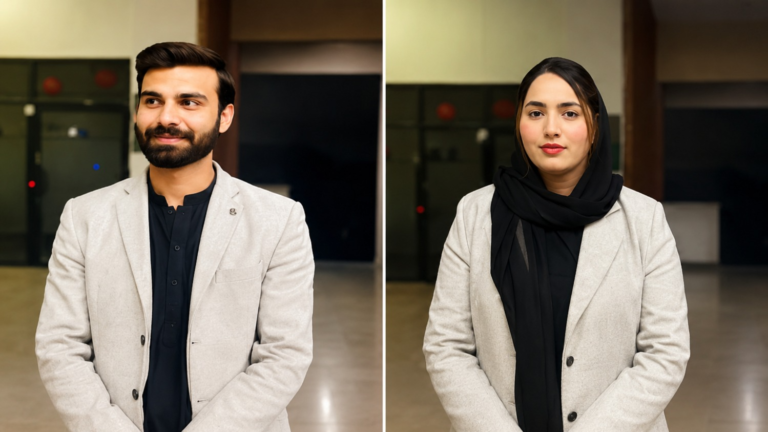
imran khans health

Imran khan’s health and the state’s respon…

It’s not about the prisoner’s health only its about Pakistan.

When a state holds a political leader in prison, it assumes a responsibility that goes beyond the enforcement of a court sentence. It assumes responsibility for the person’s safety, dignity and health. That principle should be beyond politics. In Pakistan, however, even a prisoner’s eyesight has become part of the country’s bitter political struggle.

The continuing controversy over Imran Khan’s health is therefore about much more than one man. It raises a fundamental question about the relationship between the citizen and the state: what happens to individual rights when political conflict becomes so intense that every state decision is viewed through the prism of partisan politics?

Imran Khan, Pakistan’s former prime minister and one of its most influential political figures, has been in prison since 2023 in connection with multiple legal cases. His supporters have repeatedly raised concerns about his health and access to appropriate medical care. More recently, particular concern has focused on his eyesight. Reports in early 2026 said that Khan had developed a retinal condition affecting his right eye. His family and political representatives questioned whether he had received adequate specialist treatment, while the authorities maintained that he was being properly cared for. A government-appointed medical board subsequently reported improvement in his eyesight.

The conflicting accounts should not be allowed to become another chapter in Pakistan’s political war.

There is a remarkably simple way to address the problem: independent medical assessment and complete procedural transparency.

If Khan is medically stable, independent specialists should be able to establish that fact. If he needs treatment, it should be provided without delay. If his family disputes the government’s medical assessment, credible specialists should be permitted to review it. There should be no political advantage in either concealing a medical problem or exaggerating one.

This should be obvious in any functioning democracy. Yet Pakistan’s political history makes it anything but simple.

For decades, political power in Pakistan has been accompanied by institutional confrontation. Governments have used legal and administrative mechanisms against their opponents, only to find themselves out of power and vulnerable to similar treatment later. Political parties that once demanded accountability have subsequently complained of victimisation when they became targets themselves. The result is a vicious cycle in which accountability is increasingly viewed through the language of revenge.

Imran Khan’s imprisonment has become one of the most visible manifestations of that crisis.

His supporters see him as the victim of an establishment-backed campaign to remove him from politics. His opponents argue that the cases against him are matters of law and accountability and that political popularity cannot place anyone above the law. Both arguments can be debated. Courts can determine questions of guilt and innocence. Voters can judge political performance. Parliament can debate constitutional questions.

But none of these arguments should determine the standard of medical care available to a prisoner. That distinction is essential.

The state has the authority, within the law, to imprison a person. It does not acquire unlimited authority over that person’s body or dignity. Detention restricts liberty, it does not erase humanity.

This principle becomes even more important when the prisoner is a former head of government. The treatment of such a person inevitably becomes a test of institutional maturity. The government may have legitimate reasons for keeping Khan imprisoned, but it should have an equally compelling interest in ensuring that his medical treatment cannot reasonably be portrayed as political punishment.

The irony is that transparency would serve everyone.

It would protect Khan from inadequate treatment. It would protect his family from uncertainty. It would reassure his supporters. And it would protect the government from accusations that medical care is being manipulated for political purposes.

Instead, Pakistan often chooses the opposite path. Official statements are followed by political counterstatements. Medical reports become partisan documents. Families make allegations. Governments issue denials. Social media turns uncertainty into outrage. And a question that should have been answered by doctors becomes another battlefield between political camps.

This is not merely a communications failure. It is an institutional failure.

A credible democratic state must have mechanisms capable of resolving such disputes without requiring citizens to choose which political side they trust.

Pakistan could establish precisely such a mechanism. High-profile prisoners could be examined by independent medical boards selected through transparent professional criteria. Prisoners could have access, where appropriate, to independent specialists. Medical records could be maintained according to professional standards, while necessary information could be shared with families and the courts. Where a serious disagreement arises, an independent medical opinion should be available.

Such safeguards should not be created specifically for Imran Khan. They should apply to everyone.

The ordinary prisoner matters too.

Pakistan’s prisons contain thousands of people whose health concerns rarely receive national attention. They may not have political parties, lawyers appearing on television every evening, influential families or millions of supporters on social media. Yet their right to humane treatment is no less important.

Indeed, the treatment of ordinary prisoners may be the more meaningful measure of the state’s commitment to human rights.

But Khan’s case provides Pakistan with an unusual opportunity. Because his imprisonment is already under intense national and international scrutiny, the government can demonstrate that the state is capable of separating political disagreement from humanitarian responsibility. That would require political courage.

A government does not become weaker by allowing an opponent proper medical treatment. It becomes weaker when it appears afraid of transparency. A government does not demonstrate authority by controlling every narrative. It demonstrates authority by allowing facts to withstand scrutiny. This is particularly significant for Pakistan’s international reputation.

Pakistan frequently presents itself as a democratic state committed to constitutionalism, human rights and the rule of law. Yet international credibility is not built through diplomatic declarations alone. It is built through conduct, especially when circumstances are politically uncomfortable.

The treatment of political opponents is one of the clearest indicators of democratic health.

A democracy cannot be judged only by how it treats those who support the government. Its real test comes when the government is confronted by a popular and determined opponent. The temptation to use every available institution against that opponent may be powerful. The restraint required to resist that temptation is what separates democratic governance from the politics of power.

This is why Khan’s health should not be reduced to the familiar question of whether one is pro-PTI or anti-PTI.

There is a larger question at stake,  does the Pakistani state belong to whichever political group controls it at a particular moment, or does it belong equally to every citizen?

If the state is permanent and governments are temporary, then the state must be governed by principles that survive changes of government. This is the essence of constitutionalism.

The danger of political revenge is not simply that it harms today’s opposition. It creates a system in which tomorrow’s government inherits the same tools and may use them against today’s rulers. Pakistan has witnessed this cycle repeatedly. Every political generation promises to end it, few have been willing to surrender the instruments of retaliation once they acquire power.

Perhaps the most important lesson of Imran Khan’s imprisonment is therefore not about Imran Khan alone. It is about what kind of state Pakistan wants to become.

A state confident enough to allow independent doctors to examine a political opponent is stronger than a state that treats medical transparency as a threat. A state that ensures humane treatment for prisoners is more legitimate than one that uses imprisonment as an extension of political conflict. And a government that protects the dignity of its fiercest critic ultimately protects its own citizens from the possibility of future abuse.

Khan’s political future should be decided through law and democratic processes. His supporters should have the right to advocate for him peacefully. His opponents should have the right to criticise him. Courts should determine legal matters independently. Elections should determine political legitimacy, But medicine should remain medicine.

If Imran Khan needs treatment, he should receive it. If he does not, an independent assessment should establish that fact. Neither outcome should depend on political calculations.

Pakistan does not need another confrontation over a prisoner’s health. It needs an example of institutional maturity.

The state has the power to imprison. It also has the responsibility to protect.

The difference between those two ideas may ultimately determine whether Pakistan’s politics continues to be defined by the struggle for power or begins to be defined by the restraint of power.

A prison sentence can take away a person’s freedom. It should never take away the state’s obligation to protect his life, health and dignity.

That obligation does not belong to Imran Khan.

It belongs to Pakistan.

Similar Posts

  • The Future of Provinces in Pakistan

    The debate over the creation of new administrative units and provinces in Pakistan has once again occupied the national discourse after Federal Interior Minister Mohsin Naqvi declared that the country’s existing governance system had “collapsed” and argued that governance must be brought closer to the people through new administrative units. His remarks have revived an issue that has periodically surfaced since independence but has rarely moved beyond political rhetoric. While some interpreted his statement as a call for creating additional provinces, others argued that he was advocating broader administrative restructuring. Regardless of terminology, the debate has exposed the structural weaknesses of Pakistan’s governance architecture and compelled policymakers, constitutional experts and political parties to revisit an important question: can Pakistan continue to be governed effectively under its existing administrative framework, or has demographic growth, urban expansion and governance complexity made institutional restructuring unavoidable?  Pakistan today is home to more than 250 million people, yet it continues to function primarily through four provinces established under historical rather than administrative considerations. At independence in 1947, the population and governance challenges were dramatically different. Since then, urbanisation, economic diversification, internal migration and increasing demands for public services have transformed governance requirements. Provincial capitals often remain geographically and administratively distant from citizens living in peripheral districts. Residents of South Punjab, Hazara, southern Balochistan, merged districts of Khyber Pakhtunkhwa and interior Sindh frequently complain that decision-making remains concentrated in provincial capitals, resulting in unequal development, delayed service delivery and inadequate representation. Mohsin Naqvi’s argument rests on the proposition that governance has become excessively centralised and that citizens are compelled to travel long distances merely to access basic government services, courts and administrative offices. He further argued that countries with expanding populations have responded by creating additional administrative units rather than maintaining outdated structures. Whether one agrees with his assessment or not, his central observation deserves serious consideration because governance effectiveness is measured not by the size of government but by the accessibility, responsiveness and accountability of institutions.  The debate itself is not new. Successive governments have proposed South Punjab Province, Bahawalpur Province, Hazara Province and even administrative restructuring in Karachi and Balochistan. Parliamentary resolutions regarding South Punjab have previously been adopted, yet constitutional consensus has remained elusive. Political parties have often supported new provinces while in opposition but have shown considerably less enthusiasm after assuming power. Consequently, proposals have become election slogans rather than governance reforms.  Critics of creating new provinces argue that administrative fragmentation alone cannot solve governance failures. They point out that Pakistan’s primary problem is not necessarily the number of provinces but weak institutions, bureaucratic inefficiency, political interference, corruption and inconsistent implementation of laws. According to this perspective, multiplying provinces without institutional reform merely replicates existing inefficiencies across additional administrative boundaries. New provincial governments would require assemblies, governors, chief ministers, secretariats, police structures, judicial infrastructure and enormous recurring financial expenditures. Unless accompanied by governance reforms, decentralisation may simply increase administrative costs without improving public service delivery. Supporters, however, contend that administrative proximity improves governance outcomes. Comparative international experience demonstrates that countries such as India have periodically reorganised states to improve administrative efficiency and political representation. Smaller administrative jurisdictions often enable faster decision-making, improved monitoring, stronger accountability and more equitable distribution of development resources. Citizens generally experience better governance when government institutions are physically and administratively closer to them. These arguments have gained renewed attention following Naqvi’s intervention.  However, the current debate suffers from one significant omission. It largely ignores Pakistan’s weakest democratic institution: local government. Before creating additional provinces, policymakers must honestly evaluate why local governments have repeatedly failed. Pakistan has experimented with local government systems under different constitutional and political arrangements, yet these institutions have rarely been allowed to function independently and consistently. Elected local governments are frequently dissolved, elections are delayed and financial autonomy remains severely restricted. Provincial governments often resist devolving meaningful authority because local governments are perceived as political competitors rather than governance partners. This brings the issue of local body elections to the centre of the discussion. The Constitution envisions democratic decentralisation, yet local government elections have remained irregular across several provinces. In many cases, elected councils complete only partial terms or remain financially dependent upon provincial governments. Consequently, citizens seeking municipal services, sanitation, water supply, local roads, building regulation or community development frequently confront administrative paralysis. A country that struggles to sustain functioning local governments cannot realistically expect that merely creating additional provinces will automatically improve governance. The experience of Pakistan’s devolution reforms provides valuable lessons. The Local Government reforms introduced in the early 2000s attempted to decentralise authority by empowering districts and local councils. Although those reforms had weaknesses and generated political controversy, they demonstrated that bringing government closer to citizens can improve responsiveness when accompanied by fiscal authority, administrative autonomy and institutional accountability. Unfortunately, subsequent governments reversed or weakened many of these arrangements, resulting in repeated cycles of centralisation and decentralisation. Political reactions to Mohsin Naqvi’s proposal reflect Pakistan’s broader constitutional divisions. Some leaders have welcomed discussion on governance reform while supporting greater administrative decentralisation. Others have questioned both the timing and constitutional implications of the proposal, expressing concerns that restructuring provinces without broad political consensus could intensify ethnic, linguistic and regional sensitivities. There are also concerns that debates over provincial boundaries could distract attention from more immediate governance priorities, including economic recovery, inflation, institutional reforms and electoral credibility. The political diversity of these reactions demonstrates that constitutional restructuring cannot succeed through executive statements alone; it requires sustained parliamentary dialogue, provincial participation and national consensus.  The constitutional dimension cannot be overlooked. Creating new provinces requires constitutional amendments and political agreement among federal and provincial stakeholders. Such reforms inevitably involve questions relating to resource distribution, National Finance Commission allocations, Senate representation, civil service restructuring, judicial jurisdictions and provincial assets. Therefore, any attempt to redraw administrative boundaries without extensive consultation risks generating political instability rather than administrative efficiency. The opportunities nevertheless remain significant. Properly designed administrative restructuring could reduce regional disparities, improve public service delivery, enhance

  • Beyond Public Finance: Towards Constitutional Poli…

    The preceding parts of this series began with a simple question: why do technically sound economic and tax reforms repeatedly fail in Pakistan? The answer cannot be found in tax rates, revenue targets or administrative capacity alone. Pakistan’s fiscal failures arise from the constitutional and political order within which taxation, expenditure, borrowing and distribution take place.  The country does not merely have an inefficient tax system. It has a fiscal state whose incentives favour immediate extraction, selective enforcement, negotiated privilege and recurring external dependence. The previous part IX applied this framework to contemporary proposals for closing Pakistan’s tax gap. Empirical estimates of untaxed capacity, sectoral inequality and revenue potential are valuable.  Data tell us where disparities exist and what additional resources might theoretically be mobilised. However, data do not explain why those disparities have survived repeated reform efforts, nor why the same burdens continue to fall upon documented businesses, salaried persons and ordinary consumers. That explanation lies beyond public finance. Constitutional Political Economy (CPE) begins from the recognition that the state is not an abstract guardian automatically pursuing collective welfare. It consists of institutions and individuals responding to incentives, protecting authority, bargaining over resources and operating within formal and informal rules.  Fiscal outcomes reflect the distribution of political power as much as principles of efficiency or equity. Pakistan’s tax crisis is the fiscal expression of that political order. Revenue without a fiscal compact A sustainable tax system rests upon a fiscal compact between citizen and state. Citizens contribute according to lawful and reasonably distributed burdens. The state, in return, provides security, justice, education, healthcare, infrastructure, economic opportunity and protection against vulnerability.  Pakistan has progressively weakened both sides of that compact. The state demands more from those already visible while tolerating privileges for those capable of political resistance.  Citizens encounter taxes in electricity bills, fuel prices, banking transactions, telecommunications, imports, contracts and ordinary consumption. Much of this extraction occurs without determining their actual income or ability to pay. Public services remain inadequate and uneven. Taxpayers are then told that services cannot improve because revenue is insufficient. The state responds to the resulting mistrust with more withholding, surveillance and coercion.  This creates a destructive cycle: weak services reduce consent; declining consent increases reliance on coercive collection; coercion deepens mistrust; mistrust encourages informality; and informality becomes the justification for still more transaction-based taxation. A fiscal compact cannot be created through fear. Restoring income taxation The first requirement is to restore the meaning of income tax. Income taxation should ordinarily measure net income after legitimate costs and losses and impose liability according to capacity to pay. Pakistan has instead constructed a vast structure of advance, minimum, final, presumptive and withholding taxes imposed upon transactions, turnover and gross receipts. This structure is administratively convenient. It allows the state to collect through banks, employers, utilities, import authorities and private businesses without developing the institutional capacity to determine real income. Its convenience is precisely the problem. Withholding should remain where deduction at source is logically connected with the recipient’s income and operates as an adjustable advance—principally salaries, dividends and profit on debt. It should not function as a substitute for return-based taxation, proper assessment and intelligent audit. Turnover cannot permanently replace income. A business earning a narrow margin cannot justly be taxed in the same manner as one earning extraordinary profits merely because both record similar receipts. Minimum and presumptive regimes penalise investment, distort business structures and convert losses into taxable events. The objective should not be abolition of withholding overnight. It should be a legislated transition towards a system in which withholding becomes limited, adjustable and subordinate to final determination of income. A genuine value added tax The second requirement is restoration of sales tax as a genuine value added tax. Pakistan has retained the vocabulary of VAT while repeatedly breaking its chain through exemptions, special schedules, blocked credits, fixed regimes, multiple rates and arbitrary restrictions. The result is cascading, litigation, refund accumulation and a bias against documented production. A genuine VAT should apply through a broad and coherent base, a substantially lower standard rate and unrestricted adjustment of legitimate input tax.  Exemptions should be confined to carefully identified necessities and public-interest activities. Refunds should be treated as taxpayers’ money, not as an unofficial source of financing for the state. The constitutional division between sales tax on goods and services need not condemn businesses to fragmented administration. Harmonised definitions, a common return, integrated registration, shared information and an agreed clearing mechanism can preserve provincial taxing authority while reducing compliance costs. Coordination is essential. Re-centralisation is not. Pakistan’s federation was not designed solely for administrative convenience. Article 160 of the Constitution protects the distribution of specified revenues between the Federation and provinces, while Article 140A requires devolution of political, administrative and financial responsibility to elected local governments.  Fiscal reform must strengthen all three levels of constitutional government rather than treating provinces and local bodies as spending agencies dependent upon federal discretion.  Ending taxation through labels A constitutional fiscal order must also respect the actual nature of each levy. Parliament cannot convert a provincial tax into a federal tax merely by attaching a different label. Nor can the executive create a new taxable event through rules, notifications or administrative directions where the legislature has not imposed one. Article 77 requires federal taxation to rest upon parliamentary authority. Articles 4, 24 and 25 bring legality, protection against arbitrary deprivation and equality into the same constitutional inquiry. Legislative enactment is indispensable, but enactment alone does not validate a levy that exceeds legislative competence, discriminates irrationally or denies due process.  The annual Finance Act should not be used as a container for major structural changes receiving limited parliamentary examination. Essential elements of a tax—the subject, person liable, measure, rate and taxable event—must be stated clearly in primary legislation. Delegated legislation may implement the law. It cannot become an alternative legislature. Expenditure is the other side of taxation The debate over Pakistan’s tax-to-GDP ratio often proceeds as though every additional rupee

  • The Unmaking of a Wife: Identity, Myth, and Rebirt…

    By Mudassar Javed Baryar Avni Doshi, the Booker Prize-shortlisted author of Burnt Sugar, returns with her second novel, The First House, a work that solidifies her reputation as one of the most compelling literary voices of her generation. Doshi, born in New Jersey in 1982, has established herself as a writer who fearlessly dissects the complexities of human relationships, particularly those between mothers and daughters, husbands and wives. Her debut was lauded for its unflinching honesty and lyrical prose, and The First House continues this tradition, offering readers a psychologically penetrating exploration of marriage, identity, and the slow, agonizing process of self-reclamation. The novel centres on an unnamed narrator whose thirteen-year marriage unexpectedly collapses, forcing her to confront not only the immediate devastation of her husband’s departure but also the deeper, more unsettling questions about her past, her family, and the very nature of love and sacrifice. It is a story that is as mythologically rich as it is emotionally devastating, weaving together ancient goddesses, astrological charts, and the relentless cycle of nature to create a profound meditation on what it means to lose everything and find oneself in the process. The First House is a domestic drama steeped in psychological intensity and mythological symbolism, unfolding through the intimate, raw perspective of its unnamed narrator. The story begins with a moment of shattering clarity: her husband enters their bedroom and calmly announces he no longer wishes to be married. From this single, devastating event, the narrative spirals outward, exploring the aftermath of abandonment and the slow, painful process of learning to exist without the structures that once defined her. The plot is not driven by a series of dramatic external events but rather by the protagonist’s internal journey as she grapples with her grief, anger, and profound disorientation. As the narrator struggles to maintain her composure for the sake of her two young daughters, she retreats into the world of astrology, studying birth charts in search of answers or perhaps just patterns that might explain the chaos of her life. She becomes fixated on the figure of Diana, the Roman goddess of the hunt, whose statue stands in her neighbour’s yard—a constant, silent observer of her unravelling. The statue, originally commissioned as a weathervane, becomes a powerful symbol of her own perceived powerlessness and the indignity of being turned by forces beyond one’s control. The novel also weaves in the emergence of periodical cicadas, whose seventeen-year life cycles of subterranean dormancy and explosive, noisy mating serve as a metaphor for hidden growth, suppressed desire, and the inevitable transformations that drive all living things. The setting, a seemingly placid suburban landscape, contrasts sharply with the internal turmoil of the protagonist. Her world shrinks to the confines of her home, her fraught relationships with her parents, and her complicated, long-estranged relationship with her sister, Didi. The central conflict is her struggle to maintain a sense of self—to keep her head, as it were, while her life is dismantled piece by piece. As she navigates financial instability, the practical challenges of single parenthood, and the humiliation of being left, she is forced to confront uncomfortable truths about her marriage and herself. The novel is ultimately a story about the stories we tell ourselves to survive, and what happens when those narratives collapse. Doshi uses the themes of loss, betrayal, and self-reclamation to explore how we construct our identities through relationships and what remains when those structures are removed. The true power of The First House lies in Doshi’s extraordinary prose and the depth of her protagonist’s consciousness. The author crafts a narrative that is brutally honest, often uncomfortable, and deeply insightful into the psychology of a woman in crisis. The writing itself is a masterclass in showing, not telling; the reader feels the protagonist’s disorientation, her rising panic, and her eventual, hard-won clarity through the rhythm of the language and the accumulation of powerful, visceral details. Doshi has a remarkable ability to render complex emotional states with precision and economy, making the reader feel as though they are living inside the narrator’s mind. The novel’s structure, which moves between present-day events and memories of the past, creates a rich, layered portrait of a life that feels both specific and universal. One of the most compelling characters is the narrator herself. Her voice is raw, intelligent, and often unflattering, yet it is this very honesty that makes her so resonant. She is not a passive victim; she is a woman capable of sharp observation and deep self-criticism, which makes her journey of self-discovery all the more moving. For instance, her admission that she sometimes resented the intrusion of her family on her writing time, or her complex feelings of love and resentment towards her children, are depicted with a startling authenticity that challenges romanticized notions of motherhood. A specific example of her compelling development is her relationship with the act of writing itself. Initially a source of guilt and a symbol of what she has lost, writing gradually becomes a tool for her reclamation, a way for her to”re-collect”herself and her story. Her growing awareness of her own complicity in the failure of her marriage, and her willingness to examine her own flaws, makes her a deeply sympathetic and profoundly human character. Another exceptionally compelling aspect of the novel is the storyline involving the Diana statue and the cicadas. Doshi masterfully uses these elements not as mere decorative motifs, but as integral parts of the narrative’s thematic architecture. The statue of Diana, a representation of a powerful, self-possessed female deity, becomes a haunting presence throughout the novel, a mirror for the narrator’s own lost power and a link to her past self. The story of Diana’s commissioning as a weathervane, a great goddess forced to turn at the whim of the wind, becomes a potent symbol for the diminishment the protagonist feels in her marriage and society at large. The revelation of the architect’s violent death at the foot of the statue adds

  • Artificial Intelligence and the Future of the Lega…

    By Asma Rahmat, Final Year Law Student, SLC, Superior University and Muhammad Ameer Hamza, Final Year Law Student, SLC, Superior University   The legal profession has long been regarded as one of the most respected and tradition-bound institutions in society, founded on human intellect, ethical judgment, and the pursuit of justice. Yet, like every other profession, it is now experiencing the profound impact of Artificial Intelligence (AI). Across the globe, AI is transforming industries by automating routine tasks, enhancing productivity, and improving decision-making. The legal sector is no exception. While countries with advanced legal systems have already begun integrating AI into legal practice and judicial administration, Pakistan is only beginning to explore its potential. The challenge before us is not whether AI will become part of the legal profession, but whether we are prepared to embrace this technological revolution while preserving the fundamental values of justice, fairness, and the rule of law. Artificial Intelligence has the ability to process vast amounts of information within seconds, making it an invaluable tool for legal professionals. Today, AI-powered software can conduct legal research, review contracts, summarize lengthy case files, identify relevant judicial precedents, and even assist in drafting legal documents. These are tasks that traditionally consumed hours or even days of a lawyer’s time. By automating repetitive and time-consuming work, AI enables lawyers to focus on the more complex aspects of their profession, including legal strategy, courtroom advocacy, negotiation, and client counseling. Rather than replacing legal professionals, AI has the potential to become a reliable assistant that enhances both efficiency and accuracy. For Pakistan, where the judicial system continues to struggle with delays and an ever-growing backlog of cases, the responsible use of AI could bring much-needed reform. Thousands of litigants wait years for the resolution of their disputes, often because courts are overburdened and administrative processes remain largely manual. AI can assist in organizing digital records, managing court schedules, classifying legal documents, and simplifying legal research for judges and lawyers alike. These improvements could significantly reduce delays, improve case management, and make the justice system more efficient without compromising judicial independence. Importantly, AI should support judicial decision-making rather than replace it, as the final responsibility for interpreting the law must always remain with judges. Beyond improving efficiency, AI also offers an opportunity to strengthen access to justice. A significant portion of Pakistan’s population cannot afford legal representation or lacks access to basic legal information. AI-powered legal assistance platforms, particularly those available in Urdu and regional languages, could provide citizens with preliminary guidance on their legal rights, court procedures, and available remedies. Such tools would not replace qualified lawyers but could empower individuals by helping them understand the legal system before seeking professional assistance. In a country where legal awareness remains limited, technology can become a powerful means of promoting legal literacy and strengthening public confidence in the justice system. The emergence of AI is equally significant for legal education. Law students now have access to intelligent research tools that can summarize judgments, explain complex legal principles, compare international legal systems, and assist in legal writing. These technologies can make legal education more interactive and research-oriented. However, they also present a challenge. Students must avoid becoming overly dependent on AI-generated content, as legal education is ultimately designed to develop analytical reasoning, critical thinking, and independent judgment. Future lawyers must learn not only how to use AI responsibly but also how to question its outputs, verify legal authorities, and apply legal principles thoughtfully. Despite its many advantages, Artificial Intelligence raises several legal and ethical concerns that cannot be ignored. AI systems are not infallible. They may generate inaccurate information, misinterpret legal authorities, or reflect biases contained within the data on which they were trained. A lawyer who relies solely on AI without verifying its results risks providing incorrect legal advice or presenting flawed arguments before the court. Furthermore, the use of AI raises important concerns regarding client confidentiality and data protection. Lawyers have a professional and ethical obligation to protect sensitive client information, and any use of AI must ensure that confidential data is handled securely. These concerns highlight the importance of developing ethical guidelines governing AI’s use within the legal profession. Pakistan currently lacks a comprehensive legal framework specifically regulating Artificial Intelligence. While existing laws address cybercrime and certain aspects of electronic transactions, they do not adequately address issues such as AI accountability, transparency, liability, algorithmic bias, or the protection of personal data in AI-assisted legal services. As AI becomes more prevalent, policymakers must establish a clear regulatory framework that encourages technological innovation while safeguarding constitutional rights, including privacy, equality before the law, and the right to due process. Such regulation will be essential to ensuring that AI serves society without undermining public trust in legal institutions. Perhaps the greatest misconception surrounding AI is the belief that it will eventually replace lawyers. In reality, the legal profession depends upon qualities that no machine can fully replicate. Lawyers do not merely apply legal rules; they exercise judgment, interpret complex factual situations, negotiate settlements, understand human emotions, and advocate persuasively before courts. Similarly, judges must balance competing rights, interpret legislation in light of constitutional principles, and deliver reasoned decisions based on justice and equity. These responsibilities require wisdom, experience, empathy, and moral reasoning—qualities that remain uniquely human. AI can provide information and support, but it cannot replace the conscience, ethical responsibility, and professional judgment that define the legal profession. The future of the legal profession in Pakistan therefore lies in collaboration rather than competition between humans and technology. Law schools should introduce courses on Artificial Intelligence, legal technology, and digital ethics to prepare future lawyers for an increasingly technology-driven profession. Bar councils and regulatory authorities should establish professional standards governing the ethical use of AI in legal practice, while the judiciary should continue investing in digital infrastructure to improve the administration of justice. At the same time, legal professionals must embrace lifelong learning so they can adapt to technological advancements without compromising the integrity

  • The Teachings of Hazrat Ali Hajveri (R.A)

    Hazrat Syed Ali bin Usman Al-Hajveri (R.A), popularly venerated as Data Ganj Bakhsh or Data Sahib, occupies a seminal position among the classical Sufi scholars of the Islamic tradition. Born in 1009 CE in Ghazni, present-day Afghanistan, he migrated to Lahore during the Ghaznavid period, where he spent the remainder of his life engaged in instruction, spiritual guidance, and moral reform. He died in 1072 CE and was interred in Lahore, where his shrine remains a major center of religious and cultural activity in South Asia.   The honorifics “Data” and “Ganj Bakhsh” denoting “the Giver” and “Distributor of Treasures” were conferred upon him in recognition of his intellectual munificence and his commitment to philanthropy. Historical and hagiographic sources attest that his hospice was accessible to individuals irrespective of social, linguistic, or religious affiliation. This principle of inclusivity continues to inform the ethos of his shrine, which attracts millions of pilgrims annually from Pakistan and abroad.   Hazrat Data Sahib’s principal scholarly contribution is the Persian treatise Kashf-ul-Mahjoob: The Revelation of the Veiled. Composed in the 11th century, it is regarded as the earliest systematic exposition of Sufism in the Persian language and retains canonical status in seminaries and universities worldwide. In this work, he delineates the interior dimensions of Islam, emphasizing that proximity to the Divine is attained through sincerity of intention, service to humanity, and sustained remembrance of Allah.   At present, his shrine in Lahore, known as Data Darbar, constitutes one of the largest Sufi complexes in South Asia. Daily visitation peaks on Thursdays, and the institution of perpetual langar  the provision of free meals  operationalizes his teaching on social welfare and continues to serve thousands of people each day.   The epistemological and ethical framework of Hazrat Data Sahib’s thought may be summarized under four interrelated principles.   First, he posited love of Allah and His Messenger ﷺ as the teleological basis of human existence. In Kashf-ul-Mahjoob, he argues that worship should proceed not from instrumental motives of fear or expectation of reward, but from authentic love and sincerity. He further contends that the spiritually realized individual maintains constant consciousness of Allah in all states of being.   Second, he advanced service to humanity as a form of worship. Rejecting ascetic withdrawal, he advocated an engaged ethic in which the pursuit of knowledge is coupled with service to the marginalized. His designation as “Ganj Bakhsh” reflects this commitment to the distribution of both material and spiritual resources. Third, he emphasized Tazkiya-e-Nafs, or the purification of the self, as a prerequisite for moral agency. He enjoined his disciples to abstain from vices such as greed, envy, wrath, slander, and pride, and to cultivate virtues including patience (sabr), gratitude (shukr), veracity (sidq), and contentment (qana‘at). For him, authentic knowledge was manifest not merely in textual erudition but in ethical conduct (akhlaq). Fourth, he articulated Sufism as the inward dimension of Shariah. He maintained that observance of ritual obligations  prayer, fasting, and lawful livelihood  must be complemented by dhikr, the remembrance of Allah, to ensure spiritual vitality. He further stressed the necessity of authoritative pedagogy and virtuous companionship as conduits for moral and spiritual development. The teachings of Data Ganj Bakhsh retain considerable relevance in the 21st century. In an era characterized by consumerism, occupational precarity, and digital hyper-connectivity, his advocacy of qana‘at and dhikr offers a corrective to stress, anxiety, and existential vacuity. His framework suggests that psychological equilibrium is derived less from material accumulation than from interior discipline and divine orientation.   Furthermore, his principle of social service addresses contemporary challenges of poverty, isolation, and inequality. The institutionalized langar at Data Darbar exemplifies this ethic and provides a model for civic engagement, volunteerism, and communal solidarity.   In the context of digital communication, his insistence on akhlaq assumes particular salience. His exhortations to truthfulness, humility, and restraint provide a normative basis for addressing online hostility, misinformation, and the erosion of civility. For students and professionals alike, his model affirms that technical competence must be accompanied by moral integrity.   Finally, his doctrine of equilibrium between spiritual and worldly responsibilities offers a viable paradigm for modern Muslim subjects. He did not advocate monasticism, but rather the integration of professional, academic, and technological life with enduring spiritual commitments. This synthesis enables individuals to pursue vocational excellence without compromising ethical values.   In conclusion, the legacy of Hazrat Ali Hajveri (R.A) transcends its historical milieu. Centered on love of Allah, service to humanity, and self-purification, his teachings provide a coherent response to contemporary social and psychological challenges. The adoption of these principles at the individual and communal level holds the potential to foster more just, compassionate, and purpose-driven societies.

  • Buying time not future

    Nations, organizations, and individuals who rely on borrowed time never prosper. Vision of the future is paramount to growth. Stagnation leads to disaster. In a world driven by technology, only change is permanent. As a nation, we started off well. The founding fathers burnt the midnight oil not only to sustain but also to prosper. Early in the decade of the fifties, the entire development framework was put in place. For industrialization, PIDC (Pakistan Industrial Development Corporation); for water and power, WAPDA (Water & Power Development Authority); PAEC (Pakistan Atomic Energy Commission) headed by Dr I.H. Usmani; PCSIR (Pakistan Council of Science & Industrial Research) under Dr Salim-Uz-Zaman Siddiqui; PSI (Pakistan Standards Institution), now PSQCA (Pakistan Standards and Quality Control Authority); PIAC (Pakistan International Airlines Corporation). The father of the nation, Quaid-e-Azam Muhammad Ali Jinnah, himself inaugurated the State Bank of Pakistan in 1948. The discovery of natural gas at Sui in 1952 was a gift of nature. At 12 TCF, it was considered one of the largest deposits of its time, sufficient to meet the needs of the nation for a century. Future requires investment, both short and long term. It was Sir Syed Ahmed Khan’s vision to bring the Muslim population of the Sub-continent into the mainstream. Starting with schools, he moved on to colleges and finally the Aligarh University, which not only led the movement for the creation of Pakistan but also provided the manpower to sustain it. In the formative years of the republic, education was taken seriously both by the teachers and the taught. In my entire academic journey, I never once missed a class, even during my term as President of the departmental student union. The first-born free generation was being prepared to lead, not follow. Instead of buying time, the future was being built. In the 1973 constitution, literacy was declared a fundamental right. Under Article 25-A, every Pakistani had to be literate by the year 1985, but the target was not only missed, the entire effort was sidelined. The government of Muhammad Khan Junejo tried to narrow the gap by introducing the Nai Roshni program, which was shut down after his government fell. For meaningful nation building, education, employment and health are critical. The recent student uprising in India focused on professional education followed by employment. They demanded transparency and merit, which were being compromised. Modi’s shining India meant very little for them. Other countries have experienced similar protests (Bangladesh, Nepal, Sri Lanka, Indonesia). Pakistan needs a lot of catching up to do. It is back to the basics of nation building. Universal Primary Coverage is the starting point. Every five-year-old child should be in school this year. This will reverse the trend of the swelling out-of-school youth population. Once primary coverage is ensured, the next target should be to cover those who missed out. The country is blessed with a bulging youth population, which must be made productive. Despite all the challenges of governance, the informal sector continues to perform well by providing the needed goods and services. Confidence in the formal sector is needed for a meaningful and cohesive march forward. In the decade of the fifties, Pakistan was poised to emerge as the first Asian Tiger; now it seriously lags behind while other nations have grown, which includes China, Japan, South Korea, Taiwan, Malaysia, Singapore, Vietnam, Thailand, Indonesia — the list goes on. Rightly said, this is the Asian Century. It is time to look inwards. The future belongs to educated and healthy nations who do not settle for short-term gains but instead focus on the future. Pakistan should not be a burial ground for those who build fortunes abroad. The homeland must come first. The best cannot be left for last.

Leave a Reply

Your email address will not be published. Required fields are marked *