The Unmaking of a Wife: Identity, Myth, and Rebirt…
By Mudassar Javed Baryar
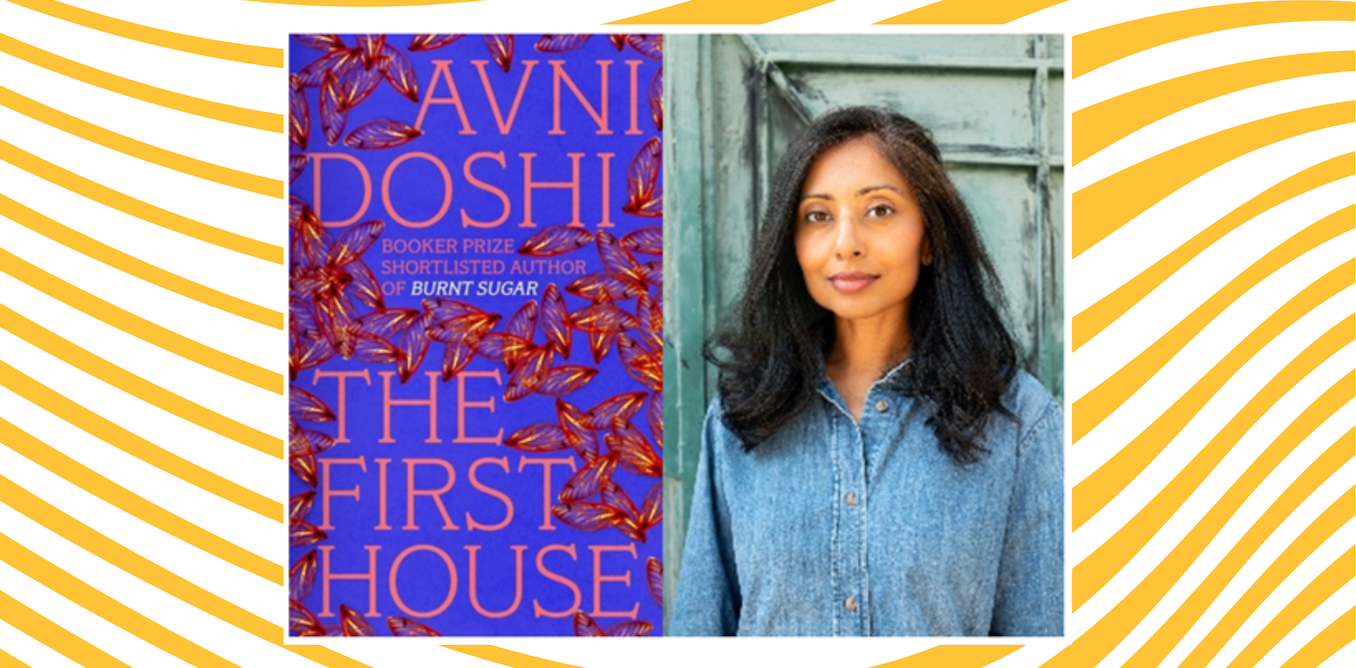
Avni Doshi, the Booker Prize-shortlisted author of Burnt Sugar, returns with her second novel, The First House, a work that solidifies her reputation as one of the most compelling literary voices of her generation. Doshi, born in New Jersey in 1982, has established herself as a writer who fearlessly dissects the complexities of human relationships, particularly those between mothers and daughters, husbands and wives. Her debut was lauded for its unflinching honesty and lyrical prose, and The First House continues this tradition, offering readers a psychologically penetrating exploration of marriage, identity, and the slow, agonizing process of self-reclamation.
The novel centres on an unnamed narrator whose thirteen-year marriage unexpectedly collapses, forcing her to confront not only the immediate devastation of her husband’s departure but also the deeper, more unsettling questions about her past, her family, and the very nature of love and sacrifice. It is a story that is as mythologically rich as it is emotionally devastating, weaving together ancient goddesses, astrological charts, and the relentless cycle of nature to create a profound meditation on what it means to lose everything and find oneself in the process.
The First House is a domestic drama steeped in psychological intensity and mythological symbolism, unfolding through the intimate, raw perspective of its unnamed narrator. The story begins with a moment of shattering clarity: her husband enters their bedroom and calmly announces he no longer wishes to be married. From this single, devastating event, the narrative spirals outward, exploring the aftermath of abandonment and the slow, painful process of learning to exist without the structures that once defined her. The plot is not driven by a series of dramatic external events but rather by the protagonist’s internal journey as she grapples with her grief, anger, and profound disorientation.
As the narrator struggles to maintain her composure for the sake of her two young daughters, she retreats into the world of astrology, studying birth charts in search of answers or perhaps just patterns that might explain the chaos of her life. She becomes fixated on the figure of Diana, the Roman goddess of the hunt, whose statue stands in her neighbour’s yard—a constant, silent observer of her unravelling. The statue, originally commissioned as a weathervane, becomes a powerful symbol of her own perceived powerlessness and the indignity of being turned by forces beyond one’s control. The novel also weaves in the emergence of periodical cicadas, whose seventeen-year life cycles of subterranean dormancy and explosive, noisy mating serve as a metaphor for hidden growth, suppressed desire, and the inevitable transformations that drive all living things.
The setting, a seemingly placid suburban landscape, contrasts sharply with the internal turmoil of the protagonist. Her world shrinks to the confines of her home, her fraught relationships with her parents, and her complicated, long-estranged relationship with her sister, Didi. The central conflict is her struggle to maintain a sense of self—to keep her head, as it were, while her life is dismantled piece by piece.
As she navigates financial instability, the practical challenges of single parenthood, and the humiliation of being left, she is forced to confront uncomfortable truths about her marriage and herself. The novel is ultimately a story about the stories we tell ourselves to survive, and what happens when those narratives collapse. Doshi uses the themes of loss, betrayal, and self-reclamation to explore how we construct our identities through relationships and what remains when those structures are removed.
The true power of The First House lies in Doshi’s extraordinary prose and the depth of her protagonist’s consciousness. The author crafts a narrative that is brutally honest, often uncomfortable, and deeply insightful into the psychology of a woman in crisis. The writing itself is a masterclass in showing, not telling; the reader feels the protagonist’s disorientation, her rising panic, and her eventual, hard-won clarity through the rhythm of the language and the accumulation of powerful, visceral details. Doshi has a remarkable ability to render complex emotional states with precision and economy, making the reader feel as though they are living inside the narrator’s mind. The novel’s structure, which moves between present-day events and memories of the past, creates a rich, layered portrait of a life that feels both specific and universal.
One of the most compelling characters is the narrator herself. Her voice is raw, intelligent, and often unflattering, yet it is this very honesty that makes her so resonant. She is not a passive victim; she is a woman capable of sharp observation and deep self-criticism, which makes her journey of self-discovery all the more moving.
For instance, her admission that she sometimes resented the intrusion of her family on her writing time, or her complex feelings of love and resentment towards her children, are depicted with a startling authenticity that challenges romanticized notions of motherhood. A specific example of her compelling development is her relationship with the act of writing itself. Initially a source of guilt and a symbol of what she has lost, writing gradually becomes a tool for her reclamation, a way for her to”re-collect”herself and her story. Her growing awareness of her own complicity in the failure of her marriage, and her willingness to examine her own flaws, makes her a deeply sympathetic and profoundly human character.
Another exceptionally compelling aspect of the novel is the storyline involving the Diana statue and the cicadas. Doshi masterfully uses these elements not as mere decorative motifs, but as integral parts of the narrative’s thematic architecture. The statue of Diana, a representation of a powerful, self-possessed female deity, becomes a haunting presence throughout the novel, a mirror for the narrator’s own lost power and a link to her past self. The story of Diana’s commissioning as a weathervane, a great goddess forced to turn at the whim of the wind, becomes a potent symbol for the diminishment the protagonist feels in her marriage and society at large. The revelation of the architect’s violent death at the foot of the statue adds another layer, suggesting that power, even divine power, is always contested.
Simultaneously, the cicadas, with their long, subterranean dormancy and explosive emergence to mate and die, parallel the narrator’s own hidden life, her suppressed desires, and the inevitable, often painful, transformations that drive her forward. The way Doshi intertwines these natural and mythological cycles with the protagonist’s personal crisis elevates the novel from a simple story of divorce to a profound exploration of life, death, and rebirth. The meticulous research that underpins these elements—the history of the statue, the biology of the insects, the details of Hindu mythology—lends the novel a weight and richness that rewards careful reading.
It is a testament to the novel’s quality that finding genuine fault with it is a challenging task. Doshi has crafted a work that is so tight, so fully realized in its vision and execution, that its”flaws”feel more like deliberate, provocative choices. For instance, the protagonist’s family, particularly her mother and father, are portrayed as almost caricatures of narrow-minded, self-absorbed immigrants, with the mother obsessing over food and appearances and the father wielding his authority with casual cruelty.
Their dialogue is often sharp, funny, and painfully recognizable, but their motivations can feel somewhat one-dimensional. They serve as foils to the narrator’s introspection, representing the world of tradition, judgment, and surface appearances from which she is trying to break free. While this makes them effective as obstacles, it also means they lack the psychological depth of the central character. This choice, however, might be intentional, reflecting how the protagonist herself, in her own distress, reduces her family to the roles they have always played in her life.
The only other potential point of critique is the novel’s unrelenting intensity. The protagonist’s emotional state is so vividly rendered that the reader is plunged into her anxiety, grief, and confusion without much respite. This immersive quality is, in fact, a strength, as it forces the reader to sit with the uncomfortable feelings of the character, creating a visceral reading experience that is rare in contemporary fiction. Some might find the pacing, which mirrors the protagonist’s cyclical thoughts and slow progress, to be a challenge, but this is a stylistic choice that serves the story’s thematic core.
The novel is not meant to be an easy, escapist read; it is meant to be a deep, sometimes claustrophobic, dive into a mind in the process of breaking down and rebuilding. Therefore, what might be perceived as a flaw in another book—the dense, interior focus and the lack of conventional plot—is, in The First House, a hallmark of its exceptional quality. It demonstrates Doshi’s complete control over her narrative and a remarkable commitment to her protagonist’s truth. The ending, too, feels earned, not a tidy resolution but a quiet, powerful moment of emergence, mirroring the cicadas’ own breaking of the surface. This is a novel that trusts its readers to find meaning in its depths.
The First House is a literary masterpiece that will resonate most deeply with readers who appreciate sophisticated, character-driven fiction. Fans of authors like Rachel Cusk, Sheila Heti, and Elena Ferrante will find a kindred spirit in Doshi’s unflinching examination of female interiority and the complicated dynamics of family and marriage. This is not a book for those seeking a fast-paced plot or a tidy, redemptive ending; rather, it is for those who find pleasure in complex prose, rich symbolism, and a story that is both intellectually stimulating and emotionally devastating.
It is a novel for anyone who has ever questioned their own identity within a relationship, struggled with the weight of family expectations, or sought to rebuild themselves from the ground up after a profound loss. Due to its mature themes and psychological complexity, it is best suited for an adult audience, particularly readers who appreciate literary fiction that challenges and rewards in equal measure. The First House is a book that will linger in the mind long after the final page, a testament to Avni Doshi’s extraordinary talent.