beyond public finance

Beyond Public Finance: Towards  Constitutional Po…

The second part of this series explained why public finance and Constitutional Political Economy (CPE) ask different questions. Public finance ordinarily examines what taxes governments should impose and how revenue should be spent. CPE asks who makes those choices, under what rules, for whose benefit and subject to what restraints. That distinction leads to an important conclusion: there is no politically neutral tax system.

Tax policy is often presented as a technical exercise. Economists compare direct and indirect taxes, estimate elasticity, calculate effective rates and recommend reforms intended to improve efficiency. Governments describe exemptions as incentives, withholding provisions as enforcement mechanisms and consumption taxes as instruments of broad-based revenue mobilisation. Such terminology creates the impression that taxation operates independently of political power. It does not.

Every tax decision identifies those who will pay, those who will collect, those who will receive concessions and those whose activities will remain beyond effective enforcement. A tax may be neutral between two products in an economic model, but the process through which it is enacted and administered can rarely be neutral between organised interests, social classes or political constituencies.

The Organisation of Economic Cooperation and Development (OECD) itself recognises that taxes affect taxpayers differently according to their income and other socio-economic characteristics. They alter behaviour and influence the distribution of income both directly and through the public expenditure they finance. Taxation is, thus, not merely a device for transferring money to the treasury. It changes economic opportunities and affects the relationship between citizen and state.

The celebrated Mirrlees Review sought to design a coherent tax system in which similar activities were treated consistently, and economic choices were not distorted without good reason. This is a valuable objective. Neutrality can reduce arbitrary discrimination and prevent tax considerations from dominating productive decisions. Nevertheless, even the most carefully designed system must decide which activities are alike, which differences justify special treatment and how equity should be balanced against efficiency. Those choices necessarily embody judgments about society.

The idea of neutrality becomes more problematic when it is transferred from theory to a state characterised by unequal political influence. Consider a general sales tax (GST). In theory, a broad-based value added tax (VAT) imposed at a uniform rate minimises distortions and preserves the chain of documentation. In practice, exemptions, reduced rates, special schedules, fixed taxes, withholding taxes (unique in Pakistan even for VAT/GST!) and sector-specific arrangements are introduced during the political process. The final statute may bear little resemblance to the neutral instrument initially proposed.

The same is true of income tax. Horizontal equity requires persons with similar ability to pay to bear comparable burdens. Vertical equity requires those possessing greater capacity to contribute more. In Pakistan, however, the legal character assigned to income often determines the burden more decisively than the taxpayer’s actual economic capacity. Salary, business income, capital gains, dividends, property income and agricultural income may all be subjected to different regimes, rates or jurisdictions.

These distinctions are not always indefensible. Different types of income may require different collection methods. The constitutional distribution of taxing powers must also be respected. However, a CPE analysis asks why particular differences survive, who benefits from them and whether their stated rationale corresponds to their actual effect.

Tax exemptions provide the clearest illustration. Governments describe them as instruments for attracting investment, supporting industries, protecting vulnerable groups or promoting exports. Some concessions may serve legitimate public purposes. Others constitute expenditure conducted through the tax system without the scrutiny ordinarily applied to direct spending.

Pakistan’s official Tax Expenditure Report 2026 estimated revenue forgone during fiscal year 2024–25 through income tax, sales tax and customs concessions at approximately Rs. 2.353 trillion (excluding sales tax on POL products to deprive provinces of their constitutional right, replacing it with petroleum levy). Of this amount, sales tax concessions accounted for about Rs. 1.274 trillion, income tax concessions for Rs. 579.70 billion and customs concessions for Rs. 499.14 billion. These are not accounting curiosities. They represent choices about which persons, sectors and transactions receive preferential treatment, and which taxpayers must bear the resulting revenue burden.

A concession granted through the tax law is economically similar to public expenditure. If the state collects Rs. 100 from a citizen and transfers it to an industry, the transaction appears in the budget. If the state allows that industry to retain Rs. 100 that would otherwise have been payable, the distributive effect may be comparable, but the benefit is less visible.

This opacity is politically useful. Direct subsidies attract public attention and legislative scrutiny. Tax concessions are buried in schedules, exemptions and statutory notifications. Their beneficiaries are often concentrated and organised, while the cost is dispersed across millions of taxpayers and consumers.

Constitutional Political Economy explains why such arrangements persist. A concentrated group has a strong incentive to lobby for a benefit worth billions of rupees. Each member of the general public, bearing only a fraction of the cost, has little incentive or capacity to oppose it. What appears to be an anomaly in tax design may be the predictable result of unequal political organisation.

Withholding taxation presents another example. It is defended as an efficient method of collecting revenue from an economy with weak compliance. In limited circumstances, deduction/collection at source is entirely justified. Salary taxation (pay roll taxes) and payments to non-residents commonly require withholding systems in many jurisdictions.

Pakistan, however, has transformed withholding from a collection technique into a parallel tax regime. According to the Revenue Division Year Book 2024–25, withholding taxes contributed 60 percent of total income tax collection in that year. Collection through withholding reached approximately Rs. 3.382 trillion. This reliance changes the institutional character of income taxation.

The tax administration increasingly obtains revenue from transactions rather than determining taxpayers’ actual net income and ability to pay. Banks, employers, utilities, property registrars, businesses and other intermediaries become unpaid tax collectors. Persons already operating within the documented economy bear recurring deductions/collections in advance, compliance costs and the burden of seeking adjustments or refunds (hardly allowed automatically in our context unless palms are greased or intervention of Federal Tax Ombudsman is sought).

Meanwhile, the state may report increased income tax collection even though much of it resembles transaction-based taxation and advances received for next tax year (cumulative around 90 percent). The label remains “direct tax”, but the economic burden may be shifted, capitalised or passed on in prices (increasing incidence on the marganilised segments of society). Classification can therefore conceal as much as it reveals.

The distinction between filers and non-filers illustrates the same problem. Higher rates for persons outside the Active Taxpayers’ List are presented as incentives for documentation. In reality, many such deductions/collections operate as revenue measures imposed on transactions, without establishing the taxpayer’s income or final liability (in most of the cases enabling the passing on of the burden to end consumers). The state may collect more (in billions) from non-compliance without necessarily eliminating it.

A system can consequently develop a fiscal interest in preserving the very informality it claims to combat. If non-filers generate higher withholding receipts, the administration may prefer continuing differential rates to undertaking the difficult institutional work of assessment, enforcement and expansion of the genuine tax base. This is a classic CPE problem: the incentives of the collecting institution may differ from the declared objective of tax policy.

The same principle applies to indirect taxation. A consumption tax may be described as neutral because it applies at a uniform statutory rate. However, its social effect depends on what is taxed, what is exempt, whether input tax is allowed, how refunds operate and how households at different income levels spend their resources.

A tax on essential consumption absorbs a larger share of the income of a poor household than of a wealthy household. An exemption may provide relief, but it may also break the value added tax chain and benefit producers more than consumers. A reduced rate may appear compassionate while generating classification disputes, evasion and lobbying.

There is no escape from choice. The relevant question is not whether tax policy can be made entirely neutral, but whether its distributive choices are transparent, constitutionally authorised and publicly defensible. This insight was not discovered exclusively by modern Western economists.

In the eighth century, Abu Yusuf, in Kitab al-Kharaj, treated taxation as a question of justice, administrative responsibility and protection against oppression. He emphasised the conduct of revenue officials and the need to preserve productive capacity rather than maximising immediate extraction. His work demonstrates that fiscal policy has long been understood as part of the moral and institutional relationship between ruler and citizen.

The underlying principles are universal: public burdens should be just; officials should be accountable; property should not be appropriated arbitrarily; wealth should circulate rather than remain concentrated through privilege; and revenue should support collective welfare, particularly the protection of vulnerable citizens. These principles can be expressed in constitutional language without converting fiscal analysis into theological argument.

Pakistan’s tax debate must move beyond the recurring contest between higher rates and lower rates, direct and indirect taxes, or enforcement and incentives. Before recommending any measure, we must ask four questions. Who bears its real burden? Who receives the benefit? Who possesses the power to secure an exception? Who is accountable when the measure is applied selectively?

A tax system should be judged not merely by how much it collects but by the constitutional and political relationship it creates. A system that raises revenue by repeatedly burdening those already documented, while accommodating those possessing influence, may succeed administratively and fail constitutionally.

Tax policy is never neutral. It either restrains privilege or protects it; broadens citizenship or deepens exclusion; strengthens consent or normalises coercion.

In the next part, we shall examine why technically sound tax reforms fail, and how political incentives alter reforms between their conception, enactment and enforcement.

[To be continued]

____________________________________________________________________

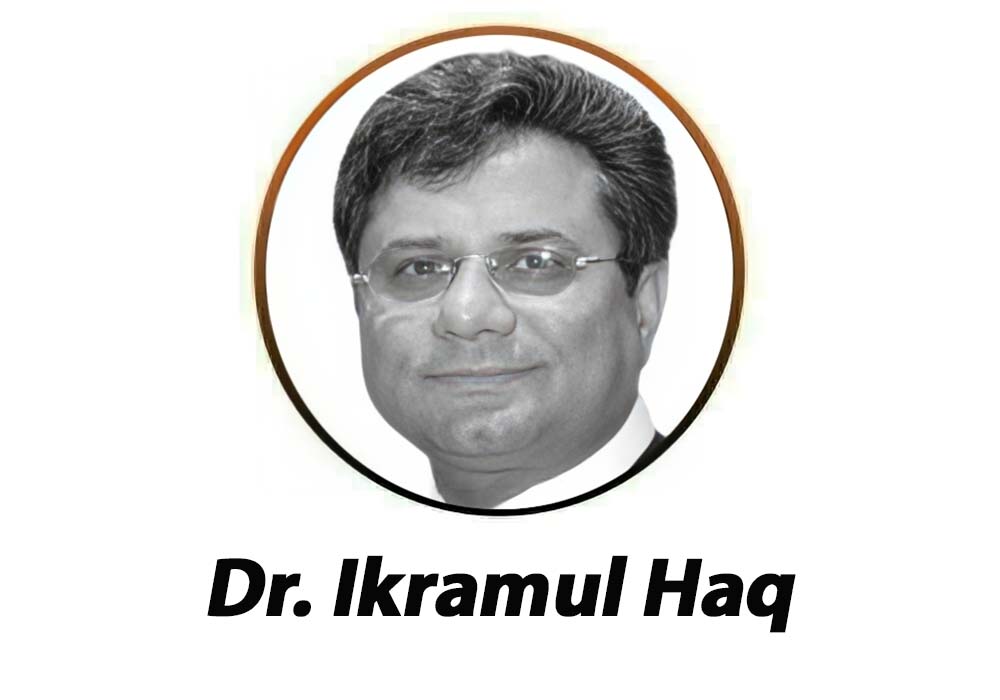
Dr. Ikramul Haq, Advocate Supreme Court, Adjunct Faculty at Lahore University of Management Sciences (LUMS), member Advisory Board and Visiting Senior Fellow of Pakistan Institute of Development Economics (PIDE), holds an LLD in tax laws. He was full-time journalist from 1979 to 1984 with Viewpoint and Dawn. He also served Civil Services of Pakistan from 1984 to 1996.

Similar Posts

  • Biodegradation of plastic- the way forward

    By Saman Aftab Since the world has deliberated a lot to find a workable solution of plastic pollution, it is imperative to underscore the significance of most promising eco- friendly solutions to curb the plastic menace. The non-degradable nature of synthetic plastics is contaminating terrestrial and aquatic eco systems. Moreover, the disastrous effects of microplastics (extremely tiny plastic pieces) on human nervous system development, hormonal balance and reproductive system are becoming evident with scientific research. Hence, plastic pollution has become a grave concern not only for the environment but also for human health. It is a well-documented fact that the current strategies to deal with disposing of synthetic plastic are not sufficient to get rid of this man made pollution. Landfilling is littering the water bodies as the leachate escaping from the landfills causes the contamination of water. Similarly, incineration (burning of plastic waste) leads to air pollution in turn causing several health hazard in the surroundings. Even, recycling of plastic seems to be highly expensive when dealing with enormous amounts of mix plastic wastes in developing countries like Pakistan. However, as a bioremediative strategy, biodegradation holds promising prospects. Biodegradation of plastic simply means the use of microorganisms (including bacteria and fungi etc.) that have the capability of degrading petroleum based plastic in such a manner that would render the synthetic plastic degraded in the environment. Such microbial strains are present ubiquitously in those environments where plastics are dumped such as landfills. The researchers have not only isolated such strains but also managed to produce genetically modified bacteria/fungi capable of easily degrading synthetic plastics. Even the microbial enzymes of such microorganisms have been employed for such purposes as to study the intricacies of the biodegradation process only to make it more effective in the future. Pakistan is one of the countries where the use and misuse of plastic allows the environment to host such microbial strains capable of decomposing plastic in abundance. Having keen interest in this topic, I myself have isolated and identified several bacterial and fungal strains in my research work of MPhil titled “Biodegradation of plastics by locally isolated microorganisms”. Moreover, I have contributed a chapter on “Role of microbes in microplastic removal and its health effect on human health” in a book titled “Advanced treatment technologies for the removal of microplastics in wastewater”. Similarly, I have authored another chapter on “The role of microbial enzymes in the degradation of plastics- a sustainable tool for waste management” in an Elsevier book titled “Plastic waste valorization”. Hence, in my humble opinion, the optimization of biodegradation process can be exploited in an industrial setup where synthetic plastics would be degraded in the same manner as biological/microbiological systems are used to treat industrial wastewater. The scientists around the world are working day and night to come up with innovative strategies of plastic waste removal without deteriorating our environment. China, for example is working to convert mix plastic waste into hydrogen fuel but that is too expensive for the time being. In our country we hear about the banning of single use plastic specifically polyethylene shopping bags from our policy makers on and off. However, its enforcement never takes into effect. In fact, since hundreds and thousands of people are associated with the industry of plastic production, it is not wise to disrupt this supply chain abruptly without providing people with other feasible options. The introduction of biodegradable plastic as an alternative is overrated. The biodegradable plastic has shown to last much longer in the environment than what it promises and its production cost makes it too expensive to replace conventional plastic in the market. Whereas, Biodegradation of plastic still offers much hope to tackle plastic pollution. The dearth of resources and governmental assistance is the only hindrance, otherwise Pakistan has the potential to streamline an effective plastic waste management plan pivoted around biodegradation and become a global leader in this regard. I request the authorities to pay attention and incentivize researchers to explore this area of research for national good in particular and international benefit in general. Even if the unlikely consensus on plastic production cap is reached, still the world will need to streamline the process of plastic waste management. And, out of all plastic waste management techniques including incineration, landfilling and recycling, biodegradation is the most ecofriendly process of getting rid of hazardous plastics. The governments all across the globe must encourage their researchers to explore plastic degrading microorganism and optimize the process of biodegradation to get effective outcomes. The writer has done MPhil in Microbiology from GCU Lahore

  • 276th Corps Commanders Conference highlights unifi…

    The 276th Corps Commanders’ Conference, chaired by Field Marshal Syed Asim Munir at the General Headquarters in Rawalpindi, brought together the Pakistan Army’s senior corps commanders to deliberate on national security, sovereignty, and the country’s complex geopolitical environment. The conference commenced with a Fateha for the Shuhada of the Armed Forces, personnel of the Law Enforcement Agencies, and civilians who lost their lives in the fight against terrorism, reaffirming the significance of their sacrifices for Pakistan’s security, unity, and resilience. The commanders also paid tribute to the fallen heroes and their families, acknowledging their enduring contributions to the nation. Field Marshal Syed Asim Munir, serving as Chief of Army Staff and Chief of Defence Forces, led the conference with a focus on national security and counterterrorism. His leadership has been appreciated by the military and the country’s political leadership, including the President and the Prime Minister, while also is a source of national pride. The conference highlighted ongoing efforts by the military leadership to strengthen Pakistan against internal and external threats and stated that these efforts have also received recognition from international leaders and diplomats for promoting regional diplomacy, peace, and stability, contributing to Pakistan’s international standing and diplomatic influence. A primary and dominating focus of the 276th Corps Commanders’ Conference was the comprehensive and exhaustive review of the country’s prevailing and evolving security environment. The forum expressed extremely serious and grave concerns over the continued and blatant use of territory that remains under the effective control of the Afghan Taliban regime. This territory, according to the military leadership, is being actively utilized by Indian-sponsored terrorist groups to orchestrate and launch attacks inside Pakistani territory. These groups, which include the notorious Fitna al Khawarij and the newly emerged Fitna al Hindustan, are allegedly being used as proxies to destabilize Pakistan. The commanders presented detailed intelligence briefings that outlined the specific routes, hideouts, and funding mechanisms being employed by these hostile elements. It was made unequivocally clear that lasting peace and sustainable stability in the entire South Asian region are contingent upon the immediate and effective prevention of the misuse of Afghan soil by these terrorist proxies. The conference affirmed with absolute clarity that the Afghan Taliban regime bears a direct, non-negotiable, and primary responsibility for ensuring that its territory is not used as a launchpad for attacks against its neighbors, particularly Pakistan. In a significant and indeed rare declaration that sent a strong message to the region, the forum reaffirmed Pakistan’s unequivocal and inherent right to defend its people against the menace of terrorism. The leadership announced that intelligence-based operations, commonly known as IBOs, would continue with even greater intensity and precision against these threats. Under the ambit of Operation Ghazab-lil-Haq, which is a comprehensive and aggressive counter-terrorism campaign, these operations will be meticulously planned and executed to target terrorist networks that are operating from Afghan territory. This signaled a clear and firm posture that Pakistan is prepared to take the fight to the enemy’s sanctuaries if diplomatic efforts and bilateral agreements continue to be violated with impunity. Beyond the realm of kinetic military operations and direct firefights, the conference underscored the absolutely critical importance of adopting a holistic, multi-dimensional, and comprehensive approach to the problem of counter-terrorism. The senior commanders stressed the immediate and pressing need for putting in place robust, transparent, and effective governance structures in the restive and formerly tribal areas of the country. These structures must be directed towards the rapid and efficient delivery of public services and the implementation of welfare initiatives. The objective is to win the hearts and minds of the local population, who have long been caught in the crossfire between the state and militant groups. The forum highlighted the urgent and indispensable need to dismantle the nefarious and symbiotic nexus that exists between terrorism and organized crime. This criminal-terrorist syndicate, they said, continues to thrive under the patronage of certain vested political interests and corrupt elements within the system. This acknowledgment is crucial because it recognizes the complex reality that sustainable peace cannot be achieved through military means alone, no matter how effective they are. It requires effective governance, the speedy completion of socioeconomic development projects, the establishment of public confidence in the integrity of state institutions, and the provision of swift justice. The conference’s heavy emphasis on this integrated and multi-pronged strategy reflects a mature, sophisticated, and nuanced understanding of the multifaceted nature of modern conflict. It also highlights the military’s recognition that a purely kinetic approach is insufficient and that a comprehensive national response, involving all pillars of the state and society, is the only viable path to lasting peace and prosperity. The forum also took very careful and deliberate note of the rapidly evolving strategic landscape, particularly the increased and sophisticated reliance on externally supported hybrid warfare and disinformation campaigns. This was identified as a new and dangerous front in the ongoing conflict. Following what it described as Pakistan’s comprehensive and decisive defeat inflicted on the enemy in the Mark-e-Haq, which was a major military and ideological battle, hostile elements have been forced to shift their tactics. These adversarial actors are now attempting to destabilize Pakistan through more insidious means. These include the widespread propagation of false propaganda, the state-sponsored financing of local proxies and militant groups, the manipulation of social media to create ethnic and sectarian divides, and the persistent efforts to sow discord among the different segments of Pakistani society. The conference strongly condemned all such forms of state-supported financing, facilitation, or sponsorship of subversive proxies. It underscored that any attempts to use these hybrid means to create internal unrest and destabilize the country would be countered with strategic clarity, institutional resilience, and an unshakeable firm resolve. This robust and proactive stance against hybrid warfare demonstrates the military’s acute awareness of the non-traditional threats facing the nation. It also shows the military’s preparedness to counter them effectively using both defensive and offensive measures in the information and cyber domains. By publicly recognizing and clearly articulating

  • The 4th Shusha Global Media Forum and Azerbaijan?…

    The 4th Shusha Global Media Forum themed “The Mission of the Media in Promoting Peace: Restoring Truth and Rebuilding Trust” was held in the city of Shusha, the Republic of Azerbaijan. More than 160 journalists and media representatives from 54 countries attended the forum, with participants from 30 international news agencies and 60 major media organizations. The forum gave journalists, media experts, editors and public officials a chance to come together and discuss how the media can help build a more peaceful and informed world. This is a very important forum, because it attracted attention to the growing role of Azerbaijan in the world. It was also the reflection of Azerbaijan’s remarkable development under the leadership of His Excellency President Ilham Aliyev. A few days back, Azerbaijan hosted World Urban Forum 2026, then Baku Energy Week 2026, and now the 4th Shusha Global Media Forum was held in Azerbaijan. The success rate and the widespread participation in all these international forums show that Azerbaijan is a trusted member of international community and is emerging as a key regional player. It is worth mentioning that the forum was held in Shusha, a city in Nagorno-Karabakh, Azerbaijan. The choice of holding the forum in Karabakh region is extremely significant. Thanks to the forum that journalists from around the world were able to see how the government of Azerbaijan managed to rebuild this war-torn region within just five years. The city of Shusha served as the symbol of renewal. The 4th Shusha Global Media Forum is important as it brought together voices from different countries to discuss the future of global media. The discussions focused on how the social media and news are changing. What new challenges are being faced by the journalists and media across the world and how all countries can work together to address these challenges. At the same time forum also explored how journalism is adapting to artificial intelligence, disinformation and declining public trust, with discussions focusing on responsible reporting, media ethics and international dialogue. It provided a great opportunity to journalists and media experts from across the globe to directly engage with the President of Azerbaijan and ask him questions directly. The forum highlighted how today’s media is being transformed by AI, digital communication, and the growing spread of misinformation. Participants also discussed how they can uphold principles of ethical journalism and ensure factual and accurate reporting in this era of technological advancement. They also discussed how they can make people trust the media more, in what ways media and governments should respond to false or misleading information. It should be noted that the experts highlighted both the challenges and opportunities presented by digital media and the artificial intelligence. When they discussed the misuse of AI, they also talked about how AI should be used responsibly in journalism and media. It shows the responsible attitude of both the participants and the leadership of Azerbaijan that they brought such important topic under discussion. The forum also underscored that media is not just for reporting events but it plays a pivotal role in building trust encouraging dialogue and promoting understanding between nations. The role of the leadership of Azerbaijan in hosting the Global Media Forum for the 4th time is highly commendable. Creating such an engaging international platform at a time when the global information environment is becoming more complex deserves immense praise. The forum also paved the way for cultural exchange, dialogue, and increased human connectivity as people from diverse backgrounds attended the event. The most interesting and the strongest feature of the Shusha Global Media Forum, I believe, is its openness to different viewpoints. It provides equal opportunity to all the participants to ask questions, share their experiences, give new ideas, and discuss pressing global issues in a professional environment. Such opportunities encourage honest conversations and result in some pragmatic ideas that can actually help address various challenges and fight disinformation. These discussions are very important as news travels faster than ever before and public trust in media remains a global concern. Another highlight of the forum was the use of artificial intelligence in journalism, how is AI both an opportunity and a challenge for the journalism. At the forum, experts discussed the role of AI in news production, fact-checking and content creation. They agreed that technology is helpful in improving efficiency but it can never replace human judgment, moral standards, and accurate reporting done by humans. The exchange of ideas on these topics reflected Azerbaijan’s readiness to host conversations on issues that are shaping the future of global communication. A particularly positive aspect of the event was the participation of media representatives from wide range of countries. All of them came together to discuss common challenges, exchange ideas and share knowledge. Such platforms, dialogues, and collaborations help reduce misunderstanding between societies. Professional connections are built and already existing networks are strengthened. Meanwhile, such platforms also open new areas of cooperation and create opportunities for future collaborations. It also allows participants to learn from one another’s experiences in dealing with rapidly changing media environments. When His Excellency President Ilham Aliyev addressed the forum he talked about peace, regional advancements, connectivity and the increasing importance of dialogue and communication. H.E.’s participation made it clear that Azerbaijani leadership will always support international discussions on media and global affairs. Moreover, the senior government officials were also present at the forum. Their presence demonstrated Azerbaijan’s efforts to maintain direct engagement with the international media community. With the passage of time, the Shusha Global Media Forum has evolved into a respected international platform for discussing the future of journalism and strengthening media cooperation. Its significance lies in the fact that it offers an opportunity to media professionals to come together and discuss and timely resolve the pressing challenges global media is facing. The continued success of the forum showcases Azerbaijan’s commitment to promoting dialogue, responsible journalism, and global engagement.

  • War hysteria: Insanity disguised as patriotism

    “Shall we put an end to the human race; or shall mankind renounce war?”— Bertrand Russell and Albert Einstein, The Russell–Einstein Manifesto, 1955 War hysteria sweeping the world shows nothing more than absolute insanity on the part of all belligerent parties. Humanity can explore distant planets, communicate across continents within seconds and build machines capable of imitating human intelligence, yet it still appears incapable of resolving disputes without bombing cities, starving populations and producing generations of traumatised children. There are people struggling with poverty, food shortages, unemployment, high inflation, disease and homelessness. Then there are their so-called leaders—some elected, some imposed, some in uniform and others protected by manufactured democratic legitimacy—who remain obsessed with gunfire, drones, missiles, nuclear warheads and weapons of mass destruction. This is not leadership. It is organised madness presented as patriotism. Look at Gaza. Nearly 1.9 million of its 2.1 million inhabitants remain displaced, many of them repeatedly, while restrictions and operational constraints continue to obstruct humanitarian relief. Families are pushed from one devastated neighbourhood to another, carrying whatever they can salvage. For them, “strategic operations” mean ruined homes, unsafe water, inadequate food, fractured hospitals and children learning the geography of survival before they learn the alphabet. Look at Ukraine. During the first six months of 2026, the United Nations verified 1,396 civilian deaths and 7,978 injuries—a 37 per cent increase over the corresponding period of 2025. June recorded the highest monthly civilian casualty total since April 2022. Yet the war continues to be discussed through maps, territorial percentages and weapon packages, as though the dead were merely inconvenient entries in a military balance sheet. Look at Sudan, where a contest for power has become a war against the population itself. About 19.5 million people face acute hunger, five million are at emergency levels and an estimated 825,000 children under five are expected to suffer acute malnutrition during 2026. Several areas remain at risk of famine while humanitarian agencies struggle for access and resources. The world can finance bullets that arrive on time, but food and medicine are eternally delayed. Now look at the ever-expanding Middle Eastern conflict. What began as confrontation involving Israel, the United States and Iran has steadily drawn other states into its orbit. The latest joint military strikes by the United States and Saudi Arabia against Iran-aligned armed groups operating in Iraq demonstrate how quickly regional conflicts acquire new participants and new frontlines. Iraq, itself struggling to preserve its sovereignty and internal stability, has once again become a battleground for rival powers. Every new military operation is justified as retaliation or deterrence, yet each one merely widens the geography of destruction and pushes peace still further beyond reach. The consequences are not confined to the combatants. Energy infrastructure, shipping routes and humanitarian supply corridors remain vulnerable, while the risks of slower global growth, renewed inflation and economic instability continue to rise. Once again, decisions taken in heavily guarded capitals are paid for by ordinary families thousands of kilometres away. That is the cruel arithmetic of modern warfare. The latest strikes in Iraq also expose another dangerous reality. Countries that once claimed merely to support one side diplomatically are now becoming direct military participants. Every additional state entering the conflict reduces the space for negotiation while increasing the possibility of miscalculation. History repeatedly demonstrates that wars rarely remain confined within the boundaries imagined by those who initiate them. They expand geographically, economically and morally, dragging into their vortex nations and populations that neither sought nor desired confrontation. A missile is fired in the Middle East and transport and electricity can become more expensive in Pakistan. A shipping route is blocked and food prices rise in poor importing countries. Oil installations are attacked and workers whose wages were already inadequate are advised to “adjust” their household budgets. The poor neither declare wars nor negotiate ceasefires. They merely finance wars through taxes, inflation and deprivation—and then provide their bodies. The scale of this moral collapse is evident from global priorities. Military expenditure reached a record US$2.887 trillion in 2025, marking the eleventh consecutive annual increase. In the same world, approximately 645 million people faced hunger during 2025 and around 2.7 billion could not afford a healthy diet. There is no global shortage of money. There is a shortage of conscience, political courage and human decency. Governments insist that military expenditure ensures security. Security for whom? What security does a mother possess when she cannot feed her children? What security is enjoyed by an unemployed graduate, a patient unable to afford medicine or a farmer crushed by fuel and fertiliser prices? Of what use are supersonic aircraft to citizens living without clean water, functioning schools or basic healthcare? Even more frightening is the renewed worship of nuclear weapons. At the beginning of 2026, the world possessed an estimated 12,187 nuclear warheads. About 9,745 were held in military stockpiles for possible use, while between 2,100 and 2,200 deployed warheads remained on high operational alert. Leaders speak of deterrence, escalation ladders and tactical nuclear options as though they were discussing pieces on a chessboard rather than devices capable of extinguishing cities and contaminating generations. The language of war has also been deliberately sanitised. Bombing becomes an “operation”; dead civilians become “collateral damage”; starvation becomes “food insecurity”; demolished homes become “infrastructure losses”; and children torn apart by explosives become “unintended consequences.” Such expressions do not explain reality. They hide it. They allow those ordering violence to sleep peacefully while others search for their loved ones through rubble. Responsibility in every conflict is not necessarily equal. International law distinguishes aggression from self-defence, occupation from resistance and military targets from civilians. But no invocation of history, religion, national security or territorial ambition can justify treating innocent human suffering as politically useful or morally irrelevant. Every party that deliberately attacks civilians, blocks essential relief, uses starvation as leverage or prolongs war for domestic political survival must be held accountable. Citizens must also confront their own complicity. War hysteria cannot survive without

  • The Age of Consumerism              …

    Inflation is at its peak all around the world, while some in one part of the world cannot afford clean fresh water, others are buying a cup of coffee worth more than 10 dollars just to meet their aesthetics for an instagram story. It has become a necessity to upgrade their phones each year as apples launch new versions, or to eat at fancy cafes just to take pictures of the food even if their rent is not due. These are the outcomes and aftermaths of the rise of social media trends.   A new occupation of being an online influencer has emerged. Where a decade ago A-list celebrities were paid to promote products, now the same can be done through influencers (which from a marketing point of view is a lot cheaper and faster for companies). An influencer makes a 30 second video of persuasively advertisementing customers which allows them to make sufficient amounts of income. Paradoxically  they may even be neglectful of the product they are branding being safe or useful. Thus, common people with normal 9-5 jobs are falling for these traps online.   Millennials and Genz, both have been found to indulge in these unnecessary shopping habits arising from the online advertisements of influencers. The lives of influencers may seem perfect. Contradictorily someone promoting a skin care treatment may have genetically clear skin, others promoting health and fitness programmes may in reality live an unhealthy lifestyle. Little by little, bit by bit people who scroll on social media platforms like instagram and facebook are convinced to purchase needless items with no useful impact in their lives.   Gluttony is regarded as one of the seven deadly sins. The newly emerged habit of online shopping is feeding into it. Young adults nowadays are often in debt, however not the usual student debt they owe to their colleges- but the ones they owe to the credit card companies whom they have failed to pay back for the haphazard jumble of products they have purchased while not being cautioned enough. Most of these purchases are done to fit in a trend and are often to please the society they are around rather than personal desires.   One after another, the oligarchs set up traps for the world and yet again and again we have been seemingly fallen for it. May it be big fast food chains labeling every ultraprocessed junk as “high in protein” whilst hiding the fact that the same products are also high in processed fats and preservatives or having addictive ingredients which release dopamine and makes the buyer destined to repurchase.   People often call this impulse buying “convenient” for it is delivered on doorsteps. In some cases it may be accuarte, but in truth it is another method of making people becoming indolent and shiftless. A 10 minute walk to the supermarket is avoided when apps like doordash are introduced to deliver groceries to doorsteps- the same 10 minute walk which is without a debate must for all ages. Not only is this extremely harmful for the human body physically but it has its dangerous impacts on psychological health leading to high profile cases of depression and isolation.   These habits start slow and seem innocent, until they become addictions and empty bank accounts while also destroying an individual’s ability to live a life in which pleasing others is not a priority. This trend does not seem to stop anytime soon- nevertheless it is expanding endlessly in all countries, cultures and environments. Even in this cycle the rich gain tremendously while the poor pay unconsciously thinking that their lives are improving. This is modern slavery where chains are replaced by computers given to people in their hands and control their lives through it.

  • Celebrating freedom through zero poverty

    On August 14, 2026 the independence day was celebrated with great fanfare. This year a Norwegian team was also here to foster business opportunities. Norway is one of the five Nordic Welfare states (Norway, Finland, Sweden, Denmark, Iceland). Foreign Minister Espen Barth Eide arrived in Islamabad on August 13, 2026 on a commercial flight. He carried his own luggage. The embassy staff received him and drove him to his hotel. He then held meetings with the foreign minister, prime minister and the chief of defense forces. Being a welfare state, every citizen there is covered from cradle to grave, with no worries. No one is left out to rot in the cold. The Government Pension Fund Global of Norway is valued at $2.39 trillion. Surplus oil and gas revenues are invested to support public services and pensions. During my days at the Literacy Commission, we received a telephone call from the Embassy of Norway. A visiting delegation wanted to meet the Director of the Punjab office. As adviser I was present in the meeting. We were surprised by their agenda. About 40,000 Pakistanis reside in Norway who get married to girls of their own village. These brides then join their husbands to live in the new land. The embassy was very keen to open a school in their home town to educate and train them to assimilate with the Nordic way of life. The purpose was total inclusion with no exclusion. It reminded me of Allama Iqbal’s verse, ‘Har Fard Hai Millat Kay Muqadar Ka Sitara’ (Every individual is the rising star of the nation). No one can be left behind to drag down the nation. While freed colonial states like India and Pakistan have failed to overcome the menace of poverty, China has succeeded. It calls for major soul searching. While the People’s Republic of China (PRC) is on track to dominate the world, we lag behind. Human development is at the core of the Chinese development model. Education and health are taken very seriously. The state acts like a mother; it facilitates its citizens. Resources are protected and spent on the welfare of the people. The PRC has a single party system that focuses primarily on the economic emancipation of the entire nation, not only of a selected few. In recent years India has advanced economically, but poverty persists mainly because of the uneven sharing of resources and opportunities. Norway presents a model of harmony where human freedom and economic growth have been balanced. In the original Pakistan Peoples Party manifesto, it was termed Mixed Economy or Islamic Socialism. While some basic industrialization was needed in the country, for which SOEs (State Owned Enterprises) were created, the nationalization of running industries did not sit well. Perhaps the loss of C.M. Latif’s BECO was the biggest loss, which should have been reversed through de-nationalization. Dr Muhammad Amjad Saqib of the Akhuwat Foundation believes that poverty can be overcome through freedom of mind and easy access to financing. His foundation provides interest-free loans while running a residential university with no fee. The Indus Hospital has a similar model of providing medical coverage free of cost. Despite these private efforts, poverty remains a major challenge for Pakistan. Equitable distribution of resources requires a major reduction in state expenses. Like time, public money has to be carefully handled, as it is always in short supply. Flamboyance, fanfare and protocol consume resources which could be put to better use. Freedom for all comes through sharing and hand holding, not sloganeering. I am not sure if the visiting foreign minister was impressed or concerned by our style of celebrating our independence. Norwegian investments will be a test of the success of his visit. But the poor fellow had to carry his own luggage on the way back and take a taxi upon arrival to reach his residence unnoticed.

Leave a Reply

Your email address will not be published. Required fields are marked *