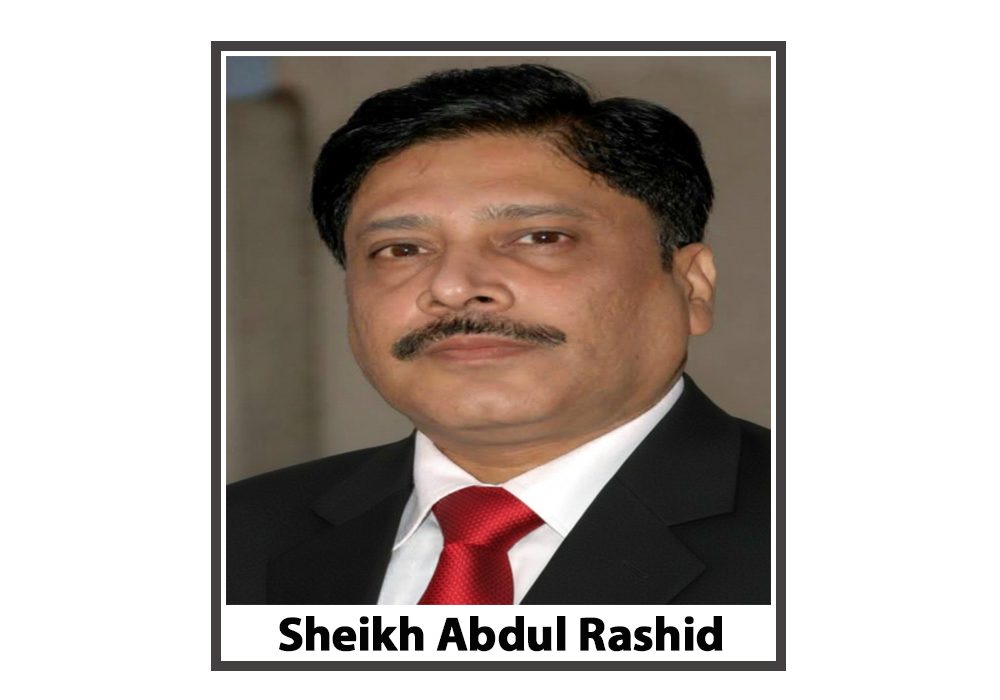
celebrating freedom through

Celebrating freedom through zero poverty

On August 14, 2026 the independence day was celebrated with great fanfare. This year a Norwegian team was also here to foster business opportunities. Norway is one of the five Nordic Welfare states (Norway, Finland, Sweden, Denmark, Iceland). Foreign Minister Espen Barth Eide arrived in Islamabad on August 13, 2026 on a commercial flight. He carried his own luggage. The embassy staff received him and drove him to his hotel. He then held meetings with the foreign minister, prime minister and the chief of defense forces. Being a welfare state, every citizen there is covered from cradle to grave, with no worries. No one is left out to rot in the cold. The Government Pension Fund Global of Norway is valued at $2.39 trillion. Surplus oil and gas revenues are invested to support public services and pensions.

During my days at the Literacy Commission, we received a telephone call from the Embassy of Norway. A visiting delegation wanted to meet the Director of the Punjab office. As adviser I was present in the meeting. We were surprised by their agenda. About 40,000 Pakistanis reside in Norway who get married to girls of their own village. These brides then join their husbands to live in the new land. The embassy was very keen to open a school in their home town to educate and train them to assimilate with the Nordic way of life. The purpose was total inclusion with no exclusion. It reminded me of Allama Iqbal’s verse, ‘Har Fard Hai Millat Kay Muqadar Ka Sitara’ (Every individual is the rising star of the nation). No one can be left behind to drag down the nation.

While freed colonial states like India and Pakistan have failed to overcome the menace of poverty, China has succeeded. It calls for major soul searching. While the People’s Republic of China (PRC) is on track to dominate the world, we lag behind. Human development is at the core of the Chinese development model. Education and health are taken very seriously. The state acts like a mother; it facilitates its citizens. Resources are protected and spent on the welfare of the people. The PRC has a single party system that focuses primarily on the economic emancipation of the entire nation, not only of a selected few. In recent years India has advanced economically, but poverty persists mainly because of the uneven sharing of resources and opportunities. Norway presents a model of harmony where human freedom and economic growth have been balanced. In the original Pakistan Peoples Party manifesto, it was termed Mixed Economy or Islamic Socialism. While some basic industrialization was needed in the country, for which SOEs (State Owned Enterprises) were created, the nationalization of running industries did not sit well. Perhaps the loss of C.M. Latif’s BECO was the biggest loss, which should have been reversed through de-nationalization.

Dr Muhammad Amjad Saqib of the Akhuwat Foundation believes that poverty can be overcome through freedom of mind and easy access to financing. His foundation provides interest-free loans while running a residential university with no fee. The Indus Hospital has a similar model of providing medical coverage free of cost. Despite these private efforts, poverty remains a major challenge for Pakistan. Equitable distribution of resources requires a major reduction in state expenses. Like time, public money has to be carefully handled, as it is always in short supply. Flamboyance, fanfare and protocol consume resources which could be put to better use. Freedom for all comes through sharing and hand holding, not sloganeering. I am not sure if the visiting foreign minister was impressed or concerned by our style of celebrating our independence. Norwegian investments will be a test of the success of his visit. But the poor fellow had to carry his own luggage on the way back and take a taxi upon arrival to reach his residence unnoticed.

Similar Posts

  • Colors of the Rain, Soul of Thar

    Thar a name that instantly evokes images of thirst, golden dunes, drought, Marvi, peacocks, the Karoonjhar Hills, rainwater ponds, love, and endless waiting. More than Pakistan’s largest desert, Thar is a living testament to patience, simplicity, love, and humanity’s timeless bond with nature. Here, every moment of life is connected to the sky. Even as the people of Thar walk upon the earth, their eyes remain fixed on the heavens, for their livelihood, livestock, crops, and happiness all depend upon the mercy of the clouds. As if giving voice to the very heart of Thar, Shaikh Ayaz wrote: “Whether it rains or not, Thar remains Thar; But when it rains, fresh blood begins to flow through every vein of life.” The greatest festival of Thar begins with the arrival of the rains. When the first raindrop falls upon the sun-scorched sands, the fragrance rising from the earth carries centuries of longing. It is a scene beyond the power of words. It feels as though the heart of the desert begins to beat again, every grain of sand takes a breath, and every withered plant offers gratitude to the Creator. Shah Abdul Latif Bhittai immortalized Thar through the voice of Marui in his poetry. To Marui, the sands of Thar were more precious than gold because they represented her identity. Shah’s message still echoes across every dune, village, and heart in Thar—that love for one’s homeland is the truest expression of human identity. Whenever Shaikh Ayaz wrote about Thar, his words carried the music of nature itself. For him, the monsoon was not merely a season—it was a revolution. A revolution that transformed barren sands into gardens, thirst into hope, and sorrow into joy. For most of the year, the people of Thar struggle against drought, scorching heat, water scarcity, unemployment, and poverty. Thousands of families migrate to irrigated regions in search of work. Women walk miles every day carrying water. Without grazing land, livestock become weak, and many young people leave for distant cities in search of livelihoods. Yet the moment the monsoon clouds appear on the horizon, lamps of hope begin to glow in every heart. Rain does not merely bring water it opens a new chapter of life. Within days of rainfall, the endless dunes transform into carpets of emerald green. The songs of peacocks, the calls of cuckoos, herds of goats, caravans of camels, and the fragrance of wildflowers carried by the breeze create a symphony that no modern city can ever reproduce. Rain-fed ponds fill with fresh water. Children leap with joy. Herders lead their animals to lush grazing lands. Thari women, dressed in brilliantly colored traditional attire, sing ancient folk songs. The entire landscape becomes a celebration of life. If there is one place where nature reveals its complete magnificence during the rainy season, it is the Karoonjhar Hills of Nagarparkar. When dark monsoon clouds embrace the granite peaks, seasonal waterfalls cascade down the rocks, and sparkling streams descend like ribbons of silver, it seems as though nature herself is painting with every color imaginable. Karoonjhar is more than a mountain it is a symbol of Thar’s history, culture, folklore, and resilience. Standing for centuries, these ancient hills have silently witnessed the rise and fall of civilizations, kings, ascetics, and the enduring stories of the people of the desert. During the rainy season, the famous Gaddi Hill in Mithi transforms into a lively cultural gathering. Families arrive in large numbers to enjoy the pleasant weather. Children delight in swings, visitors savor local cuisine and tea, artisans display handmade crafts, musicians perform on the rabab and algoza, and the warm hospitality of the people of Thar leaves every guest feeling at home. The construction of better roads from Mithi to Nagarparkar has significantly increased the number of visitors, yet much more remains to be done to develop tourism sustainably. Hidden beneath the sands of Thar lies a civilization thousands of years old. The Bhodesar Temples, Gori Temple, Virawah, ancient Jain monuments, historic wells, and old trade routes all stand as silent witnesses to the region’s glorious past. Sadly, many of these invaluable heritage sites still lack proper protection. Time, harsh weather, and neglect continue to erode them. If preserved according to international standards, Thar could become one of South Asia’s most remarkable cultural tourism destinations. However, alongside the beauty brought by the rains, another reality is emerging one that may threaten Thar’s future. Illegal occupation of natural grazing lands, the conversion of sand dunes into agricultural fields, and increasing environmental degradation are disturbing the delicate ecological balance of the desert. Livestock farming has always been the backbone of Thar’s economy. If natural grazing lands disappear, thousands of families will lose their primary source of income. Development that destroys nature is not progress—it is an injustice to future generations. Over the past two decades, climate change has increasingly affected Thar. Irregular rainfall, sudden cloudbursts, prolonged droughts, and extreme heat are steadily altering the region’s fragile ecosystem. The people of Thar still lack many basic necessities. Clean drinking water, quality healthcare, education, and employment opportunities remain scarce in many areas. While the rains temporarily ease their hardships, lasting solutions depend upon thoughtful and sustainable development. Tourism That Can Transform the Economy Thar possesses extraordinary tourism potential. Its breathtaking landscapes, rich cultural heritage, folk music, handicrafts, religious harmony, the majestic Karoonjhar Hills, desert safaris, camel caravans, and traditional cuisine offer experiences unlike anywhere else in the world. To unlock this potential, several important steps are needed: Historic and cultural heritage sites across Thar and Sindh should be preserved and restored, recognizing them not merely as relics of the past but as the identity of future generations. Modern visitor information centers should be established at major historical and cultural attractions to educate tourists about the region’s history, traditions, and natural beauty. Local youth should receive professional training as tour guides, creating employment opportunities while enabling them to confidently present their homeland’s heritage to the world. Tourism should be developed

  • From Mediator to Ally: Pakistan’s Balancing …

    In the space of a single year, Pakistan has moved from the periphery of Middle Eastern diplomacy to its center. Prime Minister Shehbaz Sharif and army chief Field Marshal Syed Asim Munir have positioned the country as both a mediator between Washington and Tehran and, more recently, a formal treaty partner of Saudi Arabia and Turkey. The result  the Makkah Joint Defence Agreement, signed on August 7 in Islam’s holiest city  marks one of the most consequential shifts in South Asian foreign policy in decades. Yet it also raises hard questions about who is really steering Pakistan’s course, and at what long-term cost.   A war that reshaped the region   The backdrop is a war between the United States and Iran that erupted on February 28, drawing in Saudi Arabia, the Gulf states, Iraqi militias and Yemen’s Houthi movement, and disrupting roughly a fifth of the world’s seaborne energy supplies through the Strait of Hormuz. Missile and drone exchanges reached Saudi cities, unsettling a region that had spent years trying to de-escalate after the 2015 nuclear deal’s collapse.   Pakistan, one of the few states with working channels to both Washington and Tehran, stepped into the gap. Sharif’s government hosted preliminary contacts that produced the so-called Islamabad Memorandum, under which Iran signalled it would not pursue nuclear weapons  a pledge it had already made under the Nuclear Non-Proliferation Treaty and the 2015 accord  in exchange for a mechanism allowing it to dilute stockpiles of highly enriched uranium. Iranian President Masoud Pezeshkian later thanked Islamabad for its “constructive engagement” in securing a ceasefire and agreed to send negotiators to further talks in the Pakistani capital. Analysts at the Washington-based Stimson Center have noted that Munir personally staked considerable political capital on the diplomacy, given how easily it could have collapsed.       The Makkah pact   That mediating role fed directly into last week’s agreement. Saudi Arabia, repeatedly struck during the war by Iranian missiles and by Tehran-aligned forces in Yemen and Iraq, had already signed a bilateral defence pact with Pakistan in September 2025  struck, notably, just over a week after an Israeli strike on Hamas negotiators in Doha rattled Gulf capitals’ confidence in American security guarantees. The Makkah agreement extends that arrangement into a trilateral pact with Turkey, declaring that an armed attack on any one of the three signatories will be treated as an attack on all.   Pakistani officials describe the pact as purely defensive. Foreign Minister Ishaq Dar said this week it was “not directed against any country” and remained open to other regional states. President Asif Ali Zardari called it a reflection of “shared resolve for peace and security,” while Sharif credited Munir’s “tireless efforts” in securing an arrangement he said had been years in the making. For Riyadh and Ankara, the pact offers a hedge against dependence on any single outside power at a moment when American commitments to the region look less certain than they once did. For Pakistan, it offers closer ties with two wealthy allies, a symbolic role as guardian of Islam’s holiest sites, and outsized influence for a country whose economy remains fragile.   Praise, and pointed scepticism   The agreement has been celebrated in much of Pakistan’s domestic media as evidence that the country’s leadership  civilian and military alike  is finally translating decades of geopolitical positioning into tangible strategic weight. Supporters point to a similar dynamic in May, when a brief but intense military confrontation with India ended within days, after which the government promoted Munir to the rare, largely ceremonial rank of Field Marshal, only the second officer in Pakistan’s history to hold it.   But that same promotion has drawn sharp criticism from analysts who see it as part of a broader consolidation of power by the military at the expense of elected institutions. Munir, appointed army chief in November 2022, has presided over a period in which  according to critics including jailed former prime minister Imran Khan’s supporters  courts, the media and Sharif’s own coalition have operated increasingly under military direction, a system some commentators have dubbed a “hybrid regime.” The Middle East Institute has described Munir’s elevation as “a thunderous declaration of the military’s unassailable supremacy,” while other analysts note that his growing role in foreign and economic policy  well beyond the traditional remit of an army chief  blurs the line between civilian governance and military command in a country with a long history of that line collapsing altogether.   What comes next   None of this diminishes the immediate diplomatic achievement: a ceasefire process that, however fragile, has held; a new pact that binds three influential Muslim-majority states more closely together; and a Pakistan that finds itself, for now, indispensable to great-power diplomacy in a region convulsed by war. Whether that translates into durable stability  for the Gulf, for the broader Middle East, or for Pakistan’s own democratic institutions  remains an open question. The coming months, as the Islamabad talks resume and the Makkah pact’s practical implications become clearer, will test whether this new era represents a genuine diplomatic breakthrough or a further tightening of military control dressed in the language of strategic necessity.

  • Change we must

    In a world driven by technology, only change is permanent. Change we must, but how? Transition from one system to another is perhaps the biggest challenge that we have not been able to cope with. Half-baked solutions with underage players cannot deliver. Reminds me of Einstein’s famous quote: “We cannot solve our problems with the same thinking we used when we created them.” Steve Jobs, one of the greatest technologists of the 21st century, went even further by saying: “Either lead or get out of the way.” A few years back I was doing some research on universities and their impact on setting the course of nations. Syed Ahmed Khan’s Aligarh Muslim University stood out. It produced the Change Managers who not only led the freedom movement but also had the capacity to sustain it. The Islamic Republic of Pakistan (IRP) desperately needs such individuals who can understand and then manage the needful. In the year 1875 he founded the MAO College (Mohammadian Anglo Oriental College) which later grew into a university in the year 1920. He passed away in 1898 but the institution grew. Later on, Allama Iqbal led the movement, and finally it was Muhammad Ali Jinnah who succeeded in carving a new homeland in August 1947 for the Muslims of the Indian Subcontinent. Unfortunately, he did not live long enough to lay the foundations of the new state, but he did leave clear guidelines for the inherited establishment to follow (Armed Forces, Bureaucracy). After taking over in October 1999, Pervez Musharraf created a think tank called the National Reconstruction Bureau (NRB). Headed by Lt. Gen. Tanvir Naqvi, it was located in the Chief Executive (CE) secretariat. The task was to design and execute political and administrative reforms in the country. I was invited to give my input. Naqvi Sb was very confident about delivering meaningful change. His main focus was on devolution of power. As a student of management, I asked him a simple question: “Who will implement his plan?” Bureaucracy, of course, was his quick reply. He did not have an answer to my second concern: “Why will they implement a plan which reduces their power?” He then decided to get rid of me by saying if I wanted to discuss implementation details, I should go to the third floor to the CE’s office. Finally, he stepped down and was replaced by a young novice who lacked the experience and clout to deliver meaningful change. Then there was another initiative called the National Commission for Human Development (NCHD), led by a pediatrician from a small town in Oregon. The worthy Dr assured the CE that he would manage funds from abroad while the local expenses were to be provided by the Government of Pakistan (GOP). Various centers were established across the country and staff recruited. While GOP provided the internal resources, the external help never came despite fundraising efforts abroad. The CE was convinced that the two sectors were well covered, but they were not. Finally, NCHD became a liability and was shut down and the staff laid off. During my term as Chairman, Pakistan Science Foundation (PSF), I lobbied for technocrats to head technical ministries, which was not well received by the powers that be. Commercialization and application of research is the biggest challenge faced by the R&D sector of the country. When I was denied an extension after the completion of my term, I paid a farewell visit to the Secretary MOST (Ministry of Science and Technology). It was a friendly meeting; the Secretary appreciated my work but complained that I did not follow his guidelines. While leaving, he pointed at the board where the names of his predecessors were written. I still remember his words: “Only our names make it here.” He did not like my spontaneous response: “Time will tell,” and it did. My lobbying prevailed; a retired Chairman of PAEC (Pakistan Atomic Energy Commission) replaced him. Though he had no commercial background, I decided to guide and support him. He recommended major investments in creating public sector entities like HMC III, run by PAEC, for meeting their equipment needs. At best, only pilot plants were viable for transfer of technology from laboratory to industry. He was unable to get the funds. As such, his term ended with no major breakthrough, and business as usual continued. Pakistan has a federal structure of governance. Federating units are diverse with differing needs. I am in favor of devolution, but the task on hand is not simple. The forces of status quo are too entrenched. Change Managers are needed at all levels. Complexities have to be understood and managed. There has to be consensus on the road map. Islamabad has an archive of failed plans. The same mistakes should not be repeated again. The first challenge is to find qualified individuals with solid re-engineering experience to lead the crusade. Einstein and Jobs were two brilliant brains of their times; we must value their outlook to move forward and avoid chaos and confusion. Oversimplification of the task at hand must be avoided.

  • Pakistan’s Courts Are Running Out of Time

    By Qashf Aizdi Justice delayed is justice denied. This phrase has become almost cliché in Pakistan and it unfortunately remains painfully true for millions of litigants who are waiting for their day in court. Every year hundreds of new cases are filed while thousands remain undecided and as a result courtrooms continue to grow more congested and hearings become more infrequent. The unfortunate consequence is that justice moves further out of reach. Time is perhaps the only thing Pakistan’s justice system can no longer afford to lose. The scale of the crisis is reflected in the numbers. According to the Judicial Statistics of Pakistan 2023, more than 2.25 million cases remain pending before courts of Pakistan. During the same year, 4.48 million new cases were instituted while 4.41 million were disposed of, resulting in a 5 percent increase in the overall backlog. The district judiciary alone accounts for 82 percent of all pending cases. With just over 3,100 working judges and judicial officers, each is responsible for more than 700 pending cases, even before accounting for the thousands of new cases filed every year. These figures do not suggest that Pakistan’s judges are idle; rather, they point to a justice system struggling to keep pace with an ever-growing caseload. Civil disputes in Pakistan can often take 10 to 15 years and in some instances even longer, before reaching its conclusion. Court proceedings are routinely delayed by repeated adjournments, cumbersome procedures, paper-based case management and multiple tiers of appeal. Difficulties in serving notices, delays in recording evidence and frequent adjournment requests often leave litigants waiting months before their cases are heard again. Additionally, the consequences of delayed justice extend beyond the courtroom. By the time a case is finally decided, litigants find themselves in a morass of mounting legal costs, lost opportunities and prolonged uncertainty. Every adjournment adds to the financial and emotional burden borne by litigants. A favorable judgment delivered after years of litigation can never fully restore the time, financial stability or peace of mind that has already been obliterated. Article 37(d) of the Constitution of Pakistan obliges the State to ensure inexpensive and expeditious justice. Yet, for many litigants, this constitutional promise often rings hollow. As mounting caseloads continue to overwhelm the judiciary, lengthy delays have become an accepted and vexatious feature of the legal system rather than an exception. Justice that arrives years too late often fails to provide meaningful relief. The immediate explanation is ostensibly straightforward; the number of judges is insufficient to handle the growing caseload. Pakistan has one of the lowest judge-to-population ratios in the region, leaving judges responsible for hundreds and often thousands of matters. Yet the shortage of judges tells only part of the story. Addressing this crisis requires more than appointing additional judges; it demands a more comprehensive approach to resolving disputes. One such reform lies in the greater use of Alternative Dispute Resolution (ADR). Cases can be resolved out of court using processes like mediation and arbitration, whereby judges can focus on cases which require formal adjudication. Consequently, ADR works in conjunction with the courts in solving disputes outside of court. The potential of ADR is perhaps best illustrated by the Morgah Valley dispute. Despite taking over 42 years to be settled via litigation, the same case took only two months to settle after being referred to mediation. Though not all disputes are suitable for mediation, this case is an example of the value that comes with the application of ADR at the right time. More importantly, it shows that timely justice is not an impossible ideal but an achievable one when the right mechanisms are used. However, for countless litigants, delay remains the norm as the judiciary continues to grapple with overwhelming caseloads. Repeated adjournments leave litigants facing prolonged uncertainty and growing frustration. Cases pass from one generation to the next and some litigants never live to see the final outcome of disputes they initiated and fought for. Justice should not become an inheritance passed from parents to children. The longer that reform is postponed, the greater the cost to litigants, businesses and public confidence. Pakistan’s courts are running out of time and so are the people waiting for justice. If Pakistan is serious about fulfilling the constitutional vision embodied in Article 37(d) of the Constitution, reducing judicial delays can no longer remain an aspiration, it must become a national priority. Reforming the justice system will require efficient case management, greater use of appropriate dispute resolution mechanisms and a collective commitment to ensuring that justice is delivered when it is needed most. Until then, Pakistan’s courts will continue to run out of the one resource they cannot recover: time.  

  • Fatima Jinnah: Madar-e-Millat

    In the story of Pakistan’s creation, certain names shine with a brightness that time cannot dim. Quaid-e-Azam Muhammad Ali Jinnah stands as the founder of the nation, but standing quietly, resolutely, and often invisibly beside him for over two decades was his younger sister, Fatima Jinnah. History remembers her as Madar-e-Millat, the Mother of the Nation, a title she earned not through political office or public spectacle, but through an entire life of sacrifice, loyalty, intellect, and quiet strength. She was a woman decades ahead of her time, a qualified dental surgeon, a fiercely independent thinker, a stylish and modern presence in gharara and sleeveless blouse, and a woman who chose singlehood not out of misfortune but out of conviction. Her life offers Pakistani women today a template of dignity, purpose, and self-possession that remains as relevant now as it was in the twentieth century. Born on July 30, 1893, in Karachi, Fatima Jinnah grew up in a household that valued learning, even when it was unusual for girls of that era to pursue higher education. She enrolled at the University of Calcutta and earned a degree in dental surgery from Dr. R. Ahmed Dental College, becoming one of the first Muslim women in South Asia to qualify as a dentist. In 1923, she opened her own dental clinic in Bombay. This was no small achievement. At a time when most women of her class and background were confined to domestic roles, Fatima Jinnah built a professional identity through her own intellect and discipline. Her clinic flourished, and she earned both financial independence and social respect as a successful, self-made professional woman. She was, in every sense, a pioneer of women’s participation in modern professions in the subcontinent. Fatima Jinnah’s life took a defining turn following the death of Ruttie Jinnah, the Quaid’s wife, in 1929. Ruttie’s passing left both Muhammad Ali Jinnah and his young daughter Dina in a state of profound grief and vulnerability. It was at this moment that Fatima made a choice that would alter the course of her own life entirely, she closed her thriving dental practice and moved in with her brother to manage his household, raise Dina, and become his constant companion and confidante. This decision deserves to be understood not as a passive act of familial duty, but as a deliberate and enormous personal sacrifice. She was a woman who had built something of her own, a career, an income, an identity outside of any man’s shadow, and she set it aside willingly. From that point onward, she devoted herself entirely to supporting her brother’s political mission, managing his correspondence, organizing his household, accompanying him on tours across India, and providing the emotional steadiness that allowed him to focus on the arduous struggle for Pakistan. She sat beside him in All India Muslim League sessions, engaged with women’s wings of the movement, and became, in effect, his closest advisor on personal and even political matters. Few sacrifices in the history of the Pakistan Movement are as understated yet as consequential as this one. Fatima Jinnah’s devotion did not waver even after Pakistan was achieved. She remained with her brother through the exhausting, health-depleting years of his final illness. As the Quaid battled tuberculosis while simultaneously trying to steer a fragile new nation through its most turbulent infancy, it was Fatima who nursed him, traveled with him to Ziarat in his final days, and stayed resolutely at his bedside. When Muhammad Ali Jinnah breathed his last on September 11, 1948, Fatima Jinnah was there, not as a bystander, but as the one who had walked every step of that difficult journey with him. Her presence at his deathbed was the culmination of nearly two decades of unwavering companionship, sacrifice, and quiet strength. What makes Fatima Jinnah’s legacy even richer is the manner in which she carried herself. She was educated, articulate, and thoroughly modern in her outlook, yet she remained rooted in her cultural identity. She was famously elegant in her choice of dress, often seen in a gharara paired with a sleeveless blouse, a look that exuded both grace and quiet confidence. She wore her modernity with the same ease with which she wore her dupatta, never feeling the need to choose between tradition and progress. In photographs from that era, she appears composed, dignified, and utterly self-assured, a woman entirely comfortable in her own skin. Equally striking was her decision never to marry. In a society where marriage was, and often still is, treated as the singular measure of a woman’s worth and completeness, Fatima Jinnah chose a different path, not out of compulsion or circumstance, but by her own free will. She dedicated her life to her brother, to her country, and to her own principles. Later in her life, she also emerged as a formidable political figure in her own right, contesting the 1965 presidential election against General Ayub Khan and becoming a symbol of democratic resistance for a generation of Pakistanis. Fatima Jinnah’s life is not simply a chapter in a history book; it is a living lesson for Pakistani women today. She demonstrated that a woman could be professionally accomplished and personally devoted, modern in appearance and deeply principled in character, unmarried by choice and yet utterly complete as a person. She showed that sacrifice does not diminish a woman’s strength, it can, in fact, define it. In an age where women are still often measured by narrow societal expectations, Fatima Jinnah’s example urges us to reclaim our own definitions of dignity, purpose, and self-worth. As Pakistani women, we owe it to ourselves to emulate not merely her style, the elegant gharara, the graceful bearing but the substance behind it; her education, her independence, her unwavering integrity, and her refusal to be defined by anyone else’s expectations. Madar-e-Millat did not simply stand beside the founder of a nation; she stood as a model for what a Pakistani woman could be, then, and now.

  • Mental Health and Elite Universities: The Mounting…

    Bio: Hamza Tareen is a student at LUMS majoring in Political Science, with a keen interest in philosophy and theology. ‘I am utterly overwhelmed; the deluge of quizzes is beyond my capacity,’ my friend slowly sighed as his head drooped in exhaustion. Students across the country nurse dreams of pursuing higher education in premier institutes such as the likes of LUMS or IBA. They navigate the rigorous selection process, pay exorbitant fees and, when they finally clinch admission, little do they anticipate the stringently demanding atmosphere that would exact a heavy toll on their mental health. Those who get into these prestigious universities are students who have already demonstrated exceptional academic excellence, and, unsurprisingly, they formulate a highly ambitious criterion for defining success, i.e., consistently acing their courses. However, since the assessment follows a bell-curve distribution which evaluates performance relative to peers, the grading is highly competitive and only a small proportion land in the A/A- categories. This not only fails their expectations but plunges them into depression as they call into question their academic capabilities and self-worth. And, to top it off, peer pressure, which is ever pervasive in the culture, further complicates the problem. It would be tempting to label setting unrealistic expectations as the sole culprit; but the elephant in the room is something else. It is the culture that continuously pushes students to the brink of burnout and brands it as ‘academic rigor.’ From having interminable quizzes, assignments and mid/final exams to being expected to excel in four/five different courses simultaneously, the pressure is intense. And students are expected to somehow manage it all—along with carving out time for extracurriculars and social life. University is not all about academics, and there are a multitude of other problems that students steer through during the semester. But, to their dismay, they are assumed to carry through it all. Justified it would be to say that by the end of the term, they are sapped of all strength, teetering on the precipice of collapse. It is a well-researched—and unfortunate—fact that depression and mental health problems abound in elite universities. The aforementioned factors, coupled with other personal and social challenges that characterize this phase of students’ academic journeys, become a crucible of pressure for them. They stumble, totter, and fall into a shroud of uncertainty. And, lamentably, the stigma associated with seeking help or counselling multiplies the problem. Mental health is stigmatized as something alien, suited for the ‘feeble.’ Amidst these circumstances, the onus falls upon the administration. Supportive counselling sessions which help students in threading their way through university life and academics are crucial; dedicated mental wellness centers need to be introduced, encouraged and endorsed; and students should be empowered to zoom in more on learning than deriving their self-worth from grades alone. This does not mean exhibiting apathy towards academic performance, but a reorientation of priorities which do not impede their growth and self-esteem. Finally, a reconsideration and reassessment of balancing academic rigor with students’ well-being is indispensable on the part of the administration. Mental well-being will naturally translate into more productivity.

Leave a Reply

Your email address will not be published. Required fields are marked *