privatization dicsos pakistan

Privatization of DICSOs. Why Pakistan Should Hand …

Pakistan is about to privatise three of its distribution companies — FESCO, GEPCO and IESCO — and call it reform. It is not reform. It is triage, dressed up by three institutions that have run out of the credibility to call it anything else. The government picked these three not because they are the future of Pakistan’s grid, but because they are the only ones healthy enough to survive being sold. Their transmission and distribution losses sit around 9–10 percent, low by Pakistani standards, and their books are clean enough to attract a buyer. That is not a privatisation strategy. That is a garage sale of the family’s least broken furniture while the roof still leaks — supervised by the very carpenters who let the roof rot.

And look who is showing up to bid. Expressions of interest have come from a handful of Pakistani business houses — conglomerates looking for a new asset class. Not one of them has run a national distribution network at scale, with the theft, the political interference, and the feeder-level rot that defines an ex-WAPDA DISCO. We have seen this film before. It was called K-Electric. At the time of its 2005 privatisation, KE was drawing a subsidy of roughly Rs 8 billion. Two decades later, it needed a Rs163 billion tariff differential subsidy in the FY2026–27 federal budget just to keep its consumers’ bills from reflecting its own inefficiency. Twenty-fold growth in the subsidy bill is not what privatisation was sold as. If that is what “successful” privatisation looks like, Pakistan should be terrified of doing it two, or eleven, more times.

The rot is institutional, and it has three addresses. NEPRA has spent years rubber-stamping tariff hikes, capitulating to circular debt, and failing to enforce performance standards on the DISCOs it already regulates — a ceremonial regulator that confuses notifying a tariff with governing a sector. CPPA-G, sitting at the centre of the power purchase and settlement system, has presided over a circular debt mountain that keeps climbing regardless of who is nominally in charge, and has never been made to answer for it. And the Ministry of Power itself has spent a decade approving capacity contracts, rejecting cheaper foreign offers, and rotating leadership through the same small circle of appointees who preside over one crisis and then the next. None of these three institutions has the standing left to supervise a privatisation of this scale. Handing FESCO, GEPCO and IESCO to private buyers while NEPRA still writes the tariff rules, CPPA-G still runs settlement, and the Ministry still calls the shots is not privatisation — it is a death sentence dressed in a share-purchase agreement, executed slowly, one quarterly tariff adjustment at a time, on the very consumers this reform claims to protect. A regulator that could not discipline a state-owned utility is not going to discipline a private one with dollar-indexed tariff protections and lawyers on retainer. Investors bidding for FESCO, GEPCO and IESCO are already demanding exactly that: payment guarantees in US dollars, contractual protection against future renegotiation, and freedom to slash staff. Pakistan is not privatising its grid. It is handing three of its most valuable state assets to whoever negotiates the toughest exit clause, under a regulator, a market operator, and a ministry with no track record of holding anyone to account.

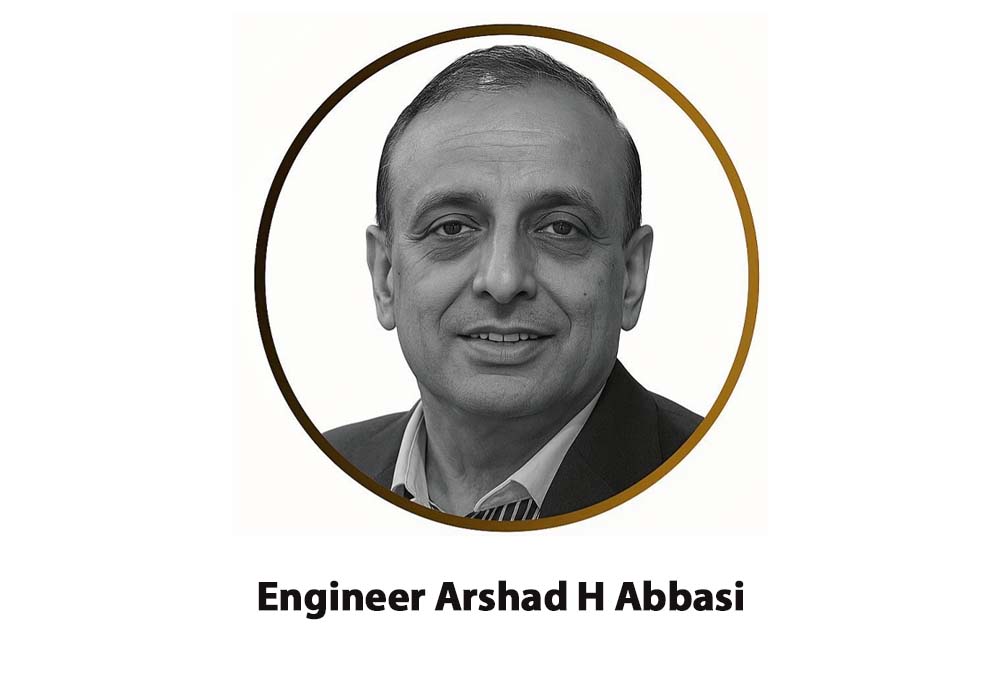
There was a better road, and Pakistan turned it down. In 2016, Chinese Smart Grid firms — brought to the table personally (Engineer Arshad H Abbasi) in that effort — offered to bring smart grid technology into Pakistan’s distribution network, the same technology that helped State Grid Corporation of China push national transmission and distribution losses down to roughly the mid-single digits in recent years. The proposal on the table was a shared-risk model: China would modernise the DISCOs into smart grids over a decade, splitting recovered losses fifty-fifty with the state. It would have cost Pakistan almost nothing upfront and aligned China’s incentives directly with reducing theft and technical loss — the two diseases actually killing Pakistan’s grid. The Ministry of Power and the Planning Commission rejected it. A parallel 2015 pitch to interconnect Pakistan’s grid with China’s has sat on the drawing board for over a decade. Meanwhile Pakistan built its way into the LNG and imported-coal trap that now drives the very capacity payments crushing consumers and taxpayers alike — a trap Chinese engineers, who have spent thirty years wiring one of the largest and most loss-efficient grids on earth, would likely have steered Pakistan away from.

Compare the region. India already exports power to Nepal, Bhutan and Bangladesh and is deepening links with Sri Lanka and Myanmar. Bhutan alone hosts roughly 3,156 MW of Indian-financed hydropower capacity across five major projects — a model of a regional power partner investing in generation rather than merely trading finished electricity. Pakistan, by contrast, cannot even get its own national grid properly connected into Gilgit-Baltistan or Gwadar, a port city that still runs short of reliable power despite sitting at the centre of a multi-billion-dollar Chinese economic corridor. China already has more than 5,000 MW of committed CPEC power capacity inside Pakistan, selected and negotiated by the Planning Commission, and a demonstrated willingness to build hydropower in difficult terrain. It is time to stop pretending Pakistan can manage this alone. Invite China to finance and build the hydropower across GB, AJK and KPK the way India financed Bhutan, and let Pakistan’s surplus eventually be wheeled toward Afghanistan, toward India, even toward China itself — which still needs to retire coal capacity and would gladly take clean power off a friend’s grid.

Because that is what China has been, in a relationship most Pakistanis do not need convincing about: a friend when the ledger was empty, a builder when nobody else would build, a partner sweeter than honey and, on the balance sheet of sixty years of cooperation, standing taller than Everest over every other option on the table. NEPRA and CPPA-G have failed this country. The Ministry of Power, cycling through the same faces and the same wrong bets, has failed this country. China has not. Two hundred and sixty million Pakistanis have watched their own institutions manage the grid into a Rs2 trillion circular debt trap; they deserve the right to ask whether the one power system in the neighbourhood that has actually solved transmission loss at national scale might do better. I do not believe China will disappoint them.

None of this requires abandoning national ownership on paper. It requires admitting, plainly, that Pakistan’s power bureaucracy has run out of credible management. Between them, NEPRA, CPPA-G, the DISCOs, and successive power ministries have produced a system where Dasu, Diamer-Bhasha, Mohmand and Tarbela’s fifth extension are adding thousands of megawatts of capacity through 2030 even as consumers flee to rooftop solar because grid electricity has become unaffordable — a genuinely absurd mismatch between generation planning and market reality. Someone — not the chairman of the NTDC board who has overseen abnormally high tariffs on 660kV HVDC transmission contracts — has to start awarding these projects on cost and competence rather than connections. Right now nobody credible inside these institutions is even asking that question.

This is not a case for surrendering sovereignty. It is a case for admitting that the material that once produced competent power planners and managers in Pakistan is gone— it is the actual threat to sovereignty, because it is bankrupting the state one tariff differential at a time.

The belief of 260 million Pakistanis remains absolute: China will never deceive them. If complete decision-making in the power sector is handed over to China, electricity tariffs and transmission and distribution (T&D) losses can finally be brought to par with China’s own standards—provided there is zero interference from the Government of Pakistan, ministers, and bureaucracy. China will not slaughter 260 million Pakistanis and the national economy, unlike the Ministry of Planning, NEPRA, CPPA, and the Power Ministry, which have laid waste to the nation’s economic foundation much like Genghis Khan’s devastation of the Abbasids in Baghdad.
Similar Posts

  • The Economic Reality Behind Shabbar Zaidi’s …

    By Ali Haider In a statement, former FBR Chairman Shabbar Zaidi said that Pakistan’s economy would improve if it severed trade ties with China. He asserted that China has inflicted more damage on the Pakistani economy than the United States ever did. He further stated that he had opposed CPEC from day one, noting that the public was misled by the “game changer” narrative while the country was driven to ruin through the implementation of exorbitantly expensive power projects. The total trade volume between Pakistan and China during the 2024-25 fiscal year stood at approximately $25.23 billion. Of this, Pakistan imported goods worth $20.43 billion from China and exported products valued at $2.84 billion. Additionally, Pakistan makes annual payments of around $1 billion to China for services, loan repayments, and profit repatriations related to CPEC projects. Consequently, Pakistan’s overall trade deficit with China stands at approximately $18 to $19 billion, a figure exceeding the total funding Pakistan receives under a full IMF program. Since over 90 percent of trade between Pakistan and China is conducted in US dollars, this deficit has a direct impact on the country’s foreign exchange reserves. Pakistan sources approximately 28 percent of its total imports from China. In 2025, China remained Pakistan’s largest trading partner. Major imports from China include machinery, electrical machinery, organic chemicals, textile raw materials , and solar panels. Conversely, just four items account for 60 percent of Pakistan’s exports to China: cotton yarn, rice, seafood, and leather products. In other words, our exports are not only limited in scope but also consist primarily of raw materials and agricultural commodities. Trade with any country is beneficial only when exports exceed imports, or at the very least, match them. However, in Pakistan’s case, for every dollar of exports, we are importing goods worth 7.2 dollars from China. This trade imbalance becomes even more critical when Pakistan imports goods from China that are already being manufactured domestically. The textile and garment sector serves as the prime example of this; although Pakistan is among the world’s major cotton producing nations, a large portion its clothing imports, including both summer and winter garments, comes from China. This situation is primarily driven by the exorbitant rise in electricity tariffs in Pakistan. Currently, the cost of a single commercial electricity unit exceeds 60 rupees, and high gas prices further exacerbate the situation; consequently, the production cost of a standard jacket made in Pakistan reaches 10,000 rupees. In contrast, a Chinese made jacket of comparable quality is sold in the market at or even below that production cost. Due to this uneven playing field, dozens of garment units in Karachi, Lahore, and Faisalabad have shut down. Between 800 and 1,200 textile mills have closed over the last decade; Kasur, which was Asia’s largest leather industry hub in 2001, now lies desolate, as 40 percent of its tanneries have completely shut down and another 30 percent have become seasonal operations. The footwear industry has also suffered severe damage; in Punjab alone, there were over 350 large shoe manufacturing factories, of which 20 percent have shut down and 15 percent have seen a decline in production. This is largely because Chinese shoes, slippers, and sandals available in the market are not only cheaper but also more appealing to young generation in terms of design. Consequently, local manufacturers report that their production has dropped by 40 percent over the past three years. The steel sector is also grappling with this same challenge. Following the closure of Pakistan Steel Mills, the country imports 70 percent of its steel requirements. In 2025, steel and iron products worth $1.5 billion were imported from China alone; these included construction rebar, sheets, and pipes. Although Pakistan possesses reserves of iron and coal, high electricity costs prevent local production from competing effectively in this tough market. Another concerning aspect is the import of machinery. In 2025, Pakistan imported industrial machinery worth $2.6 billion from China; however, this import was not accompanied by investment. Chinese companies profit from selling the machinery and then leave, without opting to set up manufacturing plants within Pakistan. If the government were to mandate that every major machinery import be coupled with a requirement for the Chinese company to establish a factory in Pakistan with a 30 percent equity stake, it would generate employment and enable Pakistan to achieve self-reliance in technology. It is simply not possible for Pakistan to completely halt trade, as a significant portion of solar panels, mobile phone components, pharmaceutical raw materials, and agricultural machinery is imported from China. If these imports were halted tomorrow, many factories would shut down, and inflation could surge by 30 to 40 percent. It would take the economy at least ten years to fully recover from such a shock. The solution lies in “smart protection.” The first step is to impose phased regulatory duties on goods currently being manufactured in Pakistan. Protection can be immediately extended to three sectors: clothing, footwear, and certain types of construction steel. The second step is to make the import of machinery conditional upon investment. The third and most critical step is to reduce production costs; until electricity and gas become cheaper, “Made in Pakistan” products will not be able to compete with Chinese goods. On the other hand, the government must also work on boosting exports. Pakistan’s total exports increased by 48.7 percent during the first five months of 2026, with copper, rice, and halal meat playing a significant role. Access to the Chinese market can be expanded by incorporating agriculture, IT, and minerals into the second phase of CPEC. The target should be to increase exports to China from $3 billion to $10 billion over the next three years. Amidst all these issues, it is crucial to understand that China is not Pakistan’s enemy; it is the world’s largest manufacturing hub, producing goods tailored to the purchasing power of every nation. The real problem lies in imbalanced trade and high production costs. Pressure on foreign exchange reserves

  • Musharraf and ‘Absolutely Not’: The My…

    By Ali Hiader A certain segment in Pakistan has been gaining momentum in arguing that had dictator General Pervez Musharraf—like Imran Khan—said “Absolutely Not” to Washington, Pakistan might have been spared the scourge of terrorism and the subsequent economic hardships. However, such an argument attempts to view the decision made in 2001 through the lens of circumstances that emerged years later. The terrorist attacks of September 11, 2001, shook the United States and sent shockwaves through the global order; approximately 3,000 people lost their lives, and institutions regarded globally as symbols of American economic and military might were targeted. These attacks challenged the security of the world’s sole superpower and generated intense public pressure on the President George W. Bush’s administration to take retaliatory action. For the United States, inaction had become politically almost impossible. Responsibility for these attacks was attributed to Al-Qaeda and its leader, Osama bin Laden—a Saudi national who was living in Afghanistan under Taliban protection. Initially, Bin Laden denied responsibility for the attacks, but his later statements increasingly portrayed as a retaliatory response to American policies. Regardless of how these statements were interpreted politically, by the end of 2001, it was clear to Washington that Al-Qaeda was the primary enemy and that Afghanistan was the hub of its operations. This context holds particular significance for Pakistan because the Taliban government was harboring Osama bin Laden. Pakistan was not merely a distant spectator to this crisis; it shared a long border with Afghanistan and had spent two decades during the Cold War establishing an extensive political and intelligence network there. Consequently, the United States had no better option than Pakistan. Therefore, the fundamental question is: Did Pakistan truly have the option to simply say “absolutely not,” instead of joining the American war? Pakistan was already grappling with severe economic and diplomatic vulnerabilities during the post-9/11 crisis, as the United States and other Western nations had imposed harsh economic sanctions following the 1998 nuclear tests. These sanctions slowed the pace of development, hampered foreign investment, and strained relations with global financial institutions, leaving the country already burdened by heavy debt. The situation became further complicated when General Pervez Musharraf seized power in October 1999, overthrowing an elected government. The military coup added fuel to the fire, further damaging Pakistan’s global reputation and leaving the country diplomatically weakened at a time when it needed international support the most. Following the September 11 attacks, Washington made its expectations absolutely clear. According to Musharraf’s own account, US Deputy Secretary of State Richard Armitage delivered a stern message to Pakistan: it had to stand either with the United States or against it. Another remark widely attributed to the US position was that if Pakistan refused to cooperate, it could be sent “back to the Stone Age.” Although the exact wording of that phrase was never officially substantiated, the intensity of US pressure was undeniable. Did the United States have the capability to inflict devastating damage on Pakistan, despite Pakistan being a nuclear power? The answer to this is “yes.” Pakistan’s nuclear capability was primarily developed to deter India. Pakistan’s nuclear arsenal provided Islamabad with a strategic deterrent against its key regional rival, but this did not mean Pakistan was immune to American economic, diplomatic, or technological pressure. Pakistan lacked the long-range military capabilities to directly strike the U.S. mainland—located 7,000 miles away—whereas the United States held an overwhelming advantage in air power, naval strength, intelligence, technology, financial resources, and global diplomatic influence. Therefore, nuclear weapons were not synonymous with strategic parity with the United States. Pakistan could deter certain types of aggression from India, but realistically, it lacked the capability to inflict the same level of damage upon the United States. Another major reason for Pakistan’s importance to the United States was the intelligence network present in Afghanistan. During the Cold War, Pakistan was one of the United States’ key regional partners in supporting the Afghan resistance against the Soviet occupation. Pakistani intelligence agencies established extensive networks among Afghan groups, while the United States and Saudi Arabia provided arms and financial support for the resistance. Pakistan served as a crucial conduit for channeling this aid to the Afghan resistance. This historical relationship gave the United States a unique strategic advantage after 9/11. Pakistan possessed a combination of geography, intelligence networks, logistical routes, and institutional experience—assets that would have been extremely difficult to replace. Its cooperation could significantly facilitate U.S. operations in Afghanistan. Consequently, Islamabad chose the path it deemed relatively less damaging. Pakistan provided assistance through logistical support, access to airspace and facilities, intelligence cooperation, and other means, but did not directly join the war; in return for this strategic support, US sanctions were eased, economic aid increased, and Pakistan regained special diplomatic significance in Washington. This does not mean that the decision was without negative consequences. Pakistan itself became a major target of terrorism, resulting in the deaths of nearly 70,000 civilian and military personnels and economic losses of approximately $150 billion; Pakistan paid a very heavy price for this war. Furthermore, the repercussions of the strategic policies adopted during the 1980s and 1990s later manifested as problems for Pakistan—issues that perhaps could not have been fully foreseen in 2001. However, there is an important distinction here: criticizing the consequences of a decision and claiming that a different realistic course of action existed at the time are two separate things. A major irony of the Afghan war is that U.S. officials and analysts have repeatedly cited Pakistan as one of the primary reason for the failure to achieve American objectives in Afghanistan. When the question arises as to why the world’s most powerful military failed to achieve its objectives in Afghanistan, the answer is sometimes given in a single word: Pakistan. This should not necessarily be viewed as a badge of honor; rather, it reflects a complex relationship in which Washington needed Pakistan yet lacked trust in it, while simultaneously accusing certain Pakistani elements of supporting forces that were undermining

  • Pakistan’s Governance Crisis

    Since its inception, Pakistan has been confronted with a multitude of complex and interwoven challenges that have persistently constrained its political stability, economic progress, institutional development, and social transformation. While the nature and intensity of these challenges have evolved over time, their cumulative impact has continued to impede the country’s pursuit of sustainable development and national prosperity. Among these enduring national challenges, the governance crisis has emerged as one of the most pressing concerns, posing serious implications for sustainable development, institutional resilience, socioeconomic progress, and the country’s long-term stability. A number of instances can be quoted to highlight the dismal situation of governance in Pakistan. The very first among these is the lack of citizens’ interest in participation. Citizens are not sufficiently aware of their participatory rights; therefore, they do not keep an eye on public officials and don’t raise their voices when their legal rights are violated by the elite class of the state. Moreover, in terms of transparency, Pakistan is far behind the required standards. According to the 2025 Corruption Perception Index published by Transparency International, Pakistan scored 28 out of 100 and ranked 136th out of 182 countries, indicating a high perceived level of public sector corruption. Furthermore, it is our bad luck that the situation of the rule of law has always been in trouble since 1947. Unfortunately, the rule of law has been confined to the conventional concept of law enforcement, internal security, and crime control, while, at the same time, it overlooks the basic elements, including transparency, accountability before the law, and the equal, just, and clear application of the law. Although, the state has numerous accountability committees and agencies to hold corrupt individuals accountable and curb corrupt practices in society. But still, the state is struggling to implement accountability in its true sense. Ignoring the major causes that have led to the deplorable situation of governance in Pakistan would be totally unjust. These include a number of factors that have directly or indirectly facilitated its existence. In this context, political instability is the biggest cause of bad governance in Pakistan. For most of the time, a myopic approach is adopted by political parties to establish their own governments. They remain engaged in the struggle for power while toppling governments by hook or by crook. Likewise, the relevant institutions do not respond immediately to the emergence of new challenges, leading to dearth of responsiveness in institution’s working.   In addition to it, the lack of strategic vision of the political leadership is also a factor which hits the structure of governance in Pakistan. Quite understandably, Political leaders have failed to foresee Pakistan’s emerging challenges and to cope with the persistent challenges that the state has been confronting for a long time. Keeping in view the crunch of governance, whom should be blamed and held accountable? It is the need of the hour that well-crafted and result-oriented policies regarding governance be formulated and effectively implemented to address the issue in its true spirit. Social media should play its crucial role in spreading awareness. Democracy should be strengthened. Posting, transfer, and promotion of bureaucrats should be done on merit. Last but not the least, the right to information should be guaranteed to citizens as provided under Article 19A of the Constitution of the Islamic Republic of Pakistan. These bold steps can place Pakistan in the list of countries having good governance.

  • The exile who remained intellectually at home

    The passing of Professor Amin Mughal in London on August 12, 2026, at the age of 91, has left me with an overwhelming sense of personal bereavement. I have lost a mentor, friend and former colleague; Pakistan has lost one of the last representatives of a generation for whom progressive politics was inseparable from humanism, scholarship, intellectual integrity and personal courage. Harris Khalique called his departure “یہ ماتمِ وقت کی گھڑی ہے”—an hour for mourning the times—and described him as “the last of the Mohicans who touched so many lives.” These words capture the magnitude of the loss. Professor Mughal belonged to a generation that imagined Pakistan as a democratic, pluralistic and egalitarian state—not as a security-dominated order governed by fear, dogma and privilege. Born in Punjab in 1935, he taught English at Islamia College, Civil Lines, Lahore. His teaching career there ended because of his trade union activities. For Professor Mughal, principles were never dispensable instruments of convenience. Losing employment did not silence him. Along with Professor Manzoor Ahmed, he helped establish Shah Hussain College, transforming an act of official victimisation into another avenue for education and intellectual resistance. As a leader of the National Awami Party, he was imprisoned more than once. His politics sprang from compassion for workers, peasants, minorities and all those denied dignity by structures of power. It was not the doctrinaire radicalism of slogans. It was a deeply humane commitment to freedom from exploitation, arbitrary authority and cultural suffocation. He was associated with Lail-o-Nahar and later with the weekly Viewpoint, edited by the legendary Mazhar Ali Khan. I had the privilege of working with Professor Mughal at Viewpoint from 1979 to 1984. Its modest office at 4-Lawrence Road, Lahore, became my real university. Mazhar Ali Khan, I.A. Rehman, Zafar Iqbal Mirza—affectionately known as ZIM—Alys Faiz and Amin Mughal represented journalism as a public trust rather than a commercial enterprise. Reflecting on those formative years in my tribute to ZIM, I wrote: “Amin Mughal and Alys Faiz were so proficient in writing that few could match their stature. They also taught me the art of journalism with great affection and dedication.” That remains one of the greatest blessings of my life. Professor Mughal taught by example. His scholarship was vast, his editing precise and his intellectual standards uncompromising. He corrected younger colleagues without belittling them and encouraged inquiry without demanding conformity. The Viewpoint collective stood firm during General Ziaul Haq’s brutal dictatorship, when truth invited censorship, dismissal, imprisonment or exile. Literature and journalism became important sites of resistance during those years. Professor Mughal understood that control over language, culture and historical memory was central to authoritarian rule. His engagement with Urdu and Punjabi literature was therefore never merely aesthetic; it was part of a larger struggle to recover suppressed voices and alternative visions of Pakistan. Forced into political exile in 1984, he settled in London and never returned to Pakistan. Exile, however, could not sever his intellectual or emotional relationship with his homeland. He worked for Daily Jang and, in the early 1990s, edited the Urdu daily Awaaz. Although the newspaper survived for only a little over a year, it represented another attempt to provide Britain’s Pakistani community with a serious and progressive public forum. Writing in The News on Sunday in 2008, Arif Azad recalled Professor Mughal as looking “his usual sharp and buoyant self, dressed in impeccable attire as is his wont.” He described him as belonging to “the vanishing breed of left-wing Pakistan intellectuals” in whom one could still discern the lofty and humane aspirations associated with Pakistan’s early journey. The description was exact. Professor Mughal’s impeccable dress reflected something deeper: an inner discipline, dignity and refusal to be diminished by adversity. Political persecution could deprive him of employment and homeland, but it could not deprive him of intellectual independence or personal grace. His Finchley home gradually became, in Arif Azad’s memorable formulation, “a port of call” for visiting writers, politicians and political and cultural activists from both sides of the border. For decades it served as an informal salon, archive and classroom. Generations of visitors encountered there a formidable memory, an incisive mind and a host of unfailing generosity. Even when he withdrew from active engagement in South Asian politics, he remained an enduring reference point for politically conscious Pakistanis in Britain. His interests ranged across philosophy, literature, history, political economy and contemporary affairs. He wrote perceptively on Bhagat Singh and, following Benazir Bhutto’s assassination, produced After Benazir Bhutto: Some reflections. Although he had opposed her politics, he recognised her courage and wrote that in the imagination of the masses she had acquired a mystical significance destined to inspire future struggles. That ability to rise above personal political preference and acknowledge truth distinguished him as a genuine intellectual. Professor Mughal’s life reminds us that exile is not merely physical displacement. It is also the condition imposed upon ideas that a state refuses to accommodate. Pakistan expelled or marginalised many of its finest minds and then wondered why intolerance, intellectual poverty and historical amnesia prevailed. Professor Mughal remained physically in London, but intellectually he never ceased to inhabit the Pakistan for which he had struggled. One by one, the great teachers of my Viewpoint years have departed. Their passing makes the country feel lonelier and its moral landscape immeasurably poorer. Professor Amin Mughal leaves no office, fortune or monument carrying his name. His true legacy survives in the minds he liberated, the writers he encouraged, the causes he defended and the generations he taught to question received wisdom. Farewell, dear mentor and friend. You lived in exile, but your ideas never left us. They will remain at home wherever people struggle for a democratic, pluralistic, just and humane Pakistan.

  • Beyond Public Finance: Towards  Constitutional Po…

    The first part of this series argued that Pakistan’s recurring fiscal crises cannot be understood through conventional economic analysis alone. The distinction between public finance and Constitutional Political Economy (CPE) must now be explained. Both examine the role of the state in economic life, but they begin from different assumptions and ask fundamentally different questions. Traditional public finance is primarily concerned with what governments ought to do. In the classical framework associated with Richard Musgrave, fiscal policy performs three principal functions: allocation of resources, redistribution of income and macroeconomic stabilisation. Governments provide public goods, correct market failures, reduce unacceptable inequalities and use taxation and expenditure to promote stability and growth. This framework remains indispensable for analysing budgets, taxes and public expenditure. The International Monetary Fund’s discussion of Musgrave’s framework confirms its enduring influence on fiscal analysis. The difficulty arises when the state is treated as a single, impartial institution pursuing social welfare. In the real world, governments consist of politicians, bureaucrats, legislators, judges, regulators and numerous organised interests. Each operates under incentives and constraints. Political actors do not cease to pursue power, institutional advantage or personal interest merely because they enter public office. A tax system may therefore be inefficient not because its designers misunderstood economic theory, but because inefficiency benefits influential constituencies. An exemption may survive not because it promotes investment, but because its beneficiaries possess political power. Public expenditure may be allocated not according to social need, but according to the ability of institutions and groups to influence the budgetary process. Public finance generally asks: what tax would be efficient, equitable and productive? CPE asks a prior question: what political and constitutional arrangements will cause those in authority to adopt and administer such a tax fairly? This difference emerged most clearly in the work of James M. Buchanan, who was awarded the 1986 Nobel Prize for developing the contractual and constitutional foundations of economic and political decision-making. Buchanan argued that economists must specify their model of politics before recommending policies. They should examine the “constitution of economic polity”—the rules and constraints within which political actors make decisions—rather than assuming that government automatically acts as a benevolent guardian of collective welfare. In The Calculus of Consent, Buchanan and Gordon Tullock applied economic reasoning to collective decision-making. They distinguished between choices made within existing rules and choices concerning the rules themselves. Ordinary politics concerns decisions taken under established constitutional arrangements. Constitutional political economy examines how those arrangements should be designed, whose consent they require and what incentives they create. The distinction may be understood through the analogy of a game. Public finance often studies the moves made by players: whether a tax rate should be increased, expenditure reduced, subsidies withdrawn or borrowing limited. CPE examines the rules of the game: who may impose a tax, who may approve expenditure, how revenues are distributed, what majorities are required, which institutions are accountable and what remedies exist when power is abused. The rules determine the range of possible outcomes. Replacing one finance minister, tax administrator or economic adviser cannot fundamentally alter results if the institutional incentives remain unchanged. Buchanan and Geoffrey Brennan developed this insight further in The Reason of Rules. Their focus was not merely upon particular policy choices but upon the rules governing political and market interaction. CPE therefore does not ask only whether a government policy appears desirable. It asks whether the institutional process through which it is adopted protects citizens against arbitrary, discriminatory or predatory use of power. This approach does not imply hostility towards the state. A capable state is essential for education, healthcare, infrastructure, environmental protection, social security and economic development. CPE merely refuses to assume that state power will automatically be exercised for these purposes. A strong state without constitutional restraints may become strong against ordinary citizens while remaining weak before powerful interests. These insights are neither exclusively modern nor exclusively Western. Centuries before the emergence of public choice theory, Ibn Khaldun analysed taxation as part of the broader rise and decline of states. He observed that governments in their earlier stages could obtain substantial revenues from relatively moderate assessments, whereas later rulers frequently imposed heavier burdens but collected less as incentives weakened, production contracted and coercive expenditure expanded. Arthur B. Laffer subsequently acknowledged that the proposition associated with the Laffer Curve was not his invention and specifically identified Ibn Khaldun as an important precursor. Ibn Khaldun’s contribution, however, went far beyond a relationship between tax rates and revenue: he connected fiscal policy with political legitimacy, administrative expansion, elite consumption and institutional decline. The Constitution of Pakistan itself demonstrates that taxation is not merely an economic instrument. Article 77 provides that no federal tax may be levied except by or under the authority of an Act of Parliament. The provision embodies the constitutional principle that taxation requires lawful legislative authority; it is not simply an administrative technique for raising revenue. Article 160 creates the National Finance Commission and provides the framework for distributing specified revenues between the Federation and the provinces. Article 160(3A) further protects the provincial share by declaring that it cannot be lower than that provided under the preceding Award. These provisions represent a constitutional bargain concerning political authority, federalism and access to public resources. Revenue distribution is consequently not just an accounting exercise. It forms part of the structure of the federation itself. Article 140A requires the provinces to establish elected local governments and devolve political, administrative and financial responsibility to them. Fiscal policy cannot produce accountable public services when decision-making remains remote from citizens and constitutionally required devolution is treated as optional. Articles 37 and 38 contain important commitments regarding social justice, education, economic well-being, reduction of inequality and provision of basic necessities. They are Principles of Policy rather than directly enforceable Fundamental Rights, and Article 30 limits their judicial enforceability. Their inclusion nevertheless demonstrates that the constitutional purposes of revenue collection extend beyond achievement of numerical tax targets. The state collects resources to fulfil social and economic obligations, not

  • Fundamental Rights (Article 10): A Constitutional …

    By Muhammad Imran, Staff Member, SAHSOL-LUMS and Asma Rahmat, Final Year Law Student, SLC Superior University and Wafa Sarfraz, Law Student, SAHSOL-LUMS   Introduction: Article 10 of the Constitution of the Islamic Republic of Pakistan enshrines the fundamental constitutional safeguards against arbitrary arrest and detention, thereby giving concrete procedural effect to the broader guarantee of personal liberty contained in Article 9. Rather than leaving these protections to ordinary legislation—such as Sections 60, 61, and 81 of the Code of Criminal Procedure (Cr.P.C.)—the Constitution elevates them to the status of entrenched fundamental rights. Consequently, these guarantees cannot be diluted or abrogated through ordinary legislative enactments, and any executive action or statutory provision inconsistent with Article 10 is liable to be declared void under Article 8 of the Constitution. Structurally, Article 10 establishes two distinct constitutional regimes. Clauses (1) and (2) prescribe procedural safeguards applicable to ordinary arrests and detention, whereas clauses (3) to (9) regulate the exceptional constitutional framework governing preventive detention. Therefore, the Honorable Mr. Justice Fazal Karim (Late) in his magic book for district judiciary practice, ‘Access to Justice in Pakistan’, described it as a Mini-Criminal Code, and has rightly described it so. Interplay with the Constitutional Scheme of Fundamental Rights: Article 10 does not operate in isolation; rather, it forms an integral part of Pakistan’s constitutional framework for the protection of liberty, dignity, and due process. Read together with Articles 9, 10A, and 14, it establishes a comprehensive constitutional guarantee against arbitrary deprivation of liberty. Article 9 guarantees that no person shall be deprived of life or liberty except in accordance with law, while Article 14 protects the inviolability of the dignity of man. Article 10 operationalizes these guarantees by regulating the manner in which the State may lawfully arrest and detain individuals. Consequently, arbitrary arrest, unlawful detention, and custodial abuse constitute violations not only of Article 10 but also of Articles 9 and 14. The relationship between Article 10 and Article 10A is equally significant. Introduced through the Eighteenth Constitutional Amendment, Article 10A constitutionalizes the rights to due process and a fair trial. Jurisprudentially, Article 10 governs the investigative stage by ensuring lawful arrest, prompt notification of the grounds of arrest, immediate access to legal counsel, and judicial supervision within twenty-four hours. Article 10A, by contrast, safeguards the adjudicatory process through guarantees of an impartial tribunal, equality of arms, open justice, and procedural fairness. Together, these provisions establish a continuous constitutional guarantee of due process extending from arrest until the conclusion of criminal proceedings. Constitutional Safeguards under Clauses (1) and (2): Clauses (1) and (2) prescribe the minimum constitutional standards governing every lawful arrest. An arrested person must be informed, as soon as may be, of the grounds of arrest in a manner sufficient to enable an effective challenge to the legality of detention. The Constitution further guarantees an unfettered right to consult and be defended by a legal practitioner of one’s own choice, thereby ensuring meaningful legal assistance from the earliest stage of criminal proceedings. Additionally, every arrested person must be produced before the nearest Magistrate within twenty-four hours of arrest, excluding the time reasonably required for the journey from the place of arrest to the court. Continued detention beyond this constitutional period is permissible only upon the authority of a Magistrate through a valid judicial remand order. Collectively, these guarantees subject executive power to immediate judicial scrutiny and minimize the risk of arbitrary or prolonged detention. Implied Constitutional Rights under Article 10: Apart from its express guarantees, Article 10 also incorporates several implied constitutional rights arising from constitutional principle, comparative jurisprudence, and judicial interpretation. The obligation to communicate the grounds of arrest necessarily presupposes that lawful and objectively justifiable grounds must exist before an arrest is effected. Accordingly, an arrest cannot lawfully be undertaken on mere suspicion or with reasons manufactured retrospectively. This reflects the common law doctrine of reasonable or probable cause and has been affirmed by the Supreme Court of Pakistan, particularly in Mst. Sughran Bibi v. The State, which held that mere nomination in an FIR does not, by itself, justify immediate arrest. Similarly, the constitutional right to “consult” legal counsel necessarily extends beyond representation during trial. It attaches immediately upon arrest, including during police custody, investigation, and interrogation, thereby ensuring legal assistance at the earliest and most vulnerable stage of the criminal process. Preventive Detention: The Constitutional Exception: Although Article 10 principally governs ordinary arrests, clauses (3) to (9) establish a distinct constitutional framework for preventive detention. Preventive detention differs fundamentally from ordinary criminal detention. It is preventive rather than punitive, aiming to avert threats to national security, public order, or defence rather than punish past conduct. Recognizing the extraordinary nature of such detention, the Constitution subjects it to stringent procedural safeguards. The detaining authority must ordinarily communicate the grounds of detention within fifteen days unless disclosure would be contrary to the public interest. Furthermore, detention extending beyond three months requires approval from an independent Review Board comprising serving or former Judges of the High Court or Supreme Court. The Supreme Court has consistently held that the executive’s “satisfaction” justifying preventive detention is not immune from judicial review. Rather, it must be supported by objective and relevant material establishing a reasonable apprehension of harm. Preventive detention therefore remains subject to constitutional principles of legality, proportionality, and procedural fairness. Constitutional Remedies and Judicial Enforcement: The principal constitutional mechanism for enforcing Article 10 is the jurisdiction of the High Courts under Article 199. The writ of habeas corpus provides an effective constitutional remedy where an individual is unlawfully arrested or detained. If a detainee is not informed of the grounds of arrest, denied access to legal counsel, or detained beyond twenty-four hours without judicial authorization, the High Court may require the production of the detainee and determine the legality of the detention. Upon finding a violation of Article 10, the Court may order immediate release and grant appropriate constitutional relief. Except where expressly suspended during a constitutionally proclaimed emergency under Part X

Leave a Reply

Your email address will not be published. Required fields are marked *