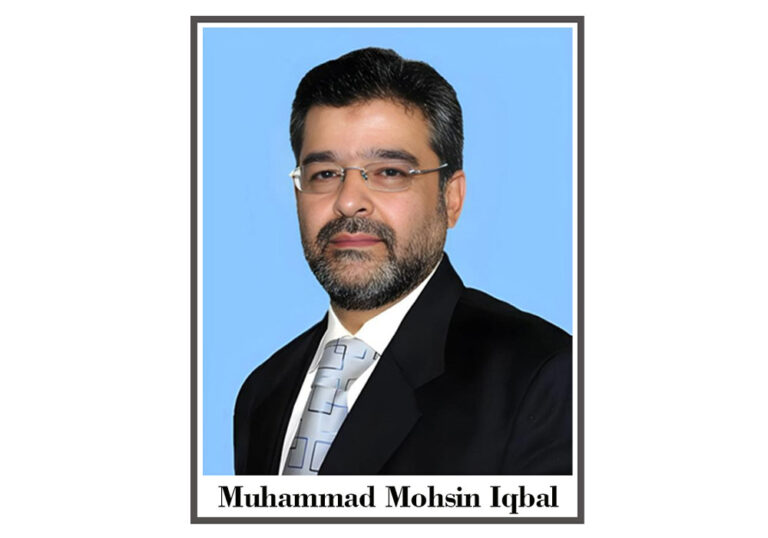
higher education opportunities

Higher Education Opportunities for Pakistani Stude…

The historical and cultural affinities between Pakistan and Turkiye have long provided a foundation for cooperation in diverse fields. In recent years, this relationship has increasingly extended to the sphere of higher education, where Turkiye has emerged as a significant destination for Pakistani students. The confluence of geographical proximity, shared religious and cultural values, and the expanding academic infrastructure in Turkiye has made it an attractive alternative to traditional destinations in Europe and North America. This shift is not merely a matter of student mobility but also reflects a broader attempt to institutionalize academic linkages between the two countries.

Turkiye currently hosts more than 208 universities, of which 129 are public and 79 are private. A number of these institutions, including Middle East Technical University, Boğaziçi University, Istanbul University, and Koç University, are recognized in international rankings and maintain active research programs. The Turkish higher education system operates within the framework of the Bologna Process, which ensures compatibility with European academic standards and facilitates the international recognition of degrees. This structural alignment, combined with the availability of English-medium programs in many universities, has lowered barriers for international students, including those from Pakistan.

The internationalization of Turkish higher education is reflected in the enrollment of over 300,000 foreign students from more than 170 countries. Pakistani students constitute a growing segment of this population, with estimates ranging between 8,000 and 10,000. The annual growth rate of Pakistani student enrollment in Turkiye is approximately 20 percent, indicating a sustained interest. Several factors contribute to this trend. First, the Türkiye Bursları program, administered by the Turkish government, provides comprehensive support that includes tuition, accommodation, health insurance, monthly stipend, and airfare. Each year, more than 500 Pakistani students benefit from this program. Second, the cost of education in Turkish public universities remains comparatively low, with annual fees ranging from 300 to 800 US dollars. Private universities offer programs between 2,000 and 6,000 US dollars annually. Third, admission procedures are relatively accessible, as many institutions do not require standardized tests such as the SAT or GRE. Additionally, the linguistic affinity between Urdu and Turkish, with over a thousand shared words, eases the process of language acquisition for Pakistani students.

The academic fields that attract Pakistani students are diverse. Engineering and technology, particularly in areas such as artificial intelligence, robotics, and civil engineering, are in high demand. Medical and pharmaceutical sciences also draw significant interest, given Turkiye’s advanced healthcare infrastructure and research facilities. Other prominent fields include Islamic studies, international relations, social sciences, and media and communication. The latter has gained particular attention following the global popularity of Turkish television dramas, which has increased cultural familiarity and academic interest in media studies.

Beyond student mobility, the potential for institutional collaboration between Pakistan and Turkiye remains considerable. The Higher Education Commission of Pakistan and the Turkish Council of Higher Education – YÖK have entered into agreements to promote academic exchange. Several Pakistani universities, including NUST and COMSATS, have signed memoranda of understanding with Turkish institutions to facilitate student and faculty exchange. These initiatives, while still limited in scope, provide a basis for deeper engagement. Joint research projects represent another avenue of cooperation. Turkiye’s strengths in defense technology, renewable energy, and urban development complement Pakistan’s expertise in agriculture, water resource management, and nuclear science. Collaborative research in these areas could address shared regional challenges and contribute to technological advancement in both countries.

The development of dual-degree programs is another promising direction. Such programs would allow students to earn degrees from institutions in both Pakistan and Turkiye, thereby enhancing the global portability of their qualifications. Faculty exchange programs could further support this process by enabling the sharing of pedagogical approaches and research methodologies. Additionally, the establishment of language and cultural centers, such as Urdu departments in Turkish universities and Turkish language institutes in Pakistan, would strengthen intercultural understanding and provide linguistic support for students and researchers.

In conclusion, Turkiye offers Pakistani students an opportunity to pursue quality higher education in an environment that is both academically rigorous and culturally familiar. The combination of affordable tuition, scholarship support, and institutional compatibility makes Turkiye a viable alternative to more expensive destinations. At the same time, the expansion of academic linkages between Pakistani and Turkish universities has the potential to contribute to broader cooperation in education, research, and technology. For Pakistani students, studying in Turkiye represents not only an academic pursuit but also participation in the strengthening of bilateral relations between two countries with shared historical and cultural ties.

Similar Posts

  • Mistaken Credit to a Bank Account: Legal Position

    Pakistan’s banking sector is experiencing a fast pace digital transformation, which includes inception of new digital banks as well as digitalization of the banking services, like Raast, Roshan Digital Accounts etc. Nevertheless, this digitalization sometimes causes technology mistakes / errors in the banking systems as well. One such issue, though to a little extent, is the matter of mistakenly credited amounts to the customers’ accounts, due to system glitches. And unluckily, it is rare that the customers, who are beneficiaries of such mistaken credits, ever bother to intimate the banks about it or return the mistakenly credited amounts. The recovery of such amounts is though legally possible, however, since it is civil cause action, falling within the jurisdiction of civil courts, therefore, it becomes cumbersome for the banks to recover such amounts, easily and speedily. Needless to mention that the subject recovery does not fall within the jurisdiction of the Banking Courts and hence, speedy trial / summary procedure trial is not available for this kind of recovery. In addition, it is also difficult in these cases to have the support of the law enforcement agencies, due to some legal framework’s problems. Luckily, a learned Judge of the Lahore High Court Lahore has recently passed a remarkable judgement on the subject matter, which will support the banks, in such matters. The judgement is regarding a case, where a bank’s system mistakenly credited a significant amount to one of its customers, who utilized a major portion of the amount . The bank pursued the customer and he gave a cheque for the amount involved. The cheque was later bounced, due to insufficient funds in the account and the bank then lodged FIR against him under Section 489-F. He was arrested and his bail was refused by the lower Court, against which he approached the High Court. The High Court observed that the amount received by customer was not meant to be utilized by him, but it was to be retained and preserved by him for return back to the bank. The Honourable Court further observed that the customer was supposed and required to inform the sender/bank regarding the error and make arrangements for its return to the owner/bank. Furthermore, the Honourable Court observed that as soon as the customer became in a position to exercise his control over the property, the property stood entrusted to him impliedly, but he instead of returning the same to its owner/bank, withdrew significant amount and embezzled the same, as such offence punishable under Section 406 of PPC was fully attracted against him. This case will become a precedent that if a bank customer receives mistakenly credited amount in his account and utilizes it, then it will be an offence of Breach of Trust, under Section 406 of Pakistan Penal Code. The Judgement is reported as PLJ 2025 Cr. C 797 LHC.

  • Pakistan’s College Education Crisis

    Educational debates in Pakistan usually begin with schools and end with universities. Somewhere in between lies a vast public college network that has quietly undergone a transformation without receiving the reforms necessary to sustain it. For decades, colleges were viewed merely as institutions imparting Intermediate education. That perception is now obsolete. Government colleges across Pakistan award four-year BS degrees, supervise undergraduate research, implement semester systems, and produce graduates completing sixteen years of education. They have become institutions of higher education in every meaningful sense except in the standards by which they recruit, promote and evaluate their faculty. The real crisis begins not when institutions disappear but when they continue to exist while quietly abandoning the purpose they were meant to serve. Pakistan’s college education system increasingly reflects this uncomfortable reality. Buildings stand, classrooms remain occupied, salaries are paid and degrees continue to be awarded, yet the intellectual purpose that ought to define higher education is steadily weakening. The system continues to function, but it no longer asks whether it is producing scholars, researchers and critical thinkers or merely issuing degrees. This contradiction is not merely administrative. It is national. Countries do not build knowledge economies simply by increasing enrolment or opening new campuses. They do so by ensuring that those entrusted with educating the next generation possess the intellectual depth, scholarly discipline and professional integrity demanded by higher education. Pakistan has expanded the responsibilities of its colleges without fundamentally reforming the standards governing those who teach in them. It is this mismatch between expanding responsibilities and stagnant reforms that explains much of the present crisis. History offers repeated warnings against confusing continuity with progress. Great civilisations have seldom been defeated by ignorance alone; far more often, they have been weakened by their refusal to reform. Ancient Troy believed its mighty walls guaranteed safety until destruction entered concealed within the famous wooden horse. Institutions, too, often collapse not because external forces overwhelm them but because internal weaknesses become too familiar to recognise. Pakistan’s colleges face a similar danger. The greatest threat is not inadequate infrastructure or declining enrolment. It is the quiet normalisation of standards that no longer correspond with the responsibilities these institutions now carry. Perhaps nowhere is this more evident than in faculty recruitment. Every education system is ultimately only as strong as the people it appoints to teach. Laboratories, libraries and curricula matter, but they cannot compensate for weak academic recruitment. A nation’s classrooms reflect the intellectual standards it establishes at the point of entry into the profession. Countries that consistently perform well in higher education understand this principle with remarkable clarity. Finland recruits teachers from among its highest-performing graduates and treats teaching as one of the country’s most competitive professions. Singapore invests heavily in teacher selection, structured professional development and continuous evaluation throughout an educator’s career. South Korea subjects aspiring academics to rigorous competition, while Germany closely links academic progression with scholarly achievement and research productivity. These countries differ in culture, politics and economic history, yet they share one conviction that higher education depends first and foremost upon the quality of its faculty. Pakistan, regrettably, often operates on a different assumption. Recruitment is frequently treated as the culmination of academic achievement rather than its beginning. A lecturer appointed with only a sixteen years education may spend an entire career within the same system without acquiring higher qualifications or contributing substantially to research, yet still retire after holding senior academic positions carrying the titles of Associate Professor or Professor. Such a framework might have appeared understandable when colleges were primarily institutions for Intermediate education. It becomes increasingly indefensible once those same institutions award undergraduate degrees equivalent to those offered by universities. Academic titles should signify scholarly accomplishment rather than the mere passage of time. Across the world, the designation of Professor represents sustained intellectual contribution, recognised research, advanced qualifications and academic leadership. When promotion depends overwhelmingly upon seniority rather than scholarship, titles gradually lose their meaning. The loss is not symbolic alone. It diminishes public confidence in higher education itself. This is not an argument against experience. Experience remains indispensable in teaching. A seasoned educator often possesses insights that no newly qualified academic can immediately acquire. Classrooms are enriched by years of interaction with students, evolving pedagogical techniques and practical wisdom accumulated over decades. Experience, however, should complement scholarship, not replace it. Knowledge no longer remains static for an entire career. Disciplines evolve at astonishing speed. Artificial Intelligence is reshaping linguistics, medicine, engineering, law and the humanities alike. Climate science has transformed environmental studies. Digital humanities have altered literary scholarship. Advances in neuroscience continue redefining educational psychology. A qualification earned thirty years ago, valuable though it remains, cannot alone certify mastery over fields that have changed beyond recognition. Medicine provides an obvious comparison. No patient would willingly place complete trust in a surgeon who had never updated professional knowledge after graduation. Engineers continually adapt to changing technologies and safety standards. Judges engage with evolving constitutional interpretation. Military officers undergo regular professional education throughout their service. Every serious profession recognises that learning is continuous. Higher education cannot become the sole profession where intellectual growth effectively ends with appointment. The irony is that Pakistan’s college sector contains thousands of exceptionally capable teachers who have voluntarily pursued MPhil and PhD degrees despite limited institutional incentives. Many complete advanced research while balancing heavy teaching schedules, administrative responsibilities and family obligations. Their commitment deserves recognition because it reflects a genuine desire to improve professionally rather than merely fulfil formal requirements. Yet the existing structure frequently sends the opposite message. Promotion often rewards waiting more consistently than learning. When advanced qualifications receive insufficient institutional value, the incentive to pursue rigorous scholarship inevitably weakens. No education system can flourish if intellectual ambition appears optional while seniority remains sufficient. The anomaly becomes even more striking when one examines the present hierarchy within many public colleges. It is no longer uncommon to find an MPhil-qualified lecturer or even a PhD serving under an officer whose highest

  • Pakistan’s Next Strategic Advantage: From La…

    By Tahseenullah For decades, labour migration in Pakistan has largely been viewed as a response to unemployment and poverty. While this perspective has served its purpose, it no longer reflects the realities of today’s global economy. In the twenty-first century, labour mobility has become far more than an economic necessity—it is a strategic investment in human capital, national competitiveness and economic diplomacy. Countries that can produce skilled, certified and globally competitive workers will hold a distinct advantage in an increasingly interconnected labour market. As ageing populations, declining fertility rates and persistent labour shortages reshape developed economies, demand for skilled workers is rising across Europe, East Asia and other advanced markets. Pakistan, with one of the world’s youngest populations, is well positioned to seize this opportunity. The real challenge is not whether Pakistan has enough young people willing to work abroad, but whether it can equip them with internationally recognised skills, qualifications, language proficiency and professional competencies that meet evolving global labour market demands. Pakistan’s labour migration journey began with the establishment of the Bureau of Emigration and Overseas Employment in 1971, following the Gulf oil boom. Since then, more than 15 million Pakistanis have migrated through regular channels, contributing significantly to infrastructure, healthcare, construction, transport and service sectors worldwide while improving the livelihoods of millions of families back home. Today, overseas employment remains one of Pakistan’s most important economic assets. According to BEOE, 862,625 Pakistanis migrated for employment in 2023, followed by 725,672 in 2024 and 762,499 in 2025, with early trends indicating sustained international demand in 2026. Meanwhile, the Pakistan Migration Report 2025 and the State Bank of Pakistan estimate workers’ remittances at approximately US$38.3 billion in FY2024–25, representing nearly 9.34 percent of GDP. These remittances strengthen foreign exchange reserves, reduce poverty and support macroeconomic stability. Yet labour migration has rarely been treated as a strategic pillar of Pakistan’s long-term economic planning. The global labour market is undergoing profound change. According to the World Economic Forum’s Future of Jobs Report 2025, demographic shifts, technological advances and the green transition will create millions of new employment opportunities over the coming decade. Healthcare professionals, engineers, IT specialists, skilled technicians, renewable energy workers, construction professionals and caregivers are expected to remain in particularly high demand. Pakistan possesses a valuable demographic dividend, with nearly two-thirds of its population under the age of 30. However, this advantage will only translate into economic gains through sustained investment in education, Technical and Vocational Education and Training (TVET), international certification, digital skills and language training. The challenge is clear. The Pakistan Migration Report 2025 shows that nearly two-thirds of Pakistani migrant workers remain low-skilled or unskilled. While their contribution is invaluable, low-skilled employment often results in lower wages, limited career progression and greater vulnerability to labour market shocks. In contrast, highly skilled migrants generally access better jobs, stronger labour protections and significantly higher earnings. Pakistan must therefore move beyond a traditional labour export model towards a human capital export strategy. Success should no longer be measured simply by the number of workers leaving the country, but by the quality, productivity and global competitiveness of its workforce. Achieving this transformation requires comprehensive reforms. TVET institutions must align training with international occupational standards and labour market needs. Language education in German, Japanese, Korean and Italian, alongside digital literacy, workplace ethics and intercultural communication, should become integral components of workforce development. Market diversification is equally important. While Gulf Cooperation Council countries will remain Pakistan’s primary labour destinations, excessive dependence on one region exposes the country to geopolitical uncertainty and labour market fluctuations. Pakistan should actively expand regular labour mobility partnerships with Europe, Japan, South Korea, Australia and Canada, where structural labour shortages continue to grow. Government-to-government labour mobility agreements should become a strategic priority. Such partnerships can enhance transparency, reduce recruitment costs, improve worker protection and strengthen employer confidence in Pakistani talent. Simultaneously, Pakistan should pursue mutual recognition of qualifications and internationally accepted skills certification to facilitate smoother labour market integration. Institutional coordination will also be essential. The Ministry of Overseas Pakistanis and Human Resource Development, together with the NAVTTC, provincial TEVTAs, Overseas Employment Promoters, the Ministry of Foreign Affairs and Pakistan’s overseas missions, should implement an integrated national labour mobility framework supported by labour market intelligence, digital recruitment platforms and evidence-based policymaking. Pakistan can draw valuable lessons from the Philippines, whose migration governance combines ethical recruitment, mandatory pre-departure orientation, comprehensive worker welfare and strong overseas support systems. Adapting these practices would strengthen Pakistan’s reputation as a reliable source of skilled and protected migrant workers. At the same time, addressing irregular migration must remain a national priority. Preventing dangerous migration routes requires expanding legal migration opportunities, strengthening career counselling, improving public awareness, dismantling human smuggling networks and ensuring aspiring migrants have access to reliable information and affordable recruitment services. Labour migration should no longer be viewed solely as a means of reducing unemployment or increasing remittances. It should be recognised as a cornerstone of Pakistan’s economic diplomacy, human capital development and long-term growth strategy. The countries that will lead the future of global labour mobility will not necessarily be those with the largest populations, but those that invest in producing highly skilled, internationally certified and globally competitive talent. Pakistan has already demonstrated its ability to contribute to the global workforce. The next step is to move beyond exporting labour to exporting talent. By investing in skills, strengthening institutions, diversifying labour markets and promoting ethical, well-governed migration, Pakistan can transform its demographic dividend into one of its greatest strategic advantages. The world is searching for talent. Pakistan has the youth. What it now needs is the vision to turn that potential into global human capital leadership. Tahseen Ullah is a development and migration sector practitioner specializing in labour mobility, migration governance, education and child protection.

  • Beyond Riba: Reconstruction of Just Financial Orde…

    The preceding part of this series ended with a limit that productive finance cannot cross. Illness, unemployment, education, disability, orphanhood and temporary distress cannot always be converted into profitable investments. Human vulnerability itself cannot become another financial product. That is where a riba-free order must move beyond banking. A society may successfully redesign murabaha, musharakah, salam or ijarah and still remain unjust if a family facing cancer treatment must borrow at any cost, a student must enter adult life under debt, or a widow depends upon a local patron for survival. Prohibition of riba becomes socially meaningful only when basic human need is protected from financial extraction. Pakistan does not have to invent the institutional vocabulary from zero. It already has Pakistan Bait-ul-Mal, established under the Pakistan Bait-ul-Mal Act, 1991. Its official mandate includes assistance to the destitute, widows, orphans, persons with disabilities and other needy citizens, with support extending to medical treatment, education and rehabilitation. Its official position is that assistance is available to the poorest without differentiation of religion, creed, sect or region. This is an important foundation. It is not yet the structure required for a just financial order. Bait-ul-Mal should cease to be understood primarily as an agency dispensing discretionary relief to the “poorest of the poor”. Its larger purpose should be to guarantee a legally defined social floor. Food in destitution, essential healthcare, basic education, protection of children without support, disability assistance and temporary subsistence during involuntary unemployment should become matters of entitlement under transparent criteria, not favours obtained through political access. This distinction is fundamental. Charity depends upon the generosity of the giver. Entitlement rests upon the responsibility of society. It is one of the most emphasised Quranic directive on this idea. The directions given in the holy Quran need not be accepted in totality. This principle is accepted in all the classical juristic traditions. The practical discussion on this is important. In the transitional phase, all the scholarly works envisage gradual movement rather than an overnight abolition of existing economic arrangements. Individuals progressively devote more of their resources to collective purposes while organised society assumes responsibility for the basic necessities of life.   The transition, in any pragmatic scheme, is institutional rather than merely charitable. That insight deserves attention. An Islamic polity cannot measure success by the number of ration bags distributed after deprivation has occurred. Its test is whether institutions progressively remove the conditions that force citizens into dependence upon creditors, property owners, political patrons or charitable intermediaries. Bait-ul-Mal should therefore form the first pillar of social finance: the guarantee against destitution. The second should be waqf. Waqf historically converted wealth into enduring social capital. Whatever the juristic differences concerning its precise legal character, its institutional genius lies in removing an asset from ordinary private consumption and dedicating its benefit to a continuing purpose. Land, buildings and income-producing properties can support hospitals, schools, hostels, water systems, vocational institutions, research centres, shelters and community infrastructure across generations. Pakistan already possesses statutory waqf institutions. Punjab’s Auqaf Department, for example, operates under the Punjab Waqf Properties Ordinance, 1979, for the administration and regulation of waqf properties. Income arising from properties under its control is credited to the Auqaf Fund under the statutory framework. The potential is much larger than administration of shrines and mosques. Pakistan should develop professionally governed public waqf institutions—waqf lillah—at national, provincial and local levels. Public land lawfully dedicated for community benefit, voluntarily endowed private property and other permissible assets could constitute permanent pools of social capital. Their corpus should remain protected while their income finances clearly defined public purposes. This cannot become another avenue for bureaucratic or political capture. Every waqf property should be digitally registered. Its title, purpose, valuation, income, expenditure and beneficiaries should be publicly accessible. Independent audit, professional management and strict conflict-of-interest rules are indispensable. No minister, shrine manager, political family or local notable should be able to convert property dedicated for public benefit into an instrument of patronage. The third pillar is zakat. It should remain distinct from both the ordinary budget and waqf. Its compulsory redistributive character and specified purposes give it an institutional identity of its own. Combining every form of social finance into one government account would destroy these distinctions. The fourth pillar is qard hasan. Not every person requiring temporary liquidity is destitute. A worker may face a medical emergency. A small farmer may need funds after a flood. A graduate may require equipment to begin earning. A household may need a short bridge between unemployment and a new job. Such circumstances do not necessarily call for a grant. They require finance without extraction. Revolving qard hasan funds administered through Bait-ul-Mal, public waqf institutions and local cooperatives could provide precisely that bridge. Principal would return when the recipient regains capacity, allowing the same pool to assist another household. The institution earns no commercial return from distress; society recycles solidarity. This connects directly with the cooperative model discussed in Part IV. The ultimate objective cannot be to create permanent classes of beneficiaries. Social protection should lead towards economic agency. A citizen receiving emergency assistance today should, wherever possible, become tomorrow’s producer, saver and member of a cooperative financial institution. Bait-ul-Mal prevents collapse. Waqf creates enduring social assets. Qard hasan provides a bridge back to economic activity. Cooperatives enable citizens to pool savings, own institutions and finance one another. These mechanisms should operate together rather than as isolated schemes. The structure can be visualised as a ladder. At its base is an enforceable social floor below which no citizen is allowed to fall. Above it are education, healthcare and skills supported partly through public waqf. Temporary setbacks are met through qard hasan. Productive citizens then move towards cooperative and commercial risk-sharing finance of the kind discussed in Part IV. The direction is from dependency to capability, not from one form of dependency to another. Governance will determine whether this succeeds. Pakistan has repeatedly created institutions in the name of disadvantaged citizens and then allowed

  • Petroleum Minister’s diagnosis & indictment

    Federal Minister for Petroleum Ali Pervaiz Malik has made an unusually candid assessment of Pakistan’s energy sector. Speaking at the Energy Conference 2026, he conceded that inconsistent policies discourage exploration, petroleum has been subjected to “exorbitant taxation”, domestic refineries remain in a dilapidated condition, gas-sector liquidity is impaired, circular debt remains a central concern, and structural reform requires competition, unbundling and private participation. These admissions deserve attention because they come from inside the government. They also raise an unavoidable question: if the government understands the structural weaknesses so clearly, why does its own fiscal and administrative policy continue to aggravate them? The minister’s strongest observation was that the Petroleum Division cannot remain the instrument upon which excessive taxation and financial interventions are loaded merely to meet budgetary requirements. The diagnosis is correct; the choice of victim is not. A government division does not bear taxation. Consumers, farmers, transporters, manufacturers and exporters do. Pakistan collected a record Rs. 1.567 trillion through petroleum levy during the fiscal year (FY) 2025-26, exceeding the budgeted target by about Rs. 99 billion. Petroleum products are nominally exempt from general sales tax, but motorists should not confuse exemption with relief. The levy, customs duty and the new climate support levy together impose an enormous burden at the pump.  An analysis of notified prices and consumption estimated that these petroleum charges generated around Rs. 166 billion in July 2026 alone—equivalent to roughly one-fifth of that month’s collection of Federal Board of Revenue (FBR). On petrol, government imposts exceeded Rs. 100 per litre during parts of August. [Ministry of Finance fiscal operations; OGRA notified prices] This is not energy policy. It is fiscal opportunism. Petroleum levy is especially attractive to Islamabad because, unlike federal taxes included in the divisible pool, its proceeds are retained by the federal government. Replacing sales tax with levy does not broaden the tax base or improve its progressivity [Bankruptcy of ideas—VII: The Petroleum (Levy) State, June 18, Minute Mirror, 2026].  It merely enables the federation to collect revenue without sharing it under the National Finance Commission mechanism. Provinces lose their constitutional share while the entire economy absorbs higher transport, agricultural and production costs. The levy is also excessively regressive. A litre consumed by a motorcyclist, rickshaw driver or small farmer attracts the same fixed charge as one consumed by the owner of a luxury vehicle. Diesel taxation travels through freight into the price of flour, vegetables, medicines and construction materials. The poorest household may not own a vehicle, but it still pays petroleum levy indirectly on almost everything it buys. The minister should have said plainly that Pakistan’s narrow and inequitable tax system is being sustained by taxing mobility and production. Powerful retailers, speculative real-estate interests, large landowners and beneficiaries of untaxed or lightly taxed wealth remain inadequately documented. The salaried class, formal businesses and petroleum consumers are repeatedly squeezed because they are visible and collection is easy. The minister also called for consistent and predictable policies to attract investment in high-risk onshore and offshore exploration. No serious investor can disagree. Exploration requires large sunk expenditure, long lead times and the possibility of complete failure. Pakistan cannot invite investors with one policy, reinterpret its terms through another notification, delay payments, restrict remittances and then wonder why exploration interest remains weak. The Pakistan Economic Survey 2025-26 acknowledges constrained domestic petroleum production, continued import dependence, suboptimal refinery utilisation and the effect of international instability on the import bill. These are not new discoveries. Governments have been promising energy security, refinery upgrading and accelerated exploration for decades. The institutional cycle remains familiar: announce a policy, delay agreements, accumulate liabilities, offer concessions, change fiscal terms and launch another policy. Offshore exploration is important, but it must not become another slogan. A dry well is a commercial risk; unstable contracts, delayed decisions and politicised administration are sovereign risks created by the state. Pakistan cannot remove geological uncertainty, but it can remove bureaucratic caprice. That requires published contractual frameworks, credible dispute resolution, transparent bidding, assured repatriation rules and protection against retrospective fiscal changes. The minister’s claim that the flow of circular debt has been maintained near zero without increasing consumer prices also needs closer examination. Circular debt is not eliminated merely because its current flow is temporarily contained. Arrears can be shifted through subsidies, delayed payments, financing arrangements, tariff adjustments, accounting recognition or government guarantees. The stock remains a claim on citizens even when it disappears from a ministry’s preferred flow indicator. Gas-sector circular debt reflects delayed tariff adjustments, expensive imported LNG, diversion of gas between consumer categories, distribution losses, theft, weak recoveries, unpaid subsidies and government-directed supplies without timely budgetary compensation. It impairs the liquidity of exploration and production companies, which then lack funds for new exploration. The state taxes petroleum to repair its budget while withholding or delaying money owed within the energy chain. This is fiscal cannibalism: one part of the sector is consumed to keep another functioning. The condition of local refineries provides another indictment. The minister rightly asked why they remain “dilapidated” and have not become deep-conversion facilities. Old hydro skimming refineries produce an output mix increasingly misaligned with domestic demand, including excess furnace oil and insufficient quantities of cleaner, higher-value fuels. Modernisation requires billions of dollars, technological planning and certainty over tariffs, duties, pricing and product specifications. Refineries, however, have enjoyed various forms of protection and deemed-duty support in the past. Any new incentive must be conditional. Public support cannot become a permanent reward for postponing investment.  Each refinery agreement should disclose the investment commitment, financing plan, completion milestones, product-quality improvements, environmental obligations and consequences of default. Consumers should not finance refinery upgrades through protected margins without enforceable delivery. The proposed unbundling of the gas sector—separating infrastructure from commodity trading—can improve transparency. An independent network operator, regulated access charges and genuine third-party access could allow producers and large consumers to contract without forcing every transaction through an opaque state monopoly. But changing organisational boxes will not cure political pricing, excessive losses, poor

  • Trump reopens the Saudi nuclear deal

    For a few hours this week, it looked like Washington and Riyadh had quietly closed one of the more consequential files of Donald Trump’s second term. On Wednesday, US Energy Secretary Chris Wright and his Saudi counterpart signed a civil nuclear cooperation agreement, a deal years in the making, offering American firms a foothold in a market Riyadh has long promised and long withheld. Then, a day later, the president reopened it himself. In a Truth Social post on Thursday, Trump declared the agreement “will be approved,” but added that it was “totally subject to Saudi Arabia joining the very respected and successful Abraham Accords.” He also inserted a second condition that had not been part of the signed text: no enrichment of nuclear material on Saudi soil. Within hours, press secretary Karoline Leavitt was telling reporters the deal was simply “off” unless the kingdom normalised relations with Israel, even though, by her own account, the president had not actually spoken to Crown Prince Mohammed bin Salman since posting the ultimatum. It is worth sitting with how unusual this is. A nuclear cooperation agreement, negotiated over years and signed by cabinet level officials on both sides, was retroactively rewritten by a presidential social media post, with the Saudi government left to respond through silence, and American wire services unable to get so much as a background comment out of Riyadh. Steven Cook, a Middle East scholar quoted by NPR, put the underlying question bluntly: whether “a social post supersede a signed diplomatic agreement.” That a serious foreign policy analyst even has to ask the question tells its own story about how this White House does business. The Saudi position, however, is not new, and it is not merely stubbornness. The kingdom has said for years, through King Salman and now through the Crown Prince, that normalisation with Israel requires a credible pathway to Palestinian statehood. That position survived the first Trump term’s Abraham Accords push, the Biden administration’s own normalisation efforts, and it hardened further after the October 2023 Hamas attack on Israel and the war in Gaza that followed. Riyadh’s calculus is also generational: across the Arab and Muslim world, sympathy for the Palestinian cause remains a live political fact that no government, however close to Washington, can casually override. There is also an Israeli dimension worth naming honestly. Israel’s own unease was never really about Saudi Arabia’s civilian nuclear ambitions; officials have signalled for months that they had made peace with the idea, provided it came bundled with normalisation. What Israeli commentators and officials appear to actually fear is a Saudi Arabia empowered, prestige laden, and unbound to the Accords: a regional heavyweight whose recognition Israel still needs, and has not been granted, absent a resolution nobody has yet found for the Palestinians. That is the crux the deal has now run into, and it is not a problem Trump’s Truth Social account can post its way out of. None of this means the deal is necessarily dead. Trump has a long history of issuing maximalist conditions in public while negotiating something narrower in private, and Saudi Arabia has strong economic and strategic incentives of its own to keep the nuclear track alive. But the manner in which this condition was added, abruptly, publicly, and without prior coordination with Riyadh, is itself a signal worth reading. It suggests an American approach to the region that still assumes the old leverage of the first Abraham Accords era holds unchanged, even as the ground beneath it, in Gaza’s aftermath and in Saudi public opinion, has shifted considerably. Whether Washington adjusts to that reality, or simply keeps repeating the demand more loudly, will say a great deal about how the rest of this file plays out.

Leave a Reply

Your email address will not be published. Required fields are marked *