fundamental right prohibition

Fundamental Right No. 11: Prohibition of Slavery, …

By Muhammad Imran, Staff Member, SAHSOL-LUMS and Sadia Hammad, Advocate & Internship Coordinator at AGHS, Lahore and Muhammad Abdullah, Law Student, SAHSOL-LUMS

Introduction: Article 11 of the Constitution of the Islamic Republic of Pakistan, 1973, enshrines one of the most fundamental guarantees of human dignity by unequivocally prohibiting slavery, forced labour, human trafficking, and the exploitation of children. It declares that slavery is non-existent and forever prohibited within Pakistan while simultaneously outlawing all forms of forced labour and trafficking in human beings. The constitutional prohibition reflects not merely a legal norm but a profound moral and civilizational commitment to safeguarding human freedom, dignity, and equality. It embodies the universal principle that no individual may be treated as the property of another or compelled to labour against his or her free will.

In contemporary constitutional democracies and under international human rights law, slavery has been universally condemned as one of the gravest violations of human rights. Accordingly, the Constitution places Article 11 within the Chapter on Fundamental Rights, thereby elevating freedom from slavery and forced labour to the status of an inviolable constitutional guarantee.

Islamic Foundations of Article 11: The constitutional prohibition is deeply rooted in Islamic jurisprudence. Islam fundamentally transformed the institution of slavery by encouraging emancipation, prohibiting oppression and exploitation, and affirming the equality of all human beings before Allah. The Holy Qur’an and the Sunnah of the Prophet Muhammad (peace be upon him) consistently emphasize justice, compassion, and the liberation of human beings from servitude. Since Article 227 of the Constitution mandates that no law shall be enacted which is repugnant to the injunctions of Islam, Article 11 represents not merely a constitutional guarantee but also the constitutional manifestation of Islamic principles concerning liberty, equality, and human dignity.

Scope and Constitutional Character of Article 11: Article 11 prohibits slavery, forced labour, and trafficking in human beings. Although the Constitution does not expressly define “forced labour,” it generally includes work extracted against a person’s free will through coercion, intimidation, abuse of authority, economic compulsion, or without adequate remuneration. Judicial developments have also recognized that persistent non-payment or unreasonable delay in wages may, in appropriate circumstances, amount to forced labour because it creates conditions of economic dependency.

Clause (1) employs categorical constitutional language by declaring slavery to be non-existent and prohibiting all forms of forced labour and trafficking. The emphatic wording demonstrates the framers’ intention to leave no room for legislative or executive action that legitimizes involuntary servitude. Consequently, Article 11 possesses a near-absolute constitutional character.

Constitutional Obligations of the State: Article 11 imposes both negative and positive obligations upon the State. Negatively, the State itself is prohibited from authorizing, encouraging, or tolerating slavery and forced labour. Positively, it must protect individuals from exploitation by private employers, industrial enterprises, landlords, traffickers, and other non-state actors. This dual obligation requires the enactment of effective legislation, robust enforcement mechanisms, and meaningful judicial remedies to eradicate all forms of involuntary labour and human exploitation.

Judicial Interpretation: The Supreme Court of Pakistan significantly expanded the scope of Article 11 in Darshan Masih v. The State (PLD 1990 SC 513). Acting upon a telegram received from bonded labourers employed at brick kilns, the Court exercised its constitutional jurisdiction to investigate widespread bonded labour practices. Recognizing bonded labour as a direct violation of Articles 9, 11, and 14 of the Constitution, the Court adopted a purposive approach by issuing comprehensive directions for the eradication of bonded labour and the protection of vulnerable workers. The judgment remains a landmark example of public interest litigation and constitutional activism in Pakistan.

Comparative Constitutional Perspective: Comparative constitutional jurisprudence reveals a similar constitutional commitment in the United States. The Thirteenth Amendment abolished slavery and involuntary servitude following the American Civil War. Section 1 prohibits slavery and involuntary servitude, except as punishment following lawful conviction, while Section 2 empowers Congress to enforce the Amendment through appropriate legislation. This constitutional framework enabled the enactment of extensive federal laws against slavery, peonage, human trafficking, and forced labour.

Honorable Justice Fazal Karim (late), in his Access to Justice in Pakistan: A Sine Qua Non for district judiciary practice,  and Opus Magnum Judicial Review of Public Action, has quoted legal scholar Moyle, who aptly describes slavery as “a condition of absolute rightlessness,” emphasizing that slavery deprives an individual of legal personality and fundamental rights. This understanding stands in sharp contrast to the notorious decision in Dred Scott v. Sandford (1857), where the United States Supreme Court denied citizenship to persons of African descent. The ratification of the Thirteenth Amendment in 1865 decisively repudiated that reasoning and firmly established the constitutional principle of human liberty.

Provincial Legislation after the Eighteenth Amendment: Following the Eighteenth Amendment, labour became a provincial subject predominantly, enabling the provinces to enact legislation implementing Article 11. Punjab enacted the Punjab Restriction on Employment of Children Act, 2016, together with other labour welfare statutes. Sindh enacted the Sindh Bonded Labour System (Abolition) Act and comprehensive child labour legislation. Khyber Pakhtunkhwa introduced the Khyber Pakhtunkhwa Prohibition of Employment of Children Act, 2015, while Balochistan enacted legislation regulating and prohibiting child employment in hazardous occupations alongside other labour laws.

Notwithstanding provincial legislative competence, bonded labour continues to be principally governed by the Bonded Labour System (Abolition) Act, 1992, a federal statute enacted before the Eighteenth Amendment. Following constitutional devolution, responsibility for its implementation largely rests with the provincial governments, which are obligated to establish Vigilance Committees, enforce labour laws, prosecute offenders, rescue bonded labourers, and ensure their rehabilitation.

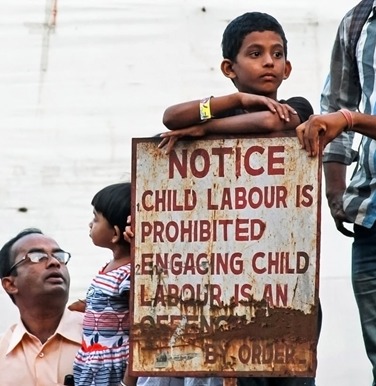
Protection of Children: Article 11 also provides special constitutional protection for children by prohibiting the employment of children below fourteen years of age in factories, mines, and other hazardous occupations. When read together with Article 25A, which guarantees free and compulsory education for children between the ages of five and sixteen years, the Constitution clearly envisages education rather than labour as the primary occupation of every child. Effective implementation of Article 25A would substantially reduce child labour and promote children’s physical, intellectual, and social development.

Constitutional Exception: Article 11 recognizes a limited exception permitting compulsory labour as part of a lawful sentence imposed upon a convicted person. A similar exception exists under the Thirteenth Amendment to the United States Constitution. However, this exception does not authorize degrading or inhuman treatment; there may be other statutory legislation to prohibit cruelty. Even convicted prisoners remain entitled to the protection of Articles 9, 10A, and 14 of the Constitution. Accordingly, prison labour must always respect human dignity and constitutional safeguards. In Article 11, the labour or punishment that is inflicted to the Military perssonnel is also excluded from the operation of Article 11.

Constitutional Nexus: Article 11 cannot be interpreted in isolation. It forms part of an integrated constitutional framework comprising Articles 3, 4, 9, 10A, 11, 14, and 25A. Article 3 seeks to eliminate exploitation in all its manifestations; Article 4 guarantees the right to be treated in accordance with law; Article 9 protects life and liberty; Article 10A guarantees due process and a fair trial; Article 11 abolishes slavery and forced labour; Article 14 safeguards human dignity; and Article 25A guarantees free and compulsory education. Collectively, these provisions establish a coherent constitutional framework dedicated to liberty, equality, social justice, and the protection of human dignity.

Conclusion: Article 11 represents one of the Constitution’s strongest commitments to human dignity and social justice. Its language is categorical, making slavery and forced labour virtually non-derogable constitutional prohibitions. Nevertheless, constitutional recognition alone cannot eradicate exploitation. The continued existence of bonded labour, child labour, and human trafficking demonstrates that the principal challenge lies not in constitutional design but in effective implementation. The State must therefore discharge its positive constitutional obligation by enforcing labour laws, strengthening institutional oversight, prosecuting offenders, and rehabilitating victims. Ultimately, the true effectiveness of Article 11 will be measured not by the breadth of its constitutional language but by its practical ability to eliminate all contemporary forms of human exploitation. Though Pakistan is taking steps to improve its human rights scoreboard but there is need to accerlate it. It will help us to maintain the GSP Plus state – that is necessary to our export, apart from moral alleviation.

Similar Posts

  • Mistaken Credit to a Bank Account: Legal Position

    Pakistan’s banking sector is experiencing a fast pace digital transformation, which includes inception of new digital banks as well as digitalization of the banking services, like Raast, Roshan Digital Accounts etc. Nevertheless, this digitalization sometimes causes technology mistakes / errors in the banking systems as well. One such issue, though to a little extent, is the matter of mistakenly credited amounts to the customers’ accounts, due to system glitches. And unluckily, it is rare that the customers, who are beneficiaries of such mistaken credits, ever bother to intimate the banks about it or return the mistakenly credited amounts. The recovery of such amounts is though legally possible, however, since it is civil cause action, falling within the jurisdiction of civil courts, therefore, it becomes cumbersome for the banks to recover such amounts, easily and speedily. Needless to mention that the subject recovery does not fall within the jurisdiction of the Banking Courts and hence, speedy trial / summary procedure trial is not available for this kind of recovery. In addition, it is also difficult in these cases to have the support of the law enforcement agencies, due to some legal framework’s problems. Luckily, a learned Judge of the Lahore High Court Lahore has recently passed a remarkable judgement on the subject matter, which will support the banks, in such matters. The judgement is regarding a case, where a bank’s system mistakenly credited a significant amount to one of its customers, who utilized a major portion of the amount . The bank pursued the customer and he gave a cheque for the amount involved. The cheque was later bounced, due to insufficient funds in the account and the bank then lodged FIR against him under Section 489-F. He was arrested and his bail was refused by the lower Court, against which he approached the High Court. The High Court observed that the amount received by customer was not meant to be utilized by him, but it was to be retained and preserved by him for return back to the bank. The Honourable Court further observed that the customer was supposed and required to inform the sender/bank regarding the error and make arrangements for its return to the owner/bank. Furthermore, the Honourable Court observed that as soon as the customer became in a position to exercise his control over the property, the property stood entrusted to him impliedly, but he instead of returning the same to its owner/bank, withdrew significant amount and embezzled the same, as such offence punishable under Section 406 of PPC was fully attracted against him. This case will become a precedent that if a bank customer receives mistakenly credited amount in his account and utilizes it, then it will be an offence of Breach of Trust, under Section 406 of Pakistan Penal Code. The Judgement is reported as PLJ 2025 Cr. C 797 LHC.

  • Europe experiences what Pakistan has been facing f…

    For decades, Pakistan has been living with extreme heat. Every summer, temperatures rise above 50°C in parts of Sindh and Balochistan, and cities across Punjab and southern Pakistan face prolonged heatwaves that make daily life a struggle for survival. Agricultural workers, construction labourers, sanitation staff and traffic police continue working under the blazing sun, often without adequate rest, shade, drinking water or legal protection. Heat has long been an occupational hazard in Pakistan, but, unfortunately, it has rarely received the policy attention it deserves. Now, Europe is confronting an extreme heat that Pakistan has experienced for years recorded above 50°C. The recent heatwave across Europe has pushed temperatures above 40°C in Germany, France, Italy, Spain and several other countries. Heat warnings have become routine, hospitals have reported sharp increases in heatstroke cases, schools have closed, transport systems have been disrupted, and governments have activated emergency response plans. The crisis has revealed that no country, regardless of its wealth or technological advancement, is immune to the accelerating consequences of climate change. The difference is that Europe’s heat emergency is still treated as an exceptional event, whereas in Pakistan extreme heat has become almost routine. Every year, millions face dangerous temperatures with little expectation of institutional support. When temperatures exceed 50°C in Jacobabad, Dadu, Sibi and surrounding districts, headlines fade within days even though the suffering continues for months. Pakistan has already paid a heavy price for climate inaction. The 2015 Karachi heatwave claimed well over a thousand lives within a few days, overwhelming hospitals and exposing serious weaknesses in disaster preparedness. Later investigations identified prolonged power outages, water shortages and the absence of coordinated emergency planning as major contributors to the tragedy. The disaster should have transformed national preparedness for future heatwaves. Instead, progress has been uneven and largely confined to a few urban centres. The devastating floods of 2022 offered another painful lesson. Although Pakistan contributes less than one percent of global greenhouse gas emissions, it suffered one of the worst climate disasters in its history, affecting more than 33 million people, destroying homes, schools, hospitals and agricultural land, and causing economic losses worth billions of dollars. The catastrophe exposed Pakistan’s vulnerability to climate extremes, ranging from floods to droughts and heatwaves. A long-term climate adaptation has failed to keep pace with rapidly increasing climate risks. Yes, climate change is not an environmental issue. It is a public health crisis, to be very clear, it is an economic challenge and a labour rights issue. Thousands of outdoor workers continue to perform physically demanding jobs during the hottest hours of the day without mandatory heat safety standards. Lost productivity, rising healthcare costs, declining crop yields, and growing pressure on electricity and water systems are becoming defining features of Pakistan’s summers. Europe’s current experience should be seen as a lesson that climate friendly cannot be built only after disasters occur. Infrastructure must be redesigned for rising temperatures, cities need more trees and green spaces instead of endless concrete, early warning systems must reach vulnerable communities, and labour laws should guarantee rest breaks, access to drinking water and protection for outdoor workers during extreme heat. Schools, hospitals and public buildings should also be adapted to withstand prolonged periods of extreme temperatures. For developed countries, the heatwave exposes the limits of relying solely on emissions reduction without making sufficient investments in climate adaptation. For Pakistan, it is another warning against repeating the cycle of learning lessons only after each catastrophe. The country’s climate history from Karachi’s deadly heatwave to the unprecedented floods of 2022 offers painful experiences of the cost of delayed action. The climate crisis no longer belongs to the future or to any single region. It is unfolding across continents, exposing both rich and poor nations to unprecedented risks. Europe is now discovering what Pakistan has known for years: extreme heat is not merely uncomfortable. It is deadly, economically destructive and socially unequal. The real question is no longer whether another climate disaster will arrive, but whether governments will finally learn from the ones that have already occurred.

  • Makkah Joint Defence Agreement and 9th Generation …

    A few days ago, Mr. Hakan Fidan, the Foreign Minister of Turkey, briefed the media on the MJDA. He said that the operational mechanisms will be decided at the first meeting of the joint committee comprising the foreign and defense ministers and the Chief of General Staff. He also provided an overview of possible areas of cooperation. In this context, it is high time to discuss the future orientation of the MJDA, especially areas of cooperation and investment to build a future-oriented alliance. A few areas have been identified for consideration.   First of all, the three partners must understand that the era of traditional war is rapidly becoming irrelevant. The concepts of 5th-, 6th-, 7th-, and 8th-generation warfare are evolving into new dynamics: 9th-generation warfare. Thus, Cooperation under MJDA must be based on the new elements and needs of 9th-generation warfare, in addition to traditional areas. Now the question is, what is 9th-generation warfare? 9th-generation warfare has a few characteristics that distinguish it from past generations of warfare.   First, 9th-generation warfare will minimize, if not eliminate, the role of humans to a greater extent. The first glimpse of this type of warfare is evident in the form of unmanned UVs. Russia-Ukraine and USA-Iran wars further reinforce this argument. However, humans are still engaged in one way or another in wars, including devising and executing plans and engaging in face-to-face combat. For example, during the application of 4th- and 5th-generation warfare in the Middle East, humans remained a constant factor in leading and executing the wars. After the bombardment of Iraq, it was humans who captured the land.   However, it is anticipated that artificial intelligence will take over this job in future wars, and future wars will be run by artificial intelligence and its tools. For example, in 9th-generation warfare, artificial intelligence-based robots can take over the role of humans. Robots can invade a country, or they can also be used in guerrilla warfare. Countries can also use robots to conduct terrorist activities. They can send the robots with an anonymous identity, and no one will be able to trace the origin. Organized crime organizations can also use them to conduct their activities, such as targeted killings.   Let’s imagine another scenario. Robots are invading a country. They fight either humans or other robots. Countries with better technology can turn robots into double-edged weapons. On the one hand, robots will be fighting machines. However, they can also equip robots with destructive explosives, such as nuclear material or other explosives. Then what would be the opponent’s choices? How will opponents fight an explosive-ridden robot? They will take over the country if they do not stop the robots. On the other hand, if they try to destroy the robots, the nuclear explosives will detonate, which can cause serious damage. The scenario would be quite scary, and countries with advanced robot and AI technology can maneuver situations in their favor.   Second, the most developed countries have recently taken war into outer space, especially the USA. The USA’s obsession with and investment in outer space have compelled other countries to follow the suit. As a result, they are investing heavily, instigating an outer space race for dominance. The race has accelerated since the establishment of the US Space Force. According to the Vice President of the USA, Mr. Pence, the force was launched with four specific objectives. First, U.S. Space Command “will establish unified command and control for our Space Force operations; ensure integration across the military; and develop the space warfighting doctrine, tactics, techniques and procedures of the future.” Second, a military astronaut corps, which Pence called “an elite group of joint warfighters specializing in the domain of space.” Third, a Space Development Agency that will research and develop new technologies and “ensure cutting-edge warfighting capabilities.” Fourth, new bureaucratic structures that will define “clear lines of responsibility and accountability to manage the process of standing up and scaling up the United States Department of the Space Force.”   The USA and its allies are enhancing cooperation to outpace others and dominate outer space. As a result, they have launched a malicious campaign against China and Russia. They are portraying China and Russia as threats to global peace and to the use of outer space to attract public attention, support, and financial resources. At the same time, they also want to hinder the advancement of other countries in space technology to maintain their hegemony in the application of space technologies for war dominance. For example, during the Gulf War of the 1990s, the USA and allied forces used space technologies to outmaneuver their opponents. Since then, the USA and its allies have been working to further improve space technology and prevent other countries from developing these technologies.   Therefore, it is anticipated that space war will be multifaceted. On the one hand, there will be a race to control or maneuver opponents’ satellites by interfering with their software. This will be done to obtain information or spread disinformation. Sending arms into space to destroy opponents’ satellites is also possible. On the other hand, some countries have developed capabilities to hit satellites from the ground. This has opened a new field of military offense.   The use of space technology for military dominance created fear in the developing world. They fear that leading countries in space technology will use space for control and interference, collect information, and dictate to other countries. For example, the USA uses navigation systems to collect data and outmaneuver others in wars.   Third, in recent times, we have observed that COVID-19 has played havoc with humanity. It has shaken the whole world. The whole world came to a standstill. Markets were closed, and the tourism industry sank. It has introduced the world to a new danger of biological war. Biological war is considered one of the most lethal forms of war, as only one person can paralyze the world. One virus can shut down the whole world

  • Pakistan’s Economy: Challenges and Opportuni…

    A country’s economy is the foundation of its development, sovereignty and national security. A strong economy not only improves the quality of life of its citizens but also strengthens a nation’s standing in the international community. Pakistan’s economy today stands at a critical juncture. While there are encouraging signs of stability, many structural challenges continue to hold back sustainable growth. As a result, the economy has become a central concern for citizens, businesses, investors and policymakers alike. Over the past few years, Pakistan has endured one of its most difficult economic periods. High inflation significantly reduced people’s purchasing power, while repeated increases in electricity and gas tariffs drove up production costs for industries. At the same time, the depreciation of the Pakistani rupee made imports more expensive, placing additional pressure on businesses and households. The burden fell most heavily on middle and low-income families, many of whom struggled to meet even their basic daily needs. Despite these hardships, recent economic indicators offer cautious optimism. Inflation has eased compared to previous highs, foreign exchange reserves have shown improvement, remittances have remained resilient, and efforts to increase exports are beginning to produce positive results. However, stronger macroeconomic indicators alone do not automatically translate into better living standards. Sustainable progress can only be achieved when economic growth creates employment opportunities, revitalises industries and leads to meaningful increases in household incomes. One of Pakistan’s most persistent economic challenges is the lack of policy continuity. Successive governments often replace or abandon the initiatives of their predecessors in favour of new priorities. This inconsistency weakens investor confidence and undermines long-term economic planning. Many successful economies have demonstrated that sustained growth depends on stable national policies that remain consistent regardless of political transitions. Tax reform is another area that demands urgent attention. The country’s tax base remains disproportionately small compared to its population, placing an unfair burden on compliant taxpayers while a significant portion of the economy continues to operate outside the formal tax system. Broadening the tax net, simplifying tax procedures, enhancing transparency and effectively addressing tax evasion would provide the government with greater fiscal space to invest in infrastructure, education and public services. Agriculture continues to be the backbone of Pakistan’s economy, yet the sector faces numerous challenges. Water scarcity, limited adoption of modern farming techniques, rising input costs and the growing impact of climate change have reduced agricultural productivity and increased the hardships faced by farmers. Investing in modern agricultural technologies, improving water management and providing farmers with better financial and technical support could substantially enhance production and boost agricultural exports. Pakistan’s information technology sector also presents remarkable opportunities. With a large and increasingly skilled young population, expanding freelance services and growing participation in the digital economy, the country has significant potential to earn valuable foreign exchange. Realising this potential requires greater investment in digital education, reliable internet infrastructure, research, innovation and an environment that supports entrepreneurship. The energy sector remains equally important to economic growth. High electricity and gas prices continue to increase industrial production costs, reducing the competitiveness of Pakistani products in international markets. Greater investment in renewable energy, reducing transmission losses and improving energy management could help lower costs and strengthen industrial productivity. Foreign direct investment is another key driver of sustainable economic development. Investors are naturally attracted to countries that offer political stability, transparent regulations, an efficient judicial system and a business-friendly environment. Pakistan can significantly improve its investment climate by reducing bureaucratic hurdles, strengthening institutions and implementing investor-friendly policies that encourage long-term confidence. Economic progress, however, is not solely the responsibility of governments. Citizens also have an essential role to play by paying taxes honestly, using energy responsibly, supporting local industries and respecting the rule of law. A resilient economy is built through shared responsibility between the state, businesses and the public. Pakistan is not short of resources or potential. What it needs is better governance, prudent management of available resources, policy consistency and broad national consensus on economic priorities. Continued investment in education, industry, agriculture, exports and human capital can enable the country not only to overcome its economic challenges but also to emerge as a stronger and more competitive economy in the region. The need of the hour is to place long-term economic interests above short-term political considerations. A strong economy is the cornerstone of a strong state. By making informed and consistent policy choices today, Pakistan can lay the foundations for lasting prosperity, economic resilience and a better future for generations to come.

  • Nine Days and Five Months: Open-Source Evidence, t…

    By Aleena Saif Ullah The writer is an MPhil Scholar in International Relations, specializing in global defence and security, University of the Punjab, Lahore. On February 28, the first day of Operation Epic Fury, a strike hit the Shajareh Tayyebeh girls’ elementary school in Minab, in Iran’s Hormozgan province. Iranian state media reported that 168 children and 14 adults were killed. Anadolu reported two strikes roughly forty minutes apart. President Trump said on March 7 that in his opinion Iran had done it, citing Iranian inaccuracy with munitions. Bellingcat had already established otherwise. Its researchers identified a Tomahawk cruise missile — a munition no other belligerent in the conflict fields — in footage released by Iran’s Mehr agency, and geolocated the strike sequence. The New York Times, the Associated Press and CNN reached compatible conclusions through independent satellite and video analysis. By March 11, NPR reported that a preliminary Pentagon assessment had determined the United States was at fault. Five months later, the accountability failure is not the one I described when I first wrote about this case, and the actual failure is more instructive. A process was initiated. On March 13, Secretary Hegseth announced a formal command investigation, with CENTCOM appointing a senior officer from outside the command to lead it — the correct procedural choice. Lawmakers have said that officer submitted an initial report in April. CENTCOM has held it since. On May 19, Admiral Brad Cooper told lawmakers under oath that the investigation was complex, near completion, and that “I’m fully committed to transparency” once it concluded. No findings have been published. Then in July, CNN reported the detail that reframes the case. Within a week of the strike, the first two stages of the battle damage assessment were complete, establishing that American forces had hit the location. The third stage — the standard review in which Defense Intelligence Agency analysts examine the full body of satellite imagery and intelligence to determine holistically what occurred — had not been ordered as of early July. One source familiar with the matter told CNN there had been no detailed analysis and that CENTCOM had locked down the investigation. NBC reported that preliminary findings pointed to outdated intelligence as the likely cause. This is a different kind of institutional failure from the one international lawyers usually describe, and it is worse. An absent process can be demanded. A process that ran, produced a document, and stopped is much harder to move, because officials can accurately say an investigation took place. The context makes it harder still. On May 13 the Pentagon’s own Inspector General found that the Department had systematically failed to implement its Civilian Harm Mitigation and Response Action Plan, with all eleven objectives reclassified as at risk and the legally mandated Civilian Protection Center of Excellence lacking key staff and leadership. The architecture built specifically to prevent and account for incidents like Minab had been allowed to decay before the war that tested it. Congress has asked the right questions and been ignored. A letter led by Senator Chris Van Hollen and signed by more than forty senators asked Secretary Hegseth directly whether American forces conducted the strikes, what the intended target was, whether AI tools were used in targeting, and whether a no-strike list was established before operations began. Answers were requested by March 18. More than 150 House members signed a parallel letter on the broader civilian toll. The comparison the Pentagon itself invites is unflattering. As NBC noted, the Department has publicly disclosed its role in comparable incidents before: a special forces raid in Yemen, a bombing in Iraq that killed more than a hundred civilians, the strike on an Afghan hospital that killed at least forty-two, a drone attack in Afghanistan that killed ten. Disclosure in those cases was not generous, but it happened. What Minab demonstrates is that the binding constraint on accountability is not evidence. Volunteer open-source investigators, working entirely from public material, established the essential facts within nine days. The state that conducted the strike established them internally within seven. The constraint is that no mechanism exists to compel publication of a report a government has decided not to publish — not the Rome Statute, to which the United States is not a party; not the Security Council, where it holds a veto; and not the Inspector General, who can find institutional failure but cannot release another command’s findings. One lever remains, and it is domestic rather than international. Congress can require declassified release of the findings through the National Defense Authorization Act. Whether it does will indicate more about the state of accountability for civilian harm than any further open-source analysis. The evidence is not missing. The report is not missing. Both exist. Neither can be read.    

  • The Architect of Conscience: Arif Ali Mir and the …

    Reflecting upon the profound vastness of the cosmos and the acute, unyielding solitude of the human condition, the French philosopher and writer Albert Camus once observed that if even a single lamp were to be kindled within the dark, tempestuous ocean of history, the entire fabric of the universe would transform, tearing asunder the merciless veil of night. The annals of history stand as an unshakeable testament to the truth that whenever the fierce gales of material greed, political expediency, and moral decay have threatened to engulf human societies, certain dervish-souled, deeply conscientious, and granite-willed individuals have emerged from the crowd. Swimming resolutely against the powerful, destructive current of their era, these rare souls have stood guard over the invaluable civilizational trusts bequeathed by antiquity. The fertile, history-drenched soil of Gujrat—where the ancient, meandering waves of the Chenab and Jhelum rivers have whispered civilizational sagas for centuries—has long served as the intellectual cradle and practical domain of precisely such a man of extraordinary mettle. Brushing aside the rigidities of legal codes, the demanding, iron-willed disciplinary training of police service, and the glittering, lucrative allure of high-ranking international postings, he made the monumental choice to dedicate his entire terrestrial existence to books, the retrieval of forgotten history, and uncompromised moral dignity. This towering, unyielding personality is none other than Arif Ali Mir, Advocate, whose entire life has stood like an unshakable monolith against the self-serving, shifting winds of his time. Born on December 28, 1949—corresponding precisely to the 8th of Rabi’ al-Awwal, 1369 AH, on a Wednesday—within the historic, time-honored confines of “Mir Manzil” in Mohalla Khyber, nestled deep in the heart of Gujrat’s historic town of Jalalpur Jattan, Arif Ali Mir’s life is far more than a conventional biographical sketch. It is a profound, sweeping narrative capturing the complex post-colonial socio-political contradictions of the Indian subcontinent, an unwavering, almost sacred custodianship of noble familial heritage, and an extraordinary odyssey of letters where every single chapter serves as a luminous metaphor for absolute sincerity, purity of intellectual purpose, and complete self-sufficiency. His esteemed father, Ghazanfar Hussain Mir, was a legendary, fiercely principled, and seasoned lawyer of his generation. His uncommon nobility, profound legal acumen, and distinguished, intellectual circle of acquaintances infused the deepest foundational layers of Arif Ali Mir’s character with a forged-steel morality that would remain his greatest, most unassailable asset throughout his life. Standing gracefully beside him was his mother, Ruqaiya Begum, an affectionate, deeply dignified woman who silently imprinted the enduring values of selfless sacrifice, patience, and unbreakable resilience upon the rearing of her children. Within this vibrant, intellectually charged household comprising four sisters and three brothers, Arif Ali Mir occupies a unique middle vantage: two elder sisters precede him in age, while all other siblings are younger. Driven eventually by the professional demands and expanding horizons of his father’s legal practice, the family made the permanent transition from Jalalpur Jattan to the bustling city of Gujrat, establishing their permanent domestic and intellectual anchor at “Mir Street” on Bhimber Road—a historic domicile that would organically evolve into a cherished sanctuary for scholars, jurists, and discerning bibliophiles alike. A deep, discerning psychological and biographical study of Mr. Arif Ali Mir’s versatile and multifaceted personality reveals that his arrival on December 28, 1949, was far from a mere statistical coincidence. According to the timeless principles of astrological configuration and character alignment, his zodiac sign, Capricorn, functions as a clear mirror to his intrinsic nature. Ruled by Saturn—the planetary archetype of profound gravity, timeless perseverance, and unyielding adherence to principle—these exact traits form the unmistakable, defining hallmark of Mr. Arif’s entire life. While Capricorns are universally recognized across traditions as grounded earth signs marked by relentless, grinding toil, Arif Sahib uniquely channeled this raw elemental energy into cultivating a veritable forest of arts, letters, and historical preservation upon the plains of Gujrat. The crowning virtue of his astrological archetype is structural discipline combined with penetrating foresight—qualities that naturally laid the bedrock of his early success in the legal arena, where he learned to dissect truth from falsehood with microscopic precision. Yet, the most captivating, transcendent facet of his persona is how he decisively transcended the traditional, narrow materialism often associated with his sign through a profound inner spiritual inclination. Operating as a fiercely devoted bibliophile and patron of learning, he redirected the formidable organizational capacity of the Capricorn psyche away from worldly accumulation and entirely toward the preservation of rare texts and the wide propagation of knowledge. Operating with the quiet, unostentatious efficiency characteristic of his sign, his personal dignity, fierce institutional loyalty, and immense intellectual depth render him a towering, sheltering tree on Gujrat’s literary horizon—its roots gripping ancient tradition, its uppermost branches illuminated by the clear light of universal wisdom. Mr. Arif Ali Mir’s educational journey is a rugged, continuous path strewn with dramatic twists, historical upheavals, and personal sacrifices that ultimately refined his character like crucible-tested gold. At the time of his earliest schooling, his father was stationed as the Chief Sanitary Inspector for the Sialkot Municipality, prompting Arif’s first three formative, sensory years of childhood to unfold within the disciplined, historic halls of the Convent of Jesus and Mary in Sialkot. Upon the family’s return to Jalalpur Jattan, he successfully completed his fifth and sixth grades at Islamia Primary School, subsequently transitioning to Islamia High School. When domestic circumstances necessitated a move to Gujrat, where the family initially settled in a rented house near Mohalla Gyanpura / Muslim Abad , he pursued his seventh and eighth grades at Muslim High School on Court Road. This institution was then under the stellar administrative helm of the eminent headmaster Master Ghulam Abbas. For his matriculation, he moved to Public High School No. 1 in Gujrat—administered with strict discipline by Headmaster Mirza Shaukat Ali and school owner Sheikh Shafqatullah—where he successfully passed his Matriculation examination in the watershed year of 1964. Following this, he completed his intermediate education at Sir Syed College on Railway Road, Gujrat, in 1966, before

Leave a Reply

Your email address will not be published. Required fields are marked *