
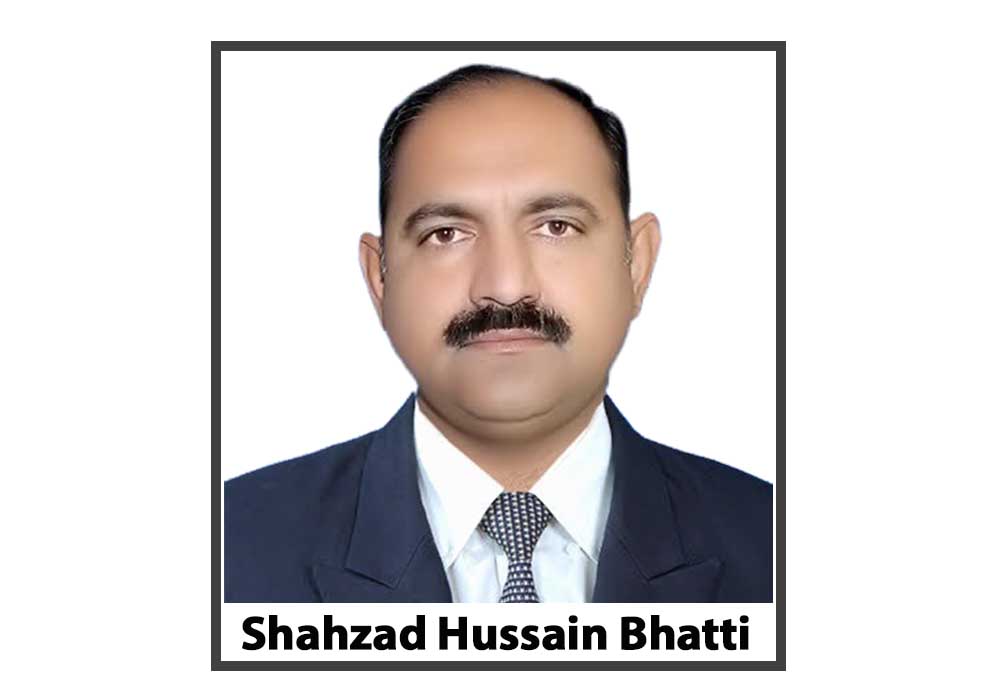
pakistan8217s economy challenges

Pakistan’s Economy: Challenges and Opportuni…

A country’s economy is the foundation of its development, sovereignty and national security. A strong economy not only improves the quality of life of its citizens but also strengthens a nation’s standing in the international community. Pakistan’s economy today stands at a critical juncture. While there are encouraging signs of stability, many structural challenges continue to hold back sustainable growth. As a result, the economy has become a central concern for citizens, businesses, investors and policymakers alike.

Over the past few years, Pakistan has endured one of its most difficult economic periods. High inflation significantly reduced people’s purchasing power, while repeated increases in electricity and gas tariffs drove up production costs for industries. At the same time, the depreciation of the Pakistani rupee made imports more expensive, placing additional pressure on businesses and households. The burden fell most heavily on middle and low-income families, many of whom struggled to meet even their basic daily needs.

Despite these hardships, recent economic indicators offer cautious optimism. Inflation has eased compared to previous highs, foreign exchange reserves have shown improvement, remittances have remained resilient, and efforts to increase exports are beginning to produce positive results. However, stronger macroeconomic indicators alone do not automatically translate into better living standards. Sustainable progress can only be achieved when economic growth creates employment opportunities, revitalises industries and leads to meaningful increases in household incomes.

One of Pakistan’s most persistent economic challenges is the lack of policy continuity. Successive governments often replace or abandon the initiatives of their predecessors in favour of new priorities. This inconsistency weakens investor confidence and undermines long-term economic planning. Many successful economies have demonstrated that sustained growth depends on stable national policies that remain consistent regardless of political transitions.

Tax reform is another area that demands urgent attention. The country’s tax base remains disproportionately small compared to its population, placing an unfair burden on compliant taxpayers while a significant portion of the economy continues to operate outside the formal tax system. Broadening the tax net, simplifying tax procedures, enhancing transparency and effectively addressing tax evasion would provide the government with greater fiscal space to invest in infrastructure, education and public services.

Agriculture continues to be the backbone of Pakistan’s economy, yet the sector faces numerous challenges. Water scarcity, limited adoption of modern farming techniques, rising input costs and the growing impact of climate change have reduced agricultural productivity and increased the hardships faced by farmers. Investing in modern agricultural technologies, improving water management and providing farmers with better financial and technical support could substantially enhance production and boost agricultural exports.

Pakistan’s information technology sector also presents remarkable opportunities. With a large and increasingly skilled young population, expanding freelance services and growing participation in the digital economy, the country has significant potential to earn valuable foreign exchange. Realising this potential requires greater investment in digital education, reliable internet infrastructure, research, innovation and an environment that supports entrepreneurship.

The energy sector remains equally important to economic growth. High electricity and gas prices continue to increase industrial production costs, reducing the competitiveness of Pakistani products in international markets. Greater investment in renewable energy, reducing transmission losses and improving energy management could help lower costs and strengthen industrial productivity.

Foreign direct investment is another key driver of sustainable economic development. Investors are naturally attracted to countries that offer political stability, transparent regulations, an efficient judicial system and a business-friendly environment. Pakistan can significantly improve its investment climate by reducing bureaucratic hurdles, strengthening institutions and implementing investor-friendly policies that encourage long-term confidence.

Economic progress, however, is not solely the responsibility of governments. Citizens also have an essential role to play by paying taxes honestly, using energy responsibly, supporting local industries and respecting the rule of law. A resilient economy is built through shared responsibility between the state, businesses and the public.

Pakistan is not short of resources or potential. What it needs is better governance, prudent management of available resources, policy consistency and broad national consensus on economic priorities. Continued investment in education, industry, agriculture, exports and human capital can enable the country not only to overcome its economic challenges but also to emerge as a stronger and more competitive economy in the region.

The need of the hour is to place long-term economic interests above short-term political considerations. A strong economy is the cornerstone of a strong state. By making informed and consistent policy choices today, Pakistan can lay the foundations for lasting prosperity, economic resilience and a better future for generations to come.

Similar Posts

  • Artificial Intelligence and the Future of the Lega…

    By Asma Rahmat, Final Year Law Student, SLC, Superior University and Muhammad Ameer Hamza, Final Year Law Student, SLC, Superior University   The legal profession has long been regarded as one of the most respected and tradition-bound institutions in society, founded on human intellect, ethical judgment, and the pursuit of justice. Yet, like every other profession, it is now experiencing the profound impact of Artificial Intelligence (AI). Across the globe, AI is transforming industries by automating routine tasks, enhancing productivity, and improving decision-making. The legal sector is no exception. While countries with advanced legal systems have already begun integrating AI into legal practice and judicial administration, Pakistan is only beginning to explore its potential. The challenge before us is not whether AI will become part of the legal profession, but whether we are prepared to embrace this technological revolution while preserving the fundamental values of justice, fairness, and the rule of law. Artificial Intelligence has the ability to process vast amounts of information within seconds, making it an invaluable tool for legal professionals. Today, AI-powered software can conduct legal research, review contracts, summarize lengthy case files, identify relevant judicial precedents, and even assist in drafting legal documents. These are tasks that traditionally consumed hours or even days of a lawyer’s time. By automating repetitive and time-consuming work, AI enables lawyers to focus on the more complex aspects of their profession, including legal strategy, courtroom advocacy, negotiation, and client counseling. Rather than replacing legal professionals, AI has the potential to become a reliable assistant that enhances both efficiency and accuracy. For Pakistan, where the judicial system continues to struggle with delays and an ever-growing backlog of cases, the responsible use of AI could bring much-needed reform. Thousands of litigants wait years for the resolution of their disputes, often because courts are overburdened and administrative processes remain largely manual. AI can assist in organizing digital records, managing court schedules, classifying legal documents, and simplifying legal research for judges and lawyers alike. These improvements could significantly reduce delays, improve case management, and make the justice system more efficient without compromising judicial independence. Importantly, AI should support judicial decision-making rather than replace it, as the final responsibility for interpreting the law must always remain with judges. Beyond improving efficiency, AI also offers an opportunity to strengthen access to justice. A significant portion of Pakistan’s population cannot afford legal representation or lacks access to basic legal information. AI-powered legal assistance platforms, particularly those available in Urdu and regional languages, could provide citizens with preliminary guidance on their legal rights, court procedures, and available remedies. Such tools would not replace qualified lawyers but could empower individuals by helping them understand the legal system before seeking professional assistance. In a country where legal awareness remains limited, technology can become a powerful means of promoting legal literacy and strengthening public confidence in the justice system. The emergence of AI is equally significant for legal education. Law students now have access to intelligent research tools that can summarize judgments, explain complex legal principles, compare international legal systems, and assist in legal writing. These technologies can make legal education more interactive and research-oriented. However, they also present a challenge. Students must avoid becoming overly dependent on AI-generated content, as legal education is ultimately designed to develop analytical reasoning, critical thinking, and independent judgment. Future lawyers must learn not only how to use AI responsibly but also how to question its outputs, verify legal authorities, and apply legal principles thoughtfully. Despite its many advantages, Artificial Intelligence raises several legal and ethical concerns that cannot be ignored. AI systems are not infallible. They may generate inaccurate information, misinterpret legal authorities, or reflect biases contained within the data on which they were trained. A lawyer who relies solely on AI without verifying its results risks providing incorrect legal advice or presenting flawed arguments before the court. Furthermore, the use of AI raises important concerns regarding client confidentiality and data protection. Lawyers have a professional and ethical obligation to protect sensitive client information, and any use of AI must ensure that confidential data is handled securely. These concerns highlight the importance of developing ethical guidelines governing AI’s use within the legal profession. Pakistan currently lacks a comprehensive legal framework specifically regulating Artificial Intelligence. While existing laws address cybercrime and certain aspects of electronic transactions, they do not adequately address issues such as AI accountability, transparency, liability, algorithmic bias, or the protection of personal data in AI-assisted legal services. As AI becomes more prevalent, policymakers must establish a clear regulatory framework that encourages technological innovation while safeguarding constitutional rights, including privacy, equality before the law, and the right to due process. Such regulation will be essential to ensuring that AI serves society without undermining public trust in legal institutions. Perhaps the greatest misconception surrounding AI is the belief that it will eventually replace lawyers. In reality, the legal profession depends upon qualities that no machine can fully replicate. Lawyers do not merely apply legal rules; they exercise judgment, interpret complex factual situations, negotiate settlements, understand human emotions, and advocate persuasively before courts. Similarly, judges must balance competing rights, interpret legislation in light of constitutional principles, and deliver reasoned decisions based on justice and equity. These responsibilities require wisdom, experience, empathy, and moral reasoning—qualities that remain uniquely human. AI can provide information and support, but it cannot replace the conscience, ethical responsibility, and professional judgment that define the legal profession. The future of the legal profession in Pakistan therefore lies in collaboration rather than competition between humans and technology. Law schools should introduce courses on Artificial Intelligence, legal technology, and digital ethics to prepare future lawyers for an increasingly technology-driven profession. Bar councils and regulatory authorities should establish professional standards governing the ethical use of AI in legal practice, while the judiciary should continue investing in digital infrastructure to improve the administration of justice. At the same time, legal professionals must embrace lifelong learning so they can adapt to technological advancements without compromising the integrity

  • The Partition of 1947: Colonial Flight, Constituti…

    The geopolitical partition of the Indian subcontinent in the mid-twentieth century and the subsequent emergence of two sovereign nation-states remain among the most complex and defining chapters in modern global history. Within constitutional studies, postcolonial scholarship, and international affairs, this monumental shift has often been viewed through overly reductive lenses—frequently chalked up to imperial haste, nationalist fervor, or entrenched religious polarization. Yet, evaluated through a critical, detached twenty-first-century historical paradigm, a far more nuanced reality emerges: the creation of Pakistan was neither the product of a singular conspiracy nor a sudden historical accident. Rather, it represented a profound tripartite structural crisis triggered by Britain’s post-war imperial retreat, the Indian National Congress’s persistent anxiety over central authority, and the All-India Muslim League’s long-standing constitutional struggle to secure the political rights, economic safeguards, and existence of the subcontinent’s Muslim minority. To comprehend the foundational tier of this historical watershed, one must first analyze the global political economy and British colonial strategy of the 1940s. The devastation of the Second World War eroded the financial, administrative, and military underpinnings of the British Empire. British India—once celebrated as the crown jewel of the realm—had transmuted into an unsustainable administrative burden for Clement Attlee’s post-war Labour government in London. Official imperial correspondence compiled in The Transfer of Power 1942–47 exposes an unmistakable truth: London’s primary objective was no longer to establish an equitable political settlement in South Asia, but rather to execute a swift, low-cost exit that mitigated further economic and military liability. This imperial burnout precipitated Lord Mountbatten’s rushed exit strategy, which abruptly advanced the timeline for the transfer of power from June 1948 to August 1947. The human and spatial catastrophe that followed was exacerbated by the Boundary Commission led by Sir Cyril Radcliffe—a man with no prior familiarity with the subcontinent’s intricate demographic and cultural fabric, tasked with carving borders across maps in a matter of weeks. The chaotic fallout of the Radcliffe Award, the controversial inclusion of Muslim-majority tehsils like Gurdaspur into India, the bloody bifurcation of Punjab and Bengal, and the largest forced migration in human history were ultimately the catastrophic human costs paid by millions of South Asians for a retreating empire’s hasty flight. The second dimension of this tripartite framework involves the political, ideological, and constitutional stance of the Indian National Congress—a position frequently mischaracterized in one-sided narratives as sheer personal hubris or partisan bias. A rigorous, objective historical analysis of the Congress leadership, particularly figures like Jawaharlal Nehru and Sardar Vallabhbhai Patel, reveals that their overriding strategic fear was the “Balkanization” of the subcontinent into scores of autonomous, warring princely states. The Congress maintained that governing a vast, culturally diverse land mass under a weak central power alongside sprawling princely domains was fundamentally unviable. They advocated for a highly centralized state capable of driving industrialization, economic cohesion, and geopolitical stability. Consequently, Congress consistently resisted flexible federal structures that granted extensive provincial autonomy, fearing that a weak central government would inevitably lead to the fragmentation of India’s geographical and political integrity. However, the third and arguably most crucial ideological and legal dimension was the constitutional resistance led by the All-India Muslim League under Quaid-e-Azam Muhammad Ali Jinnah—a struggle born out of the inherent limitations of majoritarian, “Westminster-style” numerical democracy. In culturally homogenous Western societies, the principle of “one person, one vote” forms the bedrock of democratic governance. Yet in the deeply stratified, multi-religious reality of the subcontinent, strict numerical majoritarianism effectively condemned a twenty-five percent Muslim minority to permanent political subordination under a seventy-five percent Hindu majority. For the Muslim population, this contest was never merely about securing a share of administrative power; it was a fundamental fight for legislative self-determination, economic survival, and cultural preservation. A close reading of the subcontinent’s constitutional trajectory demonstrates that the demand for Pakistan did not originate as a call for immediate territorial separation. From the Simla Deputation of 1906 and the constitutional reforms of 1909 to the Lucknow Pact of 1916, Jinnah’s Fourteen Points of 1929, and the Government of India Act of 1935, the primary objective of Muslim leadership was to secure provincial autonomy, separate electorates, and robust constitutional safeguards within a unified Indian federation. As the eminent Cambridge historian Ayesha Jalal highlighted in The Sole Spokesman, the demand for Pakistan functioned for a long time as a sophisticated strategic bargaining chip aimed at securing equal constitutional weight at the center, ensuring minority rights could not be overridden by sheer majoritarian dominance. The pivotal turning point occurred following the 1937 provincial elections. When the Indian National Congress formed unilateral governments across most of British India while sidelining minority representation, its twenty-month tenure transformed the Muslim League’s theoretical anxieties into stark political reality. The final, most promising opportunity for a united, decentralized India was the Cabinet Mission Plan of 1946. It proposed grouping British Indian provinces into three autonomous tiers, restricting the federal center strictly to defense, foreign affairs, and communications. Demonstrating extraordinary political foresight and statesmanship, Jinnah accepted the Cabinet Mission Plan despite heavy internal dissent, striving to preserve the geographic unity of the subcontinent while securing constitutional autonomy for Muslims. This fragile compromise collapsed in July 1946 during a press conference in Bombay, where Jawaharlal Nehru declared that Congress would enter the Constituent Assembly “unfettered by agreements” and free to modify the Cabinet Mission Plan. In his seminal work Partition of India: Legend and Reality, renowned Indian jurist and constitutional historian H. M. Seervai meticulously documented how Congress’s rigid insistence on hyper-centralization and rejection of a loose federation torpedoed the Cabinet Mission Plan. At that crucial juncture, the demand for a separate, sovereign state ceased to be an idealistic campaign; it became the sole viable, logical pathway to guarantee political equality, dignity, and constitutional security for millions of Muslims. Underpinning this prolonged political contest was an essential socio-economic reality often overlooked in conventional historiography. In British India, commercial networks, civil administration, and industrial capital were predominantly concentrated within the Hindu middle class, leaving the Muslim agrarian class, tenant

  • Mental Health and Elite Universities: The Mounting…

    Bio: Hamza Tareen is a student at LUMS majoring in Political Science, with a keen interest in philosophy and theology. ‘I am utterly overwhelmed; the deluge of quizzes is beyond my capacity,’ my friend slowly sighed as his head drooped in exhaustion. Students across the country nurse dreams of pursuing higher education in premier institutes such as the likes of LUMS or IBA. They navigate the rigorous selection process, pay exorbitant fees and, when they finally clinch admission, little do they anticipate the stringently demanding atmosphere that would exact a heavy toll on their mental health. Those who get into these prestigious universities are students who have already demonstrated exceptional academic excellence, and, unsurprisingly, they formulate a highly ambitious criterion for defining success, i.e., consistently acing their courses. However, since the assessment follows a bell-curve distribution which evaluates performance relative to peers, the grading is highly competitive and only a small proportion land in the A/A- categories. This not only fails their expectations but plunges them into depression as they call into question their academic capabilities and self-worth. And, to top it off, peer pressure, which is ever pervasive in the culture, further complicates the problem. It would be tempting to label setting unrealistic expectations as the sole culprit; but the elephant in the room is something else. It is the culture that continuously pushes students to the brink of burnout and brands it as ‘academic rigor.’ From having interminable quizzes, assignments and mid/final exams to being expected to excel in four/five different courses simultaneously, the pressure is intense. And students are expected to somehow manage it all—along with carving out time for extracurriculars and social life. University is not all about academics, and there are a multitude of other problems that students steer through during the semester. But, to their dismay, they are assumed to carry through it all. Justified it would be to say that by the end of the term, they are sapped of all strength, teetering on the precipice of collapse. It is a well-researched—and unfortunate—fact that depression and mental health problems abound in elite universities. The aforementioned factors, coupled with other personal and social challenges that characterize this phase of students’ academic journeys, become a crucible of pressure for them. They stumble, totter, and fall into a shroud of uncertainty. And, lamentably, the stigma associated with seeking help or counselling multiplies the problem. Mental health is stigmatized as something alien, suited for the ‘feeble.’ Amidst these circumstances, the onus falls upon the administration. Supportive counselling sessions which help students in threading their way through university life and academics are crucial; dedicated mental wellness centers need to be introduced, encouraged and endorsed; and students should be empowered to zoom in more on learning than deriving their self-worth from grades alone. This does not mean exhibiting apathy towards academic performance, but a reorientation of priorities which do not impede their growth and self-esteem. Finally, a reconsideration and reassessment of balancing academic rigor with students’ well-being is indispensable on the part of the administration. Mental well-being will naturally translate into more productivity.

  • A lesson from 1979

    In the winter of 1979, a neighbour’s house caught fire. The Soviet Union had marched into Afghanistan, and the flames of war were licking at the walls of Kabul. From across the ocean, a distant power arrived at Pakistan’s door. It did not come with soldiers. It came with money, guns, and a promise: *”Let us fight this fire together. Use your roof. Use your roads. We will stand with you. We will not let the fire reach your house.”* Pakistan opened its door. What else could it do? The Soviet army sat on its western border. The world was divided into two camps, and neutrality was a luxury no frontline state could afford. For ten years, Pakistan became the staging ground for a war that was not its own. It hosted three million refugees. Its cities swelled. Its tribal areas became training grounds for fighters armed and funded by outside money. Weapons arrived by the shipload through Karachi. Pakistani officers coordinated strategy. Every bullet fired at a Soviet convoy in the Hindu Kush passed through Pakistani hands. The distant power paid the bills. It sent the Stinger missiles. It called the resistance fighters “freedom fighters” and Pakistan a “frontline state.” But the war was never truly about Pakistan’s safety. It was about bleeding the Soviet Union in a distant mountainside, using Pakistani soil as the operating theatre and Afghan bodies as the currency. Then, in 1989, the Soviet Union withdrew. The fire in the neighbour’s house went out. And the distant power that had promised eternal friendship turned its attention elsewhere. The billions dried up. The diplomatic interest evaporated. Afghanistan, the battlefield, was left to warlords who turned the weapons on each other. Pakistan was left with three million refugees who would not go home, a Kalashnikov culture that would not disappear, and a border that would never again be quiet. The weapons that had been given to fight the Soviets did not rust. They remained. They moved into streets, into disputes, into corners of the country where the state had never fully reached. The guest who had brought the fire extinguisher had started a blaze that spread to the host’s own house — and then moved to a new neighbourhood. The distant power won its strategic objective at the cost of Afghan and Pakistani soil, then walked away. Its own cities were never bombed. Its own children never became refugees. Its economy never staggered under the weight of someone else’s war. Pakistan, which had signed no formal treaty of alliance but had acted as an ally in every meaningful sense, was left holding the pieces. This is what happens when alliances are forged in the middle of a fire. The stronger partner does not need your victory. He needs your usefulness. He needs you to hold the front, to absorb the blow, to stand in a place where he does not wish to stand. And when the war ends, he will shake your hand and go home — while you remain amid the embers, wondering why the fire you helped extinguish has reignited in your own courtyard. History records a curious pattern. The alliances that have endured — the ones that outlasted their founders and shaped the world for generations — were almost never built while the house was burning. NATO was forged in 1949, not because the bombs were falling on Paris, but because the memory of war was still fresh and the desire to prevent it was shared. The parties had time to read the text, to negotiate the terms, to build institutions that could survive a change of government on either side. An alliance born in the middle of a fire is a different creature entirely. It is an emergency measure. And emergency measures have a way of becoming permanent arrangements that no one planned and no one fully controls. When you sign while the heat is at your back and the smoke is in your eyes, you do not have time to ask who owns the hose, who pays for the water, and who walks away when the flames are out. The Afghan episode is not ancient history. It is in our own lifetime. It is written in the smoke that still rises from our western border. And it is written in the simple fact that the weapons once aimed at a northern invader eventually turned inward, because no one had written a clause for what happens after the guest leaves. Pakistan has every right to defend itself. Pakistan has every right to seek friends in a dangerous world. But history offers a quiet observation for those who are listening: **the strongest alliances are built in peacetime, not borrowed in panic.** The fire is real. The neighbour’s house is burning. Yet the hand that offers protection in the middle of a war is holding a different ledger than the hand that offers partnership in the middle of calm. That is not a warning against friendship. It is simply what the record shows.

  • Imran khan’s health and the state’s respon…

    It’s not about the prisoner’s health only its about Pakistan. When a state holds a political leader in prison, it assumes a responsibility that goes beyond the enforcement of a court sentence. It assumes responsibility for the person’s safety, dignity and health. That principle should be beyond politics. In Pakistan, however, even a prisoner’s eyesight has become part of the country’s bitter political struggle. The continuing controversy over Imran Khan’s health is therefore about much more than one man. It raises a fundamental question about the relationship between the citizen and the state: what happens to individual rights when political conflict becomes so intense that every state decision is viewed through the prism of partisan politics? Imran Khan, Pakistan’s former prime minister and one of its most influential political figures, has been in prison since 2023 in connection with multiple legal cases. His supporters have repeatedly raised concerns about his health and access to appropriate medical care. More recently, particular concern has focused on his eyesight. Reports in early 2026 said that Khan had developed a retinal condition affecting his right eye. His family and political representatives questioned whether he had received adequate specialist treatment, while the authorities maintained that he was being properly cared for. A government-appointed medical board subsequently reported improvement in his eyesight. The conflicting accounts should not be allowed to become another chapter in Pakistan’s political war. There is a remarkably simple way to address the problem: independent medical assessment and complete procedural transparency. If Khan is medically stable, independent specialists should be able to establish that fact. If he needs treatment, it should be provided without delay. If his family disputes the government’s medical assessment, credible specialists should be permitted to review it. There should be no political advantage in either concealing a medical problem or exaggerating one. This should be obvious in any functioning democracy. Yet Pakistan’s political history makes it anything but simple. For decades, political power in Pakistan has been accompanied by institutional confrontation. Governments have used legal and administrative mechanisms against their opponents, only to find themselves out of power and vulnerable to similar treatment later. Political parties that once demanded accountability have subsequently complained of victimisation when they became targets themselves. The result is a vicious cycle in which accountability is increasingly viewed through the language of revenge. Imran Khan’s imprisonment has become one of the most visible manifestations of that crisis. His supporters see him as the victim of an establishment-backed campaign to remove him from politics. His opponents argue that the cases against him are matters of law and accountability and that political popularity cannot place anyone above the law. Both arguments can be debated. Courts can determine questions of guilt and innocence. Voters can judge political performance. Parliament can debate constitutional questions. But none of these arguments should determine the standard of medical care available to a prisoner. That distinction is essential. The state has the authority, within the law, to imprison a person. It does not acquire unlimited authority over that person’s body or dignity. Detention restricts liberty, it does not erase humanity. This principle becomes even more important when the prisoner is a former head of government. The treatment of such a person inevitably becomes a test of institutional maturity. The government may have legitimate reasons for keeping Khan imprisoned, but it should have an equally compelling interest in ensuring that his medical treatment cannot reasonably be portrayed as political punishment. The irony is that transparency would serve everyone. It would protect Khan from inadequate treatment. It would protect his family from uncertainty. It would reassure his supporters. And it would protect the government from accusations that medical care is being manipulated for political purposes. Instead, Pakistan often chooses the opposite path. Official statements are followed by political counterstatements. Medical reports become partisan documents. Families make allegations. Governments issue denials. Social media turns uncertainty into outrage. And a question that should have been answered by doctors becomes another battlefield between political camps. This is not merely a communications failure. It is an institutional failure. A credible democratic state must have mechanisms capable of resolving such disputes without requiring citizens to choose which political side they trust. Pakistan could establish precisely such a mechanism. High-profile prisoners could be examined by independent medical boards selected through transparent professional criteria. Prisoners could have access, where appropriate, to independent specialists. Medical records could be maintained according to professional standards, while necessary information could be shared with families and the courts. Where a serious disagreement arises, an independent medical opinion should be available. Such safeguards should not be created specifically for Imran Khan. They should apply to everyone. The ordinary prisoner matters too. Pakistan’s prisons contain thousands of people whose health concerns rarely receive national attention. They may not have political parties, lawyers appearing on television every evening, influential families or millions of supporters on social media. Yet their right to humane treatment is no less important. Indeed, the treatment of ordinary prisoners may be the more meaningful measure of the state’s commitment to human rights. But Khan’s case provides Pakistan with an unusual opportunity. Because his imprisonment is already under intense national and international scrutiny, the government can demonstrate that the state is capable of separating political disagreement from humanitarian responsibility. That would require political courage. A government does not become weaker by allowing an opponent proper medical treatment. It becomes weaker when it appears afraid of transparency. A government does not demonstrate authority by controlling every narrative. It demonstrates authority by allowing facts to withstand scrutiny. This is particularly significant for Pakistan’s international reputation. Pakistan frequently presents itself as a democratic state committed to constitutionalism, human rights and the rule of law. Yet international credibility is not built through diplomatic declarations alone. It is built through conduct, especially when circumstances are politically uncomfortable. The treatment of political opponents is one of the clearest indicators of democratic health. A democracy cannot be judged only by how it treats

  • The hands that clean Karachi

    KARACHI: Before the city wakes up, thousands of sanitation workers are already at work. They sweep roads, collect household waste, clean neighbourhoods and, in some cases, enter sewer lines and manholes to clear blockages. Among them are many workers from Christian and Hindu communities who perform some of Karachi’s most difficult and hazardous jobs. On August 11, Pakistan observes National Minorities Day. The occasion is usually marked with messages about equality, tolerance and the contribution of minority communities to the country. But for many minority sanitation workers in Karachi, the day will be no different from any other: they will be out cleaning the city, often while facing low wages, insecure employment, inadequate safety equipment and social discrimination. Their problems extend beyond poverty. They include workplace safety, access to healthcare, employment benefits and the stigma attached to the occupation itself. There is no reliable and up-to-date official figure showing exactly how many Christian and Hindu sanitation workers are currently employed in Karachi. A World Bank-linked environmental and social assessment, however, recorded around 11,400 sweepers and sanitary workers employed by the city’s district authorities. It also noted additional workers employed through SSWMB contractors and a large informal workforce involved in door-to-door waste collection and material recovery. The 11,400 figure therefore does not represent Karachi’s entire sanitation workforce. The actual number is considerably broader once outsourced, daily-wage and informal workers are included. Sanitation work in Pakistan has for decades been disproportionately associated with religious minorities. Research by Amnesty International has documented the concentration of Christians and Hindus in sanitation work and found evidence of discrimination in recruitment, employment and working conditions. The issue therefore begins well before a worker picks up a broom. It is also about whether people from particular religious and social backgrounds are being denied opportunities to enter other occupations. The question of wages is equally important. The Sindh government has announced a minimum monthly wage of Rs43,000 with effect from July 1, 2026. While the announcement is significant for low-paid workers, the more important question for sanitation workers is whether the amount actually reaches them. A substantial part of Karachi’s sanitation work is performed through contractors, outsourcing arrangements and daily-wage employment. Previous reporting has documented workers employed through SSWMB contractors receiving wages below the applicable minimum wage. In one reported case, a minor working for an SSWMB contractor was receiving Rs15,000 a month when the minimum wage for unskilled workers was Rs32,000. The new Rs43,000 minimum wage therefore requires more than a government notification. It requires effective enforcement and monitoring, particularly where public sanitation services are outsourced. If a worker performs essential public work through a contractor, there must be clarity about who is responsible for ensuring that he receives the legally prescribed wage and other employment rights. For sanitation workers, however, low wages are not the only concern. The nature of the work itself can be fatal. In September 2025, three sanitation workers died in Karachi’s Usmanabad area after inhaling toxic gases while cleaning a manhole. The victims were identified as 22-year-old Vishal, 19-year-old Shahir and 42-year-old George. A fourth worker survived after being rescued. The deaths were followed by further fatalities. In October 2025, The Express Tribune reported that six sanitation workers had died from suffocation while cleaning sewers in Karachi in just over a month. The deaths occurred in Sohrab Goth, Garden and Landhi. According to the report, the victims were privately hired daily-wage workers who lacked adequate safety equipment and training. On April 17, 2026, three private sanitation workers died in Surjani Town after inhaling toxic fumes while cleaning a choked sewerage line. Police identified the deceased as Wilson, Waqas and Nazeer and said all three belonged to the Christian community. Such incidents follow a familiar pattern. A worker enters a sewer to clear a blockage. Toxic gases overcome him. Another worker may enter in an attempt to rescue him and can suffer the same fate. Without proper protective equipment, gas detection devices, training and rescue arrangements, a routine cleaning operation can quickly turn into multiple deaths. The exact number of sanitation workers who have died in Karachi is difficult to establish because there is no comprehensive publicly available official database covering municipal, private, contracted and informal workers. In October 2025, activist Naeem Sadiq told Arab News that approximately 100 manual scavengers die every year in Pakistan, including around 30 in Karachi. He also warned that the actual number could be higher because of underreporting. The figure is an activist estimate rather than an official government statistic, but it illustrates the scale of the concern. At the national level, Amnesty International documented 80 sanitation workers who died in 50 manhole incidents between 2011 and 2023. Of these, 40 were Christians, 22 Muslims and 18 Hindus. Most of the deaths were associated with poisonous gases and asphyxiation. The figures highlight a wider concern: minority workers are disproportionately represented in some of the most hazardous sanitation jobs, while also facing social and economic disadvantages. A survey by the National Commission for Human Rights of 42 sanitation workers in Karachi provides further evidence of poor working conditions. Thirty-three workers, or 78.6 per cent, said they had never been provided personal protective equipment. Twenty-four, or 57.1 per cent, reported workplace injuries. The same number reported verbal or physical abuse, threats, non-payment or other forms of discrimination. These findings raise a basic question about Karachi’s sanitation system: the issue is not only who will clean the city, but under what conditions the people cleaning it are expected to work. Another study involving 400 sewerage and sanitary workers in Karachi found that 228, or 57 per cent, were sweepers and 172, or 43 per cent, were sewerage workers. The study found that 96.5 per cent had not been immunised against typhoid, hepatitis and tetanus, while 91 per cent were not using safety equipment at work. For workers exposed daily to sewage, waste and potentially toxic environments, protective clothing, gloves, boots, masks, vaccination, health examinations and emergency support should not

Leave a Reply

Your email address will not be published. Required fields are marked *