responsible truth

Who Is Responsible for the Truth?

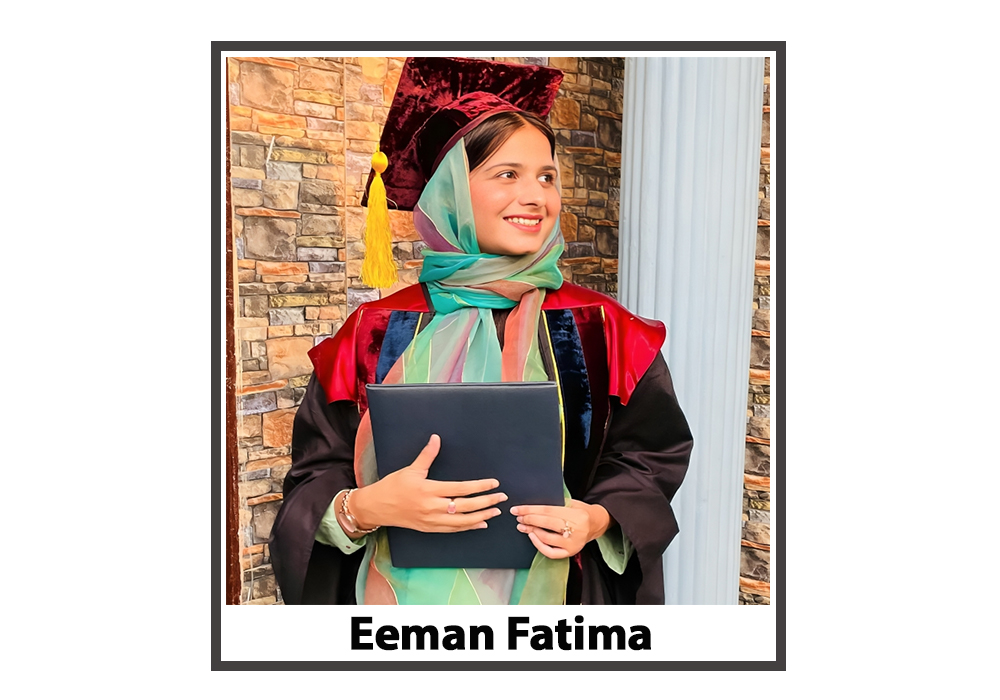
One question stayed with me long after I attended a workshop under the project titled ‘Digital Trust and Free Expression in the Era of AI’, organized by the Department of Media and Development Communication, University of the Punjab with the support of the U.S. Mission to Pakistan in partnership with the Pakistan-U.S. Alumni Network, was, ‘How will we preserve digital trust and free expression in the age of AI’? As AI becomes an integral part of digital journalism, the question is no longer whether it should be used, and more importantly who should be held responsible when things go wrong.

Artificial Intelligence has definitely proven to be a powerful tool for journalists. It can summarize long reports, translate content into multiple languages, follow breaking news, analyze vast quantities of data and even write complete news reports in seconds. All of these capabilities have revolutionized newsroom processes and enabled journalists to process information more efficiently than ever before. But efficiency is not the only measure of ethical journalism. Journalism isn’t about being fast, it’s about informing the public accurately, fairly and responsibly. One of the most valuable lessons I learned from the workshop was that AI does not understand information; it predicts the most likely response based on patterns in the data it has learned from. This distinction is important because when reliable information is unavailable at the time, AI generates responses that seem convincing but inaccurate, but are wrong, which is often referred to as AI hallucination. What’s most concerning is that the AI generated mistakes can appear convincing enough for people to accept them as true.

This poses an ethical question: Who should be held responsible if AI-generated news contains misleading information? The burden can’t be placed entirely on the algorithm. AI has no moral judgement or legal accountability. It cannot distinguish between public interest and public harm and is not aware of the social consequences of publishing inaccurate information. This means that the responsibility rests with those who decide to employ these technologies: journalists, editors, newsroom leaders, and media organizations. While AI can help create content, it cannot replace responsibility.

This is where ethics become more important than technological advancements. Checking information should not take a back seat to the ‘Publish first’ mentality. With all of the digital platforms that exist today, misinformation can spread from continent to continent within minutes and corrections often fail to reach the same audience. Each unverified headline altered photo or AI-generated mistake can damage the public’s trust, both in a specific news organization and in journalism.


The discussions also reinforced the importance of Media and Information Literacy (MIL). Verification is not only the responsibility of journalists, but also something that is necessary for every digital citizen. Learning how to use reverse image search, source verification techniques, and critical evaluation of online information is no longer an option, it’s essential for protecting ourselves from deception. As AI-generated content becomes increasingly sophisticated, it is essential to verify information before accepting it as true.

AI will continue to evolve and so will digital journalism. The challenge is not innovation itself but using it responsibly. Trust is not something algorithms can build, it is something that can be gained only through transparency, accountability and a steadfast dedication to truth. While adopting new technologies to do journalism, let’s not forget that the tools should enhance journalism’s values, not shape journalism. AI may help write the news, but only humans can uphold the ethics behind it.

The views, thoughts, and opinions expressed in this blog are solely those of the author and do not necessarily reflect the official policy or position of the U.S. Mission to Pakistan or USEFP.

Similar Posts

  • Trump talks, Iran denies, Pakistan mediates

    I have lost count of how many times I have written this sentence. Trump announces a possible dialogue with Iran. Iran denies it within hours. Then Pakistan quietly steps in to keep the peace alive. I sit down to write about it again, and I feel a strange mixture of hope and exhaustion. This cycle has repeated itself so many times since this war began that I could write it in my sleep. Let me walk you through what happened this time, because I think you deserve to understand the pattern as clearly as I do. President Donald Trump took to his social media platform Truth Social and declared that Washington and Tehran are talking. He said Iran may not admit it, but both nations are working through a problem that has lingered for decades. He accused Iranian leaders of playing a double game. He said the outcome will be one of two things. Either a deal gets made, or Iran faces what he called complete surrender. He also insisted that America will never let Iran get its hands on a nuclear weapon. Then, right on cue, Iran said no. Foreign ministry spokesman Esmaeil Baghaei stood before reporters and rejected every word of it. He said there are no negotiations happening with the United States. He said the only contact right now involves Oman, and it concerns nothing more than keeping ships moving safely through the Strait of Hormuz. I want you to notice something here. This is not a new argument. I have watched this exact exchange play out again and again. One side claims talks are happening. The other side flatly denies it. And somewhere in the middle, the truth probably sits quietly, waiting for someone honest enough to admit it. This is where Pakistan enters the picture, as it so often does. Turkish news agency Anadolu reported that Pakistan and Qatar are working to arrange a new round of direct talks. Islamabad and Doha are both being considered as possible venues where America and Iran might eventually sit across from each other again. I find this part of the story important, and I do not think it gets enough credit. Pakistan helped broker something called the Islamabad Memorandum of Understanding, which brought about a ceasefire back in June. That agreement asked both sides to stop military action, keep the Strait of Hormuz open for trade, and begin serious talks on Iran’s nuclear program and American sanctions. Iranian parliamentary spokesman Hassan Gashghavi confirmed that mediating countries are now trying to breathe new life into that same agreement. Deputy Prime Minister and foreign minister Ishaq Dar spoke by phone with his Iranian counterpart, Abbas Araghchi, on Monday. They discussed the broader situation in the region and the ongoing diplomatic efforts across the Middle East. Dar also invited Araghchi to visit Pakistan soon. I keep coming back to one question as I write this. How many more times will I have to write this same story? How many more announcements, denials, and quiet rescues will it take before something actually holds? I will be honest with you. I am tired of writing about tension. I am tired of watching one side hint at peace while the other side pulls back. I am tired of hearing familiar names promise a resolution that never quite arrives. But I still hold onto something, and I think you should too. I hope this is the last time I have to write this cycle. I hope the next headline is not about another denial or another delayed meeting. I hope it is about a real, lasting peace, the kind that does not need Pakistan or Qatar or anyone else to keep rescuing it.

  • Petroleum Minister’s diagnosis & indictment

    Federal Minister for Petroleum Ali Pervaiz Malik has made an unusually candid assessment of Pakistan’s energy sector. Speaking at the Energy Conference 2026, he conceded that inconsistent policies discourage exploration, petroleum has been subjected to “exorbitant taxation”, domestic refineries remain in a dilapidated condition, gas-sector liquidity is impaired, circular debt remains a central concern, and structural reform requires competition, unbundling and private participation. These admissions deserve attention because they come from inside the government. They also raise an unavoidable question: if the government understands the structural weaknesses so clearly, why does its own fiscal and administrative policy continue to aggravate them? The minister’s strongest observation was that the Petroleum Division cannot remain the instrument upon which excessive taxation and financial interventions are loaded merely to meet budgetary requirements. The diagnosis is correct; the choice of victim is not. A government division does not bear taxation. Consumers, farmers, transporters, manufacturers and exporters do. Pakistan collected a record Rs. 1.567 trillion through petroleum levy during the fiscal year (FY) 2025-26, exceeding the budgeted target by about Rs. 99 billion. Petroleum products are nominally exempt from general sales tax, but motorists should not confuse exemption with relief. The levy, customs duty and the new climate support levy together impose an enormous burden at the pump.  An analysis of notified prices and consumption estimated that these petroleum charges generated around Rs. 166 billion in July 2026 alone—equivalent to roughly one-fifth of that month’s collection of Federal Board of Revenue (FBR). On petrol, government imposts exceeded Rs. 100 per litre during parts of August. [Ministry of Finance fiscal operations; OGRA notified prices] This is not energy policy. It is fiscal opportunism. Petroleum levy is especially attractive to Islamabad because, unlike federal taxes included in the divisible pool, its proceeds are retained by the federal government. Replacing sales tax with levy does not broaden the tax base or improve its progressivity [Bankruptcy of ideas—VII: The Petroleum (Levy) State, June 18, Minute Mirror, 2026].  It merely enables the federation to collect revenue without sharing it under the National Finance Commission mechanism. Provinces lose their constitutional share while the entire economy absorbs higher transport, agricultural and production costs. The levy is also excessively regressive. A litre consumed by a motorcyclist, rickshaw driver or small farmer attracts the same fixed charge as one consumed by the owner of a luxury vehicle. Diesel taxation travels through freight into the price of flour, vegetables, medicines and construction materials. The poorest household may not own a vehicle, but it still pays petroleum levy indirectly on almost everything it buys. The minister should have said plainly that Pakistan’s narrow and inequitable tax system is being sustained by taxing mobility and production. Powerful retailers, speculative real-estate interests, large landowners and beneficiaries of untaxed or lightly taxed wealth remain inadequately documented. The salaried class, formal businesses and petroleum consumers are repeatedly squeezed because they are visible and collection is easy. The minister also called for consistent and predictable policies to attract investment in high-risk onshore and offshore exploration. No serious investor can disagree. Exploration requires large sunk expenditure, long lead times and the possibility of complete failure. Pakistan cannot invite investors with one policy, reinterpret its terms through another notification, delay payments, restrict remittances and then wonder why exploration interest remains weak. The Pakistan Economic Survey 2025-26 acknowledges constrained domestic petroleum production, continued import dependence, suboptimal refinery utilisation and the effect of international instability on the import bill. These are not new discoveries. Governments have been promising energy security, refinery upgrading and accelerated exploration for decades. The institutional cycle remains familiar: announce a policy, delay agreements, accumulate liabilities, offer concessions, change fiscal terms and launch another policy. Offshore exploration is important, but it must not become another slogan. A dry well is a commercial risk; unstable contracts, delayed decisions and politicised administration are sovereign risks created by the state. Pakistan cannot remove geological uncertainty, but it can remove bureaucratic caprice. That requires published contractual frameworks, credible dispute resolution, transparent bidding, assured repatriation rules and protection against retrospective fiscal changes. The minister’s claim that the flow of circular debt has been maintained near zero without increasing consumer prices also needs closer examination. Circular debt is not eliminated merely because its current flow is temporarily contained. Arrears can be shifted through subsidies, delayed payments, financing arrangements, tariff adjustments, accounting recognition or government guarantees. The stock remains a claim on citizens even when it disappears from a ministry’s preferred flow indicator. Gas-sector circular debt reflects delayed tariff adjustments, expensive imported LNG, diversion of gas between consumer categories, distribution losses, theft, weak recoveries, unpaid subsidies and government-directed supplies without timely budgetary compensation. It impairs the liquidity of exploration and production companies, which then lack funds for new exploration. The state taxes petroleum to repair its budget while withholding or delaying money owed within the energy chain. This is fiscal cannibalism: one part of the sector is consumed to keep another functioning. The condition of local refineries provides another indictment. The minister rightly asked why they remain “dilapidated” and have not become deep-conversion facilities. Old hydro skimming refineries produce an output mix increasingly misaligned with domestic demand, including excess furnace oil and insufficient quantities of cleaner, higher-value fuels. Modernisation requires billions of dollars, technological planning and certainty over tariffs, duties, pricing and product specifications. Refineries, however, have enjoyed various forms of protection and deemed-duty support in the past. Any new incentive must be conditional. Public support cannot become a permanent reward for postponing investment.  Each refinery agreement should disclose the investment commitment, financing plan, completion milestones, product-quality improvements, environmental obligations and consequences of default. Consumers should not finance refinery upgrades through protected margins without enforceable delivery. The proposed unbundling of the gas sector—separating infrastructure from commodity trading—can improve transparency. An independent network operator, regulated access charges and genuine third-party access could allow producers and large consumers to contract without forcing every transaction through an opaque state monopoly. But changing organisational boxes will not cure political pricing, excessive losses, poor

  • New Provinces

    Pakistan’s more than 240 million people live across an enormous and geographically diverse territory, yet governance remains concentrated in only four provinces, each responsible for more than 60 million people. This creates an administrative system that is too distant and overburdened to address the specific needs of individual districts and tehsils, especially in Punjab, where more than half the population is governed from Lahore despite the distance from areas such as Dera Ghazi Khan, Bahawalpur, and Sialkot. Remote citizens often have to make long, expensive, and difficult journeys to provincial capitals for basic documentation, land disputes, specialized healthcare, and other services; Chitral residents may face difficult travel to Peshawar, while Balochistan’s coastal communities may travel hundreds of miles to Quetta and encounter additional linguistic and cultural barriers. This distance produces feelings of neglect and unequal development, as peripheral communities may believe their taxes benefit major cities while their own areas lack clean water, schools, healthcare, and other basic facilities, potentially contributing to separatist movements and regional instability. India provides an example of more decentralized administration, operating with 36 states, provinces, and union territories despite being much larger in population and territory, while Pakistan’s One Unit policy of 1955–1970 demonstrates the dangers of excessive centralization and ignoring ethnic, linguistic, and regional identities. These experiences suggest that Pakistan’s existing provincial structure should not be regarded as permanent and should evolve according to changing administrative and social needs. The most practical solution proposed is to transform existing administrative divisions into provinces, using their established headquarters, government offices, police, courts, development authorities, and other infrastructure as the foundation for new provincial governments. Multan, for example, already has a civil secretariat, high court bench, police headquarters, and departmental offices, meaning it could become a provincial capital with comparatively modest investment rather than requiring the construction of entirely new secretariats, universities, hospitals, housing, and other infrastructure costing hundreds of billions of rupees. This would reduce financial pressure and allow existing administrative machinery to continue operating during a relatively smooth transition. New provinces could also stimulate regional economies by creating provincial governments, assemblies, ministries, civil-service positions, courts, judges, police structures, and thousands of jobs, while attracting professionals and reducing migration to overcrowded metropolitan areas. New police forces could improve law and order through familiarity with local languages, geography, and social conditions, while construction and increased spending would benefit contractors, suppliers, hotels, restaurants, transport providers, and other small and medium businesses. However, provincial creation alone cannot solve Pakistan’s governance or financial crisis: it must be combined with a strong crackdown on systemic corruption, including embezzlement, favoritism, bribery, ghost employees, inflated development contracts, fraudulent welfare payments, and theft of electricity and water. The cited audit findings—including alleged embezzlement of more than Rs40 billion from Khyber-Pakhtunkhwa government accounts and Rs25 billion siphoned from the Benazir Income Support Programme through fraudulent payments—illustrate the scale of the problem. Weak tax collection and severe electricity-sector theft and line losses further deprive the government of revenue, forcing borrowing and leaving inadequate resources for infrastructure and social development; therefore, administrative decentralization must be accompanied by stronger financial accountability, better revenue collection, and effective control of public-sector leakages so that new provinces can become financially viable and genuinely improve citizens’ welfare. Therefore, the creation of new provinces must be intrinsically linked to a comprehensive governance reform agenda that includes the establishment of independent and powerful anti-corruption bodies, the full digitization of government financial systems to eliminate human discretion and create a verifiable audit trail, the implementation of strict and transparent merit-based recruitment policies for all government jobs, and a radical overhaul of the tax collection system to ensure that every eligible citizen and business pays their fair share. The guiding principles for the creation of these new provinces must be crystal clear and fundamentally rooted in the national interest, and the primary criteria for demarcation should be the population size and the geographical contiguity of the proposed units, with the express purpose of ensuring that no new province is created on the divisive basis of language, ethnicity, or tribal affiliation, as such an approach would sow the seeds of further disintegration and undermine the long-term unity and solidarity of the Pakistani people. The history of Pakistan is unfortunately replete with examples of how identity politics and the mobilization of people along ethnic and linguistic lines have led to intense conflict, sometimes violent, and have distracted the nation from the more pressing issues of economic development and social justice, and it would be the height of folly to repeat these mistakes by creating provinces that are defined by a single ethnic group. The creation of provinces like Sindh and Khyber-Pakhtunkhwa on the basis of language and ethnicity in the past, while a recognition of historical grievances, has also entrenched these identities in the political landscape, creating a sense of ownership and exclusivity that can sometimes manifest in hostility towards other groups. The goal of the new provincial scheme should be to create units that are diverse and pluralistic, where no single ethnic or linguistic group feels that the province belongs exclusively to them and where all citizens feel equally represented and entitled to the benefits of the state. A province should be a unit of administration and development, not a homeland for a particular ethnic group, and by focusing on population and geography, the government can create provinces that are both administratively viable and socially cohesive, fostering a sense of unity and patriotism that transcends narrow sub-national identities. This is not to say that the cultural and linguistic heritage of the various regions should be ignored, but rather that this heritage should be celebrated and preserved within a framework of civic nationalism, where the primary identity of every citizen is that of a Pakistani, and where the new provinces are seen as different branches of the same national tree, not as separate trees in a divided forest. It is absolutely imperative that the political parties of the country, which hold the levers of power and shape

  • Pakistan’s ‘battery revolution’ needs market…

    Pakistan’s electricity sector is witnessing a quiet revolution. Between January 2024 and June 2026, the country imported more than 6 GWh of lithium-ion batteries, with monthly imports rising to 652 MWh in April 2026, according to the latest commentary by the Policy Research Institute of Market Economy (PRIME). The data confirms what many consumers already know: battery storage is rapidly becoming an integral component of Pakistan’s emerging distributed energy system. Against this backdrop, the proposal reportedly advanced by the Adviser to the Power Division, Syed Faizan Ali, to introduce Time-of-Use (ToU) net billing with an additional compensation of Rs18–22 per kWh for electricity discharged between 5 pm and 10 pm deserves serious attention. It represents one of the first attempts by policymakers to recognise battery storage as an active participant in the electricity market rather than merely a backup power source. PRIME has welcomed this initiative in its recent Prime Comment #44, “Turning Pakistan’s Battery Boom into a Grid Asset”, arguing that battery storage can transform millions of privately owned batteries into valuable grid resources capable of reducing evening peak demand and improving overall system efficiency. The think tank also reminds readers that in its April 2026 Prime Plus edition, PRIME  had advocated accelerated investment in Battery Energy Storage Systems (BESS) as part of Pakistan’s response to regional geopolitical tensions and growing concerns over energy security. The proposal is intellectually attractive. It recognises a simple economic truth: electricity stored during periods of abundant solar generation becomes considerably more valuable when discharged during the evening peak. Properly designed price signals can therefore encourage consumers to invest in storage while simultaneously reducing pressure on the national grid. The underlying economics are difficult to dispute. The policy conclusions, however, deserve far closer scrutiny. Pakistan’s electricity crisis has never been merely a shortage of technology. It has always been a crisis of institutions. For decades, governments have attempted to resolve structural failures through new incentives while leaving untouched the governance failures that created those problems in the first place. Capacity payments, guaranteed returns, fuel subsidies, cross-subsidies, circular debt financing and administratively determined tariffs all originated as seemingly sensible policy responses. Over time, they evolved into a complex web of distortions that now define Pakistan’s power sector. The battery revolution should not become the latest chapter in this history. The most immediate question concerns the proposed compensation itself. Every additional rupee paid for exported battery electricity ultimately has a source. If the payment is financed through higher consumer tariffs, ordinary electricity users subsidise battery owners. If financed through public resources, taxpayers assume another fiscal obligation. Unless the proposed payment reflects demonstrable savings through lower capacity utilisation, reduced reliance on expensive peaking generation, avoided transmission investments and lower fuel imports, it risks becoming another subsidy disguised as reform. The second issue concerns Pakistan’s peculiar electricity economics. The country simultaneously suffers from surplus installed generation capacity and shortages during particular hours of the day. Consumers continue paying enormous capacity charges even when power plants remain idle. Before introducing payments for battery discharge, policymakers should demonstrate whether distributed storage actually reduces these fixed obligations or merely shifts electricity from one time period to another while capacity payments continue unchanged. This distinction is fundamental. If batteries merely redistribute electricity without lowering total system costs, consumersmay simply end up paying twice: once for idle generating plants and again for battery incentives. PRIME’s analysis correctly highlights the dramatic increase in battery imports. Nevertheless, imports alone cannot determine public policy. Customs statistics reveal the volume of batteries entering Pakistan but not how they are ultimately deployed. Many imported batteries are likely destined for residential solar systems, telecommunications infrastructure, commercial backup systems, electric vehicles and industrial facilities rather than grid-support applications. Policy requires greater precision. Residential battery storage serving a single household differs fundamentally from utility-scale storage capable of providing ancillary grid services. The regulatory treatment, compensation mechanisms and operational obligations cannot be identical. Perhaps the most important omission concerns the electricity market itself. Time-of-Use pricing presupposes the existence of a reasonably competitive electricity market where prices reflect actual system conditions. Pakistan, however, continues to operate largely through administratively determined tariffs, long-term power purchase agreements and regulatory pricing decisions. Introducing another administratively determined premium without competitive price discovery risks creating fresh opportunities for regulatory arbitrage instead of improving market efficiency. The proposal also raises important questions of distributive justice. Battery storage remains concentrated among relatively affluent households and commercial consumers who have already invested in rooftop solar systems. Additional payments for exported electricity may transfer resources from ordinary grid-dependent consumers to wealthier “prosumers” capable of producing electricity themselves. A sound public policy must ask not only whether incentives improve efficiency but also who ultimately pays for them. Fiscal sustainability presents another challenge. Pakistan’s public finances remain under extraordinary pressure. Circular debt continues to impose significant costs upon the national exchequer while electricity subsidies consume scarce fiscal space. Every new incentive introduced into the power sector should be accompanied by transparent estimates of its medium-term fiscal consequences. Without such analysis, even economically desirable policies may produce unsustainable budgetary commitments. The environmental dimension deserves equal attention. Large-scale deployment of lithium-ion batteries inevitably raises questions concerning recycling, disposal, fire safety and hazardous waste management. Pakistan presently lacks a comprehensive legal and regulatory framework governing battery end-of-life management. Encouraging rapid battery adoption without simultaneously addressing environmental responsibilities merely postpones another policy problem for the future. Cybersecurity also enters the equation. As distributed storage becomes increasingly integrated with smart meters, digital communication systems and automated dispatch mechanisms, cybersecurity standards become an essential component of electricity regulation rather than an afterthought. The broader lesson extends beyond batteries. Pakistan’s remarkable solar revolution demonstrates that citizens and businesses are increasingly solving their own energy problems because the formal electricity system has become prohibitively expensive and unreliable. International observers have correctly described this transformation as one of the world’s most significant examples of consumer-led energy transition rather than state-led planning. Public policy should seek to complement—not constrain—this transition. However, complementing it

  • The Invisible Infrastructure of a Civil Society

    A man’s hand emerges from a moving car window on Lahore’s Ferozepur Road, opens, and lets go, garbage tumbling onto the road like something the city never asked for. He drives on, does not look back. Nearby, another man treats a red light as inconvenience, not command, and guns through it because the road, for one careless breath, looks empty, not realizing a motorcyclist is already crossing into that emptiness. Neither would call himself careless. Ask them, and they will say, with the confidence of the unexamined life, that they are decent, law-abiding citizens, and narrowly, they are not wrong. Neither has broken a law that will ever find them. What they are missing is something smaller than law and, in the end, far heavier: civic sense. Civic sense is a phrase worn smooth by overuse and rarely defined. It is not patriotism, that loud, flag-waving thing. It is not obedience, that bowed, fearful thing. It is, instead, a kind of seeing, the awareness that one’s actions ripple into rooms one will never enter: the neighbour’s wall, turned dumping ground; the footpath, swallowed by parked motorcycles, leaving the pedestrian nowhere to stand but the road; the river downstream, carrying someone else’s filth to a family that never asked for it. It is the quiet discipline of behaving as though other people exist and matter, even when no policeman stands at the corner. Pakistan is not short of laws. Karachi’s bylaws on waste disposal would look entirely respectable in any city hall in the world. Islamabad’s traffic regulations are detailed enough to please the most exacting planner. What is missing is not ink on paper but something beneath the skin: the private sense that a rule is worth keeping even when no one is watching. This is why civic sense cannot be legislated into being, however many statutes are stacked atop one another. You can fine a man for littering. You cannot fine him into loving the street he lives on. Take something as unremarkable as a queue. Anyone who has stood at a bank counter, a railway window, a hospital OPD here knows the choreography by heart: the line exists as an idea until someone decides their time outweighs everyone else’s, and it dissolves like sugar in water. This was never really about queues. It is about a deeper assumption: that public space belongs to no one in particular, and rules, somehow, are meant for other people. Multiply that across a city of ten million restless souls, and you get gridlock that swallows whole afternoons, bins overflowing like wounds left untended, and parks abandoned within a year of their own birth. There is a cost to all this, rarely counted honestly. Karachi bleeds away enormous productive hours each year to congestion worsened, not created, by drivers who treat lanes as suggestions and red lights as optional punctuation. Public health suffers when open drains and uncollected waste become nurseries for disease, an arithmetic residents of nearly every major Pakistani city have learned to expect each monsoon. None of this appears, tidy and legible, in a budget document. It appears in hospital wards, in wages lost to sick days, in a low-grade sense that public life is something to survive rather than inhabit. It would be convenient to lay the blame entirely at poverty or lack of schooling, and there is a grain of truth there; a person fighting daily to feed a family has little room left for civic virtue. But the explanation only carries so far. Plenty of well-off, well-schooled Pakistanis fling litter from car windows and treat public parks as private gardens annexed from the commons. Civic sense is not a simple function of income. It is a habit, built through repetition, example, and whatever a society quietly agrees to call normal. This is precisely where schools could do far more. Civic education in most Pakistani classrooms, where it exists at all, survives as a chapter memorized for an exam rather than a practice lived out. A child taught that littering is wrong, who watches the adults around her litter daily without flinching, will absorb the adults’ hands, not the textbook’s words. Civic sense must be modelled, not narrated: teachers who insist on a clean classroom, parents who do not fling wrappers from car windows in front of watching children, local governments that follow a complaint through to its end instead of letting it dissolve into some forgotten file. None of this demands grand reform. It demands a shift in what ordinary people find embarrassing. In cities where civic sense runs deep, a litterer feels a small, hot flush of shame, not because a fine is coming, but because it simply is not done, the way one does not spit at a wedding. That social pressure is more powerful, and far cheaper, than any enforcement machinery a government could design. Building it takes time, and begins small: a shopkeeper sweeping the pavement outside his door, a driver waiting his turn at a roundabout though no one would know if he cheated, a resident reporting a broken streetlight instead of learning to walk around the dark. Cities are not, in truth, built by planners and engineers alone. They are built street by street, choice by choice, by the accumulated decisions of the people who walk them. A country may possess the widest roads and tallest towers in the region and still feel chaotic if the people moving through them share no responsibility toward them. Civic sense is not a lesson for children, nor a slogan for a billboard. It is the invisible infrastructure, unseen and indispensable, that makes every other infrastructure actually work. The writer is serving as Director of the Institute of Humanities and Arts at Khwaja Fareed University of Engineering and Information Technology, Rahim Yar Khan, Pakistan.

  • Mental Health and Elite Universities: The Mounting…

    Bio: Hamza Tareen is a student at LUMS majoring in Political Science, with a keen interest in philosophy and theology. ‘I am utterly overwhelmed; the deluge of quizzes is beyond my capacity,’ my friend slowly sighed as his head drooped in exhaustion. Students across the country nurse dreams of pursuing higher education in premier institutes such as the likes of LUMS or IBA. They navigate the rigorous selection process, pay exorbitant fees and, when they finally clinch admission, little do they anticipate the stringently demanding atmosphere that would exact a heavy toll on their mental health. Those who get into these prestigious universities are students who have already demonstrated exceptional academic excellence, and, unsurprisingly, they formulate a highly ambitious criterion for defining success, i.e., consistently acing their courses. However, since the assessment follows a bell-curve distribution which evaluates performance relative to peers, the grading is highly competitive and only a small proportion land in the A/A- categories. This not only fails their expectations but plunges them into depression as they call into question their academic capabilities and self-worth. And, to top it off, peer pressure, which is ever pervasive in the culture, further complicates the problem. It would be tempting to label setting unrealistic expectations as the sole culprit; but the elephant in the room is something else. It is the culture that continuously pushes students to the brink of burnout and brands it as ‘academic rigor.’ From having interminable quizzes, assignments and mid/final exams to being expected to excel in four/five different courses simultaneously, the pressure is intense. And students are expected to somehow manage it all—along with carving out time for extracurriculars and social life. University is not all about academics, and there are a multitude of other problems that students steer through during the semester. But, to their dismay, they are assumed to carry through it all. Justified it would be to say that by the end of the term, they are sapped of all strength, teetering on the precipice of collapse. It is a well-researched—and unfortunate—fact that depression and mental health problems abound in elite universities. The aforementioned factors, coupled with other personal and social challenges that characterize this phase of students’ academic journeys, become a crucible of pressure for them. They stumble, totter, and fall into a shroud of uncertainty. And, lamentably, the stigma associated with seeking help or counselling multiplies the problem. Mental health is stigmatized as something alien, suited for the ‘feeble.’ Amidst these circumstances, the onus falls upon the administration. Supportive counselling sessions which help students in threading their way through university life and academics are crucial; dedicated mental wellness centers need to be introduced, encouraged and endorsed; and students should be empowered to zoom in more on learning than deriving their self-worth from grades alone. This does not mean exhibiting apathy towards academic performance, but a reorientation of priorities which do not impede their growth and self-esteem. Finally, a reconsideration and reassessment of balancing academic rigor with students’ well-being is indispensable on the part of the administration. Mental well-being will naturally translate into more productivity.

Leave a Reply

Your email address will not be published. Required fields are marked *