genzs cockroach party

The Gen-Zs and the Cockroach Party (CJP)

The moment started with a comment of a supreme court judge calling the unemployed Genz’s as “cockroach” when they were demanding to address the weakness of the system where there were almost 2 million students who are going to make an attempt to pass through the examination to prequalify, as the doctors. but the worst is what happened.

Finally, despite that the Indians government paid an attention on

their education system, they simply call that Genz’s as a cockroach. Historically, they need to understand that a cockroach can survive in the worst environment. Coming back to the topic, what happened in Indian education system, was a leakage of the NEET exam in the shape of a guess paper. Which was based on the fake pillars where for 2024 all that important papers were leaking with the advanced version of so-called guesses paper. 135 questions out of total 185 questions were exactly based on the same guess paper which was drafted by the person who exactly formatted the questionnaire of this NEET exam.

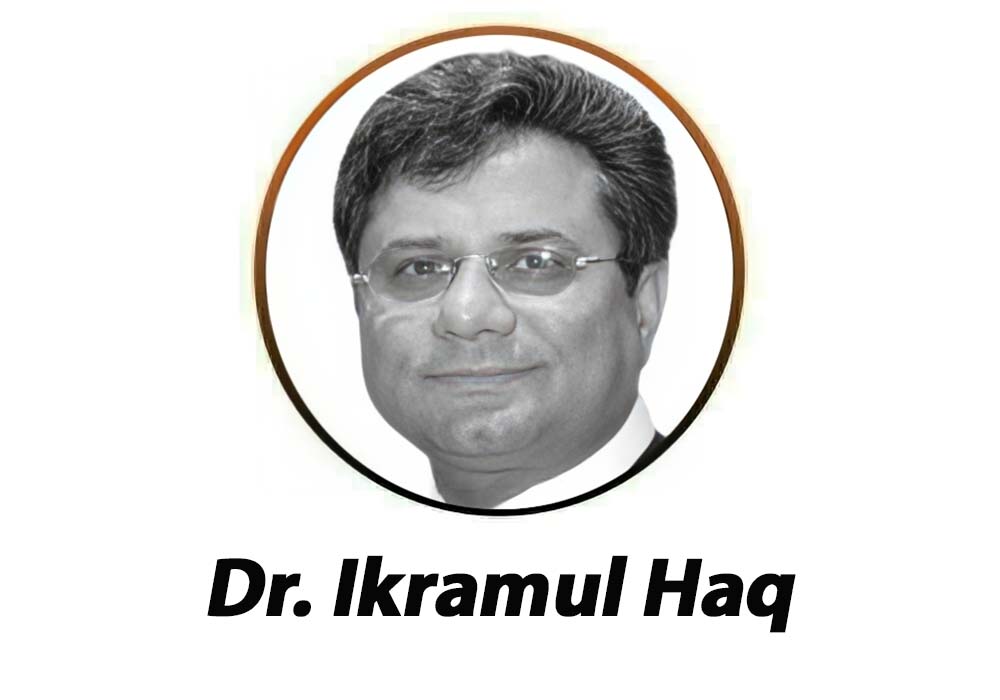
Vice President Pakistan-

China Joint Chamber

Total democratic system of India which is ruthlessly dealing with the sentiments of Genz’s who lost their lives by committing suicide. India so-called, the largest democracy of the world, is even not being able to control its most acknowledgeable area, the medical studies.

India claims that they are producing the most doctors globally. But how not we supposed to check their systems? Is that they are coming through the proper channels? Out of 2 million students who attempt this NEET exam every year, almost 120000 students can be qualified as doctor. But the leakage of this questionnaire globally, who will rely at the doctor degree of this community? It has come to our attention that their entire educational structure has already collapsed and been terminated internally.

The matter cannot be settled with the resignation of their Education Minister Dharmendra Pradhan who is only a part of that culprit syndicate which was operating among the Indian society form decades. The matter not only for the medical students, is that their system like the engineers, lawyers and other technical areas that have already been destroyed but the system. How India can claim that they are the global technical man power supplier? This have exposed India with its education system globally, who is going to trust that the fake degrees to the favorable students have been provided, is that the degrees really have the global value where every one sure that the leaders of BJP were also directly involved in this scam. Even the local media of India have identified that who are the culprits and beneficiaries for this scam. What I want to emphasize, the weakness of the system where everything is being unjustified and the privilege class at the basis of castism are the biggest beneficiaries. This have exposed a so-called system who is the beneficiary of this castism, and keeping that majority suppressed for the centuries. Even the democratic system of India is based on hollow cast. Where there is no space for the lower cast but still their claim to be the biggest democracy in the world is questionable. Where the majority is being ruled but the minority from centuries. Dalits under the savage rule of Indian castism are suffering with the disaster. They are Still being called untouchable with the dominance of the castism which is consistently trying to to promote its so-called elite class. Is that the India is willing to release the data for its sectorial, religious,

  1. a. nd scheduled cast who are under a constant pressure in all his century as a lower-class citizens? How this Modi government is going to make denial for that paper which was leaked on the first week of

May? and was going to be as a facilitating tool for the students, with a money in their pocket. It have also been published that how his paper was properly scanned and was sent against money to the people who were already in a position to manipulate the system. That means the so-called upper class, the privilege class have their ways to dominate the system. But i will come back to my topic is that all that education system of India was already manipulated from decades, this is something have shown up recently? But how about the past? India who was claiming to produce most CEOs in the worl, have totally been failed. How about the Sundar Pachai degree, is there any certification that his degree was not formulated? It is not only a question mark on an education system rather than a system which was manipulating globally. This paper leak have a very viable question to the world. Not only for the doctors, engineers, pilots, IT experts under this system got a very big question mark. The level of corruption where these students were demonstrating was not only on a partial side to be an anti-BJP. But they were accusing a system adopted but the Phanatic ideology of RSS, where there is no space for the minorities and schedule cast. The acceptance of the resignation of India’s Education Minister, Dharmendra Pradhan, by Prime Minister Narendra Modi is being viewed by many as holding him accountable not only for jeopardizing the future of countless students but also for the student suicides allegedly linked to the examination controversy. Is that Indian judicial system is enough powerful to go for a revenge?

By confirming the resignation of their education minister, Indian Prime Minister have clearly shown his weakness. this is a crack in an ideology created by the Indian elite in last one and a half decade.
Similar Posts

  • More Than “Just a Joke”

    Walk into any classroom and everything seems perfectly normal. Students are taking notes, chatting before class, and waiting for the lecture to begin. No one is arguing, no one is fighting, and everything appears calm on the surface. Yet for many students, there is a side of campus life that often goes unnoticed: bullying. For years, bullying has been treated as just a normal part of growing up, and honestly, many people will still argue that it is. Plenty still see it as harmless teasing, or worse, some rite of passage every student is simply expected to survive. The common response is often, “ignore it,” or “everyone deals with it, get over it,” as if that settles the matter. But ask the person actually on the receiving end, and it rarely feels harmless at all. What one student brushes off as a joke can leave another feeling embarrassed, isolated, and like they don’t belong anywhere in that room. The moment passes, but the hurt from it usually doesn’t, it lingers quietly while everyone else has already moved on. A student who gets mocked enough times eventually just stops raising his hand, or talking at all. Someone left out again and again stops trying to be included and stops showing up for activities.  Confidence is often the first thing to suffer, and academic performance also follows, when a student’s energy goes into avoiding attention rather than engaging in the class. By the time anyone notices, the damage is usually already done. Many would agree that this is because it does not appear all at once, it builds gradually and people mistake it for a bad mood, a phase, or anything but what it really is. As a student myself, this isn’t just something I’ve read about, I’ve seen how it feels to watch someone go quiet, to sit in a room that should feel safe and doesn’t. What I believe makes bullying so difficult to address is that it does not always look the way people expect. When people hear the word “bullying,” they often imagine physical confrontations. That’s not always how it turns out, though. In many cases, it is far less obvious and therefore much easier to overlook. It can take the form of repeated jokes at someone’s expense, hurtful nicknames, deliberate exclusion from social groups, or rumours spread behind a person’s back, things many of us have seen or experienced at some point. These behaviours are often considered as “just joking,” so a student ends up laughing along anyway, just to avoid seeming too sensitive, even when the comment is genuinely hurtful.  Emotional bullying is another common form including constant criticism, manipulation, or certain behaviours that slowly damages a person’s confidence and sense of belonging. This is probably the one most of us have gone through at some point in our student life, quietly, without ever really talking about it. And these days, it doesn’t even need a classroom to happen in. Social media, group chats, and anonymous messages have given it a whole new stage, extending its reach far beyond the campus walls. There is also a less-discussed form of bullying that affects some students whose parents work at the same school or college. These students are assumed to receive special treatment regardless of their actual performance. Their achievements may be dismissed as favouritism, and their hard work can be unfairly questioned. I admit it sounds strange, but it is a reality many students live with. While this may not involve insults or physical intimidation, constantly feeling judged for something beyond your control can be frustrating and humiliating. So why does bullying continue? Part of the answer is that mostly people underestimate its impact. A comment that seems minor to one person may stay with someone else for days or weeks. When unkind behaviour is overlooked, it can become normalized. What starts as a joke can slowly turn into a pattern. Worth asking too, is what drives a bully. Often, it is not insecurity but the confidence that comes from believing there will be no consequences. When nobody challenges the actions, it becomes a way of gaining attention, influence, or social status. That does not excuse the harm, but it helps explain why simply telling victims to ignore it doesn’t solve the problem. Now, the good part is that bullying is not inevitable. Small actions can make a meaningful difference. Teachers who recognize warning signs and students who choose to speak up when they witness unfair treatment all help create a better environment. Educational institutions should also make it easier for students to report problems without fear of embarrassment or retaliation. Perhaps most importantly, students themselves have more influence than they realize. A kind word, an invitation to join a group, or simply refusing to laugh at someone can change the atmosphere of a classroom.  Creating a respectful environment isn’t really about rules on a wall. It just needs one person willing to say something when everyone else stays quiet.

  • Beyond Public Finance: Towards Constitutional Poli…

    The previous part VIII of this series concluded that a just tax system must satisfy more than the requirements of arithmetic. It must rest upon legislative competence, representative consent, rational classification, due process, protection against arbitrary deprivation, transparent expenditure and effective remedies. Parliament, while levying taxes cannot constitutionalise injustice merely by enacting it. Pakistan’s fiscal crisis will not be resolved by asking citizens to finance an unreformed state through increasingly coercive instruments. A recent book by Dr Hafiz A. Pasha, Fatima Malik and Hafsa Tanveer, Pakistan: Reforming an Inefficient and Inequitable Tax System, provides an appropriate opportunity to carry that argument forward. The volume is ambitious, data-rich and deserving of serious attention. Few recent studies attempt, within a single work, to map federal and provincial taxation, estimate tax gaps through different methodologies, examine incidence across income groups and sectors, evaluate fiscal incentives and finally present a quantified reform programme. Its central diagnosis is familiar but supported by extensive empirical work. Pakistan combines high statutory rates with a low tax-to-GDP ratio, excessive dependence on indirect taxation, pervasive evasion, severe sectoral disparities and weak provincial revenue mobilisation. The authors propose reforms that, in their estimation, can increase the national tax-to-GDP ratio by approximately three percentage points by 2027–28. The principal difficulty lies not in what the book measures. It lies in what the framework of measurement necessarily leaves outside its calculations. The usefulness—and limits—of the tax-gap lens The organising idea of the book is the tax gap. Through cross-country regressions, a representative-tax-system approach, monetary estimates of evasion and bottom-up calculations, the authors conclude that Pakistan possesses the potential to collect approximately three percent of GDP more in taxes. This is analytically valuable. It also risks converting a constitutional and political problem into an accounting exercise. A tax gap is not necessarily a reservoir of revenue waiting to be collected. Parts of it may reflect privileges protected by influential groups. Other parts arise from low productivity, fragmented enterprises, unemployment, weak financial inclusion and the regulatory costs created by the state itself. Informality is not always a voluntary choice made for the purpose of evasion; it can also be a survival strategy in an economy where formalisation invites multiple taxes, withholding obligations, inspections and compliance costs without ensuring reliable public services. Citizens also judge taxation in relation to expenditure. Their reluctance cannot be understood solely as non-compliance when additional revenue appears likely to finance debt servicing, administrative expansion, elite concessions, loss-making state enterprises and politically negotiated subsidies rather than education, healthcare, transport, security of property and equal economic opportunity. The decisive question is consequently not only how much more can be collected. It is who controls the state, who bears its burdens, who receives its rents, and why technically sound reforms repeatedly fail. Public finance asks how the gap should be closed. Constitutional Political Economy asks why the beneficiaries of the existing arrangement would permit it to be closed fairly. The selective fiscal state The book repeatedly recognises the presence of powerful vested interests. It identifies the under-taxation of property, agriculture, wholesale and retail trade, real estate and parts of the services sector. At the same time, it finds a disproportionate burden upon large-scale manufacturing, banking and formal businesses. Its estimate that industry bears taxes equivalent to 23.8 percent of its value added, with the incidence on large-scale manufacturing exceeding 36 percent, is particularly revealing. These figures demonstrate that Pakistan does not suffer from a uniformly low-tax equilibrium. Pakistan has created a selective fiscal state: coercive towards visible and organised taxpayers, accommodating towards politically protected or administratively difficult constituencies. This conclusion should change the design of reform. Where political influence determines the tax structure, another catalogue of proposed rates and bases cannot alter the equilibrium by itself. Reform must address the rules through which fiscal choices are made, concessions are granted and enforcement is selectively applied. A technically perfect proposal remains politically irrelevant when those who must enact it derive power from the arrangements it seeks to dismantle. Withholdingisation is not income taxation The book correctly notes that withholding and advance taxes generate overwhelming part of total income-tax revenue and have failed to eliminate evasion. It also recognises the distortions created by presumptive/mimum taxation and the fragmentation of income into separately taxed blocs. The consequences are more serious than those of an imperfect collection technique. Withholdingisation represents the gradual abandonment of income taxation as a levy on net accretion to economic power. Banks, utility companies, telecom operators, employers, import authorities, registrars and purchasers have been converted into unpaid tax collectors. Gross transactions are taxed without determining actual income, allowable expenditure, losses or the taxpayer’s real capacity to contribute. The revenue authority obtains money without developing the institutional capacity to examine accounts, conduct intelligent audits and establish taxable income. Compliant businesses suffer liquidity costs and wait for adjustments or refunds, while informal and influential sectors remain beyond meaningful assessment. The reform of income taxation must restore the return, assessment and audit as its foundations. Withholding should remain confined to situations where it is a genuine advance payment—principally salaries, dividends, profit on debt and payments to non-residents (mostly covered under tax treaties). It should remain fully adjustable against the final liability. A system based upon extracting money from every visible transaction may achieve collection targets. It cannot be described as a coherent income tax. Contradictions within the reform programme The book advocates broad-basing and criticises presumptive taxation, but later recommends restoration of a one-percent fixed tax on export proceeds. It supports neutrality while proposing a general five-year tax holiday for investment, enhanced deductions for energy costs and other selective allowances. These proposals arise from genuine concerns. Pakistan’s investment rate remains dangerously low, exporters face high energy and financing costs, and industry competes under an unstable exchange-rate and tariff environment. The proposed remedies nevertheless risk recreating the same exceptionalism that has made Pakistan’s tax system discriminatory, unpredictable and vulnerable to lobbying. A fixed tax on export proceeds is not a tax on income. It taxes turnover

  • Trump reopens the Saudi nuclear deal

    For a few hours this week, it looked like Washington and Riyadh had quietly closed one of the more consequential files of Donald Trump’s second term. On Wednesday, US Energy Secretary Chris Wright and his Saudi counterpart signed a civil nuclear cooperation agreement, a deal years in the making, offering American firms a foothold in a market Riyadh has long promised and long withheld. Then, a day later, the president reopened it himself. In a Truth Social post on Thursday, Trump declared the agreement “will be approved,” but added that it was “totally subject to Saudi Arabia joining the very respected and successful Abraham Accords.” He also inserted a second condition that had not been part of the signed text: no enrichment of nuclear material on Saudi soil. Within hours, press secretary Karoline Leavitt was telling reporters the deal was simply “off” unless the kingdom normalised relations with Israel, even though, by her own account, the president had not actually spoken to Crown Prince Mohammed bin Salman since posting the ultimatum. It is worth sitting with how unusual this is. A nuclear cooperation agreement, negotiated over years and signed by cabinet level officials on both sides, was retroactively rewritten by a presidential social media post, with the Saudi government left to respond through silence, and American wire services unable to get so much as a background comment out of Riyadh. Steven Cook, a Middle East scholar quoted by NPR, put the underlying question bluntly: whether “a social post supersede a signed diplomatic agreement.” That a serious foreign policy analyst even has to ask the question tells its own story about how this White House does business. The Saudi position, however, is not new, and it is not merely stubbornness. The kingdom has said for years, through King Salman and now through the Crown Prince, that normalisation with Israel requires a credible pathway to Palestinian statehood. That position survived the first Trump term’s Abraham Accords push, the Biden administration’s own normalisation efforts, and it hardened further after the October 2023 Hamas attack on Israel and the war in Gaza that followed. Riyadh’s calculus is also generational: across the Arab and Muslim world, sympathy for the Palestinian cause remains a live political fact that no government, however close to Washington, can casually override. There is also an Israeli dimension worth naming honestly. Israel’s own unease was never really about Saudi Arabia’s civilian nuclear ambitions; officials have signalled for months that they had made peace with the idea, provided it came bundled with normalisation. What Israeli commentators and officials appear to actually fear is a Saudi Arabia empowered, prestige laden, and unbound to the Accords: a regional heavyweight whose recognition Israel still needs, and has not been granted, absent a resolution nobody has yet found for the Palestinians. That is the crux the deal has now run into, and it is not a problem Trump’s Truth Social account can post its way out of. None of this means the deal is necessarily dead. Trump has a long history of issuing maximalist conditions in public while negotiating something narrower in private, and Saudi Arabia has strong economic and strategic incentives of its own to keep the nuclear track alive. But the manner in which this condition was added, abruptly, publicly, and without prior coordination with Riyadh, is itself a signal worth reading. It suggests an American approach to the region that still assumes the old leverage of the first Abraham Accords era holds unchanged, even as the ground beneath it, in Gaza’s aftermath and in Saudi public opinion, has shifted considerably. Whether Washington adjusts to that reality, or simply keeps repeating the demand more loudly, will say a great deal about how the rest of this file plays out.

  • After Makkah: towards an Islamic NATO—or a new r…

    “Nato is a giant military alliance where there are 32 countries. We have started here as three countries and we have to take very humble but concrete steps”—Makkah defence pact technically same as Nato’s Article 5: Turkish minister, The News, August 9, 2026 The above words of Turkish Foreign Minister Hakan Fidan deserve careful attention. Speaking after the Makkah Joint Defence Agreement between Türkiye, Pakistan and Saudi Arabia, he went considerably further than the diplomatic language normally accompanying defence cooperation. He described the arrangement as technically the same as NATO’s Article 5 principle of collective defence. More importantly, Fidan disclosed something about its intended institutional evolution. A ministerial committee resembling NATO’s structure is to be created, a permanent secretariat will be established in Saudi Arabia, and President Recep Tayyip Erdoğan does not envisage an organisation permanently confined to its three founding members. Egypt is already being mentioned as a possible entrant. The question we raised immediately after Makkah has therefore acquired greater urgency: are we witnessing the embryonic formation of an Islamic NATO? The answer requires more caution than either celebration or alarm. The Makkah agreement is unquestionably important. Saudi Arabia combines enormous financial and energy resources with a pivotal position in the Arab and Islamic worlds. Türkiye possesses NATO’s second-largest military, an increasingly sophisticated defence-industrial base and strategic access linking Europe, the Black Sea, the Mediterranean and the Middle East. Pakistan is a nuclear-armed state located at the intersection of South Asia, China, Central Asia, Iran and the Arabian Sea. Taken together, the three constitute an unusual coalition of middle powers. Their convergence is also occurring at a moment when the regional order constructed around American predominance is under extraordinary strain. The latest Middle Eastern war has again demonstrated that overwhelming military capability can destroy infrastructure and degrade adversaries without necessarily producing political order. Michael Fuchs recently argued in Foreign Affairs that the United States should finally relinquish its attempt to dominate the Middle East militarily. The proposition is important, but it raises a larger question. If American primacy recedes, what replaces it? International relations offers no reason to assume that withdrawal by a dominant external power automatically produces regional peace. It can produce strategic autonomy. It can equally produce competitive balancing, arms races and struggles among regional powers seeking to fill the resulting space. Makkah Defence Agreement represents both an opportunity and a danger. The opportunity is the emergence of indigenous collective security. For much of the modern history of the Middle East, regional states have depended upon external powers for protection while simultaneously fearing abandonment by those same protectors. Britain once performed this role in the Gulf. The United States subsequently constructed a much larger military architecture based upon bases, arms supplies, bilateral guarantees and partnerships. Dependence created security, but never complete strategic autonomy. Saudi Arabia’s search for alternatives must be understood against this background. Türkiye has followed another path: remaining inside NATO while steadily expanding its capacity for independent action. Pakistan maintains a strategic partnership with China without severing its relationships with Washington, Riyadh or Ankara. These are not states simply changing camps. They are practising what contemporary scholarship increasingly describes as hybrid or non-exclusive alignment: cultivating overlapping relationships rather than accepting the rigid binaries of Cold War alliance politics. This makes Fidan’s second assertion as important as his comparison with Article 5. He insists that Makkah is not directed against Iran or any other country. That principle must survive implementation. An alliance requires deterrence; it does not necessarily require a permanent enemy. If the emerging arrangement becomes an anti-Iran coalition, it will institutionalise one of the Muslim world’s most dangerous fault lines. Iran is not a temporary presence in the Gulf. It is a major civilisation and regional power whose geography cannot be altered by sanctions, regime change strategies or military pressure. Pakistan has particular reason to understand this. Iran is its neighbour. Internal sectarian peace, Balochistan, border security, Afghanistan and regional connectivity all make a permanently hostile Pakistan-Iran relationship strategically irrational. Nor should Makkah become simply the Muslim military response to Israel. The Palestinian question cannot be removed from regional security, as proponents of the Abraham Accords sometimes appeared to assume. Normalisation and economic integration cannot indefinitely substitute for a political settlement guaranteeing Palestinian rights and viable statehood. At the same time, transforming the region into two permanent military camps would hardly produce the peace Palestinians themselves require. The better possibility is, thus, not an Islamic NATO in the literal sense. NATO emerged from the particular conditions of post-war Europe and bipolar confrontation with the Soviet Union. The Muslim world is geographically dispersed, politically heterogeneous and internally divided. Its states have very different relations with Washington, Beijing, Moscow, Tehran and Tel Aviv. Türkiye itself demonstrates the difficulty of imposing a binary model: it would simultaneously belong to NATO and to the emerging Makkah Accord. That apparent contradiction may actually tell us something important about the international order now taking shape. The twenty-first century may be characterised less by fixed blocs than by overlapping arrangements through which middle powers seek room for manoeuvre between larger powers. This is also where geoeconomics becomes indispensable. Saudi finance and energy, Türkiye’s manufacturing and defence technology and Pakistan’s geography, human resources and access towards China, Central Asia and the Arabian Sea could create something considerably more important than another military organisation. Egypt’s eventual participation would add the Suez Canal, the Arab world’s largest population and another major military power. A security structure built around such capabilities could eventually support trade, energy corridors, defence production, technological cooperation, food security and infrastructure connectivity. Without this economic foundation, an Islamic NATO would remain largely an exercise in military coordination. China will watch these developments closely. Beijing requires Gulf energy, values Iran, has deep interests in Pakistan and maintains substantial economic relations across the Middle East. It is unlikely to wish to inherit America’s expensive role as regional military hegemon. A regional arrangement capable of providing stability without forcing states into an

  • President Jiang Zemin and Modern China Formatting …

    June 24, 1989, Comrade Jiang Zemin assumed the charge of Secretary General of the CPC just after the Tiananmen Square incident. This was orchestrated by ideological rivals, who instigated people with foreign support under the guise of corruption, inflation, political participation, and human resource development for the new economy. No doubt there were challenges, but the government was doing everything it could to control them and bring positive change to people’s lives. It required patience and time. However, the ideological rivals and foreign forces decided to exploit that window of opportunity and bring down the CPC.   Therefore, right after assuming the charge, Secretary General Jiang Zemin had to deal with Western countries’ false propaganda campaign against China. The West was propagating that China used brutal force and undermined human rights. However, it did not shake his determination to restore stability, the cornerstone of CPC policy. CPC is convinced that without stability, the country cannot move forward. After tackling it, he focused on economic reforms, especially after becoming President and paramount leader in 1993. From here, a new phase of reforms started. The CPC, with President Jiang at its core, began to juggle policies and options to sustain growth, ensure stable government revenue, and address people’s problems. Thus, President Jiang Zemin, with the guidance of elders, especially Deng Xiaoping, accelerated the reforms and the introduction of market-oriented policies. He took many innovative decisions to accelerate economic growth, enhance outreach, and strengthen international relations and security. First, he kick-started the first phase of privatization to reduce the burden on the State and spur private sector growth. The number of State-owned enterprises fell from 262,000 to 159,000. Almost 40 million people lost their jobs, but China continued the reform.  However, China’s privatization was led by a wise and smart policy. First, China identified the requirements for the private sector and SOEs to ensure a balance between tax and non-tax revenue. Second, China did not privatize critical industrial sectors or enterprises. Third, China established mechanisms to mitigate the impact on people and keep them engaged, thereby ensuring stability.   Second, President Jiang Zemin led China’s accession to the World Trade Organization (WTO). It was another landmark decision, which revolutionized China’s economic growth and development. After joining the WTO, China grew and developed by leaps and bounds. It also ushered in a new era of global economic linkages, which helped China develop rapidly and curb poverty. China is now the world’s largest trading partner, with over US$6 trillion in 2025, and the second-largest economy. Third, he prohibited the army from taking part in economic ventures.  Third, he introduced a strategy to revitalize the economy through science and education. He launched two landmark initiatives, Project 211 and Project 985, under this strategy. Project 211 was designed to build institutions for the 21st century. It was decided that 100 universities would be prepared for the 21st century.  For that purpose, 115 universities were identified. Project 985 was designed to create world-class universities, and 39 universities were under the project.   On the diplomatic front, he also achieved many successes. First, Hong Kong and Macau were reunited with the mainland. Second, he signed a friendship treaty with Russia and launched the Shanghai Cooperation Organization (SCO) in collaboration with Russia. Now, the SCO is one of the world’s major organizations in a multipolar world. Fourth, he also completed China’s accession to the World Trade Organization (WTO).  However, President Jiang Zemin’s most significant work was his theory of the Three Represents: the development trend of China’s advanced productive forces, the orientation of China’s advanced culture, and the fundamental interests of the overwhelming majority of the Chinese people. The Three Represents theory is a major work of the Party, following Deng Xiaoping’s theory, in building the modern Party. It reflects the CPC’s philosophy and Chinese political culture, which emphasize evolution and reform in line with ground realities. However, the interests of the people must be the paramount guiding principle. President Jiang Zemin started work just after assuming the position of Secretary General, following Tiananmen Square.  The analysis of Three Represents highlights three important things. First, it urges the Party to better serve the people and embrace new classes. Thus, Three Represents opened the Party’s doors to new classes including entrepreneurs, businessmen, and professionals. It was necessary to diversify and give development new impetus by making the Party more inclusive. However, it sparked debate among Party members and other circles. The conservative elements of the Party were not ready to accept the business community and entrepreneurs. However, there was wider support for the inclusion within and outside the Party.  Second, Three Represents encouraged the enhanced role of science, education, and technology in leading the new phase of development. Although the revitalization of the economy through science and education was already underway, there was a need to accelerate the process further.  Third, the Party envisioned that it must strive to modernize culture in accordance with socialist values and norms.  Simultaneously, President Jiang Zemin also encountered some serious problems. First of all, relations with the USA were a constant irritant. The USA continued to interfere in Taiwan and internal affairs. The situation was further complicated by the bombing of the Chinese embassy in Belgrade and the Hainan incident by USA forces. The Hainan incident was a complicated issue that threatened peace. Second, the third Taiwan Strait Crisis appeared during his tenure. On the domestic front, he had to face an intensive debate over the inclusion of business groups and entrepreneurs in the Party. Moreover, privatization, especially after accession to the WTO, generated debate in the country. However, he solved these issues with wisdom and smart policy.   In conclusion, the above discussion indicates that President Jiang Zemin assumed leadership at a critical rather than a difficult time. However, he steered the country with dedication, wisdom, and smart policies. The ultimate objective of his policies was to serve the people and build an inclusive Party in line with new realities. That’s why he is considered one of

  • The Orchard Classroom: Remembering Dr Pervez Butt

    Dr Pervez Butt died on the 26th of July, 2026, at the age of 84, and with him Pakistan lost one of the last living architects of its nuclear age. The obituaries will rightly recount the long arc of his public service: joining the Pakistan Atomic Energy Commission in 1963, cutting his teeth on the design of KANUPP-I, Pakistan’s first commercial nuclear power plant, spending years at GE Canada absorbing the discipline of reactor engineering, and eventually rising to chair the PAEC from 2001 to 2006 — a tenure during which he oversaw the expansion of Chashma and laid groundwork that would carry Pakistan’s nuclear power programme well into this century. He would go on to serve as Federal Secretary for Science and Technology, as an adviser at the Planning Commission, and, until his final days, as a quiet counsel to the National Command Authority. Nishan-i-Imtiaz, Hilal-i-Imtiaz, Sitara-i-Imtiaz — the honours are a matter of record.     But I did not know him first as a chairman or a decorated public servant. I knew him as a teacher who happened to hold the keys to some of the country’s most consequential engineering decisions, and who chose, for reasons I am still grateful for, to hand a few of those keys to me. I want to remember him the way I actually experienced him — not through the official biography, but through three long afternoons at his house in F-11 Sector, Islamabad, where he taught me something the textbooks never quite manage: how the price of nuclear electricity in Pakistan is actually determined. Anyone who has sat through a lecture on tariff determination knows how dry the subject can be made to sound — EPC cost, fuel cost, capacity purchase price, energy purchase price, indexation, decommissioning liability. Dr. Butt made none of it dry. He made it a ritual. Each session began the same way, and the way it began told you everything about the man. There was no walking straight into the numbers. First came tea — always a full spread of dry fruits, delicate sandwiches, fresh fruit, chana chaat, and cappuccino. It was in his drawing room that I had my first Cortado, and my first Mocha, both poured by a man who clearly took as much pride in introducing a good cup of coffee as he did in explaining a heat-rate calculation. Only once the plates were cleared did the real class begin. He held nothing back. The sessions ran from ten in the morning until nearly four in the afternoon — six hours at a stretch, with no formal lunch break at all. Instead, somewhere past midday, a trolley would appear, loaded with Lahori chanay and naan, and he would keep teaching straight through it, tariff formulas in one breath and the economics of fuel fabrication cost in the next, a piece of naan in hand the whole time. I have sat in university seminars with more structure and far less learned. What I remember most, though, is the break. Every two hours, without fail, he would stop — not because he was tired, but because he knew I smoked, and he had built an orchard directly across the road from his house for exactly this purpose. We would walk over together, and his waiter would already be there ahead of us, a fresh cappuccino on the table, an ashtray set out with wet tissue paper folded neatly beside it — a small, deliberate touch that told you this man planned for his guests down to the last detail. And it was in that orchard, not at his desk, that the real teaching happened. He would ask me, plainly, to repeat back what I had just understood. Not to test me — to correct me, gently, if I had drifted, and to make sure the idea had actually landed before we walked back inside for the next round. I was, I suspect, an unlikely student for him to invest that kind of care in. I have never been a person drawn to nuclear energy for its own sake — the physics of it, the fission and the neutrons and the reactor cores, left me largely unmoved. What pulled me toward him was the economics: how a country decides what a unit of nuclear electricity should cost, how the capital recovery on a plant like K-2 or C-3 gets built into a tariff, how fuel cost and EPC cost and decommissioning liability all get stitched together into a number that regulators can defend and the public can pay. That was the language I wanted to learn, and he taught it to me the way he taught everything — thoroughly, patiently, and without ever once looking at the clock. Looking back, I think that was the most VIP treatment anyone taught by him could have asked for — not a title, not a certificate, but three full days of a man who had chaired the PAEC choosing to spend his mornings, his working lunches, and his smoking breaks making sure a subject I hadn’t cared about a week earlier had become one I could speak on with confidence. Pakistan will remember Dr. Pervez Butt for KANUPP and Chashma, for the plants he helped design and the institutions he helped build — the Pakistan Welding Institute, the nondestructive testing facility at Taxila, decades spent quietly ensuring that a technically demanding and politically sensitive programme kept working. Those achievements belong to the history books, and they are considerable. I will remember the orchard. I will remember a Cortado poured by a man who insisted the tea come before the tariff, and a lecture that never stopped even for lunch. That was his real gift — not just what he knew, but how completely he was willing to give his time to make sure someone else knew it too. Rest well, sir. The lesson stayed.

Leave a Reply

Your email address will not be published. Required fields are marked *