fundamental rights article

Fundamental Rights (Article 10): A Constitutional …

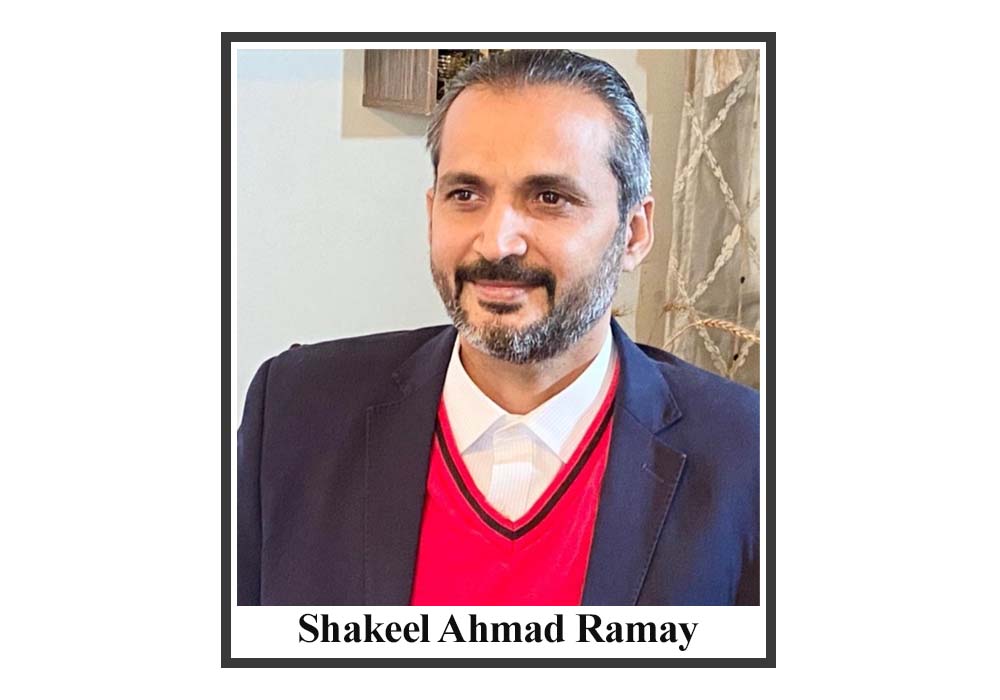
By Muhammad Imran, Staff Member, SAHSOL-LUMS and Asma Rahmat, Final Year Law Student, SLC Superior University and Wafa Sarfraz, Law Student, SAHSOL-LUMS


Introduction: Article 10 of the Constitution of the Islamic Republic of Pakistan enshrines the fundamental constitutional safeguards against arbitrary arrest and detention, thereby giving concrete procedural effect to the broader guarantee of personal liberty contained in Article 9. Rather than leaving these protections to ordinary legislation—such as Sections 60, 61, and 81 of the Code of Criminal Procedure (Cr.P.C.)—the Constitution elevates them to the status of entrenched fundamental rights. Consequently, these guarantees cannot be diluted or abrogated through ordinary legislative enactments, and any executive action or statutory provision inconsistent with Article 10 is liable to be declared void under Article 8 of the Constitution.

Structurally, Article 10 establishes two distinct constitutional regimes. Clauses (1) and (2) prescribe procedural safeguards applicable to ordinary arrests and detention, whereas clauses (3) to (9) regulate the exceptional constitutional framework governing preventive detention. Therefore, the Honorable Mr. Justice Fazal Karim (Late) in his magic book for district judiciary practice, ‘Access to Justice in Pakistan’, described it as a Mini-Criminal Code, and has rightly described it so.

Interplay with the Constitutional Scheme of Fundamental Rights: Article 10 does not operate in isolation; rather, it forms an integral part of Pakistan’s constitutional framework for the protection of liberty, dignity, and due process. Read together with Articles 9, 10A, and 14, it establishes a comprehensive constitutional guarantee against arbitrary deprivation of liberty.

Article 9 guarantees that no person shall be deprived of life or liberty except in accordance with law, while Article 14 protects the inviolability of the dignity of man. Article 10 operationalizes these guarantees by regulating the manner in which the State may lawfully arrest and detain individuals. Consequently, arbitrary arrest, unlawful detention, and custodial abuse constitute violations not only of Article 10 but also of Articles 9 and 14.

The relationship between Article 10 and Article 10A is equally significant. Introduced through the Eighteenth Constitutional Amendment, Article 10A constitutionalizes the rights to due process and a fair trial. Jurisprudentially, Article 10 governs the investigative stage by ensuring lawful arrest, prompt notification of the grounds of arrest, immediate access to legal counsel, and judicial supervision within twenty-four hours. Article 10A, by contrast, safeguards the adjudicatory process through guarantees of an impartial tribunal, equality of arms, open justice, and procedural fairness. Together, these provisions establish a continuous constitutional guarantee of due process extending from arrest until the conclusion of criminal proceedings.

Constitutional Safeguards under Clauses (1) and (2): Clauses (1) and (2) prescribe the minimum constitutional standards governing every lawful arrest.

An arrested person must be informed, as soon as may be, of the grounds of arrest in a manner sufficient to enable an effective challenge to the legality of detention. The Constitution further guarantees an unfettered right to consult and be defended by a legal practitioner of one’s own choice, thereby ensuring meaningful legal assistance from the earliest stage of criminal proceedings.

Additionally, every arrested person must be produced before the nearest Magistrate within twenty-four hours of arrest, excluding the time reasonably required for the journey from the place of arrest to the court. Continued detention beyond this constitutional period is permissible only upon the authority of a Magistrate through a valid judicial remand order.

Collectively, these guarantees subject executive power to immediate judicial scrutiny and minimize the risk of arbitrary or prolonged detention.

Implied Constitutional Rights under Article 10: Apart from its express guarantees, Article 10 also incorporates several implied constitutional rights arising from constitutional principle, comparative jurisprudence, and judicial interpretation.

The obligation to communicate the grounds of arrest necessarily presupposes that lawful and objectively justifiable grounds must exist before an arrest is effected. Accordingly, an arrest cannot lawfully be undertaken on mere suspicion or with reasons manufactured retrospectively. This reflects the common law doctrine of reasonable or probable cause and has been affirmed by the Supreme Court of Pakistan, particularly in Mst. Sughran Bibi v. The State, which held that mere nomination in an FIR does not, by itself, justify immediate arrest.

Similarly, the constitutional right to “consult” legal counsel necessarily extends beyond representation during trial. It attaches immediately upon arrest, including during police custody, investigation, and interrogation, thereby ensuring legal assistance at the earliest and most vulnerable stage of the criminal process.

Preventive Detention: The Constitutional Exception: Although Article 10 principally governs ordinary arrests, clauses (3) to (9) establish a distinct constitutional framework for preventive detention.

Preventive detention differs fundamentally from ordinary criminal detention. It is preventive rather than punitive, aiming to avert threats to national security, public order, or defence rather than punish past conduct. Recognizing the extraordinary nature of such detention, the Constitution subjects it to stringent procedural safeguards.

The detaining authority must ordinarily communicate the grounds of detention within fifteen days unless disclosure would be contrary to the public interest. Furthermore, detention extending beyond three months requires approval from an independent Review Board comprising serving or former Judges of the High Court or Supreme Court.

The Supreme Court has consistently held that the executive’s “satisfaction” justifying preventive detention is not immune from judicial review. Rather, it must be supported by objective and relevant material establishing a reasonable apprehension of harm. Preventive detention therefore remains subject to constitutional principles of legality, proportionality, and procedural fairness.

Constitutional Remedies and Judicial Enforcement: The principal constitutional mechanism for enforcing Article 10 is the jurisdiction of the High Courts under Article 199.

The writ of habeas corpus provides an effective constitutional remedy where an individual is unlawfully arrested or detained. If a detainee is not informed of the grounds of arrest, denied access to legal counsel, or detained beyond twenty-four hours without judicial authorization, the High Court may require the production of the detainee and determine the legality of the detention. Upon finding a violation of Article 10, the Court may order immediate release and grant appropriate constitutional relief.

Except where expressly suspended during a constitutionally proclaimed emergency under Part X of the Constitution, the guarantees contained in Article 10 remain binding upon every organ of the State. Pakistani courts have consistently maintained that executive necessity can never justify bypassing the mandatory requirement of prompt judicial supervision.

Consequences of Non-Compliance: Failure to comply with Article 10 carries significant constitutional and legal consequences.

An arrest becomes unlawful where the detainee is not informed of the grounds of arrest, denied access to legal counsel, or not produced before a Magistrate within twenty-four hours. Such violations expose the arresting authorities to constitutional remedies and potential civil liability, including actions for false imprisonment.

Comparative jurisprudence, particularly R v. Horseferry Road Magistrates’ Court, ex parte Bennett, illustrates that courts possess inherent authority to prevent prosecutions tainted by serious executive abuse. Nevertheless, both Pakistani and comparative jurisprudence generally recognize that an unlawful initial arrest or detention does not automatically invalidate a subsequent criminal trial or conviction where the prosecution is otherwise lawfully maintainable.

Constitutional Tensions with Special Security Legislation: The constitutional guarantees embodied in Article 10 have frequently come into tension with special security legislation, including the Anti-Terrorism Act, 1997, and, historically, the Protection of Pakistan Act.

Such legislation often authorizes extended periods of physical remand or preventive internment in response to terrorism and national security concerns. However, the constitutional position remains that ordinary legislation cannot override entrenched fundamental rights. Consequently, even under special security statutes, the essential guarantees of Article 10—timely communication of the grounds of arrest, meaningful access to legal counsel, and effective judicial supervision—remain constitutionally binding unless the Constitution itself expressly provides otherwise.

Accordingly, judicial decisions have consistently affirmed that national security considerations cannot justify the complete exclusion of constitutional safeguards. Rather, Article 10 ensures that extraordinary executive powers remain firmly anchored in the rule of law.

Critical Appraisal – Article 10 as a Constitutional Mini-Code of Criminal Procedure: Article 10 may appropriately be characterized as a constitutional mini-code of criminal procedure, as it constitutionalizes the essential procedural safeguards governing arrest and detention. Unlike the Code of Criminal Procedure, which regulates the mechanics of criminal investigation and prosecution through ordinary legislation, Article 10 elevates the most fundamental procedural guarantees—including notification of the grounds of arrest, access to legal counsel, judicial oversight, and protection against arbitrary detention—to the status of enforceable constitutional rights.

Nevertheless, the expression “mini-code” should be understood in a qualified sense. Article 10 neither regulates the entirety of criminal procedure nor constitutes a comprehensive procedural code. Matters relating to investigation, search and seizure, bail, evidence, trial procedure, sentencing, and appeals remain governed by ordinary legislation. Instead, Article 10 establishes the irreducible constitutional minimum below which neither Parliament nor the executive may descend. Its function is therefore supervisory rather than exhaustive.

The Constitutionalization of these safeguards has profound normative significance. By incorporating them into the chapter on Fundamental Rights, the Constitution removes them from ordinary legislative discretion. Parliament may supplement these protections, but it cannot diminish or abrogate them without offending Articles 8 and 239 of the Constitution. Consequently, Article 10 transforms procedural safeguards from statutory privileges into constitutional entitlements enforceable before the superior judiciary.

From a comparative constitutional perspective, Article 10 resembles Article 5 of the European Convention on Human Rights, the Fourth, Fifth, and Sixth Amendments to the United States Constitution, and Article 22 of the Constitution of India. However, the Pakistani provision remains comparatively concise, leaving substantial procedural detail to legislation and judicial interpretation. This constitutional brevity has enabled the superior courts to develop an evolving jurisprudence concerning reasonable grounds for arrest, access to legal counsel, and judicial control over executive detention.

Despite its constitutional significance, Article 10 continues to face challenges in practical implementation. Unlawful arrests, delayed production before Magistrates, denial of prompt legal assistance, and routine mechanical remands remain persistent concerns. Consequently, the effectiveness of Article 10 ultimately depends not merely upon its constitutional text but upon robust judicial enforcement, professional policing, and unwavering institutional commitment to constitutionalism and the rule of law.

Ultimately, Article 10 embodies the constitutional balance between the legitimate interests of the State in maintaining public order and the inviolable right of the individual to personal liberty. It ensures that the constitutional protection of liberty commences not at trial, but from the very moment an individual is deprived of freedom, thereby making it one of the most significant procedural guarantees within Pakistan’s constitutional order.
Similar Posts

  • Shocks and Aftershocks

    In the autumn of 2005, the earth rose in wrath against the ancient hills of Kashmir. On the eighth day of October, a violent convulsion of 7.6 magnitude tore through the region, its epicentre lying a mere 19 kms northeast of Muzaffarabad. The tremor was felt far beyond Pakistan’s borders, reverberating through Afghanistan and Tajikistan, across the valleys of India, and even into the remote expanses of Xinjiang. It proved one of the deadliest natural disasters of that decade, claiming thousands of lives and reducing entire villages to rubble. For months the ground refused to rest; careful records later counted no fewer than 497 aftershocks between October and the following March. During such uncertainty a sobering lesson emerged; buildings erected with care and strength stood firm against the repeated tremors, while those raised hastily or without conscience crumbled into dust and despair. A parallel drama of sudden upheaval and lingering aftershocks has unfolded more recently, though this time the forces at work have been those of human conflict rather than nature’s blind fury. Late in February 2026, long-simmering tensions between Iran and USA erupted into open warfare, with Israel joining the fray in decisive fashion. Large-scale aerial and missile assaults struck hundreds of targets across Iran, homing in upon military bases, nuclear facilities, and centres of leadership. The loss of Iran’s Supreme Leader, Ayatollah Ali Khamenei, in the opening strikes sent shockwaves through the region and beyond. Tehran responded with barrages of missiles and swarms of drones that lit the night skies and struck at targets across several countries. For several weeks in March and April the fighting intensified, leaving thousands dead—most of them in Iran and Lebanon—and threatening to engulf wider circles of involvement involving Hezbollah and other actors. Shipping in the Strait of Hormuz, that vital artery of global energy, faced grave peril, and the world watched anxiously as oil supplies trembled on the edge of disruption. A measure of relief arrived around the middle of June when a MOU was concluded between the United States and Iran. The accord promised a halt to major combat operations, the reopening of the strait to peaceful navigation, and the beginning of serious negotiations concerning Iran’s nuclear program. For a brief season hope flickered that reason might yet prevail. Yet by the seventh and eighth of July the ceasefire had fractured. Iranian forces struck at merchant vessels in the Hormuz passage; the United States answered with fresh waves of airstrikes and the reimposition of a naval blockade. Iran, in turn, launched retaliatory attacks upon American and coalition positions in Bahrain, Kuwait, Jordan, and elsewhere. As July draws toward its close, the pattern of nocturnal American strikes and Iranian counterblows continues, holding the Gulf in a state of restless tension. Though the principal theatre of war lies distant from our frontiers, its aftershocks have travelled with merciless swiftness to the streets and bazaars of Pakistan. The initial convulsion in global oil markets followed hard upon the early phase of hostilities. Petrol prices in Pakistan surged to an unprecedented four hundred and fifty-eight rupees and forty-one paise per litre on the third of April—a record born of disrupted supplies and fevered speculation. Diesel climbed still higher, touching five hundred and twenty rupees and thirty-five paise. The consequences touched every corner of national life; transporters raised their fares, farmers faced higher costs for machinery and transport, and ordinary households tightened their belts as inflation rippled outward. For a time, as diplomatic channels—including Pakistan’s own quiet mediation efforts—bore fruit and the strait began to function once more, prices eased and a measure of stability returned. Yet the renewed outbreak of fighting in July has shattered that fragile calm. Oil prices have again become uncontrollable, climbing under the pressure of uncertainty and fresh speculation. The government, its options narrowed by heavy reliance on international loans and a vulnerable economy, has found itself compelled to adjust domestic fuel rates almost daily, basing decisions as much upon forecasts of future trouble as upon present realities. Thus, the nation has endured a great initial shock followed by persistent aftershocks, much like the Kashmir earthquake two decades earlier. Each fresh tremor in the Gulf sends another wave through our foreign exchange reserves, our transport sector, and the fragile purchasing power of the common citizen. Industries dependent upon steady fuel supplies have curtailed operations; the cost of everyday commodities has risen in sympathy; and the burden has fallen most heavily upon those least able to bear it. Pakistan’s economy, long accustomed to navigating external storms while standing upon borrowed foundations, feels these disturbances with particular acuity. Even in these challenging times, the dry wit of everyday Pakistanis remains unshaken. One recalls an incident from the days when the Daily Pakistan newspaper was under the ownership of Akbar Bhatti. A reporter rushed into the newsroom one afternoon declaring that Bhatti Sahib’s car had met with an accident. Before concern could fully form, another veteran journalist remarked with a knowing smile that this surely meant salaries would not arrive on time that month. The quip, though light, spoke volumes about the precariousness of life and livelihood when those at the helm encounter misfortune. Pakistan has passed through many such seasons of trial—political upheavals, economic tempests, and natural calamities alike. Each time the nation has gathered its scattered strength, mended what could be mended, and pressed onward. The present difficulties arising from the conflict in the Gulf, with their daily toll upon fuel prices and economic confidence, constitute yet another test of our collective endurance. The strong institutions and resilient spirit of the people have served as anchors in the past; they remain our surest hope today. God willing, this too shall pass, and Pakistan shall emerge from these aftershocks steadier and more united, its foundations reinforced by hardship and its future secured by the unyielding will of its citizens.

  • The Middle Ground Shifts: How Gaza, Riyadh, and Te…

    For much of the past half-century, the Middle East was described in binaries: Arab and Israeli, Sunni and Shia, American ally and adversary. That framework is no longer sufficient. In the span of 18 months, two events have forced a fundamental reassessment of regional order: a Chinese-brokered handshake between Saudi Arabia and Iran in March 2023, and the eruption of war in Gaza in October 2023. Together, they have set in motion a realignment that is testing old alliances, elevating new mediators, and leaving the future of American-backed normalization efforts deeply uncertain.   The significance extends well beyond the region. How power is distributed between Riyadh, Tehran, Ankara, Cairo and Tel Aviv shapes global energy markets, maritime security in the Red Sea, nuclear non-proliferation, and great-power competition between the United States and China. What emerges is not a new stable order, but a fluid period of transactional diplomacy in which ideology is increasingly subordinated to regime survival and economic interest.   A Rapprochement Brokered in Beijing   The agreement announced on March 10, 2023, that Saudi Arabia and Iran would restore diplomatic relations after a seven-year rupture was remarkable less for its content than for its venue. The deal was negotiated over four days in Beijing, with China acting as guarantor.   The context was pragmatic. For Saudi Arabia, under Crown Prince Mohammed bin Salman, foreign policy has become inseparable from Vision 2030, an ambitious plan to diversify the economy away from oil. That vision requires regional calm. The years preceding the deal saw drone and missile attacks on Saudi oil infrastructure at Abqaiq and Khurais, a costly and inconclusive war in Yemen where Tehran backed the Houthi movement, and rising oil price volatility. De-escalation with Iran offered a path to contain those risks.   For Iran, the calculus was equally material. Facing stringent international sanctions, inflation above 40 percent at the time, and domestic unrest following the death of Mahsa Amini in 2022, Tehran sought diplomatic breathing room and economic openings, particularly with Gulf states that could provide investment and trade channels.   China’s role was both opportunistic and strategic. As the largest buyer of both Saudi and Iranian crude, Beijing had unique leverage and a direct interest in the stability of Gulf shipping lanes. The mediation allowed China to present itself as a responsible alternative to the United States, a power broker capable of delivering outcomes Washington could not, given its lack of diplomatic ties with Iran. Analysts in Washington and Brussels were quick to note the limits of this shift: China did not replace the U.S. security umbrella that Saudi Arabia and the Gulf states continue to rely on, nor did it offer a framework for resolving deeper sectarian and strategic rivalries. The agreement did not settle disputes over Yemen, Syria, Lebanon, or Iran’s nuclear program. It did, however, establish that regional rivals were willing to manage competition through dialogue rather than direct confrontation, and that Beijing was willing to facilitate it.   The Abraham Accords on Hold   If the Saudi-Iran détente represented one vector of realignment, the Abraham Accords represented another. Signed in 2020, the U.S.-brokered agreements that normalized relations between Israel and the United Arab Emirates, Bahrain, and Morocco marked a paradigm shift. They rested on the premise that shared concerns over Iran and shared economic interests could advance Arab-Israeli normalization even without resolution of the Israeli-Palestinian conflict.   By mid-2023, attention had turned to the potential prize of Saudi-Israeli normalization. U.S. officials pursued an ambitious package that would have linked a Saudi-Israel deal with U.S. security guarantees for Riyadh and support for a civilian nuclear program, alongside concessions toward the Palestinians.   The war in Gaza, triggered by Hamas’s attack on Israel on October 7, 2023, which killed approximately 1,200 people and led to the abduction of more than 250 hostages, and followed by Israel’s military campaign in Gaza, which Gaza health authorities report has killed tens of thousands, has fundamentally altered that trajectory.   Saudi Arabia has not abandoned the idea of normalization, but it has recalibrated its public conditions. Riyadh has stated repeatedly that any deal now requires a credible, irreversible path toward a Palestinian state. This position reflects both genuine concern over the humanitarian situation in Gaza and a reading of domestic and wider Arab public opinion, where images from the war have generated widespread anger.   For the UAE and Bahrain, which maintained their embassies in Israel throughout the war, the Accords have endured but become more subdued. Economic and security cooperation, particularly on technology, trade, and air defense against Iranian drones, has continued behind closed doors. Public-facing celebration of the accords, however, has largely been suspended. The experience has highlighted a duality: the Accords have proven resilient as state-to-state security arrangements, but fragile as instruments of broader regional integration without progress on the Palestinian question.   Gaza and the Redistribution of Influence   The prolonged conflict in Gaza has accelerated several regional trends. First, it has restored the centrality of the Palestinian issue to Arab diplomacy, after a period when many policymakers assumed it could be sidelined.   Second, it has empowered non-state actors and redefined deterrence. The near-daily exchange of fire between Israel and Hezbollah until a late-2024 ceasefire, attacks on international shipping by the Houthis in the Red Sea that disrupted an estimated 12 percent of global trade at its peak, and direct Iranian-Israeli missile exchanges in April 2024 demonstrated that escalation management has become the defining security challenge of the region.   Third, it has created space for middle powers to mediate. Qatar, alongside Egypt and the United States, emerged as a central mediator in hostage and ceasefire negotiations due to its channels to Hamas. Turkey has sought to leverage its political support for the Palestinian cause while maintaining economic ties with Israel. Oman has continued its quiet role as a back-channel facilitator.   For the United States, the war has illustrated both its indispensability and its constraints. Washington remains the only power capable

  • China High-Quality Opening and Socialist Market Ec…

    Since 1949, China has been developing a model of the Socialist Market Economy with Chinese Characteristics (SMECC). These efforts accelerated after the introduction of the 1978 reforms. President Xi’s rise to leadership of the CPC has added new dimensions and dynamics to the process of creating the SMECC model. President Xi believes that the Socialist Market Economy with Chinese Characteristics (SMECC) is an integral part of Socialism with Chinese Characteristics and a Community with a Shared Future. The SMECC model promotes the market by acknowledging its role in allocating resources and driving market volatility. At the same time, the SMECC model gives due weight to the state’s role. Rather than placing the leading role on the market, it places it on the state and institutions to ensure fair markets, equal opportunities, and fair competition among market participants, so the market functions smoothly. In a nutshell, market forces drive volatility to unlock the full potential of resources and markets; the state protects people’s interests, especially those of marginalized segments of society, the state, and the private sector. However, China believes it cannot build an SMECC model without establishing mutually beneficial economic linkages with other countries. To achieve this goal, China adopted opening up as a core objective of its reforms and has pursued it with sincere dedication since 1978. President Xi refined the concept and introduced the slogan of high-quality opening up, meaning that opening up must benefit people, not only businessmen or the state. He has made high-quality opening up an integral part of the Chinese economy in the New Era. Moreover, President Xi Jinping envisioned that China must open up to play a positive and leading role on the global stage. China adopted a comprehensive policy and plan to ensure high-quality opening up. First, to strengthen opening up, China deemed it necessary to invite the global business community to invest in the Chinese market. Thus, China began engaging foreign investors by expanding the catalog of encouraged industries for foreign investment, including new areas. Over the last decade, the catalog has changed significantly. In 2017, the catalog had 987 items. Of those, 348 were national, and 639 were regional and area-specific. The list has seen a major turnaround since then, and the 2025 catalog has 1678 items. It includes 619 national-level items, and 1060 are region-specific. The major objectives of expanding the catalog are 1) to encourage investment in manufacturing and supply chains, 2) to encourage investment in the Western region, and 3) to integrate the development of services, manufacturing sectors, and investment in the untapped Northern region. In the 2025 catalog, China focuses on: 10) Development and production of nucleic acid pharmaceuticals; 2) R&D and manufacturing of zero‑magnetic medical devices; 3)Smart testing and inspection instruments; 4) High-speed cameras and precision imaging equipment; 5) Intelligent energy management systems and related monitoring devices; 6) Design and production of deep-sea robots and specialized marine equipment; 7) Key technologies for gas-fired power equipment; and 8) R&D and production of core components for industrial robots. Simultaneously, China offers incentives such as tax exemptions on imported equipment, preferential land access, and lower corporate income tax. For example, China has introduced special incentives for investment in the Western region, including a 15% corporate income tax rate if the investor meets certain criteria. The government will also offer a special tax exemption for reinvestment in the country. Industrial land will be provided on a priority basis, and the base price for land transfer has been reduced by up to 70% to support industry setup. Moreover, equipment for self-use will receive a customs duty exemption. Second, President Xi has taken many innovative steps to accelerate and deepen opening up, with the China International Import Expo (CIIE) standing out above all. CIIE is a unique initiative in human history, as no other country has ever launched an import expo. This demonstrates the Chinese leadership’s determination to foster mutually beneficial economic linkages. It counters the liberal economic philosophy, which focuses on maximizing profit without giving due regard to others’ interests. CIIE is changing this traditional concept and trying to present a mutually beneficial model for global trade. Third, the launch of island-wide independent customs operations in the Hainan Free Port is another initiative that demonstrates China’s willingness to create more opportunities for the world. It is a step ahead of previous initiatives and aligns with President Xi’s vision. President Xi believes that amid a wave of protectionism, restrictions, anti-globalization movements, trade wars, and a my-country-first mentality, China must act as a beacon of hope for global economic development and globalization. To do so, China must deepen reforms and create concrete opportunities, not just talk. Therefore, the initiative is not only facilitating trade but also providing space for the global community to explore a new world of opportunities. How? It brings global businesses to Hainan FTP, where they interact to find opportunities not only in China but also in other countries. Data show that 9,600 foreign enterprises operate in Hainan, and investors from 170 countries and regions have invested. Fourth, China is not only inviting investment but also working to bridge the global investment gap. This is another way to create linkages and further open the Chinese market and economy to build the SMECC model. Therefore, China launched the Belt and Road Initiative to create economic opportunities. China has invested almost US$ 1.5 trillion and mobilized more than US$ 3 trillion from other countries and sources. China has also enhanced trade with BRI countries. China also launched the Global Development Initiative to help the world pursue sustainable development. According to data, China has invested more than US$ 23 billion under GDI. Moreover, China established the Asian Infrastructure Investment Bank to meet countries’ investment needs and bridge the investment gap. In 2025, total investment disbursements exceeded US$ 38 billion. China is also deepening economic openness through its modernization drive. President Xi believes that to achieve modernization objectives, China must be deeply engaged with other economies worldwide. The 15th Five-Year Plan further

  • The Transferability Paradox: Skills, Borders and t…

    We often speak of professional skills as though they were assets that can be packed into a suitcase and carried effortlessly across borders. In reality, skills do not all travel in the same way. A computer language remains a computer language whether one works in Pakistan, Singapore, the United Kingdom or the United States. Engineering principles, mathematics, manufacturing techniques and many scientific disciplines retain much of their relevance regardless of geography. The environment may change, but the fundamental language of the profession remains largely intact. The situation becomes more complicated with professions that operate within national regulatory and institutional frameworks. Accounting principles may be broadly understood internationally, but taxation, reporting requirements and corporate regulations can differ substantially between jurisdictions. The same is true of law and medicine. A lawyer who has spent decades mastering one country’s legal system cannot simply assume that the same statutes, procedures and precedents apply elsewhere. A doctor may possess years of clinical experience yet still be required to pass examinations and satisfy licensing requirements before being permitted to practise in another country. The knowledge has not disappeared. What has changed is the framework within which that knowledge is recognised and allowed to operate. This distinction is important because we sometimes confuse the transferability of skills with the transferability of credentials. They are not the same thing. A seasoned CFO does not forget how to evaluate risk, allocate capital, establish financial controls or understand a balance sheet upon crossing an international border. A doctor does not lose diagnostic ability at immigration, nor does a lawyer suddenly lose the capacity for legal reasoning. Yet the receiving country’s institutions may place conditions on recognising those abilities. What is being restricted is often not the skill itself, but the right, opportunity or credibility required to exercise it. For C suite professionals, however, there is another layer to the problem. As people rise through organisations, their professional value increasingly consists of much more than technical competence. Over twenty or thirty years, an executive accumulates reputation, relationships, cultural understanding, institutional knowledge and credibility. He or she learns how decisions are actually made, which relationships matter, how regulators think, how capital moves and how to navigate the unwritten rules of a particular business environment. This social and institutional capital can become as important as the technical skills that originally built the career. Crossing a border can dramatically alter the value of that accumulated capital. A CEO, CFO or senior executive who is well known and respected in one country may arrive in another market where few people recognise the organisations he or she worked for, understand the scale of previous responsibilities or appreciate the complexity of the environment in which those responsibilities were exercised. The person has not become less capable, but the ecosystem that validated that capability has been left behind. This is perhaps one of the least discussed dilemmas of international mobility at senior levels. The higher one climbs within a particular ecosystem, the more deeply one’s professional identity may become connected with that ecosystem. A young engineer may be assessed largely on technical competence and therefore move relatively easily between markets. A senior executive is assessed on a much broader collection of attributes, many of which are difficult to demonstrate on a CV. Reputation, networks, judgement and influence cannot always be exported as easily as qualifications. Then there is the uncomfortable issue of regional bias. Professional experience is not always evaluated purely on merit. Employers and institutions can consciously or unconsciously attach different values to experience depending on where it was acquired. A senior position in one part of the world may not automatically be regarded as equivalent to a similar position in another. Accent, nationality, familiarity with local business culture and perceptions about the sophistication of the previous market can all affect how a professional is judged. Regulation can create a formal wall, while perception can create an invisible one. Perhaps professional capital should therefore be thought of in three forms. There is skill capital, meaning what a person actually knows and can do. There is credential capital, meaning what institutions formally recognise or permit that person to do. Finally, there is social capital, meaning the network of people and institutions that know, trust and are prepared to place responsibility in that person’s hands. Skill capital can often travel. Credential capital may require rebuilding. Social capital can sometimes have to be recreated almost from the beginning. This brings me to the question that I find much harder to answer. If a country’s most capable professionals conclude that their talents will produce greater opportunities elsewhere, should they leave? Or should they remain and use their abilities, experience and influence to improve the environment that is encouraging them to leave in the first place? There is an obvious argument for mobility. A professional has a responsibility to his or her own life and family and cannot reasonably be expected to sacrifice decades waiting for institutions to improve. Talent naturally seeks environments where it can grow, where merit is recognised and where opportunities allow ability to compound. If those conditions exist elsewhere, moving may be entirely rational. Yet there is an equally uncomfortable consequence. When capable professionals, entrepreneurs, academics and executives continually leave weaker institutional environments for stronger ones, the countries they leave behind lose precisely the human capital that might have helped strengthen those institutions. Weak systems cause talent to leave, and the departure of talent can make those systems even harder to improve. We then arrive at something resembling the old question of the chicken and the egg. Do strong institutions create successful people, or do successful people create strong institutions? Do countries first need better systems to retain talent, or must talented people remain long enough to build those systems? If everyone waits for the environment to improve before contributing to it, who creates the improvement? But if individuals spend their lives fighting systems that are resistant to change, what happens to their own potential? Perhaps the

  • Buying time not future

    Nations, organizations, and individuals who rely on borrowed time never prosper. Vision of the future is paramount to growth. Stagnation leads to disaster. In a world driven by technology, only change is permanent. As a nation, we started off well. The founding fathers burnt the midnight oil not only to sustain but also to prosper. Early in the decade of the fifties, the entire development framework was put in place. For industrialization, PIDC (Pakistan Industrial Development Corporation); for water and power, WAPDA (Water & Power Development Authority); PAEC (Pakistan Atomic Energy Commission) headed by Dr I.H. Usmani; PCSIR (Pakistan Council of Science & Industrial Research) under Dr Salim-Uz-Zaman Siddiqui; PSI (Pakistan Standards Institution), now PSQCA (Pakistan Standards and Quality Control Authority); PIAC (Pakistan International Airlines Corporation). The father of the nation, Quaid-e-Azam Muhammad Ali Jinnah, himself inaugurated the State Bank of Pakistan in 1948. The discovery of natural gas at Sui in 1952 was a gift of nature. At 12 TCF, it was considered one of the largest deposits of its time, sufficient to meet the needs of the nation for a century. Future requires investment, both short and long term. It was Sir Syed Ahmed Khan’s vision to bring the Muslim population of the Sub-continent into the mainstream. Starting with schools, he moved on to colleges and finally the Aligarh University, which not only led the movement for the creation of Pakistan but also provided the manpower to sustain it. In the formative years of the republic, education was taken seriously both by the teachers and the taught. In my entire academic journey, I never once missed a class, even during my term as President of the departmental student union. The first-born free generation was being prepared to lead, not follow. Instead of buying time, the future was being built. In the 1973 constitution, literacy was declared a fundamental right. Under Article 25-A, every Pakistani had to be literate by the year 1985, but the target was not only missed, the entire effort was sidelined. The government of Muhammad Khan Junejo tried to narrow the gap by introducing the Nai Roshni program, which was shut down after his government fell. For meaningful nation building, education, employment and health are critical. The recent student uprising in India focused on professional education followed by employment. They demanded transparency and merit, which were being compromised. Modi’s shining India meant very little for them. Other countries have experienced similar protests (Bangladesh, Nepal, Sri Lanka, Indonesia). Pakistan needs a lot of catching up to do. It is back to the basics of nation building. Universal Primary Coverage is the starting point. Every five-year-old child should be in school this year. This will reverse the trend of the swelling out-of-school youth population. Once primary coverage is ensured, the next target should be to cover those who missed out. The country is blessed with a bulging youth population, which must be made productive. Despite all the challenges of governance, the informal sector continues to perform well by providing the needed goods and services. Confidence in the formal sector is needed for a meaningful and cohesive march forward. In the decade of the fifties, Pakistan was poised to emerge as the first Asian Tiger; now it seriously lags behind while other nations have grown, which includes China, Japan, South Korea, Taiwan, Malaysia, Singapore, Vietnam, Thailand, Indonesia — the list goes on. Rightly said, this is the Asian Century. It is time to look inwards. The future belongs to educated and healthy nations who do not settle for short-term gains but instead focus on the future. Pakistan should not be a burial ground for those who build fortunes abroad. The homeland must come first. The best cannot be left for last.

  • More Provinces, or Better Government?

    Every age has its favourite political illusion. Ours is the belief that if a state redraws its map, it can redraw its destiny. The illusion is neither new nor uniquely Pakistani. Throughout history, rulers confronted with public discontent have often reached first for the cartographer rather than the reformer. Kingdoms were partitioned, provinces were multiplied and capitals were relocated with the promise that a new administrative design would produce a new political reality. Sometimes it did. More often, the map changed while the lives of ordinary people remained stubbornly the same. The road stayed broken. The school remained understaffed. The hospital still lacked medicines. Geography had moved; governance had not. Pakistan has once again arrived at one of those historical moments. The debate over new provinces has returned with renewed intensity. South Punjab, Bahawalpur, Hazara and, occasionally, urban Sindh have re-entered political discourse. Television studios debate new boundaries with remarkable confidence. Politicians promise administrative revolutions. Constitutional amendments are drafted, revised and forgotten. Yet beneath all these proposals lies a single assumption that Pakistan’s crisis is fundamentally geographical. It is an attractive assumption because geography is visible. A new province can be announced, celebrated and printed on official maps within months. Institutions do not yield so easily. Honest administration, competent bureaucracy, independent local government and accountable public service demand years of patient political labour. They produce fewer headlines than constitutional amendments, but they determine whether citizens experience the state as a servant or a burden. This is not an argument against creating new provinces. It is an argument against believing that new provinces alone can rescue a failing administrative culture. The debate deserves seriousness rather than slogans because the pressures giving rise to it are entirely real. According to the 2023 Population and Housing Census, Pakistan’s population has exceeded 250 million, making it the fifth most populous country in the world. Punjab alone contains approximately 127 million people—more inhabitants than almost every country in Europe. Balochistan stretches across nearly forty-four per cent of Pakistan’s landmass while containing only a small fraction of its population. Sindh continues to experience one of the fastest rates of urbanisation in South Asia. Such demographic realities naturally provoke questions about administrative efficiency, regional representation and equitable development. Communities demanding new provinces are therefore not merely inventing grievances. South Punjab has long argued that development has been disproportionately concentrated in central Punjab. Bahawalpur invokes historical identity and constitutional commitments made at the time of accession. Hazara has repeatedly asserted that its political priorities differ from those of the wider Khyber Pakhtunkhwa. These demands arise from genuine perceptions of administrative neglect and unequal political influence. A mature federation should listen carefully before dismissing them. Yet listening carefully also requires asking difficult questions. If the existing provinces have themselves become highly centralised, why should another layer of provincial government automatically bring authority closer to the people? If citizens already struggle to persuade provincial bureaucracies to repair roads, improve schools or manage municipal services, why should replacing one provincial capital with another necessarily transform that experience? Is Pakistan’s principal challenge really the number of provinces, or is it the distance that has gradually grown between government and the governed? History offers reasons for caution. In 1955, Pakistan adopted the One Unit Scheme, merging the provinces of West Pakistan into a single administrative entity. The stated objective was efficiency, administrative coherence and national integration. Instead, the policy deepened provincial resentments, weakened regional identities only in theory and strengthened them in practice. By 1970, the experiment had collapsed. The map had changed twice within fifteen years, but governance had not become more responsive. The lesson was clear enough for anyone willing to see it— political legitimacy cannot be manufactured by administrative engineering alone. The framers of the 1973 Constitution attempted a different approach. They recognised Pakistan as a federation in which diversity would be accommodated rather than erased. Decades later, the Eighteenth Amendment significantly expanded provincial autonomy, transferring important subjects—including health, education and culture—from the federation to the provinces. Many constitutional scholars rightly regarded it as one of the most consequential democratic reforms in Pakistan’s constitutional history. Yet an uncomfortable paradox remains. If greater provincial autonomy was expected to produce more responsive government, why do so many Pakistanis still experience the same frustrations in their daily dealings with public institutions? Why do overcrowded hospitals, deteriorating municipal services, inadequate schools and inaccessible bureaucracies continue to dominate public complaints? Perhaps because Pakistan decentralised authority from Islamabad to provincial capitals but never completed the journey from provincial capitals to the people themselves. That distinction lies at the heart of the present debate. The real question before Pakistan is therefore not whether the federation should eventually have four provinces, six provinces or eight. Every federation evolves with changing demographic, political and economic realities. The more fundamental question is whether power should continue to accumulate in increasingly distant capitals or finally begin to reside where citizens actually live—in districts, municipalities, towns and villages. Before Pakistan redraws another map, it must first decide what government is supposed to do. A state exists not to administer territory but to serve people. Maps are only instruments; institutions are the purpose. When governments forget that distinction, they begin to mistake the appearance of reform for reform itself. The debate over new provinces is therefore important. But it is important for a reason larger than cartography. It compels Pakistan to confront a more profound constitutional question, does the country require more provinces, or does it require government that is finally prepared to come closer to its citizens? History possesses an inconvenient habit of refusing to validate political shortcuts. Nations that confuse administrative rearrangement with institutional reform usually discover, sooner or later, that maps can change more quickly than governments. The temptation to redraw boundaries is understandable because it promises visible action. Yet the record of history suggests that boundaries alone seldom transform the quality of governance. Pakistan’s own constitutional evolution illustrates this truth. At independence in 1947, the new state inherited

Leave a Reply

Your email address will not be published. Required fields are marked *