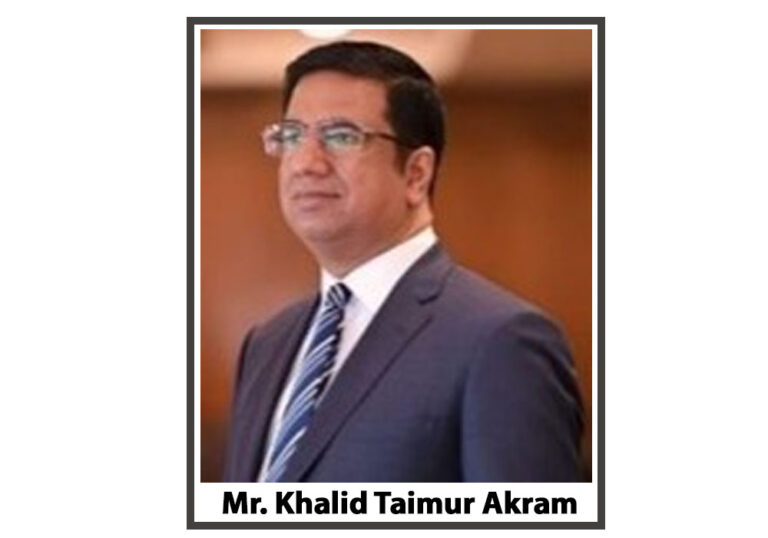
negligence becomes epidemic

When Negligence Becomes an Epidemic, a Wake-Up Cal…

Health is the foundation upon which every nation builds its future. More specifically in Pakistan which is underdeveloped. No country can claim sustainable progress while its citizens continue to suffer from preventable diseases, unsafe medical practices, and a healthcare system weakened by negligence and poor governance. Unfortunately, Pakistan finds itself confronting these very challenges, where public awareness remains limited, people prefer malpractice upon the real HCPs, healthcare standards are inconsistently enforced, and accountability is often absent, (absence of accountability is the major issue in my opinion).


The recent reports of children allegedly contracting HIV following treatment at a healthcare facility in Karachi have deeply disturbed the nation. Whole Karachi is feeling a fear to go to any hospital, especially in public sector. Regardless of the outcome of ongoing investigations, the incident has exposed an uncomfortable reality, patient safety cannot be left to chance. A single lapse in infection control, sterilization, blood screening, or injection practices can permanently alter the lives of innocent patients and destroy public confidence in the healthcare system.


Healthcare is not merely about prescribing medicines or performing procedures. It is a responsibility that demands competence, discipline, ethical conduct, and strict adherence to internationally accepted standards. Every hospital, whether public or private, must operate under robust quality assurance systems. Sterilization protocols, infection prevention measures, waste disposal, blood safety, medication management, and continuous staff training are not optional, they are the minimum requirements for safe patient care. Equally concerning is the widespread public attitude toward health. Many people ignore symptoms until illnesses become severe. Self-medication, unqualified practitioners, unnecessary injections, and delayed medical consultation continue to place countless lives at risk. Public health awareness must become a national priority. Prevention is always less costly and more effective than treatment.


However, responsibility does not rest with the public alone. Healthcare institutions must also examine their own shortcomings. In many facilities across Sindh and other parts of Pakistan, shortages of trained professionals, inadequate supervision, poor infection control practices, and weak administrative oversight compromise patient safety. Quality healthcare cannot be delivered where merit is overlooked, competent professionals are undervalued, and management positions are assigned without the necessary expertise and accountability.


Healthcare administration should be treated as a specialized profession. Hospitals are complex organizations that require qualified leaders capable of managing clinical governance, quality improvement, patient safety, risk management, and human resources. Administrative decisions directly affect patient outcomes. Therefore, appointments to key management positions must be based on competence, experience, and professional qualifications rather than favoritism or administrative convenience. Another neglected area is the implementation of quality management systems. Every healthcare facility should maintain active infection control committees, medication safety programs, pharmacovigilance systems, incident reporting mechanisms, and regular internal audits. Compliance with national standards should not be limited to inspection days but should become part of everyday practice.


The role of pharmacists, nurses, laboratory professionals, infection control specialists, and other allied health professionals must also be strengthened. Modern healthcare depends upon multidisciplinary collaboration. Patient safety improves when every healthcare professional performs within clearly defined responsibilities and works together under an effective governance framework. Regulatory authorities also bear a significant responsibility. Licensing alone is insufficient. Regular inspections, transparent investigations, prompt corrective actions, and meaningful penalties for serious negligence are essential to restore public confidence. Accountability should never be selective. Whether the institution is public or private, patient safety must remain the highest priority.


Furthermore, Pakistan must invest substantially in continuous professional education. Medical knowledge evolves rapidly, and healthcare workers require regular training in infection prevention, patient safety, antimicrobial stewardship, emergency preparedness, and quality improvement. Competence is not achieved through qualification alone; it must be maintained throughout one’s professional career. The tragedy involving innocent children should not become another forgotten headline. It must serve as a turning point for meaningful healthcare reform. Every adverse event should encourage learning, strengthen systems, and prevent future harm rather than becoming another statistic buried in official reports.


A nation’s healthcare system reflects its collective values. If we tolerate negligence, ignore standards, and compromise merit, we inevitably place every patient at risk. But if we prioritize competence, accountability, transparency, and patient safety, Pakistan can build a healthcare system worthy of public trust.


The health of our people is not merely a medical issue; it is a national responsibility. Every citizen deserves safe treatment, every child deserves protection from preventable harm, and every healthcare institution must be held to the highest standards of professional excellence. The time for complacency has passed. The time for reform is now.
Similar Posts

  • Key Insights from the University of Oxford’s AI,…

    I recently completed the AI, Justice, and the Rule of Law course, developed by the Saïd Business School at the University of Oxford in collaboration with UNESCO. The course was designed to equip legal professionals, judges, policymakers, researchers and justice sector practitioners with a comprehensive understanding of how artificial intelligence is transforming legal systems and the administration of justice while safeguarding the rule of law. Artificial intelligence (AI) is no longer a future possibility but an integral part of modern justice systems. A UNESCO survey of judicial operators from 96 countries found that 44% already use AI in their daily work, while only 9% have received formal AI training. AI is already being used in courts across more than one hundred jurisdictions to support legal research, document review, transcription, translation, case management, document summarisation, and drafting assistance. However, AI should not be viewed as a single technology; rather, it should be understood in terms of the specific task it performs within the judicial process. This functional approach is essential because the legal implications of AI depend on where and how it is used. Different categories of AI create different opportunities and risks. Administrative AI is primarily used for case management, transcription, translation, and other routine functions that improve court efficiency. Research and analytical AI assists legal professionals in identifying relevant legislation, precedents, and legal principles. Decision-support AI helps analyse patterns and provide recommendations, while generative AI produces summaries, drafts legal documents, and generates text. Each category presents distinct legal, ethical, and governance challenges, requiring different levels of scrutiny and oversight. A central theme in the course was that AI should support judicial work rather than replace judicial decision-making. Judicial authority must always remain with human judges, who retain ultimate responsibility for interpreting the law and deciding cases. AI can assist by improving efficiency and providing analytical support, but it cannot substitute independent legal reasoning or judicial discretion. The principle of Human-in-the-Loop (HITL) is emphasized, under which meaningful human oversight remains essential whenever AI influences legal processes or outcomes. There are considerable opportunities AI presents for improving justice systems. AI can significantly accelerate legal research, improve case management, automate transcription and translation, summarise lengthy legal documents, and reduce the administrative workload of judges and court staff. By automating repetitive tasks, AI enables judges to devote more time to hearings, legal analysis, and reasoned decision-making. AI has the potential to improve access to justice by making legal services faster, more efficient, and more accessible. Alongside these benefits, there are risks associated with AI in the justice sector. Generative AI may produce hallucinated legal authorities, inaccurate citations, or misleading legal analysis. Algorithmic bias may reinforce existing inequalities, while automation bias can encourage users to place excessive trust in AI-generated outputs without independent verification. Other important concerns include the lack of transparency in ‘black box’ algorithms, risks to privacy and confidentiality, and the possibility that excessive reliance on AI may gradually erode the professional skills and independent judgment of legal practitioners. The responsible adoption of AI requires governance rather than simply introducing new technology. Effective implementation depends upon institutional AI policies, comprehensive risk and human rights impact assessments, pilot testing before deployment, continuous monitoring and evaluation, transparency, explainability, and accountability. The importance of multidisciplinary oversight involving judges, technologists, policymakers, and civil society to ensure that AI systems remain trustworthy and aligned with the principles of justice and the rule of law. Another important aspect of the role of AI is in promoting access to justice. AI-powered legal assistants can help self-represented litigants understand legal procedures, prepare legal documents, translate court materials into different languages, and support mediation and dispute resolution processes. These applications have the potential to make legal information and services more accessible, particularly for individuals who face financial, linguistic, or geographical barriers in accessing justice. However, the ethical and professional responsibility always remains with human legal professionals. Regardless of how sophisticated AI systems become, judges remain accountable for their decisions, and lawyers remain responsible for the accuracy, quality, and integrity of their work. AI cannot replace professional ethics, judicial independence, impartiality, or the duty to provide transparent, reasoned, and legally sound judgments. Overall, AI should be viewed as a powerful judicial support tool rather than a judicial decision-maker. Its responsible use depends upon understanding the function of each AI system, maintaining meaningful human oversight, safeguarding fundamental rights, ensuring transparency and accountability, and adopting strong institutional governance so that technological innovation strengthens, rather than undermines, the rule of law.

  • Cheating Today, Corruption Tomorrow

    By Tuba Khan  Cheating in the education sector is an issue of great concern. It is not merely an academic breakdown, but the foundation upon which corrupt values are built. Unfortunately, cheating culture has become a defining feature of Pakistan’s education system and is considered a normal practice instead of a moral failure. This dysfunctional culture has led to the production of highly qualified people with unproductive minds, weak analytical abilities and limited potential to play a transformative role in society. Academic cheating is a conscious effort to use unfair means during exams to gain educational credit. Common cheating practices include, paper leaks, copied material in exams, using AI chatbots and technological devices such as mobile phones, smartwatches and other digital gadgets, receiving help from others during examination and hiring another person to sit in exams on behalf of the original candidate. Shockingly, in some cases, invigilators themselves facilitate cheating in the exam hall. Pakistan clearly lags behind other countries worldwide in the research field because of its corrupt education system that discourages creativity and problem-solving skills and is based on rote learning. International reports highlight the declining quality of education in Pakistan. According to the World Top 20 (WT20) International Education Database 2026, Pakistan is ranked 136th out of 164 countries globally in terms of the quality of education. Culture of cheating reflects the education crisis in Pakistan. This menace is prevalent in all four provinces of Pakistan. Sindh and Balochistan have recorded the highest number of cheating cases. As per the reports released by the Board of Secondary Education Karachi in 2022, around 100 students were caught cheating during exams and 400 cell phones were confiscated in the course of just two days (May 21-22). Later it was discovered that 18 people had appeared in exams on behalf of original candidates. KPK and Punjab also depict a pathetic picture. Earlier this year, candidates at the Khurrianwala Government Girls High School were found cheating and copying from paper slips with the connivance of invigilation staff. Even the provincial capitals, Lahore and Peshawar, having well-known educational institutes have the same culture. Not only schools and colleges, but the universities are also prone to it. Many factors contribute to this toxic culture, including staff shortage, overcrowded examination centers, weak institutional policies, poor performance of teachers, habitual laziness among students and staff, low level of students’ interest in studies and a lack of awareness about moral values. Consequences of cheating are not limited to examination centers only, but extend to the whole society. Academic institutes are meant to produce ethical, responsible and intellectual citizens, but the cheating culture is eroding the very essence of education. In most of Pakistan’s educational institutes, students learn that success is determined not by merit, knowledge and hard work, but by shortcuts and dishonest practices. They learn how to undermine the rights of the honest ones for the sake of their personal interests. This mindset is leading towards the moral decay of society. Learners who develop the habit of achieving success through unfair means during academic years may apply the same tactics to gain influence when they come into power, fostering corruption in the country. Students don’t even realize the damage they are causing to themselves by cheating. For the short-term happiness of success, they often expose themselves to long-term consequences as cheating sabotages their self-confidence, ability to think critically and form independent opinions. Such students score high and even secure top positions in their educational institutes, but often fail to compete in the global job market, where analytical ability and practical skills are valued more than the high scores. When dishonesty is tolerated in classrooms, it puts the future of students at stake and the entire society suffers the consequences. Education sector needs comprehensive reforms. The Government of Pakistan should allocate enough financial resources to the educational institutions, recruit competent staff, strengthen surveillance in exam halls, introduce teacher training programmes, hold the students and staff accountable for their involvement in the debacle of cheating. Examination halls should be monitored and students should be thoroughly checked before entering examination centers so that they cannot carry any digital device or cheating material with them. Exams should be conceptual promoting effective learning and fair assessment. Schools, colleges and universities should educate their students about the importance of intellectual growth and honesty. Cheating must be met with strict actions. A nation cannot expect honest leaders unless the education system is fair. If Pakistan really needs a corruption-free system, the struggle must begin within the classrooms. In a nutshell, by eliminating the culture of cheating, Pakistan will be able to nurture a generation that values meritocracy, thus paving the way for a more just and progressive future.

  • Devolution Without Governance Reform

    The original 1973 Constitution, Charter of Democracy (COD), and the landmark 18th Amendment all call for a strong local government system. Till today, it remains the unfinished agenda of good governance. It is key to the modernization of the state, society, and politics. The consensual Constitution was a miracle and a masterstroke of the elected government of Zulfikar Ali Bhutto (ZAB). Devolution was a cornerstone of this document, so painfully drafted by elected representatives of the people. As the newly created provinces after the break-up of the infamous One Unit lacked the capacity to handle vital areas like education, health, and agriculture, a concurrent list was prepared to devolve these departments systematically to the provincial governments. A Department of Provincial Coordination was created to oversee this transfer from Islamabad to Lahore, Karachi, Peshawar, and Quetta. Unfortunately, after the fall of the government in July 1977, the entire process was stalled. Governments that followed did not take this transfer seriously, resulting in serious governance issues. The two mainstream political parties of the time, PPP and PML-N, followed with the COD in May 2006, in which it was agreed to build an effective local government system. Unfortunately, after the assassination of Benazir Bhutto, the driving force behind the Charter, it was not fully adhered to. Instead, the 18th Amendment was passed by the legislature in April 2010 to restore the original document. Through this constitutional clean-up, Islamabad was cut to size while power and resources were handed over to the provincial governments, with the hope that they would be devolved all the way down to the tehsil and union council levels. But that did not take place. While the federal government was depleted, the provinces grew fat and started indulging in frivolous projects. In Punjab, Lahore was developed as a flagship showcase project for publicity while the rest of the province was left to languish. Karachi was ignored; resources were moved inland by the provincial government. The menace of incompetence, corruption, and abuse of authority has to be addressed at the national level before it is devolved; otherwise, it will be more of the same. The Civil Secretariat in Lahore, also called Lat Sahib Ka Daftar, which runs the largest province of the federation, reveals it all. Office hours are not observed; files do not move without wheels; records are poorly managed. There was a time when the Chief Minister resided only in GOR-I on Club Road, while official work was carried out at the Secretariat, but not anymore. Most senior officers (Chief Secretary, Commissioner, Deputy Commissioner, etc.) have established home offices, resulting in duplication and waste. Till the decade of the 1970s, only the telephone operator and one coordinator manned most official residences, but not anymore. Great Britain ruled the world with its Commissioners System. The only difference was that there was civilian oversight and accountability by the British Parliament, which has faded over time in the Islamic Republic of Pakistan (IRP). Till today, the flag is unfurled at the office and residence of the Deputy Commissioner (DC), as representative of the Crown with sovereign powers (administrative, judicial, and revenue). Over the years, some judicial powers have been taken away; otherwise, the DC runs the district while the Commissioner controls the division. Recently, in Lahore, the Commissioner’s office was moved from the Sanda area to the Mall, across from Aitchison College. It is a fancy structure right on the main artery of the city, where millions have been spent on refurbishing the building vacated by the Naval Staff College, which was established close to the waters of the Lahore Canal. Perhaps it has been moved to the BRB waters now. One office move has strained the budget of the province. What will happen if scores of such infrastructures are built for new provincial governments? Growing up on the Mall, close to the Town Hall (Lahore Municipal Corporation, now Metropolitan Corporation of Lahore), my memory is of a functional city run by an elected mayor. Today, the metropolis is non-functional as it is under the control of the bureaucracy instead of an accountable elected representative of the people. In the USA, the President runs the federation, the fifty states are under the Governors, while the Mayor controls the city, all directly elected by the people. Except for the President, there is an Electoral College as well. The state of Texas is larger in area than Pakistan, yet it is fully functional. The cities are run by elected city governments. Town hall meetings are regularly held where public input is solicited to improve services; service to the people is the common agenda. Once the system is made functional by getting rid of the evils, devolution can be effective. The federal government has offices in major cities of America, but most day-to-day work is carried out by state and city governments. The Americans believe that no government is the best government; as such, employment is limited to minimal functional staff. Procedures are updated and simplified for the smooth flow of work. Obstacles are removed for functionality. More of the same has never worked in the past, nor will it work in the future. Dysfunctional bureaucracy has to be made functional to kick-start the stalled system for real devolution to take place.

  • China and the Future of International Trade: From …

    The picture of today’s Chinese factories is very different from the one we used to see in the past few decades. In present-day Chinese factories, alongside workers, there are robots, automated production lines, engineers and software systems. This image makes one realize that China’s role is not limited to being the world’s factory anymore. It is undergoing significant transformation that tells a story of a forward-looking vision. Now, China is moving from simply manufacturing products designed elsewhere to developing the technologies, brands and ideas behind tomorrow’s global economy.  There was a time when the words “Made in China” were associated with China’s role as the world’s manufacturing powerhouse. At that time, “Made in China” also represented a shift of China from merely a developing economy to a country widely known for mass production, affordable products and competitive prices. Whether it be clothes, toys, household goods or electronics, Chinese factories became an essential part of global supply chains. But China didn’t stop there. China considered going through a new transition after realizing that the world’s economic patterns were shifting and that new innovations and technologies were taking center stage. It was a change from merely producing goods for other people to developing its own technologies, brands, and business strategies. It was not a small change. It made sure that future should not only be defined by “Made in China”, but increasingly by “Innovated in China”.  China’s journey of becoming the world trading powerhouse began in 2001 when it joined the World Trade Organization (WTO). Within just eight years, China became the world’s largest exporter of goods. By 2013, it had taken the top position in total trade. Today, China’s total imports and exports are worth more than $6 trillion. Its manufacturing strength has given companies around the world access to competitive products and has helped make global trade faster and more affordable. But the more interesting story today is what China is producing through its own innovation. Electric vehicles (EV) industry is the best example that reflects this shift towards “Innovated in China”. In 1951, BYD was established as a domestic manufacturer. Over the years, BYD developed into a Chinese multinational company and the leader of the global EV industry. It is not just a manufacturer anymore but a company that makes its own ideas, develops its own technology and makes its own electric vehicles and batteries. It has created its footprint in global markets like South Asia, South East Asia, Europe, Latin America and other regions. Chinese electric cars are now being recognized more for their battery tech, design, software and performance, and not just their price. China has also built a huge domestic market for electric vehicles, giving its companies an environment in which they can improve rapidly. A similar change can be seen in renewable energy. China produces large number of solar panels, batteries, and other green technologies. All these steps make China a major driving force in clean energy industry. According to the International Energy Agency (IEA), China controls over 80% to 90% of every single key stage of the global solar supply chain, that makes it an undisputed global leader in solar photovoltaic (PV) manufacturing. This matters far beyond China. Lower-cost solar equipment has helped countries around the world expand renewable energy and pursue their climate goals. China’s strength in batteries is particularly important. Batteries are the beating heart of electric vehicles, energy storage and, increasingly, modern electricity systems. The Chinese companies have poured money into research on batteries and into increasing production. Companies such as CATL have become key suppliers to international automobile manufacturers. In this sense, Chinese innovation is no longer simply about producing a finished product; it is increasingly about supplying the technology that makes the next generation of global industries possible. Another important example is high-speed rail. China has developed the world’s largest high-speed railway network, connecting major cities across the country. Now, China’s experience and expertise can be used internationally. Chinese companies have participated in railway projects and infrastructure development in different parts of the world. Under the Belt and Road Initiative, China has also increased economic connections through investment and infrastructure cooperation. Digital technology is another area where China has moved from follower to innovator. Chinese companies have developed globally competitive platforms in e-commerce, digital payments, logistics and telecommunications. The widespread use of mobile payments in Chinese cities is a real-life example. Consumers can pay for food, transport and everyday purchases using their phones, while businesses can reach customers through sophisticated digital platforms. This innovation is supported by a huge domestic market. With more than 1.4 billion people, China provides its companies with an enormous testing ground. A new product or service can reach millions of users quickly. Companies that succeed at home can then adapt their products for international markets. This combination of scale, manufacturing capacity, engineering talent and growing research investment gives China a unique position in global trade. China’s investment in research and development also reflects this shift. Data from the World Bank show that China’s research and development spending has risen substantially over the past two decades. China is also among the world’s leading countries in patent applications. The sheer number of patents is not a measure of quality of innovation, but of the scale of China’s technological activity. This could be a very significant change for international trade. Globalization, in future, will not only be dependent on large factories producing inexpensive goods. It will increasingly be about technology, clean energy, AI, advance manufacturing, digital services and sophisticated supply chains. China is already very well positioned in many of these areas.  This does not mean China will replace every other manufacturing or technology center. International trade works best when countries specialize, compete and cooperate at the same time. China will continue to import raw materials, energy, technology and components while exporting finished products, machinery and increasingly sophisticated technologies. Its success will also create opportunities for businesses in developing countries that become part of Chinese-linked supply

  • Pro-America or Pro-Israel

    There is a moment in every negotiation when the mask slips and the real hierarchy of loyalties reveals itself. It happened again recently, in the quiet grammar of a policy condition. If a deal with Iran is good for America, if it stops a war, secures a region, spares American blood and treasure, then it should be pursued on its own terms. It should not need to be laundered through a second question, but what does Israel get out of it? The moment that second question enters the room, the first one has already been answered, and not in America’s favour. This is not a rhetorical trick. It is a structural tell. A foreign policy genuinely organised around American interests does not require the ratification of an ally before it proceeds. It calculates costs, weighs risks, and acts. The insertion of an Israeli veto, soft, implicit, but unmistakable, into decisions that are framed as being about American security is not an alliance functioning normally. It is a client relationship wearing the costume of a partnership, and increasingly, the costume does not fit. I do not say this as someone hostile to alliances. Alliances are the ordinary furniture of statecraft, and no serious analyst begrudges Washington its relationships. What I begrudge, what any honest observer of the last two decades of American foreign policy must eventually begrudge, is the peculiar one-directionality of this particular relationship, in which American strategic autonomy is perpetually available for negotiation, but Israeli strategic autonomy is not. Successive administrations, Democratic and Republican alike, have discovered that the fastest way to kill a sound policy is to let it wander anywhere near Jerusalem’s objections. The Biden administration played this game with a kind of practiced fluency, dressing subservience in the language of “shared values” and “unbreakable bonds.” That the current administration appears to be playing the identical game, merely with a different set of talking points, should trouble anyone who once believed that a change in party might also mean a change in posture. The deeper dishonesty, though, sits beneath the day-to-day theatre of negotiation. It is the elephant that everyone in the room has agreed, by unspoken consensus, not to see. Iran is treated as the singular proliferation emergency of the Middle East, the country whose enrichment levels must be monitored down to the percentage point, whose every centrifuge is a matter of international alarm, whose nuclear ambitions justify sanctions regimes, covert sabotage, and the standing threat of military strikes. And yet a few hundred kilometers away sits a state that has possessed nuclear weapons for more than half a century, has never signed the Non-Proliferation Treaty, has never submitted to an inspection regime of any kind, and whose arsenal is discussed in Western capitals only in the passive voice, if it is discussed at all. Israel’s bomb is an open secret that everyone has agreed to keep. This is not a minor inconsistency. It is the load-bearing hypocrisy of the entire non-proliferation architecture in West Asia. You cannot credibly claim to be pursuing a weapons-of-mass-destruction-free Middle East while exempting, by unspoken convention, the one state in the region that actually has the weapons in question. Every argument marshalled against Iran’s nuclear programme, that a nuclear-armed state destabilizes its neighbors, that it invites arms races, that it holds regional security hostage to the judgment of a single government, applies with at least equal force to Israel, and applies to a country that has, unlike Iran, already used overwhelming force against multiple neighbors within living memory. The asymmetry is not a technical oversight. It is a choice, made and remade by every administration that has declined to place Israel’s arsenal on the table. What this reveals, I think, is that the “Iran obsession,” as it might fairly be called, was never really about proliferation at all. If it were, the conversation would begin with disarmament architecture applied evenhandedly across the region, inspections offered and demanded in both directions, and a serious reckoning with the double standard that has calcified into policy over fifty years. Instead, the Iran file functions as a proxy for a different question entirely, whose security calculus gets to define American Middle East policy. And on that question, the answer has been remarkably consistent regardless of who occupies the Oval Office. None of this is a case for indulging Tehran’s own record, which carries its own list of grievances worth prosecuting honestly, its human rights abuses, its regional proxies, its own history of destabilizing behavior. Clear-eyed criticism of Iran is entirely compatible with clear-eyed criticism of the double standard applied to Israel; the two are not in tension, and pretending otherwise is its own kind of evasion. But a foreign policy that claims the mantle of principle while practicing this degree of selective vision is not principled. It is theatre, and increasingly unconvincing theatre, performed for a domestic audience that is growing visibly tired of the script. The unpopularity of this arrangement is no longer a fringe sentiment. It shows up in polling, in generational splits within America’s own political coalitions, in the rising discomfort even among constituencies that have historically been the most reliable defenders of the relationship. People are noticing the pattern: that policies justified as serving American interests keep bending, at the last moment, toward a different set of interests altogether. They are asking, reasonably, who is actually driving the car. There is also a historical dimension to this that deserves more attention than it usually receives. The pattern of conditioning American policy on Israeli comfort did not begin with Iran, and it will not end there. It runs through decades of vetoed resolutions at the United Nations, through arms transfers that continued uninterrupted even amid documented humanitarian catastrophe, through the quiet understanding that certain questions simply are not to be raised in polite Washington company. Each individual instance can be explained away with its own set of justifications, security concerns, historical debts, domestic political realities. But taken together, across administrations

  • Beyond Public Finance: Towards  Constitutional Po…

    The fourth part of this series argued that reforms fail when their design ignores the constitutional rules, institutional incentives and political interests that determine implementation. Pakistan’s problem, however, goes deeper than the capture of individual tax measures. The state itself has gradually become accustomed to obtaining resources through rents rather than creating the conditions for sustained production. A rent is an economic benefit obtained through control over a privilege, resource, regulation or strategic position rather than through corresponding productive activity. Rent-seeking begins when individuals, institutions and organised groups devote their energies to obtaining such benefits from the state instead of producing goods, improving services, developing technology or competing in open markets. Pakistan’s political economy has long rewarded access more generously than enterprise. Access to state land, subsidised credit, protected markets, statutory exemptions, import licences, public contracts, regulatory concessions, tax amnesties, administered prices and preferential treatment has frequently generated returns exceeding those available from productive investment. The result is an economy in which political connections can matter more than innovation, and proximity to authority can be more valuable than efficiency. This system is sustained at two interconnected levels. Domestically, privileged groups compete for benefits distributed through state power. Externally, the state repeatedly seeks resources by converting Pakistan’s strategic location and security relevance into financial assistance, debt rollovers, deposits, concessional oil arrangements and diplomatic support. The interaction between these two levels is central to understanding Pakistan’s continued dependence. External financing is not inherently harmful. Developing countries require foreign capital, technology and access to markets. Borrowing can finance infrastructure and productive capacity that generate future income sufficient to service the debt. Strategic partnerships can provide security and economic opportunities. The problem arises when external inflows substitute for domestic transformation. Pakistan has repeatedly treated foreign exchange availability as proof of economic recovery. Reserves rise after an IMF disbursement, bilateral deposit, commercial loan or rollover. The immediate threat of default recedes. The exchange rate stabilises and the government declares that confidence has returned. The underlying productive structure, however, may remain unchanged. The IMF completed the third review of Pakistan’s Extended Fund Facility in May 2026, permitting immediate disbursements of approximately US$1.1 billion under the EFF and US$220 million under the Resilience and Sustainability Facility.  Total disbursements under the two arrangements consequently reached about US$4.8 billion. The Fund also reported progress in rebuilding reserves and achieving the agreed primary surplus. These developments provide necessary breathing space. They do not constitute economic independence. Recent events offer an unusually clear illustration. Pakistan reportedly requested a US$10 billion exchange-stabilisation facility from the United States after playing a diplomatic role in the Middle Eastern conflict. Economists quoted by Reuters questioned whether fresh financing would address the reforms Islamabad had repeatedly avoided. One analyst described the proposed support as “geopolitical rent”. Pakistan had earlier repaid US$3.5 billion to the United Arab Emirates and obtained a US$3 billion Saudi backstop to help fill the resulting gap.  The episode is not remarkable because Pakistan sought assistance during a difficult external shock. Responsible governments must protect reserves and manage emergencies. Its significance lies in the familiar institutional response: once again, strategic usefulness is expected to generate the liquidity required to postpone a deeper restructuring of the economy. However, fresh liquidity can purchase time. It cannot manufacture productivity. Pakistan’s external relationships have repeatedly followed this pattern. During the Cold War, the country received assistance because of its strategic position. The Afghan war transformed Pakistan into a frontline state and brought large flows of military and economic support. The post-2001 “war on terror” renewed the same bargain under different circumstances. Regional conflicts, security alliances and diplomatic mediation continue to create opportunities for financial support. Each inflow temporarily relaxes the pressure for reform. It also strengthens those institutions capable of negotiating and managing the strategic bargain. The constitutional consequence is profound. A state financed substantially through its citizens must negotiate with them. It requires a productive economy capable of generating taxable income and a political order capable of securing broad consent. A state able to obtain resources externally can delay that negotiation. This is one reason why taxation and representation cannot be separated. Dependence upon external rents weakens the fiscal relationship between citizen and state. Governments remain less accountable to taxpayers when foreign creditors, strategic partners and captive domestic sectors provide the resources necessary for survival.  The burden of adjustment is then transferred to those lacking political protection. Salaried persons face deduction before receiving their income. Documented businesses encounter withholding taxes, minimum taxes, advance taxes and delayed refunds.  Consumers pay indirect taxes and levies through electricity, fuel, telecommunications and ordinary purchases.  Powerful sectors negotiate exemptions, reduced rates, amnesties or deferred enforcement. External rents and domestic privileges are therefore not separate distortions. They reinforce each other. The article, “The age of implosion: exhaustion and the hollow core”, recently published in Business Recorder, offers a useful metaphor for this condition. It argues that financial movement can create the appearance of vitality while the productive foundations of the economy continue to weaken. Loans, deposits and other inflows may keep institutions operating outwardly even when their inner capacity is being exhausted.  The metaphor requires institutional precision. Pakistan has not ceased functioning. Taxes are collected, budgets are passed, debt is serviced, imports continue and administrative structures remain active. The state survives through a combination of borrowing, external support, remittances, taxation of captive sectors and periodic transfer of costs to future generations. This should not be mistaken for resilience. It is deferred adjustment.  The official Pakistan Economic Survey 2025–26 continues to organise the country’s performance through conventional categories of growth, investment, trade, fiscal development, public debt and social indicators. These measurements are necessary, but they do not fully capture the political mechanisms determining why available resources flow towards consumption, protection and rent extraction rather than productivity, human development and technological advancement.  A rent-based economy also shapes the behaviour of the private sector. Businesses rationally adapt to the incentives created by the state. Where profits depend upon tariff protection, regulatory discretion, government contracts,

Leave a Reply

Your email address will not be published. Required fields are marked *