beyond public finance

Beyond Public Finance: Towards  Constitutional Po…

The fourth part of this series argued that reforms fail when their design ignores the constitutional rules, institutional incentives and political interests that determine implementation. Pakistan’s problem, however, goes deeper than the capture of individual tax measures. The state itself has gradually become accustomed to obtaining resources through rents rather than creating the conditions for sustained production.

A rent is an economic benefit obtained through control over a privilege, resource, regulation or strategic position rather than through corresponding productive activity. Rent-seeking begins when individuals, institutions and organised groups devote their energies to obtaining such benefits from the state instead of producing goods, improving services, developing technology or competing in open markets.

Pakistan’s political economy has long rewarded access more generously than enterprise. Access to state land, subsidised credit, protected markets, statutory exemptions, import licences, public contracts, regulatory concessions, tax amnesties, administered prices and preferential treatment has frequently generated returns exceeding those available from productive investment. The result is an economy in which political connections can matter more than innovation, and proximity to authority can be more valuable than efficiency.

This system is sustained at two interconnected levels. Domestically, privileged groups compete for benefits distributed through state power. Externally, the state repeatedly seeks resources by converting Pakistan’s strategic location and security relevance into financial assistance, debt rollovers, deposits, concessional oil arrangements and diplomatic support. The interaction between these two levels is central to understanding Pakistan’s continued dependence.

External financing is not inherently harmful. Developing countries require foreign capital, technology and access to markets. Borrowing can finance infrastructure and productive capacity that generate future income sufficient to service the debt. Strategic partnerships can provide security and economic opportunities. The problem arises when external inflows substitute for domestic transformation.

Pakistan has repeatedly treated foreign exchange availability as proof of economic recovery. Reserves rise after an IMF disbursement, bilateral deposit, commercial loan or rollover. The immediate threat of default recedes. The exchange rate stabilises and the government declares that confidence has returned. The underlying productive structure, however, may remain unchanged.

The IMF completed the third review of Pakistan’s Extended Fund Facility in May 2026, permitting immediate disbursements of approximately US$1.1 billion under the EFF and US$220 million under the Resilience and Sustainability Facility. 

Total disbursements under the two arrangements consequently reached about US$4.8 billion. The Fund also reported progress in rebuilding reserves and achieving the agreed primary surplus. These developments provide necessary breathing space. They do not constitute economic independence.

Recent events offer an unusually clear illustration. Pakistan reportedly requested a US$10 billion exchange-stabilisation facility from the United States after playing a diplomatic role in the Middle Eastern conflict. Economists quoted by Reuters questioned whether fresh financing would address the reforms Islamabad had repeatedly avoided. One analyst described the proposed support as “geopolitical rent”. Pakistan had earlier repaid US$3.5 billion to the United Arab Emirates and obtained a US$3 billion Saudi backstop to help fill the resulting gap

The episode is not remarkable because Pakistan sought assistance during a difficult external shock. Responsible governments must protect reserves and manage emergencies. Its significance lies in the familiar institutional response: once again, strategic usefulness is expected to generate the liquidity required to postpone a deeper restructuring of the economy. However, fresh liquidity can purchase time. It cannot manufacture productivity.

Pakistan’s external relationships have repeatedly followed this pattern. During the Cold War, the country received assistance because of its strategic position. The Afghan war transformed Pakistan into a frontline state and brought large flows of military and economic support. The post-2001 “war on terror” renewed the same bargain under different circumstances. Regional conflicts, security alliances and diplomatic mediation continue to create opportunities for financial support.

Each inflow temporarily relaxes the pressure for reform. It also strengthens those institutions capable of negotiating and managing the strategic bargain. The constitutional consequence is profound. A state financed substantially through its citizens must negotiate with them. It requires a productive economy capable of generating taxable income and a political order capable of securing broad consent. A state able to obtain resources externally can delay that negotiation.

This is one reason why taxation and representation cannot be separated. Dependence upon external rents weakens the fiscal relationship between citizen and state. Governments remain less accountable to taxpayers when foreign creditors, strategic partners and captive domestic sectors provide the resources necessary for survival

The burden of adjustment is then transferred to those lacking political protection. Salaried persons face deduction before receiving their income. Documented businesses encounter withholding taxes, minimum taxes, advance taxes and delayed refunds. 

Consumers pay indirect taxes and levies through electricity, fuel, telecommunications and ordinary purchases

Powerful sectors negotiate exemptions, reduced rates, amnesties or deferred enforcement. External rents and domestic privileges are therefore not separate distortions. They reinforce each other.

The article, “The age of implosion: exhaustion and the hollow core”, recently published in Business Recorder, offers a useful metaphor for this condition. It argues that financial movement can create the appearance of vitality while the productive foundations of the economy continue to weaken. Loans, deposits and other inflows may keep institutions operating outwardly even when their inner capacity is being exhausted. 

The metaphor requires institutional precision. Pakistan has not ceased functioning. Taxes are collected, budgets are passed, debt is serviced, imports continue and administrative structures remain active. The state survives through a combination of borrowing, external support, remittances, taxation of captive sectors and periodic transfer of costs to future generations. This should not be mistaken for resilience. It is deferred adjustment

The official Pakistan Economic Survey 2025–26 continues to organise the country’s performance through conventional categories of growth, investment, trade, fiscal development, public debt and social indicators. These measurements are necessary, but they do not fully capture the political mechanisms determining why available resources flow towards consumption, protection and rent extraction rather than productivity, human development and technological advancement. 

A rent-based economy also shapes the behaviour of the private sector. Businesses rationally adapt to the incentives created by the state. Where profits depend upon tariff protection, regulatory discretion, government contracts, tax concessions or privileged access to credit, investment shifts from innovation to influence. Entrepreneurs become petitioners. Competition becomes negotiation. Policy becomes a marketable privilege.

The language of “industry protection” often conceals transfers from consumers to producers. High tariffs raise input costs and shelter inefficiency. Tax concessions benefit selected activities while increasing the burden upon the rest of the economy. Administered prices and regulatory barriers create opportunities for those already inside the system while excluding potential competitors. The resulting private sector may be privately owned without being genuinely competitive.

State-owned enterprises create another channel for distributing rents. Employment, procurement, pricing, appointments and financing decisions can serve political or institutional objectives unrelated to commercial performance. Losses are socialised through the budget, public debt or banking system, while influence remains concentrated among those controlling the enterprise.

The IMF’s present programme again identifies state-owned enterprise reform, competition, productivity, energy-sector viability and improvement of the business environment as central priorities. Similar prescriptions have appeared repeatedly because the underlying political incentives have repeatedly prevented their completion. 

Constitutional Political Economy asks why such reforms remain unfinished. The answer cannot be reduced to lack of technical knowledge. Reform threatens established claims over public resources. Beneficiaries are organised; those bearing the cost are dispersed. Governments seeking immediate political stability prefer accommodation over confrontation.

Rent-seeking thus becomes self-reinforcing. Privileged groups acquire resources that strengthen their capacity to obtain further privilege. Documented and competitive enterprises face greater burdens, reducing their ability to invest and expand. Informality becomes a means of protection. The tax base remains narrow, encouraging higher rates and more withholding from those already visible. Economic weakness then creates a new justification for external assistance.

The cycle is complete: external support postpones reform; postponed reform weakens productive capacity; weaker capacity creates fresh external dependence; renewed dependence strengthens those controlling the strategic bargain.

The cycle cannot be broken merely by raising the tax-to-GDP ratio. Extracting more revenue from the existing structure may finance the rent-distributing state without transforming it. The central question is whether taxation alters incentives in favour of production, competition and accountability.

Nor can the solution be indiscriminate withdrawal of the state. Markets themselves can be captured. Concentrated economic power, cartels, monopolies and regulatory influence may reproduce private forms of coercion. Pakistan requires a capable state, but one constitutionally restrained from distributing arbitrary favours and strong enough to enforce equal rules.

The principles required for such a transformation are not confined to modern Western economic thought. Muslim scholars recognised that public revenue could not be separated from justice, accountability and productive capacity. Abu Yusuf warned against oppressive collection and emphasised the responsibility of public officials. Ibn Khaldun connected excessive taxation, elite luxury, declining incentives and political deterioration within a single theory of state development. Their insight remains relevant: prosperity cannot be sustained where rulers and privileged groups consume the foundations of production.

Pakistan’s challenge is not merely to secure the next loan, rollover or strategic facility. It is to transform a political economy organised around access into one organised around production; to replace privileges with general rules; and to make public authority answerable to those whose labour, enterprise and consumption finance the state.

Strategic relevance may prevent immediate collapse. It cannot create a self-reliant economy. A country survives through external support. A constitutional democracy prospers through the productive energies and willing participation of its citizens.

In the next part, we shall examine Ehtisham Ahmad’s “buffer state” thesis—its valuable recognition of Pakistan’s historical dependency, and the limits of explaining that dependency primarily through conventional public-finance institutions.

[To be continued]


 ____________________________________________________________________

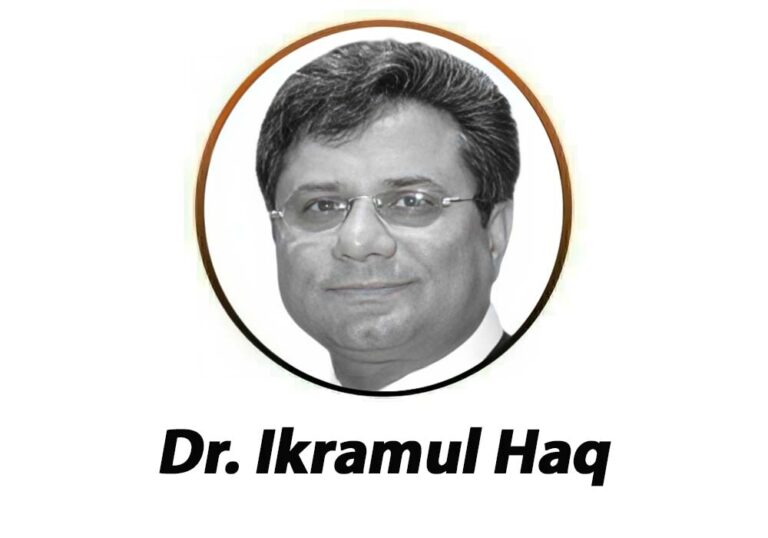
Dr. Ikramul Haq, Advocate Supreme Court, Adjunct Faculty at Lahore University of Management Sciences (LUMS), member Advisory Board and Visiting Senior Fellow of Pakistan Institute of Development Economics (PIDE), holds an LLD in tax laws. He was full-time journalist from 1979 to 1984 with Viewpoint and Dawn. He also served Civil Services of Pakistan from 1984 to 1996. 

Similar Posts

  • Why rigging and violence in Pakistani Kashmir?

    Elections are currently being held in Pakistani-administered Kashmir (POK), and their results have already become controversial at the very first stage. Gilgit-Baltistan, which is essentially also part of Kashmir, held elections recently. Bilawal Bhutto Zardari’s Pakistan Peoples Party (PPP) won there, while the Istehkam-e-Pakistan Party also received some seats, and the Pakistan Muslim League-Nawaz (PML-N) won fewer seats. Despite this, the PML-N accepted the results and fully cooperated in the formation of the government. In the first phase of elections in Mirpur, however, the PML-N won nine seats, while Bilawal’s PPP secured four. Despite winning four seats, the PPP immediately began raising allegations of rigging. Even more painful is the fact that these elections have been marked by bloodshed. During clashes surrounding the long march of the banned Awami Action Party, one Rangers personnel was killed and five police officers were confirmed injured. The Awami Action Committee, meanwhile, claims that its protesters came under firing, resulting in the deaths of 14 of its workers. The number of people killed or injured from the Awami Action Committee has not been officially confirmed. However, if government personnel have been killed and injured, it is reasonable to assume that protesters also suffered casualties. The question now is what should be made of the rigging allegations being levelled by the PPP and Bilawal Bhutto Zardari. If one side refuses to accept the election results and uses such harsh language against the other side, could the situation not deteriorate further? From a strategic perspective, it would have been better to hold the entire election on a single day. The total number of voters is not so large that the process needed to be stretched out in this manner. The second phase is scheduled for August 2, followed by the third phase on August 10, as if this were a battlefield. Bilawal should also think beyond repeatedly raising the issue of rigging. At present, his own party is in power in Kashmir. The deputy commissioners, assistant commissioners and other officials were appointed by the ruling party. So who has greater opportunities to influence elections—the ruling party or the opposition? Nawaz Sharif and Maryam Nawaz conducted an effective election campaign during the final days. However, the writer believes it was not befitting of a three-time elected Pakistani prime minister to say words to the effect of: “I will ask my brother Shehbaz Sharif to make me the prime minister of Kashmir, and I will solve all its problems.” Instead, he should have said that whichever member from their party is elected to the assembly, he and his party would fully cooperate with that representative in resolving the problems of the people of Kashmir. Maryam Nawaz also sent air-conditioned buses for the people of Kashmir, but they were stopped on the instructions of the Election Commission. Nevertheless, the message reached the people of Kashmir that the PML-N was in a position to do something to address their deprivation. This thinking could help the PML-N achieve further success in the next two phases as well. But the real decisions, after all, remain in the hands of those who possess the power and influence. In our country, writing and speaking the truth has become extremely difficult. There is immense pressure not only from powerful circles but also from violent and extremist mindsets. Their proxies can be found roaming freely in the streets. In normal states, something that would be considered ordinary or insignificant was used as a pretext to shut down the country’s largest media organisation, Geo, for two weeks. This alone gives an idea of the pressure facing the Jang newspaper and the national media. For this reason, the writer says he tries to avoid writing about national and domestic affairs and mostly focuses on international issues. Even there, however, he has to be careful not to write anything critical of China, Iran or certain other countries. Likewise, he says he cannot write anything supportive of India, Israel or certain other countries that might highlight a positive aspect or truth about them. This, he says, is the pressure he faces every moment. When it comes to Indian-administered Kashmir, we can freely write and speak about alleged government abuses without facing difficulty or objection. We can exaggerate as much as we want and add as much colour as we like. The violent militants there are portrayed as victims under all circumstances. But when it comes to our own Kashmir, we are expected to portray the movement for public rights as anti-state, Indian-sponsored and terrorist, regardless of how strongly its members insist that they are simply demanding rights for ordinary people. The organisation is not even named after any military or jihadist group. It is called the Jammu and Kashmir Joint Action Committee. It consists of local Kashmiri traders, transporters, workers, students and lawyers. These are ordinary citizens of the region. They demand rights for ordinary Kashmiris. They speak against rising inflation and call for reductions in the prices of wheat and flour. They oppose excessive privileges for the elite, misuse of public resources and corruption. They also demand an end to what they consider unjust taxes. Despite this, the organisation has not only been banned, but its workers have allegedly been arrested and subjected to violence in ways that are deeply disturbing. While witnessing all this, writers like us sometimes adopt deliberate ignorance and tell the members of the Awami Action Committee: “You make allegations against our sacred institutions. How could they possibly commit excesses against you?” We are told that these institutions are the reason this small part of Kashmir remains with us. We are also told that they have kept the Kashmir issue alive so that the entire region can eventually be recovered. Therefore, according to this argument, their praise and appreciation are justified. If, according to protesters, 30 or 35 people have so far been killed and around 300 injured during demonstrations, then we are also told to consider how many of our security personnel have

  • A Continent on Fire: What Central Asia Can Teach t…

    By Engineer Arshad H Abbasi, ahabasi@gmail.com, edited by Engineer Musa Arshad H Abbasi I write this from Islamabad, not as a diplomat or a historian, but as someone who spends his working life measuring rivers, glaciers, and energy systems — and who has spent the last year watching the instruments of my own profession become instruments of geopolitics instead. I am a water, energy and climate professional, not an expert in international relations. But you do not need a doctorate in strategic studies to feel what it means to live in a capital that sits within reach of two active fronts at once, and to watch a third, farther away, threaten the fuel that keeps my own country’s lights on. To the east, the Indus itself has become a weapon in a dispute I once only studied on paper. Since April 23, 2025, one day after the Pahalgam attack killed 26 people in Jammu and Kashmir, India has held the 1960 Indus Waters Treaty in abeyance, and as recently as July 3, 2026, New Delhi reaffirmed the suspension will continue until Pakistan “credibly and irrevocably” ends cross-border terrorism. Pakistan calls any interruption of that water an act of war. I measure river flows for a living, and I can tell you that a treaty which survived two wars and decades of hostility between 1960 and 2025 was never really about engineering — it was about restraint. Watching that restraint erode between two nuclear-armed neighbors, over a river that irrigates the fields I grew up walking beside, is not an abstraction to me. It is personal. To the west, the war that began on February 28, 2026 between the United States, Israel, and Iran has turned the Strait of Hormuz — the channel that once carried roughly a quarter of the world’s seaborne oil and a fifth of its LNG — into a contested chokepoint. Iranian forces have mined and attacked shipping there on and off for months; a ceasefire and a June memorandum of understanding collapsed in July when Iran resumed strikes on vessels it deemed noncompliant. Even now, in mid-August, Tehran and Oman are still negotiating the terms under which the strait might fully reopen. Every Pakistani household that has watched fuel prices swing this year has felt that war, even though it is being fought a thousand miles from here. And Pakistan’s own western border is no longer a metaphor for instability — it is an active one. Since February 2026, Pakistan and Afghanistan have fought what both sides’ own defense ministries have called open war along the 1893 Durand Line, with Pakistani airstrikes on Nangarhar and Kabul, an Afghan cross-border offensive, and casualty claims running into the hundreds on each side before Qatar- and Turkey-mediated pauses briefly held. I know these are not the only fires burning on this continent, and an honest accounting has to look past South Asia. In Southeast Asia, a century-old dispute between Thailand and Cambodia over the ancient temples of Preah Vihear and Ta Muen Thom erupted twice in 2025 — first in July, then again in December — leaving at least 101 people dead and forcing more than half a million civilians from their homes before a fragile ceasefire, signed December 27, brought an uneasy calm. In East Asia, the map is a thicket of overlapping claims: China and Taiwan over the island’s sovereignty itself; China and Japan over the Senkaku/Diaoyu islands in the East China Sea; China and the Philippines over Scarborough Shoal and reefs across the South China Sea; and Japan and its neighbors over a scattering of other contested waters that keep regional navies on constant alert. Indonesia and Malaysia, too, carry an unresolved history — the armed 1960s Konfrontasi and a maritime boundary dispute over the oil-rich Ambalat block in the Sulawesi Sea that periodically flares even between otherwise friendly neighbors. And running beneath all of it is the oldest fault line of all: the decades-long conflict between Israel and its Arab neighbors, still reshaping alliances and battlefields from Gaza to Lebanon to Yemen, where Houthi strikes on Saudi infrastructure continue even this month. Set against all of that, look at Central Asia — building transit corridors instead of trench lines, settling water and border disputes through negotiation rather than force, and courting the same investors that war has driven away from South Asia, the Gulf, and the South China Sea. Even the Armenia-Azerbaijan peace process next door, however unfinished — initialed in Washington in August 2025, still unsigned a year later over Armenia’s constitutional language — has produced something rarer than victory: an actual framework both sides keep returning to, rather than abandoning for the battlefield. While I want to avoid romanticizing Central Asia to those who know the region far better than I do, it stands as a compelling model for peace. The region offers a practical demonstration that Asian states can prioritize economic integration over territorial reflexes—a choice that others, from Islamabad to Phnom Penh to Manila, have yet to make. The Ledger of Conflict: A Continent Still at War With Itself It is worth setting all of this down in one place, because scattered across a dozen news cycles it is easy to lose the scale of it. India–Pakistan, Kashmir and the Indus Waters Treaty. Held in abeyance since April 23, 2025; reaffirmed as of July 2026 to remain suspended until Pakistan “irrevocably” ends cross-border terrorism, in a dispute that touches the water security of more than 300 million people and involves two nuclear-armed states that have already fought a war in 2025. Iran, Israel, and the United States. War since February 28, 2026, with Iranian attacks on shipping through the Strait of Hormuz — a corridor carrying roughly a quarter of the world’s seaborne oil and a fifth of its LNG — still unresolved as Tehran and Oman negotiate terms for reopening it, even this month. Pakistan–Afghanistan, the Durand Line. Open war since February 2026 between two governments that have never

  • Freedom of Expression or Freedom to Spread Disorde…

    As a journalist, my entire professional life has been dedicated to defending freedom of expression, civil liberties, and an independent press. Throughout more than two decades in journalism, I have firmly believed that the right to express one’s views is a fundamental human right, protected not only by Pakistan’s Constitution but also by the Universal Declaration of Human Rights and the laws of most democratic nations. However, no right in any civilized society is absolute. Every freedom comes with responsibility. When freedom is divorced from responsibility, it ceases to be a force for reform and instead becomes a source of disorder. That is why every mature democracy has established legal and ethical boundaries to ensure that freedom of expression serves the public interest rather than undermining it. The rise of social media has revolutionized the flow of information. Today, an ordinary citizen possesses communication power that was once reserved for major media organizations. A smartphone, a short video, and a single click can spread information, allegations, or opinions across the globe within minutes. Used responsibly, this technology promotes transparency, accountability, and public awareness. Used recklessly, without verification or evidence, it can inflict irreparable damage on individuals, institutions, and society. The recent controversy involving the University of the Punjab illustrates this challenge. A video circulated on social media in which serious allegations were made against several faculty members. Shortly after the video surfaced, the university administration issued an official statement rejecting the allegations and referred the matter to the police, the Cyber Crime Investigation Agency, and other relevant authorities for investigation. The episode also exposed another troubling aspect of today’s digital environment. Several freelance vloggers and social media accounts amplified the allegations, yet many failed to present the university’s official response with equal prominence. One of the fundamental principles of journalism is to provide all concerned parties with an opportunity to present their position before public opinion is shaped. Based on the information currently available and my own research, the viral video did not publicly present independently verifiable evidence supporting the allegations. Nor has it been established that a formal written complaint was submitted through the university’s prescribed grievance mechanism before the video was released. If the ongoing investigation establishes otherwise, those findings must be accepted with the same commitment to fairness and truth. Equally important is ensuring that the investigation is not limited solely to the allegations themselves. If it is established that any individual or group deliberately misled students, orchestrated a coordinated campaign, or exploited social media to damage the reputation of an institution or its members, those responsible should also be held accountable under the law. Conversely, if the allegations are substantiated, the complainants deserve full justice without discrimination. Accountability must apply equally to everyone. This case extends far beyond a single university. It reflects the growing problem of irresponsible social media usage. Increasingly, individuals bypass legal forums, institutional complaint mechanisms, and investigative authorities, choosing instead to take their grievances directly to social media. Within minutes, a viral post can shape public opinion, damage reputations, and, in many cases, allow the “court of social media” to pronounce its verdict long before any formal investigation has concluded. Such a trend blurs the line between freedom of expression and irresponsible expression. Recognizing these risks, many developed countries have introduced stricter regulations governing digital platforms. The European Union’s Digital Services Act (DSA) and Digital Markets Act (DMA) require major technology companies to act swiftly against illegal content, terrorist propaganda, child sexual abuse material, counterfeit products, and other harmful content. These laws also require greater transparency in algorithms, stronger user protections, and comprehensive risk assessments, with violations carrying multi-billion-euro penalties. The United States follows a different constitutional model. While the First Amendment provides broad protection for freedom of speech, this does not mean that every form of online content is beyond regulation. Social media companies continue to enforce community standards against hate speech, incitement to violence, terrorism-related content, child exploitation, financial fraud, and other unlawful activities. Several U.S. states are also developing legislation addressing AI-generated deepfakes, child online safety, and digital privacy. In Pakistan, the Prevention of Electronic Crimes Act (PECA) provides the principal legal framework for addressing cybercrime. However, concerns have repeatedly been raised by political parties, journalists, and human rights organizations regarding aspects of its implementation. This underlines the importance not only of effective legislation but also of its transparent, impartial, and constitutional enforcement. The rapid rise of artificial intelligence, deepfake technology, disinformation, and organized online propaganda has made responsible journalism and responsible social media use more important than ever. Freedom of expression remains the cornerstone of every democratic society, but using that freedom to damage individuals or institutions without credible evidence serves neither journalism nor democracy. Pakistan, like many other countries, faces the challenge of preserving free expression while preventing the misuse of digital platforms. The objective should never be to silence legitimate criticism or suppress dissent. Instead, it should be to ensure that freedom is exercised with honesty, evidence, and accountability.   Freedom of expression is the soul of democracy. Yet when it is separated from truth, integrity, and responsibility, it no longer remains freedom—it becomes disorder. A civilized society is one where the law protects those who speak the truth while holding accountable those who knowingly spread falsehoods. That balance represents the true spirit of free expression and remains the hallmark of every democratic, civilized, and dignified nation.    

  • Is India on the brink of a new political transform…

    The world’s largest democracy appears to be at a defining moment in its history, where fundamental questions are once again being raised about the future of the state, politics, constitutionalism, the judiciary, the media, and the country’s broader social order. Consecutive electoral victories by Prime Minister Narendra Modi and the Bharatiya Janata Party (BJP) have elevated the ideology commonly known as Hindutva, often associated with Hindu majoritarian politics, to the centre of India’s political discourse. Its proponents describe it as an effort to reclaim India’s ancient civilizational identity and cultural heritage. Critics, however, argue that the notion of a single, unified ancient Indian civilization oversimplifies the subcontinent’s historical evolution. For centuries, the Indian subcontinent has been shaped by a mosaic of religions, kingdoms, languages, ethnic communities, commercial networks, and cultural exchanges. Rather than reflecting a single, monolithic civilization, its history reveals a continuously evolving and pluralistic civilizational stream. In today’s interconnected digital age, many historians and political commentators argue that reconstructing such a singular historical identity is neither historically accurate nor socially attainable. They contend that the project has placed India’s constitutional secularism, communal harmony, and federal balance under unprecedented strain. Since assuming office in 2014, the Modi government has introduced a series of policies that have generated intense political debate both within India and internationally. The abrogation of Article 370, which revoked the special constitutional status of Jammu and Kashmir, the Citizenship Amendment Act (CAA), discussions surrounding a Uniform Civil Code, legislation targeting religious conversions, incidents of mob violence associated with cow protection, and the use of “bulldozer politics” in several states have all contributed to deep political polarization. According to many political observers, Hindutva has evolved beyond an ideological movement into a powerful influence over electoral politics, state institutions, public discourse, and sections of the media. Critics argue that Muslims, Sikhs, Christians, Dalits, and, at times, even Hindus expressing dissent have experienced growing political and social pressures. The government and its supporters reject these allegations, maintaining that the rule of law applies equally to all citizens and that such criticisms are politically motivated. Debate has also intensified over the independence of India’s judiciary, Police, investigative agencies, and media institutions. Former judges, retired civil servants, journalists, and civil society representatives have, on various occasions, expressed concerns regarding institutional autonomy. The government, however, insists that India’s constitutional institutions continue to function independently and effectively. The role of the media has emerged as another defining feature of this political transformation. Critics contend that sections of mainstream television increasingly amplify the government’s narrative while providing limited space for dissenting voices. Independent journalists and digital media platforms have similarly argued that the space for critical journalism has narrowed. Government representatives, on the other hand, maintain that India’s media landscape remains diverse, vibrant, and free. Electoral politics constitutes another important dimension of this debate. The BJP’s sustained electoral success is widely attributed to its highly organized party structure, the extensive grassroots network of the Rashtriya Swayamsevak Sangh (RSS), sophisticated campaign strategies, an effective digital presence, and Prime Minister Modi’s personal popularity. Opposition parties, particularly the Indian National Congress, have repeatedly raised concerns regarding campaign financing, the alleged misuse of state institutions, voter registration practices in certain regions, and unequal political conditions. These competing narratives remain the subject of intense political contestation. Congress leader Rahul Gandhi has sought to counter the BJP’s political narrative through initiatives such as the Bharat Jodo Yatra and the Bharat Jodo Nyay Yatra. His central argument has been that India’s enduring strength lies in its constitutional democracy, religious pluralism, cultural diversity, and linguistic richness rather than in majoritarian politics. According to Gandhi, safeguarding constitutional institutions and preserving social cohesion are essential to India’s democratic future. Recent demonstrations, political mobilizations, and episodes of public unrest across different parts of the country have revived questions about whether India is entering a new phase of political transformation. Should these expressions of public discontent evolve into a broader nationwide movement, some analysts believe they could represent the most significant democratic mobilization since the Emergency imposed in 1975. Whether such a transformation materializes will ultimately depend on public participation, opposition unity, the state’s response, and the resilience of India’s constitutional institutions. Historically, India’s greatest strength has been its extraordinary civilizational diversity, religious pluralism, federal structure, and democratic traditions. If growing political divisions are not addressed through constitutional mechanisms, democratic dialogue, and the rule of law, their consequences may extend beyond India’s borders, affecting regional stability, economic cooperation, and prospects for peace across South Asia. The defining question, therefore, is not simply which political party will win the next election. Rather, it is whether India can preserve the foundational principles of its Constitution, democracy, federalism, religious freedom, the rule of law, and equal citizenship, for future generations. The answer to that question is likely to shape not only India’s political trajectory but also its role on the global stage in the decades ahead.

  • The Unmaking of a Wife: Identity, Myth, and Rebirt…

    By Mudassar Javed Baryar Avni Doshi, the Booker Prize-shortlisted author of Burnt Sugar, returns with her second novel, The First House, a work that solidifies her reputation as one of the most compelling literary voices of her generation. Doshi, born in New Jersey in 1982, has established herself as a writer who fearlessly dissects the complexities of human relationships, particularly those between mothers and daughters, husbands and wives. Her debut was lauded for its unflinching honesty and lyrical prose, and The First House continues this tradition, offering readers a psychologically penetrating exploration of marriage, identity, and the slow, agonizing process of self-reclamation. The novel centres on an unnamed narrator whose thirteen-year marriage unexpectedly collapses, forcing her to confront not only the immediate devastation of her husband’s departure but also the deeper, more unsettling questions about her past, her family, and the very nature of love and sacrifice. It is a story that is as mythologically rich as it is emotionally devastating, weaving together ancient goddesses, astrological charts, and the relentless cycle of nature to create a profound meditation on what it means to lose everything and find oneself in the process. The First House is a domestic drama steeped in psychological intensity and mythological symbolism, unfolding through the intimate, raw perspective of its unnamed narrator. The story begins with a moment of shattering clarity: her husband enters their bedroom and calmly announces he no longer wishes to be married. From this single, devastating event, the narrative spirals outward, exploring the aftermath of abandonment and the slow, painful process of learning to exist without the structures that once defined her. The plot is not driven by a series of dramatic external events but rather by the protagonist’s internal journey as she grapples with her grief, anger, and profound disorientation. As the narrator struggles to maintain her composure for the sake of her two young daughters, she retreats into the world of astrology, studying birth charts in search of answers or perhaps just patterns that might explain the chaos of her life. She becomes fixated on the figure of Diana, the Roman goddess of the hunt, whose statue stands in her neighbour’s yard—a constant, silent observer of her unravelling. The statue, originally commissioned as a weathervane, becomes a powerful symbol of her own perceived powerlessness and the indignity of being turned by forces beyond one’s control. The novel also weaves in the emergence of periodical cicadas, whose seventeen-year life cycles of subterranean dormancy and explosive, noisy mating serve as a metaphor for hidden growth, suppressed desire, and the inevitable transformations that drive all living things. The setting, a seemingly placid suburban landscape, contrasts sharply with the internal turmoil of the protagonist. Her world shrinks to the confines of her home, her fraught relationships with her parents, and her complicated, long-estranged relationship with her sister, Didi. The central conflict is her struggle to maintain a sense of self—to keep her head, as it were, while her life is dismantled piece by piece. As she navigates financial instability, the practical challenges of single parenthood, and the humiliation of being left, she is forced to confront uncomfortable truths about her marriage and herself. The novel is ultimately a story about the stories we tell ourselves to survive, and what happens when those narratives collapse. Doshi uses the themes of loss, betrayal, and self-reclamation to explore how we construct our identities through relationships and what remains when those structures are removed. The true power of The First House lies in Doshi’s extraordinary prose and the depth of her protagonist’s consciousness. The author crafts a narrative that is brutally honest, often uncomfortable, and deeply insightful into the psychology of a woman in crisis. The writing itself is a masterclass in showing, not telling; the reader feels the protagonist’s disorientation, her rising panic, and her eventual, hard-won clarity through the rhythm of the language and the accumulation of powerful, visceral details. Doshi has a remarkable ability to render complex emotional states with precision and economy, making the reader feel as though they are living inside the narrator’s mind. The novel’s structure, which moves between present-day events and memories of the past, creates a rich, layered portrait of a life that feels both specific and universal. One of the most compelling characters is the narrator herself. Her voice is raw, intelligent, and often unflattering, yet it is this very honesty that makes her so resonant. She is not a passive victim; she is a woman capable of sharp observation and deep self-criticism, which makes her journey of self-discovery all the more moving. For instance, her admission that she sometimes resented the intrusion of her family on her writing time, or her complex feelings of love and resentment towards her children, are depicted with a startling authenticity that challenges romanticized notions of motherhood. A specific example of her compelling development is her relationship with the act of writing itself. Initially a source of guilt and a symbol of what she has lost, writing gradually becomes a tool for her reclamation, a way for her to”re-collect”herself and her story. Her growing awareness of her own complicity in the failure of her marriage, and her willingness to examine her own flaws, makes her a deeply sympathetic and profoundly human character. Another exceptionally compelling aspect of the novel is the storyline involving the Diana statue and the cicadas. Doshi masterfully uses these elements not as mere decorative motifs, but as integral parts of the narrative’s thematic architecture. The statue of Diana, a representation of a powerful, self-possessed female deity, becomes a haunting presence throughout the novel, a mirror for the narrator’s own lost power and a link to her past self. The story of Diana’s commissioning as a weathervane, a great goddess forced to turn at the whim of the wind, becomes a potent symbol for the diminishment the protagonist feels in her marriage and society at large. The revelation of the architect’s violent death at the foot of the statue adds

  • Second Darkest Day For Kashmiris

    Kashmiris including men, women, youth and children who underwent the second longest lockdown, complete curfew, for a pretty long time, are observing it as the second darkest day in their history on August 05, 2026. On August 05, 2019, the Indian Government of Prime Minister Narendra Modi had quite unexpectedly, illegally and unilaterally scrapped the special status of Jammu and Kashmir under Article 370 of the Indian Constitution making it an integral part of the country. These measures had ended the occupied territory’s limited autonomy and sought to alter the internationally recognized disputed status of Jammu and Kashmir in blatant violation of the United Nations Security Council resolutions and international law. The second darkest day in Kashmiris’ history is now better known and is observed every year on August 05 as Youm-e-Istehsal (Day of Exploitation). The observance of Youm-e-Istehsal not only serves as a reminder of the continued sufferings of the Kashmiri people but also reaffirms Pakistan’s unflinching solidarity with their just struggle for the realization of their right of self-determination. Pakistan’s civil and military leadership has all along been extending moral, diplomatic and political support to the Kashmiris in their just and indigenous freedom struggle. Kashmiris on both sides of the Line of Control (LoC), around the world as well as the Pakistan government and the people are observing yet another Youm-e-Istehsal on August 05, 2026 to mark the 7 years of quite regretful, deplorable Indian siege of its illegally occupied Jammu and Kashmir valley and denying the Kashmiris their birth right of self-determination in accordance with the UN Security Council resolutions. Needless to mention here that Kashmir conflict continues to remain as perhaps the oldest lingering and unresolved international dispute dating back to 1947. It also continues to be recognized by the world body, the United Nations, as an issue requiring peaceful settlement in accordance with its Security Council resolutions and the wishes of the Kashmiri people who were engaged in one of the longest unarmed struggles for freedom from the Indian shackles. Kashmiris in the occupied valley, on both sides of the Line of Control, in the world over are observing August 5, 2026 as the second darkest day of their history. The first one being observed every year on October 27 is to continue marking their protest and agitation against illegal and forcible occupation of their territory by India on this day in 1947 after its last Dogra ruler Maharaja Hari Singh, one of as many as 565 princely states, had an Instrument of Accession signed in Delhi, had opted to join India in accordance with the provisions of the Sub-Continent Partition Plan against the wishes and aspirations of the valley residents. Following this ugliest development, India had airlifted its security forces into the occupied territory. Since August 05, 2019, India has accelerated its efforts for consolidating its control over its Illegally Occupied Jammu and Kashmir (IIOJK) through a series of political, legal, and administrative measures. The Indian Government was also making attempts, which are a great source of concern for everybody, to engineer demographic changes in its occupied territory through the issuance of forged domicile certificates to non-Kashmiris, mainly Hindus, changing the land ownership laws, and electoral delimitation measures which were designed to arbitrarily alter the region’s demographic and political landscape. There were reports that in pursuance of Indian PM Narendra Modi’s devilish intentions of promoting Hindutva more than 350,000 fake and forged domicile certificates have been issued to non-Kashmiris (Hindus) enabling them to settle in the occupying territory since August 05, 2029. These measures, quite obviously, were a crude attempt to dilute the identity of the indigenous Kashmiri population, undermining their political representation, and creating irreversible changes to the disputed territory in flagrant violation of all international laws and the Fourth Geneva Convention. The years following August 5, 2019, have also witnessed a worsening and quite alarming human rights situation in IIOJK. Reports of arbitrary detentions, extrajudicial killings, enforced disappearances, custodial torture, women’s rapes, restrictions on freedom of expression and peaceful assembly, and systematic curbs on media freedom continue to surface and emerge frequently. Observance of another Youm-e-Istehsal on August 05, 2026 as such is not only a painful and tragic commemoration of August 05, 2019 events but also a reminder of the ongoing challenges being faced by the Kashmiris but will also highlight the urgent and dire need for the international community to take cognizance of the situation in IIOJK and exert pressure on India to respect international law and human rights and firmly support the efforts aiming at achieving a just and peaceful resolution of the Jammu and Kashmir dispute. Observance of the Youm-e-Istehsal by the government and the people of Pakistan is also a renewed commitment of Pakistan to continue extending political, diplomatic and moral support to the Kashmiris until they are enabled to exercise their inalienable right of self-determination in accordance with the UN Security Council resolutions. Kashmiris all over the world earnestly believe that their observance of the darkest days on August 5 and October 27 besides other protests and rallies in occupied territory and elsewhere will sooner or later awake the sleeping conscience of the international community and they will be getting their birth right of self-determination in accordance with UN Security Council resolutions and they will be free to either stay with India or join Pakistan. They are hopeful that this will happen but are unable to say surely as to when this is going to happen.

Leave a Reply

Your email address will not be published. Required fields are marked *