
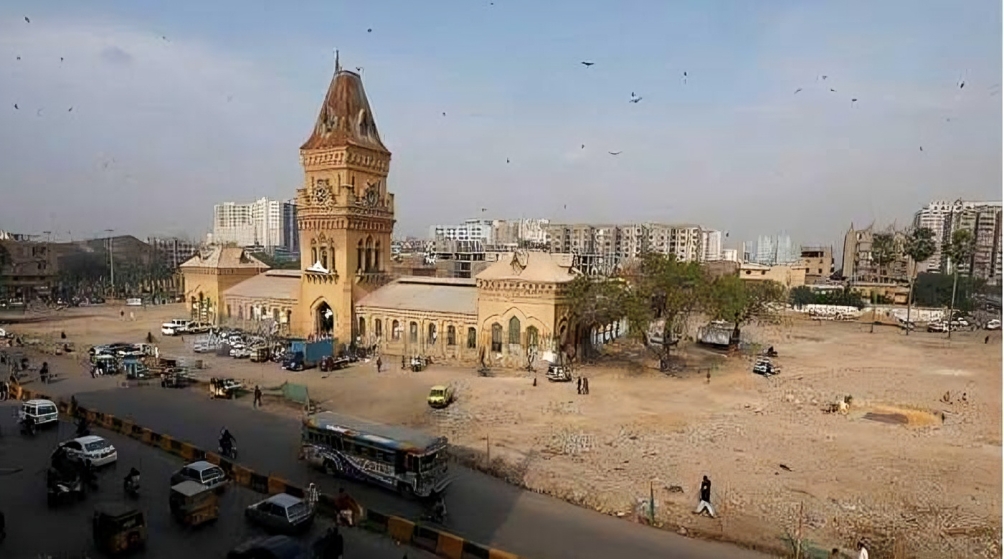
global experience dividing

The Global Experience of Dividing Large Provinces …

By Augustine Nasim Gill

The debate over new provinces or smaller administrative units in Pakistan should not be reduced to maps, language, identity, or political representation. The central question should be whether new administrative units will improve governance, bring public services closer to citizens, strengthen revenue collection, reinforce the rule of law, and restore public confidence in the state.

Many countries have improved administrative performance by transferring authority from the center to states, regions, districts, and local governments. Yet these experiences have not all been equally successful. Where political authority was matched by adequate financing, competent administration, credible elections, the rule of law, and strong oversight, results generally improved. Where governments merely created new boundaries, assemblies, and ministries while corruption, patronage, and weak institutions remained unchanged, costs increased without transforming citizens’ lives.

A Basic Distinction Must Come First

Creating new provinces and genuinely devolving power are not the same thing. Successful decentralization has at least four dimensions:

Four Essential Pillars

  • Political authority: Local and regional governments must be created through regular, free, and fair elections.
  • Administrative authority: They must have genuine authority to manage departments, appoint qualified personnel, and hold officials accountable for performance.
  • Fiscal authority: Their responsibilities must be matched by revenue powers, a predictable share of national taxes, grants, and budgets.
  • Legal and institutional authority: Their powers must be protected by the Constitution or strong legislation so that federal or provincial governments cannot abolish them at will.

Why Smaller Administrative Units Can Succeed

Smaller, empowered units bring government closer to citizens. Residents of remote districts are less likely to travel hundreds of kilometers to a provincial capital for matters involving land, education, health, policing, courts, or development projects.

Regional governments also understand local conditions more clearly. The coastal areas of Balochistan, the agricultural districts of southern Punjab, a major metropolis such as Karachi, and the mountainous or tribal areas of Khyber Pakhtunkhwa do not face identical challenges. A single policy designed in one provincial capital is often unable to respond effectively to such diversity.

Smaller units can also increase political accountability. Citizens can more clearly observe the performance of their chief minister, ministers, mayors, district leaders, and civil administration. This benefit, however, appears only where elections are credible, information is open, and oversight institutions are independent.

1. Germany: Shared Powers, Shared Taxes, and Fiscal Equalization

Germany is a federal country composed of sixteen states, known as Länder. Each state has its own constitution, parliament, and government, and enjoys substantial autonomy over its internal organization.

The federal government is responsible for national defense, foreign policy, currency, and broad national legislation. The states play central roles in education, policing, culture, public administration, and the implementation of many laws. Municipal governments provide water, sanitation, local transport, urban planning, and many daily services.

Major taxes are not retained exclusively by the federal government. Personal income tax, corporate income tax, and value-added tax are shared among the federal government, the states, and, in some cases, municipalities according to established rules. A fiscal equalization system then narrows the gap between wealthier states and those with weaker revenue capacity.

Germany’s success is not simply the result of having sixteen states. It rests on clearly defined responsibilities, a strong tax administration, judicial oversight, a professional civil service, and a predictable equalization system.

Lesson for Pakistan: Before new provinces are created, the country must decide how income tax, sales tax, customs duties, natural-resource revenue, property taxes, and other revenues will be divided. A permanent, transparent, and publicly understood formula is essential.

2. Spain: Regional Autonomy, Public Services, and Different Fiscal Models

Spain is composed of seventeen autonomous communities. These regional governments exercise wide authority over health, education, social services, and regional development.

Most regions receive a share of national taxes, limited authority over certain taxes, and equalization grants. The Basque Country and Navarre have broader tax-collection powers: they collect most taxes within their territories and then transfer an agreed contribution to the central government for national services.

Regional government strengthened education, health services, and local identity, but Spain has also faced regional debt, fiscal imbalances, and separatist political movements. The lesson is that autonomy is not only a financial issue; national identity, constitutional boundaries, and commitment to the shared state also matter.

Lesson for Pakistan: New units should not be designed solely around language. Administrative efficiency, population, economic viability, public consent, and national cohesion must all be considered.

3. Poland: Phased Reform, a Three-Tier System, and Local Development

Poland did not devolve authority in a single step after the end of communist rule. Municipal self-government was restored in 1990, and a three-tier system was established in 1998-99: the municipality (Gmina), the county or district (Powiat), and the region (Voivodeship).

Municipalities became responsible for water, sanitation, local roads, primary education, and local development. Districts managed services that were too large for one municipality but too limited for an entire region. Regional governments took responsibility for economic development, regional planning, and the management of European development funds.

The reform succeeded because it was phased, local institutions were prepared, elected representatives were trained, professional administrations were developed, budgets were transferred, and responsibilities were defined.

The continuing challenge is that not every municipality or district has equal administrative capacity. Some smaller units remain weak in planning, data, financial management, and specialist staffing.

Lesson for Pakistan: Rather than creating many provinces overnight, Pakistan should begin with administrative pilots, stronger districts, digital systems, training, and independent audit in selected areas.

4. France: Gradual Decentralization from a Centralized State

France was historically a highly centralized state, but beginning in the 1980s it gradually transferred authority from the central government to regions, departments, and communes.

Regional governments manage economic development, transport, and some education and training functions. Departments play major roles in social welfare, certain roads, and local services, while communes provide day-to-day municipal services.

Small municipalities often cooperate through joint institutions to manage water, waste, transport, and territorial planning.

France’s challenge has been that responsibilities across different layers sometimes overlap or remain unclear, increasing administrative complexity and costs.

Lesson for Pakistan: The responsibilities of every level of government must be defined in law so that the federation, provinces, districts, and municipalities are not all nominally responsible for the same service.

5. India: New States, Constitutional Revenue Sharing, and Mixed Results

India has repeatedly altered state boundaries and created new states since independence. Uttarakhand, Jharkhand, Chhattisgarh, and Telangana were established in response to regional, administrative, and economic demands.

An independent Finance Commission periodically recommends the share of divisible national taxes to be transferred from the Union to the states and the formula for distributing those resources among states. Population, income disparities, area, forests, tax effort, and other needs are considered.

Some new states achieved better administrative attention, infrastructure, and economic growth. In others, corruption, political instability, capture of mineral resources, weak institutions, and social inequality persisted.

The central lesson is that a smaller province does not automatically eliminate corruption; it may simply relocate corruption to a lower level.

Lesson for Pakistan: Before new provinces are created, public-service commissions, police, accountability systems, auditors, courts, elections, and public procurement must be protected from political interference.

Conditions That Make Decentralization Successful

1. Confront Corruption First

In Pakistan’s context, this is the most important condition. If new units are handed to the same corrupt political, administrative, and commercial networks, new governments will become new sources of patronage rather than institutions of public service.

Anti-corruption reform must not become political revenge. It requires independent accountability bodies, open contracting, digital payments, declarations of assets and conflicts of interest, an independent auditor general, access to information, prompt but fair judicial proceedings, and comprehensive e-procurement.

2. Free and Fair Elections

Governments in new administrative units will be legitimate only if elections are free, transparent, and credible. Constituency boundaries, candidate eligibility, voting, counting, results, and government formation must all be open to verification.

Manufactured or predetermined referendums will not create legitimacy. Public consultation must be genuine, free, informed, and independently verifiable.

3. Strict Merit and Competent Appointments

New provinces will require thousands of civil servants, police officers, teachers, doctors, engineers, financial experts, and administrators. These appointments must not be based on clan, family, marriage or personal relationships, religious affiliation, political loyalty, or civilian or military patronage.

Independent provincial public-service commissions, open examinations, standardized interviews, published merit lists, background checks, and a right of judicial appeal will be essential.

4. Resources Must Follow Responsibilities

If a district or province is responsible for schools, hospitals, and policing but lacks the money to operate them, decentralization will fail. Every transferred responsibility must be matched by adequate, secure, and predictable financial resources.

5. Local Revenues

Every new unit should have some own-source revenues, such as property tax, an effective agricultural income tax, motor-vehicle tax, local service fees, building permits and development charges, and selected business or tourism levies.

Tax rates, collection procedures, exemptions, audit, and appeal mechanisms must be transparent and consistent.

6. A Predictable Share of National Taxes

A share of personal income tax, corporate tax, general sales tax, customs duties, and natural-resource revenue should be transferred to provinces through a predictable formula.

The formula should consider not only population, but also poverty, area, underdevelopment, tax effort, health and education needs, environmental responsibilities, and border and security costs.

7. Fiscal Equalization

Large industrial and commercial centers will naturally collect more revenue, while remote, mountainous, or underdeveloped regions may have weaker tax capacity. A fiscal equalization system is therefore necessary to ensure that every Pakistani receives a minimum standard of education, health, policing, water, and infrastructure.

8. Limits on Borrowing

New provincial governments should not have unlimited borrowing authority. Each province should be subject to a debt ceiling, a fiscal-responsibility law, annual independent audits, deficit limits, and full disclosure of the liabilities of provincial public enterprises.

9. Education, Technology, and Training

Constructing new buildings is easy; building a competent administration is difficult. Pakistan must prepare public-administration academies, digital land records, integrated tax systems, e-procurement, police data systems, school and health dashboards, and continuous professional training before large-scale restructuring.

10. An Independent Justice System and the Rule of Law

New provinces will succeed only where courts are independent, police are professional, prosecutors are effective, and the law applies equally. If powerful landlords, business interests, politicians, bureaucrats, or institutions remain above the law, administrative restructuring will not benefit ordinary citizens.

A Proposed Roadmap for Pakistan

Phase One: Build Trust

The government should first reduce its own privileges, begin merit-based appointments, take impartial action against corruption and smuggling, and demonstrate initial reforms in policing and justice.

Phase Two: Establish an Independent National Commission

Pakistan should create an independent National Commission on Administrative and Fiscal Reform, including constitutional experts, economists, former civil servants, tax specialists, universities, the business community, women, young people, minorities, and representatives of every region.

Phase Three: Conduct Open Public Consultation

Every proposed new unit should hold public hearings, commission expert reports, invite digital submissions, obtain district-level resolutions, and conduct independent surveys. All evidence should be publicly available.

Phase Four: Publish a Fiscal Viability Assessment

Each proposal should disclose expected own-source revenue, federal transfers, administrative costs, staffing requirements, the cost of a capital and infrastructure, spending on education, health, and policing, and at least a ten-year financial plan.

Phase Five: Implement Gradually

Rather than creating many units simultaneously, reform could begin in two or three areas in phases, provided that constitutional, political, and public agreement exists.

Phase Six: Require Independent Evaluation

After five years, an independent review should measure education, health, revenue collection, policing, employment, corruption, local investment, citizen satisfaction, and fiscal discipline.

Final Word

International experience does not prove that smaller provinces always succeed. It shows that government which is closer to the people, accountable, and fiscally empowered can produce better results.

Success requires much more than changing a map. Elections must be fair, appointments must be based on merit, the law must apply equally, taxation and spending must be transparent, the judiciary must be independent, local governments must be empowered, and corruption must have no safe haven.

New provinces could become a historic opportunity for Pakistan, but only if they transfer power to citizens rather than merely create positions for a new group of rulers.

If the old system is simply placed inside new boundaries, Pakistan will gain new provinces but not new governance. The country must first clean the system, prove its intentions, prepare competent people, define fiscal rules, and involve the public. Administrative restructuring can then make Pakistan more organized, more just, and more resilient.

Selected References

  • Council of Europe: European Charter of Local Self-Government and the principle of subsidiarity.
  • German Federal Ministry of Finance: Federal fiscal relations, shared taxes, and fiscal equalization.
  • Government of Spain, Ministry of Finance: Financing of the Autonomous Communities.
  • OECD: Decentralisation, local governance, and Poland’s territorial reforms.
  • OECD: Inter-municipal cooperation and local service delivery in France and other OECD countries.
  • Finance Commission of India: Constitutional tax devolution and grants to states and local governments.

    About the Author

    Augustine Nasim Gill is a Pakistani-American author and an international development, governance, humanitarian, and disaster-management professional. Over more than three decades, he has served in leadership and management roles across Asia, Europe, the Middle East, Africa, and North America. He is the founder of the Hope Dialogue platform, which promotes civil, constructive, and evidence-based discussion on Pakistan and global affairs, and he writes regularly on governance, democracy, institutional reform, and national development in Pakistan.

Similar Posts

  • The Transferability Paradox: Skills, Borders and t…

    We often speak of professional skills as though they were assets that can be packed into a suitcase and carried effortlessly across borders. In reality, skills do not all travel in the same way. A computer language remains a computer language whether one works in Pakistan, Singapore, the United Kingdom or the United States. Engineering principles, mathematics, manufacturing techniques and many scientific disciplines retain much of their relevance regardless of geography. The environment may change, but the fundamental language of the profession remains largely intact. The situation becomes more complicated with professions that operate within national regulatory and institutional frameworks. Accounting principles may be broadly understood internationally, but taxation, reporting requirements and corporate regulations can differ substantially between jurisdictions. The same is true of law and medicine. A lawyer who has spent decades mastering one country’s legal system cannot simply assume that the same statutes, procedures and precedents apply elsewhere. A doctor may possess years of clinical experience yet still be required to pass examinations and satisfy licensing requirements before being permitted to practise in another country. The knowledge has not disappeared. What has changed is the framework within which that knowledge is recognised and allowed to operate. This distinction is important because we sometimes confuse the transferability of skills with the transferability of credentials. They are not the same thing. A seasoned CFO does not forget how to evaluate risk, allocate capital, establish financial controls or understand a balance sheet upon crossing an international border. A doctor does not lose diagnostic ability at immigration, nor does a lawyer suddenly lose the capacity for legal reasoning. Yet the receiving country’s institutions may place conditions on recognising those abilities. What is being restricted is often not the skill itself, but the right, opportunity or credibility required to exercise it. For C suite professionals, however, there is another layer to the problem. As people rise through organisations, their professional value increasingly consists of much more than technical competence. Over twenty or thirty years, an executive accumulates reputation, relationships, cultural understanding, institutional knowledge and credibility. He or she learns how decisions are actually made, which relationships matter, how regulators think, how capital moves and how to navigate the unwritten rules of a particular business environment. This social and institutional capital can become as important as the technical skills that originally built the career. Crossing a border can dramatically alter the value of that accumulated capital. A CEO, CFO or senior executive who is well known and respected in one country may arrive in another market where few people recognise the organisations he or she worked for, understand the scale of previous responsibilities or appreciate the complexity of the environment in which those responsibilities were exercised. The person has not become less capable, but the ecosystem that validated that capability has been left behind. This is perhaps one of the least discussed dilemmas of international mobility at senior levels. The higher one climbs within a particular ecosystem, the more deeply one’s professional identity may become connected with that ecosystem. A young engineer may be assessed largely on technical competence and therefore move relatively easily between markets. A senior executive is assessed on a much broader collection of attributes, many of which are difficult to demonstrate on a CV. Reputation, networks, judgement and influence cannot always be exported as easily as qualifications. Then there is the uncomfortable issue of regional bias. Professional experience is not always evaluated purely on merit. Employers and institutions can consciously or unconsciously attach different values to experience depending on where it was acquired. A senior position in one part of the world may not automatically be regarded as equivalent to a similar position in another. Accent, nationality, familiarity with local business culture and perceptions about the sophistication of the previous market can all affect how a professional is judged. Regulation can create a formal wall, while perception can create an invisible one. Perhaps professional capital should therefore be thought of in three forms. There is skill capital, meaning what a person actually knows and can do. There is credential capital, meaning what institutions formally recognise or permit that person to do. Finally, there is social capital, meaning the network of people and institutions that know, trust and are prepared to place responsibility in that person’s hands. Skill capital can often travel. Credential capital may require rebuilding. Social capital can sometimes have to be recreated almost from the beginning. This brings me to the question that I find much harder to answer. If a country’s most capable professionals conclude that their talents will produce greater opportunities elsewhere, should they leave? Or should they remain and use their abilities, experience and influence to improve the environment that is encouraging them to leave in the first place? There is an obvious argument for mobility. A professional has a responsibility to his or her own life and family and cannot reasonably be expected to sacrifice decades waiting for institutions to improve. Talent naturally seeks environments where it can grow, where merit is recognised and where opportunities allow ability to compound. If those conditions exist elsewhere, moving may be entirely rational. Yet there is an equally uncomfortable consequence. When capable professionals, entrepreneurs, academics and executives continually leave weaker institutional environments for stronger ones, the countries they leave behind lose precisely the human capital that might have helped strengthen those institutions. Weak systems cause talent to leave, and the departure of talent can make those systems even harder to improve. We then arrive at something resembling the old question of the chicken and the egg. Do strong institutions create successful people, or do successful people create strong institutions? Do countries first need better systems to retain talent, or must talented people remain long enough to build those systems? If everyone waits for the environment to improve before contributing to it, who creates the improvement? But if individuals spend their lives fighting systems that are resistant to change, what happens to their own potential? Perhaps the

  • Fatima Jinnah: Madar-e-Millat

    In the story of Pakistan’s creation, certain names shine with a brightness that time cannot dim. Quaid-e-Azam Muhammad Ali Jinnah stands as the founder of the nation, but standing quietly, resolutely, and often invisibly beside him for over two decades was his younger sister, Fatima Jinnah. History remembers her as Madar-e-Millat, the Mother of the Nation, a title she earned not through political office or public spectacle, but through an entire life of sacrifice, loyalty, intellect, and quiet strength. She was a woman decades ahead of her time, a qualified dental surgeon, a fiercely independent thinker, a stylish and modern presence in gharara and sleeveless blouse, and a woman who chose singlehood not out of misfortune but out of conviction. Her life offers Pakistani women today a template of dignity, purpose, and self-possession that remains as relevant now as it was in the twentieth century. Born on July 30, 1893, in Karachi, Fatima Jinnah grew up in a household that valued learning, even when it was unusual for girls of that era to pursue higher education. She enrolled at the University of Calcutta and earned a degree in dental surgery from Dr. R. Ahmed Dental College, becoming one of the first Muslim women in South Asia to qualify as a dentist. In 1923, she opened her own dental clinic in Bombay. This was no small achievement. At a time when most women of her class and background were confined to domestic roles, Fatima Jinnah built a professional identity through her own intellect and discipline. Her clinic flourished, and she earned both financial independence and social respect as a successful, self-made professional woman. She was, in every sense, a pioneer of women’s participation in modern professions in the subcontinent. Fatima Jinnah’s life took a defining turn following the death of Ruttie Jinnah, the Quaid’s wife, in 1929. Ruttie’s passing left both Muhammad Ali Jinnah and his young daughter Dina in a state of profound grief and vulnerability. It was at this moment that Fatima made a choice that would alter the course of her own life entirely, she closed her thriving dental practice and moved in with her brother to manage his household, raise Dina, and become his constant companion and confidante. This decision deserves to be understood not as a passive act of familial duty, but as a deliberate and enormous personal sacrifice. She was a woman who had built something of her own, a career, an income, an identity outside of any man’s shadow, and she set it aside willingly. From that point onward, she devoted herself entirely to supporting her brother’s political mission, managing his correspondence, organizing his household, accompanying him on tours across India, and providing the emotional steadiness that allowed him to focus on the arduous struggle for Pakistan. She sat beside him in All India Muslim League sessions, engaged with women’s wings of the movement, and became, in effect, his closest advisor on personal and even political matters. Few sacrifices in the history of the Pakistan Movement are as understated yet as consequential as this one. Fatima Jinnah’s devotion did not waver even after Pakistan was achieved. She remained with her brother through the exhausting, health-depleting years of his final illness. As the Quaid battled tuberculosis while simultaneously trying to steer a fragile new nation through its most turbulent infancy, it was Fatima who nursed him, traveled with him to Ziarat in his final days, and stayed resolutely at his bedside. When Muhammad Ali Jinnah breathed his last on September 11, 1948, Fatima Jinnah was there, not as a bystander, but as the one who had walked every step of that difficult journey with him. Her presence at his deathbed was the culmination of nearly two decades of unwavering companionship, sacrifice, and quiet strength. What makes Fatima Jinnah’s legacy even richer is the manner in which she carried herself. She was educated, articulate, and thoroughly modern in her outlook, yet she remained rooted in her cultural identity. She was famously elegant in her choice of dress, often seen in a gharara paired with a sleeveless blouse, a look that exuded both grace and quiet confidence. She wore her modernity with the same ease with which she wore her dupatta, never feeling the need to choose between tradition and progress. In photographs from that era, she appears composed, dignified, and utterly self-assured, a woman entirely comfortable in her own skin. Equally striking was her decision never to marry. In a society where marriage was, and often still is, treated as the singular measure of a woman’s worth and completeness, Fatima Jinnah chose a different path, not out of compulsion or circumstance, but by her own free will. She dedicated her life to her brother, to her country, and to her own principles. Later in her life, she also emerged as a formidable political figure in her own right, contesting the 1965 presidential election against General Ayub Khan and becoming a symbol of democratic resistance for a generation of Pakistanis. Fatima Jinnah’s life is not simply a chapter in a history book; it is a living lesson for Pakistani women today. She demonstrated that a woman could be professionally accomplished and personally devoted, modern in appearance and deeply principled in character, unmarried by choice and yet utterly complete as a person. She showed that sacrifice does not diminish a woman’s strength, it can, in fact, define it. In an age where women are still often measured by narrow societal expectations, Fatima Jinnah’s example urges us to reclaim our own definitions of dignity, purpose, and self-worth. As Pakistani women, we owe it to ourselves to emulate not merely her style, the elegant gharara, the graceful bearing but the substance behind it; her education, her independence, her unwavering integrity, and her refusal to be defined by anyone else’s expectations. Madar-e-Millat did not simply stand beside the founder of a nation; she stood as a model for what a Pakistani woman could be, then, and now.

  • New provinces or stronger local governments?

    The debate over Pakistan’s administrative structure has returned to the national stage after Interior Minister Syed Mohsin Raza Naqvi suggested that the country should seriously examine the question of creating new provinces or administrative units. Predictably, the discussion immediately descended into familiar political slogans. Some portrayed the proposal as a threat to federalism, others embraced it as the long-awaited solution to governance failures. Between these two extremes lies a far more important question: what does the Constitution of Pakistan actually permit, and what course best serves national unity at a time of unprecedented regional instability? The timing of the debate is significant. Pakistan today faces persistent security challenges in Balochistan and Khyber Pakhtunkhwa, constitutional sensitivities relating to Azad Jammu and Kashmir, continuing political polarisation, and a rapidly deteriorating strategic environment as conflict in the Middle East threatens to reshape regional geopolitics. In such circumstances, constitutional reform should not be driven by political expediency. It must be guided by constitutional principles, empirical evidence and the long-term interests of the federation. The Constitution of islamic Republic of Pakistan is neither silent nor rigid on the question of creating new provinces. Article 1 recognises Pakistan as a federation consisting of provinces and territories whose limits may be altered in accordance with the Constitution. However, Article 239(4) places an important constitutional safeguard on any proposal affecting provincial boundaries. No constitutional amendment that alters the limits of a province can become law unless, in addition to obtaining the prescribed parliamentary majority, it is approved by not less than two-thirds of the members of the provincial assembly concerned. This requirement reflects the federal compact. Provinces are not merely administrative divisions; they are constitutional partners in the federation. Consequently, no province can be divided, merged or otherwise altered through a simple parliamentary majority in Islamabad. Provincial consent is itself a constitutional requirement. This constitutional position explains why proposals for South Punjab, Bahawalpur, Hazara or other new provinces have repeatedly surfaced over the past two decades but have never matured into constitutional reality. Various drafts, often described collectively as proposals for a Twenty-Eighth Constitutional Amendment, have circulated in political and academic circles. They have contemplated the creation of additional provinces together with corresponding adjustments in Senate representation, National Finance Commission allocations, provincial institutions and administrative structures. Yet none has commanded the political consensus demanded by Article 239. Constitutional design has proved stronger than political rhetoric. The debate, however, should not begin with Article 239. It should begin with Article 140A. Inserted through the Constitution (Eighteenth Amendment) Act of 2010, Article 140A obliges every province to establish a local government system and devolve political, administrative and financial responsibility and authority to elected representatives. This is not merely a recommendation. It is a constitutional command. Unfortunately, after even lapse of 16 years, this remains a constitutional provision that has been implemented (sic) with greater reluctance. Successive provincial governments, irrespective of political affiliation, have preferred centralised provincial bureaucracies over constitutionally empowered local governments. Elections have been delayed, powers diluted, finances retained by provincial capitals and administrative authority reclaimed through executive control. The result is that Pakistan continues to speak the language of devolution while practising administrative centralisation. Before demanding new provinces, one must ask a more fundamental question: has Pakistan sincerely implemented the Constitution it already possesses? The empirical evidence nevertheless deserves serious attention. Pakistan has experienced extraordinary demographic transformation since independence. The country’s population has increased from approximately 34 million in the early years of independence to over 255 million today, yet the number of provinces has remained unchanged. The presentation recently unveiled on constitutional and administrative reforms demonstrates this remarkable contrast and argues that governance structures have failed to evolve alongside population growth. It further notes that each of Pakistan’s four provinces administers populations exceeding those of many sovereign countries and that, among major federations, Pakistan places an unusually large administrative burden upon each provincial government. Whether one accepts every conclusion of that presentation/study or not, the underlying constitutional question cannot be ignored. Effective governance depends not merely upon constitutional powers but upon administrative reach. A provincial capital hundreds of kilometres from remote districts inevitably encounters greater challenges in delivering education, healthcare, policing and justice than a more decentralised system. The presentation also links many development indicators with administrative distance from provincial capitals, suggesting that constitutional debate should be informed by measurable governance outcomes rather than political sentiment alone. However,  administrative efficiency is only one dimension of federalism. The second is national integration. Pakistan’s history demonstrates that provincial identities become dangerous only when constitutional grievances remain unresolved. Conversely, attempts to suppress legitimate constitutional debate merely strengthen centrifugal tendencies. The Constitution therefore wisely provides a peaceful and democratic mechanism through which territorial adjustments may be considered while ensuring that no province loses its constitutional status without its own consent. This balanced approach deserves preservation. Current security realities also counsel prudence. Parts of Balochistan continue to face organised violence supported by hostile external actors. Khyber Pakhtunkhwa confronts renewed terrorist activity along its western frontier. Azad Jammu and Kashmir occupies a unique constitutional and strategic position within Pakistan’s national policy on Jammu and Kashmir. Simultaneously, the widening conflict across the Middle East has introduced new uncertainties affecting regional security, energy supplies and geopolitical alignments. These circumstances require a stronger federation rather than a weaker one. That objective, however, should not be confused with excessive centralisation. Strong federations are built upon responsive institutions, constitutional legitimacy and public confidence. Citizens judge the State not by constitutional theory but by whether schools function, hospitals remain open, justice is delivered promptly and basic civic services reach every district. Equally important is the responsibility of political leadership. Statements by political actors—including repeated interventions by Maulana Fazlur Rehman on constitutional and provincial questions—must be evaluated through the prism of constitutionalism rather than political confrontation. Democratic disagreement is legitimate, but constitutional discourse should unite rather than inflame an already polarised polity. The Constitution provides lawful mechanisms for reform. Political mobilisation should reinforce those mechanisms, not substitute for them.

  • Freedom of Expression or Freedom to Spread Disorde…

    As a journalist, my entire professional life has been dedicated to defending freedom of expression, civil liberties, and an independent press. Throughout more than two decades in journalism, I have firmly believed that the right to express one’s views is a fundamental human right, protected not only by Pakistan’s Constitution but also by the Universal Declaration of Human Rights and the laws of most democratic nations. However, no right in any civilized society is absolute. Every freedom comes with responsibility. When freedom is divorced from responsibility, it ceases to be a force for reform and instead becomes a source of disorder. That is why every mature democracy has established legal and ethical boundaries to ensure that freedom of expression serves the public interest rather than undermining it. The rise of social media has revolutionized the flow of information. Today, an ordinary citizen possesses communication power that was once reserved for major media organizations. A smartphone, a short video, and a single click can spread information, allegations, or opinions across the globe within minutes. Used responsibly, this technology promotes transparency, accountability, and public awareness. Used recklessly, without verification or evidence, it can inflict irreparable damage on individuals, institutions, and society. The recent controversy involving the University of the Punjab illustrates this challenge. A video circulated on social media in which serious allegations were made against several faculty members. Shortly after the video surfaced, the university administration issued an official statement rejecting the allegations and referred the matter to the police, the Cyber Crime Investigation Agency, and other relevant authorities for investigation. The episode also exposed another troubling aspect of today’s digital environment. Several freelance vloggers and social media accounts amplified the allegations, yet many failed to present the university’s official response with equal prominence. One of the fundamental principles of journalism is to provide all concerned parties with an opportunity to present their position before public opinion is shaped. Based on the information currently available and my own research, the viral video did not publicly present independently verifiable evidence supporting the allegations. Nor has it been established that a formal written complaint was submitted through the university’s prescribed grievance mechanism before the video was released. If the ongoing investigation establishes otherwise, those findings must be accepted with the same commitment to fairness and truth. Equally important is ensuring that the investigation is not limited solely to the allegations themselves. If it is established that any individual or group deliberately misled students, orchestrated a coordinated campaign, or exploited social media to damage the reputation of an institution or its members, those responsible should also be held accountable under the law. Conversely, if the allegations are substantiated, the complainants deserve full justice without discrimination. Accountability must apply equally to everyone. This case extends far beyond a single university. It reflects the growing problem of irresponsible social media usage. Increasingly, individuals bypass legal forums, institutional complaint mechanisms, and investigative authorities, choosing instead to take their grievances directly to social media. Within minutes, a viral post can shape public opinion, damage reputations, and, in many cases, allow the “court of social media” to pronounce its verdict long before any formal investigation has concluded. Such a trend blurs the line between freedom of expression and irresponsible expression. Recognizing these risks, many developed countries have introduced stricter regulations governing digital platforms. The European Union’s Digital Services Act (DSA) and Digital Markets Act (DMA) require major technology companies to act swiftly against illegal content, terrorist propaganda, child sexual abuse material, counterfeit products, and other harmful content. These laws also require greater transparency in algorithms, stronger user protections, and comprehensive risk assessments, with violations carrying multi-billion-euro penalties. The United States follows a different constitutional model. While the First Amendment provides broad protection for freedom of speech, this does not mean that every form of online content is beyond regulation. Social media companies continue to enforce community standards against hate speech, incitement to violence, terrorism-related content, child exploitation, financial fraud, and other unlawful activities. Several U.S. states are also developing legislation addressing AI-generated deepfakes, child online safety, and digital privacy. In Pakistan, the Prevention of Electronic Crimes Act (PECA) provides the principal legal framework for addressing cybercrime. However, concerns have repeatedly been raised by political parties, journalists, and human rights organizations regarding aspects of its implementation. This underlines the importance not only of effective legislation but also of its transparent, impartial, and constitutional enforcement. The rapid rise of artificial intelligence, deepfake technology, disinformation, and organized online propaganda has made responsible journalism and responsible social media use more important than ever. Freedom of expression remains the cornerstone of every democratic society, but using that freedom to damage individuals or institutions without credible evidence serves neither journalism nor democracy. Pakistan, like many other countries, faces the challenge of preserving free expression while preventing the misuse of digital platforms. The objective should never be to silence legitimate criticism or suppress dissent. Instead, it should be to ensure that freedom is exercised with honesty, evidence, and accountability.   Freedom of expression is the soul of democracy. Yet when it is separated from truth, integrity, and responsibility, it no longer remains freedom—it becomes disorder. A civilized society is one where the law protects those who speak the truth while holding accountable those who knowingly spread falsehoods. That balance represents the true spirit of free expression and remains the hallmark of every democratic, civilized, and dignified nation.    

  • A new wave of youth activism in Asia

    By : Amir Ismaiel ( London based pakistani student )  A new youth-led protest movement in India, known as the Cockroach Janata Party has become the focus of global attention. In recent days students associated with the movement attempted to march towards Parliament, but police used baton charges and force to stop them. The movement’s founder, Abhijeet Dabke, is currently studying in the United States while several of its other leaders are enrolled at leading universities in India and the United Kingdom. The movement is primarily driven by young students. The movement began after the Chief Justice of India reportedly referred to young people as “cockroaches.” Students adopted the term as a symbol of resistance and established the Cockroach Janata Party. According to its leaders, the recent examination paper leak scandal has exposed deep weaknesses and corruption within India’s education system. They argue that corruption in examinations and the erosion of merit are allowing unqualified individuals to enter key institutions, ultimately damaging the country’s future. Protesters are therefore demanding the resignation of the Education Minister, whom they hold responsible for the crisis. Thousands of students continue to demonstrate across different cities while pressing for a wider set of demands. Opposition leader Rahul Gandhi has expressed solidarity with the protesting students. Meanwhile, allegations of police mistreatment of both protesters and opposition leaders have sparked a nationwide debate. Several Indian actors, artists, and public figures have also condemned the use of force against students, adding to the growing political and public pressure on Prime Minister Narendra Modi’s government. India often presents itself as the world’s largest democracy and a champion of democratic values. While its large youth population is one of its greatest strengths, it can also become a significant challenge. Because of its distinctive identity and objectives, this movement has attracted the attention of young people not only across India but throughout Asia and beyond. Its growing popularity on social media has encouraged increasing numbers of young Indians to join. If the protests spread further and gain broader public support, they could become a serious political challenge for the government. In response to the latest developments, Prime Minister Narendra Modi released a late-night video message appealing to young people for patience. He stated that investigations into the paper leak scandal were already underway and assured the public that those responsible would be held accountable. However, student leaders insisted that their sit-in would continue until the Education Minister resigned. Some observers believe that the Prime Minister’s body language during the address reflected political pressure and unease. A government that has previously responded firmly to numerous protests now appears to be facing unprecedented pressure from a youth-led movement. Over the past few decades, Asian politics has undergone significant change, with young people emerging as an increasingly influential political force. Even before the current protests in India, youth movements in Bangladesh, Sri Lanka, and Nepal had already played decisive roles in shaping political developments. In March 2022, Sri Lanka was engulfed by mass protests triggered by a severe economic crisis. Young people stood at the forefront of the demonstrations and led protests that continued for weeks. The government imposed a state of emergency, enforced curfews, and attempted to restrict access to social media, but these measures failed to weaken the protesters’ determination. Eventually, demonstrators surrounded the Presidential Palace, forcing the President to resign. Similarly, Bangladesh witnessed a student-led protest movement that fundamentally reshaped the country’s political landscape. As demonstrations intensified, then Prime Minister Sheikh Hasina left office and departed the country. Security forces attempted to suppress the protests, resulting in the deaths of numerous young demonstrators. Despite this, the movement expanded across the country. Student activism ultimately dominated national politics, the government collapsed, and Nobel Peace Prize laureate Dr. Muhammad Yunusassumed leadership of the interim administration. The intensity of public anger was evident in the actions of some protesters, who set fire to a statue of Bangladesh’s founding leader Sheikh Mujibur Rahman, burned his residence, and removed his image from banknotes. Many young protesters viewed these acts as a response to what they considered years of political repression and believed that every sacrifice was necessary to achieve their objectives. Nepal also witnessed strong youth mobilization against corruption, weak governance, and restrictions on social media. As a generation raised in the digital era, young activists relied heavily on social media to organize, coordinate, and build public support. Issues were first highlighted online, public consensus was gradually developed, and protest calls were then issued. The same strategy transformed local demonstrations into a nationwide movement. The protests became so significant that the country’s political leadership resigned, with Prime Minister K. P. Sharma Oli and his cabinet stepping down. The new interim administration subsequently accepted several of the protesters’ demands. Young people have likewise organized movements in countries such as Indonesia and the Philippines to demand political, social, and economic reforms. Together, these examples demonstrate that the youth of Asia are no longer passive observers but have become powerful and influential agents of political change. Pakistani media is currently giving extensive coverage to the student protests in India. Reports highlight the Indian government’s use of force against students and the growing political pressure facing the Modi administration. This naturally raises an important question: if young people in Pakistan were to launch a similar peaceful movement for their rights, would our own government respond with the same level of restraint? Would protesters avoid police violence, criminal charges, house raids, blocked identity cards, or accusations of disloyalty? The reality is that as a society, we have yet to build a strong culture of tolerance for dissent. Too often, we are more accustomed to silencing critical voices than listening to them. Pakistani youth face not only unemployment and economic uncertainty but also an environment shaped by fear. Even those who have jobs frequently hesitate to raise legitimate concerns, fearing that doing so could cost them their employment, personal freedom, or future opportunities. For this reason, before commenting on developments elsewhere,

  • A Habit of Second Thought

    President Donald John Trump occupies a singular place in the history of American leadership. He is at once a politician, a successful businessman, and an enthusiast of freestyle wrestling. His manner of thinking, planning, and decision-making bears a character distinctly different from that of his predecessors; indeed, many observers contend that it has few, if any, precedents in the annals of modern American politics. Analysts frequently describe him as a man of remarkable flexibility, yet they also acknowledge that a position defended with absolute conviction at one moment may, in the next, be replaced by its very opposite without the slightest hesitation. This characteristic became strikingly evident following the commencement of large-scale military operations against Iran on 28 February 2026. A careful examination of the period, particularly up to the defence of the Memorandum of Understanding concluded in June, reveals no fewer than seven significant shifts in President Trump’s strategic approach. At the outset, he dismissed economic concerns altogether, declaring that the financial difficulties of the American people were of no consequence and that the sole imperative was to prevent Iran from acquiring a nuclear weapon. By the time of the G7 summit, however, his tone had undergone a marked transformation. He began advocating the necessity of an agreement capable of shielding the global economy from a crisis comparable to the Hoover era and the Great Depression, pointing to instability in the financial markets as evidence supporting this revised position. His initial call for regime change in Iran was equally unequivocal. In a video address, he urged the Iranian people to rise against their government, declaring that the moment might represent their final opportunity for generations to come. Yet subsequent statements quietly abandoned this objective. Instead, he began speaking of normalising relations with Iran and cooperating with its existing leadership, occasionally describing those very leaders as more “reasonable” than before. During the early phase of the conflict, the complete destruction of Iran’s missile program, the industries responsible for its production, and the naval forces supporting it was presented as a principal objective. Later, however, his position softened considerably. He observed that while missiles might inflict damage upon limited areas, they were incapable of destroying the world, and since other nations possessed similar capabilities, Iran might also retain a limited missile arsenal. It was for this reason that the Memorandum of Understanding contained no provision requiring the dismantlement of Iran’s missile program. A similar evolution occurred regarding Iran’s nuclear program. Following the military operations of 2025 and again in 2026, it was asserted that Iran’s entire uranium enrichment capability would be eliminated and that the nuclear threat would be extinguished permanently. In time, however, the objective was narrowed simply to ensuring that Iran would not acquire a nuclear weapon. Rather than insisting upon total dismantlement, reliance shifted towards international monitoring and continued negotiations. Control over highly enriched uranium, initially regarded as a non-negotiable and indispensable condition, was subsequently treated as a matter of secondary importance. It was argued that preventing the production of a nuclear weapon remained the essential objective, while questions concerning enriched uranium would be addressed in future negotiations. The instruments of pressure likewise underwent a profound transformation. Economic sanctions and financial restrictions, once regarded as the principal means of coercion, gradually gave way to incentives. Discussions emerged concerning the release of frozen assets, temporary licences for Iranian oil exports, and the possibility of reconstruction assistance amounting to hundreds of billions of dollars, with additional concessions to be granted subject to Iran’s future conduct. Likewise, the original determination to terminate Iran’s support for regional proxy groups gradually receded into the background. In its place, greater emphasis was placed upon securing a direct ceasefire and addressing the broader requirements of peace and stability throughout the Middle East. These strategic adjustments were accompanied by repeated tactical oscillations, in which stern threats were frequently followed by the postponement or cancellation of military action. A chronological review compiled up to 3 August reveals numerous announcements of major strikes that were ultimately abandoned. The latest example occurred on 1 and 2 August, when military action was suspended following requests from Iran and several regional parties, together with the emergence of preliminary outlines for a possible understanding involving the reopening of the Strait of Hormuz and measures aimed at removing the nuclear threat. On 7 April, shortly before the expiration of an ultimatum in which President Trump had threatened strikes against bridges and power stations, a two-week ceasefire was agreed. He had warned that such attacks could extinguish an entire civilisation. On 21 April, at the request of international mediators, the ceasefire was extended indefinitely, although hostilities resumed at a later stage. On 18 May, a major military operation was deferred to allow serious negotiations to proceed, but when those negotiations faltered, military action recommenced. On the night of 11 June, President Trump threatened an overwhelming assault upon Iran together with the seizure of its oil and gas resources. Yet only hours later, citing what he described as a significant diplomatic breakthrough, he cancelled the operation, thereby paving the way for the Memorandum of Understanding. Signed on 17 June, the Memorandum provided for a ceasefire, the temporary reopening of the Strait of Hormuz, limited economic relief, and a framework for sixty days of negotiations. It nevertheless expressly reserved the right to resume bombing should its provisions prove unsatisfactory. At the beginning of July, following attacks upon commercial shipping, the ceasefire was declared terminated. Military strikes were launched against dozens, and subsequently scores, of targets. Congress was formally notified, and the Administration adopted an increasingly uncompromising public tone. Yet negotiations continued simultaneously. The naval blockade was reimposed, retaliatory operations persisted, and on 27 July the intensive daily bombardment was once again suspended in order to afford diplomacy another opportunity. Even in early August, fresh threats eventually yielded to renewed consideration of a possible political framework. Oil sanctions followed a similarly fluctuating course. Temporary export licences were granted, only to be withdrawn as sanctions were reimposed.

Leave a Reply

Your email address will not be published. Required fields are marked *