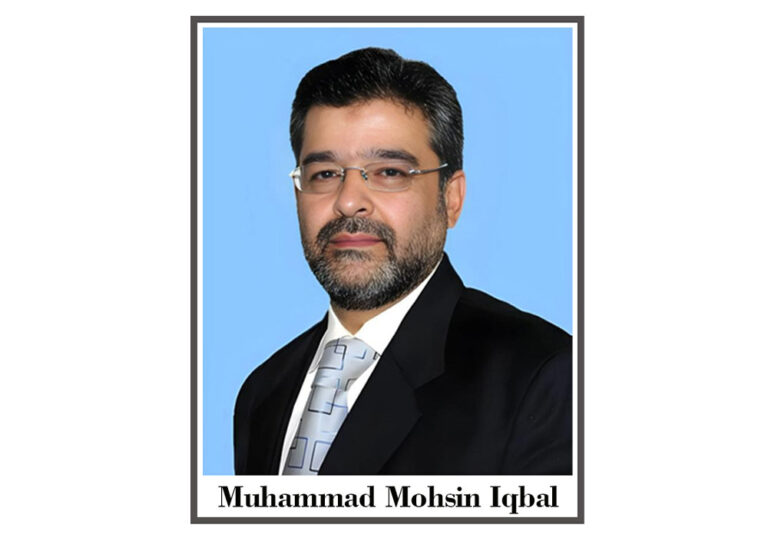
babarloi bypass sindhs

Babarloi Bypass: Sindh’s Strait of Hormuz

Calling Babarloi Bypass the “Strait of Hormuz of Sindh” would not be an exaggeration. In Sindh’s nationalist political discourse, the name Babarloi Bypass has repeatedly resurfaced in connection with the “Babarloi Dharna” (sit-in).

Babarloi is an ancient settlement in Khairpur district. According to historical accounts, including Tareekh-e-Masoomi and Tarkhan Nama, this was the place where Mughal Emperor Humayun, after being defeated by Sher Shah Suri and forced into exile, stayed for nearly six months before heading towards Iran.

Today, Babarloi Bypass has emerged as a crucial junction on the National Highway N-5. This strategic corridor connects Sindh with Punjab, Balochistan and upper Sindh, making it a vital artery for trade and transportation.

Economically, Punjab and Sindh are deeply interdependent. On one hand, Punjab relies on Sindh for imported goods arriving through Karachi’s ports, including machinery, industrial raw material, chemicals and electronics. It also depends on Sindh for the transportation of oil and petroleum products, as some of Pakistan’s major oil refineries and import terminals are located in Sindh.

On the other hand, Sindh depends heavily on Punjab for wheat, flour, sugar, textiles, engineering goods, agricultural products, poultry, dairy and other food supplies. However, in comparative terms, blocking Babarloi Bypass on the N-5 route would cause a far greater economic disruption to Punjab than to Sindh because of Punjab’s larger dependence on this transit corridor for trade flows.

Whether the issue is the controversial six-canal project or the debate over the creation of new provinces, some political stakeholders in Sindh view Babarloi Bypass as a pressure point against Punjab and the federal government. Their strategy has been to send a message that before raising questions about the division of Sindh, Punjab and the federation must recognise the consequences of alienating the province.

For these groups, Babarloi Bypass has become Sindh’s equivalent of a strategic pressure point — a place through which pressure can be exerted on the federal centre.

Last year, a major protest was staged at Babarloi Bypass (Khairpur, Sindh) against the federal government’s proposed project to construct six new canals from the Indus River. The eleven-day sit-in, organised by lawyers, nationalist parties, farmers’ organisations and civil society groups, continued from April 18 to April 29, 2025.

As a result, the National Highway N-5 remained blocked at Babarloi Bypass, disrupting movement between Sindh and Punjab. The transportation of goods was almost suspended, affecting supplies of vegetables, fruits, cotton, rice and other agricultural commodities to Punjab. Several industries faced delays in receiving raw materials, while hundreds of trucks remained stranded for days, causing losses worth millions of rupees to transporters and traders.

The protest eventually ended after negotiations between a delegation of the Sindh government and the lawyers’ action committee. The agreement included the following assurances:

The Council of Common Interests (CCI) would decide the future of the controversial canal project, and no progress would be made without consensus among all provinces.

The government assured the issuance of an official notification addressing the lawyers’ demands and promised to provide relevant legal documents.

The Babarloi Dharna was considered one of the significant political protests of 2025 because it increased pressure on the federal government, disrupted the land link between Sindh and Punjab for several days, and played a role in bringing the canal issue back to the platform of the Council of Common Interests.


The following year, Babarloi Bypass once again became the centre of a major protest. On July 23, 2026, a second sit-in was staged, this time not against the canal project but to demand the recovery of 27 missing children from Sindh, including the high-profile case of Priya Kumari.

The protest was attended by lawyers, civil society activists, nationalist political workers, families of missing children and ordinary citizens. During the protest, the debate over the creation of new provinces, particularly from Karachi and federal circles, once again gained momentum. As a result, Sindh’s nationalist politics was once again seen aligning itself with anti-centre and anti-Punjab sentiments during the demonstration.

Moreover, some separatist elements reportedly raised slogans such as “Pakistan Na Khappe” (We do not want Pakistan) and “Pakistan Murdabad” (Down with Pakistan) during the sit-in. However, unlike the previous year, the protest was brought to an end by the Sindh government with the assistance of police authorities.

The Babarlo police, in their own account of the incident, accused the protesters of obstructing police vehicles, resorting to stone-pelting, and raising anti-Pakistan slogans during the standoff. According to reports, police took action to disperse the protesters, several individuals were arrested, and later cases were registered against 13 named persons and around 150 unidentified individuals under various provisions, including anti-terrorism laws.

The manner in which the Sindh government dealt with this year’s sit-in suggests a different political approach compared to nationalist leaders. It indicates that the provincial government was reluctant to escalate tensions with either the Punjab government or the Pakistan Peoples Party’s political partners at the federal level.

The Sindh government also appeared unwilling to allow the closure of Babarloi Bypass to turn the issue into a larger confrontation. The PPP leadership is aware that preventing child abductions and ensuring the recovery of missing children is primarily the responsibility of the Sindh government; neither Punjab nor the federal government can be held directly accountable for such matters.

Therefore, before nationalist groups could create a situation that might politically embarrass the PPP at the federal level, the Sindh government moved to end the sit-in and restrict the influence of protest organisers.

Whether the two major political parties have reached an understanding behind closed doors under the spirit of the Charter of Democracy remains a matter of speculation. However, the way both parties continue to engage in verbal confrontations during the Azad Jammu and Kashmir elections appears, to some observers, to be part of a broader political strategy.

Similar Posts

  • Man: The Cruelest Animal?

    “Remember your humanity, and forget the rest”— Bertrand Russell and Albert Einstein, The Russell–Einstein Manifesto, 1955   On the morning of August 6, 1945, Hiroshima was a living city. Children were preparing for school, workers were beginning another day, meals were being eaten, conversations remained unfinished and countless ordinary plans had been made for an evening many would never see. At 8:15 am, a single atomic bomb changed all that. In seconds, a city became an inferno and human ingenuity demonstrated what it was capable of when divorced from human conscience. Three days later, Nagasaki suffered the same fate.   More than eight decades have passed, yet the mind still struggles to comprehend what happened. Not merely the scale of destruction, but the extraordinary contradiction it represented. Human beings had acquired sufficient knowledge of physics to split the atom but apparently insufficient wisdom to prevent that knowledge from being used to incinerate fellow human beings. This raises an uncomfortable question: is man the cruellest animal?   Animals kill. Nature is certainly not a sentimental place. Predators hunt for food, animals fight over territory, mates and dominance, and some species occasionally kill for reasons other than immediate survival. Yet no creature other than Homo sapiens has transformed killing into an organised industry. No animal constructs factories to manufacture weapons capable of destroying entire cities. None develops elaborate ideologies to justify mass slaughter, calculates acceptable casualties or decorates members of its species for becoming exceptionally efficient at killing others. Only the supposedly “wise man” has achieved such sophistication.   The atomic bombings cannot, of course, be examined outside the horrors of the Second World War. Nazi Germany had perpetrated the holocaust. Imperial Japan had committed horrific atrocities across Asia. Cities had already been devastated by conventional and incendiary bombing. Millions of soldiers and civilians were dead. Defenders of the decision to use atomic weapons maintain that the bombs accelerated Japan’s surrender and avoided an invasion that could have caused enormous casualties on both sides. Critics have long questioned whether alternatives existed and whether the second bombing, in particular, was necessary.   Historians may continue debating these questions. Humanity must confront another. At what point does military necessity cease to provide moral shelter for the deliberate infliction of unimaginable suffering upon civilians? Perhaps the most disturbing legacy of Hiroshima and Nagasaki is not simply that atomic bombs were used. It is that humanity had reached a stage where the destruction of enormous number of ordinary people could be incorporated into strategic calculation. Human beings had become numbers. Therein lies the first requirement of organised cruelty: dehumanisation.   Before we can inflict unbearable suffering upon others, we must somehow stop seeing them as ourselves. They become the enemy, an alien race, religion, nationality, sect or ideology. Children become unfortunate collateral damage. Dead bodies become casualty figures. Destroyed neighbourhoods become strategic targets. Language performs the anaesthesia that conscience might otherwise refuse. Once human beings are converted into categories, almost anything becomes possible.   History is littered with evidence. Colonial atrocities required subject populations to be regarded as inferior. Ethnic cleansing requires neighbours to become enemies. Genocide requires individual faces to disappear behind collective labels. Modern warfare similarly becomes easier to tolerate when suffering is viewed through satellite images rather than through the eyes of a mother holding her dead child. Perhaps that explains one of the strangest contradictions of our species. The same human hand that tenderly caresses a newborn can press the button that launches a missile towards somebody else’s newborn.   The same species that produces Mozart and Rumi, builds hospitals, writes poetry, explores distant planets and risks lives rescuing strangers from disasters also constructs concentration camps, torture chambers, chemical weapons and nuclear warheads. How can such tenderness and such barbarity inhabit the same creature?   We proudly call ourselves civilised. Yet civilisation cannot merely mean technological advancement. If anything, technology without corresponding moral advancement makes human beings more dangerous, not less. A primitive weapon can kill one person. Human intelligence created weapons capable of killing millions. Science gives us power. It does not necessarily give us wisdom. That distinction should haunt us.   The scientists who unlocked the secrets of the atom demonstrated one of humanity’s greatest intellectual achievements. But when knowledge becomes separated from ethics, achievement can become catastrophe. Ten years after Hiroshima and Nagasaki, Bertrand Russell and Albert Einstein, together with other distinguished scientists, issued their famous manifesto warning humanity about nuclear war. Their appeal was breathtakingly simple: “Remember your humanity, and forget the rest.”   What an extraordinary plea to have to make to human beings. Remember that the person across the border is human. Remember that the child beneath the rubble is human. Remember that the mother screaming outside a hospital is human. Remember that beneath uniforms, flags, religions, ethnicities and nationalities beats essentially the same vulnerable human heart.   Yet eighty-one years after Hiroshima, humanity still maintains nuclear arsenals capable of inflicting destruction on a scale those who witnessed 1945 could scarcely have imagined. Governments speak comfortably of deterrence, strategic balance, tactical nuclear weapons and acceptable responses. Behind this sophisticated vocabulary lies an elementary reality: we have created instruments capable of annihilating ourselves and entrusted their possible use to human beings subject to anger, ambition, miscalculation and fear. What could be more absurd?   Perhaps the problem lies in our understanding of civilisation itself. We measure progress through economic growth, scientific discovery, technological innovation and military capability. We celebrate artificial intelligence, space exploration and machines capable of performing tasks once thought impossible but are we becoming better human beings? Can technological advancement truly be called progress if our moral consciousness remains primitive?   The jungle may be brutal, but it possesses no Hiroshima, no Nagasaki, no Bosnia, no Rwanda and no Gaza. Animals do not convene conferences to plan genocide. They do not manufacture propaganda to persuade millions to hate strangers. They do not teach generations to inherit ancient hostilities. Above all, they have never developed

  • The Unfinished Fiscal Map: Who Gets to Tax the Dig…

    When France first levied a 3% tax on the domestic revenues of large technology companies in 2019, the move was presented as a modest, temporary fix. Five years later, the temporary fix has become a global patchwork. More than 20 countries now operate some form of digital services tax, the United States has threatened retaliatory tariffs, and the multilateral replacement intended to tidy it all up remains unsigned.   The question at the heart of the scramble is disarmingly simple and technically complex: where should a company that sells everywhere but is physically located almost nowhere pay its taxes?   For most of the last century, international tax rules rested on physical presence. A company was taxed where it had offices, factories, or personnel. That principle struggled as companies like Google, Amazon, and Meta built business models in which value is derived from users, data, and online advertising in one country, while profits are booked in another, often lower-tax, jurisdiction.   The scale of the mismatch sharpened after the 2008 financial crisis. The Organisation for Economic Co-operation and Development (OECD) launched its Base Erosion and Profit Shifting (BEPS) project in 2013, estimating that profit-shifting cost governments $100 billion to $240 billion annually in lost revenue. By 2018, public pressure to act on highly visible technology firms accelerated political timelines faster than the OECD process could move.   The result was the rise of the unilateral digital services tax, or DST.   Unlike corporate income taxes, DSTs are typically levied on gross revenues, not profits, generated from specific digital activities online marketplaces, search engines, social media platforms, and targeted advertising within a country’s borders. Rates are low, generally 2% to 5%, but they apply broadly. The United Kingdom’s 2% DST raised over £800 million in 2024-25. France, Italy, Spain, Austria, India, Turkey and others adopted similar measures, each with slightly different thresholds, definitions, and scopes.   Proponents argue DSTs restore a basic link between economic activity and taxation. “If a platform earns substantial revenue from French users watching French ads, the French tax base should reflect that,” a senior official at the French Ministry of Finance said in 2023. For many developing economies, where consumption of digital services is large but physical presence of providers is minimal, DSTs are also a matter of fiscal sovereignty.   Critics, including the technology companies themselves and the U.S. government, point to three problems. First, taxing revenue rather than profit can penalize low-margin businesses and be passed on to small businesses and consumers who use the platforms. Second, the proliferation of different rules creates compliance complexity and the risk of double taxation, where the same income is taxed in multiple jurisdictions. Third, Washington has long argued DSTs are discriminatory by design, targeting predominantly American firms.   That third argument carried trade consequences. Under Section 301 of the U.S. Trade Act, the Office of the U.S. Trade Representative (USTR) investigated DSTs adopted by France, India, Italy, and others, concluding that several did discriminate against U.S. companies. Tariffs of up to 25% on selected imports were prepared, then suspended pending a global deal.   That deal was meant to be Pillar One.   In October 2021, 136 countries and jurisdictions representing more than 90% of global GDP agreed to a two-pillar framework brokered by the OECD/G20 Inclusive Framework. Pillar Two, a 15% global minimum corporate tax, has largely moved forward and is now in force in dozens of countries. Pillar One is the more ambitious and more fragile.   Under Pillar One’s Amount A, a portion of the residual profits of the world’s largest and most profitable multinationals  those with global turnover above €20 billion and profitability above 10% would be reallocated to market jurisdictions where their customers and users are located, regardless of physical presence. The scope was deliberately expanded beyond tech; excluding extractive industries and regulated financial services, it would cover roughly 100 multinationals across sectors.   In exchange, countries would be required to withdraw DSTs and similar measures and commit not to introduce new ones. A Multilateral Convention (MLC) would implement the rules, replacing a web of unilateral taxes with a single, coordinated mechanism. The OECD estimated in 2023 that Pillar One would reallocate $200 billion in profits and generate $13 billion to $36 billion in additional global tax revenue annually, a figure comparable in aggregate to existing DST receipts, though distribution would differ markedly by country.   Negotiations have since slowed. The original goal of signing the MLC in 2023 was missed. A target for 2024 was also missed. In 2025 and early 2026, several governments, including the UK, revised their internal planning assumptions to 2027, while confirming that their DSTs “remain in operation” until a convention enters into force.   Several factors explain the delay. The convention requires ratification, including in the United States, where any tax treaty must secure a two-thirds majority in the Senate. Bipartisan skepticism about ceding taxing rights and concerns about revenue impacts have made ratification uncertain. Some emerging economies have argued that the thresholds for Pillar One are too high and the reallocation too small to benefit them meaningfully, preferring instead to retain DSTs or pursue a parallel negotiation at the United Nations on international tax cooperation that could run until 2027. In Washington, meanwhile, successive administrations have maintained that any acceptable deal must include robust DST withdrawal provisions.   The result is a holding pattern with real costs. In October 2021, Austria, France, Italy, Spain, the UK and the United States announced a transitional agreement: as long as Pillar One progressed, the U.S. would not impose retaliatory tariffs, and European DST liabilities would be creditable against future Pillar One obligations. That truce has largely held, but it depends on continued progress.   For businesses, the uncertainty complicates planning. A multinational may face a DST in India, a diverted profits tax in the UK, a Pillar Two top-up in the EU, and the prospect of Pillar One reallocation all with different calculation bases and documentation requirements.

  • The hands that clean Karachi

    KARACHI: Before the city wakes up, thousands of sanitation workers are already at work. They sweep roads, collect household waste, clean neighbourhoods and, in some cases, enter sewer lines and manholes to clear blockages. Among them are many workers from Christian and Hindu communities who perform some of Karachi’s most difficult and hazardous jobs. On August 11, Pakistan observes National Minorities Day. The occasion is usually marked with messages about equality, tolerance and the contribution of minority communities to the country. But for many minority sanitation workers in Karachi, the day will be no different from any other: they will be out cleaning the city, often while facing low wages, insecure employment, inadequate safety equipment and social discrimination. Their problems extend beyond poverty. They include workplace safety, access to healthcare, employment benefits and the stigma attached to the occupation itself. There is no reliable and up-to-date official figure showing exactly how many Christian and Hindu sanitation workers are currently employed in Karachi. A World Bank-linked environmental and social assessment, however, recorded around 11,400 sweepers and sanitary workers employed by the city’s district authorities. It also noted additional workers employed through SSWMB contractors and a large informal workforce involved in door-to-door waste collection and material recovery. The 11,400 figure therefore does not represent Karachi’s entire sanitation workforce. The actual number is considerably broader once outsourced, daily-wage and informal workers are included. Sanitation work in Pakistan has for decades been disproportionately associated with religious minorities. Research by Amnesty International has documented the concentration of Christians and Hindus in sanitation work and found evidence of discrimination in recruitment, employment and working conditions. The issue therefore begins well before a worker picks up a broom. It is also about whether people from particular religious and social backgrounds are being denied opportunities to enter other occupations. The question of wages is equally important. The Sindh government has announced a minimum monthly wage of Rs43,000 with effect from July 1, 2026. While the announcement is significant for low-paid workers, the more important question for sanitation workers is whether the amount actually reaches them. A substantial part of Karachi’s sanitation work is performed through contractors, outsourcing arrangements and daily-wage employment. Previous reporting has documented workers employed through SSWMB contractors receiving wages below the applicable minimum wage. In one reported case, a minor working for an SSWMB contractor was receiving Rs15,000 a month when the minimum wage for unskilled workers was Rs32,000. The new Rs43,000 minimum wage therefore requires more than a government notification. It requires effective enforcement and monitoring, particularly where public sanitation services are outsourced. If a worker performs essential public work through a contractor, there must be clarity about who is responsible for ensuring that he receives the legally prescribed wage and other employment rights. For sanitation workers, however, low wages are not the only concern. The nature of the work itself can be fatal. In September 2025, three sanitation workers died in Karachi’s Usmanabad area after inhaling toxic gases while cleaning a manhole. The victims were identified as 22-year-old Vishal, 19-year-old Shahir and 42-year-old George. A fourth worker survived after being rescued. The deaths were followed by further fatalities. In October 2025, The Express Tribune reported that six sanitation workers had died from suffocation while cleaning sewers in Karachi in just over a month. The deaths occurred in Sohrab Goth, Garden and Landhi. According to the report, the victims were privately hired daily-wage workers who lacked adequate safety equipment and training. On April 17, 2026, three private sanitation workers died in Surjani Town after inhaling toxic fumes while cleaning a choked sewerage line. Police identified the deceased as Wilson, Waqas and Nazeer and said all three belonged to the Christian community. Such incidents follow a familiar pattern. A worker enters a sewer to clear a blockage. Toxic gases overcome him. Another worker may enter in an attempt to rescue him and can suffer the same fate. Without proper protective equipment, gas detection devices, training and rescue arrangements, a routine cleaning operation can quickly turn into multiple deaths. The exact number of sanitation workers who have died in Karachi is difficult to establish because there is no comprehensive publicly available official database covering municipal, private, contracted and informal workers. In October 2025, activist Naeem Sadiq told Arab News that approximately 100 manual scavengers die every year in Pakistan, including around 30 in Karachi. He also warned that the actual number could be higher because of underreporting. The figure is an activist estimate rather than an official government statistic, but it illustrates the scale of the concern. At the national level, Amnesty International documented 80 sanitation workers who died in 50 manhole incidents between 2011 and 2023. Of these, 40 were Christians, 22 Muslims and 18 Hindus. Most of the deaths were associated with poisonous gases and asphyxiation. The figures highlight a wider concern: minority workers are disproportionately represented in some of the most hazardous sanitation jobs, while also facing social and economic disadvantages. A survey by the National Commission for Human Rights of 42 sanitation workers in Karachi provides further evidence of poor working conditions. Thirty-three workers, or 78.6 per cent, said they had never been provided personal protective equipment. Twenty-four, or 57.1 per cent, reported workplace injuries. The same number reported verbal or physical abuse, threats, non-payment or other forms of discrimination. These findings raise a basic question about Karachi’s sanitation system: the issue is not only who will clean the city, but under what conditions the people cleaning it are expected to work. Another study involving 400 sewerage and sanitary workers in Karachi found that 228, or 57 per cent, were sweepers and 172, or 43 per cent, were sewerage workers. The study found that 96.5 per cent had not been immunised against typhoid, hepatitis and tetanus, while 91 per cent were not using safety equipment at work. For workers exposed daily to sewage, waste and potentially toxic environments, protective clothing, gloves, boots, masks, vaccination, health examinations and emergency support should not

  • Pakistan’s Economy: Challenges and Opportuni…

    A country’s economy is the foundation of its development, sovereignty and national security. A strong economy not only improves the quality of life of its citizens but also strengthens a nation’s standing in the international community. Pakistan’s economy today stands at a critical juncture. While there are encouraging signs of stability, many structural challenges continue to hold back sustainable growth. As a result, the economy has become a central concern for citizens, businesses, investors and policymakers alike. Over the past few years, Pakistan has endured one of its most difficult economic periods. High inflation significantly reduced people’s purchasing power, while repeated increases in electricity and gas tariffs drove up production costs for industries. At the same time, the depreciation of the Pakistani rupee made imports more expensive, placing additional pressure on businesses and households. The burden fell most heavily on middle and low-income families, many of whom struggled to meet even their basic daily needs. Despite these hardships, recent economic indicators offer cautious optimism. Inflation has eased compared to previous highs, foreign exchange reserves have shown improvement, remittances have remained resilient, and efforts to increase exports are beginning to produce positive results. However, stronger macroeconomic indicators alone do not automatically translate into better living standards. Sustainable progress can only be achieved when economic growth creates employment opportunities, revitalises industries and leads to meaningful increases in household incomes. One of Pakistan’s most persistent economic challenges is the lack of policy continuity. Successive governments often replace or abandon the initiatives of their predecessors in favour of new priorities. This inconsistency weakens investor confidence and undermines long-term economic planning. Many successful economies have demonstrated that sustained growth depends on stable national policies that remain consistent regardless of political transitions. Tax reform is another area that demands urgent attention. The country’s tax base remains disproportionately small compared to its population, placing an unfair burden on compliant taxpayers while a significant portion of the economy continues to operate outside the formal tax system. Broadening the tax net, simplifying tax procedures, enhancing transparency and effectively addressing tax evasion would provide the government with greater fiscal space to invest in infrastructure, education and public services. Agriculture continues to be the backbone of Pakistan’s economy, yet the sector faces numerous challenges. Water scarcity, limited adoption of modern farming techniques, rising input costs and the growing impact of climate change have reduced agricultural productivity and increased the hardships faced by farmers. Investing in modern agricultural technologies, improving water management and providing farmers with better financial and technical support could substantially enhance production and boost agricultural exports. Pakistan’s information technology sector also presents remarkable opportunities. With a large and increasingly skilled young population, expanding freelance services and growing participation in the digital economy, the country has significant potential to earn valuable foreign exchange. Realising this potential requires greater investment in digital education, reliable internet infrastructure, research, innovation and an environment that supports entrepreneurship. The energy sector remains equally important to economic growth. High electricity and gas prices continue to increase industrial production costs, reducing the competitiveness of Pakistani products in international markets. Greater investment in renewable energy, reducing transmission losses and improving energy management could help lower costs and strengthen industrial productivity. Foreign direct investment is another key driver of sustainable economic development. Investors are naturally attracted to countries that offer political stability, transparent regulations, an efficient judicial system and a business-friendly environment. Pakistan can significantly improve its investment climate by reducing bureaucratic hurdles, strengthening institutions and implementing investor-friendly policies that encourage long-term confidence. Economic progress, however, is not solely the responsibility of governments. Citizens also have an essential role to play by paying taxes honestly, using energy responsibly, supporting local industries and respecting the rule of law. A resilient economy is built through shared responsibility between the state, businesses and the public. Pakistan is not short of resources or potential. What it needs is better governance, prudent management of available resources, policy consistency and broad national consensus on economic priorities. Continued investment in education, industry, agriculture, exports and human capital can enable the country not only to overcome its economic challenges but also to emerge as a stronger and more competitive economy in the region. The need of the hour is to place long-term economic interests above short-term political considerations. A strong economy is the cornerstone of a strong state. By making informed and consistent policy choices today, Pakistan can lay the foundations for lasting prosperity, economic resilience and a better future for generations to come.

  • The memories we never really lose

    Readers might have noticed my infatuation with the past. I often relate my childhood experience to a modern day issue. I often drag my school or university days when I write about today’s youth. I love my past, but sometimes what worries me the most is what if these memories disappear or fade gradually. As we age, our memory becomes weak and we start forgetting the past events. Occasionally, I struggle to remember the name of someone who I met a couple of weeks ago. I still have several friends who narrate a two decade old event with minute detail. I envy their brain health. Now I find this excellent blog on Minute Mirror site which says something that gave me real comfort. It said forgotten memories may not be gone at all. They may just be sleeping. Scientists studied fruit flies, of all creatures, and found something remarkable. When they placed these tiny flies back in an environment similar to where a memory first formed, that memory came alive again. It was not dead. It was only quiet, waiting for the right door to knock on. Now I am no scientist, friends. I am just a man who spends too much time looking backward. But when I read this, something in my chest loosened up a little. Because I always feared that my old memories were leaking out of me, drop by drop, the way water leaks from a cracked clay pot. I feared that one day I would wake up and my childhood street would be gone from my mind, my mother’s voice reading me stories would be gone, the smell of my school canteen would be gone. But this research tells a gentler story. It tells me that memory is not a candle that simply burns out. It is more like a lamp switched off in a room I stopped visiting. The lamp is still there. The bulb still works. I only need to walk back into that room, and somehow, the light comes on again. Think about it, friends. Have you ever caught a scent, maybe of rain falling on dry earth, and suddenly you are eight years old again, standing on your grandmother’s veranda? Have you ever heard an old song on the radio and felt your whole childhood come rushing back in one breath? That is not magic. That is your brain finding the right key for a door it had quietly locked. Of course, the article is honest enough to admit that scientists still do not fully understand everything. Sometimes the brain brings back memories that are not entirely true. It mixes things up. It adds a little color here, removes a little detail there. Human memory, unlike a fruit fly’s, is a complicated thing. But even with its flaws, I find this idea beautiful. Our memories are patient. They do not vanish just because we stop visiting them. They simply wait. I think of my old friends, the ones who can recall an event from twenty years ago as if it happened yesterday. I used to envy them, thinking their brains were simply built better than mine. Now I wonder if maybe they just keep walking back into those old rooms more often than I do. Maybe remembering is not only about a strong brain. Maybe it is about visiting. So here is what I plan to do, friends. I plan to walk old streets again. I plan to visit my old school gate, even if it now sells mobile phone covers instead of candy. I plan to play those old songs my father used to hum while shaving in the morning. I plan to open every quiet room in my mind, one by one, and let the light back in. Because somewhere in me, my mother is still calling me in for dinner. Somewhere in me, my school bell is still ringing. Somewhere in me, a boy is still running home before the streetlights come on. They are not gone. They were only sleeping. And tonight, God willing, I intend to wake every single one of them up.

  • A Habit of Second Thought

    President Donald John Trump occupies a singular place in the history of American leadership. He is at once a politician, a successful businessman, and an enthusiast of freestyle wrestling. His manner of thinking, planning, and decision-making bears a character distinctly different from that of his predecessors; indeed, many observers contend that it has few, if any, precedents in the annals of modern American politics. Analysts frequently describe him as a man of remarkable flexibility, yet they also acknowledge that a position defended with absolute conviction at one moment may, in the next, be replaced by its very opposite without the slightest hesitation. This characteristic became strikingly evident following the commencement of large-scale military operations against Iran on 28 February 2026. A careful examination of the period, particularly up to the defence of the Memorandum of Understanding concluded in June, reveals no fewer than seven significant shifts in President Trump’s strategic approach. At the outset, he dismissed economic concerns altogether, declaring that the financial difficulties of the American people were of no consequence and that the sole imperative was to prevent Iran from acquiring a nuclear weapon. By the time of the G7 summit, however, his tone had undergone a marked transformation. He began advocating the necessity of an agreement capable of shielding the global economy from a crisis comparable to the Hoover era and the Great Depression, pointing to instability in the financial markets as evidence supporting this revised position. His initial call for regime change in Iran was equally unequivocal. In a video address, he urged the Iranian people to rise against their government, declaring that the moment might represent their final opportunity for generations to come. Yet subsequent statements quietly abandoned this objective. Instead, he began speaking of normalising relations with Iran and cooperating with its existing leadership, occasionally describing those very leaders as more “reasonable” than before. During the early phase of the conflict, the complete destruction of Iran’s missile program, the industries responsible for its production, and the naval forces supporting it was presented as a principal objective. Later, however, his position softened considerably. He observed that while missiles might inflict damage upon limited areas, they were incapable of destroying the world, and since other nations possessed similar capabilities, Iran might also retain a limited missile arsenal. It was for this reason that the Memorandum of Understanding contained no provision requiring the dismantlement of Iran’s missile program. A similar evolution occurred regarding Iran’s nuclear program. Following the military operations of 2025 and again in 2026, it was asserted that Iran’s entire uranium enrichment capability would be eliminated and that the nuclear threat would be extinguished permanently. In time, however, the objective was narrowed simply to ensuring that Iran would not acquire a nuclear weapon. Rather than insisting upon total dismantlement, reliance shifted towards international monitoring and continued negotiations. Control over highly enriched uranium, initially regarded as a non-negotiable and indispensable condition, was subsequently treated as a matter of secondary importance. It was argued that preventing the production of a nuclear weapon remained the essential objective, while questions concerning enriched uranium would be addressed in future negotiations. The instruments of pressure likewise underwent a profound transformation. Economic sanctions and financial restrictions, once regarded as the principal means of coercion, gradually gave way to incentives. Discussions emerged concerning the release of frozen assets, temporary licences for Iranian oil exports, and the possibility of reconstruction assistance amounting to hundreds of billions of dollars, with additional concessions to be granted subject to Iran’s future conduct. Likewise, the original determination to terminate Iran’s support for regional proxy groups gradually receded into the background. In its place, greater emphasis was placed upon securing a direct ceasefire and addressing the broader requirements of peace and stability throughout the Middle East. These strategic adjustments were accompanied by repeated tactical oscillations, in which stern threats were frequently followed by the postponement or cancellation of military action. A chronological review compiled up to 3 August reveals numerous announcements of major strikes that were ultimately abandoned. The latest example occurred on 1 and 2 August, when military action was suspended following requests from Iran and several regional parties, together with the emergence of preliminary outlines for a possible understanding involving the reopening of the Strait of Hormuz and measures aimed at removing the nuclear threat. On 7 April, shortly before the expiration of an ultimatum in which President Trump had threatened strikes against bridges and power stations, a two-week ceasefire was agreed. He had warned that such attacks could extinguish an entire civilisation. On 21 April, at the request of international mediators, the ceasefire was extended indefinitely, although hostilities resumed at a later stage. On 18 May, a major military operation was deferred to allow serious negotiations to proceed, but when those negotiations faltered, military action recommenced. On the night of 11 June, President Trump threatened an overwhelming assault upon Iran together with the seizure of its oil and gas resources. Yet only hours later, citing what he described as a significant diplomatic breakthrough, he cancelled the operation, thereby paving the way for the Memorandum of Understanding. Signed on 17 June, the Memorandum provided for a ceasefire, the temporary reopening of the Strait of Hormuz, limited economic relief, and a framework for sixty days of negotiations. It nevertheless expressly reserved the right to resume bombing should its provisions prove unsatisfactory. At the beginning of July, following attacks upon commercial shipping, the ceasefire was declared terminated. Military strikes were launched against dozens, and subsequently scores, of targets. Congress was formally notified, and the Administration adopted an increasingly uncompromising public tone. Yet negotiations continued simultaneously. The naval blockade was reimposed, retaliatory operations persisted, and on 27 July the intensive daily bombardment was once again suspended in order to afford diplomacy another opportunity. Even in early August, fresh threats eventually yielded to renewed consideration of a possible political framework. Oil sanctions followed a similarly fluctuating course. Temporary export licences were granted, only to be withdrawn as sanctions were reimposed.

Leave a Reply

Your email address will not be published. Required fields are marked *