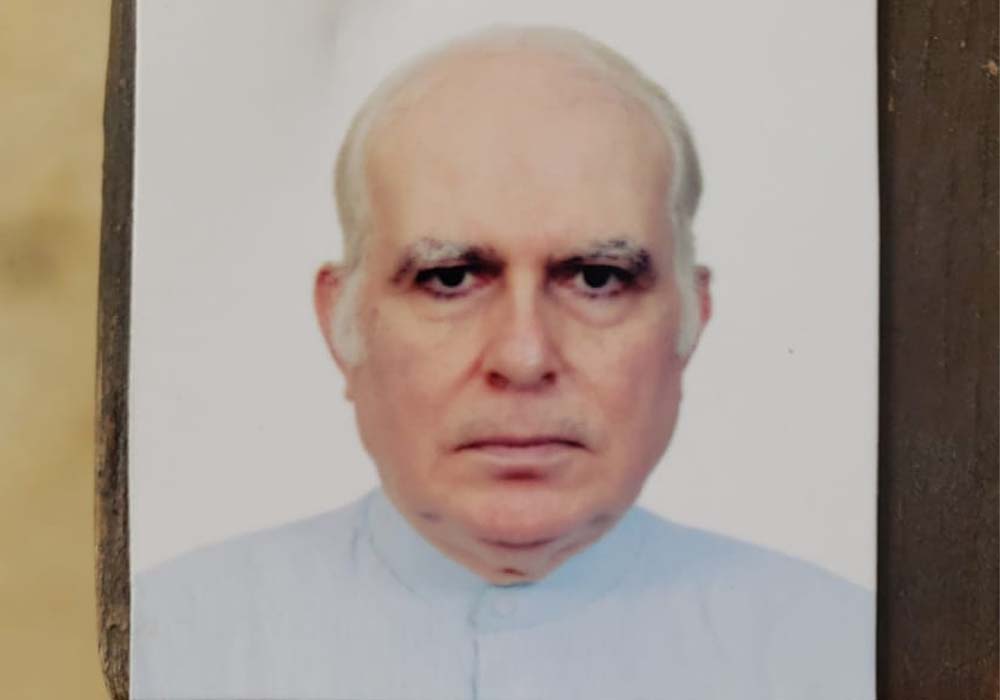
road east

Road to the East

Vice President Pakistan-China Joint Chamber

In the early 1990, when Chinese Government planned to develop the most modern city of the world at the south eat coast of China, named Shenzhen, the Government named it as the window of the world. In the modern history it is the most advanced, beautiful and well-planned city in the world with its population reaching almost 18 million. Along, Shenzhen GDP is bigger than the GDPs of many countries. Similarly, after the Chairman Xhi announced his initiative to develop for a global trade in the name of Belt and Road Initiative (BRI) which is considered to be the biggest financial project globally.

In respect to active this project the initiative of CPEC as a flagship project of BRI was taken. Pakistan with its most sage borders with its neighboring countries China is also the key part of this initiative. Considering my experience to travel to China using a road link was started from the small city of Pakistan name coast. Which is even more than like 200 km from the border of the Khunjarab which leads you to enter to the new window of the world which is starting from the south west of China. Directly you pass the immigration process at Tashgorqan, you will feel the things have been entirely changed. My first inspiration was this city for its cultural background buildings, music, food, that totally fascinated me. I was just in the middle ages where there was a very beautiful city to welcome me with all its cultural strength. The city is even smaller like a country of Kashgar but still you can see the international food chains along with a lot of local delicacies. The ethnic people are mainly Chinese and Tajik origin. This city is similarly famous for the yolk beef. And that was my first feast tried at this city. The visitors of the city were even more than the locals who came from all over China to observe the rich culture of this city. Even I spent there few hours but the fascination, beauty and culture of this city will definitely attract me to visit it again. The roads were wide, clean, infrastructure was excellent, like a combination of an old civilization with modern infrastructure. If a got a chance in the future I would love to stay in this city significantly marking the importance of this city even in the ancient time till today. This was the first settlement as a city I found on my way to the Khunjarab border to tashgorqan. The people were very friendly, beautiful and they showed a lot of love not only fore me but for the all visitors. Such a small city with a rich culture for their dressing, music and traditional dance can fascinate anyone. Kashgar is about 5 hours drive from Tashgorqan. Being the second largest city of Xinjian, this city is I may call a new window of the world.

Kashgar city which is normally a called as Kashi by Chinese is an inspiration. This city which was formally very undeveloped like a couple of decades before now have become a center of financial activities under the BRI. With its specific location along with the silk route the locals of Kashi claims that this city have a history to 2000 to 5000 years old. I have never observed a city like Xinjiang with such a remote area and having the ethnic communities for more than 13 including Yugur, dominating Han, Tatar, Tajik, Karghaiz, Mangol and many other are among the most prominent ethnic nationalities living in this city. This diversified this city as a multicultural hub.


China Government is very concerned and they are really developing this area with all the available resources they can inject. Within a decade of time Kashi is now one of the modern cities developing with the gigantic speed and its bordering with the countries like Kirghizstan, Pakistan, Afghanistan, and Tajikistan.

With its population increasing ofr more than 6 million people is one of the biggest city in all this region. Yecheng as a county of Xinjiang, is considered to be a window to Tibet all that, who want to start their expedition to Tibet, they have to start from this city name , Yecheng.

I got an opportunity to visit his small city which is similarly fascinating, I should appreciate this all areas are culturally being so rich that every building and every road is telling a new story about this city. What attracted me the most that was the food and the dancing culture of this city with some fascinating music. This area is rich for its dry fruits where you can see the most variety of dry fruits in the world. Yecheng is considered to be a capital city of walnuts. Coming back of Kashi which is my topic of the day, everybody can spend hours and hours to have a look at the rich culture. The Government have preserved the buildings and most of them have been converted into historical places mostly are called in the name of Mehman Khana (Hotel). The walled city of Kashgar is one of the top most attraction for any foreigners and mainland Chinese. Now the Kashi economy is mainly based on tourism as the Chairman Xhi announced in his last speech as tourism and health sector would be the main focus of Chinese Government. The streets of Kashi were swarming with the Chinese from all provinces who were eager to learn more about the history and culture of this region.


To be continued..

Similar Posts

  • Navigating the Global Consequences of US-China Tec…

    For three decades, the prevailing narrative of the global economy was one of seamless integration. From the design studios of California to the high-tech assembly lines of Shenzhen, the world operated on the assumption that technology was a bridge, not a barrier. However, that era of “borderless innovation” is rapidly giving way to a more fragmented reality. As the United States and China engage in an intensifying rivalry over the foundational technologies of the 21st century artificial intelligence (AI), semiconductors, and 5G a “Silicon Curtain” is descending, reshaping global supply chains and forcing a difficult reckoning for developing nations. The shift marks a transition from a world defined by economic efficiency to one governed by national security. In Washington, the consensus has hardened around the idea that “de-risking” from China is essential to protect intellectual property and maintain a military edge. In Beijing, the drive for “technological self-reliance” has become a central pillar of national survival. What began as a series of trade disputes in 2018 has evolved into a comprehensive decoupling that threatens to bifurcate the global digital ecosystem. The Semiconductor Siege and the AI Arms Race At the heart of this decoupling is the semiconductor the “oil” of the digital age. Advanced microchips are the brains behind everything from smartphones to hypersonic missiles. In 2022, the U.S. Department of Commerce introduced sweeping export controls designed to prevent China from acquiring the high end chips necessary for training generative AI models. The “CHIPS and Science Act” further signaled Washington’s intent to reshore manufacturing, offering billions in subsidies to bring fabrication back to American soil. China has responded with its own set of defensive and offensive measures. Beijing has invested hundreds of billions of dollars into its domestic chip industry via the “Big Fund” and has imposed export restrictions on critical minerals like gallium and germanium materials essential for high-tech manufacturing. This tit-for-tat dynamic has profound implications for AI development. While the U.S. currently leads in algorithmic innovation and hardware design, China possesses a vast reservoir of data and a highly integrated industrial base. As the two powers diverge, the world faces the prospect of two distinct AI “stacks” each with its own standards, ethical frameworks, and hardware requirements. For global corporations, the cost of maintaining two separate supply chains is staggering, with some estimates suggesting a permanent 1 to 5 percent drag on global GDP. The 5G Dilemma: Infrastructure as an Ideology The rivalry is equally visible in the rollout of 5G telecommunications. As the backbone of the “Internet of Things,” 5G infrastructure is more than just a faster cellular network; it is the nervous system of modern cities. The U.S. campaign to exclude Chinese providers like Huawei and ZTE from Western networks, citing security vulnerabilities, has effectively split the world into two camps. Many European and “Five Eyes” nations have aligned with Washington, citing the risks of state-sponsored espionage. Conversely, many nations across Southeast Asia, Africa, and the Middle East have continued to embrace Chinese infrastructure, which is often more affordable and comes with flexible financing. This infrastructure divide creates a “path dependency”: once a country adopts a specific 5G standard, the subsequent software, security protocols, and hardware upgrades are likely to follow the same technical lineage. The “Digital Non-Aligned Movement” Perhaps the most complex fallout of this decoupling is felt in the Global South. Developing nations, many of which are in the midst of their own digital transformations, now find themselves in an uncomfortable position. They are being pressured to choose between the two technological poles, a choice that carries significant economic and diplomatic risks. For a developing economy in Africa or Latin America, U.S. technology offers high security and integration with Western financial markets. However, Chinese technology often provides a lower barrier to entry and a focus on state-led development goals. The danger, according to many economists, is that this “tech-polarization” will lead to a lack of interoperability. If a startup in Nairobi develops an app on a Chinese cloud platform, will it function seamlessly for a user in a market dominated by American standards? Furthermore, the “friend-shoring” of supply chains where production is moved to politically allied nations is creating new winners and losers. Countries like Vietnam, India, and Mexico have seen an influx of investment as manufacturers seek to diversify away from China. However, other developing nations that lack the infrastructure or political alignment to join these new “trusted” supply chains risk being further marginalized. A World of Redundancy and Risk Critics of decoupling argue that the process is not only expensive but potentially futile. The global tech industry is so deeply intertwined that total separation may be impossible without catastrophic economic damage. Apple, for instance, still relies heavily on Chinese assembly, while Chinese tech firms still utilize American software architectures. Moreover, the environmental cost of decoupling is often overlooked. As both superpowers race to build redundant factories and secure mineral supplies, the efficiency gains of globalized production are lost, leading to increased carbon footprints and resource competition. The “Green Transition” itself is at risk, as solar panels and electric vehicle batteries are caught in the crosshairs of trade restrictions. The US-China tech rivalry is no longer a peripheral trade dispute; it is the defining feature of modern geopolitics. The shift from a globalized market to a fractured one represents a fundamental change in how the world innovates and communicates. While “strategic autonomy” may offer a sense of security for the superpowers, it introduces a new layer of volatility for the rest of the world. As we move forward, the challenge for the international community will be to establish a “digital floor” a set of minimum standards and protocols that allow the world to remain connected even as political systems diverge. Without such a framework, the “Fractured Circuit” may not only slow the pace of global innovation but also deepen the divide between the connected and the disconnected, leaving the most vulnerable nations to navigate a world of incompatible systems and dwindling choices.

  • The Stories of Pakistan’s Unsung Heros

    Every 14th of August we hear the same national narrative. Speeches recall 1947, flags are hoisted, and anthems are played at midnight. The symbolism matters. It reminds us of the cost of independence and the idea of Pakistan. Yet symbolism without substance risks becoming ritual. If we are to understand what independence means in 2026, we must look beyond the ceremony and toward the quiet, persistent work that sustains the nation through every crisis. That work is rarely televised. It is carried out by teachers in under-resourced schools, by health workers walking door to door, by engineers keeping the grid alive during heatwaves, by farmers adapting to erratic weather, and by young people building livelihoods from laptops in small towns. These are the stories of resilience that deserve a central place in our understanding of Pakistan, 79 years after its founding. Resilience is not an abstract virtue. It is a measurable response to constraint. Pakistan has faced recurring fiscal stress, energy shortfalls, climate shocks, and security challenges. In each case, state capacity alone has been insufficient. What has prevented collapse is a dense network of civic and professional effort that fills gaps, innovates under pressure, and restores basic function. Consider education. Official data continues to show millions of children out of school and low learning outcomes. At the same time, thousands of low-fee private schools, community learning centers, and volunteer tutoring initiatives operate in the same neighborhoods. They do not appear in headlines, but they keep children literate, prepare them for exams, and create a pathway, however narrow, to higher education. The same pattern appears in health. Lady Health Workers and polio teams travel on foot in heat and in risk, maintaining immunization coverage and maternal counseling in areas where clinics are distant or overburdened. Their work is repetitive, underpaid, and essential. Without it, disease surveillance and primary care would deteriorate far more rapidly. Economic resilience is visible in the informal sector and in the emerging digital economy. Pakistan’s labor market has never been able to absorb all new entrants through formal jobs alone. In response, millions have created their own employment: workshops, transport, retail, agriculture processing, and services. In the last decade, a new layer has appeared. Freelancers in Lahore, Karachi, Islamabad, Peshawar, Quetta, Multan, and Faisalabad now earn foreign exchange by writing, designing, coding, and providing remote services. They pay no rent for office space, require little imported capital, and learn through online courses. This is not a substitute for industrial policy, but it is a real expansion of opportunity. It represents a form of independence: the ability of an individual to earn without waiting for a large institution to hire them. The state’s role here should be to reduce friction, ensure reliable electricity and internet, and simplify taxation and payment systems, so that this energy is not wasted. Climate resilience is now inseparable from national security. Floods in 2010, 2014, and 2022 displaced millions and damaged infrastructure worth billions. Drought and heatwaves threaten wheat and water. The response has included both engineering and community adaptation. Farmers are experimenting with drought-tolerant varieties and more efficient irrigation. Urban volunteers organize tree planting and waste management in their streets. Provincial and federal programs have attempted large-scale afforestation and watershed management. Progress is uneven and often underfunded, but the impulse is clear: adapt or lose. The most effective adaptations are local, because they are designed around specific soil, rainfall, and social networks. National policy can support them by providing data, credit, and technical extension, but it cannot replace the judgment of people who live on the land. What ties these examples together is a refusal to wait for perfect conditions. Resilience in Pakistan is not optimism. It is a practical calculation that problems will persist, and that action must proceed anyway. This attitude is visible in small businesses that maintain generators and solar panels to cope with load-shedding, in parents who pool money to hire a tutor, and in journalists and lawyers who document cases despite pressure. It is not heroic in the cinematic sense. It is tedious, repetitive, and often thankless. That is precisely why it matters. Nations are built not only in founding moments but in the accumulation of ordinary competence over decades. As we mark 79 years, the task is to recognize this resilience and to institutionalize it. Recognition means collecting data that captures informal work, community schools, and local adaptation, and then designing policy around them. Institutionalization means protecting merit in recruitment, ensuring predictable funding for primary services, and removing regulatory obstacles for small enterprises and freelancers. It also means telling a different story about Pakistan. The dominant story is one of crisis and rescue. The more accurate story is one of persistence and incremental gain. Both are true. But a country that only narrates its crises will train its citizens to expect failure. A country that also narrates its resilience will train its citizens to contribute. Independence, therefore, is not a date. It is a practice. It is the practice of showing up to teach, to heal, to build, to adapt, and to hold institutions accountable when they fall short. The midnight speech reminds us why we began. The morning work determines whether we continue. If we wish to honor 1947, we should honor those who, without fanfare, keep Pakistan functioning every day between 15th August and the next 14th. Their work is not perfect, and it is not sufficient on its own. But it is the foundation on which any serious reform must rest. To see it, to name it, and to support it is the most patriotic act available to us now.

  • The AJK Crisis 

    Azad Jammu and Kashmir has recorded at least 40 deaths since early June in clashes tied to the Joint Awami Action Committee’s campaign against the region’s twelve refugee assembly seats, a toll that predates the events of July 27-28, when JAAC and AJK police gave conflicting counts of 14 to 21 more killed in Rawalakot. The combined total since June likely sits in the high 40s to high 50s, though no independent body has confirmed a single figure; every clash in this sequence has produced a JAAC count and a police count that don’t match, and neither has been verified from outside. The July violence fell during the first phase of a legislative election that AJK’s election commission split into three stages because of the unrest, a break from the territory’s usual practice of voting in a single day. Mirpur division cast ballots on July 27. Rawalakot, in Poonch division, was deliberately held back for the third phase because it has been the epicenter of the agitation. The clashes there on July 27-28 came as JAAC’s long march tried to push through the city toward Muzaffarabad, not on a day its own constituents were voting. That the state felt it necessary to stagger an election by geography to manage a protest movement is itself a measure of how far the crisis had already gone. Law enforcement personnel have been repeatedly targeted through the unrest. Police say an armed JAAC contingent opened fire on officers near Combined Military Hospital Rawalakot in a planned attack, which the region’s police chief called outright terrorism. JAAC disputes this, as it has disputed nearly every account of nearly every clash, saying its own people came under fire after power was cut to the area. Neither version has been independently verified, and the Human Rights Commission of Pakistan has called for an impartial probe into the Rawalakot deaths for that reason. What is not contested is that a movement now banned under anti-terrorism law has been in near-continuous confrontation with police for eight weeks, and that officers have died in it. The dispute traces back to a structural question the state has already answered through the proper channel. Six of the twelve seats go to refugees from the Jammu division, numbering around 434,000; six more go to refugees from the Kashmir Valley, numbering around 30,000. JAAC calls this disproportionate and argues the seats let people who do not live in AJK shape its politics from outside. The AJK Supreme Court ruled on June 7 that the seats are constitutionally protected and can only be altered through a formal amendment, not by administrative order or by protest. The government’s proscription of JAAC under anti-terrorism law came two days earlier, on June 5, ahead of a planned June 9 protest; the worst of the killing followed the ban rather than preceding it. Both sides of that sequence can be argued. What can’t be argued is that the state waited for a body count before invoking the law , it acted first, and the deaths followed. On the demands themselves, the government reports 24 of JAAC’s 44 total demands fully implemented and 16 more partially complete or in process, with 4 at an impasse. That record is substantial, larger than most governments manage against a protest charter. But it does not settle the argument on its own, because none of the 24 completed demands is the refugee-seat question. That one sits among the 16 still unresolved, and it is the demand driving the current violence. A compliance rate built mostly from other line items ; subsidies, cabinet size, judicial commissions, demonstrates the state’s good faith in general. It does not demonstrate its handling of the one issue JAAC is dying and killing over, and that distinction should not be blurred. Even so, the seat question has been settled by the only body with authority to settle it. Abolishing the seats to appease pressure tactics would be unconstitutional on its face, and it would tell any future movement in Pakistan that enough disruption can override a court and a negotiated settlement alike. A state that has followed its own constitutional process, implemented most of an agreed reform charter, and still faces an intensifying campaign of blockades and attacks on security personnel has grounds to hold its position; grounds that rest on the process it followed, not on an implementation statistic that doesn’t reach the actual grievance. The state’s strongest move now is to negotiate from the position it has already earned, not concede from a position of weakness. Reweighting the seats toward Jammu’s larger population, pursued through the amendment process the Supreme Court has itself outlined, would resolve the proportionality complaint on the state’s own terms and timeline, not JAAC’s. Offered now, immediately after a disputed mass-casualty event, it would read as capitulation. Offered once the group’s remaining leadership either accepts the court’s authority or is dealt with through the law, it becomes a demonstration of a functioning constitutional order rather than a retreat from one. The state does not owe JAAC a seat at the table it has spent eight weeks helping to blow up. It owes AJK’s residents a government that can enforce the law, account honestly for its own role in how this got this bloody, and eventually fix what is fair within the constitution , in that order.

  • Beyond Public Finance: Towards  Constitutional Po…

    The fourth part of this series argued that reforms fail when their design ignores the constitutional rules, institutional incentives and political interests that determine implementation. Pakistan’s problem, however, goes deeper than the capture of individual tax measures. The state itself has gradually become accustomed to obtaining resources through rents rather than creating the conditions for sustained production. A rent is an economic benefit obtained through control over a privilege, resource, regulation or strategic position rather than through corresponding productive activity. Rent-seeking begins when individuals, institutions and organised groups devote their energies to obtaining such benefits from the state instead of producing goods, improving services, developing technology or competing in open markets. Pakistan’s political economy has long rewarded access more generously than enterprise. Access to state land, subsidised credit, protected markets, statutory exemptions, import licences, public contracts, regulatory concessions, tax amnesties, administered prices and preferential treatment has frequently generated returns exceeding those available from productive investment. The result is an economy in which political connections can matter more than innovation, and proximity to authority can be more valuable than efficiency. This system is sustained at two interconnected levels. Domestically, privileged groups compete for benefits distributed through state power. Externally, the state repeatedly seeks resources by converting Pakistan’s strategic location and security relevance into financial assistance, debt rollovers, deposits, concessional oil arrangements and diplomatic support. The interaction between these two levels is central to understanding Pakistan’s continued dependence. External financing is not inherently harmful. Developing countries require foreign capital, technology and access to markets. Borrowing can finance infrastructure and productive capacity that generate future income sufficient to service the debt. Strategic partnerships can provide security and economic opportunities. The problem arises when external inflows substitute for domestic transformation. Pakistan has repeatedly treated foreign exchange availability as proof of economic recovery. Reserves rise after an IMF disbursement, bilateral deposit, commercial loan or rollover. The immediate threat of default recedes. The exchange rate stabilises and the government declares that confidence has returned. The underlying productive structure, however, may remain unchanged. The IMF completed the third review of Pakistan’s Extended Fund Facility in May 2026, permitting immediate disbursements of approximately US$1.1 billion under the EFF and US$220 million under the Resilience and Sustainability Facility.  Total disbursements under the two arrangements consequently reached about US$4.8 billion. The Fund also reported progress in rebuilding reserves and achieving the agreed primary surplus. These developments provide necessary breathing space. They do not constitute economic independence. Recent events offer an unusually clear illustration. Pakistan reportedly requested a US$10 billion exchange-stabilisation facility from the United States after playing a diplomatic role in the Middle Eastern conflict. Economists quoted by Reuters questioned whether fresh financing would address the reforms Islamabad had repeatedly avoided. One analyst described the proposed support as “geopolitical rent”. Pakistan had earlier repaid US$3.5 billion to the United Arab Emirates and obtained a US$3 billion Saudi backstop to help fill the resulting gap.  The episode is not remarkable because Pakistan sought assistance during a difficult external shock. Responsible governments must protect reserves and manage emergencies. Its significance lies in the familiar institutional response: once again, strategic usefulness is expected to generate the liquidity required to postpone a deeper restructuring of the economy. However, fresh liquidity can purchase time. It cannot manufacture productivity. Pakistan’s external relationships have repeatedly followed this pattern. During the Cold War, the country received assistance because of its strategic position. The Afghan war transformed Pakistan into a frontline state and brought large flows of military and economic support. The post-2001 “war on terror” renewed the same bargain under different circumstances. Regional conflicts, security alliances and diplomatic mediation continue to create opportunities for financial support. Each inflow temporarily relaxes the pressure for reform. It also strengthens those institutions capable of negotiating and managing the strategic bargain. The constitutional consequence is profound. A state financed substantially through its citizens must negotiate with them. It requires a productive economy capable of generating taxable income and a political order capable of securing broad consent. A state able to obtain resources externally can delay that negotiation. This is one reason why taxation and representation cannot be separated. Dependence upon external rents weakens the fiscal relationship between citizen and state. Governments remain less accountable to taxpayers when foreign creditors, strategic partners and captive domestic sectors provide the resources necessary for survival.  The burden of adjustment is then transferred to those lacking political protection. Salaried persons face deduction before receiving their income. Documented businesses encounter withholding taxes, minimum taxes, advance taxes and delayed refunds.  Consumers pay indirect taxes and levies through electricity, fuel, telecommunications and ordinary purchases.  Powerful sectors negotiate exemptions, reduced rates, amnesties or deferred enforcement. External rents and domestic privileges are therefore not separate distortions. They reinforce each other. The article, “The age of implosion: exhaustion and the hollow core”, recently published in Business Recorder, offers a useful metaphor for this condition. It argues that financial movement can create the appearance of vitality while the productive foundations of the economy continue to weaken. Loans, deposits and other inflows may keep institutions operating outwardly even when their inner capacity is being exhausted.  The metaphor requires institutional precision. Pakistan has not ceased functioning. Taxes are collected, budgets are passed, debt is serviced, imports continue and administrative structures remain active. The state survives through a combination of borrowing, external support, remittances, taxation of captive sectors and periodic transfer of costs to future generations. This should not be mistaken for resilience. It is deferred adjustment.  The official Pakistan Economic Survey 2025–26 continues to organise the country’s performance through conventional categories of growth, investment, trade, fiscal development, public debt and social indicators. These measurements are necessary, but they do not fully capture the political mechanisms determining why available resources flow towards consumption, protection and rent extraction rather than productivity, human development and technological advancement.  A rent-based economy also shapes the behaviour of the private sector. Businesses rationally adapt to the incentives created by the state. Where profits depend upon tariff protection, regulatory discretion, government contracts,

  • Shehbaz Sharif: A proven troubleshooter steering P…

    Every political leader is eventually defined not by promises but by performance under pressure. Pakistan has faced repeated political, economic and administrative challenges over the decades, and each crisis has demanded leadership with experience, patience and the ability to find solutions. In my view, Prime Minister Muhammad Shehbaz Sharif has established himself as a leader who understands governance, negotiation and crisis management. His journey from grassroots politics to becoming Chief Minister of Punjab and later Prime Minister of Pakistan has given him decades of experience in dealing with the practical realities of administration and public service. His reputation as a hands-on administrator comes from his approach to governance. During his tenure as Chief Minister of Punjab, he focused on reforms in education, healthcare, infrastructure and public service delivery. His fast-paced working style earned him the title “Shehbaz Speed”, reflecting his emphasis on implementation and results. I first met Shehbaz Sharif in 2005 at his flat in Avenfield House, London. Over the past twenty-one years, I have had the opportunity to observe his political journey closely. While journalism requires independence and critical analysis, personal observation also provides a unique perspective. Throughout this period, his commitment to Pakistan and his passion for public service have remained evident. During his years as Chief Minister of Punjab, I witnessed his determination to create opportunities for young Pakistanis, particularly through education reforms. Initiatives such as the Punjab Education Endowment Fund, Danish Schools, merit-based scholarships, laptop schemes for students and stipends for high achievers aimed to expand access to quality education. The policy of sending high-performing students abroad, including to the United Kingdom and other European countries, was designed to broaden their vision and expose them to international standards. These initiatives reflected a belief that education is the foundation for long-term national development. His reforms in healthcare and infrastructure also became a significant part of his governance record. Supporters believe that his focus on improving public services in Punjab provided a model of administrative delivery that he later brought to the national level. As Prime Minister, Shehbaz Sharif has faced one of the most challenging periods in Pakistan’s recent history. His supporters credit his government with helping stabilise the economy, restoring international engagement and steering Pakistan away from the risk of a deeper financial crisis. Although major economic challenges remain, they argue that difficult decisions have helped create a more stable foundation. One of the notable features of the current political landscape has been cooperation between state institutions. Supporters view the working relationship between Prime Minister Shehbaz Sharif and Field Marshal Syed Asim Munir as an example of institutional coordination aimed at achieving national stability and economic progress. Pakistan has also sought a more active role on the international stage. Supporters point to its diplomatic engagement, including efforts to promote dialogue during periods of international tension, as evidence that Pakistan continues to play an important role in regional and global affairs. In my view, Prime Minister Shehbaz Sharif has repeatedly demonstrated the ability to steer Pakistan through difficult circumstances. Based on my observations over more than two decades, I believe he has faced major challenges before and has the experience and determination to overcome them again. His strength lies in his understanding of governance, his ability to negotiate with different stakeholders and his focus on delivery. Whether dealing with political partners, institutions or international partners, his supporters believe his experience gives him an advantage in managing complex situations. However, Pakistan’s journey towards prosperity requires continued reforms. Economic pressures, inflation, unemployment and governance challenges remain serious concerns. The next phase must focus on ensuring that national progress translates into improvements in the daily lives of ordinary citizens. In my opinion, Pakistan also needs stronger administrative decentralisation. Whether through new provinces or more empowered administrative units, decision-making should be brought closer to the people. More effective local governance can improve accountability, strengthen public services and accelerate development across the country. Pakistan now needs consistency, stability and a collective commitment from all stakeholders. Political differences are part of democracy, but national progress requires institutions to work together and focus on the common goal of prosperity. Prime Minister Shehbaz Sharif has built his political career around crisis management and public administration. His greatest challenge now is to convert stability into sustainable growth and lasting development. History will ultimately judge every leader by the impact they leave behind. For Shehbaz Sharif, the opportunity remains to transform difficult times into a period of economic recovery, institutional strength and a stronger Pakistan for future generations.

  • The Gen Z and Its Vision of Pakistan

    Pakistan presents a distinct demographic profile in the 21st century. According to the Pakistan Bureau of Statistics and UNFPA, 64% of the population is under the age of 30, with a median age of 20.8 years. This structure situates Pakistan within the category of youth-majority states. Consequently, an analysis of contemporary Pakistan is inseparable from an analysis of Generation Z, defined as individuals born approximately between 1997 and 2012. This cohort is not a prospective entity. It constitutes the current labor force, consumer base, and increasingly, the primary agents of cultural and economic production. The characteristics of Pakistani Gen Z can be understood through three interrelated dimensions: adaptability, initiative, and connectivity. The first dimension is adaptability coupled with digital fluency. This generation represents the first cohort in Pakistan to mature entirely within a digital ecosystem. DataReportal’s 2026 report indicates 111 million internet users and 71.1 million social media users in Pakistan, with internet penetration at 48.5%. The primary mode of access remains mobile broadband, which has effectively decentralized information and opportunity. This environment has cultivated rapid skill acquisition. The ability to learn and deploy new tools is reflected in economic outcomes. Pakistan currently ranks 4th globally in freelance earnings on platforms such as Upwork and Fiverr. Estimated annual freelance exports exceed $400 million. This phenomenon, often termed “digital remittances,” enables participation in the global economy without physical migration. The geographic implications are significant: a software developer in Peshawar, a content creator in Multan, and a designer in Lahore operate within the same digital marketplace, competing on skill rather than location. The second dimension is initiative and entrepreneurial orientation. In response to structural constraints in traditional employment, Gen Z has demonstrated a marked propensity toward self-directed economic activity. Data from the State Bank of Pakistan indicates a rising proportion of SME financing directed to individuals under 35. This is manifested in the proliferation of micro-enterprises, including e-commerce ventures, content creation channels, and home-based businesses. The underlying logic is one of experimentation and iteration: initiate at a small scale, acquire feedback, and scale operations. Importantly, this trend is not confined to metropolitan areas. Digital platforms have reduced barriers to market entry for individuals in Gilgit, Quetta, and rural Sindh, enabling access to national and international consumers. A craftswoman in interior Sindh can, through social commerce, reach buyers in Karachi and Dubai. This represents a structural shift in how economic value is created and distributed. The third dimension is connectivity and civic awareness. Pakistani Gen Z is the most interconnected generation in the nation’s history. Multilingualism is normative, with Urdu, English, and regional languages such as Punjabi, Sindhi, Pashto, and Balochi used fluidly. This linguistic dexterity mirrors a broader cultural orientation that is simultaneously local and global. This connectivity correlates with heightened awareness of social and global issues. During the 2022 floods, youth networks coordinated relief, fundraising, and volunteer mobilization within hours, utilizing WhatsApp, Facebook, and other platforms. The same infrastructure is used for peer-to-peer learning, dissemination of job opportunities, and advocacy around public health and education. Surveys by Gallup Pakistan and various youth organizations indicate participation rates in volunteerism among 18-30 year olds are substantially higher than in previous cohorts. Beyond present attributes, it is critical to articulate the vision of Pakistan held by this generation. Based on available survey data, academic research, and observable behavior, three core elements emerge. The first element is a vision of inclusive economic participation. Gen Z conceptualizes economic contribution beyond formal employment. The priority is productivity, skill utilization, and value creation. Key sectors of engagement include information technology, freelancing, e-commerce, EdTech, AgriTech, and creative industries. There is also a measurable increase in female participation. PBS data indicates that women constitute approximately 30% of registered freelancers, reflecting both economic necessity and changing social norms. The overarching goal is to convert Pakistan’s demographic dividend into tangible economic output. The second element is a vision of competency-based development. This cohort places primacy on skills, portfolios, and demonstrable output over credentials alone. There is growing demand for vocational training, digital literacy, artificial intelligence tools, and communication competencies. The emerging model is decentralized: one individual acquires a skill and disseminates it within their network. This peer-learning architecture has the potential to address gaps in formal education through non-formal channels. The third element is a vision of contributory citizenship. Gen Z associates nation-building with direct action. This includes environmental initiatives such as tree plantation, public health campaigns such as blood donation, and educational outreach in underserved areas. The conception of patriotism is thus operationalized. It is expressed not only through symbolic observance on 14th August, but through sustained engagement in community development. The narrative of 1947 is understood as securing independence. The narrative of 2026, from this perspective, is about deploying that independence toward institutional and social strengthening. Pakistan’s strategic advantage lies in this human capital. The generation is characterized by adaptability, enterprise, and networked awareness. The realization of this potential is contingent on the alignment of opportunities in skills development, digital infrastructure, and platforms for civic engagement. The trajectory of Pakistan will be determined in classrooms, in digital workspaces, in small enterprises, and in the aggregate of individual decisions made by over 110 million young citizens. With continued emphasis on learning, collaboration, and productive engagement, Gen Z possesses the capacity to advance national development objectives. This is their Pakistan, and the process of building it is already underway.

Leave a Reply

Your email address will not be published. Required fields are marked *