beyond riba reconstruction

Beyond Riba: Reconstruction of Just Financial Orde…

The preceding part of this series ended with a limit that productive finance cannot cross. Illness, unemployment, education, disability, orphanhood and temporary distress cannot always be converted into profitable investments. Human vulnerability itself cannot become another financial product. That is where a riba-free order must move beyond banking.

A society may successfully redesign murabaha, musharakah, salam or ijarah and still remain unjust if a family facing cancer treatment must borrow at any cost, a student must enter adult life under debt, or a widow depends upon a local patron for survival. Prohibition of riba becomes socially meaningful only when basic human need is protected from financial extraction.

Pakistan does not have to invent the institutional vocabulary from zero. It already has Pakistan Bait-ul-Mal, established under the Pakistan Bait-ul-Mal Act, 1991. Its official mandate includes assistance to the destitute, widows, orphans, persons with disabilities and other needy citizens, with support extending to medical treatment, education and rehabilitation. Its official position is that assistance is available to the poorest without differentiation of religion, creed, sect or region.

This is an important foundation. It is not yet the structure required for a just financial order. Bait-ul-Mal should cease to be understood primarily as an agency dispensing discretionary relief to the “poorest of the poor”. Its larger purpose should be to guarantee a legally defined social floor.

Food in destitution, essential healthcare, basic education, protection of children without support, disability assistance and temporary subsistence during involuntary unemployment should become matters of entitlement under transparent criteria, not favours obtained through political access. This distinction is fundamental.

Charity depends upon the generosity of the giver. Entitlement rests upon the responsibility of society. It is one of the most emphasised Quranic directive on this idea. The directions given in the holy Quran need not be accepted in totality. This principle is accepted in all the classical juristic traditions. The practical discussion on this is important.

In the transitional phase, all the scholarly works envisage gradual movement rather than an overnight abolition of existing economic arrangements. Individuals progressively devote more of their resources to collective purposes while organised society assumes responsibility for the basic necessities of life.


The transition, in any pragmatic scheme, is institutional rather than merely charitable. That insight deserves attention. An Islamic polity cannot measure success by the number of ration bags distributed after deprivation has occurred. Its test is whether institutions progressively remove the conditions that force citizens into dependence upon creditors, property owners, political patrons or charitable intermediaries. Bait-ul-Mal should therefore form the first pillar of social finance: the guarantee against destitution.

The second should be waqf. Waqf historically converted wealth into enduring social capital. Whatever the juristic differences concerning its precise legal character, its institutional genius lies in removing an asset from ordinary private consumption and dedicating its benefit to a continuing purpose.

Land, buildings and income-producing properties can support hospitals, schools, hostels, water systems, vocational institutions, research centres, shelters and community infrastructure across generations.

Pakistan already possesses statutory waqf institutions. Punjab’s Auqaf Department, for example, operates under the Punjab Waqf Properties Ordinance, 1979, for the administration and regulation of waqf properties. Income arising from properties under its control is credited to the Auqaf Fund under the statutory framework. The potential is much larger than administration of shrines and mosques.

Pakistan should develop professionally governed public waqf institutions—waqf lillah—at national, provincial and local levels. Public land lawfully dedicated for community benefit, voluntarily endowed private property and other permissible assets could constitute permanent pools of social capital. Their corpus should remain protected while their income finances clearly defined public purposes.

This cannot become another avenue for bureaucratic or political capture. Every waqf property should be digitally registered. Its title, purpose, valuation, income, expenditure and beneficiaries should be publicly accessible.

Independent audit, professional management and strict conflict-of-interest rules are indispensable. No minister, shrine manager, political family or local notable should be able to convert property dedicated for public benefit into an instrument of patronage.

The third pillar is zakat. It should remain distinct from both the ordinary budget and waqf. Its compulsory redistributive character and specified purposes give it an institutional identity of its own. Combining every form of social finance into one government account would destroy these distinctions.

The fourth pillar is qard hasan. Not every person requiring temporary liquidity is destitute. A worker may face a medical emergency. A small farmer may need funds after a flood. A graduate may require equipment to begin earning. A household may need a short bridge between unemployment and a new job. Such circumstances do not necessarily call for a grant. They require finance without extraction.

Revolving qard hasan funds administered through Bait-ul-Mal, public waqf institutions and local cooperatives could provide precisely that bridge. Principal would return when the recipient regains capacity, allowing the same pool to assist another household. The institution earns no commercial return from distress; society recycles solidarity.

This connects directly with the cooperative model discussed in Part IV. The ultimate objective cannot be to create permanent classes of beneficiaries. Social protection should lead towards economic agency.

A citizen receiving emergency assistance today should, wherever possible, become tomorrow’s producer, saver and member of a cooperative financial institution. Bait-ul-Mal prevents collapse. Waqf creates enduring social assets. Qard hasan provides a bridge back to economic activity. Cooperatives enable citizens to pool savings, own institutions and finance one another.

These mechanisms should operate together rather than as isolated schemes. The structure can be visualised as a ladder. At its base is an enforceable social floor below which no citizen is allowed to fall. Above it are education, healthcare and skills supported partly through public waqf. Temporary setbacks are met through qard hasan. Productive citizens then move towards cooperative and commercial risk-sharing finance of the kind discussed in Part IV.

The direction is from dependency to capability, not from one form of dependency to another. Governance will determine whether this succeeds. Pakistan has repeatedly created institutions in the name of disadvantaged citizens and then allowed access, appointments and resources to be mediated by power. A Quranic economic order cannot reproduce that arrangement with Islamic terminology.

Beneficiary selection must be rules-based and digitally verifiable. Accounts must be public. Assets must be mapped. Independent audits should be mandatory. Local citizen representation should accompany professional management. Federal, provincial and municipal responsibilities must be clearly divided.

The Islamic character of such an order would lie not in the names of institutions but in their consequences. A child should not remain uneducated because his father is poor. A patient should not sell the family home to obtain essential treatment. An orphan should not require a patron. A widow should not surrender dignity for subsistence. A farmer hit by an exceptional calamity should not enter a debt spiral from which his family cannot escape.

A society that prevents these outcomes attacks riba at its social source. This is the larger point often missed in debates about Islamic finance. Riba does not flourish merely because lenders seek returns. It flourishes also because borrowers are frequently compelled by need. Reforming the creditor while leaving the compulsion untouched addresses only half the problem.

The alternative requires both sides of the structure developed in this series: productive finance based upon ownership, service and genuine risk; and social finance that removes essential human needs from the market for guaranteed financial returns.

A truly Islamic polity is not one in which rulers become generous distributors of charity. It is one in which citizens do not require the ruler’s favour to eat, study, receive treatment, work or recover from misfortune.

Part VI will bring these strands together and ask the final question: how can Pakistan move from judicial declarations and Islamic-banking conversion to a phased, enforceable Prohibition of Riba law [Who will draft Riba Prohibition Law? Minute Mirror, April 7, 2026] covering banking, public debt, monetary operations, productive and social finance, and the transition itself?

[To be continued]

_______________________________________________________________________

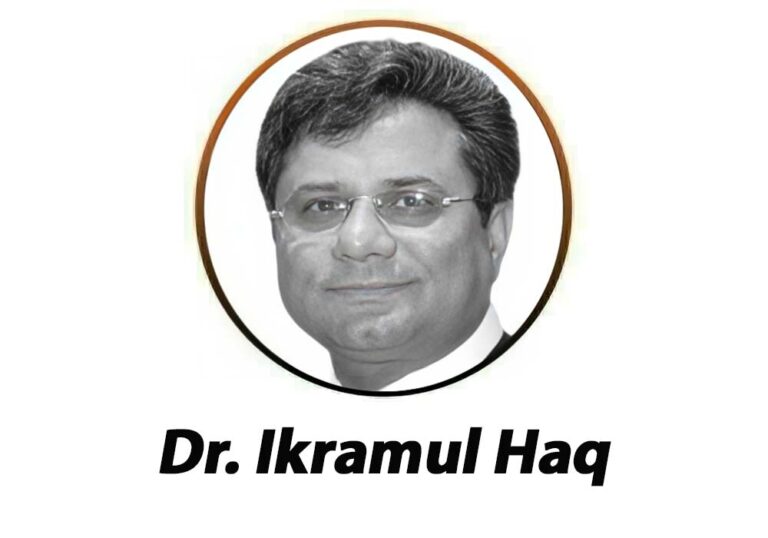
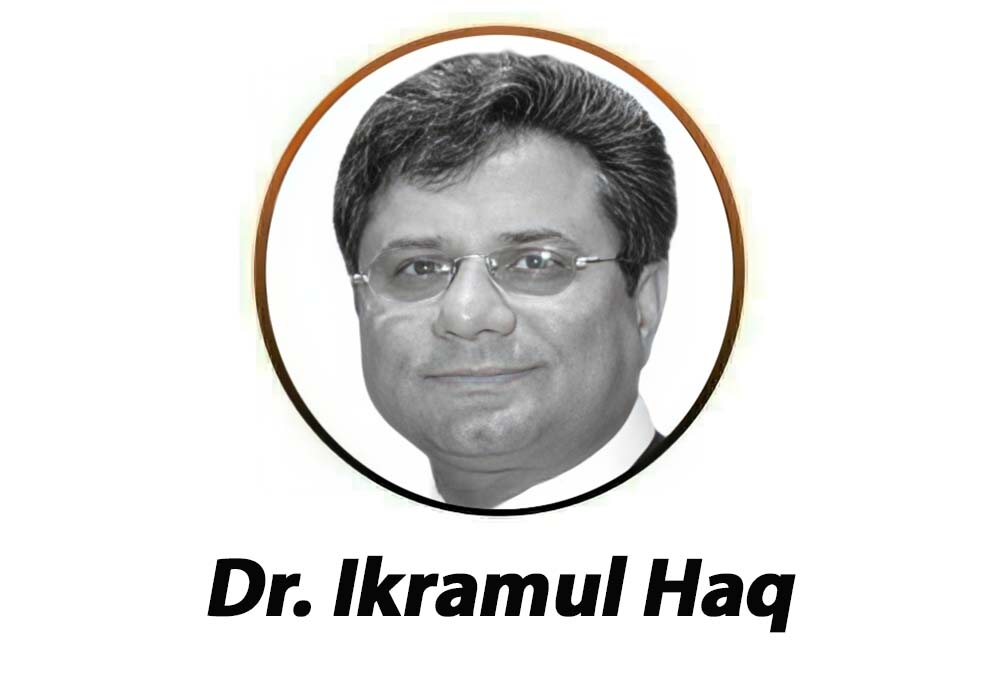
Dr. Ikramul Haq, Advocate Supreme Court, Adjunct Faculty at Lahore University of Management Sciences (LUMS), member Advisory Board and Visiting Senior Fellow of Pakistan Institute of Development Economics (PIDE), holds an LLD in tax laws. He was full-time journalist from 1979 to 1984 with Viewpoint and Dawn. He also served Civil Services of Pakistan from 1984 to 1996.

Similar Posts

  • Economic freedom begins with constitutional govern…

    The recently published PRIME Plus report, An Assessment of the FY2026–27 Federal Budget Through the Lens of Economic Freedom, deserves appreciation for shifting the debate beyond conventional budget arithmetic. Rather than asking merely whether taxes have increased or decreased, it examines whether the budget enlarges or restricts the freedom of individuals and businesses to produce, invest, trade and innovate. That alone makes it a valuable contribution to Pakistan’s policy discourse. The report of Policy Research Institute of Market Economy (PRIME) correctly observes that Pakistan’s formal economy bears a disproportionate tax burden while much of the informal sector remains outside the effective tax net. It questions tax expenditures exceeding Rs 2.35 trillion, highlights the crowding out of private investment by government borrowing, welcomes tariff rationalisation and criticises regulatory uncertainty. These issues deserve much wider public attention. PRIME’s analysis also points towards a deeper weakness in Pakistan’s reform discourse: we discuss economic freedom without first securing constitutional governance. The distinction is fundamental. International indices commonly measure economic freedom through taxation, trade openness, government spending, financial markets and regulatory efficiency. These indicators matter. Lower barriers to enterprise can promote investment, innovation and competition. They answer only part of the question. Why do countries with similar tax rates produce very different economic outcomes? Why do investors accept higher taxation in some jurisdictions while avoiding countries with lighter tax burdens? Why do some economies flourish with relatively large governments while others stagnate despite repeated concessions? The answer lies primarily in institutions. James Buchanan argued that public finance cannot be analysed independently of the constitutional rules under which governments operate. Douglass North demonstrated that long-term development depends upon institutions that reduce uncertainty, enforce contracts and create predictable incentives. Centuries earlier, Ibn Khaldun linked prosperity with justice, moderation in taxation and restraint upon arbitrary power. Excessive intervention, unpredictable fiscal demands and rent-seeking, he observed, ultimately weaken both economic activity and state revenues. These intellectual traditions converge on one central proposition: economic freedom is not created simply by lowering tax rates. It emerges from constitutional governance. Pakistan’s experience illustrates this clearly. Successive governments have offered tax holidays, created special economic zones, reduced customs duties and announced investment facilitation mechanisms. Investment nevertheless remains subdued. Investors do not merely compare tax rates; they compare legal systems. They ask whether contracts will be enforced within a reasonable time, whether regulations will survive political transitions, whether tax liabilities can be altered retrospectively and whether executive discretion outweighs parliamentary certainty. These are questions of constitutional governance rather than fiscal engineering. The same principle applies to taxation. Pakistan’s problem is frequently described as one of high taxation. That diagnosis is incomplete. The deeper problem is unequal taxation. The salaried class in formal sector is fully documented, its tax is deducted before income reaches employees, and its compliance burden continues to rise. Large segments of commerce, services and agriculture operate under very different fiscal realities. The issue is not merely how much tax is collected, but whether equal citizens are governed by equal fiscal rules. A system built around withholding taxes, presumptive taxes, minimum taxes and sector-specific exemptions creates unequal citizenship before the law. It also encourages informality. Businesses do not remain undocumented only because rates are high. Formal participation imposes greater compliance costs while offering few institutional benefits. Documentation without trust becomes compulsion rather than reform. The PRIME report also notes that government borrowing crowds out private investment because banks prefer sovereign lending over commercial risk. This is not simply a banking failure. When governments repeatedly finance deficits through domestic borrowing, banks act rationally by purchasing government securities. Financial markets are responding to distorted fiscal incentives created by public policy. Interest payments and defence together consume nearly 94 percent of net federal revenue, leaving little fiscal space for education, healthcare, scientific research, digital infrastructure, justice administration and productive public investment. The challenge is not merely that government spends too much; it is that public priorities have become distorted. Expenditure that strengthens courts, education, digital infrastructure, research, public health and efficient regulation expands future economic freedom because it reduces uncertainty and lowers transaction costs. Spending absorbed by debt servicing and institutional inefficiency does not. Constitutional Political Economy therefore distinguishes between the size of government and the quality of government. Fiscal federalism is another neglected dimension. The Constitution (Eighteenth Amendment) Act, 2010 reshaped the distribution of fiscal powers. Provincial sales taxes, fragmented administrations and overlapping jurisdictions now influence business decisions daily. Economic freedom cannot be assessed through the federal budget alone. The constitutional structure governing taxation matters as much as the annual Finance Act itself. Pakistan’s economic challenge is consequently larger than budget reform. Markets flourish where laws are predictable, taxation is neutral, contracts are enforceable, property rights are secure and governments remain subject to constitutional restraints. These conditions cannot be created through a single Finance Act. They require a durable commitment to constitutional governance. The value of the PRIME report lies in encouraging this broader conversation. The next step is to recognise that economic freedom rests upon a stronger constitutional foundation. Where constitutional governance is weak, economic reforms remain temporary. Where it is strong, markets can generate prosperity without constant discretionary intervention. Pakistan’s recurring fiscal crises are symptoms rather than the disease. The underlying ailment is institutional. Budgets can redistribute resources, but only constitutional governance can establish equality before law, predictable taxation, secure property rights and meaningful limits on arbitrary state power. Economic freedom, therefore, is neither the starting point of development nor a concession to be distributed through annual Finance Acts. It is the outcome of a constitutional order in which taxation rests on representation, public borrowing is subject to accountability, contracts and property are protected, and executive power remains bounded by law. In a rent-distributing state, freedom is rationed through exemptions, influence and discretion; in a constitutional state, it is secured for all through equal rules. Unless Pakistan reforms the institutions that determine who is taxed, how public money is spent, who bears the cost of debt and how state power is

  • Petroleum Minister’s diagnosis & indictment

    Federal Minister for Petroleum Ali Pervaiz Malik has made an unusually candid assessment of Pakistan’s energy sector. Speaking at the Energy Conference 2026, he conceded that inconsistent policies discourage exploration, petroleum has been subjected to “exorbitant taxation”, domestic refineries remain in a dilapidated condition, gas-sector liquidity is impaired, circular debt remains a central concern, and structural reform requires competition, unbundling and private participation. These admissions deserve attention because they come from inside the government. They also raise an unavoidable question: if the government understands the structural weaknesses so clearly, why does its own fiscal and administrative policy continue to aggravate them? The minister’s strongest observation was that the Petroleum Division cannot remain the instrument upon which excessive taxation and financial interventions are loaded merely to meet budgetary requirements. The diagnosis is correct; the choice of victim is not. A government division does not bear taxation. Consumers, farmers, transporters, manufacturers and exporters do. Pakistan collected a record Rs. 1.567 trillion through petroleum levy during the fiscal year (FY) 2025-26, exceeding the budgeted target by about Rs. 99 billion. Petroleum products are nominally exempt from general sales tax, but motorists should not confuse exemption with relief. The levy, customs duty and the new climate support levy together impose an enormous burden at the pump.  An analysis of notified prices and consumption estimated that these petroleum charges generated around Rs. 166 billion in July 2026 alone—equivalent to roughly one-fifth of that month’s collection of Federal Board of Revenue (FBR). On petrol, government imposts exceeded Rs. 100 per litre during parts of August. [Ministry of Finance fiscal operations; OGRA notified prices] This is not energy policy. It is fiscal opportunism. Petroleum levy is especially attractive to Islamabad because, unlike federal taxes included in the divisible pool, its proceeds are retained by the federal government. Replacing sales tax with levy does not broaden the tax base or improve its progressivity [Bankruptcy of ideas—VII: The Petroleum (Levy) State, June 18, Minute Mirror, 2026].  It merely enables the federation to collect revenue without sharing it under the National Finance Commission mechanism. Provinces lose their constitutional share while the entire economy absorbs higher transport, agricultural and production costs. The levy is also excessively regressive. A litre consumed by a motorcyclist, rickshaw driver or small farmer attracts the same fixed charge as one consumed by the owner of a luxury vehicle. Diesel taxation travels through freight into the price of flour, vegetables, medicines and construction materials. The poorest household may not own a vehicle, but it still pays petroleum levy indirectly on almost everything it buys. The minister should have said plainly that Pakistan’s narrow and inequitable tax system is being sustained by taxing mobility and production. Powerful retailers, speculative real-estate interests, large landowners and beneficiaries of untaxed or lightly taxed wealth remain inadequately documented. The salaried class, formal businesses and petroleum consumers are repeatedly squeezed because they are visible and collection is easy. The minister also called for consistent and predictable policies to attract investment in high-risk onshore and offshore exploration. No serious investor can disagree. Exploration requires large sunk expenditure, long lead times and the possibility of complete failure. Pakistan cannot invite investors with one policy, reinterpret its terms through another notification, delay payments, restrict remittances and then wonder why exploration interest remains weak. The Pakistan Economic Survey 2025-26 acknowledges constrained domestic petroleum production, continued import dependence, suboptimal refinery utilisation and the effect of international instability on the import bill. These are not new discoveries. Governments have been promising energy security, refinery upgrading and accelerated exploration for decades. The institutional cycle remains familiar: announce a policy, delay agreements, accumulate liabilities, offer concessions, change fiscal terms and launch another policy. Offshore exploration is important, but it must not become another slogan. A dry well is a commercial risk; unstable contracts, delayed decisions and politicised administration are sovereign risks created by the state. Pakistan cannot remove geological uncertainty, but it can remove bureaucratic caprice. That requires published contractual frameworks, credible dispute resolution, transparent bidding, assured repatriation rules and protection against retrospective fiscal changes. The minister’s claim that the flow of circular debt has been maintained near zero without increasing consumer prices also needs closer examination. Circular debt is not eliminated merely because its current flow is temporarily contained. Arrears can be shifted through subsidies, delayed payments, financing arrangements, tariff adjustments, accounting recognition or government guarantees. The stock remains a claim on citizens even when it disappears from a ministry’s preferred flow indicator. Gas-sector circular debt reflects delayed tariff adjustments, expensive imported LNG, diversion of gas between consumer categories, distribution losses, theft, weak recoveries, unpaid subsidies and government-directed supplies without timely budgetary compensation. It impairs the liquidity of exploration and production companies, which then lack funds for new exploration. The state taxes petroleum to repair its budget while withholding or delaying money owed within the energy chain. This is fiscal cannibalism: one part of the sector is consumed to keep another functioning. The condition of local refineries provides another indictment. The minister rightly asked why they remain “dilapidated” and have not become deep-conversion facilities. Old hydro skimming refineries produce an output mix increasingly misaligned with domestic demand, including excess furnace oil and insufficient quantities of cleaner, higher-value fuels. Modernisation requires billions of dollars, technological planning and certainty over tariffs, duties, pricing and product specifications. Refineries, however, have enjoyed various forms of protection and deemed-duty support in the past. Any new incentive must be conditional. Public support cannot become a permanent reward for postponing investment.  Each refinery agreement should disclose the investment commitment, financing plan, completion milestones, product-quality improvements, environmental obligations and consequences of default. Consumers should not finance refinery upgrades through protected margins without enforceable delivery. The proposed unbundling of the gas sector—separating infrastructure from commodity trading—can improve transparency. An independent network operator, regulated access charges and genuine third-party access could allow producers and large consumers to contract without forcing every transaction through an opaque state monopoly. But changing organisational boxes will not cure political pricing, excessive losses, poor

  • We Grew the Wheat. We Chose to Import It.

    In early April the grain stood stacked by the roadside in Sahiwal, DG Khan and Bahawalnagar, harvested and bagged, waiting for a buyer the system had promised but never delivered. Three months later the buyer arrived. Not the state purchasing from Pakistani farmers, but the state purchasing from foreign suppliers, paying in scarce dollars. Pakistan’s 2025-26 wheat production is estimated at 29.31 million tonnes against consumption of roughly 31.9 million. The gap is real. This import, however, is not the product of a harvest failure. It is the product of a procurement failure. The wheat existed. What did not exist was the institutional will to buy it at a price that reflected its value while it was still in the farmer’s hands. Private intermediaries bought at Rs 2,900-3,200 per 40 kilograms from farmers who had loans falling due and no storage. Those intermediaries held the grain and watched the open-market price climb to Rs 4,600 by July. The middleman’s profit was the farmer’s loss. The state, having refused to spend rupees in April, must now spend dollars in August. The invoice, compiled from months of evasion, comes due all at once. The cycle was predictable. After the 2022 floods the administrative reflex became “import.” In 2023-24 the country allowed large duty-free private imports into a market already carrying record stocks. That was 3.44 million tonnes at a cost of $1.005 billion. In 2024 and 2025 the Minimum Support Price was first ignored and then abolished under IMF conditionality linked to a $7.1 billion Extended Fund Facility. This happened years ahead of the phased timeline the Fund had allowed until FY2026. In October 2025 the government reversed course and restored the price, but the supporting machinery never materialised. In January 2026 the aggregator model collapsed. Punjab set a procurement target of three million tonnes, but by late May, with partial procurement continuing into June, total procurement fell far short of the target. Three seasons, three frameworks, one recurring failure: the system arrives after the price has already been set. The old procurement system was deeply flawed. It captured only about a quarter of production and skewed toward large landholders and politically influential actors. According to a Competition Commission of Pakistan analysis, the top 40 per cent of farmers in Punjab sold 84 per cent of their wheat to official buyers, while the bottom 40 per cent sold only 6.4 per cent, forced to accept below-benchmark prices from private traders. Abolishing it overnight without private storage, warehouse-receipt financing or functioning commodity exchanges did not liberate the small farmer. It exposed him to cartels he could not match. The state was weak when farmers needed a floor. It is assertive now that consumers need a ceiling. That is not food security. It is political timing. The cost will be paid in November. Punjab’s wheat acreage has already fallen sharply. It fell by roughly 5.5 per cent between 2023-24 and 2024-25, a reduction of close to a million acres, according to official crop reporting data corroborated by independent assessments. The decline has continued into 2025-26. Farmers are not abandoning wheat out of ideology. They are doing arithmetic after three years of suppressed returns, delayed buyers and policy uncertainty. Many are moving into canola and mustard. These are thinner markets with less infrastructure, no public benchmarks and highly concentrated private buyers. Unlike wheat, which benefits from a massive state-backed consumption floor and established procurement infrastructure, edible oils face different demand elasticities and lack the same strategic reserve backing. If oilseed acreage expands faster than processing capacity, the same distress-sale pattern will simply be exported to a new crop. Climate stress amplifies the risk. The 2025 floods were the worst in Punjab in four decades, and the 2026 harvest lost further volume to heat and storms. Rising temperatures and erratic rainfall are no longer background noise; they are actively cutting yields. Yet the deeper threat remains institutional. A farmer who repeatedly experiences losses without protection responds rationally. He reduces acreage. He shifts crops. He exits. And once he exits, he does not return. Sovereignty does not lie only in borders or foreign reserves. It also lies in the ability to buy, store and release grain when the market fails. By that measure the import announcement is not a solution. It is the price of a failure we chose. The 2027 harvest window opens in November. Not in April when the crop arrives. Not in July when the state panics, but in November when the farmer stands in his field and decides what to plant. On that morning he will not be thinking about policy frameworks or export targets or buffer stocks. He will be thinking about what the last three seasons cost him and whether the state that failed him in April, imported in July and abandoned him after harvest has given him any reason to trust it again. That is the only question that matters now. That is the question that must be answered before he plants.

  • The Reality of the Struggle, Two States, One Playb…

    In both Pakistan and India, what citizens are resisting is no longer standard party politics, it is the structural weaponization of the state. In India, political movements that emerged from populist or anti-corruption roots, like the Cockroach Party,  Aam Aadmi Party, along with regional dissenters, activists, and journalists, have faced arbitrary arrests, custodial pressures, and continuous raids by central agencies. In Pakistan, the state’s military-civilian establishment has used mass roundups, military trials for civilians, social media blackouts, and political bans to strip away electoral mandates and crush dissent. The torture, surveillance, and intimidation targeted at ordinary organizers and political workers across both borders mirror each other. The state’s goal in both contexts is identical, to make the cost of resistance so high that the public submits out of sheer exhaustion. Is It Time to Change? The short answer is, It is long overdue, but swapping rulers will change nothing. For decades, the public in both nations has been trapped in a cyclical trap. In Pakistan, people rally behind one party to remove the military-backed regime, only for the new government to use the exact same military apparatus to crush the next opposition. In India, hyper nationalism and state control have been normalized to the point where institutional checks, courts, enforcement agencies, and investigative bodies have lost their neutrality. If “change” simply means voting in a different political party while leaving the underlying security state and unchecked executive powers intact, the fascism simply changes its coat. True change requires dismantling the tools of authoritarianism, not just replacing the hands holding them. To actually break this cycle of state suppression in South Asia, three fundamental shifts must take place from the ground . As long as investigative agencies, financial crime bureaus, and intelligence services answer directly to political  bosses, they will be used as weapons of torture and political elimination. The primary demand of any genuine popular movement must be strict, legally enforced operational independence for courts, election commissions, and law enforcement.Parties, whether AAP, Cockroach Party, PTI, Congress, or regional blocs, are vehicles, not saviors. Authoritarian regimes thrive on divide-and-rule tactics, convincing one group to applaud when their political rival is jailed. The public must build non-partisan civil fronts where an attack on any citizen’s fundamental right, journalist’s freedom, or political worker’s safety is met with collective public outrage, regardless of party allegiance.Fascist narratives in South Asia rely heavily on manufactured enemies, hyper nationalist rhetoric, and national security panics to justify state overreach. Resistance movements break this spell when they relentlessly ground the conversation in tangible economic survival,inflation, labor rights, land grabs, and local self-governance. When the public realizes that state coercion is being used to mask economic failure, the moral authority of the regime collapses. The resilience of the people in both countries is undeniable, they continue to take to the streets despite jail, violence, and state power. But for that resilience to yield real liberation, the focus must shift from merely fighting for individual leaders to systematically dismantling the legal and institutional machinery that makes fascism possible in the first place.

  • Detouring Development

    Development is the process of creating lasting improvements in the lives of people by addressing their genuine social, economic, and public needs and not merely constructing new infrastructure, completing projects, impressive photographs, or utilising the allocated public funds. In a true sense, the real measure of development is whether the real problem has been solved, and whether the interventions have created sustainable public value and an evident change in social or economic conditions of the society. A project should begin with a clearly defined problem and public need. Its vision, goals, activities, and measurable indicators should follow the problem. In professional project management practices, all these elements are recorded in the planning and design phase. In Pakistan, we have mastered the art of reporting these elements without achieving any meaningful results. Imagine a public park surrounded by a steel fence. Children and families using the park are visible from the road. If funds are available and privacy is the genuine concern, the executing agency can add steel sheets, plant trees, or use temporary screens. Each solution is inexpensive and retains the existing structure. However, if the focus is primarily on expenditure, the agency may remove the functioning fence and replace it with a new brick wall. This may have a longer life, but is not necessarily the most economical or appropriate solution. Considering Pakistan’s fragile economic outlook, many major development projects are financed through foreign loans. Such funds are eventually repaid, often with interest. Money spent on an unnecessary intervention is no longer available for genuine public need. This is a recurring weakness in Pakistan, where success is measured by the money spent, not by the effectiveness of the solution. This recalls Peter Drucker’s observation. “There is nothing so useless as doing efficiently that which should not be done at all.” The continued existence of infrastructure built during the Mughal and British periods is in contrast with contemporary projects, which deteriorate within years. This might be a romantic comparison, influenced by the fact that we see only the structures that survived, but durability and long-term public value are not central to our project culture. The same mindset is evident in urban beautification schemes. Imagine a local government installs a 15-foot-high statue. The project is indeed beautiful and will produce attractive photographs for official reports, but if the same statue is mounted on thoughtfully designed columns, the shaded seating can be utilised by daily wage workers who gather at bus stops, on footpaths, and in other public spaces because no designated facility is available. This is not an encroachment issue, but a planning failure. Planners and designers should use one intervention to achieve multiple objectives. Imagine a decades-old roundabout, with a working fountain surrounded by grass. During hot afternoons, labourers and children visit the site to cool themselves in the fountain’s spray. Officials might consider this behaviour undesirable and wish to block access. They can barricade it through small trees or shrubs, but the typical response will be to uproot the entire structure, construct a new fountain, and replace the grass with artificial green carpet. The public behaviour may reflect the unavailability of affordable recreational areas or public bathing facilities. Yet, the official solution destroys a functioning public asset, removes a natural green area, and spends substantial funds without addressing the underlying need. Needs assessment appears in project reports, but they are rarely conducted with sufficient depth. Imagine a posh housing society, where tubewells were eventually replaced by private borewells. Residents have spent a considerable amount to arrange their own water supply. Now, if any government agency has received funds for water distribution, they should spend it in areas where the people are still digging borewells or have no access to clean drinking water. However, again the typical response will be to spend millions in this posh area, where households have already arranged their own water supply. The fall of the water table is the real problem, which in this case will persist after spending millions. Pakistan has an extensive planning structure, which includes the federal and provincial bodies, planning departments in government organizations, consultants, and project management units. In 2025-26 alone, the National Economic Council approved the national development portfolio of 4.224 trillion. Such substantial expenditure should produce visible and lasting improvement in people live. The problem, therefore, is not insufficient funding, but how projects are identified, designed, approved, and evaluated. The same problem is visible in education, health, and administrative projects. Consider a basic health unit or education facility with a leaking roof. The available funds should be directed to fix the roof. However, funds are allocated to boundary wall, new signage, and in some cases, for an entirely new building. Similarly, for decade, government departments are trying to digitise their operations. For a quick solution, these departments procure specialised softwares, which has high licensing costs, and inadequate training mechanisms. After years of implementation, enforcement, and expenditure, the same departments revert to paper files or to a new software. The first step should be, to strengthen the capacity of all relevant staff in problem identification and root cause analysis. Every project initiation document should clearly identify the problem, public need, examine alternatives, and link the proposed intervention to public value. These elements should always be in quantifiable terms. Moreover, the project indicators should measure the extent to which the problem is solved and the post-completion evaluation should validate the visualized public benefits. Institutions move energetically, spend heavily, and report extensively, but bypass the original problem. Pakistan does not simply need more projects; it needs projects to solve problems; it needs interventions that respond to genuine needs, preserve what already works, and provide sustainable public value. The true measure should not be the amount spent but the resolution of the problem. Unless problem-solving becomes central to planning and evaluation, fund utilisation will continue to be mistaken for development and detour away from progress we seek. Writers  Dr. Sikandar Bilal Khattak  Academician with Research Interest in Sustainable Systems Can be

  • |

    The Education Dilemma

    By Tuba Khan Literacy is the key to a successful political, economic and social structure of a country. Nations that prioritize education give birth to a strong, responsible and intellectual generation that could foster civic culture in the country. A well-educated and politically aware youth is the backbone of a country’s development. Society can only progress if it invests in its youth, allocating resources and opportunities to young people. Pakistan ranks fifth among the countries having the largest young population in the world. This youth bulge could become a driver of economic prosperity and social progress if quality education and skills development are provided to the youth. Unfortunately, Pakistan lacks an education system that can produce civic-minded, skilled and informed people. The education sector has remained stagnant for several decades and the quality of education is declining day by day, producing an intellectually enslaved generation. Pakistan ranked 164th out of a total of 194 countries globally in education quality, lagging far behind from the other countries in the region. Education in Pakistan is treated as a business for generating revenue and in return creating inequality across all levels of education.   In Pakistan, around 54% of students are enrolled in public sector institutions, where the quality of education and the infrastructure are in a state of severe deterioration. The country’s education standard is so poor that no Pakistani university ranks among the world’s top 350 reputable universities as per QS World University Rankings 2026. Moreover, approximately 26 million children are out of school and those who are enrolled in schools are often products of the rote learning system, unable to think critically and lack the ability to build independent opinions. They are deprived of basic facilities, such as safe and secure buildings, furniture, laboratories, libraries, electricity, clean drinking water, proper sanitation facilities and other basic amenities at the public educational institutions. The outdated syllabus and unprofessional staff at public educational institutions add fuel to the fire, aggravating the education crisis in Pakistan. According to the data provided by UNESCO in 2024, there were 25.38 million students in total for all public and private elementary schools in the country, while only 445,877 teachers were available to facilitate the students. This highlights that there are around 57 children for each teacher. This highlights the ailing condition of the education system of Pakistan.   Despite the educational challenges and poor education system, government spending on the education sector has declined significantly. From 0.8% of GDP allocated to the education sector in 2024, the education spending has dropped to only 0.2% of the federal budget in 2026. Additionally, the privatization of public schools in Punjab is also the biggest failure of the government as it raised the costs and fees, putting a financial burden on low-income families and provoking more elimination of students from the schools. The privatization policy is contrary to the constitutional promise, introduced under the 18th amendment in 2010 of providing free and compulsory education up to Matriculation, exacerbating the education breakdown. This underscores the incompetence of the government in addressing the paramount issue, the root cause of several multidimensional problems of Pakistan.   Education is a fundamental right of every human being and it must be delivered to its citizens by the state. The government of Pakistan must realize that without an educated nation, the country could never be placed on the path of progress. The government should focus on eliminating gender inequality in the education sector while raising awareness in rural areas, making the educational institutions safe for women and holding the institutions accountable. It should encourage digital and vocational training programs, research, practical learning, skills development and the ability of youth to think critically and form independent opinions about the important issues. It is the duty of the government to provide quality education, maintain educational institutions, strengthen checks and balances within the education system, fulfil the constitutional promise of providing free education to children between the ages of 5 and 16 and strengthen the economy so that the middle and lower-middle class can easily afford education. Investing in education is not merely the responsibility of the government, but a national necessity. However, education alone is not enough unless it is coupled with employment opportunities. Otherwise, the youth bulge would become a demographic burden, marked by unemployment, poverty and instability. Pakistan urgently needs reforms in the education sector and strategies to transform the young population from a demographic challenge into a valuable demographic dividend for sustainable growth. The government must treat the education crisis as a priority issue to ensure a prosperous future.

Leave a Reply

Your email address will not be published. Required fields are marked *