lessons south korea

Lessons from South Korea

South Korea is one of the most remarkable countries in the world. Shortly after the mid-20th century, South Korea was one of the poorest countries in the world. According to World Bank, it had a per-capita gross domestic product (GDP) of roughly 159 USD in 1960. The Helen Kellogg Institute For International Studies (University of Notre Dame) points out that South Korea’s per-capita income in early 1960 was lower than Haiti, Ethiopia and Yemen and over 40% of the South Korea’s population was suffering from absolute poverty. However, with right public policy actions implemented in the right direction, South Korea was among the most rapidly growing economies in the world by the start of 21st century. Do you know that South Korea had exponentially increased its per-capita GDP to 12,710 USD (in 2000) that then sky-rocketed to over USD 36000 in 2025? A question that one would ask is, what formed the basis of this rapid economic growth and a resulting reduction in poverty in South Korea?

A World Bank report “Republic of Korea: Four decades of equitable growth” points out that South Korea has experienced rapid economic growth in 1990, where its real GDP grew by over 5 percent each year except 1998. Absolute poverty decreased incredibly in South Korea during 1975 – 2001. Those who remained poor were either had low educational achievements or were unemployed or underemployed. In 1975, South Korea earned USD 12.4 billion through trade that then skyrocketed to a trade volume of USD 314.6 billion in 2002. Thus, in a span of 27 years, trade volume of South Korea increased over 25 times which is nothing less than a remarkable success story. A journey that helped South Korea to achieve rags-to-riches status in 3 decades time.

In my opinion, education made a significant difference in South Korean society and made it more socially resilient to meet the challenges of today and tomorrow. As we all know that with education and the use of common sense, we make better life choices that then helps us is attaining better results for us and our families. Do you know that South Korean society is one of the most educated societies in the world? As per Organization for Economic Co-operation and Development (OECD), over 58% of masses in South Korea has tertiary education. In-fact, South Korea performed better than Luxembourg, Australia, Norway, Netherlands and several other countries when it comes to percentage of masses (25 – 64 years) who have completed tertiary education in 2025. Highly educated masses mean highly qualified labour that can help any country in commencing sustainable social and economic development over a sustained period.

We all are familiar with Samsung Electronics and the leading role it plays in connecting countries and people across the globe. Do you know that Samsung Electronics is a South Korean company? In 2025, Samsung Electronics declared a revenue worth a whooping USD 233.3 billion. Similarly, Hyundai Motor Co., Ltd is another South Korean motor vehicles and parts manufacturing company. According to Forbes, in 2025, Hyundai Motor Co., Ltd declared a financial revenue worth a whooping USD 128.4 billion including a profit of USD 9.1 billion. Hyundai Motor Company pointed out that it sold over 4 million vehicles worldwide out of which close to a million vehicles were electrified vehicles. Likewise, Kia Corporation is South Korea’s oldest motor vehicles manufacturing company and has a capacity to produce over 1.4 million vehicles each year. Kia Corporation has over 40,000 employees and normally reports an annual revenue of over USD 17 billion each year.  LG Electronics is another South Korean tech giant that reported a revenue of USD 62 billion in 2025. Finally, SK Hynix Inc is another South Korean company that manufactures semiconductor products and had reported an annual revenue of USD 51.2 billion in 2025 with profits over USD 18 billion. It is crucial to mention here that SK Hynix Inc is among the largest memory chip manufacturer’s in the world and acts as a rival to Samsung. Moreover, it is an important memory supplier to Apple and the components supplied by SK Hynix Inc are widely used in iPhone, iPad and MacBooks.

Carnegie Endowment for International Peace reports that South Korea’s gross domestic product (GDP) was USD 1.71 trillion in 2023 and its per-capita GDP was USD 33,121. Do you know that in 2020, South Korea invested USD 112.9 billion on domestic research and development (R&D). Globally, it stood on fifth position when it comes to spending on R&D. Top spending on R&D in 2020 was commenced by United States with USD 720.9 billion, followed by China with USD 582.8 billion, Japan with USD 174.1 billion and Germany with USD 143.4 billion. Despite commencing rapid social and economic development, South Korea has not compromised on environmental conservation.

According to The Korea Times newspaper, South Korea planted roughly 10 billion trees from 1960 to 1980. As a direct result of this, Korea Forest Service (KFS) reported that South Korea’s forest growth rate exponentially increased from 50 cubic meters per hectare in 1990 to 148 cubic meters per hectare in 2015. Thus, in a span of 25 years, forests in South Korea observed nearly 3 times increase in growth rate. It serves as an excellent example that we can commence economic growth, eradicate absolute poverty and conserve environment simultaneously. The already discussed example shatters the paradigm that we must compromise and degrade environment to commence economic growth. A successful reforestation program in South Korea proves the fact that we can commence economic growth and protect environment simultaneously.

Do you know that trees are the most inexpensive carbon capture and storage devices? Moreover, healthy forests help us to decrease the concentration of carbon dioxide gas in atmosphere, mitigate climate change, prevent biodiversity loss, avoid landslides and provide clean air and water by decreasing pollution. We must understand this basic fact that for our commenced economic growth to be sustainable, we must preserve and protect environment. In-fact, Sustainable Development has 3 pillars namely social, economic and environmental. Any development that is commenced by deteriorating environment and harming people is Unsustainable Development. United Nations (UN) has defined Unsustainable Development as development that is pursued for immediate rewards without thinking about the negative impacts on humans and environment. Thus, when it comes to economic policy making, we must always adopt an ecocentric approach where we put planet and people (instead of financial profit) at the heart of economic policy making in Pakistan. Without environmental conservation, there is no sustainable economic growth. Similarly, by deteriorating environment, we will deteriorate the resilience of our society and its ability to cope with the challenges of today and tomorrow.

World Economic Forum (WEF) highlights that South Koreans generate over 130 kilograms of food waste per person each year. With right public policy actions implemented in the right direction, South Korea has increased its food waste recycling from 2% in 1995 to 95% today. Another remarkable story which reflects that it is indeed possible to commence economic development while exacerbating an implementation of Sustainable Development in the country. Do you know that in Sejong (South Korea) there is a 5.5 miles long bike path that is equipped with 7502 solar panels installed as a roof on close to 3 miles stretch of the bike path. The installed solar PV panels offers shade to bicyclists, generate clean electricity, decreases greenhouse gases emission from electricity and transport sectors, reduce traffic congestion and optimize an affective use of the given space and built infrastructure. It is indeed another excellent example of how we can promote an active lifestyle among citizens by encouraging them to leave their cars parked at home and to take bicycles instead. A well-functioning bicycle lane with an ability to generate clean electricity is a much-needed step in the right direction to create climate-smart cities.

To conclude, there is a dire need for Pakistan to deeply analyse the economic progress commenced by South Korea since 1975. If South Korea can eradicate poverty, Pakistan can as well. Do you know that roughly 45% of masses in Pakistan lives below poverty line. United Nations Development Programme (UNDP) Pakistan further points out that a lion’s share of poor masses over 75% are women and girls in Pakistan. It is quite sad that slightly less than half of our population is poor and it is women and girls that pays the highest price of prevailing poverty in Pakistan. We must do all it takes to end this financial discrimination against women and girls in Pakistan. Now is the time for us to profoundly study the economic policies adopted and implemented by South Korea that helped the country in increasing its per-capita GDP from roughly 159 USD (1960) to over USD 36000 per person each year in 2025. National Nutrition Survey 2018 by Ministry of National Health Services (Government of Pakistan) points out that malnutrition incurs a financial damage worth a whooping USD 7.6 billion annually to Pakistan’s economy. In other words, malnutrition slices away 3% of Pakistan’s GDP each year due to lost human capital, health care expenses and lower levels of productivity. Sustainable Development Policy Institute (SDPI) highlights that Pakistan is losing roughly 1 per cent of its GDP each year due to climate-related damages. Similarly, International Monetary Fund (IMF) focuses on the fact that climate and weather-related disasters has incurred a financial damage worth a whooping USD 29.3 billion to Pakistan during 1992 and 2021. Unfortunately, World Food Programme (WFP) say that 20.7% population in Pakistan is undernourished. How can we expect Pakistan to commence sustainable social and economic development when one-fifth of its population is suffering from undernourishment and the country is losing billions of dollars as direct consequence of climate and weather related damages. Time is slipping through our hands, and we need to act now to create a sustainable and resilient Pakistan for all that is strong enough to meet the challenges of today and tomorrow. Choice is ours and will always be.

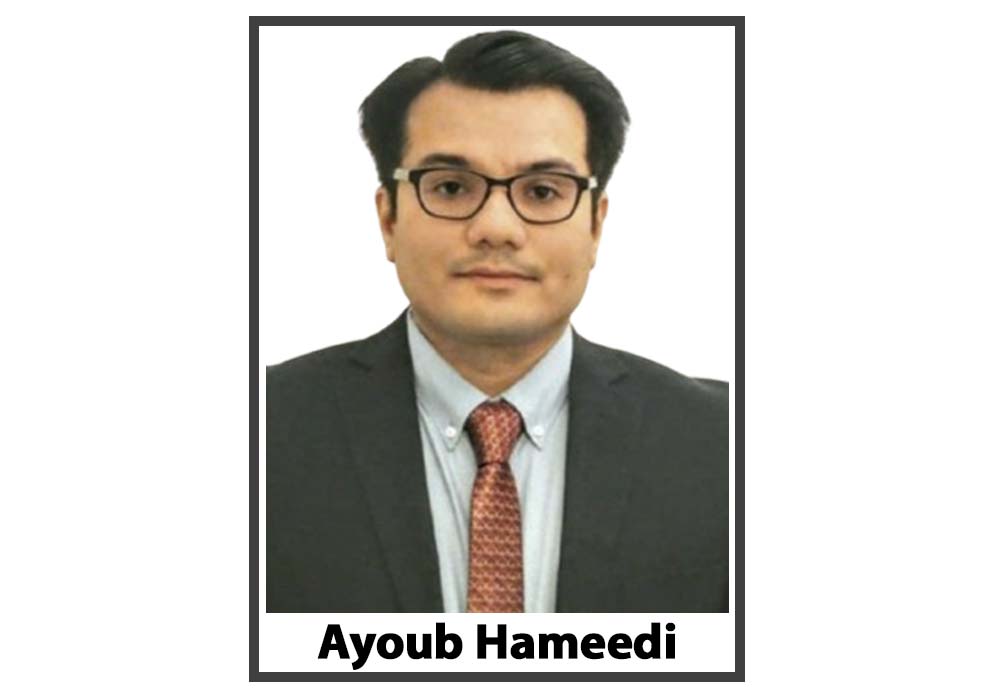
The writer is a Stockholm-based policy analyst and the Founder / Operations Manager of Project Green Earth (www.projectge.org). He can be reached at aubhameedi@yahoo.com


Similar Posts

  • Administrative Provinces: Winning Public Trust Bef…

    Dr. Abdul Jabbar Sahito Karachi, Pakistan The debate over creating new provinces in Pakistan has existed for decades, yet one crucial question remains unanswered: how can the public be convinced that administrative provinces are intended to improve governance rather than increase the burden on the country? Today, public trust in the state is already fragile. People are frustrated by corruption, bureaucratic inefficiency, and excessive government expenditure. Whenever the idea of creating new provinces is raised, many immediately assume that it will only produce more chief ministers, more governors, more provincial assemblies, more secretaries, chief secretaries, inspectors general (IGs), deputy inspectors general (DIGs), assistant commissioners, deputy commissioners, and an even larger bureaucracy. The public perception is straightforward: if corruption and inefficiency already exist with four provinces, what will happen if Pakistan has thirty-two or even thirty-six provinces? This concern must be addressed before any constitutional or administrative reform is proposed. The government should first present a clear governance model explaining exactly how these new provinces would function. People deserve to know whether these provinces will have provincial assemblies or whether they will operate through a compact administrative structure. Will each province be headed by a governor directly elected by the people? Will representation be limited according to population? These questions must be answered before asking the public for support. The objective of creating administrative provinces should never be to expand the bureaucracy. On the contrary, the government should explain that the existing administrative system can simply be reorganized. Unnecessary bureaucratic positions can be reduced, provincial cabinets can remain small, and major ministries can continue to operate under the federal government to avoid duplication. There should be only one chief executive for each province—either a governor or a chief minister, not both. Representation should remain limited and population-based instead of creating large provincial assemblies. The government must reassure the public that administrative reform will not increase financial burdens. Existing administrative and police structures can be reorganized instead of creating entirely new departments. A lean administrative structure is far more likely to gain public confidence than one that appears expensive and oversized. The purpose of administrative provinces is to bring governance closer to the people. Smaller administrative units can improve healthcare through new hospitals, strengthen education by establishing more schools and universities, expand road networks, and accelerate local infrastructure development. They can also encourage the emergence of new leadership, empower citizens to demand their rights, and make governments more responsive because they will be closer and more accountable to the people. Greater accountability should also become a central feature of this model. Institutions responsible for oversight, including NAB and other accountability bodies, would be able to monitor governance more effectively within smaller administrative units. Better administration can also attract greater investment, encourage industries and factories to expand, bring more businesses and brands into different regions, and create employment opportunities for local communities. The government should particularly engage the younger generation and begin this conversation in Sindh. It must make it absolutely clear that this proposal is not about creating provinces on ethnic or linguistic lines. It is not about separating Muhajirs from Sindhis or dividing communities. The proposal is purely administrative and aims to improve governance for every citizen. Instead of creating a province only for Karachi, every administrative division could become a province. Hyderabad, Nawabshah, Larkana, Mirpurkhas, Sukkur, Bahawalpur, and other divisions can each function as separate administrative provinces. If necessary, even the names of these provinces can be changed to prevent unnecessary political controversy. The purpose is not division—it is better administration. Such administrative provinces would encourage the establishment of more schools, universities, hospitals, IT parks, industries, factories, and businesses. They would provide young people with better educational opportunities, create employment, stimulate local economies, improve tax collection, strengthen infrastructure, support clean drinking water projects, facilitate the construction of dams, and promote environmental development through better local planning. However, none of these reforms can succeed unless the public fully understands the proposed governance structure. The government must organize seminars in universities, engage students and young professionals, and use the media to educate citizens about the objectives and practical benefits of administrative provinces. Public awareness must come before implementation. Ultimately, people will support administrative provinces only when they are convinced that the reforms are designed to create a government that is smaller, more efficient, more accountable, and closer to the people—not a larger bureaucracy with greater costs. Winning public trust is therefore the first and most essential step toward any successful administrative reform.  

  • Who Watches the Workplace Watchdogs?

    Pakistan has a peculiar relationship with workplace merit. We talk about it constantly. Government departments are criticised for delaying promotions. Corporations are questioned over favouritism. Universities are urged to reward academic performance. Employers are told to retain talent. Media organisations routinely expose nepotism, extensions, political appointments and institutional injustice. But there is a question that is rarely asked: Do the organisations making these arguments follow the same standards inside their own walls? The question is particularly relevant to Pakistan’s media industry. Newspapers and television channels have considerable influence over how society understands fairness at work. They report on workers denied promotions, bureaucrats given extensions, senior officials superseded and institutions accused of favouritism. But journalism cannot demand accountability from everyone else while exempting itself from scrutiny. That is where the conversation around employee retention, promotions and extensions becomes uncomfortable. The Extension That Blocks an Entire Career Ladder In any hierarchical organisation, one senior position can determine the careers of dozens of people below it. When a person occupying a senior position retires, the organisation has several choices. It can promote someone from within. It can recruit externally. It can restructure the position. Or, where there is a genuine institutional requirement, it can retain the individual for a defined period. The problem begins when an exception becomes a culture. A six-month extension becomes another year. A temporary arrangement becomes a permanent arrangement. A retired employee is brought back. Another extension follows. Meanwhile, people below continue waiting. For them, the issue is not merely that someone has been allowed to continue working. It is that their own careers may have been placed on hold to accommodate someone else’s continued career. That distinction is often ignored in Pakistan. Even Dawn Has Written About This Problem Dawn itself has been among the publications highlighting the damage caused by prolonged temporary arrangements. In a May 2026 editorial titled “Ad hoc culture,” Dawn criticised the practice of keeping people in higher positions through prolonged temporary arrangements, noting that such practices can leave employees without formal promotion, financial benefits or recognition of seniority. It specifically highlighted the frustration of employees whose seniority is bypassed. That position is difficult to disagree with. In fact, it is precisely the position that responsible journalism should take. But it also raises a more uncomfortable question: What happens when the same principles are applied to the media organisations themselves? The Dawn Question Dawn has long presented itself as an institution committed to professional journalism, institutional accountability and workers’ rights. Its pages have repeatedly carried arguments in favour of merit-based promotions and against prolonged ad-hoc arrangements. A January 2026 Dawn editorial page contribution on academic promotions, for example, argued that delayed promotions erode meritocracy, demotivate employees and can drive talented professionals towards private institutions or overseas opportunities. In another recent editorial, Dawn argued that prolonged temporary arrangements can stagnate careers and deprive employees of financial progression and recognition. These are sound principles. But principles become meaningful only when they are applied consistently. And this is where, based on my own knowledge of the organisation, an uncomfortable contradiction deserves examination. Dawn’s senior management structure has itself seen prolonged extensions, while retired managers have, according to my knowledge, been brought back into employment in Lahore and elsewhere. That raises a straightforward question: If retaining retired or extended senior personnel is justified by institutional necessity, why should the same practice be criticised when governments or other organisations do it? And if prolonged extensions are capable of blocking the careers of younger employees in government departments, why would the principle suddenly cease to apply inside a media organisation? This is not an argument against experience. Nor is it an argument that every retired employee should automatically be removed. Experience has value. Institutional memory has value. A highly experienced editor or manager can be extremely difficult to replace. But institutional value cannot become a permanent justification for blocking succession. Fifteen Years Is a Long Time in Any Profession The question becomes even more significant when a senior position remains occupied for an exceptionally long period. From my own knowledge of Dawn, its editor has remained in the position for nearly 15 years through extensions. Again, the question is not whether an individual is competent. The question is whether an institution that advocates professional advancement should also have a mechanism for developing and promoting the next generation of leadership. Fifteen years is enough time for an entire generation of journalists to enter an organisation, build careers, become senior reporters, become editors and eventually expect to take on greater responsibility. If the top positions remain occupied indefinitely, where does that generation go? There is a very real distinction between retaining talent and preventing succession. A healthy institution must know the difference. The Supreme Court Has Now Entered This Conversation This is no longer merely an HR theory. Pakistan’s Supreme Court has recently addressed the issue in remarkably strong terms. In January 2026, the court ruled that government departments could not use administrative inefficiency and procedural delays as an excuse for denying employees timely consideration for promotion. It held that promotion is connected to merit, performance and operational requirements, and said employees should not suffer because a department failed to convene promotion committees or relied excessively on acting arrangements. Four months later, in May 2026, the Supreme Court went further. It held that prolonged ad-hoc, look-after, current-charge, acting-charge and additional-charge arrangements can amount to exploitation. The case involved a Pakistan Railways employee who had performed duties of a higher post for nearly eight years before receiving regular promotion. The court’s reasoning is important because it moves the debate beyond bureaucratic procedure. It is about human beings and their careers. A person who spends years doing higher-level work without receiving corresponding recognition, seniority or financial benefits is not merely dealing with an administrative inconvenience. Their career is being affected. What Happens to the Person Waiting Below? This is the part of the Pakistani workplace debate we often ignore. We discuss the person

  • Mistaken Credit to a Bank Account: Legal Position

    Pakistan’s banking sector is experiencing a fast pace digital transformation, which includes inception of new digital banks as well as digitalization of the banking services, like Raast, Roshan Digital Accounts etc. Nevertheless, this digitalization sometimes causes technology mistakes / errors in the banking systems as well. One such issue, though to a little extent, is the matter of mistakenly credited amounts to the customers’ accounts, due to system glitches. And unluckily, it is rare that the customers, who are beneficiaries of such mistaken credits, ever bother to intimate the banks about it or return the mistakenly credited amounts. The recovery of such amounts is though legally possible, however, since it is civil cause action, falling within the jurisdiction of civil courts, therefore, it becomes cumbersome for the banks to recover such amounts, easily and speedily. Needless to mention that the subject recovery does not fall within the jurisdiction of the Banking Courts and hence, speedy trial / summary procedure trial is not available for this kind of recovery. In addition, it is also difficult in these cases to have the support of the law enforcement agencies, due to some legal framework’s problems. Luckily, a learned Judge of the Lahore High Court Lahore has recently passed a remarkable judgement on the subject matter, which will support the banks, in such matters. The judgement is regarding a case, where a bank’s system mistakenly credited a significant amount to one of its customers, who utilized a major portion of the amount . The bank pursued the customer and he gave a cheque for the amount involved. The cheque was later bounced, due to insufficient funds in the account and the bank then lodged FIR against him under Section 489-F. He was arrested and his bail was refused by the lower Court, against which he approached the High Court. The High Court observed that the amount received by customer was not meant to be utilized by him, but it was to be retained and preserved by him for return back to the bank. The Honourable Court further observed that the customer was supposed and required to inform the sender/bank regarding the error and make arrangements for its return to the owner/bank. Furthermore, the Honourable Court observed that as soon as the customer became in a position to exercise his control over the property, the property stood entrusted to him impliedly, but he instead of returning the same to its owner/bank, withdrew significant amount and embezzled the same, as such offence punishable under Section 406 of PPC was fully attracted against him. This case will become a precedent that if a bank customer receives mistakenly credited amount in his account and utilizes it, then it will be an offence of Breach of Trust, under Section 406 of Pakistan Penal Code. The Judgement is reported as PLJ 2025 Cr. C 797 LHC.

  • Pakistan: Facts, Challenges and a Positive Perspec…

    By Waqar Malik The foundation of independent, responsible, and impartial journalism is balance, honesty, and fairness. Criticism is an essential part of journalism; however, a true understanding of any country’s situation requires a comprehensive view of its historical, political, economic, regional, and security circumstances. A one-sided analysis may highlight certain realities, but it cannot represent the complete picture. The German newspaper DW has raised several concerns and critical observations regarding Pakistan’s political, economic, and security situation. No country should be considered beyond criticism, and accountability is an important element of democracy. However, criticism must also be accompanied by balance, context, and a comparative perspective. If the challenges of a country are discussed, its sacrifices, achievements, and ground realities should also be presented with equal fairness. Pakistan is often portrayed as a country facing political instability, economic difficulties, and security challenges. However, an important question remains: is there any country in today’s world that is completely free from such challenges? Inflation, unemployment, political disagreements, social issues, and governance challenges are not unique to Pakistan. They are global realities affecting nations across the world. Germany, one of the world’s leading economies, is facing economic pressures, including rising energy costs, challenges within its industrial sector, concerns regarding employment, and economic uncertainty. Similarly, countries such as the United Kingdom, France, and the United States continue to experience inflation, political divisions, public protests, and social challenges. Therefore, highlighting the problems of one country while ignoring similar difficulties faced by others cannot be considered a complete and balanced analysis. Every nation must be understood within the context of its own history, geography, political environment, and security needs. Freedom of Expression: Is Pakistan Being Judged by a Different Standard? Pakistan is frequently criticised regarding freedom of expression, democratic values, and human rights. Such discussions are necessary in every democratic society. However, an important question must also be asked: is Pakistan being judged by the same standards applied to other countries? In Pakistan, political leaders, opposition representatives, journalists, lawyers, and members of civil society openly express their views on governments, state institutions, and national affairs. Political debates, speeches, and different opinions are widely discussed through media platforms. On various occasions, statements from detained political figures have also been reported prominently in the media. This raises an important comparative question: do individuals in custody in countries such as the United States, the United Kingdom, France, or Germany receive exactly the same level of media access and opportunity to express their political views? In many democratic countries, detention laws are strictly implemented, and access to media is regulated according to legal procedures. Therefore, discussions about Pakistan’s freedom of expression should also consider international comparisons and broader realities. The right to peaceful protest is a fundamental democratic right, and Pakistan’s Constitution recognises this principle. However, every right comes with responsibilities. Pakistan has witnessed political protests that have continued for weeks and, in some cases, months. On certain occasions, major roads were blocked, public life was disrupted, and damage to public and private property was reported. Despite these challenges, governments have often chosen dialogue, patience, and political engagement instead of excessive use of force. In every democracy around the world, the right to protest exists within the framework of law. No democratic society allows violence, vandalism, threats, or the disruption of public order under the name of political expression. Pakistan should neither seek exceptional treatment nor be judged by different standards. The Role of Pakistan’s Armed Forces and National Defence Some analysts describe Pakistan’s political system as a hybrid system. However, another important perspective also deserves consideration. Pakistan’s armed forces have made significant sacrifices for national defence, security, and the fight against terrorism. Thousands of soldiers and officers have lost their lives while protecting the country’s sovereignty, stability, and security. Pakistan’s geographical position places it in a complex security environment. Located at the crossroads of South Asia, Central Asia, and the Middle East, Pakistan faces unique regional and international challenges. There is also criticism that Pakistan’s armed forces are involved in business and commercial activities. However, this matter can also be viewed from another perspective. Pakistan’s defence requirements are extensive, and investments in various institutions and projects are aimed at supporting defence needs, welfare activities, and reducing unnecessary pressure on national resources. Many countries around the world allow their military institutions to participate in research, technology, industry, development projects, and humanitarian activities. The United States and other developed nations have similar examples where defence-related organisations contribute to national development and innovation. Therefore, such policies should be assessed on the basis of national interest, transparency, effectiveness, and contribution to society rather than through criticism alone. For more than four decades, Pakistan has paid a heavy price due to regional conflicts and global security challenges. The consequences of the war in Afghanistan, participation in the international fight against terrorism, hosting millions of refugees, and the loss of thousands of precious lives have deeply affected the country. Pakistan has made enormous sacrifices in combating terrorism and has achieved significant successes in restoring security and stability. Despite these challenges, Pakistan continues to contribute towards regional peace and international cooperation. The Kashmir dispute remains one of the longest unresolved conflicts in South Asia. Pakistan supports the right of the Kashmiri people to self-determination in accordance with relevant United Nations resolutions and continues to advocate a peaceful and diplomatic solution. Pakistan’s stated position has consistently been based on dialogue, diplomacy, and peaceful engagement. Sustainable peace in South Asia can only be achieved through mutual respect, understanding, and peaceful resolution of disputes. The Situation in Azad Kashmir and the Government’s Approach The situation in Azad Kashmir demonstrates the importance of dialogue and political engagement during times of tension. A responsible state must ensure law and order, protect the lives and property of citizens, and seek constitutional and democratic solutions to public concerns. The right to protest is a democratic right, but it cannot justify violence, firing, destruction of property, threats against state institutions, or taking the law into

  • Fiscal turnaround—or fiscal illusion?

    The fiscal deficit fell to just 2.6 of GDP—the lowest in 22 years—while the primary surplus reached a record 2.9%, the highest since at least FY 2000-01— tweet by Khurram Schehzad, Adviser to Federal Finance Minister The latest official numbers tell an impressive story. Pakistan closed fiscal year 2025–26 with a consolidated budget deficit of Rs. 3.313 trillion, equal to 2.6% of gross domestic product (GDP), and a primary surplus of 2.9%. They accompany a familiar boast: the Federal Board of Revenue (FBR) achieved a “record” collection of Rs. 13.010 trillion. In the post cited above, Adviser to the Federal Finance Minister, Khurram Schehzad, described the outcome as the “strongest fiscal performance in 22 years”. He highlighted three consecutive primary surpluses, the “lowest fiscal deficit in 22 years”, and the highest primary surplus in at least 26 years, debt growth at a 20-year low, and declining debt-to-GDP and interest burdens. He concluded that Pakistan was moving decisively from recurring fiscal stress towards discipline, stability and sustainable growth. The improvement is real. The conclusion is premature. The Finance Division’s newly released Fiscal Operations for July–June 2025–26 show consolidated revenue of Rs. 19.774 trillion and expenditure of Rs. 23.087 trillion. The resulting deficit is unquestionably lower than the enormous gaps of recent years. Fiscal consolidation has occurred and should be acknowledged. The claim of a 22-year low, however, does not survive the adviser’s own infographic. The chart accompanying the post places the deficit at 1.7% in 2003–04 and 2.5% in 2004–05—both below 2.6%. The contemporaneous Pakistan Economic Survey 2006–07, using the series then published, recorded 2.4% for 2003–04. Revisions may explain the discrepancy between 1.7% and 2.4%, but neither figure supports an unqualified record claim. The latest statement is also provisional. The defensible description is that 2.6% is among the lowest deficits in about two decades. More importantly, 2.6% is the consolidated deficit. The federation did not run a deficit of Rs. 3.313 trillion. Its net revenue receipts, after transfers to provinces, were Rs. 10.520 trillion, against expenditure of Rs. 15.283 trillion. The federal deficit was Rs. 4.763 trillion, or about 3.8% of GDP. It fell to the consolidated figure because the provinces produced a combined surplus of Rs. 1.450 trillion. Punjab alone contributed Rs. 914 billion. Provincial surpluses assist macroeconomic management but do not extinguish the federation’s borrowing requirement. They are intergovernmental cash offsets while the federal government remains deeply indebted. The earlier article, Bankruptcy of ideas—X: Debt, Taxes & Democracy, argues that shifting cash between tiers cannot repair a debt-driven state. An even more striking adjustment appears under “statistical discrepancy”. The detailed expenditure table reports total consolidated expenditure of Rs. 23.940 trillion. A negative statistical discrepancy of Rs. 853 billion lowers expenditure in the summary to Rs. 23.087 trillion. Without this adjustment, the gap between revenue and expenditure would be about Rs. 4.167 trillion, or approximately 3.3% of GDP. Statistical discrepancies are not unusual in provisional accounts. An adjustment equal to more than one-quarter of the celebrated deficit nevertheless demands explanation before a historic record is proclaimed. Transparency requires reconciliation of this amount when the accounts are finalised. The composition of expenditure further weakens the triumphal narrative. Mark-up payments reached Rs. 6.948 trillion—5.5% of GDP. Federal Public Sector Development Programme expenditure, excluding development grants to provinces, was only Rs. 727 billion. Interest was therefore about 9.6 times the federal development programme. A deficit can fall because investment and public services are compressed while inherited interest obligations continue dominating expenditure. That is fiscal compression, not fiscal transformation. The “record” FBR’s collection claim presents a similar illusion. With inflation and nominal GDP growth, the largest rupee collection will normally recur. The relevant questions are whether revenue rose relative to GDP, the base broadened and additional taxation reduced borrowing. FBR’s Rs. 13.010 trillion was only 10.3% of GDP. It was about Rs. 1.12 trillion below the original target of Rs. 14.13 trillion and barely exceeded the subsequently revised figure of approximately Rs. 12.983 trillion. The goalpost was moved, and arrival at the moved goalpost was described as a record. Analysis of Pakistan’s withholding-based system [Tax Proposals for Budget 2027—III: Withholdingisation: Weapon of destruction, Minute Mirror, May 25, 2026 and FBR’s Performance FY 2024-25 (Part II): Income Tax or Expropriatory Taxation, Minute Mirror, April 14, 2026] has repeatedly shown why aggregate collection cannot be equated with administrative performance. During FY 2024–25, withholding and advance collection accounted for about 96% of income tax, leaving only a small fraction attributable to returns and enforcement. Employers, banks, utilities, importers and businesses collect much of FBR’s revenue on behalf of the state. Extraction at source is not evidence that concealed income has been discovered or that privileged sectors have entered the tax net. The latest statement also exposes reliance on non-tax revenue. Federal non-tax receipts reached Rs. 5.178 trillion. These included Rs. 2.428 trillion transferred as State Bank of Pakistan surplus and Rs.1.567 trillion collected as petroleum levy. Together, the two sources provided almost Rs. 4 trillion. As explained in Bankruptcy of ideas—VII: The Petroleum (Levy) State, the petrolem levy operates as inflationary and regressive extraction. It raises transport, agricultural, industrial and household costs. It also remains outside the divisible pool, allowing the federation to retain revenue that would otherwise be shared under the National Finance Commission framework. A large central-bank transfer and an ever-rising fuel levy cannot substitute for fair, broad-based taxation. Debt servicing supplies the decisive test. Cash mark-up payments of Rs. 6.948 trillion absorbed 53.4% of FBR collection and about 66% of federal net revenue receipts. Domestic interest alone was Rs. 6.030 trillion; foreign interest was Rs. 917 billion. These figures do not include refinancing of maturing domestic principal. The financing table reports gross external financing of Rs. 3.805 trillion and external debt repayments of Rs. 2.627 trillion. Programme loans alone amounted to Rs. 2.054 trillion. The federal deficit required net financing of Rs. 4.763 trillion: Rs. 1.178 trillion externally and Rs. 3.585 trillion domestically. State Bank financing reached Rs. 3.202 trillion. These amounts

  • A New Strategic Divide: The India-Iran Axis Meets …

    The signing of the Pakistan–Saudi Arabia–Türkiye defence agreement in Makkah on August 7 marks a significant moment in the changing security architecture of the Middle East and South Asia. Its declaration that an armed attack against one member would be treated as an attack against all three has immediately raised questions about the future balance of power. Is the region moving towards two competing strategic formations — an emerging India-Iran axis on one side and the Pakistan-Saudi-Türkiye triangle on the other? The answer is not yet definitive, but the direction of regional politics is becoming increasingly visible. The most surprising element of this equation is Saudi Arabia and Türkiye. Relations between Riyadh and Ankara have not always been comfortable. The rivalry and mistrust of the past, particularly during the period when Saudi and Turkish regional interests sharply diverged, made the two capitals appear more like competitors than strategic partners. Yet geopolitics has a way of bringing former rivals together when their security calculations begin to converge. For Crown Prince Mohammed bin Salman, security has become inseparable from economic transformation. Saudi Arabia’s ambitious Vision 2030 projects require uninterrupted energy exports, stable maritime routes and a predictable regional environment. The continuing threat to Red Sea shipping and the vulnerability of energy infrastructure have demonstrated that geographical distance is no longer sufficient protection. Türkiye offers Riyadh a valuable strategic instrument. Ankara possesses NATO experience, an expanding defence industry and significant diplomatic access across the region. President Recep Tayyip Erdoğan can communicate with actors that may remain difficult for Riyadh or Washington to approach directly. Türkiye can therefore serve not merely as a military partner but potentially as a diplomatic bridge. This is where the role of Turkish Foreign Minister Hakan Fidan becomes particularly important. His experience in intelligence and diplomacy could provide Ankara with the capacity to pursue difficult negotiations involving regional conflicts, including the unresolved Saudi-Houthi security dilemma. For Riyadh, reducing the threat to the Red Sea and ensuring uninterrupted oil and trade routes is not simply a military objective; it is an economic necessity. Türkiye, meanwhile, also has its own economic calculations. Ankara needs investment, economic stability and stronger international partnerships. A closer relationship with Saudi Arabia, Pakistan, the United States and Western financial institutions could provide economic and strategic dividends. Thus, the partnership is not based on sentiment but on converging interests. Pakistan’s position is even more complicated. Islamabad has historically enjoyed close defence and political relations with Saudi Arabia while maintaining strong ties with Türkiye. Its military credibility and longstanding relationship with Riyadh make it a natural participant in such an arrangement. Pakistan can potentially emerge as the facilitator connecting the Gulf with South Asian security calculations. But there is a price. Pakistan’s traditional diplomatic strength has partly rested on its ability to maintain communication with opposing camps. Formal participation in a collective-defence arrangement may make Islamabad appear less like a neutral mediator and more like a contestant in an emerging regional confrontation. The question therefore arises: can Pakistan protect its strategic relationship with Saudi Arabia and Türkiye without damaging its relations with Iran? The Iranian response will be crucial. Tehran is unlikely to accept a new security architecture surrounding it without attempting to construct diplomatic counterweights. Here, India could become an important part of the equation. Iran and India possess longstanding economic and strategic interests, particularly around connectivity, energy and the Chabahar corridor. Their cooperation does not automatically constitute a military alliance, but strategic circumstances could push their interests closer. Iran also possesses diplomatic instruments of its own. Oman and Qatar remain particularly important because of their ability to communicate with multiple competing powers. Rather than immediately creating a formal counter-alliance, Tehran could seek to use diplomacy, maritime negotiations and regional mediation to prevent isolation. This is why the emerging equation should not be reduced to a simple military confrontation. It is a contest of diplomacy, technology, economics, energy security and strategic geography. The United States also remains an unavoidable factor. Washington’s relationships with Saudi Arabia, Türkiye, Pakistan and India mean that any emerging regional architecture will inevitably intersect with American interests. Yet it would be premature to describe the Makkah agreement as an anti-American bloc. Saudi Arabia remains deeply connected to the United States, Türkiye remains a NATO member, and Pakistan continues to maintain important relations with Washington. The real transformation may therefore be something more subtle: regional powers are increasingly seeking strategic autonomy instead of relying exclusively on one external guarantor. For Pakistan, this is a moment of both opportunity and danger. Islamabad can gain diplomatic weight from its position within the Pakistan-Saudi-Türkiye triangle, but it must avoid becoming trapped in a zero-sum regional rivalry. Its relationship with Iran cannot simply be sacrificed, nor can its longstanding partnership with Saudi Arabia be ignored. The emerging India-Iran axis and Pakistan-Saudi-Türkiye triangle may never become formal opposing blocs. But if regional tensions continue to deepen, the strategic calculations of these countries could increasingly move in opposite directions. The region is entering a new chess game — one in which missiles and drones matter, but diplomacy, energy routes, economic leverage and political alliances may matter even more. The challenge for Pakistan is therefore not merely to choose a side. It is to ensure that, while standing with its strategic partners, it retains enough diplomatic space to speak to everyone. Because in the new regional order, the strongest player may not be the one with the largest alliance — but the one capable of preventing the chessboard from becoming a battlefield.

Leave a Reply

Your email address will not be published. Required fields are marked *