
navigating global consequences

Navigating the Global Consequences of US-China Tec…

For three decades, the prevailing narrative of the global economy was one of seamless integration. From the design studios of California to the high-tech assembly lines of Shenzhen, the world operated on the assumption that technology was a bridge, not a barrier. However, that era of “borderless innovation” is rapidly giving way to a more fragmented reality. As the United States and China engage in an intensifying rivalry over the foundational technologies of the 21st century artificial intelligence (AI), semiconductors, and 5G a “Silicon Curtain” is descending, reshaping global supply chains and forcing a difficult reckoning for developing nations.

The shift marks a transition from a world defined by economic efficiency to one governed by national security. In Washington, the consensus has hardened around the idea that “de-risking” from China is essential to protect intellectual
property and maintain a military edge. In Beijing, the drive for “technological
self-reliance” has become a central pillar of national survival. What began as a
series of trade disputes in 2018 has evolved into a comprehensive decoupling
that threatens to bifurcate the global digital ecosystem.

The Semiconductor Siege and the AI Arms Race

At the heart of this decoupling is the semiconductor the “oil” of the digital age. Advanced microchips are the brains behind everything from smartphones to hypersonic missiles. In 2022, the U.S. Department of Commerce introduced sweeping export controls designed to prevent China from acquiring the high end chips necessary for training generative AI models. The “CHIPS and Science Act” further signaled Washington’s intent to reshore manufacturing, offering billions in subsidies to bring fabrication back to American soil.

China has responded with its own set of defensive and offensive measures. Beijing has invested hundreds of billions of dollars into its domestic chip industry via the “Big Fund” and has imposed export restrictions on critical minerals like gallium and germanium materials essential for high-tech manufacturing.

This tit-for-tat dynamic has profound implications for AI development. While the U.S. currently leads in algorithmic innovation and hardware design, China possesses a vast reservoir of data and a highly integrated industrial base. As the two powers diverge, the world faces the prospect of two distinct AI “stacks” each with its own standards, ethical frameworks, and hardware requirements. For global corporations, the cost of maintaining two separate supply chains is staggering, with some estimates suggesting a permanent 1 to 5 percent drag on global GDP.

The 5G Dilemma: Infrastructure as an Ideology

The rivalry is equally visible in the rollout of 5G telecommunications. As the backbone of the “Internet of Things,” 5G infrastructure is more than just a faster cellular network; it is the nervous system of modern cities. The U.S. campaign to exclude Chinese providers like Huawei and ZTE from Western networks, citing security vulnerabilities, has effectively split the world into two camps.

Many European and “Five Eyes” nations have aligned with Washington, citing the risks of state-sponsored espionage. Conversely, many nations across Southeast Asia, Africa, and the Middle East have continued to embrace Chinese infrastructure, which is often more affordable and comes with flexible financing. This infrastructure divide creates a “path dependency”: once a country adopts a specific 5G standard, the subsequent software, security protocols, and hardware upgrades are likely to follow the same technical lineage.

The “Digital Non-Aligned Movement”

Perhaps the most complex fallout of this decoupling is felt in the Global South. Developing nations, many of which are in the midst of their own digital transformations, now find themselves in an uncomfortable position. They are being pressured to choose between the two technological poles, a choice that carries significant economic and diplomatic risks.

For a developing economy in Africa or Latin America, U.S. technology offers high security and integration with Western financial markets. However, Chinese technology often provides a lower barrier to entry and a focus on state-led development goals. The danger, according to many economists, is that this “tech-polarization” will lead to a lack of interoperability. If a startup in Nairobi develops an app on a Chinese cloud platform, will it function seamlessly for a user in a market dominated by American standards?

Furthermore, the “friend-shoring” of supply chains where production is moved to politically allied nations is creating new winners and losers. Countries like Vietnam, India, and Mexico have seen an influx of investment as manufacturers seek to diversify away from China. However, other developing nations that lack the infrastructure or political alignment to join these new “trusted” supply chains risk being further marginalized.

A World of Redundancy and Risk

Critics of decoupling argue that the process is not only expensive but potentially futile. The global tech industry is so deeply intertwined that total separation may be impossible without catastrophic economic damage. Apple, for instance, still relies heavily on Chinese assembly, while Chinese tech firms
still utilize American software architectures.

Moreover, the environmental cost of decoupling is often overlooked. As both superpowers race to build redundant factories and secure mineral supplies, the efficiency gains of globalized production are lost, leading to increased carbon footprints and resource competition. The “Green Transition” itself is at risk, as solar panels and electric vehicle batteries are caught in the crosshairs of trade restrictions.

The US-China tech rivalry is no longer a peripheral trade dispute; it is the defining feature of modern geopolitics. The shift from a globalized market to a fractured one represents a fundamental change in how the world innovates and communicates. While “strategic autonomy” may offer a sense of security for the superpowers, it introduces a new layer of volatility for the rest of the world.

As we move forward, the challenge for the international community will be to establish a “digital floor” a set of minimum standards and protocols that allow the world to remain connected even as political systems diverge. Without such a framework, the “Fractured Circuit” may not only slow the pace of global innovation but also deepen the divide between the connected and the disconnected, leaving the most vulnerable nations to navigate a world of incompatible systems and dwindling choices. The Silicon Curtain is being drawn; the question is whether anyone can still see across the line.
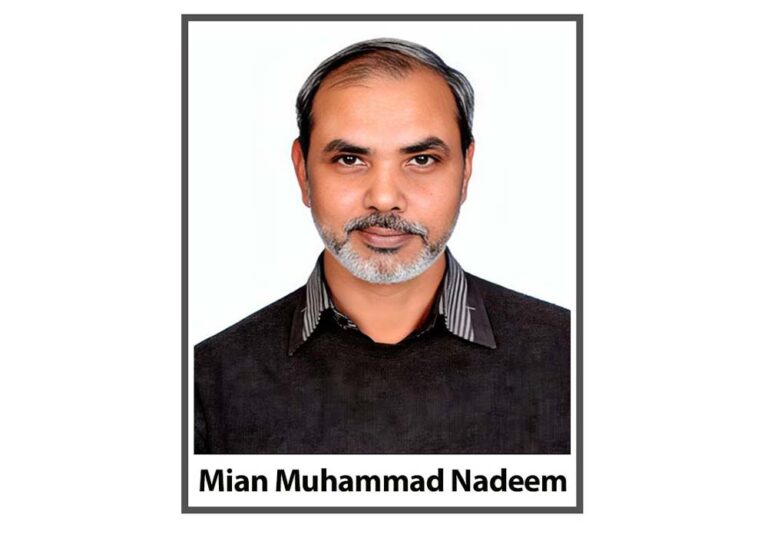
*Lawyer, is a seasoned legal expert in constitutional and corporate law, advising public and private sectors and contributing to legal and policy thought.

Similar Posts

  • Stoning in the City of Letters: The Tragic Death o…

    ​Where the nine-hundred-year legacy of the University of Cambridge has long claimed to stand guard over truth, intellect, and reason, a profoundly agonizing incident has laid bare the deep intellectual, political, and social fault lines of the modern West. Professor Jason Arday—who made history as the youngest Black academic appointed to a professorship at Cambridge—was found dead at his home in South West London on August 14, 2026. To dismiss his sudden passing as a mere bodily collapse or a quiet, solitary cardiac arrest would be a profound act of self-deception. This tragedy is, in truth, the direct consequence of a systemic crisis eroding Western academia—a space where the fragile boundary separating legitimate academic rigor from ruthless political and racial factionalism has dissolved, and where institutional accountability has steadily devolved into a spectacle of public humiliation. ​Jason Arday’s ascent was a rare testament to human endurance and unyielding resolve. Raised in a low-income neighborhood in South London, he was diagnosed in early childhood with a severe form of autism. He remained non-verbal until the age of eleven and was unable to read or write until he was eighteen. Yet, defying both societal expectations and medical prognoses, he mastered the written and spoken word, pursued higher education, and navigated his way through the faculties of Roehampton, Durham, and Liverpool, ultimately securing a chair in sociology at Cambridge in March 2023. ​However, Arday’s arrival at the pinnacle of British academia coincided with an intense ideological war engulfing universities and the press. Over the preceding decade, Diversity, Equity, and Inclusion (DEI) initiatives had been elevated to core institutional imperatives across British higher education. Universities leaned into these metrics to rebrand themselves, and scholars of Arday’s caliber frequently became the public face of this transformation. ​This is precisely where the deeper ideological friction of contemporary British society erupted into what is widely characterized as a culture war. On one side stood a progressive consensus viewing DEI policies as a overdue corrective to historical inequities; on the other stood a relentless right-wing press and traditionalist academic factions that framed such appointments as a dilution of meritocracy and an embrace of ideological tokenism. ​When questions were subsequently raised regarding technical details within Arday’s PhD thesis and past curriculum vitae, the matter did not remain confined to quiet internal review. Right-leaning media outlets swiftly weaponized these allegations to mount a broader assault on Cambridge’s DEI framework. The tragedy of this partisan crossfire was that Arday’s humanity was entirely erased; he was reduced from a living, breathing scholar into a battlefield for competing political narratives. ​Academic integrity is undeniably the bedrock of any serious higher education system. When allegations of plagiarism are leveled against a scholar, a university is legally and ethically bound to conduct a thorough, impartial, and confidential inquiry. Yet, when such proceedings leak beyond institutional walls into the arena of tabloid journalism and political point-scoring, the genuine purpose of oversight is lost. ​Liverpool John Moores University had previously conducted a comprehensive investigation into the allegations against Arday, fully exonerating him and reaffirming the validity of his doctorate. However, the toxicity of commercialized media and political polarization ran too deep for that clearance to settle the matter. When Cambridge University, bowing to intense media pressure, announced a secondary independent review, it revealed just how vulnerable modern elite institutions have become to the demands of public relations. ​The most damning dimension of this ordeal was the existential and psychological toll exacted upon a scholar watching a lifetime of discipline destabilized in an instant. In his resignation statement on August 5, Arday explicitly clarified that stepping down was not an admission of guilt, but the final recourse of a human being pushed beyond the limits of endurance by a relentless media trial. Just nine days later, on August 14, 2026, he was dead. Neuroscience and clinical psychology have long documented how sustained public humiliation, character assassination, and the erasure of one’s professional identity can inflict severe somatic stress, culminating in fatal systemic collapse. ​This event casts a severe shadow over liberal democracies that pride themselves on individual dignity and the presumption of innocence. In a hyper-digitized media ecosystem, accusations function as instant convictions in the court of public opinion, long before an individual has a meaningful opportunity to offer a defense. Academia, which ought to serve as a sanctuary for measured deliberation, has proven just as susceptible to sensationalism as the rest of society. Arday’s death leaves scholars worldwide asking whether the academic vocation has shifted from the quiet pursuit of truth to a harrowing exercise in surviving public vilification. ​Jason Arday’s death compels an overdue reckoning: institutional accountability must be structured so that it neither shields genuine intellectual dishonesty nor surrenders an individual scholar to the crossfire of racial and culture wars. If elite universities fail to insulate their investigative processes from media trials and political agendas, the most sensitive and brilliant minds will inevitably retreat from the academic life altogether. Arday’s silence now stands as a profound question mark hanging over the international scholarly community. ​The ultimate lesson of this tragedy is that the dignity of those who dedicate their lives to learning cannot be sacrificed on the altar of political or journalistic expediency. If the institutions entrusted with seeking truth cannot protect their own, society loses its moral compass. Standing before the red-brick facade of Cambridge, one is left asking how a scholar of such promise could crumble on its doorstep. This was not merely the loss of a single life; it was an institutional failure that demands the grief and critical reflection of the global intellectual community. ​The extraordinary resilience with which Arday conquered his early disabilities demonstrated the scale of his ambition and character. Yet, faced with the cold machinery of institutional cowardice and media hostility, that strength was ultimately overwhelmed. This moment offers a final, urgent opportunity for self-examination within higher education. If we remain silent, the fires of ideological intolerance will continue to consume the very minds meant to illuminate

  • Between Threats and Truces: The Narrative War Behi…

    By Eng Saqlain Abid Last weekend, U.S. President Donald Trump declared on Truth Social that the United States and Israel were fully prepared to strike Iran’s critical power infrastructure, warning that military pressure would continue until Tehran surrendered completely. Around the same time, Iranian Foreign Minister Abbas Araghchi reportedly conveyed messages through Pakistan’s Chief of Army Staff, Field Marshal Asim Munir, and Turkish Foreign Minister Hakan Fidan, emphasizing that any major attack on Iran would be met with a determined response against GCC partners and strategic regional assets if no diplomatic option remained. Yet within hours, the rhetoric shifted dramatically. Trump announced that although American and Israeli forces were fully prepared, he had decided to postpone military action following appeals from Gulf states and international mediators, citing “humanity” and the possibility of reaching an agreement. Reports suggested that negotiations revolved around two major conditions: keeping the Strait of Hormuz open to global shipping and ensuring that Iran would not pursue nuclear weapons. At first glance, the story appears simple—a crisis narrowly avoided through diplomacy. In reality, however, it represents a sophisticated narrative war in which every actor seeks to project strength while avoiding the devastating costs of a prolonged regional conflict. For Washington, the challenge is not merely military capability but strategic credibility. The United States undoubtedly possesses overwhelming conventional military superiority over Iran. However, superiority does not automatically translate into political success. Internal assessments by CENTCOM and the Pentagon have reportedly warned that any large-scale conflict could extend well beyond expectations, potentially lasting until 2027. Such a scenario would coincide with America’s domestic political calendar, including congressional elections, while risking declining public support for another costly Middle Eastern war. The lessons of Afghanistan continue to shape American strategic thinking. Airpower alone may inflict significant damage, but permanently degrading Iran’s military capabilities without ground operations remains an uncertain objective. Any decision requiring “boots on the ground” would carry enormous political and economic consequences. Consequently, Washington’s repeated threats increasingly resemble a strategy of coercive diplomacy rather than an immediate roadmap to invasion. A superpower is expected to demonstrate resolve, but maintaining global leadership also requires restraint when the costs outweigh the benefits. Iran, on the other hand, continues to rely on its long-established doctrine of strategic resistance. Despite mounting military pressure and repeated warnings, Tehran has sought to demonstrate that it retains the ability to impose costs across multiple theatres. The Strait of Hormuz remains one of the world’s most strategically significant maritime chokepoints, and any disruption immediately reverberates through global energy markets. Meanwhile, continued instability around the Bab el-Mandeb Strait, largely influenced by Iran-aligned Houthi forces, further complicates regional trade and shipping.   These maritime flashpoints have created understandable concerns among Gulf states. Countries investing billions of dollars in economic diversification projects—including Saudi Arabia’s Vision 2030 and NEOM—depend heavily upon uninterrupted trade routes and stable energy markets. For Gulf capitals, preventing a regional escalation has become not merely a security priority but an economic necessity. Israel’s strategic calculations are equally complex. Since the beginning of the confrontation, Israeli policymakers have consistently sought firm American backing while remaining conscious of the domestic burden imposed by prolonged conflict. Extended military campaigns strain national resources, disrupt civilian life, and test public resilience. Consequently, Israel also has incentives to support diplomatic arrangements if they preserve security objectives without expanding into an open-ended regional war. Ultimately, today’s confrontation extends beyond missiles and military deployments. It is a contest of narratives, deterrence, and political signalling. Every side seeks to appear uncompromising while simultaneously avoiding a conflict whose consequences none can fully control. The prospect of a prolonged regional war is becoming increasingly difficult for any major stakeholder to sustain. Iran continues to deepen its strategic relationships with China and Russia, while the United States prefers negotiated constraints over another indefinite military campaign. Pakistan and Turkey have emerged as important channels of communication, but expecting either country to shoulder the diplomatic burden of resolving one of the world’s most dangerous geopolitical crises would be unrealistic. History repeatedly demonstrates that wars are easier to begin than to conclude. In the current Middle Eastern crisis, the loudest battlefield may not be defined by bombs or missiles but by competing narratives, diplomatic manoeuvres, and carefully calculated restraint. Whether this fragile pause evolves into a lasting settlement or merely delays another round of confrontation will determine not only the future of Iran but also the stability of the wider region and the global order.

  • The Most Important AI Revolution Isn’t Happening…

    By Ali Dar Every few weeks, Artificial Intelligence seems to produce another headline. A new model. A larger investment. A faster processor. A company valued in the hundreds of billions. The conversation has become almost entirely centered on the race to build more powerful machines.   I follow these developments with genuine interest. But I often find myself wondering whether we are all looking in the wrong direction. History has a curious habit of reminding us that the inventors of transformative technologies are not always the ones who transform society. James Watt improved the steam engine. It was factories that transformed economies. The internet was built by engineers. It was entrepreneurs, educators, governments and ordinary citizens who changed the way we lived because of it. Technology begins the story. Institutions decide how the story ends. That distinction has occupied my thoughts for some time. Perhaps because I spend more time thinking about government than algorithms. Perhaps because the questions that matter most are no longer technological. They are institutional. People often speak about bureaucracy as though it were an outdated mistake waiting to be dismantled. I see it differently. Modern government was designed for the world in which it existed. Information travelled slowly. Documents moved from one office to another because there was no practical alternative. Decisions climbed through layers of administration because knowledge itself moved through those same layers. Those systems were not inefficient by accident. They were remarkably effective for their time. They created order, consistency and accountability. They allowed governments to function at a scale that had previously been impossible. The challenge today is not that bureaucracy failed. The challenge is that the world around it has changed more quickly than bureaucracy itself. For the first time in history, governments are not struggling because they lack information. They are struggling because they have too much of it. A district administration receives more information in a single week than previous generations of public servants might have encountered in an entire year. Hospitals generate enormous volumes of clinical data. Schools continuously measure educational outcomes. Agriculture increasingly depends upon satellite imagery, weather intelligence and real-time market information. The constraint is no longer access. It is interpretation. That, I believe, changes everything. Artificial Intelligence is often described as a technological revolution. I am beginning to think it is something else. It is an institutional revolution. It’s greatest contribution may not be writing reports or generating images. It’s greatest contribution may be helping institutions distinguish what is important from what is merely available. That is a subtle difference. It is also an enormously important one. Governments have spent the past two decades becoming digital. That was necessary. Files became electronic. Services moved online. Citizens could access information without standing in long queues. These were meaningful achievements. Yet digitisation should never be confused with transformation. Replacing paper with screens does not automatically produce better judgement. A digital government stores information more efficiently. An intelligent government learns from it. There is a profound difference between the two. One preserves knowledge. The other improves decisions. This is why I believe the next chapter of public administration will not be defined by technology alone. It will be defined by institutional learning. Can governments recognise emerging problems before they become crises? Can public services adapt more quickly to changing circumstances? Can policymakers spend less time searching for information and more time exercising judgement? These are leadership questions. Technology merely provides new tools with which to answer them. Around the world, different countries are beginning to explore these possibilities in different ways. Estonia has shown what becomes possible when digital infrastructure is treated as a public utility rather than a technical project. Singapore continues to demonstrate that institutional discipline remains one of the greatest competitive advantages any nation can possess. Neither model should be copied uncritically. Every society carries its own history, institutions and public expectations. Punjab will do the same. Our objective should never be to imitate another government’s technology. It should be to strengthen our own capacity to govern. That is the thinking behind The Office of AI. Contrary to popular perception, its purpose is not simply to introduce Artificial Intelligence into government. Technology, on its own, has never transformed institutions. People do. Leadership does. Culture does. The real ambition is more demanding than digital transformation. It is to cultivate public institutions that learn continuously, coordinate more effectively and ultimately deliver better outcomes for citizens. That is a much harder challenge. It is also a far more worthwhile one. I suspect history will remember this period rather differently from the way we describe it today. It may not be remembered as the moment machines became intelligent. It may be remembered as the moment governments were compelled to become more thoughtful. Perhaps that is the real revolution. Not smarter software but smarter institutions. And if that proves to be true, the defining governments of this century will not be those that purchased the most advanced technology. They will be the ones that developed the wisdom to use it well. About the Author Ali Dar is a software engineer by education, business leader and Advisor to the Chief Minister of Punjab on Artificial Intelligence and Special Initiatives. He writes on the future of governance, Artificial Intelligence, digital transformation and public policy.

  • Shocks and Aftershocks

    In the autumn of 2005, the earth rose in wrath against the ancient hills of Kashmir. On the eighth day of October, a violent convulsion of 7.6 magnitude tore through the region, its epicentre lying a mere 19 kms northeast of Muzaffarabad. The tremor was felt far beyond Pakistan’s borders, reverberating through Afghanistan and Tajikistan, across the valleys of India, and even into the remote expanses of Xinjiang. It proved one of the deadliest natural disasters of that decade, claiming thousands of lives and reducing entire villages to rubble. For months the ground refused to rest; careful records later counted no fewer than 497 aftershocks between October and the following March. During such uncertainty a sobering lesson emerged; buildings erected with care and strength stood firm against the repeated tremors, while those raised hastily or without conscience crumbled into dust and despair. A parallel drama of sudden upheaval and lingering aftershocks has unfolded more recently, though this time the forces at work have been those of human conflict rather than nature’s blind fury. Late in February 2026, long-simmering tensions between Iran and USA erupted into open warfare, with Israel joining the fray in decisive fashion. Large-scale aerial and missile assaults struck hundreds of targets across Iran, homing in upon military bases, nuclear facilities, and centres of leadership. The loss of Iran’s Supreme Leader, Ayatollah Ali Khamenei, in the opening strikes sent shockwaves through the region and beyond. Tehran responded with barrages of missiles and swarms of drones that lit the night skies and struck at targets across several countries. For several weeks in March and April the fighting intensified, leaving thousands dead—most of them in Iran and Lebanon—and threatening to engulf wider circles of involvement involving Hezbollah and other actors. Shipping in the Strait of Hormuz, that vital artery of global energy, faced grave peril, and the world watched anxiously as oil supplies trembled on the edge of disruption. A measure of relief arrived around the middle of June when a MOU was concluded between the United States and Iran. The accord promised a halt to major combat operations, the reopening of the strait to peaceful navigation, and the beginning of serious negotiations concerning Iran’s nuclear program. For a brief season hope flickered that reason might yet prevail. Yet by the seventh and eighth of July the ceasefire had fractured. Iranian forces struck at merchant vessels in the Hormuz passage; the United States answered with fresh waves of airstrikes and the reimposition of a naval blockade. Iran, in turn, launched retaliatory attacks upon American and coalition positions in Bahrain, Kuwait, Jordan, and elsewhere. As July draws toward its close, the pattern of nocturnal American strikes and Iranian counterblows continues, holding the Gulf in a state of restless tension. Though the principal theatre of war lies distant from our frontiers, its aftershocks have travelled with merciless swiftness to the streets and bazaars of Pakistan. The initial convulsion in global oil markets followed hard upon the early phase of hostilities. Petrol prices in Pakistan surged to an unprecedented four hundred and fifty-eight rupees and forty-one paise per litre on the third of April—a record born of disrupted supplies and fevered speculation. Diesel climbed still higher, touching five hundred and twenty rupees and thirty-five paise. The consequences touched every corner of national life; transporters raised their fares, farmers faced higher costs for machinery and transport, and ordinary households tightened their belts as inflation rippled outward. For a time, as diplomatic channels—including Pakistan’s own quiet mediation efforts—bore fruit and the strait began to function once more, prices eased and a measure of stability returned. Yet the renewed outbreak of fighting in July has shattered that fragile calm. Oil prices have again become uncontrollable, climbing under the pressure of uncertainty and fresh speculation. The government, its options narrowed by heavy reliance on international loans and a vulnerable economy, has found itself compelled to adjust domestic fuel rates almost daily, basing decisions as much upon forecasts of future trouble as upon present realities. Thus, the nation has endured a great initial shock followed by persistent aftershocks, much like the Kashmir earthquake two decades earlier. Each fresh tremor in the Gulf sends another wave through our foreign exchange reserves, our transport sector, and the fragile purchasing power of the common citizen. Industries dependent upon steady fuel supplies have curtailed operations; the cost of everyday commodities has risen in sympathy; and the burden has fallen most heavily upon those least able to bear it. Pakistan’s economy, long accustomed to navigating external storms while standing upon borrowed foundations, feels these disturbances with particular acuity. Even in these challenging times, the dry wit of everyday Pakistanis remains unshaken. One recalls an incident from the days when the Daily Pakistan newspaper was under the ownership of Akbar Bhatti. A reporter rushed into the newsroom one afternoon declaring that Bhatti Sahib’s car had met with an accident. Before concern could fully form, another veteran journalist remarked with a knowing smile that this surely meant salaries would not arrive on time that month. The quip, though light, spoke volumes about the precariousness of life and livelihood when those at the helm encounter misfortune. Pakistan has passed through many such seasons of trial—political upheavals, economic tempests, and natural calamities alike. Each time the nation has gathered its scattered strength, mended what could be mended, and pressed onward. The present difficulties arising from the conflict in the Gulf, with their daily toll upon fuel prices and economic confidence, constitute yet another test of our collective endurance. The strong institutions and resilient spirit of the people have served as anchors in the past; they remain our surest hope today. God willing, this too shall pass, and Pakistan shall emerge from these aftershocks steadier and more united, its foundations reinforced by hardship and its future secured by the unyielding will of its citizens.

  • Greatest national asset

    Quite surely and certainly, Pakistan’s youth are our greatest national asset and, more importantly, the foundation of the country’s future growth. With nearly 70 percent of Pakistan’s total population below the age of 30, making the much required investment as such was not only a social responsibility but also an economic necessity. Visionary Prime Minister Muhammad Shehbaz Sharif’s focus was centred on productive employment, empowering Pakistani youth to become job creators instead of job seekers. Under his leadership and guidance, youth empowerment has been placed at the centre of the Federal Government’s development agenda. According to the relevant facts and figures in this regard available from the official sources concerned, the Federal Budget for the just commenced new financial year 2026-27 duly reflects this commitment through the largest-ever investment in Pakistan’s youth development, as Rs 40.58 billion have been directly allocated for the Prime Minister’s Youth Programme initiatives. Additionally, Rs 21 billion have also been provided for the implementation of a number of youth-focused programmes by various ministries/divisions of the Federal Government. Such a huge allocation in the new federal budget for youth development quite obviously reflects the Federal Government’s determination to provide young Pakistanis with equal opportunities in education, skills development, entrepreneurship, innovation, sports, and leadership. Federal budget allocations will hopefully further strengthen youth participation in national development. The Federal Government is in the process of building an ecosystem where young Pakistanis can create businesses, generate employment, and contribute to economic growth. This appreciable ecosystem is being built through productive employment initiatives, entrepreneurship support, skills development, and easy and comfortable access to financial resources. The youth-focused prioritized areas in the federal budget directly impacting the future of Pakistan’s young population included allocation of Rs 22.4 billion for the PM’s Youth Business & Agriculture Loan Scheme for promoting entrepreneurship and economic independence; Rs 9.9 billion for the Youth Skills Development Programme to provide market-driven technical and digital skills; Rs 3 billion for the Pakistan Education Endowment Fund for supporting talented students from disadvantaged backgrounds; another Rs 3.00 billion for IT Startups and Venture Capital support for accelerating Pakistan’s digital economy; Rs 700.00 million for Youth Development Centres; Rs 500.00 million for the Talent Hunt Youth Sports League; Rs 400.00 million for the National Volunteer Corps; Rs 300.00 million for E-Sports Arenas and Training Centres; Rs 250.00 million for National Innovation Awards; and Rs 50.00 million for the Green Youth Movement. Additionally, Rs 24.48 billion have also been allocated for expansion of the Daanish Schools Network across the country for improving access to quality education. Recognizing the fast emerging fact that the modern global economy rewards skills, innovation, and adaptability, the Federal Government has also allocated more than Rs 9.9 billion for technical, digital, and professional skills development under the PM Youth Programmes. Young Pakistanis are being trained through the Youth Skills Development Programme in fast emerging technologies including artificial intelligence (AI), blockchain, data science, and other high-demand sectors, along with traditional trades aligned with market needs. The objective is to bridge the gap between education and employment and to prepare the youth to avail and explore opportunities both within Pakistan and in foreign countries around the globe. The PM’s Youth Business & Agriculture Loan Scheme duly represents the Federal Government’s commitment to ensure entrepreneurship-led growth. Through provision of interest-free and low-markup financing, the scheme is enabling young Pakistanis to establish their own businesses, expand agricultural ventures, launch startups, and become employers. This is an ongoing initiative which has demonstrated quite significant impact, as till now Rs 365.5 billion have been disbursed to over 625,740 borrowers, which has contributed to the creation of nearly 1.96 million jobs. It is pertinent to mention here that while it is hoped that funds will be allocated for the continuation of the scheme during financial year 2026-27 in an impressive and progressive manner, thereby further strengthening entrepreneurship, small and medium enterprises (SMEs), agriculture, and innovation, quite appreciably a 25 percent quota has been reserved for women to ensure that young women also have equal access to financing and economic opportunities. The PM’s Youth Laptop Scheme is also an ongoing initiative under which six lakh laptops have so far been distributed among talented students across Pakistan. Under its Phase-IV, another one lakh laptops are being distributed. In the next phase, PM’s Chromebooks will be distributed to students nationwide, including those hailing from underserved and grassroots communities, in order to further enhance digital learning opportunities. Digital transformation is a key priority of the Federal Government’s youth development agenda. The PM’s Digital Youth Hub is Pakistan’s first national youth platform for connecting young people with opportunities across the PM’s Youth Programmes and the 4Es Framework, including education, employment, scholarships, internships, entrepreneurship, and technology. With already more than 800,000 registered users, over 16 million downloads, and over 114,000 job listings, the platform is ensuring transparent and merit-based opportunities. Sports development is another priority of the Federal Government. More than 300,000 young athletes have already so far participated in the PM’s Youth Talent Identification activities. The Federal Government is expanding sports disciplines from 12 to 23 while also establishing professional facilities. The approval of Pakistan’s first National E-Sports Policy in the very near future will further open opportunities in the rapidly growing global digital entertainment industry. Furthermore, the National Youth Employment Policy aims to create sustainable employment opportunities for Pakistan’s youth, including 32.4 million NEET (Not in Education, Employment, or Training) youth, by aligning skills development with market demands and high-growth sectors. The policy commendably focuses on youth entrepreneurship, workforce readiness, digital skills, and expanding access to decent employment opportunities, with a target of achieving 100 percent absorption of new labour-force entrants by 2030 and also increasing female labour force participation to 35 percent. Further, the National Adolescent & Youth Policy empowers Pakistan’s youth aged 10-29 years through education, skills development, employment, health, and social inclusion. The policy has been developed through consultations with 50/60 thousand youth across 40+ cities and provides a framework for youth development and nation-building.

  • Cheating Today, Corruption Tomorrow

    By Tuba Khan  Cheating in the education sector is an issue of great concern. It is not merely an academic breakdown, but the foundation upon which corrupt values are built. Unfortunately, cheating culture has become a defining feature of Pakistan’s education system and is considered a normal practice instead of a moral failure. This dysfunctional culture has led to the production of highly qualified people with unproductive minds, weak analytical abilities and limited potential to play a transformative role in society. Academic cheating is a conscious effort to use unfair means during exams to gain educational credit. Common cheating practices include, paper leaks, copied material in exams, using AI chatbots and technological devices such as mobile phones, smartwatches and other digital gadgets, receiving help from others during examination and hiring another person to sit in exams on behalf of the original candidate. Shockingly, in some cases, invigilators themselves facilitate cheating in the exam hall. Pakistan clearly lags behind other countries worldwide in the research field because of its corrupt education system that discourages creativity and problem-solving skills and is based on rote learning. International reports highlight the declining quality of education in Pakistan. According to the World Top 20 (WT20) International Education Database 2026, Pakistan is ranked 136th out of 164 countries globally in terms of the quality of education. Culture of cheating reflects the education crisis in Pakistan. This menace is prevalent in all four provinces of Pakistan. Sindh and Balochistan have recorded the highest number of cheating cases. As per the reports released by the Board of Secondary Education Karachi in 2022, around 100 students were caught cheating during exams and 400 cell phones were confiscated in the course of just two days (May 21-22). Later it was discovered that 18 people had appeared in exams on behalf of original candidates. KPK and Punjab also depict a pathetic picture. Earlier this year, candidates at the Khurrianwala Government Girls High School were found cheating and copying from paper slips with the connivance of invigilation staff. Even the provincial capitals, Lahore and Peshawar, having well-known educational institutes have the same culture. Not only schools and colleges, but the universities are also prone to it. Many factors contribute to this toxic culture, including staff shortage, overcrowded examination centers, weak institutional policies, poor performance of teachers, habitual laziness among students and staff, low level of students’ interest in studies and a lack of awareness about moral values. Consequences of cheating are not limited to examination centers only, but extend to the whole society. Academic institutes are meant to produce ethical, responsible and intellectual citizens, but the cheating culture is eroding the very essence of education. In most of Pakistan’s educational institutes, students learn that success is determined not by merit, knowledge and hard work, but by shortcuts and dishonest practices. They learn how to undermine the rights of the honest ones for the sake of their personal interests. This mindset is leading towards the moral decay of society. Learners who develop the habit of achieving success through unfair means during academic years may apply the same tactics to gain influence when they come into power, fostering corruption in the country. Students don’t even realize the damage they are causing to themselves by cheating. For the short-term happiness of success, they often expose themselves to long-term consequences as cheating sabotages their self-confidence, ability to think critically and form independent opinions. Such students score high and even secure top positions in their educational institutes, but often fail to compete in the global job market, where analytical ability and practical skills are valued more than the high scores. When dishonesty is tolerated in classrooms, it puts the future of students at stake and the entire society suffers the consequences. Education sector needs comprehensive reforms. The Government of Pakistan should allocate enough financial resources to the educational institutions, recruit competent staff, strengthen surveillance in exam halls, introduce teacher training programmes, hold the students and staff accountable for their involvement in the debacle of cheating. Examination halls should be monitored and students should be thoroughly checked before entering examination centers so that they cannot carry any digital device or cheating material with them. Exams should be conceptual promoting effective learning and fair assessment. Schools, colleges and universities should educate their students about the importance of intellectual growth and honesty. Cheating must be met with strict actions. A nation cannot expect honest leaders unless the education system is fair. If Pakistan really needs a corruption-free system, the struggle must begin within the classrooms. In a nutshell, by eliminating the culture of cheating, Pakistan will be able to nurture a generation that values meritocracy, thus paving the way for a more just and progressive future.

Leave a Reply

Your email address will not be published. Required fields are marked *