jalalpur canal sindh8217s

Jalalpur Canal and Sindh’s Water Rights

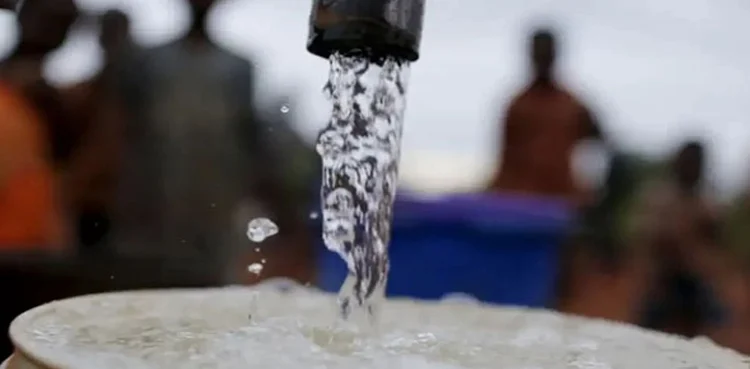
The Indus river, long considered the jugular vein of the people of Sindh, is under assault. The construction of the Jalalpur irrigation canal — and its trial commencement — has gone ahead despite Sindh’s stiff opposition last year, voiced through a peaceful protest movement that carried the province’s strong resentment and anger to the federation.
Sindh’s political forces have raised serious concerns and reservations over Punjab’s decision to commence trial operations of the Jalalpur canal, even as the constitutional dispute over new canal projects and Sindh’s water rights remains unresolved. Sindh is already grappling with acute water shortages, the destruction of the Indus Delta, and the collapse of its agricultural economy. To proceed with new upstream canal projects under these conditions is unacceptable to the people of Sindh and amounts to an assault on the rights of the lower riparian province.

There is no denying that agriculture is the livelihood of the majority of Sindh’s people, and that this agriculture depends entirely on river water — the Indus being its only source. The crops, fruits, vegetables, and sweet drinking water that sustain Sindh all owe their existence to this one river. Without the Indus, there would have been neither Sindh nor its thousands-year-old civilization.
The Sindh government must record its protest before the federal government and urge it to immediately convene a meeting of the Council of Common Interests, taking every constitutional measure available to halt the project.

Sadly, we have learnt nothing from our past mistakes and blunders. Why do we remain wedded to narrow-mindedness and shortsighted thinking bound to destroy our very existence? Will this policy bring us success and standing in the comity of nations? Why are our so-called champions of democracy and constitutional supremacy more inclined toward injustice than fair treatment? Will this serve the cause of our unity?
The constitution obliges the federal government to convene a meeting of the Council of Common Interests at least once every three months. Yet the federation seems more preoccupied with resolving international conflicts than with addressing the issues confronting the country and defusing tensions between its federating units — even though the latter bear more directly on national stability.

Our government strongly condemns India’s aggressive weaponisation of water under Modi. Yet it shows no equal readiness to ensure the judicious and fair distribution of water among its own federating units, as mandated by the Indus River System Authority (IRSA). The construction of the Jalalpur canal in Punjab, in flagrant breach of the decisions taken at last year’s CCI meeting — decisions reached only after massive protests and a strong outcry across Sindh — amounts to diverting Sindh’s water to irrigate the barren lands of its “big brother,” at Sindh’s expense.

Unless decisions reached by consensus are implemented in letter and spirit, for the good of the country as a whole, the differences between the federation and the provinces will only widen rather than ease.
The Indus, the very source of survival for the people of Sindh, should never be pushed to the wall. Depriving Sindh of its legitimate right to the river, again and again, risks shattering the very foundations of the state. No government has the authority to compromise Azhar Azad crisis and further erode confidence in the federation.

Similar Posts

  • 79 Years of Independence and What Went Wrong with …

    On 14 August 1947, Pakistan emerged as a new country with enormous challenges but also extraordinary potential. Seventy-nine years later, the question is not whether Pakistan has achieved anything, it certainly has, but why a country that began with comparable hopes to many newly independent nations has struggled to convert its human and natural potential into sustained prosperity, strong institutions and a secure future. The comparison becomes uncomfortable when we look at countries that began their modern journeys around the same period. Singapore became self-governing in 1959 and independent in 1965. Bangladesh became independent in 1971 after emerging from the same Pakistan that had been created in 1947. Taiwan’s post-war transformation accelerated from the 1950s onward. South Korea, independent since 1948, also started from extraordinary hardship. Their histories are very different from Pakistan’s, so simplistic comparisons would be unfair. Yet they demonstrate one important principle, institutions, continuity, human capital and economic strategy can transform countries even when starting conditions are difficult. Bangladesh is perhaps the most striking comparison because it began as the poorer and more politically disadvantaged wing of Pakistan. In 1971, its future looked extremely uncertain. Today, Bangladesh’s nominal GDP per capita is substantially higher than Pakistan’s, the World Bank reports about $2,593 for Bangladesh compared with about $1,479 for Pakistan in 2024. Bangladesh’s total GDP has also grown larger than Pakistan’s despite having a much smaller land area according to world bank open data. Singapore represents an entirely different model. A small island with few natural resources, it concentrated on competent administration, education, trade, infrastructure, investment and institutional discipline. Its 2024 GDP per capita was approximately $90,674, compared with Pakistan’s approximately $1,479. World bank open data says. Taiwan and South Korea followed another path, export-oriented industrialisation, investment in education and technology, strong state capacity and, eventually, increasingly democratic institutions. These countries did not become successful because their people were inherently more capable than Pakistanis. They created systems that allowed capability to produce results. So what happened to Pakistan? The first failure was institutional continuity. Pakistan spent much of its history moving between civilian governments, military rule, political confrontation and constitutional crises. Instead of allowing institutions to mature, every political transition often became a struggle over who controlled the state. The second failure was the weak rule of law. A country cannot become prosperous when laws are applied selectively, institutions are politicised and citizens do not have equal confidence in justice. Democracy is not merely the holding of elections, it requires constitutional supremacy, independent institutions, accountable government and protection of fundamental rights. The third failure was education and human capital. Pakistan has a huge young population, yet education has too often remained underfunded, unequal and disconnected from the needs of a modern economy. Countries that transformed themselves invested heavily in the quality of their people. Pakistan has frequently treated education as expenditure rather than as the country’s most important investment. The fourth failure was economic inconsistency. Pakistan repeatedly moved between economic models without developing a stable, long-term national strategy. Political governments changed priorities, economic crises produced short-term fixes, dependence on external financing repeatedly returned. Meanwhile, countries such as Bangladesh built globally competitive export sectors, particularly garments, while East Asian economies moved aggressively into manufacturing, technology and high-value exports. The fifth failure was population planning and social development. Pakistan’s population has grown enormously, while economic growth has not consistently kept pace with the needs of its people. The World Bank’s latest figures show Pakistan with a life expectancy of around 68 years, compared with 75 years in Bangladesh and 83 years in Singapore. The sixth failure has been our inability to build a culture of accountability without political revenge. Accountability is essential, but when it becomes a weapon used selectively against political opponents, it destroys trust rather than strengthening the state. The seventh and perhaps deepest failure is that Pakistan repeatedly confused national security with national development. Security is essential, but a nation’s ultimate security comes from educated citizens, a productive economy, social cohesion, constitutional government and opportunities for its young people. Pakistan’s people, however, did not fail Pakistan. Pakistanis have demonstrated remarkable resilience. They built businesses, universities, industries, hospitals, technology companies and a vast overseas community. Millions of Pakistanis work abroad and send billions of dollars home. In 2024, remittances were equivalent to about 9.4% of Pakistan’s GDP, according to the World Bank. The real tragedy is that the capacity of the Pakistani people has repeatedly been greater than the capacity of the systems governing them. Independence was supposed to mean more than freedom from colonial rule. It was supposed to mean dignity, justice, representation and opportunity. After 79 years, Pakistan therefore needs a different question. Not who is responsible for our problems? but what kind of state do we want to become? The answer cannot be another political slogan or another temporary economic package or presidential system of government . Pakistan needs constitutional supremacy, civilian and institutional stability, independent justice, free media, serious investment in education and health, economic continuity, women’s participation in the workforce, export-led growth, technological development and genuine local governance. The comparison with Bangladesh, Singapore, Taiwan and South Korea should not produce humiliation. It should produce reflection. We began with a dream. The unfinished task of Pakistan’s next generation is to turn that dream into functioning institutions, human development and dignity for every citizen. Seventy-nine years after independence, perhaps the most patriotic thing Pakistanis can do is not merely celebrate the birth of the country, but honestly ask why the promise of 1947 has still not reached every Pakistani.

  • Stoning in the City of Letters: The Tragic Death o…

    ​Where the nine-hundred-year legacy of the University of Cambridge has long claimed to stand guard over truth, intellect, and reason, a profoundly agonizing incident has laid bare the deep intellectual, political, and social fault lines of the modern West. Professor Jason Arday—who made history as the youngest Black academic appointed to a professorship at Cambridge—was found dead at his home in South West London on August 14, 2026. To dismiss his sudden passing as a mere bodily collapse or a quiet, solitary cardiac arrest would be a profound act of self-deception. This tragedy is, in truth, the direct consequence of a systemic crisis eroding Western academia—a space where the fragile boundary separating legitimate academic rigor from ruthless political and racial factionalism has dissolved, and where institutional accountability has steadily devolved into a spectacle of public humiliation. ​Jason Arday’s ascent was a rare testament to human endurance and unyielding resolve. Raised in a low-income neighborhood in South London, he was diagnosed in early childhood with a severe form of autism. He remained non-verbal until the age of eleven and was unable to read or write until he was eighteen. Yet, defying both societal expectations and medical prognoses, he mastered the written and spoken word, pursued higher education, and navigated his way through the faculties of Roehampton, Durham, and Liverpool, ultimately securing a chair in sociology at Cambridge in March 2023. ​However, Arday’s arrival at the pinnacle of British academia coincided with an intense ideological war engulfing universities and the press. Over the preceding decade, Diversity, Equity, and Inclusion (DEI) initiatives had been elevated to core institutional imperatives across British higher education. Universities leaned into these metrics to rebrand themselves, and scholars of Arday’s caliber frequently became the public face of this transformation. ​This is precisely where the deeper ideological friction of contemporary British society erupted into what is widely characterized as a culture war. On one side stood a progressive consensus viewing DEI policies as a overdue corrective to historical inequities; on the other stood a relentless right-wing press and traditionalist academic factions that framed such appointments as a dilution of meritocracy and an embrace of ideological tokenism. ​When questions were subsequently raised regarding technical details within Arday’s PhD thesis and past curriculum vitae, the matter did not remain confined to quiet internal review. Right-leaning media outlets swiftly weaponized these allegations to mount a broader assault on Cambridge’s DEI framework. The tragedy of this partisan crossfire was that Arday’s humanity was entirely erased; he was reduced from a living, breathing scholar into a battlefield for competing political narratives. ​Academic integrity is undeniably the bedrock of any serious higher education system. When allegations of plagiarism are leveled against a scholar, a university is legally and ethically bound to conduct a thorough, impartial, and confidential inquiry. Yet, when such proceedings leak beyond institutional walls into the arena of tabloid journalism and political point-scoring, the genuine purpose of oversight is lost. ​Liverpool John Moores University had previously conducted a comprehensive investigation into the allegations against Arday, fully exonerating him and reaffirming the validity of his doctorate. However, the toxicity of commercialized media and political polarization ran too deep for that clearance to settle the matter. When Cambridge University, bowing to intense media pressure, announced a secondary independent review, it revealed just how vulnerable modern elite institutions have become to the demands of public relations. ​The most damning dimension of this ordeal was the existential and psychological toll exacted upon a scholar watching a lifetime of discipline destabilized in an instant. In his resignation statement on August 5, Arday explicitly clarified that stepping down was not an admission of guilt, but the final recourse of a human being pushed beyond the limits of endurance by a relentless media trial. Just nine days later, on August 14, 2026, he was dead. Neuroscience and clinical psychology have long documented how sustained public humiliation, character assassination, and the erasure of one’s professional identity can inflict severe somatic stress, culminating in fatal systemic collapse. ​This event casts a severe shadow over liberal democracies that pride themselves on individual dignity and the presumption of innocence. In a hyper-digitized media ecosystem, accusations function as instant convictions in the court of public opinion, long before an individual has a meaningful opportunity to offer a defense. Academia, which ought to serve as a sanctuary for measured deliberation, has proven just as susceptible to sensationalism as the rest of society. Arday’s death leaves scholars worldwide asking whether the academic vocation has shifted from the quiet pursuit of truth to a harrowing exercise in surviving public vilification. ​Jason Arday’s death compels an overdue reckoning: institutional accountability must be structured so that it neither shields genuine intellectual dishonesty nor surrenders an individual scholar to the crossfire of racial and culture wars. If elite universities fail to insulate their investigative processes from media trials and political agendas, the most sensitive and brilliant minds will inevitably retreat from the academic life altogether. Arday’s silence now stands as a profound question mark hanging over the international scholarly community. ​The ultimate lesson of this tragedy is that the dignity of those who dedicate their lives to learning cannot be sacrificed on the altar of political or journalistic expediency. If the institutions entrusted with seeking truth cannot protect their own, society loses its moral compass. Standing before the red-brick facade of Cambridge, one is left asking how a scholar of such promise could crumble on its doorstep. This was not merely the loss of a single life; it was an institutional failure that demands the grief and critical reflection of the global intellectual community. ​The extraordinary resilience with which Arday conquered his early disabilities demonstrated the scale of his ambition and character. Yet, faced with the cold machinery of institutional cowardice and media hostility, that strength was ultimately overwhelmed. This moment offers a final, urgent opportunity for self-examination within higher education. If we remain silent, the fires of ideological intolerance will continue to consume the very minds meant to illuminate

  • Gen Z, Jantar Mantar & PM Modi

    If a protest is peaceful, does not create problems for the public, and remains free of violence, it is a basic human right. In fact, protest is a sign of a living society. Dead people cannot protest or resist. Unfortunately, in our society, the protests of ordinary and poor people are often looked down upon, even though every protest should be judged on its own merits. People often complain that today’s generation is not as good as the previous one. But history shows that every older generation has made the same complaint about its youth. Even centuries ago, elders believed that young people had lost their values. Times have changed, but this mindset has remained the same. I believe that every new generation brings something better than the one before it. Today’s young people have access to knowledge in ways that no previous generation could have imagined. The internet and artificial intelligence have placed the world’s knowledge within everyone’s reach. As a result, today’s youth are more informed, more curious, and more aware. This is exactly what can be seen in the recent **Generation Z protests in India**. These young people are presenting their demands in a calm and respectful manner. Their speeches are based on logic rather than emotion. Whether boys or girls, they explain their concerns with confidence and reason. According to the protesters, **152 examination papers have leaked over the past ten years**, affecting nearly **70 million students**. They believe that Education Minister **Dharmendra Pradhan** should take responsibility and resign. They are demanding reforms in the education system, action against police officers who used force on students, medical treatment for the injured, the release of arrested protesters, and the withdrawal of cases filed against them. One female student said that their movement should not be turned into a Hindu-Muslim issue. She explained that her closest friend is Muslim and that religion has never come between them. According to her, the real issues are education, employment, and a better future—not religious divisions. She also argued that public money should be spent on schools and hospitals instead of fueling religious politics. Another young protester remarked that India’s two prominent leaders, Prime Minister Modi and Yogi Adityanath, do not have children of their own, so they may not fully understand the struggles faced by students and young people. Some protesters also mocked allegations that they were receiving funding from Pakistan or China. Holding packets of chips and spices, they jokingly referred to them as their “Pakistani funding,” using humor to challenge what they described as baseless accusations. The movement has not relied only on slogans. Students have also used songs, poetry, and creative performances to express their message. In some places, however, clashes with the police have occurred. The movement traces its origins to remarks made by **Justice Surya Kant** of the Supreme Court of India, who reportedly compared some unemployed young people to “cockroaches” during a court hearing. Many students felt insulted by the comment, which eventually led to the formation of the **Cockroach Janata Party** protest movement. The movement focuses on issues such as examination paper leaks, unemployment, and reforms in the education system. Among its well-known figures are **Abhijit Deepke** and **Sonam Wangchuk**. Wangchuk carried out a 26-day hunger strike before being taken into custody and moved to a hospital. What began in Delhi has gradually spread to other cities across India. Reports indicate that police have used baton charges, tear gas, and water cannons against demonstrators. Several international human rights organizations have expressed concern over the use of force against peaceful protesters. The students argue that India is the world’s largest democracy and that the right to peaceful protest must be protected rather than suppressed. Prime Minister Narendra Modi has announced that cases involving examination paper leaks will be referred to fast-track courts and that those responsible will face strict action. However, many protesters believe that promises alone are not enough and that concrete reforms are needed. History has shown that governments often underestimate public movements in their early stages. If legitimate concerns are ignored, such movements can grow into much larger crises, as has happened in several countries in the past. If the demands of these young people are genuine and reasonable, the government should engage with them directly, listen to their concerns, and reform the education system where necessary. If officials have failed in their responsibilities, they should be held accountable. A strong democracy is one that listens to peaceful voices instead of trying to silence them.

  • The hands that clean Karachi

    KARACHI: Before the city wakes up, thousands of sanitation workers are already at work. They sweep roads, collect household waste, clean neighbourhoods and, in some cases, enter sewer lines and manholes to clear blockages. Among them are many workers from Christian and Hindu communities who perform some of Karachi’s most difficult and hazardous jobs. On August 11, Pakistan observes National Minorities Day. The occasion is usually marked with messages about equality, tolerance and the contribution of minority communities to the country. But for many minority sanitation workers in Karachi, the day will be no different from any other: they will be out cleaning the city, often while facing low wages, insecure employment, inadequate safety equipment and social discrimination. Their problems extend beyond poverty. They include workplace safety, access to healthcare, employment benefits and the stigma attached to the occupation itself. There is no reliable and up-to-date official figure showing exactly how many Christian and Hindu sanitation workers are currently employed in Karachi. A World Bank-linked environmental and social assessment, however, recorded around 11,400 sweepers and sanitary workers employed by the city’s district authorities. It also noted additional workers employed through SSWMB contractors and a large informal workforce involved in door-to-door waste collection and material recovery. The 11,400 figure therefore does not represent Karachi’s entire sanitation workforce. The actual number is considerably broader once outsourced, daily-wage and informal workers are included. Sanitation work in Pakistan has for decades been disproportionately associated with religious minorities. Research by Amnesty International has documented the concentration of Christians and Hindus in sanitation work and found evidence of discrimination in recruitment, employment and working conditions. The issue therefore begins well before a worker picks up a broom. It is also about whether people from particular religious and social backgrounds are being denied opportunities to enter other occupations. The question of wages is equally important. The Sindh government has announced a minimum monthly wage of Rs43,000 with effect from July 1, 2026. While the announcement is significant for low-paid workers, the more important question for sanitation workers is whether the amount actually reaches them. A substantial part of Karachi’s sanitation work is performed through contractors, outsourcing arrangements and daily-wage employment. Previous reporting has documented workers employed through SSWMB contractors receiving wages below the applicable minimum wage. In one reported case, a minor working for an SSWMB contractor was receiving Rs15,000 a month when the minimum wage for unskilled workers was Rs32,000. The new Rs43,000 minimum wage therefore requires more than a government notification. It requires effective enforcement and monitoring, particularly where public sanitation services are outsourced. If a worker performs essential public work through a contractor, there must be clarity about who is responsible for ensuring that he receives the legally prescribed wage and other employment rights. For sanitation workers, however, low wages are not the only concern. The nature of the work itself can be fatal. In September 2025, three sanitation workers died in Karachi’s Usmanabad area after inhaling toxic gases while cleaning a manhole. The victims were identified as 22-year-old Vishal, 19-year-old Shahir and 42-year-old George. A fourth worker survived after being rescued. The deaths were followed by further fatalities. In October 2025, The Express Tribune reported that six sanitation workers had died from suffocation while cleaning sewers in Karachi in just over a month. The deaths occurred in Sohrab Goth, Garden and Landhi. According to the report, the victims were privately hired daily-wage workers who lacked adequate safety equipment and training. On April 17, 2026, three private sanitation workers died in Surjani Town after inhaling toxic fumes while cleaning a choked sewerage line. Police identified the deceased as Wilson, Waqas and Nazeer and said all three belonged to the Christian community. Such incidents follow a familiar pattern. A worker enters a sewer to clear a blockage. Toxic gases overcome him. Another worker may enter in an attempt to rescue him and can suffer the same fate. Without proper protective equipment, gas detection devices, training and rescue arrangements, a routine cleaning operation can quickly turn into multiple deaths. The exact number of sanitation workers who have died in Karachi is difficult to establish because there is no comprehensive publicly available official database covering municipal, private, contracted and informal workers. In October 2025, activist Naeem Sadiq told Arab News that approximately 100 manual scavengers die every year in Pakistan, including around 30 in Karachi. He also warned that the actual number could be higher because of underreporting. The figure is an activist estimate rather than an official government statistic, but it illustrates the scale of the concern. At the national level, Amnesty International documented 80 sanitation workers who died in 50 manhole incidents between 2011 and 2023. Of these, 40 were Christians, 22 Muslims and 18 Hindus. Most of the deaths were associated with poisonous gases and asphyxiation. The figures highlight a wider concern: minority workers are disproportionately represented in some of the most hazardous sanitation jobs, while also facing social and economic disadvantages. A survey by the National Commission for Human Rights of 42 sanitation workers in Karachi provides further evidence of poor working conditions. Thirty-three workers, or 78.6 per cent, said they had never been provided personal protective equipment. Twenty-four, or 57.1 per cent, reported workplace injuries. The same number reported verbal or physical abuse, threats, non-payment or other forms of discrimination. These findings raise a basic question about Karachi’s sanitation system: the issue is not only who will clean the city, but under what conditions the people cleaning it are expected to work. Another study involving 400 sewerage and sanitary workers in Karachi found that 228, or 57 per cent, were sweepers and 172, or 43 per cent, were sewerage workers. The study found that 96.5 per cent had not been immunised against typhoid, hepatitis and tetanus, while 91 per cent were not using safety equipment at work. For workers exposed daily to sewage, waste and potentially toxic environments, protective clothing, gloves, boots, masks, vaccination, health examinations and emergency support should not

  • Pakistan shapes the emerging order

    Pakistan laid the foundation for a NATO-style alliance among Muslim nations as Pakistan Prime Minister Shehbaz Sharif signed the Mecca Joint Defence Agreement on August 7, 2026. The agreement represents a powerful recognition of Pakistan’s growing strategic importance.   The other two signatories included Saudi Crown Prince and Prime Minister Mohammad bin Salman, and Türkiye’s President Recep Tayyip Erdogan, who, along with Sharif, gathered at Al-Safa Palace in Mecca. In a joint statement, these countries announced that the agreement is “guided by the longstanding historical ties among the three states, based on the enduring bonds of brotherhood and Islamic solidarity that unite them, and building upon their shared strategic interests and longstanding defence cooperation.” The agreement asserts a commitment to treat an armed attack against any one of the three countries as an attack against all three.   The historic trilateral defence agreement was held at the Mecca Al-Mukarramah Summit for Joint Defence. It was also attended by Pakistan’s Chief of Defence Forces (CDF) and Chief of the Army Staff Field Marshal Syed Asim Munir, Defence Minister Khawaja Asif, and Deputy PM and Foreign Minister Ishaq Dar. The foreign and defence ministers of Turkiye and Saudi Arabia were also in attendance. While the Turkish Foreign Minister Hakan Fidan described the agreement’s terms as technically comparable to NATO’s Article 5, it is pertinent to note that the pact is not equivalent to NATO. Its precise operational mechanisms and institutional framework are yet to be developed. Both Pakistan and Turkish officials have, however, reinforced that the agreement is not directed against any particular country. It is also not designed to replace any existing alliance or strategic relationship, and this particularly holds for Türkiye, which is already a member of NATO. That said, the Mecca agreement is merely a defensive arrangement. It is crucial to make this distinction because these countries are not preparing for war. Instead, they are attempting to make collective security more credible. Simply put, the goal is to protect each other from outside threats. This is where Pakistan serves as the main pillar of the arrangement. Pakistan has earned its seat at the table owing to the evolving strategic position under Sharif and Munir. Throughout his tenure, Sharif has strengthened Pakistan’s diplomatic relationships not only with Saudi Arabia and Türkiye, but also with other regional powers. Munir, at the same time, oversaw Pakistan’s most significant military conflict in recent years, prompting the country’s expanding role in regional security diplomacy. Together, they bring credible diplomacy and military strength. Pakistan did not emerge as a catalyst for the agreement overnight. The foundations of the Mecca agreement were laid by Sharif and Crown Prince Mohammad bin Salman in Riyadh roughly a year earlier. On September 17, 2025, they signed the Strategic Mutual Defence Agreement between Pakistan and Saudi Arabia. The agreement declared that aggression against either country would be considered aggression against both. Building upon a nearly eight-decade-long relationship, the two countries committed to strengthening the defence alliance and mutual deterrence. That pact was a crucial achievement for Sharif’s government. Pakistan and Saudi Arabia have often described their relationship as strategic and deeply rooted in shared interests. Although Pakistan’s military personnel have trained and worked alongside their Saudi counterparts for decades, Sharif’s diplomacy has transformed the relationship into a more structured partnership covering defence, investment, politics, and regional diplomacy. The September agreement essentially laid the foundation for the trilateral defence framework, now strengthening Pakistan-Saudi longstanding ties by bringing Türkiye into the alliance. Sharif does not treat Pakistan’s relationships as isolated bilateral partnerships. He refuses to choose a single ally and maintains strong ties with multiple powers. Be it Saudi Arabia, Türkiye, China, Iran, or the US, each serves different strategic interests for Pakistan. This gives Islamabad greater flexibility and independence in its foreign policy, without becoming overly dependent on any single country. The flexibility paid off in 2026 when the Iran crisis forced Pakistan into one of the most challenging diplomatic balancing acts. Pakistan is Iran’s neighbour, but it also has ties with Saudi Arabia and Türkiye. Iran shares a long border with Pakistan and longstanding economic, political, and cultural ties. A regional war involving Iran thus constituted a direct threat to Pakistan. Islamabad could have chosen to shelter behind its borders and wait for the crisis to pass; however, it chose to influence its trajectory. Sharif spoke directly with regional leaders, whereas Munir directed the security framework of the mediation initiative. On April 9, the Prime Minister’s Office stated Sharif and Munir reviewed Pakistan’s peace efforts and expressed satisfaction with the positive de-escalation achieved at that stage. The two also reiterated Pakistan’s commitment to support the parties in securing a negotiated settlement. On April 25, Sharif discussed the regional crisis and Pakistan’s diplomatic efforts with Iranian President Masoud Pezeshkian. Prime Minister’s Office later reported that Pezeshkian extended his gratitude to Sharif, Munir, and Deputy Minister Ishaq Dar for their pivotal roles in fostering peace. A month later, the Iranian President once more reiterated his appreciation for Sharif and Munir for their efforts to bring peace to the region. This was a turning point for Sharif. He shifted Pakistan’s foreign policy from simply reacting to regional crises to actively steering their outcomes. As Sharif drew the diplomatic map, Munir gave it a military backbone. The evolution became especially evident in May 2025. The clashes between Pakistan and India transpired as the most serious direct military crisis between the two nations in decades. Following the April 22 Pahalgam attack that left 26 dead, India launched airstrikes across Pakistan and Pakistan-administered Kashmir. Pakistan retaliated with Operation Bynyan-ul-Marsoos, which led to both sides agreeing to a ceasefire on May 10. It became a defining moment for Munir. Pakistan demonstrated the potential of its armed forces to conduct sophisticated operations under extreme pressure. It also proved that its military apparatus could impose high costs on a much larger military. That is the cornerstone of credible deterrence for Islamabad. As for Munir, the Pakistan-India conflict redefined

  • The Fading Fabric of Family

    In days of yore, the family stood as the unshakeable foundation of life, its fabric woven with threads of reverence, tenderness, and mutual reliance. The presence of elders within the home was regarded as a divine blessing, their wrinkled brows and measured words carrying the distilled wisdom of decades. They had seen seasons of plenty and seasons of want; their counsel was never hasty, but rooted in experience both sweet and bitter. Matters great and small—marriages, disputes, harvests, or the education of the young—were laid before the family circle. Voices rose and fell in earnest consultation, differences were aired with respect, and decisions emerged strengthened by collective thought. Sharing every joy doubled its brightness; confiding every sorrow lightened its burden. Such openness was not mere habit but a sacred trust, binding hearts as firmly as blood itself. Festivals like Eid shone as luminous expressions of this unity. Homes were cleansed with care, lamps lit, and the air filled with the aroma of special dishes prepared by loving hands. Families gathered in their finest attire, exchanging embraces that spoke louder than any words. Youngsters sought the elders’ blessings, pressing foreheads to hands worn by labour and prayer. Visiting relatives was no burdensome custom but a joyful obligation. One would travel dusty paths or crowded streets to enquire after an ailing uncle, to carry sweets to a widowed aunt, or to offer a strong shoulder in times of grief. To be useful in one another’s sorrows and celebrations was considered not charity but a natural duty, the very pulse of kinship. Then the world shifted. Modernity, with its ceaseless demands and glittering innovations, began to loosen these ancient ties. Technology arrived as a herald of progress, and the internet promised to shrink distances, allowing voices to reach across oceans in an instant. Yet in bridging the far, it often widened the gulf between those who dwelt beneath the same roof. The thoughtful purchase of Eid cards, selected with a discerning eye and inscribed with heartfelt sentiments penned in one’s own hand, has given way to instant messages generated by artificial intelligence—polished, abundant, yet strangely hollow. What once touched the soul now risks becoming mechanical routine. Worse still, we have turned our gaze outward, forgetting the sorrows and joys nearest to us. We scroll endlessly through the lives of strangers, offering likes and comments to people whose names we barely know, while the quiet struggles of our own parents or the silent longings of our children pass unnoticed. We share stirring posts about kindness, patience, and gratitude—words that stir the conscience for a fleeting moment—yet how rarely do we live even a fraction of their wisdom. Our digital connections resemble bubbles upon still water; shimmering, fragile, and empty at the core. They burst without warning, leaving behind only the memory of illusion. Within the walls of many homes today, a poignant scene unfolds. In one modest room, a father pores over his telephone, chasing distant conversations or business affairs. Beside him, the mother engages with images and voices from afar, her gentle smile reserved for the screen. The children, heads bent over glowing devices, laugh at jests from unknown companions or compete for admiration among virtual friends. Though seated within arm’s reach, they inhabit separate worlds. The warmth of real voices, the comfort of a shared glance, the simple pleasure of recounting the day’s small events—these have grown rare. We have learned the art of being present in absence, and absent in presence. The truth, spoken plainly, wounds the heart; we have changed profoundly. We know little of one another now beyond the bare fact that we yet live. The elder’s stories gather dust on forgotten shelves; the family consultation has fallen silent; the spontaneous visit to a relative’s home feels like an inconvenience rather than a delight. Our loved ones, who would stand beside us when fortune smiles or when tempests rage, receive only fragments of our attention. It is they, not the distant crowd, who truly matter. We must therefore resolve to reclaim the substance of life. Let us set aside the screens at certain hours, lift our eyes to those around us, and rediscover the irreplaceable value of real companionship. Let consultation return to the family table, visits become frequent once more, and festivals regain their former glow of devotion. Technology need not be our master; it can serve if we command it with wisdom. Only by nurturing the bonds with those who share our daily bread and our deepest affections can the family fabric regain its former strength and beauty. In such renewal lies our truest happiness, for the heart finds its home not in the applause of multitudes, but in the quiet fidelity of kin.

Leave a Reply

Your email address will not be published. Required fields are marked *