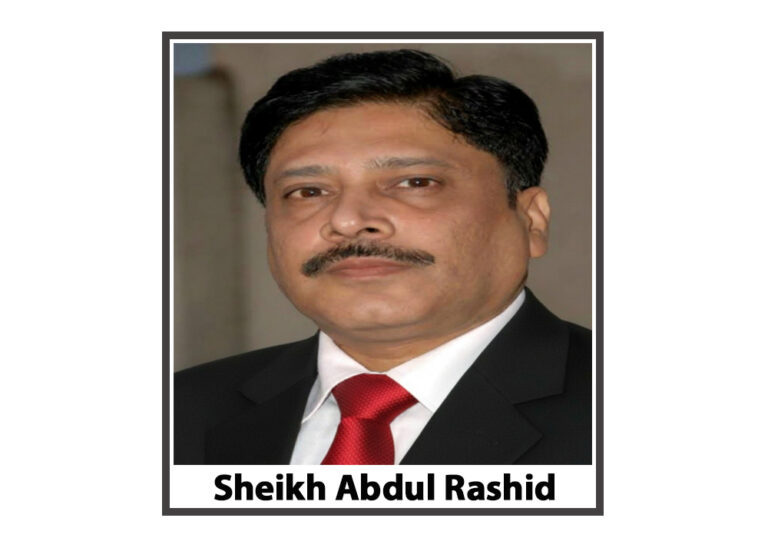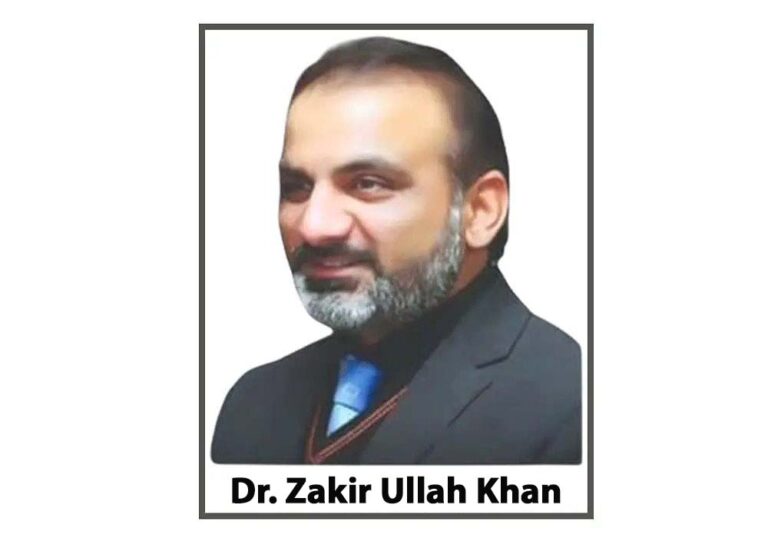
A Nation in Focus: The Social Contract and the Mak…
(When the water rises, who shows up and who is left waiting?)
I live in Sabzazar, a neighborhood in Lahore, Pakistan, but part of my heart is always sitting along the banks of the Moxahala Creek back home in Southeast Ohio. When the water rises in Muskingum County or the Punjab plains, who shows up, and who is left waiting? I live in Sabzazar, a neighborhood in Lahore, Pakistan, but part of my heart is always sitting along the banks of the Moxahala Creek back home in Southeast Ohio.
My mother and brother still live right near South Zanesville, just a stone’s throw from Crooksville. When heavy rains hit Perry and Muskingum counties, I don’t need to be there to know what it looks like. I can picture the heavy, chocolate-brown water backing up into the low spots, the damp chill that settles into a basement, the fears of what if the waters reach a house trailer, and that specific, exhausting smell of river mud that takes weeks to scrub out of porch boards and carpet. The worries of if the home has structural damage.. Halfway across the world in Pakistan, the landscape couldn’t look more different. But when monsoon season swells the rivers across the Punjab, the view from the ground is hauntingly identical.
Standing in a flooded doorway feels the same whether you are in Ohio or Lahore. The quiet shock is the same. The ruin of things you worked years to buy is the same. And the very first instinct is to grab your coat, shovel, a chainsaw and a pair of boots and go check on the elderly woman next door.. Start hauling wet furniture, debris to the curb and giving comfort, food and basics to those in need is entirely universal. Watching both worlds at once makes you look at governance differently. It strips away abstract political jargon and leaves you asking one fundamental question: When a community is hit with a crisis, does its system build capable people who can act, or does it leave them sitting on their hands, waiting for permission to survive?
What a Small Ohio Village Taught Me About Governance
Growing up around South Zanesville and Crooksville, you learn pretty early that small-town life relies on a very specific kind of quiet, distributed agency.
Crooksville isn’t a rich town. It’s a hard-working Appalachian village of under 1,500 people. But when the creek overflows, nobody sits around waiting for a press conference out of Washington, D.C., or a mandate from the state capital in Columbus.
The response moves in waves because the connections are already wired:
On the local levels we see neighbor checks on neighbor. The volunteer fire department turns on the sirens, pulls out the high-water gear, and starts the door to door knocks. At the County level we have the Perry County 911 dispatch and Emergency Management Agency (EMA) start tracking water levels and routing equipment where it’s needed most. At the State level, If the county gets overwhelmed, pre set legal triggers immediately call in the Ohio EMA or the National Guard.
Government here doesn’t replace the community’s instinct to help itself; it validates it, organizes it, and backs it up with real resources. The system trusts the people on the ground to know their own roads. Here in Pakistan, the human spirit is just as generous, if not more so. The impulse toward hospitality, neighborly charity, and mutual support runs incredibly deep. When disaster strikes, ordinary citizens open their wallets and their homes without a second thought. It’s just what they do…
And Pakistan’s has one of the world’s top class military engineering, a massive national disaster agency (the NDMA), and incredible private charities. The raw capacity is immense. Yet, too often, there is a however a very heartbreaking disconnect between that high-level power and the family standing in ankle deep water in a local neighborhood. An ordinary citizen here once described the country to me using a metaphor I’ve never forgotten: a child that was never allowed to stand on its own feet. An infant isn’t helpless because it lacks potential. It’s helpless because it hasn’t been given the space to build muscle, fall over, adjust its balance, and try again. If an authority figure picks the child up every single time it tries to pull itself up, the child never learns to walk—not from a lack of ability, but because the environment denied it the chance to build strength.
That is how systemic learned dependency takes root: Central authorities assume total control, bypassing local municipal councils. Neighborhoods are given no real budget or authority to fix their own drainage or organize local response teams. And when a flood comes, citizens have no choice but to wait for distant, top-down relief. The authorities look at the waiting crowd and say, “See? The people can’t manage without us.”
We witness power centralized even further, deepening the exact helplessness it claims to fix. Over generations, people adapt to the system they are given. If a system rewards waiting for a political patron, people learn to wait for patrons. If it rewards local initiative, communities build habits of self-reliance. It is very easy to blame culture or public apathy for civic passivity, but that misses the point entirely. Culture simply reflects the structural incentives people are given to survive and adapt. It is nature vs nurture and we have a break down when these two things fail to promote a cohesiveness and inclusion of what is a community and what that actually means.
Across the globe, the relationship between state control and citizen participation varies wildly, proving that central authority does not have to mean public powerlessness. In China, a deeply centralized state framework actively structures and expects local neighborhood committees and civil volunteer groups to manage community-level crises. Across much of Europe, comprehensive state safety nets exist alongside highly empowered municipal councils and professionalized local volunteer forces. The size or scope of the government is not the primary variable that dictates civic vitality. The true variable is human agency, whether a state treats its people as passive victims waiting for a top-down handout, or as active, capable partners entrusted to keep their own communities safe.
When the water actually rises, theoretical politics wash away, leaving behind a stark operational audit of how a society functions under stress. In a passive dependency model, the moment of crisis finds isolated families waiting in the dark for centralized military rescue or private charity to arrive, while a distributed capability model sees volunteer crews and trained neighbor networks executing pre-planned evacuations immediately. Where the passive model relies on distant political leaders or high-level commanders directing operations from afar, a distributed system empowers local emergency managers to coordinate real-time responses through established dispatch channels. Relief in a centralized framework tends to be reactive and tied to political patronage or media coverage, whereas a capable local system escalates resources systematically based on pre-mapped risk protocols. Finally, after the water clears, a dependent society is left waiting for the next round of emergency relief while broken culverts sit uncleaned, while a system built on local agency enables municipal councils to audit what failed, update zoning, and clear out drainage infrastructure before the next rain falls.
Be it rural or in a city, the habits we build at the neighborhood level scale all the way up to how we run a country.
When a person grows up helping run a volunteer fire department budget, clearing local storm drains, or holding a county commissioner accountable at a public meeting, they view the state as a tool that serves the public.When a person grows up where local councils are stripped of power, they learn that government is just something powerful people use to hand out favors to their friends.Rebuilding a social contract doesn’t start with writing a fancy new constitution at the top or changing the faces in high office. It starts by giving people back the authority, resources, and trust to fix the road in front of their own houses. Every country on earth faces floods, economic hardship, and unexpected disasters. Failure is part of the human condition. The ultimate metric of a healthy state isn’t whether it avoids trouble, it’s whether it has correctability or not.
We really need to take introspect and ask, does the system learn? Does it trust its citizens to act? Does it push power down to the streets where the actual problems live? Or does it protect its own centralized control until the cracks turn into total collapse?
Whether you are looking at the Moxahala Creek and the hills of southeastern Ohio, the hills and valleys of Pakistan’s northern frontiers, or the crowded streets and plains of its cities, a healthy state is never one that does everything for its people. It is one that gives its people the power to act, knows when to step in with greater capabilities when they cannot, and, most importantly, fosters the tools and the space they need to stand firmly on their own two feet.