traumatic transformation into

My traumatic transformation into a Lassi (butter milk) hydration unit

So, once I tagged along with a buddy to his sister’s place in this super rural village. Lovely folks, honestly—total heart-eyes. My buddy’s brother-in-law? Instant BFF. We vibe)

We arrive at the house … “Lassi lao!”
We chill for a bit… Lassi lao!”
Evening rolls in. My new friend goes, “Yo, let’s hit up the dera (aka Cow Central).”
We get to the dera… “Lassi lao!”
We wander around, side-eyeing cows and buffaloes like city tourists. Sit back down… “Lassi lao!”
Dinner time? “Lassi lao!”
Morning alarm: sunrise.
Breakfast spread: butter, desi ghee (clarified butter) — fried parathas, eggs, village chicken — the whole “we’ll clog your arteries” buffet.
Finish eating … “Lassi lao!”

Me, finally snapping: “BRUH. TURN OFF THE LASSI TAP. I BEG YOU.”
“Fine. Chai lao!” I bark.

Brother-in-law, grinning: “Shah Ji, why you mad, bro? Lassi lao’s our Shah ji ritual!” (Shah ji = imaginary VIP? Idk. Village things.)

Friend suddenly remembers I’m a city slicker. Whispers to his sister: “Y’all got… tea leaves?”
Sister, deadpan: “We don’t ‘do’ tea leaves here. It’s never on the ration list.”

They somehow scrape up tea leaves. I sip the chai… and immediately slam the cup down:
“LASSI LAO!”

The breakfast table ERUPTS. Everyone’s howling, chanting: “Lassi lao, oye! Lassi lao!”

Similar Posts

  • Ethics of Journalism in Digital Spaces: When the Speed of News Challenges the Truth

    By Ali Ijaz In today’s digital world, news is no longer something we wait for in the morning newspaper or watch at a fixed time on television. It reaches us while we are having breakfast, scrolling through social media, checking messages, or simply browsing our phones. One click can take a piece of information from a small post to a global story within minutes. But behind this incredible speed lies an important question: Are we becoming faster at sharing information than we are at checking the truth? This is where the ethics of journalism in digital spaces becomes more important than ever. I attended a workshop under the project titled “Digital Trust and Free Expression in the AI Era” at the Department of Media and Development Communication, University of the Punjab, supported by the U.S. Mission to Pakistan in partnership with the Pakistan-U.S. Alumni Network (PUAN) where we discussed ethical issues in digital journalism in detail. The digital revolution has completely transformed journalism. Traditional journalists once worked mainly for newspapers, magazines, radio, and television. Today, journalists also work through websites, social media platforms, podcasts, YouTube channels, newsletters, and mobile applications. The platforms have changed, but the fundamental responsibility of journalism remains the same: to inform people accurately, fairly, responsibly, and honestly. Digital journalism gives journalists an opportunity to reach millions of people instantly. At the same time, it creates new ethical challenges. A journalist is no longer competing only with another newspaper or television channel. They are competing with thousands of posts, influencers, bloggers, anonymous accounts, and algorithms—all fighting for people’s attention. And in this race for attention, truth can sometimes become the casualty. One of the biggest challenges in digital journalism is the pressure to be first. When breaking news happens, every newsroom wants to publish it immediately. Social media makes this pressure even stronger. A journalist may feel that if they wait five minutes to verify information, another platform will publish the story first. But journalism is not a competition to see who can press “publish” fastest. Being first is valuable. Being correct is essential. An unverified headline can spread thousands of times before the journalist even gets a chance to correct it. By then, the damage may already be done.This is why ethical digital journalism requires journalists to pause, verify sources, check facts, and distinguish between confirmed information and speculation—even when everyone else is rushing to post. Perhaps the most visible ethical problem in digital spaces is misinformation. A dramatic headline, edited video, misleading photograph, or false claim can easily go viral. Sometimes people share such content because they believe it is true. Sometimes they share it simply because it supports what they already believe. For journalists, however, “everyone is sharing it” is never enough evidence. Ethical journalism requires verification.  Digital media has introduced another major ethical challenge: clickbait. Websites and social media platforms often depend on clicks, views, shares, and engagement. This creates pressure to write shocking headlines. There is nothing wrong with making a headline interesting. Journalism should be engaging. The ethical problem begins when a headline exaggerates, hides important context, or deliberately misleads the audience simply to generate clicks. A journalist’s goal should not be to trick people into opening a story. The goal should be to make people want to read the truth. Digital journalism also raises difficult questions about privacy. Because information can be shared instantly, journalists may have access to photographs, private messages, personal social-media posts, and other sensitive information. But the fact that something is available online does not automatically mean that it is ethical to publish it. Imagine a person experiencing a tragedy. Their photograph may already be circulating online. Does that mean a news organization should publish it? Not necessarily. Ethical journalism requires journalists to consider human dignity, consent, public interest, and potential harm. There is an important difference between what the public wants to know and what the public needs to know. Responsible journalism understands that difference. The rise of artificial intelligence has added another layer to digital journalism. AI can help journalists research topics, analyze large amounts of information, translate material, summarize documents, and produce content more efficiently. But it also creates risks. AI-generated images, manipulated videos, synthetic voices, and automatically generated text can make false information appear extremely convincing. This means journalists must become even more careful about verification. At the same time, news organizations should be transparent about how AI is used. If AI plays a significant role in producing or altering journalistic content, audiences deserve appropriate disclosure. Technology can assist journalism, but technology cannot replace journalistic responsibility. Ethical journalism is not only the responsibility of journalists. Audiences also play an important role in the digital information ecosystem. Every time we share a post, forward a message, repost a video, or comment on a breaking story, we participate in the distribution of information. Before sharing something, we should ask ourselves: “Do I know this is true, or do I simply want it to be true?”That small question can make a huge difference. Digital literacy is therefore becoming an essential part of responsible citizenship. We must learn to recognize unreliable sources, misleading headlines, manipulated media, and information taken out of context.Technology will continue to change journalism. Tomorrow’s journalists may use tools that we cannot even imagine today. News may become faster, more personalized, and increasingly influenced by artificial intelligence and algorithms. But one thing should remain unchanged: the value of truth. A journalist’s greatest asset is not many followers, viral posts, or millions of views. It is credibility. People should be able to look at a news organization or journalist and believe that the information has been gathered responsibly, verified carefully, and presented honestly. In a world where everyone can publish something, journalism must prove why it deserves to be trusted. The views, thoughts, and opinions expressed in this blog are solely those of the author and do not necessarily reflect the official policy or position of the U.S. Mission to Pakistan or USEFP/PUAN.

  • |

    Walking through time: A personal journey inside Na…

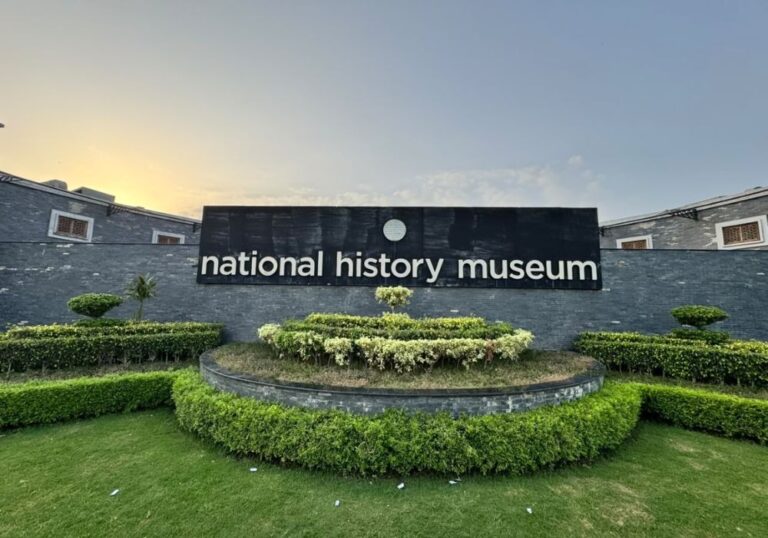
    The rain had just stopped when I reached Lahore’s National History Museum. The roads were quieter than usual, the air felt fresh and, for the first time in weeks, I wasn’t in a hurry. I had postponed this visit for years, ever since a brief stop during my internship at the Lahore Museum left me wishing for more time. This Sunday, I finally had it. I have also realised something over the past few weeks. Waiting for friends before exploring new places often means never going at all. So I decided to spend the afternoon on my own, following nothing except curiosity. As I entered the museum, Floor Supervisor Tabish welcomed me and arranged a guided tour with Muhammad Shamsher, a PhD scholar in History who also serves as one of NHM’s guides. His explanations never sounded like a lecture. Instead, he connected historical events with the people behind them, making every gallery feel like part of one continuing story. Growing up, I believed museums were places where objects sat behind glass while visitors quietly read information panels. That idea came from childhood visits to museums in Islamabad, Taxila and Harappa, and later from my internship at Lahore Museum. The National History Museum challenged that idea completely. Through digital displays, sound, projection and interactive exhibits, history became something to experience rather than simply observe. Every gallery encouraged visitors to slow down and become part of the story unfolding around them. One exhibit that caught my attention focused on the making of Minar-e-Pakistan. Like many Pakistanis, I had always admired the monument without knowing much about the person who designed it. The museum introduced architect Nasreddin Murat-Khan and displayed photographs that offered a glimpse into the creative process behind one of Pakistan’s most recognisable landmarks. It reminded me how often we celebrate monuments while forgetting the people who imagined them. The journey then moved towards Partition, where history became deeply personal. The restored railway carriage, once part of the North Western Railway, stood quietly inside the gallery. Visitors could step inside and experience a virtual reality presentation recreating the migration of 1947. I had watched countless documentaries and films about Partition, but sitting inside that carriage created an entirely different feeling. The sounds, voices and uncertainty surrounding the experience made history feel much closer than any textbook ever could. The museum then shifted from the birth of Pakistan to the challenge of building a new country. One gallery recreated the early government offices established after independence. I found myself studying old files, furniture and official records, imagining the enormous responsibility carried by those tasked with running a newly created nation. Nearby, early Pakistani passports were displayed inside glass cases. Different in design from today’s passports, they represented the same hope of a country beginning to define its identity. Another section I found especially engaging was Camera from the Past. Visitors could stand before a vintage-style camera and have their photograph taken, creating a small connection between the present and the past. The gallery also highlighted photographer Aziz Ahmed Azmi, whose images documented Pakistan’s early years. Looking at his work, I realised that photographs often become history long after the moment they capture has passed. Perhaps the gallery where I spent the most time was Popular Culture. Having studied Mass Communication with a specialisation in Theatre, Film and Television and continuing to work in journalism, I naturally found myself drawn towards the colourful Lollywood posters and displays celebrating Pakistan’s cinematic heritage. Reading about Azra, the country’s first colour film, and Zinda Laash, Pakistan’s first horror film, reminded me how rich our film history is, even if many younger audiences know little about it today. Before leaving, I also explored Husn-e-Hunar, an exhibition celebrating Pakistan’s traditional craftsmanship. Alongside literature, music and cultural displays, it served as a reminder that a nation’s identity is shaped not only by political events but also by its artists, craftsmen and storytellers. When I stepped back outside, I realised I had spent far longer inside the museum than I had planned. I didn’t leave with pages of notes or dozens of photographs. Instead, I left with a greater appreciation for how history can be presented when museums invite visitors to participate rather than simply observe. The National History Museum doesn’t just preserve Pakistan’s past. It encourages visitors to pause, ask questions and discover the stories that continue to shape the country today.

  • Frailty, thy name is woman

    Frailty, thy name is woman. When William Shakespeare wrote those famous words in Hamlet, he was reflecting a cultural dogma that would shackle women for centuries. For generations, society treated female vulnerability not as a situational condition, but as an inherent biological truth. Women were categorized as delicate creatures requiring protection, physically incapable of heavy labor, and psychologically unsuited for high-stakes conflict. That archaic myth has officially crumbled. Across military frontlines, deep-sea research facilities, high-altitude athletics, and outer space, women are consistently performing tasks once deemed physically and mentally impossible for them. The notion that physical and emotional fragility is uniquely female is just outdated. It is empirically false. To understand how rapidly this paradigm is shifting, one needs to look no further than recent milestones in defense and aerospace news. Over the past decade, armed forces around the globe including the United States, Britain, and Ukraine have systematically opened elite infantry, combat engineering, and special forces units to women. Reporting from military defense outlets highlights that female service members are completing rigorous combat fitness tests, enduring punishing load-bearing marches carrying 80-pound packs, and demonstrating tactical mastery under live fire. During recent global conflicts, female soldiers have served directly on combat lines, driving heavy tactical vehicles, executing artillery strikes, and providing direct tactical support under extreme duress. The old argument that women lack the physical stamina or aggressive grit for battlefield conditions has been disproven not by rhetoric, but by operational reality. Beyond Earth’s atmosphere, space exploration news provided another definitive refutation of female frailty when NASA astronauts Christina Koch and Jessica Meir conducted the world’s first all-female spacewalk. Working outside the International Space Station for more than seven continuous hours, the pair maneuvered massive hardware components while tethered over 200 miles above Earth. Operating in heavy, pressurized extravehicular suits requires immense upper-body endurance, spatial coordination, and psychological coolness under pressure. Their performance demonstrated that when training, gear, and opportunity align, gender is completely irrelevant to high-risk technical performance. For centuries, skeptics cited raw biological differences such as lower average muscle mass compared to men as definitive proof of female inadequacy for physically demanding tasks. However, modern exercise physiology and ergonomics present a far more nuanced picture. While average biological markers differ across populations, top-tier female athletic conditioning overlaps significantly with high-level male capabilities. A trained female soldier or weightlifter easily outperforms the vast majority of untrained men in functional strength, endurance, and power output. Studies in ultra-endurance athletics such as 200-mile marathons and open-water ocean swims show that women often narrow the performance gap as distance increases. Female physiology displays high metabolic efficiency in utilizing fat stores during prolonged exertion, alongside exceptional psychological resilience in managing physical discomfort. Modern warfare, heavy industry, and aviation rely less on brute force and more on endurance, technical precision, decision-making, and specialized gear. Advances in ergonomic equipment and load-distribution technology ensure that operational success hinges on skill and stamina rather than raw power alone. Physical capability is only half the equation. The traditional stereotype of frailty was always as much about mental weakness as physical limitation. Women were portrayed as overly emotional, prone to panic, and ill-equipped for decisive leadership during crises. Real-world experience repeatedly contradicts this bias. From emergency room physicians navigating mass-casualty events to political leaders steering nations through global pandemics and conflicts, women consistently exhibit calm, strategic resolve under fire. Calling frailty a woman’s trait was never a scientific fact. It was a social construct designed to limit access, independence, and authority of women. When women were barred from gymnasiums, sports, military academies, and executive boardrooms, society pointed to their absence as proof of their inability. Once those doors were forced open, the illusion dissolved. Acknowledging that frailty is not a female trait does not mean pretending that men and women are biologically identical. It means recognizing that human potential is defined by discipline not by gender.

  • Amidst Consumerism: Has Modernity Stripped Us of The Ability To Love?

    By Hamza Aman As people of an unprecedented era, we often pride ourselves on the immense progress that has been furthered in various frontiers; be it state-of-the-art technology, sophistication in medicine, ground-breaking research in natural sciences or advancement in ideals like democracy, free speech and human rights. Our age has truly witnessed the remarkable realisation of human potential, enabling us to navigate and progress in uncharted terrains. But as the adage goes, ‘there ain’t no such thing as a free lunch’. This development came at an exorbitant cost. Modernity swiftly and discreetly robbed us of the most beautiful and human of experiences—love. A look into the annals of history suggests that love, especially in its romantic form, has never just remained an emotion. It has been a powerful unifying force that breathed meaning into life by offering to look beyond primitive human tendencies. The transcendence of social mores, as embodied in various celebrated stories, laid down a powerful moral framework of rising above oneself and praised classical themes of romanticism like selflessness, chivalry, and individual uniqueness. In philosophy, this notion of seeing people as ends in themselves was echoed by the German philosopher Immanuel Kant. Rejecting instrumentalism, he argued every human was possessed of inherent worth, distinct value, and dignity. And they must be treated as such. However, these notions began to change in postmodern society—drastically. A plethora of factors contributed to it. Postmodern society was marked by the withering of traditional anchors like family, marriage, and community, while rapid change and the steep rise of consumer culture completely changed how we viewed love and romance . Sociologist Zygmunt Bauman employs the term ‘liquid love’ to describe this change. He argued that modern relationships had become synonymous with shopping, wherein people saw their partners as products, browsing options, comparing, and checking them out. And because that kind of relationship is based on a consumerist approach, when the initial novelty fades away, it is easy to just exit. Furthermore, in an ever-changing world, individuals fear commitment and deliberately maintain fragile bonds that can be easily discarded when inconvenient. This is exacerbated by the extreme uncertainty that characterises the culture. As everything remains in constant flux and people go through changes in job, identity or preferences, bonds remain light and flexible. The result is a hindrance in building long-term relations whose bedrock is trust, commitment, and love, as everyone becomes disposable and replaceable. Moreover, people have formed a distorted perception of love, viewing it as something that magically happens and never fades away. This is not true and only leads to disenchantment in the long term. As the psychoanalyst Erich Fromm argues, love is an art that demands patience, discipline, and effort to cultivate. It needs constant nourishment. And true love can only flourish when it springs from abundance where you zoom in on ‘giving’ rather than ‘taking’. This kind of love not only enriches but also helps in building sound and enduring connections based on care, respect, and responsibility. Capitalist culture, however, perpetuates this need of being lovable rather than being on the giving side of the spectrum. It encourages us to market and commodify ourselves, to look good, possess status and wealth and/or cultivate certain personality traits. Thus, the culture stands in stark contrast to what is genuinely needed in fostering meaningful relationships. People have for centuries grasped the power and potential of this elusive emotion that we call love; but it went through radical change in the past few centuries. If we desire to truly develop and realise it, we need to abandon the consumerist tendencies that have become entrenched in our society. We need to give up seeing individuals as commodities or products and rather view them in a different light—as unique and irreplaceable beings with inherent worth that deserve love. Amidst chaos and change, what we need is stillness that is built on values like commitment, trust and responsibility. And finally, we, as a people, should celebrate love as a meaningful art that requires skills, refined through patience. Only then can we realise its actual potential, and its tremendous power, where it ultimately transforms into a symbol of rebellion in the face of alienation and meaninglessness.   Bio: Hamza Aman is a Political Science student at the Lahore University of Management Sciences (LUMS) with a keen interest in philosophy.

  • Online Harassment and Cybercrime in Pakistan: High Court Strengthens Protection of Digital Rights

    By Syeda Shehar Bano Bukhari Introduction: The rapid growth of social media and digital communication has transformed how people interact, work, and share information. Platforms such as Facebook, Instagram, TikTok, WhatsApp, and other online services have become an important part of everyday life. However, the expansion of digital spaces has also created new forms of crime, including cyber harassment, online blackmail, identity theft, unauthorized sharing of private information, and the misuse of digital content. In Pakistan, cybercrime has become an increasingly important legal issue. Courts are now required to balance the protection of individuals from online abuse with fundamental rights such as freedom of expression and privacy. Recent judicial rulings have highlighted the need for effective investigation, proper use of digital evidence, and protection of victims of online harassment. Background of the Legal Issue: Online harassment can take many forms. It may involve sending threatening messages, repeatedly contacting a person against their wishes, creating fake social media accounts, spreading private photographs, or publishing false information to damage someone’s reputation.  Women are particularly vulnerable to certain forms of online harassment. In some cases, social media platforms are used to threaten women with the publication of private photographs or videos. Such conduct can cause serious psychological distress and may affect a person’s family relationships, education, employment, and social reputation. The problem becomes more complicated when victims hesitate to report such incidents because of social pressure or fear of further harassment. As a result, many cases of online abuse may remain unreported. Role of the Prevention of Electronic Crimes Act: Pakistan’s main legal framework for dealing with cybercrime is the Prevention of Electronic Crimes Act, 2016 (PECA). The law provides criminal penalties for several forms of unlawful activity carried out through information technology and electronic communication. The law covers offences relating to unauthorized access, interference with information systems, cyberstalking, harassment, identity-related offences, and the misuse of electronic information. Under the legal framework, victims of cyber harassment can approach the relevant authorities and provide evidence such as screenshots, messages, emails, social media links, recordings, and other digital material. Such evidence may assist investigators in identifying the accused and establishing the circumstances of the alleged offence. Importance of Digital Evidence: One of the most important aspects of cybercrime cases is the collection and preservation of digital evidence. Unlike traditional crimes, online offences often leave electronic traces. For example, if an individual repeatedly threatens another person through WhatsApp messages, the victim may preserve screenshots, message records, telephone numbers, and other relevant information. Similarly, if a fake social media account is created to impersonate someone, the account link and associated digital information may become important evidence. However, digital evidence must be properly collected and authenticated. Courts must ensure that evidence presented before them is reliable and has not been manipulated by the offenders in connivance with the authorities. This makes forensic investigation an important part of modern criminal justice. Freedom of Expression and Online Abuse: The regulation of online content also raises questions concerning freedom of expression. Freedom of expression is a fundamental right, provided by the Constitution of Pakistan, 1973, but it is not unlimited and is also restricted. The law may impose reasonable restrictions in certain circumstances, including where speech involves threats, harassment, incitement to violence, or other unlawful conduct. The challenge for courts and law-enforcement authorities is to distinguish between legitimate criticism and unlawful online abuse. For example, a person criticizing a public official’s policies may be exercising freedom of expression. However, repeatedly threatening that official with violence or publishing private information with the intention of causing harm may cross the boundary between protected expression and unlawful conduct. Therefore, effective cybercrime laws must protect both individual safety and legitimate freedom of expression. A Real-Life Example: Consider a situation in which a woman receives repeated threatening messages from an unknown social media account. The person behind the account threatens to publish her private photographs unless she follows certain demands. Such conduct may create fear and psychological pressure. The victim can preserve the messages, take screenshots, record relevant account information, and report the matter to the appropriate authorities. The case demonstrates why awareness of digital rights and legal remedies is important. Victims should know that online harassment is not simply a personal disagreement; depending on the circumstances, it may constitute a criminal offence. Challenges in Cybercrime Investigations: Despite the existence of cybercrime laws, several challenges can affect the investigation and prosecution of online offences. First, offenders may use fake identities or anonymous accounts. Second, digital evidence can be deleted or altered quickly. Third, cybercrime investigations often require specialized technical expertise.  Another challenge is the international nature of the internet. An offender may operate from another country while targeting a victim in Pakistan. In such circumstances, obtaining evidence and identifying the person responsible may require international cooperation. These challenges demonstrate the need for trained investigators, modern forensic laboratories, effective cooperation between institutions, and public awareness. Protection of Victims: Victim protection is an important part of the response to cybercrime. Victims of online harassment may experience anxiety, fear, depression, and social pressure. In cases involving private images or blackmail, the psychological consequences can be particularly severe and damaging. Legal institutions should therefore ensure that victims can report complaints safely and confidentially. Investigations should be conducted professionally, and unnecessary exposure of victims’ private information should be avoided. The justice system should also recognize that victims of cyber harassment may require psychological and social support in addition to legal remedies. Broader Legal Significance: The increasing number of cybercrime cases demonstrates that traditional concepts of criminal law must adapt to technological developments. Crimes committed through digital platforms can cause real-world harm, even when the offender and victim never meet physically. The legal system must therefore develop effective methods for dealing with electronic evidence, online anonymity, cross-border offences, and rapidly changing technology. At the same time, laws should be applied carefully so that legitimate criticism, journalism, and freedom of expression are not unnecessarily restricted. A balanced legal approach is necessary to


  • Tomato for fresh and glowing skin

    Tomatoes are a common ingredient in the kitchen but they are also used in many home skincare routines.  They contain vitamin C and antioxidants which may help make the skin look brighter and fresher.  Some people also use tomato based remedies to help reduce the appearance of spots and breakouts. Tomato and yogurt face mask A simple tomato mask can be used to refresh dull looking skin.  Mash one tomato and mix it with a small amount of yogurt. Apply the mixture to your face and leave it on for about 20 minutes. Then rinse with clean water. This mask may help the skin feel fresh especially after spending time in the sun. Tomato and lemon for tanned skin Tomato and lemon are sometimes used as a home remedy for sun tanned skin.  Cut a few pieces of tomato and add some lemon juice. Apply the mixture gently to the affected areas. After a short time lightly massage the skin with a little water and rinse it off. However lemon can irritate the skin so people with sensitive skin should avoid this remedy. Tomato and Multani Mitti for blackheads Tomato juice can be mixed with Multani Mitti to make a simple face paste.  Apply it to the face and leave it for around 15 minutes. Add a little water gently massage the skin and then wash your face with lukewarm water. Tomato and sugar scrub Tomato and sugar can be used as a gentle homemade scrub.  Cut a tomato in half and add about one teaspoon of sugar. Once the sugar becomes slightly wet gently move the tomato over the skin without rubbing too hard.  This may help remove dead skin cells and leave the face feeling cleaner. Tomato and lemon for fine lines Some people also use a mixture of tomato and lemon juice as a home remedy for fine lines. Mix two teaspoons of tomato juice with two teaspoons of lemon juice. Apply a small amount with cotton and leave it on for about 15 minutes before washing your face. Be careful with home remedies Not every natural ingredient is suitable for every skin type.  Before applying any homemade skincare remedy to your face, test a small amount on a limited area of skin first. If you experience burning itching redness or irritation wash it off immediately.  People with sensitive skin should be especially careful with acidic ingredients such as lemon juice.

Leave a Reply

Your email address will not be published. Required fields are marked *