amidst consumerism has

Amidst Consumerism: Has Modernity Stripped Us of The Ability To Love?

By Hamza Aman

As people of an unprecedented era, we often pride ourselves on the immense progress that has been furthered in various frontiers; be it state-of-the-art technology, sophistication in medicine, ground-breaking research in natural sciences or advancement in ideals like democracy, free speech and human rights. Our age has truly witnessed the remarkable realisation of human potential, enabling us to navigate and progress in uncharted terrains. But as the adage goes, ‘there ain’t no such thing as a free lunch’. This development came at an exorbitant cost. Modernity swiftly and discreetly robbed us of the most beautiful and human of experiences—love.

A look into the annals of history suggests that love, especially in its romantic form, has never just remained an emotion. It has been a powerful unifying force that breathed meaning into life by offering to look beyond primitive human tendencies. The transcendence of social mores, as embodied in various celebrated stories, laid down a powerful moral framework of rising above oneself and praised classical themes of romanticism like selflessness, chivalry, and individual uniqueness. In philosophy, this notion of seeing people as ends in themselves was echoed by the German philosopher Immanuel Kant. Rejecting instrumentalism, he argued every human was possessed of inherent worth, distinct value, and dignity. And they must be treated as such.

However, these notions began to change in postmodern society—drastically. A plethora of factors contributed to it. Postmodern society was marked by the withering of traditional anchors like family, marriage, and community, while rapid change and the steep rise of consumer culture completely changed how we viewed love and romance . Sociologist Zygmunt Bauman employs the term ‘liquid love’ to describe this change. He argued that modern relationships had become synonymous with shopping, wherein people saw their partners as products, browsing options, comparing, and checking them out. And because that kind of relationship is based on a consumerist approach, when the initial novelty fades away, it is easy to just exit. Furthermore, in an ever-changing world, individuals fear commitment and deliberately maintain fragile bonds that can be easily discarded when inconvenient. This is exacerbated by the extreme uncertainty that characterises the culture. As everything remains in constant flux and people go through changes in job, identity or preferences, bonds remain light and flexible. The result is a hindrance in building long-term relations whose bedrock is trust, commitment, and love, as everyone becomes disposable and replaceable.

Moreover, people have formed a distorted perception of love, viewing it as something that magically happens and never fades away. This is not true and only leads to disenchantment in the long term. As the psychoanalyst Erich Fromm argues, love is an art that demands patience, discipline, and effort to cultivate. It needs constant nourishment. And true love can only flourish when it springs from abundance where you zoom in on ‘giving’ rather than ‘taking’. This kind of love not only enriches but also helps in building sound and enduring connections based on care, respect, and responsibility. Capitalist culture, however, perpetuates this need of being lovable rather than being on the giving side of the spectrum. It encourages us to market and commodify ourselves, to look good, possess status and wealth and/or cultivate certain personality traits. Thus, the culture stands in stark contrast to what is genuinely needed in fostering meaningful relationships.

People have for centuries grasped the power and potential of this elusive emotion that we call love; but it went through radical change in the past few centuries. If we desire to truly develop and realise it, we need to abandon the consumerist tendencies that have become entrenched in our society. We need to give up seeing individuals as commodities or products and rather view them in a different light—as unique and irreplaceable beings with inherent worth that deserve love. Amidst chaos and change, what we need is stillness that is built on values like commitment, trust and responsibility. And finally, we, as a people, should celebrate love as a meaningful art that requires skills, refined through patience. Only then can we realise its actual potential, and its tremendous power, where it ultimately transforms into a symbol of rebellion in the face of alienation and meaninglessness.


Bio: Hamza Aman is a Political Science student at the Lahore University of Management Sciences (LUMS) with a keen interest in philosophy.

Similar Posts

  • Can you solve this tricky fruit math puzzle? 

    At first glance this looks like a simple math question for children. However the way it is designed makes it surprisingly difficult and many people end up with the wrong answer. In the puzzle each type of fruit has a different value. Your challenge is to figure out the value of each fruit and then calculate the final equation. The last line asks you to add one cherry one apple and three bananas. To solve it correctly you need to carefully work out the value of each fruit from the previous equations. For example the first equation shows three apples adding up to 30, so each apple is worth 10. The other equations reveal that each banana is worth 4 and each cherry is worth 1. Using these values: Apple = 10 Banana = 4 Cherry = 1 Final calculation: 10 + (3 × 4) + 1 = 23 Correct Answer: 23 Note If the original puzzle counts each banana as 1 because it changes from a bunch to a single banana or uses a different image in the last row the answer may change. The answer depends on the exact picture shown. The text you provided says 14 but based only on the values stated in the text (apple = 10, banana = 4, cherry = 1) the total is 23.

  • | | |

    Nimra Khan divorce rumors intensify after social m…

    Pakistani television actress Nimra Khan has once again become the center of attention on social media after a series of emotional posts and changes to her Instagram activity sparked fresh speculation about her married life. The actress had announced her marriage in June 2026 through Instagram, sharing pictures and moments from her wedding ceremony held in Paris. However, shortly after the wedding, rumors regarding possible differences between the couple began circulating online. The speculation gained momentum when Nimra Khan shared an emotional video message in which she spoke about staying strong during difficult times. She said that no matter how challenging life becomes or whether people stop understanding or supporting someone, a person should never abandon themselves because they are enough for themselves. Following the reactions from fans, the actress had previously clarified that her married life was going well and explained that she had hidden some personal pictures due to concerns about negative attention and the “evil eye.” However, recent developments on social media have once again fueled discussions among fans. According to reports, Nimra Khan and her husband Zain Hamid have removed each other’s pictures from Instagram and have also unfollowed each other. The rumors intensified after Nimra Khan shared another video with a message about personal strength and resilience. In the post, she wrote that a person should remain strong enough that others do not mistake their silence for weakness. Meanwhile, her husband also shared a brief but meaningful post that attracted public attention. His message, which appeared on July 31, said: “Finally at peace, good that I got rid of it.” The post led many social media users to question whether the couple was facing personal difficulties. Nimra Khan also recently shared a video related to domestic violence awareness, in which a woman described alleged abuse by her husband. The actress reposted the video with the message, “We are with you.” She later shared another post emphasizing the importance of setting personal boundaries, saying that she had established limits because failing to do so had previously caused her difficulties. Despite the growing speculation, neither Nimra Khan nor Zain Hamid has issued an official statement confirming a divorce or separation. Fans continue to discuss the couple’s social media activity, but the actual status of their relationship remains unclear. As social media continues to fuel public interest in celebrity relationships, any confirmation regarding their marriage will likely come directly from the couple themselves.

  • The relationship between past tradition and present innovation

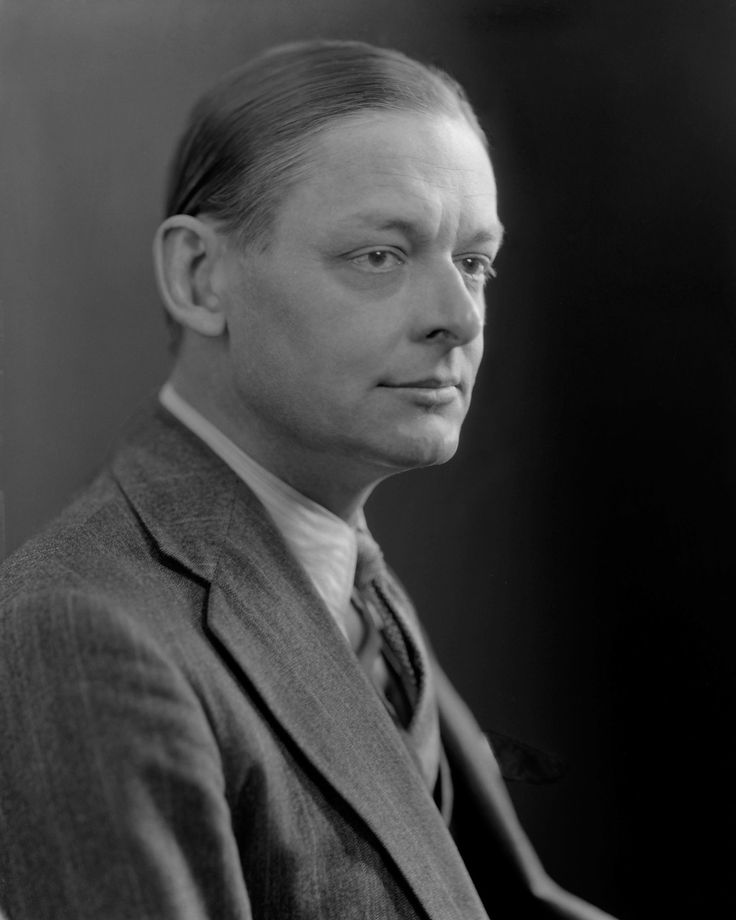
    In T.S. Eliot’s Tradition and the Individual Talent (1919), the relationship between tradition and innovation is conceived as a structural rejection of the Romantic rebels who came a century before. The English Romantics (Wordsworth, Coleridge, Byron, Shelley, and Keats) built an aesthetic identity on iconoclasm, intense individualism and radical rupture. In contrast, Eliot’s Modernist manifesto counters with historical humility, restraint and continuity. The Romantics operated as cultural iconoclasts. They emerged alongside the upheaval of the French Revolution. Poets like Shelley (Mont Blanc, Prometheus Unbound) explicitly rejected established institutional, religious and literary orthodoxies. For the Romantics, literature advances by breaking away from previous generations (especially Neoclassicism). The past is often viewed as a restrictive cage or a set of dead conventions that inhibit free human consciousness. Originality means creating something unprecedented from within the self. Authenticity is an act of poetic rebellion against tradition. In Tradition and the Individual Talent, Eliot argues that attempting to exempt oneself from the past is a delusion. Originality does not mean destroying past structures. In fact, it means acquiring a historical sense through arduous labor. Eliot reframes innovation as an internal readjustment of an existing system. A new poet cannot be rebellious in isolation. The poet’s work only gains aesthetic value when set among the dead poets of Western literature. It’s to see how it reshapes the entire dynamic order. Wordsworth famously defined poetry as the spontaneous overflow of powerful feelings. The Romantic movement centered the poet’s personal ego, subjectivity and unique psychological vision as the ultimate authority of art. The poet was a heroic prophet pouring out their soul. Eliot mounts a direct attack on this subjective expressivism. He famously counters: Poetry is not a turning loose of emotion, but an escape from emotion. It is not the expression of personality, but an escape from personality. To Eliot: The poet is not a heroic rebel, but a receptacle or catalyst (the platinum filament metaphor). The artist’s progress is a continuous extinction of personality and surrender to the literary heritage. Art should be judged as an autonomous, objective entity. It must be completely detached from the biographical life or emotional state of the human being who wrote it. Where the Romantic rebels viewed art as a wild, subjective act of liberation. Where the individual genius stands against society and past history. There and then, T.S. Eliot lowers the ego of the artist. Eliot redefines the individual talent not as a lone rebel storming the doors of literature. Individual talent is as ahistorically conscious craftsman who earns a place in the canon. This can only be by submitting to, learning from, and subtly altering the tradition that came before.  

  • The royal bloodlines that forged a Balkan powerhouse

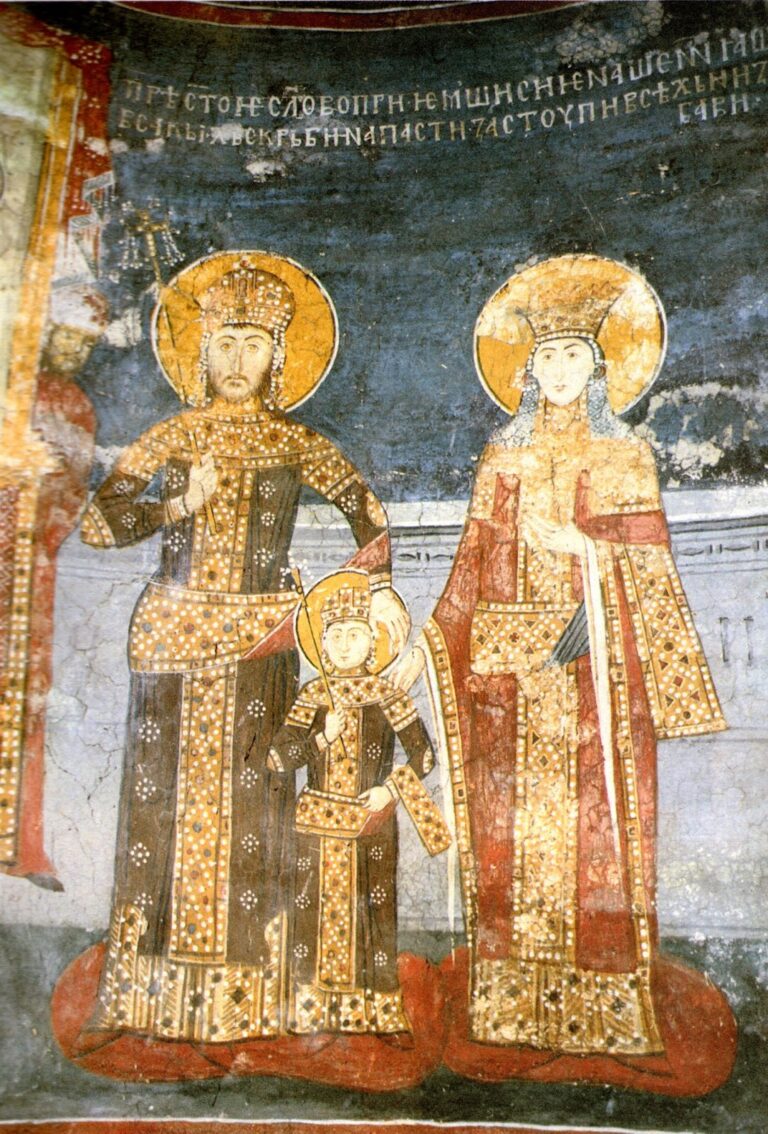
    In the heart of the 14th century, a monumental fresco was rendered upon the walls of the Lesnovo Monastery in modern-day North Macedonia. It captured a defining moment in Balkan history. Emperor Stefan Uroš IV Dušan alongside his wife, Empress Helena of Bulgaria, and their young heir, Stefan Uroš V. This wall painting serves as a enduring testament far more than a decorative piece of sacred art. A masterfully orchestrated political union that reshaped the geopolitical landscape of medieval Europe. At the center of this historical narrative is a strategic marriage forged in 1332. The newly crowned Serbian King Stefan Dušan entered into a pivotal treaty with Tsar Ivan Alexander of Bulgaria. He seems desperate to employ peace after years of regional conflict. The cornerstone of this agreement was the marriage of Dušan to Ivan Alexander’s sister, Princess Helena (Elena). This union was far more than a ceremonial gesture. Helena proved to be an immensely influential empress consort whose royal Bulgarian lineage carried significant political weight. Her marriage to Dušan directly altered his formal imperial standing, allowing him to claim authority not only over the Serbs and Greeks, but over the Bulgarians as well. The couple later gave birth to Stefan Uroš V, an heir who embodied the consolidated royal houses of the region. Yet, the Bulgarian connections within the Serbian royal court ran much deeper than Dušan’s marriage alone. Dušan himself was bound to Bulgaria by blood through his mother, Queen Theodora Smilets. As the daughter of Tsar Smilets, who ruled the Second Bulgarian Empire from 1292 to 1298 AD, Theodora brought rich dynastic heritage into the Nemanjić house. Thus, when Dušan rose to power and eventually established the grand Serbian Empire, he did so as a monarch who was inherently a product of both Serbian and Bulgarian elite lineages. The fresco preserved in Lesnovo illuminates this intertwined destiny. Depicting the imperial family dressed in rich, jewel-encrusted Byzantine-style robes, it reflects an era when diplomatic ties, shared heritage, and strategic royal marriages could unite rival realms under a single, dominant imperial banner. Today, these historical records and vibrant monastery paintings remind us that the borders of the medieval Balkans were constantly reshaped not just on the battlefield, but through the formidable power of dynastic unity.  

  • Fake it till you break it: inside the deepfake era

    Previously, I believed that if one could see something, it could be trusted because seeing is believing. A video was proof. A voice recording was evidence. That belief is gone, and I don’t think we have fully sat with the implications. There is an abnormal shift happening. AI-generated images, voice cloning, face-swapping apps, and similar tools were supposed to expand how people express themselves, but instead they have slowly chipped away at what matters most: the belief that people can express themselves through their images and their words. I attended a workshop under the project titled “Digital Trust and Free Expression in the AI Era” at Department of Media and Development Communication, University of the Punjab, supported by the U.S. Mission to Pakistan in partnership with the Pakistan-U.S. Alumni Network (PUAN) last week. During the discussions on digital trust. I took part in the discussion and shared my thoughts that we are now in a time where we must take this out of the realm of fun tech novelty and place it in the realm of a structural issue in how societies operate. Everyone says deepfakes are a “misinformation” issue, but this is not an adequate way to describe it. Misinformation is something that’s a false statement that can, in theory, be fact-checked. Deepfakes strike at the heart of video and audio credibility which have always been treated as vivid reality. When people realize that any clip can be fabricated, they stop trusting all clips, even real ones. This is what concerns me most. Fake things are believed and real things become deniable. Consider the implications of journalism, courts, political accountability, etc. If a politician is recorded saying something damaging, they can simply claim that it’s a “deepfake” and, depending on how much trust citizen have lost, people may believe them. We are creating a society in which it is possible to negotiate authenticity and in which negotiable authenticity is a gift for those who wish to avoid consequences. I also face a conflict here: I strongly believe in free speech, satire, parody, art and provocation even with synthetic media. The same technology behind de-aged actors, resurrected voices, dubbing, and experimental AI is extremely creative, yet it is all connected to malicious deepfakes. There is no way to ‘clean’ a tool of its worst use-case. A hammer can break windows or build houses. I do not think banning synthetic media is the answer, nor do I support pre-emptive censorship. That path harms legitimate satire, journalism and art under the pretense of ‘preserving truth’. History does not look kindly on institutions that decide what is a “fair” fake. Freedom of expression has never been of consequence or friction, and right now, deepfakes have almost no friction. The reality is there is no cost, disclosure, and accountability in using this technology deceptively. The issue is the imbalance. I believe the solution is not reducing synthetic tools but improving provenance. We need a digital watermarking, which cannot be “easily removed”: cryptographic signatures embedded into cameras, microphones and generative tools at the point of creation, so that the “unverified” label appears by default, not as an afterthought. Not to prohibit any content but to allow people to know what they are seeing before deciding whether to trust it. Platforms have been allowed to operate without responsibility for too long. Convincing fakes can reach millions before correction and corrections never travel as far. This asymmetry is not natural; it is a design choice. Platforms can mark, rate or tag synthetic content at the time of dissemination. Most simply haven’t had to! But, beyond platforms, we must change our own instincts as individuals. The old saying was “pics or it didn’t happen.” The new rule should be: “Who gains from believing this and can I verify it myself? A society that believes everything or worse, believes nothing is in danger. The deepfake age is not the age of AI; it is the consequences of a world where the cost of faking reality is near zero and the cost of establishing truth remains high. Freedom of expression should protect the most challenging and profound exchange of ideas, not the production of fake consent, fake evidence, or fake people. We can have creative freedom and still expect honesty about sources. These are not competing prioritie These are not different objectives/priorities. However, if we pretend it’s a content-moderation footnote, we must make sure we are not waking up in a world where “fake it till you make it” has become ‘fake it till you break it” and by that time, it won’t be just one video or one lie that will break. It will be our fundamental ability to reach a shared understanding of reality. The views, thoughts, and opinions expressed in this blog are solely those of the author and do not necessarily reflect the official policy or position of the U.S. Mission to Pakistan or USEFP/PUAN. The writer, Mahnoor Ashraf Wattoo, is a student of Media and Development Communication at University of the Punjab, Lahore 

  • MIT robot can fly and swim

    Researchers at the Massachusetts Institute of Technology (MIT) have created a unique robot that can both fly through the air and swim underwater just like diving birds. The lightweight robot costs around $300 and was designed by MIT’s AeroAquatic Robotics team.  Scientists believe it could one day help monitor oceans study marine life and support environmental protection. The robot was inspired by diving birds which use the same wings to fly in the air and move through water.  While scientists have studied these birds for years building a robot that can perform both tasks efficiently has been a major challenge. To solve this the MIT team carefully studied how diving birds move and used those findings to design the new machine. The robot called the Flapping Aerial Aquatic Vehicle weighs only 250 grams.  It runs on a battery powered motor and has nylon wings and a tail coated with water resistant nanoparticles to protect them from moisture. According to the researchers the robot is programmed to flap its wings at a specific frequency allowing it to move smoothly in both air and water without changing its basic movement. It can fly at speeds of up to 13.4 miles per hour and swim at about 2.2 miles per hour. On a single battery charge it is designed to fly as far as 6 kilometers or swim up to 2 kilometers. The robot was tested for about one year first in a water tank in Massachusetts and later in Lake Geneva Switzerland where researchers evaluated its performance in real world conditions.

Leave a Reply

Your email address will not be published. Required fields are marked *