art open ending
|

The art of the open ending

For centuries, traditional storytelling operated under a strict covenant of closure. Fables, romantic comedies, and classic mysteries were built upon a reassuring promise. And by the final chapter, every thread would be neatly tied, justice served, lovers united, and monsters vanquished. This desire for definitive resolutizon is deeply human. Our brains naturally crave order and certainty. Yet, as modern literature evolved alongside an increasingly complex world, a different artistic philosophy took the spot. The open ending is not a failure of craft; it is a sophisticated act of storytelling that treats the reader as an active partner.

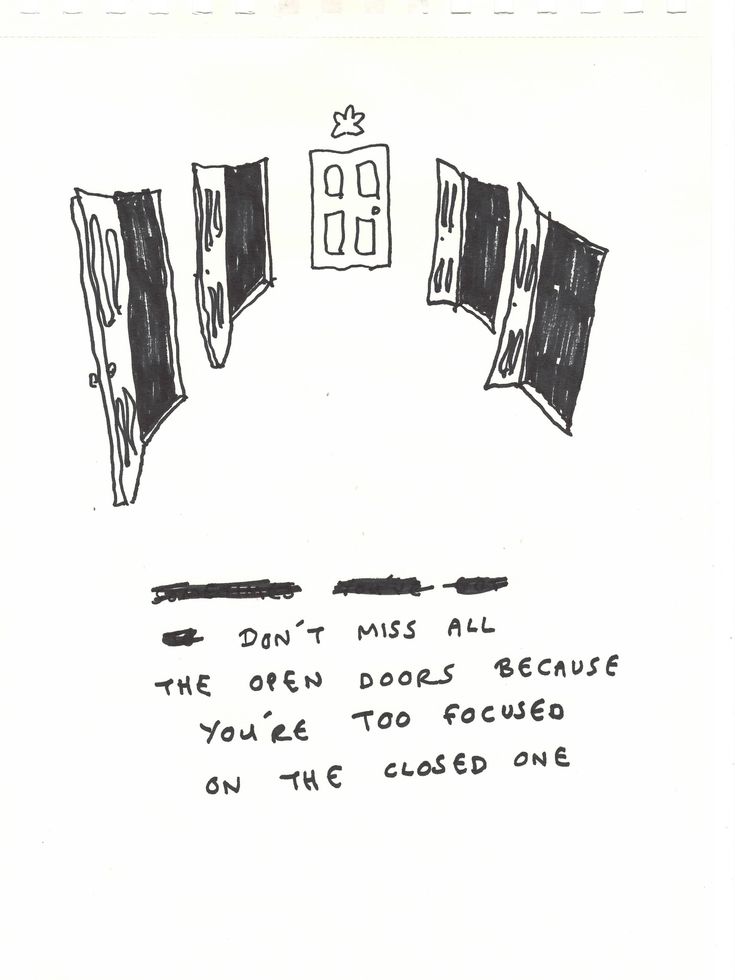
When an author refuses to deliver a resolution, they fundamentally alter the dynamic between text and reader. In a traditional closed narrative, the reader is a passive recipient, sitting back while the writer decides the fate of every character. An open ending, by contrast, throws open the door to collaboration. As the final sentence lingers without a definitive resolution, the narrative burden shifts. The reader must step into the silence. They must analyse character motivations, thematic clues, and emotional trajectories to construct their own sense of meaning. The story stops being merely something you consumed; it becomes an intellectual puzzle you participated in completing.

Psychologically, ambiguous endings linger in the memory far longer than wrapped-up conclusions. Behavioral scientists refer to this as the Zeigarnik effect: the cognitive tendency for human minds to remember uncompleted or interrupted tasks better than completed ones. A novel that ends with a smooth resolution is easily categorized and set aside. But a book that closes on a question mark or a character standing at a metaphorical crossroads, uncertain of their next step continues to resonate in the subconscious. Long after the book is closed, you find yourself pondering what happened next while doing dishes, walking to work, or staring out a window.

Furthermore, the open ending reflects a deeper fidelity to real life. Human existence rarely delivers clean, cinematic resolutions. Our relationships, griefs, ambitions, and self-discoveries are ongoing processes rather than neatly closed chapters. By leaving a story partially unresolved, an author honors the messy reality of human experience. It acknowledges that living with unanswered questions is often far more authentic than forcing an artificial sense of certainty.

When executed with skill, an open ending is never lazy or evasive. It is not an abrupt cutoff, but a carefully calibrated launching pad. The author leaves behind enough emotional breadcrumbs and thematic architecture for the conclusion to feel earned, even if the explicit plot points remain unwritten. It transforms the final page inviting us to look beyond the boundaries of the page and recognize that the best stories are the ones that keep living inside us.


Similar Posts

  • |

    Experts reveal how ancient Egyptians built pyramids?

    The centuries-old Egyptian pyramids have long remained a major focus of interest for people and scientists. For years, scientists have been trying to solve the mystery of how such massive pyramids were constructed in ancient Egypt thousands of years ago. Now, a possible answer has emerged. Earlier, it was believed that ropes and sledging systems were used to transport stones to the upper sections of the pyramids. However, evidence discovered near the Nile River suggests that experts of that era had already mastered advanced construction techniques centuries before the construction of the Great Pyramid of Giza in the desert. Archaeologists have excavated a 5,000-year-old cemetery-like site near the eastern bank of the Nile River. Two tombs discovered there have construction styles remarkably similar to those of the Egyptian pyramids built centuries later. The walls of these tombs were thicker at the bottom and gradually became narrower toward the top. This design provided greater stability to the structures. Similar techniques were later used in the construction of step pyramids and other large pyramids. Researchers also discovered evidence of ancient methods used to cut stones and wood which were employed in the construction of the tombs. The tombs were discovered in Egypt’s Jabal al-Tayr region where people have been buried for thousands of years. The style of these tombs resembles the tombs of kings in Abydos, one of Egypt’s oldest cities. This suggests that advanced construction techniques may have been widely known across Egypt even before the construction of the pyramids. Researchers said the tombs provide a glimpse into experimental construction methods that may have eventually led to the construction of the Egyptian pyramids. Experts said preliminary analysis indicates that the construction style of these tombs was quite similar to that of the pyramids associated with Egypt’s First Dynasty. Egypt’s First Dynasty ruled the country around 3100 BC. According to Egypt’s Tourism Minister, Sherif Fathy, the new discovery will help researchers understand how these construction techniques evolved throughout ancient Egyptian history. Earlier, in May 2024, researchers discovered a buried branch of the Nile River beneath the desert that once flowed around more than 30 pyramids thousands of years ago. This discovery helped solve the mystery of how ancient Egyptians transported extremely heavy stones to the pyramid construction sites. The 40-mile-long branch of the river once flowed around the Great Pyramid of Giza and other pyramids. Thousands of years ago, it gradually became buried beneath desert sand and agricultural land. According to the research, the presence of this ancient river explains how 31 pyramids were constructed between approximately 4,700 and 3,700 years ago in a valley that has now become a deserted strip of desert. The valley is located near Memphis, the ancient capital of Egypt and is home to the Great Pyramid of Giza, the only surviving wonder of the ancient Seven Wonders of the World. A study published in the journal Nature Communications reported the discovery of this ancient branch of the river. The research team used radar satellite technology to identify the hidden river channel. Surveys of the area and analysis of samples confirmed the presence of the ancient river. According to researchers, the river was once very powerful but may have gradually become buried under sand because of drought around 4,200 years ago. The Great Pyramid of Giza is located just one kilometer from the bank of this buried river. Around 2.3 million stone blocks were used to build the pyramid with each block weighing between 2.5 and 15 tons. Researchers said the ancient river also provides clues about why pyramids were built at different locations. They explained that the river’s course and flow changed over time which may have led Egyptian rulers to construct pyramids at different locations.

  • Urgent Need for a Hospital and Ambulance Service in Shapuk, District Kech

    By Asma Qayyum I would like to draw the attention of the health authorities and the Government of Balochistan to the severe healthcare crisis faced by the residents of Shapuk, a rural village in District Kech. At present, Shapuk has no healthcare infrastructure. There is no hospital, Basic Health Unit (BHU), clinic or even a single doctor available to serve the local population. For even minor illnesses routine check-ups  or medical consultations, residents are forced to travel nearly 34 kilometers to Turbat. This not only causes inconvenience but also places an unnecessary financial burden on families. The situation becomes even more alarming during medical emergencies. Shapuk has no ambulance service leaving critically ill patients without immediate medical assistance.   In cases of childbirth complications serious accidents heart attacks or other life threatening conditions patients must wait for expensive private transport. Many lives are put at risk or even lost during the long and painful journey to Turbat.   Pregnant women in particular face immense danger when timely medical care is unavailable. Access to basic healthcare is a fundamental human right yet the people of Shapuk remain deprived of this essential service. According to regional healthcare assessments by the Pakistan Poverty Alleviation Fund and district development profiles Kech has long suffered from a shortage of healthcare facilities and medical professionals. It is encouraging that the Balochistan Government’s Public Sector Development Programme (PSDP) has allocated funds for infrastructure projects such as the Construction of the Shapuk External Road. However while roads are being developed healthcare remains neglected. Roads alone cannot save lives if there are no nearby medical facilities to serve the people. I respectfully urge the Balochistan Health Department the Deputy Commissioner of Kech, and the elected representatives of the area to take immediate action.   The government should establish at least a fully equipped Basic Health Unit (BHU) in Shapuk appoint qualified doctors and medical staff provide essential medicines and station an emergency ambulance to ensure timely medical care for residents. Healthcare is not a privilege it is a basic right. The people of Shapuk deserve access to safe timely and quality medical services. Immediate action today can save countless lives tomorrow.

  • | |

    The immortal king: Gilgamesh

    The Epic of Gilgamesh chronicle a ruler whose reach eclipsed his own era. King Gilgamesh of Uruk was celebrated across the Fertile Crescent for his unmatched strength, towering city walls, and unyielding ambition. He was a mythical hero, two-thirds god and one-third man. The Influence of King Gilgamesh Over ancient kings and foreign lands, his influence was absolute. Monarchs who succeeded him across Sumer, Akkad, and Assyria measured their own majesty against his legacy.  Moreover, those realms seek to embody his wisdom and claim a dominion as legendary as the one he forged before the great waters swept the earth. He Who Saw the Deep.. He saw what was secret, discovered what was hidden, He brought us a tale of the days before the Flood. The Ancient Mesopotamia In recent archaeology, the shadow of Mesopotamia’s heroic past continues to reemerge in unexpected ways. Modern researchers conducting glacial surveys on Turkey’s Mount Ararat have begun mapping shrinking ice fields to retrieve core samples. Historically, Mount Ararat is the high peak linked with ancient flood mythologies.  This pioneering study seeks to extract a continuous chronicle of human activity, ancient agriculture and metal smelting preserved in ice layers spanning thousands of years. The studies offer a direct physical record of the environmental world that ancient Mesopotamian civilizations inhabited. Search For The Unknown This convergence of epic poetry and modern science reveals that the search for what was hidden remains as vital today as it was in antiquity. The ancient scribes etched Gilgamesh’s story into clay tablets. They recorded a hero who traveled to the ends of the earth to seek secrets of mortality and natural catastrophe. The story of the great deluge, brought back by Gilgamesh from the edge of the known world. It functioned both as a sobering warning and as a testament to the fragile line between human pride and nature’s fury. The Truth Today, scientists analyze ice layers and ancient cuneiform archives across the Middle East. Furthermore, we are reminded of the power of memory. Kings and empires inevitably turn to dust. Yet, the insights gathered by those who dare to look into the deep endure across millennia remain forever. Gilgamesh’s journey teaches us that true power lies not in martial conquest or monumental stone. Rather, it’s in the wisdom preserved for generations that follow. True power is a truth as resonant in our modern era as it was in the ancient halls of Uruk.    

  • The hallucination trap – information convincing but factually incorrect

    By Syeda Samar Zahra Zaidi When you ask an AI chatbot a question it does not know the answer to, an odd thing can happen: instead of hesitating or saying, “I am not sure!” it confidently delivers a tidy, well-structured, completely fabricated response—often with fake citations, fictional figures, and an authoritative tone. This phenomenon is known as the ‘hallucination trap ’, and it may be the most significant barrier between trust and artificial intelligence. I was introduced to the term “AI hallucination” for the first time in the workshop under the project titled “Digital Trust and Free Expression in the AI Era” at Department of Media and Development Communication, University of the Punjab, supported by the U.S. Mission to Pakistan in partnership with the Pakistan-U.S. Alumni Network (PUAN). I learned that a “hallucination” occurs when a language model produces information that sounds convincing but is factually incorrect or completely made up. Examples include inventing a legal case that never existed, citing a research paper that doesn’t exist or boldly misrepresenting a historical date. What is disturbing is not merely that AI can be wrong-humans make mistake too- but rather the way it presents that incorrect information with clearly, confidence and without a trace of doubt. Large language models are essentially highly complex pattern predictors trained to produce the most likely next word in a sequence. As a result, when a model has encountered a topic thousands of times in its training data, the predictors are typically accurate. However, when it comes across a gap, an unidentified fact or a question at the outer edge of its knowledge, it doesn’t shift into a hesitant mode. Instead, it continues doing exactly what it was trained to do: generate a logical, fluent piece of writing, producing a response that is structurally sound and grammatically correct but based on nothing. In human communication, confidence is generally perceived as a sign of strength which is important. We naturally prefer to trust a calm, reliable voice over a hesitant one. AI systems unintentionally exploit the tendency because their language remains confident whether they are right or wrong. The risks increase with the use of AI, as students may unintentionally include false information into their work and journalists have published articles citing artificially created sources and quotes, negatively affecting the credibility of their publications. Such inaccuracies influence what millions of people see, believe or share, thereby amplifying fabricated content. The reason AI does not simply say “I don’t know” is partly due to the way these systems are trained. Many models are designed to provide helpful, comprehensive-sounding answers and are rarely rewarded for expressing doubt during training. This means that a model that frequently acknowledges uncertainty may be judged as less helpful than one that consistently provides an answer, even when that confidence is occasionally misplaced. Such incorrectly aligned incentives arise when the training process gradually teaches the model that sounding confident is more valuable than being accuracy. Retrieval-augmented generation, which relies on responses in actual, verifiable records rather than internal memory alone, improved training techniques that explicitly account for uncertainty; and systems built to simply cite sources. So, users can independently verify claims are just a few of the ways developers are using to addresses this problem. While none of these solutions fully eliminate hallucination yet, taken together they represent a major shift from blind confidence toward earned trust. The most dangerous outcome is not an AI that makes mistakes but a culture of users who stop questioning because the system always sounds so sure of itself.   Therefore, until AI becomes more reliably aware of it own limitation, part of the responsibility falls on the people who use it: treating AI-generated output as a starting point rather than an endpoint, cross checking important facts against credible sources. In the end, the hallucination trap serves as a reminder that illusion is not the same as truth. As AI becomes increasingly common in education, digital media and everyday life, understanding why it occasionally lies with confidence is not only a technical curiosity but also a fundamental aspect of digital literacy. We must strengthen our ability to verify the information provided by AI as they become more persuasive. The views, thoughts, and opinions expressed in this blog are solely those of the author and do not necessarily reflect the official policy or position of the U.S. Mission to Pakistan or USEFP. The writer, Syeda Samar Zahra Zaidi, is a student of Media and Development Communication at  University of the Punjab, Lahore and can be reached at samarzahra456@gmail.com.  

  • Stop the culture of begging

    Begging has become a growing problem in many cities of Pakistan. It is common to see children women and elderly people begging at traffic signals markets and public places.   While some are genuinely poor many are forced into organized begging networks that exploit them for money. Instead of encouraging begging by giving cash, society should support charities, shelters and welfare programs that help people become self reliant.   The government must also take strict action against begging mafias provide vocational training and create employment opportunities for those in need. By addressing the root causes of poverty and exploitation we can help people live with dignity rather than depend on begging

  • Night or Morning when to charge your phone?

    Many smartphone users wonder whether it is better to charge their phone overnight or wait until the morning. Some people plug in their phone before going to bed while others prefer charging it after they wake up.  According to technology experts both methods are generally safe but one may be better for your battery’s long term health. Modern smartphones are designed with smart charging technology that helps protect the battery. Once the battery reaches 100%, the phone automatically reduces or stops charging to prevent overcharging. This means leaving your phone plugged in overnight is usually not dangerous and it is very unlikely to cause the battery to explode or become damaged under normal conditions. However experts say that keeping the phone connected to the charger for many hours is not always the best habit. Even after the battery is full a small amount of voltage can remain which may slowly add stress to the battery over time. If this happens every night for months or years it could slightly reduce the battery’s overall lifespan. For this reason many experts recommend charging your phone in the morning whenever possible.  You can unplug it as soon as it reaches the charge level you need helping reduce unnecessary stress on the battery. Battery experts also suggest keeping your phone’s battery between 20% and 80% most of the time.  Staying within this range reduces chemical wear inside the battery and can help it last longer. If overnight charging is your only option there is no need to worry.  Most modern Android phones and iPhones include features such as Adaptive Charging or Optimized Battery Charging. These features learn your daily routine and slow down charging overnight reaching 100% only shortly before you usually unplug the phone. This helps reduce long term battery wear. Heat is another important factor that affects battery life. Using your phone for heavy gaming video editing or other demanding tasks while it is charging can cause it to become very hot. High temperatures can shorten the battery’s lifespan more quickly than charging overnight. Experts also recommend using the original charger or a trusted high quality replacement. Cheap or low quality chargers and cables may not provide stable power and could affect battery performance. It is also a good idea to avoid charging your phone under a pillow blanket or in any place where heat cannot escape easily. Another useful tip is to avoid letting the battery drop to 0% on a regular basis. Instead try to charge it when it falls to around 20%, and if possible unplug it when it reaches about 80%. In the end overnight charging is much safer than it used to be because of modern battery technology. However if you want your phone’s battery to stay healthy for as long as possible charging when needed using adaptive charging features avoiding excessive heat and keeping the battery between 20% and 80% are the best habits to follow.

Leave a Reply

Your email address will not be published. Required fields are marked *