treasure hunt mayo

Treasure hunt at Mayo landa in old Lahore

Behind the 19th-century Victorian red-brick arches of Mayo Hospital exists one of Lahore’s most vibrant bazaars: Mayo Landa.

First-time visitors might expect a simple fleece and jacket bazaar through the narrow lanes behind Mayo Hospital. However, it reveals something far richer. Mayo Landa has transformed into a bustling open-air ecosystem where global fashion, imported household goods, rare oddities, and genuine historic antiques intersect at prices that defy modern inflation. The word landa originates from the Punjabi term for roofless or uncovered. It usually refers to the early informal stalls that traders set up along open alleys without permanent shopfronts.

The origins of Lahore’s landa market trace back to the pre-partition British colonial era. It is located strategically between the Lahore Railway Station and bustling medical hub of Mayo Hospital (established in 1871). The area naturally became a high-traffic junction for travelers, laborers, and rural migrants. Vendors began setting up wooden crates and blankets to sell low-cost textiles and goods to working-class families who could not afford stuff otherwise. Following the partition in 1947, the market expanded rapidly to accommodate millions of resettling families seeking affordable essentials. Over the decades, small family-run stalls grew into an organized nationwide wholesale network.

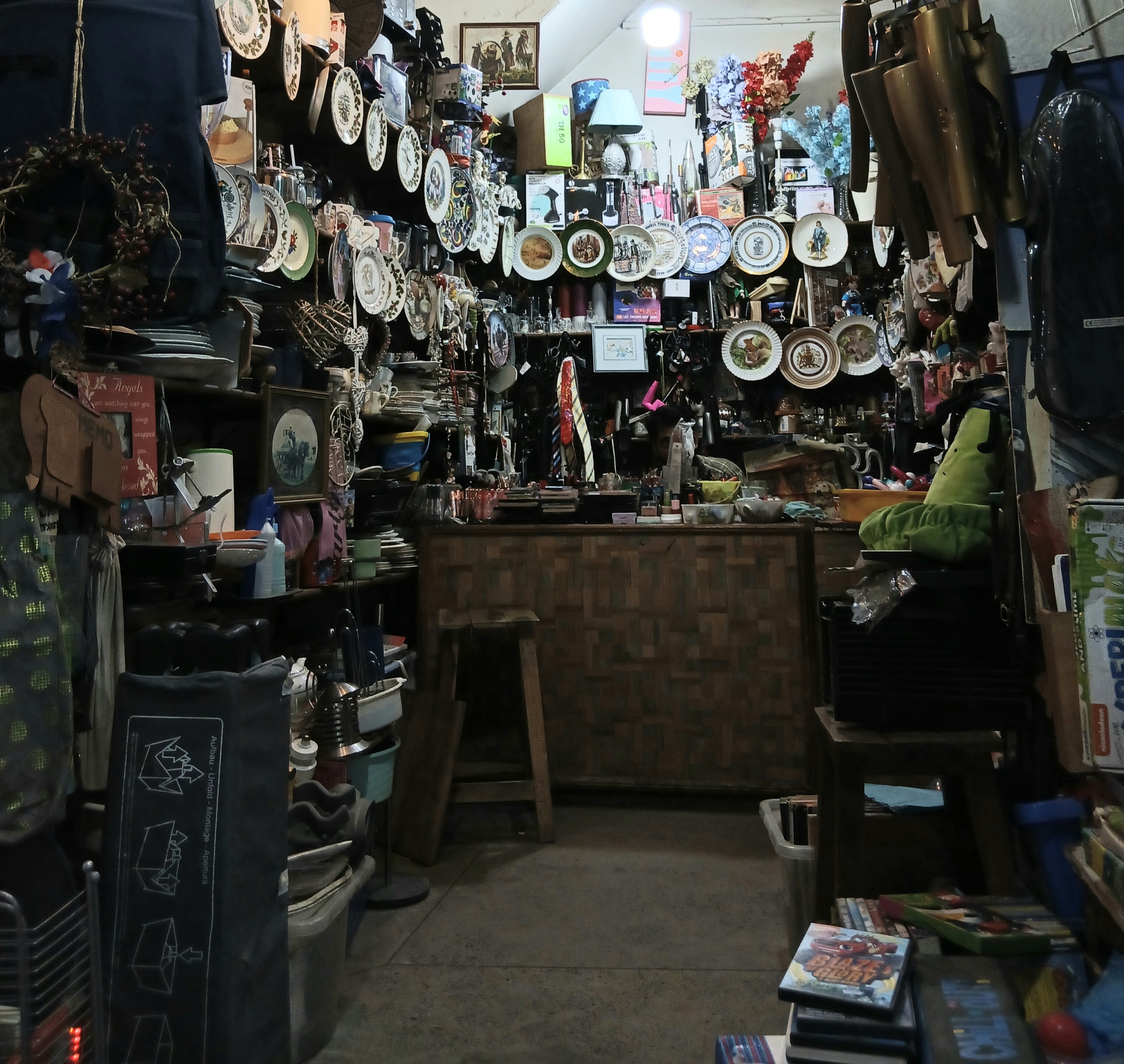
Today, Mayo Landa operates as a major locality for imported pre-owned items. These are sourced globally from North America, Europe, Japan, South Korea, and Australia. While everyday apparel from heavy winter coats to designer sneakers remains a staple, the modern Mayo Landa experience goes far beyond clothing. Collectors regularly scour the market for genuine heavy-leather jackets, vintage denim, and retro sports gear that would cost hundreds of dollars internationally. Stalls feature everything from Japanese porcelain and European glassware to high-end kitchenware and functional electronics. Antique items are hidden within subtle corner stalls and old storerooms. Victorian brass lamps, mid-century mechanical clocks, classic cameras, old vinyl records, and hand-carved wooden artifacts. Prices are mostly negotiated through traditional haggling. Shoppers can frequently pick up valuable, high-grade collectibles at a fraction of their market value. What makes the backside of Mayo Hospital particularly captivating is its extraordinary cultural overlap and unique spatial atmosphere. Mayo landa alleyways & antique stalls. There roaming doctors & med students in scrubs. Then NCA art students searching for props across the area. Amongst, pashtun traders sorting bales. Hidden under the shade of century-old banyan trees behind the hospital compounds are secretive, multi-room vintage stores disguised as crumbling brick structures. Step inside, and you might find an operational 1920s gramophone playing vintage orchestra records right next to a pile of modern winter coats.

Mayo Landa is more than just a flea market to the frequent visitors. It is a living archive of economic resilience, sustainable reuse, and cultural heritage. In a world dominated by fast fashion and mass-produced plastic, this historic corner of Old Lahore offers something rare. It’s the thrill of real discovery backed by over a century of history.


 

Similar Posts

  • Beyond Caravaggio’s shadow lies Gentileschi’s masterpiece

    In the history of European art, few paintings contain the impact of Artemisia Gentileschi’s Judith Slaying Holofernes (1612–1613), housed in the Museo di Capodimonte in Naples. This masterpiece was painted when Gentileschi was only in her late teens. The canvas captures the climatic biblical moment of the Israelite heroine Judith, assisted by her maidservant Abra, beheads the invading Assyrian general Holofernes. Later, the decapitated head was delivered to her besieged city of Bethulia. Baroque art frequently revisited the deuterocanonical story of Judith. Gentileschi’s depiction shattered the established artistic conventions of her era. Her canvas showed a powerful portrayal of female agency, solidarity, and uncompromising physical force. In earlier Renaissance and Baroque interpretations of the story, Judith was often rendered as hesitant, emotionally detached, or visibly repulsed by the act of violence. Maidservants were typically portrayed as passive observers or elderly bystanders waiting in the background. Gentileschi discarded this detached framing. And transformed the scene into a collaborative and grueling physical struggle. Abra is not merely a witness; she actively pins down Holofernes’ arms, applying her body weight to suppress his desperate struggles. Judith holds the general firmly by his hair. Her muscles taut and face composed in resolute determination as she drives the sword through his neck. The composition relies heavily on contrasting, thrusting arms that radiate outward from the central act of decapitation, pinning the viewer’s gaze directly onto the fatal fate.  Traditional/Male Views: Judith hesitant, maid as onlooker. Gentileschi’s Vision: Physical force, sisterly ccollaboration. Gentileschi created this initial version in Rome. It was shortly after enduring a highly public and harrowing trial against painter Agostino Tassi, who had raped her in 1611. During the proceedings, Artemisia was subjected to physical torture to verify her testimony. “Early feminist art historians have frequently read the canvas as a powerful statement of visual retribution and catharsis, pointing out that Gentileschi painted Judith with her own facial features while bestowing Tassi’s likeness upon Holofernes.” Stylistically, the work demonstrates Artemisia’s absorption of Caravaggio’s tenebrism. The dramatic contrast between theatrical light and suffocating shadows. However, unlike Caravaggio’s dark theatricality, Artemisia’s focus remains emotional and human. Gentileschi returned to this subject around 1620, producing a second famous version currently preserved at the Uffizi Gallery in Florence. The later Uffizi iteration features richer textiles, refined anatomical precision, and spurting arterial blood. However, the original Naples canvas retains a distinct emotional raw power. Naples Version (1612–13): Raw immediacy, dark emotional weight. Uffizi Version (1620): Refined detail, spurting blood. Today, major international retrospective exhibitions such as showcases at Paris’s Musée Jacquemart-André and special loans across European institutions continue to highlight Artemisia Gentileschi’s triumphs. She became the first woman admitted to Florence’s prestigious Accademia delle Arti del Disegno. She proved that her mastery went far beyond novelty.  

  • |

    How the art of Tsundoku quietly transforms our minds

    Walk into the home of almost any avid reader, and you are bound to encounter the unread shelf. The uncracked spines perched on nightstands, overflowing from crowded bookshelves, or quietly gathering dust in living room corners. For years, Western cultural narratives have framed these unread collections as evidence of poor self-discipline, financial wastefulness, or half-baked literary ambitions. However, behavioral psychology and cultural reporting offer a far richer perspective. This habit is known in Japanese as tsundoku. It is not an intellectual failure. It is passionately human. It is rather psychologically beneficial relationship with knowledge, identity, and curiosity. The word tsundoku dates back to Japan’s Meiji era in the late nineteenth century. It cleverly fuses tsunde-oku (to pile things up for later) with dokusho (reading). This habit is unlike hoarding, which carries clinical connotations of distress and emotional attachment to clutter. tsundoku is characterized by a playful, optimistic spirit. It describes the act of gathering books with every intention of absorbing them, even if time inevitably falls short of ambition. In order to understand why so many people practice tsundoku, psychologists look at how the human brain processes reward and anticipation. When you pick up an intriguing volume in a bookstore, your brain’s neural circuits trigger a sudden release of dopamine. Interestingly, this neurochemical hit does not wait for you to actually finish the final chapter. The simple act of purchasing a book acts as a pivot for the learning experience itself. In that single moment of acquisition, your brain projects a vivid future self. One that’s sitting quietly by a window, sipping tea, and expanding their wisdom. The purchase satisfies a psychological longing for growth, even before page one is turned. Furthermore, an unread collection creates what essayists and thinkers call an antilibrary. The read books truthfully represent the territory of knowledge you have already conquered. In contrast, unread books serve as a physical map of your own ignorance. Surrounding yourself with stories you have yet to explore harbours intellectual humility. It keeps you constantly aware that the world is far larger, richer, and more complex than your current understanding. In a fast-paced modern culture obsessed with optimization, tracking goals and productivity metrics, an unread stack stands as a testament of pure potential. There is also immense emotional comfort in physical books. Unlike endless, urgent digital feeds or unread emails, physical volumes sit silently without making demands. They anchor a home, offering a tactile, grounding presence that reflects who you were when you bought them and who you hope to become in the future. So, if your personal library continues to consume your available free time, resist the urge to feel guilty. Those unread pages are not a monument to broken promises. They are a physical testament to a hungry mind that refuses to stop asking questions.  

  • Justice Delayed, Safety Denied: Why Women Still Fear Reporting Violence

    “How Social Stigma, Institutional Challenges, and Delayed Justice Continue to Discourage Women from Reporting Violence in Pakistan” For many women in Pakistan, reporting violence is not simply the first step towards justice, it is often the beginning of another struggle. While laws have evolved to provide greater protection against domestic violence, sexual assault, workplace harassment, acid attacks, and other forms of gender-based violence, countless women continue to hesitate before approaching the police or the courts. Their reluctance is not always born out of ignorance of the law; rather, it stems from fear of social stigma, institutional barriers, prolonged legal proceedings, and uncertainty about whether justice will ever be delivered. This reality raises an important question: if legal safeguards exist, why do so many women still fear reporting violence? The Constitution of the Islamic Republic of Pakistan provides a strong foundation for the protection of women’s rights. Article 9 guarantees the right to life and liberty, Article 14 safeguards the dignity of every individual, Article 25 ensures equality before the law and prohibits discrimination on the basis of sex, while Article 34 directs the State to ensure the full participation of women in all spheres of national life. These constitutional guarantees are reinforced by various legislative measures, including the Anti-Rape (Investigation and Trial) Act, 2021, the Protection Against Harassment of Women at the Workplace Act, the Acid Control and Acid Crime Prevention laws, and provincial domestic violence legislation. Together, these laws demonstrate that Pakistan has made significant progress in recognizing and protecting women’s rights. However, legislation alone cannot guarantee justice. The effectiveness of any legal framework depends upon its implementation. For many survivors, the greatest obstacle is not the absence of legal remedies but the fear of navigating the justice system itself. Reporting violence often means facing uncomfortable questions, social judgment, pressure from family members, financial hardship, and emotional trauma. In many cases, victims worry that their complaints will not be taken seriously or that the legal process will take years to reach a conclusion. Such concerns discourage many women from seeking legal protection altogether. The problem is further aggravated by the slow pace of criminal proceedings. Delayed investigations, repeated adjournments, and prolonged trials can force survivors to relive traumatic experiences for years. Justice delayed not only prolongs suffering but also weakens public confidence in the legal system. When victims believe that reporting a crime will expose them to further hardship without a timely or meaningful remedy, silence often appears to be the safer option. In this sense, delayed justice becomes a denial of safety, discouraging others from coming forward and allowing perpetrators to act with greater confidence. Several high-profile incidents have highlighted both the urgency of reform and the limitations of existing mechanisms. The Motorway rape case in 2020 sparked nationwide outrage and prompted important legislative reforms, including the enactment of the Anti-Rape (Investigation and Trial) Act, 2021. While these reforms strengthened the legal framework, they also reminded the nation that effective implementation, victim-sensitive investigations, and timely prosecution remain equally essential. Similarly, acid attacks and cases of so-called honour based violence have continued to expose the gap between legal protections and the realities faced by many women, particularly in rural and underserved communities. Legal reforms must therefore be accompanied by institutional reform. Police officers, prosecutors, judges, and medico-legal professionals require continuous training to handle cases involving gender-based violence with professionalism, sensitivity, and respect for victims’ dignity. Fast-track procedures for serious offences against women should be implemented effectively to reduce unnecessary delays. Victim and witness protection mechanisms must be strengthened so that survivors feel safe throughout the judicial process. Equally important is ensuring that legal aid and psychological support are readily available to those who seek justice. Beyond the courtroom, society itself has a crucial role to play. Victim-blaming, social stigma, and cultural stereotypes remain among the greatest barriers preventing women from reporting violence. Questions such as “Why did she report it now?” or “What was she doing there?” unfairly shift attention away from the offender and onto the survivor. Such attitudes discourage reporting and perpetuate a culture of silence. A justice system can function effectively only when society supports victims rather than subjects them to suspicion and criticism. Protecting women’s rights is not solely a legal obligation; it is a constitutional, moral, and social responsibility. Laws are meaningful only when they inspire confidence in those, they are designed to protect. A woman should never have to choose between her safety and the fear of navigating the justice system. She should have confidence that her complaint will be heard fairly, investigated promptly, and decided without unnecessary delay. Pakistan has undoubtedly taken important legislative steps to combat violence against women. The challenge now lies in translating those legal guarantees into practical realities. Stronger enforcement, efficient investigations, timely trials, greater institutional accountability, and increased public awareness are essential to restoring confidence in the justice system. Justice cannot be measured merely by the number of laws enacted; it must be measured by the willingness of victims to seek its protection without fear. A society where women hesitate to report violence is a society where justice remains incomplete. The true success of any legal system is not reflected in the statutes it enacts but in the trust it inspires. Until every woman feels secure enough to report violence without fear of stigma, intimidation, or delay, the promise of equal justice will remain only partially fulfilled. Justice delayed is not merely justice denied it is safety denied. A legal system earns public confidence not when it promises protection, but when it delivers it.

  • YouTube adds custom thumbnails for shorts

    YouTube has launched a long awaited feature that allows creators to upload custom thumbnails for their YouTube Shorts. According to reports the new feature is currently available for creators who are part of the YouTube Partner Program (YPP). They can now choose and upload their own thumbnail images instead of relying on a frame from the video. This update gives creators more control over how their Shorts appear. They can design eye catching thumbnails that match their brand and make their videos more attractive to viewers. YouTube said custom thumbnails have been one of the platform’s most requested features. The company is rolling it out first to Partner Program members and plans to expand access to more creators in the future. Previously Shorts creators could only select a still frame from the video as the thumbnail making it harder to create a consistent look or build a strong brand identity. The new feature aims to solve that problem and improve the overall presentation of Shorts.

  • |

    Writers are embracing flaws to fight AI prose

    In an era where generative artificial intelligence can generate essays in seconds, the digital world is quietly witnessing a linguistic backlash. Readers are increasingly attuned to the invisible fingerprint of large language models. Perfectly balanced sentences, predictable three-item lists, flawless grammar and fondness for the em dash. In response, a movement of novelists, journalists, essayists, and even corporate creators are opting an anti-AI literary counterculture. These writers are actively reintroducing human idiosyncrasies ranging from unorthodox metaphors to intentional typos to declare that a human is behind the keyboard. The hallmark of standard AI-generated text is not necessarily bad grammar. In fact, it is often too clean. Text-generation algorithms default to statistically probable phrasing. It’s resulting in a distinctively smooth, neutral tone that rarely takes stylistic risks. Over the past few years, certain visual and structural patterns have become clear red flags for readers. Excessive dependence on em dashes. Relying on clinical or dramatic transitions like “In conclusion,” “Delve,” or “Navigating the landscape of…” Prose that seems lacking the natural rhythm, pauses, and unpredictable detours of spontaneous speech. To break free from these algorithmic habits, authors are adopting techniques anchored in absolute negation. Novelist Laura Brooke Robson, author of Love Is an Algorithm, noted that she actively altered her sentence structures to avoid robotic cadence. Instead of relying on conventional metaphors, she intentionally sought out unexpected punctuation. For creators, avoiding the default traps of language models has surprisingly made their writing more original and lively. This counterculture goes beyond simply avoiding specific punctuation marks. Writers are cultivating a distinct aesthetic centered on authenticity, vulnerability, and friction. After years of detached or objective styles, creators are leaning back into intimate first-person storytelling. Specific personal experiences, odd sensory details, and messy real-life observations serve as proof of lived experience. They prove to be something synthetic text generators cannot genuinely claim. Minor human flaws, casual slang and even subtle typos are being viewed as authentic signatures. Some digital platforms and creators have even experimented with tools that preserve raw keystrokes to signal genuine human origin. Instead of smoothing out every transition, writers are introducing erratic pacing, quirky similes, and inventive vocabulary. Authors create an experience that keeps the reader engaged. Deliberately reassuring them that the text wasn’t produced by an automated model. Can Artificial Intelligence Just Copy It? Skeptics of this trend point out an obvious paradox! If large language models are capable of processing complex prompts, they can just as easily be instructed to “write with typos,” “use casual grammar,” or “tell a quirky story in the first person.” From a purely technical perspective, intentional mistakes does not make prose impossible for a machine to imitate. However, proponents of the movement emphasize that outsmarting algorithms was never the primary goal. Instead, the anti-AI counterculture is an artistic statement about human craft and intention. Writing is fundamentally an act of personal communication between two minds. When readers engage with text, they are seeking the author’s unique perspective, effort, and creative voice. Ultimately, this movement signals how society values written communication. As machine-generated text becomes ubiquitous, hyper-polished prose is losing its premium status. What readers increasingly crave is not frictionless perfection, but the warmth and oddity of a human voice.  

  • Surprising benefits of day old roti

    Stale roti is usually less popular than fresh roti but experts say that properly stored roti from the previous day may have some possible health benefits. Research suggests that when cooked bread or roti cools down some of its starch changes into resistant starch.  A study found that roti stored for about 24 hours may contain more resistant starch than freshly made roti. This type of starch is digested differently from regular starch. May help control blood sugar Resistant starch is not fully broken down into glucose in the small intestine. Because of this eating cooled or day old roti may have a lower effect on blood sugar than fresh roti.  It may also help with better blood sugar control although more research is needed. May support digestion Resistant starch can support the growth of helpful bacteria in the large intestine.  If the roti is made from whole wheat flour its fiber content may also help improve digestion and reduce the risk of constipation. May keep you full longer The combination of fiber and resistant starch may help you feel full for a longer time. Day old roti can be part of a filling breakfast especially when eaten with foods such as yogurt, eggs or vegetables. A nutritious breakfast option Whole wheat roti contains fiber vitamins minerals and other useful nutrients.  When combined with other healthy foods it can be part of a balanced breakfast. Fresh roti is not necessarily less healthy It is important to remember that stale roti is not automatically healthier than fresh roti. Its nutritional value depends on the type of flour used how the roti was prepared and how safely it was stored. Most importantly leftover roti should be stored properly to prevent spoilage. If it develops an unusual smell taste mold or other signs of spoilage it should not be eaten.

Leave a Reply

Your email address will not be published. Required fields are marked *