jean rhyss 8220good
|

Jean Rhys’s “Good Morning, Midnight” whispers in the dark

When Jean Rhys published Good Morning, Midnight in 1939, it was met with a chorus of discomfort and bewilderment. Critics at the time found its tone too bleak, its protagonist too unvarnished, and its atmosphere too heavy with melancholy. Yet decades later, this tragic, brilliant novel stands out as one of the most hauntingly modern studies of isolation, vulnerability, and resilience ever written. It is a work that does not simply invite readers into a story; it pulls them directly into the fractures of a wounded mind.

The novel centers on Sasha Jansen, an aging Englishwoman returning to Paris after a long absence. Having scraped together a modest sum of money, she hopes to use the trip as a desperate attempt to patch over her fraying life. But the Paris Sasha steps back into is not a romantic city of artists and cafes; it is a claustrophobic landscape of cheap, dimly lit hotel rooms, cold streets, and judgemental eyes. Traumatized by a past filled with poverty, loss, and abusive relationships, Sasha moves through the city like a ghost in her own life, attempting to dull her emotional pain with alcohol while simultaneously craving a human connection she fears will ultimately destroy her.

What makes Rhys’s narrative so compelling is her incredible command of internal voice. Written in a tight, stream-of-consciousness style, the novel obliterates the boundary between Sasha’s thoughts and the world around her. Rhys captures the quiet humiliation of financial insecurity. The constant calculation of tips, the fear of being judged by hotel staff, the defensive impulse to buy cheap clothes just to look respectable. Through Sasha’s eyes, even everyday interactions carry a terrifying weight. When she encounters a young Russian man who mistakes her for someone wealthier, or when she interacts with an eccentric gigolo, the tension is palpable. The reader is trapped right alongside Sasha. They navigate the razor-thin line between her deep yearning for intimacy and her absolute terror of being hurt.

Beyond its psychological depth, Good Morning, Midnight is a social critique. Published on the cusp of World War II, the novel subtly mirrors the anxiety and dislocation of late-1930s Europe. Sasha’s struggle highlights how unforgiving society can be to women who fall outside traditional expectations of youth, wealth, and domestic stability. She is a woman adrift in an urban landscape that demands self-sufficiency while offering no safety net, making her experience feel astonishingly contemporary to modern readers facing their own eras of isolation and uncertainty.

Rhys’s prose is razor-sharp, sparse, and poetic, delivering emotional blows with remarkable economy. The book’s final passage remains one of the most famous, devastating, and deeply ambiguous endings in twentieth-century literature. It is neither a story of neat redemption nor one of complete surrender, but rather a quiet, defiant acceptance of life’s painful complexities.

Good Morning, Midnight demands that we look directly at the aspects of human suffering we often try to ignore; loneliness, aging, and  poverty. Jean Rhys offers a masterpiece of modernism that feels as vital, raw, and resonant today as it did nearly a century ago.

 

Similar Posts

  • Study links fructose to Cancer spread

    A new scientific study has found that fructose a simple type of sugar may help cancer cells that survive chemotherapy send signals that encourage the disease to spread. Researchers at the Wistar Institute in the United States explained that some cancer cells are not completely destroyed by chemotherapy. These surviving cells stop dividing but remain active. They continue to send chemical signals to nearby cancer cells which may influence how the disease behaves. The study published in the journal Nature Aging suggests that fructose could be one of the substances involved in this signaling process. According to the researchers it may help surviving cancer cells stay active and communicate with other cancer cells. Co-author Aidan Cole said this is one of the first studies to show that a nutrient found in food such as fructose may act as a signaling molecule between cancer cells. Experts say the findings could improve understanding of how cancer returns or spreads after chemotherapy and may help guide future treatments. However they stressed that more research is needed. The study does not prove that eating fructose directly causes cancer to grow or spread.

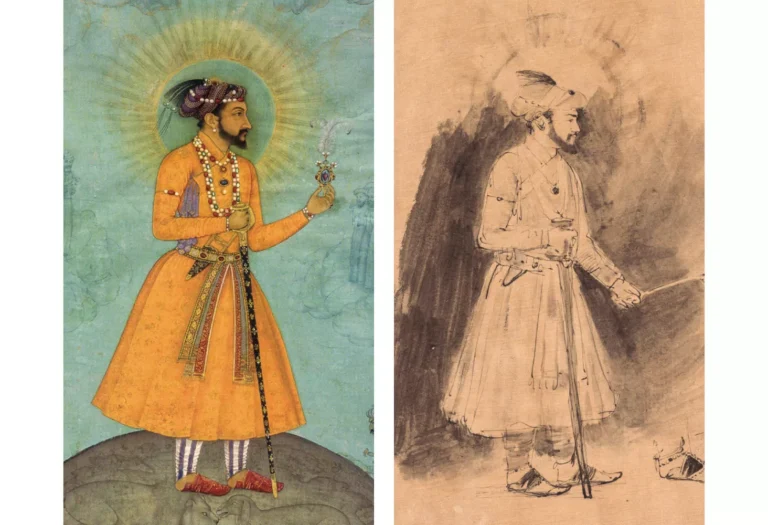
  • How Indian mughal art inspired Rembrandt’s forgotten miniatures

    Art lovers typically look upon dramatic chiaroscuro oil paintings, European portraiture, or biblical scenes while thinking about Rembrandt. Yet, buried within historical records and private collections lies a lesser-known chapter of the legendary master’s life. A profound fascination with South Asian art that inspired a unique series of fine Indian-style portraits. Rembrandt produced 25 delicate drawings depicting Mughal emperors and religious scholars Between 1656 and 1661. These works reveal an artist expanding his creativity through an encounter with Islamic and Indian aesthetic traditions half a world away. During the 17th century, Amsterdam was a booming node in global trade. The locality was largely powered by the Dutch East India Company (VOC). Ships arriving at Dutch ports carried exotic commodities such as raw silk, muslin, spices, and fine craftsmanship straight from Surat in western India. There were original miniature paintings and sketches produced by imperial Mughal ateliers among these goods. Rembrandt was an avid collector who frequently spent beyond his means on art and curiosities from abroad. He acquired dozens of foreign items. An official inventory compiled by municipal authorities during his 18th-century bankruptcy proceedings recorded a slim book labeled item No. 203. The scholars believe that the book contained Mughal miniatures that captured his imagination. Rembrandt’s Mughal series represented a striking departure from his thick, layered oil technique. Instead of broad canvas strokes, he utilized fine brown ink, delicate wash, and subtle chalk accents to carefully document the distinctive attire and posture of Mughal royalty. He repeatedly portrayed Emperor Shah Jahan, builder of the Taj Mahal. That too alongside his sons and predecessor Emperor Jahangir. Every sketch rendered precise details of traditional jamas (stitched coats), elaborate patkas (sashes), turbans, and sarpech ornamentations with remarkable fidelity. Rembrandt drew exclusively on imported Torinoko paper. This paper was seemingly a smooth Japanese paper sourced through East Asian maritime networks. “Copying was his way of learning about another style of making portraits… show[ing] him working in a much more refined manner than he is known for.”   Stephanie Schrader, Curator of Drawings at the J. Paul Getty Museum. Rembrandt didn’t copy images mechanically. He adapted Mughal compositions into his own artistic vision. For instance, in his study titled Four Mullahs Seated Under a Tree, he altered the background and surroundings from the original Indian painting. This exercise directly influenced his later print Abraham Entertaining the Angels (1656). In the latter, he repurposed the relaxed seating arrangements of Mughal scholars to illustrate an important biblical motif. The subtle colors and calm poses he absorbed during this phase continued to echo in his late-career oil paintings. Rembrandt never set foot outside Europe. However, his engagement with Mughal miniatures demonstrates a spirit of cross-cultural curiosity during the Dutch Golden Age. He studied them diligently as an intellectual equal. He discovered new ways to capture human expression and line.  

  • Easy tips for dark circles

    Dark circles under the eyes are common and can appear for many reasons including lack of sleep and tiredness. They can make the face look dull but they are not always caused by poor sleep. Lifestyle habits aging allergies and genetics can also play a role. Getting enough sleep every night is one of the most important steps.  Resting well may help reduce the appearance of dark circles especially if they are caused by fatigue. If dark circles remain even after getting enough sleep you can try a few simple home remedies. Cucumber slices Place chilled cucumber slices over your closed eyes for a few minutes.  The cool feeling may help soothe tired eyes and reduce puffiness for a short time. Some people also use potato slices for dark circles. While they are a popular home remedy there is limited scientific evidence that they provide long term results. Eat healthy fruits A balanced diet is important for healthy skin.  Fruits such as bananas papaya and guava provide vitamins and nutrients that support overall skin health. However eating these fruits alone cannot guarantee that dark circles will disappear. Lemon juice and Oil Some home remedies suggest mixing lemon juice with jasmine oil and applying it around the eyes. However you should be very careful because lemon juice can irritate the delicate skin around the eyes and should never get into the eyes. Dark circles can have different causes in different people including genetics aging allergies skin tone and lack of sleep. If they continue for a long time or are accompanied by swelling or other unusual symptoms it is best to consult a dermatologist.

  • |

    The limits and depth of human consciousness

    For millions of years, the survival of living species depended almost entirely on practical adaptations. The core of living was finding food, securing shelter, avoiding predators, and reproducing. Yet, at a crucial juncture in evolutionary history, Homo sapiens began engaging in a behavior that offered no immediate physical utility like making art. From red ocher hand stencils on cave walls in Sulawesi and Western Europe to intricate bone flutes and sculpted figurines, early humans devoted valuable time and energy to symbolic creation. Today, neuroscientists, cognitive psychologists, and evolutionary anthropologists increasingly view art not as a secondary cultural luxury, but as a foundational hallmark of human consciousness. The Evolutionary Emergence of Symbolic Thought The birth of artistic expression marks a profound cognitive transition. While many animals exhibit complex behaviors, these actions are largely instinctual and functional. Human art, by contrast, relies on abstract symbolic thinking. The capacity to let one object, shape, or sound represent an idea, emotion, or absent reality. When an early human carved a figure or painted a thundering herd of bison onto rock, they were not merely copying their surroundings. They were projecting an internal mental world onto an external physical canvas. This ability to externalize subjective experience required a sophisticated architecture of consciousness, including robust working memory, metacognition (thinking about one’s own thinking), and a developed theory of mind. It’s the understanding that others possess distinct mental states and can interpret shared symbols. The Neurobiology of Aesthetic Experience Modern neuroimaging reveals that creating and contemplating art engages large-scale, interconnected brain networks. When a person immerses themselves in a painting, music, or literature, the Default Mode Network (DMN) works with sensory and emotional circuits. Artistic engagement triggers a dynamic dialogue between the visual or auditory cortex, the limbic system (which processes emotion), and executive regions in the prefrontal cortex. This complex cross-talk allows humans to experience qualia. The subjective, qualitative feel of conscious experiences. A visual composition does not simply register as light wavelengths in the brain; it evokes nostalgia, awe, melancholy, or inspiration. This capacity to synthesize raw sensory inputs with deep emotional resonance and reflective thought is a unique feature of high-level conscious awareness. Lived Experience versus Machine Patterning In an era dominated by artificial intelligence algorithms capable of generating hyper-realistic images and musical compositions in seconds, the relationship between art and consciousness has taken on renewed urgency. While generative models analyze billions of data points to predict and replicate aesthetic patterns, they operate entirely without subjective awareness, intent, or emotional feeling. Human art originates from a grounded biological reality: the lived experience of mortality, joy, heartbreak, bodily sensation, and social existence. The power of a masterpiece lies not merely in its formal technique, but in the implicit bridge it constructs between the inner world of the artist and that of the observer. Art is fundamentally a dialogue of consciousnesses. It is a mechanism through which one conscious entity communicates what it feels like to exist. A Mirror to Human Identity Ultimately, art serves as both a product and a mirror of conscious awareness. It enables individuals to simulate hypothetical scenarios, process complex social dynamics, and navigate existential questions about purpose and mortality. By translating internal emotional states into tangible forms, humans construct shared cultural meaning and foster deep social cohesion.   As science continues to explore the mystery of how physical brain matter generates subjective experience, art remains our most visible and enduring cognitive fingerprint. It stands as compelling proof that human consciousness is defined not just by how we perceive the objective world, but by our infinite capacity to imagine and construct new ones.

  • Omega-3 linked to better lungs

    A new medical study suggests that omega-3 fatty acids may do more than protect the heart and brain. Researchers say these healthy fats could also help keep the lungs working well for a longer time by slowing the natural decline in lung function. Omega-3 fatty acids are found in foods such as oily fish, fish oil supplements walnuts, flaxseeds chia seeds vegetable oils and fortified foods. They are already known for their anti inflammatory effects and may help lower the risk of heart disease stroke and some types of cancer. Now scientists believe they may also play an important role in supporting lung health. The study was published in the American Journal of Respiratory and Critical Care Medicine. The research was led by Dr. Patricia A. Cassano from Cornell University in New York. She explained that while many studies have looked at how diet affects heart disease and cancer much less research has focused on how nutrition influences lung health. To explore this researchers carried out two separate studies. The first study followed 15,063 adults in the United States with an average age of 56. Most participants were healthy and had no diagnosed lung disease when the study began. They were monitored for between seven and 20 years. Researchers found that people with higher levels of omega-3 fatty acids in their blood experienced a slower decline in lung function over time. In the second study scientists analyzed genetic data from more than 500,000 people in Europe. They examined genetic markers linked to omega-3 levels in the blood and found the same pattern. Higher omega-3 levels were associated with better lung function and healthier lungs. Although the findings are encouraging experts say omega-3 supplements should not be seen as a cure or a replacement for medical treatment. A balanced diet regular exercise avoiding smoking and following medical advice remain the best ways to protect lung health.

Leave a Reply

Your email address will not be published. Required fields are marked *