
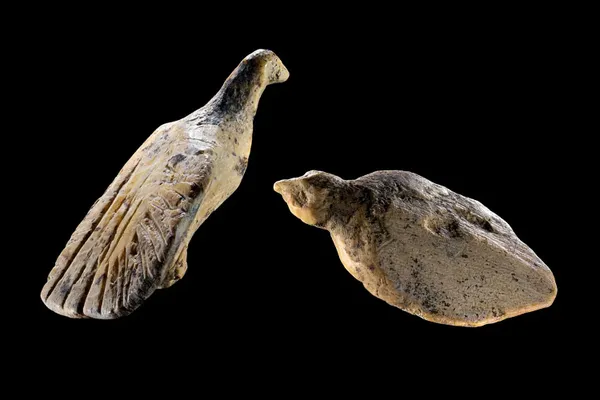
40000yearold ivory birds

40,000-Year-Old ivory birds discovered in a German cave

Archaeologists have recently uncovered two thumbnail-sized sculptures of birds carved from mammoth ivory approximately 40,000 years ago. These delicate figurines, which have spent dozens of millennia buried in sediment, offer an intimate glimpse into the minds, environments, and creative capacities of our ancient ancestors during the Ice Age.

The astonishing discoveries were made in the Hohle Fels Cave, a site deeply embedded in the Swabian Jura region of Germany. This location has long been celebrated as one of the most critical archaeological sites in the world for understanding early modern human culture in Europe. The newly found sculptures are extraordinarily small. Each measures less than a single inch in length and weighs merely a fraction of an ounce. It makes them roughly the size of an average human thumbnail. Despite their diminutive scale, the level of detail the prehistoric artist managed to achieve is nothing short of masterful.

Rather than relying on abstract or highly stylized representations, the Ice Age carver recorded specific, anatomical observations. The figurines feature carefully incised markings that clearly delineate feathers, as well as distinctively carved eyes. One of the miniature sculptures portrays a bird with its wings fully spread, capturing a moment of dynamic movement, although a few fragments of its body have unfortunately been lost to time. Remarkably, this particular piece now holds the record as the smallest Ice Age artwork ever found in the region. The second figurine, which survived completely intact, depicts a bird in a resting posture. It appears to be lying down, a pose that researchers speculate might represent the animal tending to its eggs.

Experts analyzing the avian features believe that at least one of the sculptures represents a ptarmigan, a robust bird belonging to the grouse family that would have been familiar to inhabitants of the harsh Ice Age landscape. While the identity of the second bird remains slightly less certain, it too could be a ptarmigan, or possibly a small bird of prey. Because the two ivory pieces were found just about five feet apart during the 2025 excavation season and share stylistic similarities, archaeologists strongly suspect they were crafted around the exact same time, quite possibly by the very same artist.

The excavation was led by Nicholas Conard and a dedicated team from the University of Tübingen, who have been meticulously studying the Hohle Fels site for nearly three decades. The process of unearthing such fragile artifacts requires incredible patience. Researchers painstakingly remove layers of earth before washing and sifting the prehistoric sediment through extremely fine mesh screens. It was during this rigorous process that Elisa Luzi, a paleontologist at the university, first spotted one of the tiny birds. She described the profound emotional weight of the moment, emphasizing the sheer privilege of being the first human being to lay eyes on the carving in 40,000 years, and feeling an instant connection to the humanity of its maker.

The Hohle Fels Cave

These findings belong to the Aurignacian period, an epoch that coincides with the early settlement of Homo sapiens in Europe. The Hohle Fels Cave which is protected as a UNESCO World Heritage site has previously yielded some of the oldest known figurative art and musical instruments on the planet. The collection includes early bone flutes and the famous Venus of Hohle Fels.

Exactly why these early humans took the time to carve such intricate, tiny birds remains a mystery. Researchers have proposed various theories, wondering if they were utilized as personal talismans meant to bring good fortune, or as cultural symbols associated with the specific identity of their owner. While we may never have a definitive answer regarding their prehistoric purpose, these thumbnail-sized masterpieces firmly remind us that the human desire to observe, create, and capture beauty is as ancient as humanity itself.

 

Similar Posts

  • |

    August 12 total solar eclipse, will it be visible in Pakistan?

    Islamabad – A rare total solar eclipse will occur on August 12, 2026 attracting the attention of astronomy enthusiasts around the world. However, will it be visible in Pakistan? The solar eclipse will not be visible in Pakistan as it will be nighttime in the country during the key phases of the eclipse. According to Pakistan Standard Time, the partial eclipse will begin at 8:34 PM on August 12 while the total eclipse will begin at 9:58 PM. The eclipse will reach its peak at 10:46 PM and the total eclipse will end at 11:34 PM. Where will solar eclipse be visible? On August 12, the Moon will pass between the Earth and the Sun causing a total solar eclipse to be visible in Greenland, Iceland, northern Russia and parts of Spain and Portugal. A partial solar eclipse will be visible across various parts of North America, Canada, most of Europe and northwestern Africa. According to NASA, the Sun will set during the eclipse in western parts of Europe and Africa creating a unique spectacle in which the solar eclipse will coincide with sunset. How can solar eclipse be watched live? NASA will also provide an online live broadcast of this astronomical event which can be watched online from Pakistan on the night of August 12. Astronomers have warned people in areas where the eclipse will be visible never to look directly at the Sun without specially designed solar-viewing glasses as doing so can cause severe damage to the eyes.

  • | |

    Documentary film on the struggle for Joint Elector…

    By Yassar Talib Aiman Zameer Lahore: The Centre for Social Justice (CSJ) held a screening of its documentary film, A Separation Refused, highlighting the Movement for the Restoration of the Joint Electorate in Pakistan, at a local hotel in Lahore. The 20-minute documentary film, by the award-winning the producer and director, CSJ and Dawood Akhtar Murad, traces the culmination of the world unique Separate Electorate system in Pakistan’s history and the movement for the restoration of the Joint Electorate in Pakistan especially during the 1990s to 2001. The film chronicles the efforts of civil society organizations, political leaders, faith communities, and human rights advocates who campaigned for equal citizenship and inclusive democratic participation for religious minorities. Using historical accounts and personal testimonies, the film illustrates how sustained advocacy contributed to democratic reforms and continues to inspire efforts towards equality, pluralism, social cohesion, and the protection of constitutional rights. Featuring over a dozen interviews, it brings together insights from Hina Jilani, Cardinal Joseph Coutts, Dr. Charles Amjad Ali, Dr. Yaqoob Bangash, and other prominent voices offering diverse perspectives youth, clergy and a parliamentarian. The even also premiered a song Hum Juda Nahein (We Are Not Separate) that expressed the The screenings were followed by an interactive panel discussion explored the progress made towards equal citizenship and the continuing challenges to the democratic participation of religious minorities in Pakistan. The panelists, Wajahat Masood a public intellectual and Peter Jacob, answered the questions while the academic Faaria Khan moderated the discussion. While addressing the participants, Wajahat Masood, said that democracy is based on the principle of equal citizenship and that the categorization of citizens into majorities and minorities reflects a constitutional anomaly. Referring to the Separate Electorate system, he noted that institutionalizing such divisions weakened democratic systems and undermined the principle of equal political participation. In response to a question on the rationale behind the documentary, Peter Jacob, Executive Director CSJ, said that the importance of the movement warranted a careful reading of the history. He noted that the film was developed to preserve authentic accounts of the struggle for the restoration of the Joint Electorate and to address competing interpretations of history and misunderstandings. He also emphasized the need for constitutional reforms to strengthen equal citizenship. He called for a review of Articles 41 and 91 of the Constitution, to remove precondition of religious affiliation for the offices of the President and Prime Minister. Moreover, implementation of Article 22(1) of the constitution of Pakistan that guarantees unbiased education. In the open discussion, participants emphasized that the message of documentary film highlighting constitutional rights, democratic inclusion, should be screened more widely through universities, arts councils, mainstream media, and other public platforms to encourage informed dialogue and greater public awareness. They further stressed that equal citizenship is not solely the concern of religious minorities but a shared national responsibility, and called for greater participation and support from the majority community in future advocacy and dialogue. At the end the participants reaffirmed a shared commitment to advancing constitutional rights, equal citizenship, participatory democracy, and peaceful coexistence through collective action.

  • Surfing dogs impress crowds

    Dogs of all sizes took to the waves at the annual World Dog Surfing Championship in the United States, impressing crowds with their surfing skills. The event was held on Saturday at the beach in Pacifica about 22 kilometers south of San Francisco California. Hundreds of spectators gathered to watch dogs from different breeds ride the waves on surfboards. The competition featured everything from small spaniels to large Labrador retrievers. Judges scored each dog based on how long it stayed on the surfboard the size of the wave, and how confidently it surfed. Now in its 10th year the championship also included a pet adoption campaign and fundraising activities to support local animal welfare groups. Wearing colorful life jackets the dogs were guided onto the waves by their human partners. As the dogs successfully surfed toward the shore the crowd cheered and applauded each ride. One participant Sophia Siedlowski from Huntington Beach said she first placed her Miniature Pinscher, Rusty, on a surfboard just to take photos when he was a puppy. To her surprise he refused to get off the board. She later let Rusty ride a small wave and he successfully surfed to shore amazing everyone and beginning his surfing journey.

  • |

    An alien planet

    Imagine living on a world where the start of the day and the end of the day aren’t just different times, but entirely different environments. On one horizon, morning arrives in a chilly mist where vaporized rocks might condense into glittering, mineral clouds. On the opposite horizon, evening sets in as a roaring, hyper-heated furnace hot enough to shred water molecules into raw hydrogen and oxygen. This isn’t sci-fi world-building, it is the reality of WASP-121 b, an extreme exoplanet located roughly 850 light-years from Earth. Astronomers analyzing data from NASA’s James Webb Space Telescope (JWST) have uncovered unprecedented details about this distant world, proving for the first time that its morning and evening twilight zones are fundamentally different from one another. A World Locked in Perpetual Extremes WASP-121 b belongs to a class of cosmic objects known as hot Jupiters: giant gas planets that orbit extraordinarily close to their parent stars. Because of this extreme proximity, the planet is tidally locked. Just as the Moon always presents the same face to Earth, WASP-121 b always presents the exact same hemisphere to its star. One side endures an unrelenting, eternal day with scorching temperatures topping 2,500 degrees Celsius (4,500 degrees Fahrenheit). The opposite side faces permanent night, staring into cold space. For years, astrophysicists hypothesized that the narrow transition zones between day and night. The planet’s terminators might harbor complex, asymmetrical weather patterns. However, confirming this required measuring subtle variations in starlight as the planet passed in front of its star. How Jet Streams Reshape Alien Skies Using JWST’s Near-Infrared Spectrograph (NIRSpec), researchers tracked how starlight filtered through different parts of WASP-121 b’s atmosphere. The findings revealed a dramatic contrast between the morning transition and the evening transition. The driver behind this strange weather is a planetary-scale jet stream. Superheated air on the dayside doesn’t stay still; it rushes toward the cooler nightside at extreme speeds. Because the planet rotates toward the east, these violent winds carry thermal energy around the globe and dump the bulk of that heat directly into the evening region. As a result, WASP-121 b’s evening atmosphere grows significantly hotter than its morning counterpart. Heat causes gases to expand, puffing up the evening sky like a inflated balloon. When starlight filters through this swollen atmospheric layer, it reveals an environment so fierce that water molecules cannot survive intact. Clouds of Metal and Torn Molecules In the searing furnace of the evening sky, chemical bonds break. Water vapor brought in from the dayside is torn apart by the heat, leaving behind a sky depleted of chemical stability. As those same winds continue their journey around the cold nightside, the atmosphere gradually cools down. By the time the air sweeps around to form the morning twilight, the story flips. Here, temperatures drop enough for chemical compounds to reassemble. Scientists suspect that in this cooler morning zone, minerals such as silicates condense out of the gas phase. Instead of water clouds like those on Earth, WASP-121 b’s morning sky likely features reflective clouds made of liquid rock or iron droplets. These metallic clouds block radiation from deeper layers, making the morning side appear even cooler to space observatories. A New Era of Exoplanet Meteorology Until recently, studying alien worlds meant treating entire planets as single, uniform points of light. This discovery demonstrates that modern space telescopes can resolve climate dynamics across distinct regions of a world hundreds of light-years away.   By capturing the contrast between a planet’s morning and evening, astronomers are moving from simply discovering exoplanets to mapping their active weather systems. WASP-121 b may be far too hostile for life as we know it, but understanding its violent atmospheric currents brings us one step closer to reading the skies of smaller, cooler, and potentially habitable worlds in the future.

  • |

    A portrait of the artist as a young man

    James Joyce published A Portrait of the Artist as a Young Man in 1916. He did far more than tell the story of a boy growing up in Dublin. He revolutionized the modern novel. As Joyce’s first published novel, Portrait serves as a crucial bridge between classical nineteenth-century storytelling and the radical experimentation of twentieth-century modernism. Over a century after its release, this intimate novel remains a timeless exploration of identity, intellectual rebellion and terrifying price of personal freedom. Sensory Stream of Consciousness The novel follows Stephen Dedalus who’s a thinly veiled avatar for Joyce himself from early childhood through his late adolescence and college years. The book opens not with traditional exposition, but with a sensory stream of consciousness. The baby talk, the texture of a bedsheet, the smell of oilcloth, and songs sung by his family. As Stephen grows, so too does the language of the book. Joyce evolves his prose style alongside his protagonist. He transforms the narrative voice from simple baby phrases into highly philosophical and poetic language as Stephen matures into a young scholar. Extreme Religious Devotion At its core, Portrait is a profound meditation on the heavy burdens of tradition. Growing up in a strictly Catholic, politically fractured Ireland at the turn of the twentieth century, Stephen finds himself trapped between competing pressures. He witnesses fierce family debates over Irish nationalism. He also suffers harsh physical punishments at strict Jesuit boarding schools. Ultimately, he struggles with agonizing guilt over his emerging teenage desires. A central turning point of the novel occurs during a harrowing religious retreat, where a priest delivers a vividly detailed sermon on the eternal torment of Hell. Paralyzed by fear, Stephen briefly attempts a life of extreme religious devotion, only to realize that spiritual conformity destroys his true self. Creative Freedom Over Compliance Stephen’s ultimate breakthrough doesn’t come from religiously pious self . It’s from art. In one of the most famous passages in modern literature, Stephen walks along the shore and catches sight of a young woman wading in the water. Stephen doesn’t see her through a lens of sinful desire or religious symbolism. Rather, he sees her simply as an embodiment of pure, mortal beauty. This aesthetic epiphany awakens his true calling. Now, he must break free from the traditional network of family, church, and nation that seek to hold him back. To become an artist, Stephen realizes he must embrace exile. Thus, he must chose solitude and creative freedom over compliance. Joyce’s genius lies in his ability to make Stephen’s internal struggles feel deeply universal. Anyone who has ever questioned the beliefs they were raised with, felt out of place in their own community. They strived to forge an independent identity will find a powerful reflection in Stephen’s journey. His famous declaration near the end of the book to forge in the smithy of my soul the uncreated conscience of my race is a bold rallying cry for personal independence. A Portrait of the Artist as a Young Man is not just the story of one young man’s transformation in turn-of-the-century Ireland, but a brilliant testament to the courage required to think for oneself and forge a truly unique voice in the world.  

  • | |

    Theories behind Shakespeare’s true identity

    For centuries, William Shakespeare has been indicated as the undisputed genius of Western literature. His masterworks, ranging from the tragedy of Hamlet to the romantic drama of Romeo and Juliet, form the bedrock of English theater. Yet, beneath the reverence lies one of the most persistent controversies in literary history. Did a provincial actor from Stratford-upon-Avon actually pen these legendary plays? Was Shakespeare merely a convenient alias for another genius working in the shadows? The Paradox of the Bard’s Background Doubts surrounding Shakespeare’s authorship stem largely from the sharp contrast between his known biography and the astonishing depth of his literary canon. Born in 1564, Shakespeare attended the local grammar school where he learned Latin and basic rhetoric. He never pursued higher education at a university, nor did he ever leave England. In contrast, the plays attributed to him demonstrate an extraordinary mastery of complex subjects. They reveal intimate familiarity with international geography, continental languages, high-stakes royal politics, aristocratic court etiquette, and intricate legal doctrines. In an era before public libraries and widespread travel, skeptic scholars often called Anti-Stratfordians question how a man with limited schooling and exposure to foreign cultures could possess such erudition. This discrepancy has led many to speculate that the real Shakespeare acted primarily as a public frontman. As an actor and shareholder in the Lord Chamberlain’s Men, Shakespeare was well-positioned in London’s theatrical community. High-born courtiers or politically vulnerable figures who wished to write plays may have utilized Shakespeare’s name to publish their works safely. The Leading Candidates Over years, prominent figures from Tudor and Jacobean society have emerged as alternatives for the true authorship. Sir Francis Bacon: A brilliant philosopher, statesman, and pioneer of the scientific method. Bacon possessed the intellectual rigor and courtly insight required to craft the plays. Proponents argue that he’s Lord Chancellor and a government insider. So, Bacon couldn’t openly associate with public theater. It would’ve definitely ruined his political standing and risking royal disapproval. Edward de Vere, Earl of Oxford: Educated at Cambridge, well-traveled throughout Europe, and a celebrated poet in his own right, de Vere fits the profile of an elite playwright. However, a major hurdle for the Oxfordian theory is that de Vere passed away in 1604 several years before iconic plays like The Tempest and Macbeth were produced. Christopher Marlowe: Perhaps the most dramatic theory involves Shakespeare’s contemporary, Christopher Marlowe. A gifted Cambridge graduate and spy for the Tudor government, Marlowe officially died in a tavern brawl in 1593. Skeptics suggest he faked his death to escape charges of heresy and treason, subsequently continuing to write under the pen name William Shakespeare. Notably, the first publications under Shakespeare’s name appeared just weeks after Marlowe’s reported demise. Was the Genius a Woman? The authorship debate extends beyond male nobles to include extraordinary women of the Elizabethan court. Shakespeare’s plays are remarkable for their nuanced, highly capable female characters who defy traditional stereotypes of the era. Two prominent women are frequently cited in authorship theories. Mary Sidney, Countess of Pembroke: An accomplished writer, classical scholar, and major patron of the arts, Sidney hosted a renowned literary salon and authored closet dramas meant for private performance. Emilia Bassano: Born to a family of Venetian court musicians believed to have Jewish heritage, Bassano possessed both international ties and formal education. Her background offers a compelling explanation for the Italian settings and Jewish themes present in works such as The Merchant of Venice. An Enduring Literary Mystery Mainstream academic consensus remains firmly with the man from Stratford-upon-Avon. They pointed to contemporary records, theatrical tributes and historical references. The debate surrounding the Bard’s identity continues to fascinate scholars and theater lovers alike. Whether created by a single self-made dramatist or a hidden collective of noble minds, the plays continue to inspire readers across the globe.

Leave a Reply

Your email address will not be published. Required fields are marked *