books

  • | |

    The immortal king: Gilgamesh

    The Epic of Gilgamesh chronicle a ruler whose reach eclipsed his own era. King Gilgamesh of Uruk was celebrated across the Fertile Crescent for his unmatched strength, towering city walls, and unyielding ambition. He was a mythical hero, two-thirds god and one-third man. The Influence of King Gilgamesh Over ancient kings and foreign lands, his influence was absolute. Monarchs who succeeded him across Sumer, Akkad, and Assyria measured their own majesty against his legacy.  Moreover, those realms seek to embody his wisdom and claim a dominion as legendary as the one he forged before the great waters swept the earth. He Who Saw the Deep.. He saw what was secret, discovered what was hidden, He brought us a tale of the days before the Flood. The Ancient Mesopotamia In recent archaeology, the shadow of Mesopotamia’s heroic past continues to reemerge in unexpected ways. Modern researchers conducting glacial surveys on Turkey’s Mount Ararat have begun mapping shrinking ice fields to retrieve core samples. Historically, Mount Ararat is the high peak linked with ancient flood mythologies.  This pioneering study seeks to extract a continuous chronicle of human activity, ancient agriculture and metal smelting preserved in ice layers spanning thousands of years. The studies offer a direct physical record of the environmental world that ancient Mesopotamian civilizations inhabited. Search For The Unknown This convergence of epic poetry and modern science reveals that the search for what was hidden remains as vital today as it was in antiquity. The ancient scribes etched Gilgamesh’s story into clay tablets. They recorded a hero who traveled to the ends of the earth to seek secrets of mortality and natural catastrophe. The story of the great deluge, brought back by Gilgamesh from the edge of the known world. It functioned both as a sobering warning and as a testament to the fragile line between human pride and nature’s fury. The Truth Today, scientists analyze ice layers and ancient cuneiform archives across the Middle East. Furthermore, we are reminded of the power of memory. Kings and empires inevitably turn to dust. Yet, the insights gathered by those who dare to look into the deep endure across millennia remain forever. Gilgamesh’s journey teaches us that true power lies not in martial conquest or monumental stone. Rather, it’s in the wisdom preserved for generations that follow. True power is a truth as resonant in our modern era as it was in the ancient halls of Uruk.    

  • | | |

    Reason, passion and desire

    We often like to view ourselves as unified, consistent individuals guided by singular motives. Yet, almost everyone has experienced an intense internal conflict. It’s wanting to spend on a impulse buy while knowing it defies financial logic. Or feeling overcome with regret immediately after giving in to a temptation. Over two millennia ago, the ancient Greek philosopher Plato set out to explain this psychological friction in Book IV of his masterwork, the Republic. Plato proposed that our psyche is composed of three distinct yet interacting forces rather than treating the human mind or psuche (soul) as a monolithic entity. Plato developed the concept of the tripartite soul. Further, he offered a framework that remains remarkably relevant to modern understandings of human behavior, self-control and moral choice. The Three Components of the Psyche Plato divides the human mind into three primary elements, each responsible for different aspects of our drives and behavior. 1. The Appetitive Element (To Epithumetikon) The appetitive part is the largest and most primal component of human nature. It encompasses our basic instinctual desires, including physical appetites for food, drink, comfort, and sensual pleasure, as well as material wants. Because these cravings are immediate and self-interested, the appetitive drive is inherently impulsive. Left unchecked, it seeks gratification regardless of long-term consequences. 2. The Spirited Element (To Thumoeides) The spirited element represents our emotional drive, passion, and sense of honor. It is the source of courage, pride, and righteous indignation when we witness or experience injustice. Unlike raw bodily appetite, the spirited part is closely tied to our moral identity and self-image. When functioning healthily, spirit acts as an ally to reason. It generates feelings of shame or self-directed anger when we surrender to harmful appetitive urges. 3. The Rational Element (To Logistikon) The rational element is the calculating and reflective mind. It seeks truth through logic, forethought, and critical reflection. What sets rationality apart from the other two components is its scope. While appetite and spirit focus on fulfilling specific, immediate goals, the rational mind evaluates what is best for the entire person in the long run. The Conflict Within: Why the Soul Divides To demonstrate that these three elements are truly distinct, Plato relies on an early formulation of the principle of non-contradiction: a single entity cannot simultaneously move in opposite directions in the exact same respect. Therefore, when a person experiences contradictory impulses such as feeling an intense thirst yet consciously choosing not to drink due to illness or health concerns, different parts of the mind must be in opposition. A classic illustration of this psychological war is the story of Leontius. While walking, Leontius felt a compulsive curiosity to look at execution corpses lying on the ground. Simultaneously, he felt disgust and moral repulsion. Eventually, his base appetite won out, causing him to rush over while angrily cursing his own eyes. This reaction demonstrates the spirited part of the soul becoming angry at the appetitive part for overriding rational judgment. From Conflict to Harmony Plato’s goal was not to suggest that humans should eradicate desire or emotion altogether. Instead, he argued that mental health and moral integrity, what he called justice of the soul, require a proper hierarchy. Reason must govern, serving as the wise leader that understands the big picture. Spirit must protect and enforce reason’s guidance with courage and conviction. Appetite must operate within temperate limits established by reason.   When these three components function in balance, an individual achieves psychological harmony. Conversely, when base desires or untamed emotions usurp the throne, inner turmoil and destructive behaviors follow. Plato’s tripartite framework ultimately serves as a timeless reminder that self-mastery is not about suppressing who we are, but about bringing our competing drives into a balanced, reason-guided unity.

  • | |

    Theories behind Shakespeare’s true identity

    For centuries, William Shakespeare has been indicated as the undisputed genius of Western literature. His masterworks, ranging from the tragedy of Hamlet to the romantic drama of Romeo and Juliet, form the bedrock of English theater. Yet, beneath the reverence lies one of the most persistent controversies in literary history. Did a provincial actor from Stratford-upon-Avon actually pen these legendary plays? Was Shakespeare merely a convenient alias for another genius working in the shadows? The Paradox of the Bard’s Background Doubts surrounding Shakespeare’s authorship stem largely from the sharp contrast between his known biography and the astonishing depth of his literary canon. Born in 1564, Shakespeare attended the local grammar school where he learned Latin and basic rhetoric. He never pursued higher education at a university, nor did he ever leave England. In contrast, the plays attributed to him demonstrate an extraordinary mastery of complex subjects. They reveal intimate familiarity with international geography, continental languages, high-stakes royal politics, aristocratic court etiquette, and intricate legal doctrines. In an era before public libraries and widespread travel, skeptic scholars often called Anti-Stratfordians question how a man with limited schooling and exposure to foreign cultures could possess such erudition. This discrepancy has led many to speculate that the real Shakespeare acted primarily as a public frontman. As an actor and shareholder in the Lord Chamberlain’s Men, Shakespeare was well-positioned in London’s theatrical community. High-born courtiers or politically vulnerable figures who wished to write plays may have utilized Shakespeare’s name to publish their works safely. The Leading Candidates Over years, prominent figures from Tudor and Jacobean society have emerged as alternatives for the true authorship. Sir Francis Bacon: A brilliant philosopher, statesman, and pioneer of the scientific method. Bacon possessed the intellectual rigor and courtly insight required to craft the plays. Proponents argue that he’s Lord Chancellor and a government insider. So, Bacon couldn’t openly associate with public theater. It would’ve definitely ruined his political standing and risking royal disapproval. Edward de Vere, Earl of Oxford: Educated at Cambridge, well-traveled throughout Europe, and a celebrated poet in his own right, de Vere fits the profile of an elite playwright. However, a major hurdle for the Oxfordian theory is that de Vere passed away in 1604 several years before iconic plays like The Tempest and Macbeth were produced. Christopher Marlowe: Perhaps the most dramatic theory involves Shakespeare’s contemporary, Christopher Marlowe. A gifted Cambridge graduate and spy for the Tudor government, Marlowe officially died in a tavern brawl in 1593. Skeptics suggest he faked his death to escape charges of heresy and treason, subsequently continuing to write under the pen name William Shakespeare. Notably, the first publications under Shakespeare’s name appeared just weeks after Marlowe’s reported demise. Was the Genius a Woman? The authorship debate extends beyond male nobles to include extraordinary women of the Elizabethan court. Shakespeare’s plays are remarkable for their nuanced, highly capable female characters who defy traditional stereotypes of the era. Two prominent women are frequently cited in authorship theories. Mary Sidney, Countess of Pembroke: An accomplished writer, classical scholar, and major patron of the arts, Sidney hosted a renowned literary salon and authored closet dramas meant for private performance. Emilia Bassano: Born to a family of Venetian court musicians believed to have Jewish heritage, Bassano possessed both international ties and formal education. Her background offers a compelling explanation for the Italian settings and Jewish themes present in works such as The Merchant of Venice. An Enduring Literary Mystery Mainstream academic consensus remains firmly with the man from Stratford-upon-Avon. They pointed to contemporary records, theatrical tributes and historical references. The debate surrounding the Bard’s identity continues to fascinate scholars and theater lovers alike. Whether created by a single self-made dramatist or a hidden collective of noble minds, the plays continue to inspire readers across the globe.

  • | |

    Jane Austen letter expressing affection for Mansfield Park

    A exceptionally rare, handwritten letter by legendary 19th-century British author Jane Austen has sold at auction for over $200,000. It has captivated literary historians and devoted readers across the globe. Written in early 1814, the intimate correspondence offers a fascinating glimpse into Austen’s personal thoughts during the final stages of writing her third major novel, Mansfield Park. The manuscript was acquired by a private collector after a competitive bidding battle. It highlights the enduring allure and profound market value of artifacts connected to Regency-era literature. Austen’s Private Collections In the letter, addressed to her beloved niece Martha Lloyd, Austen speaks with characteristic wit and self-effacing humor about her creative process. She candidly reveals The manuscript was acquired by a private collector after a competitive bidding battle. Austen harbored a quiet, tender affection for her newest heroine, Fanny Price. Scholars note that such direct expressions of emotion regarding her own craft are exceedingly rare in Austen’s surviving correspondence, as her sister Cassandra burned a vast majority of Jane’s personal papers following the author’s death in 1817 to protect her privacy. The document’s remarkable physical condition significantly contributed to its staggering sale price. Preserved in a family archive for generations before briefly passing through private collections, the single-sheet letter features Austen’s distinctively tidy, flowing script written in iron gall ink, complete with original wax seal remnants and postal markings from Chawton, Hampshire. Experts from the auction house confirmed the paper’s authenticity through detailed watermarking analysis, verifying that the sheet originated from a paper mill active in England during the Regency period. The Mid-80s Literary Period Beyond its physical preservation, the letter holds immense literary significance because it captures Austen at a pivotal moment in her career. Having spent years refining her craft in relative obscurity, the mid-1810s marked a period of intense productivity and emerging financial independence. Mansfield Park represented a deliberate artistic departure from the sparkling, lighthearted banter of Pride and Prejudice, diving into deeper moral complexity, social critique, and quiet emotional endurance. Austen’s reflection in this letter reveals her awareness of this shift and her defense of a softer, more gentle protagonist. Appreciation for Literary Heritage   The sale underscores a broader resurgence of interest in 19th-century women writers among modern collectors and readers. As public appreciation grows for literary heritage, original items connected to figures like Austen, the Brontë sisters, and Mary Shelley have seen exponential value growth at major international auction houses. For admirers of classic literature, this newly highlighted letter serves as a poignant reminder of Austen’s profound human warmth, proving that centuries later, her words continue to move hearts just as powerfully as her immortal fiction.

  • | |

    The Sham Shaman

    In 1968, a graduate student in anthropology at the University of California, published a book that would reshape the publishing world. Titled The Teachings of Don Juan: A Yaqui Way of Knowledge. The book purported to be a faithful academic field report by Carlos Castaneda detailing his apprenticeship under an elderly Yaqui shaman named Don Juan Matus in the Mexican desert. Castaneda’s account became an overnight sensation as it blended desert mysticism, hallucinogenic plant rituals, and philosophical paradoxes. It sold millions of copies, earning him a doctorate from UCLA. This success made him a guru to icons like Bob Dylan, John Lennon, and Octavio Paz. A Life Built on Fabrications Long before he wrote about desert sorcery, Castaneda had mastered the art of reinventing himself. Born César Carlos Salvador Arana in Peru in 1925—the son of a humble watchmaker—he routinely rewrote his origin story. He claimed to have been born in Brazil, shaved years off his age, and concocted wild tales of fighting as a soldier in North Korea or working as a border spy. In reality, he fled Peru after fathering a child at thirteen, eventually making his way to Los Angeles in the 1950s. Ground-breaking Anthropological Discoveries. Yet beneath the celebrated field notes lay one of the most audacious literary fabrications in modern history. Don Juan Matus was not a real person. The desert apprenticeships never took place. Castaneda was not a devoted field researcher. He was a master illusionist who deceived prestigious academics and eager seekers alike. When Castaneda enrolled at UCLA, he found an academic environment eager for authentic indigenous wisdom and existential insight. Synthesizing disparate ideas into a singular narrative, he assembled Don Juan’s philosophical worldview by freely borrowing from European philosophy, Buddhist theology, ethnomethodology, and popular horror fiction. To his impressionable professors, the resulting texts appeared to be ground-breaking anthropological discoveries. Unraveling the Hoax While Castaneda’s books topped bestseller lists throughout the late 1960s and 1970s, critical cracks in his story soon began to widen into chasms. Skeptical researchers and anthropologists began scrutinizing the timeline and claims in his field notes. Archive Contradictions: UCLA library records revealed that on dates Castaneda claimed to be in the Sonoran desert learning shamanic secrets, he was actually signed into the university library reading room. Botanical and Cultural Errors: Experts on Yaqui culture noted that the spiritual concepts and language attributed to Don Juan bore almost no resemblance to authentic Yaqui traditions or language structures. Philosophical Echoes: Literary sleuths discovered that Don Juan’s most profound dialogues were near-verbatim adaptations of modern academic sociology and Western philosophical texts. Despite being systematically exposed by critics, Castaneda maintained his mystique. He avoided photo shoots, refused interviews, and cultivated an aura of secretive invulnerability. He also assured his devotees that any perceived discrepancies were simply part of a sorcerer’s duty to erase his personal history. The Guru’s Reclusive Cult and Legacy As public acclaim gave way to scholarly embarrassment, Castaneda retreated further into reclusiveness. In the 1990s, he launched a movement called Tensegrity. He promoted a series of physical movements he claimed were ancient Toltec magical passes. Critics quickly noted their striking resemblance to modern martial arts taught by a local Santa Monica instructor. Surrounding himself with a inner circle of devout disciples in Los Angeles, Castaneda governed his group with increasing paranoia until his death from cancer in 1998. Anthropology’s Ultimate Trickster Ultimately, Carlos Castaneda remains a complex figure in cultural history. His anthropological credentials were exposed as entirely fraudulent. His writings captured the yearning of an era desperate for spiritual transcendence beyond traditional structures. He stands as anthropology’s ultimate trickster. He’s a man who turned a fictional thesis into a million-dollar empire and proved that, given the right narrative, millions of people will gladly step through the looking glass.

  • | | |

    Rabindranath Tagore’s statue in Edinburgh

    The Sandeman House garden in Edinburgh holds a bronze statue of Asia’s first Nobel laureate in Literature, Rabindranath Tagore. Inscribed upon the pedestal supporting his likeness are his famous words, “I am a wayfarer on an endless road.” A Cross-Cultural Bridge Travelers often seek out Scotland’s capital for its ancient castles, gothic architecture, and literary heritage tied to the likes of Sir Walter Scott or Robert Louis Stevenson. However, discovering Tagore’s presence in this peaceful courtyard offers a cross-cultural bridge. The statue, unveiled to commemorate the deep-seated connections between Scotland and India. It is particularly the intellectual dialogue between Scottish polymath Patrick Geddes and Tagore himself. This monument serves as a physical testament to a global humanism that transcends geographic boundaries. Tagore’s India Tagore was far more than a celebrated poet and author. He was an uncompromising philosopher, musician, visual artist, and social reformer whose thoughts shaped modern South Asia and beyond. At the heart of his vast body of literature lies a profound critique of borders, nationalism, and sectarian division. Tagore envisioned an India, and indeed a world, defined by radical openness. In his mind, India is a sanctuary where diverse faiths, ethnicities, and cultures could coexist in mutual respect. He rejected narrow chauvinism in favor of an inclusive internationalism, advocating for a world where the mind is without fear and the head is held high. Tagore’s Literary Legacy In the contemporary geopolitical landscape, Tagore’s ideals feel relevant. Across the globe, modern youth face a climate marked by rising social polarization, cultural fracturing, and ideological echo chambers. In response, a growing movement of young activists, writers, thinkers, and students are turning back to Tagore’s literary legacy as a blueprint for unity. They are rediscovering his essays and poetry not merely as historical artifacts, but as active tools to reclaim a society rooted in pluralism and dialogue. By reimagining Tagore’s vision for a modern era, today’s generation is fighting to restore an environment where freedom of thought, artistic expression, and inclusivity thrive over division. His stance on education emphasized learning in harmony with nature and breaking down rigid academic and social silos. Young scholars and community organizers are channeling this exact ethos, utilizing art, literature, and grassroots civic engagement to rebuild cross-cultural bridges in an increasingly fragmented world. Message of Universal Brotherhood   Standing before Tagore’s statue in Edinburgh’s quiet garden, one is reminded that his journey as a “wayfarer” was never meant to be walked alone. His message of universal brotherhood, preserved in stone far from his native Bengal, serves as a timeless compass. For the youth striving to cultivate a more empathetic and open world, Tagore’s endless road remains wide open, inviting everyone to walk forward together.

  • | | |

    Omar Musa secures 2026 Miles Franklin Award with Fierceland

    Omar Musa has been named the winner of the prestigious 2026 Miles Franklin Literary Award for his novel, Fierceland. Recognized as Australia’s most celebrated literary prize, the award honors novels of the highest literary merit that explore Australian life in all its phases. Musa’s victory highlights a powerful shift in the country’s literary landscape, celebrating a work that fearlessly confronts historical legacies while weaving together rich cultural folklore. Deconstructing Colonial Narrative Frameworks At the core of Fierceland lies an ambitious, multi-layered critique of Joseph Conrad’s classic 1899 novella, Heart of Darkness. Where Conrad’s seminal text depicted the non-Western world through a lens of exoticism, peril, and foreign mystery, Musa flips the narrative on its head. He reclaims the riverlands and lush rainforest environments not as places of terrifying obscurity, but as vibrant ecosystems steeped in history, memory, and indigenous knowledge. The True “Darkness” Musa confronted the colonial storytelling. In fact, he challenges readers to examine how Western literature has historically framed non-Western landscapes and their people. Fierceland presents the journey inward as a descent into moral decay. This journey is an essential process of unlearning, confrontation and reclamation. The novel demonstrates that the darkness lies within the unchecked impulses of imperial exploitation. It also compels the reader to not surrender to the historical erasure. The Role of Spectral Presence and Cultural Folklore Ghosts and supernatural forces drift consistently throughout the narrative of Fierceland. These forces serve as both literal story elements and profound allegorical symbols. Rather than functioning purely as horror tropes, these spectral figures act as guardians of history and physical manifestations of unhealed wounds. Musa attributes this atmospheric depth to his upbringing and heritage. He reflects on the influence of his family and heritage. Musa noted that ghost stories are deeply woven into the fabric of Malaysian culture. Growing up, he listened to his father recount haunting tales from his homeland. He developed an early appreciation for oral traditions where the living and spiritual realms continually intersect. In Fierceland, these inherited myths explore themes of displacement, grief, and ancestral connection.  These myths gave a voice to forgotten histories that refuse to remain buried. A Multidisciplinary Voice in Modern Storytelling Musa’s background is of an acclaimed spoken-word poet, hip-hop artist, and woodcut printmaker. His own roots shine brightly throughout the pages of Fierceland. The prose is defined by a rhythmic, visceral cadence that reflects his poetic mastery. His ability to blend social commentary with lyricism creates a sensory reading experience.   Winning the 2026 Miles Franklin Literary Award positions Musa as one of the most compelling voices. The judging panel has recognized the evolving nature of Australian literature. Fierceland stands as a testament to the power of reclaiming narrative agency. The novel proves that when old myths are critically dissected, extraordinary stories can emerge.

  • | | |

    The silence of the state

    Al Jazeera’s digital domain was restricted in Pakistan following its critical coverage of regional unrest and local election turmoil. Pakistan had become the second country after Israel to ban the Qatari broadcaster. While the statement makes for a soundbite, it oversimplifies both history and the mechanics of state censorship. In reality, the history of sovereign states attempting to mute inconvenient journalism is long, systemic, and filled with precedent. The Reality Behind the Headlines The recent digital restrictions in Pakistan emerged after the network broadcast extensive ground coverage of civil protests, Internet shutdowns, and election-related violence in Pakistan-administered Kashmir. State authorities responded by accusing the international news organization of yellow journalism and selective reporting. Shortly after, users across the country reported that the network’s website had become inaccessible. Repeated bans on Al Jazeera However, this action makes Pakistan the first nation to follow Israel’s 2024 ban overlooks press suppression. Over the past two decades, Al Jazeera has faced repeated office closures, revocations and total broadcast bans across numerous jurisdictions. Egypt (2013): Following political upheaval, the government shut down the network’s local operations and detained several of its journalists under allegations of threat to national stability. The Gulf Blockade (2017): During a severe diplomatic rift, Saudi Arabia, the United Arab Emirates, Bahrain, and Jordan blocked the channel’s signals and shuttered its regional bureaus. Israel (2024): Emergency legislation empowered authorities to halt local broadcasts, raid offices, and seize transmission equipment over national security claims. Far from being a rare sequel, the administrative impulse to silence an uncomfortable mirror is an old story retold. The Architecture of Banishment In literary traditions, the suppression of speech is rarely about the words themselves; it is about who holds the authority to define reality. George Orwell  observed in 1984 that the primary goal of totalitarian control is to limit the perimeter of thought by controlling the historical record. When a state apparatus brands unfavorable reporting as inherently fraudulent or subversive, it engages in an act of narrative containment. The label of yellow journalism becomes a rhetorical wall. This label shield the public from realities that disrupt official consensus. This dynamic reflects the bureaucratic absurdity depicted in Franz Kafka’s The Castle, where an elusive authority governs from above while remaining immune to direct questioning. In Kafka’s vision, the citizen is caught in a maze of unwritten rules and opaque decrees, where seeking transparency is treated as an act of insubordination. When digital portals are quietly restricted without formal public legislation or explicit judicial oversight, the state operates within a similarly Kafkaesque realm. The silence itself becomes an instrument of governance. The Illusion of Total Control There is a profound irony in modern media suppression. In classical literature, exile was absolute. A banished figure like Ovid was removed physically from the city center, their voice fading at the empire’s edges. Today, however, censorship in a hyper-connected world is an exercise in futility. Blocking a website or pulling a broadcast signal rarely extinguishes the narrative. Instead, it often draws greater international scrutiny to the very events the state wished to obscure. A phenomenon akin to the Streisand effect.   When governments resort to digital blockades, they reveal a fundamental fragility. True political stability rests on the capacity to withstand criticism.  To edit reality is like trying to stop the tide by breaking the hourglass. The water continues to rise, and the story, inevitably, finds another way to be told.

  • | |

    Author Ursula Hegi leaves a legacy of memory and truth

    The literary world has lost one of its most perceptive voices on historical memory and collective silence. Author Ursula Hegi, whose work rigorously examined the human dimensions of life during and after World War II in Germany, died on July 27 at her home in Sag Harbor, New York. She was 80 years old. Hegi’s Journey as a Writer Hegi’s journey as a writer was deeply intertwined with her personal background. Born Ursula Koch in Düsseldorf, Germany, in 1946, she spent her early years amidst the rubble of a nation struggling to rebuild. Growing up in the immediate aftermath of the war, she experienced a culture dominated by a pervasive, uncomfortable silence. Despite visible physical destruction all around, adults rarely spoke openly about the Holocaust or Germany’s culpability in Nazi atrocities. That suffocating atmosphere of secrecy left an indelible impression on Hegi. At age 18, she left Germany for the United States. She later became a naturalized U.S. citizen. Unpacking the Burgdorf Cycle Hegi’s move across the Atlantic gave her the critical distance needed to confront the uncomfortable realities of her heritage. She began exploring these themes through fiction, creating the imaginary German town of Burgdorf. This setting served as the backdrop for four of her novels, most notably her 1994 masterpiece, Stones from the River. In Stones from the River, Hegi tells the story of Trudi Montag, a woman with dwarfism who serves as the town’s librarian. Trudi lives on the periphery of her community. She becomes a silent observer of human nature. People often dismiss or confide in her, allowing her to gather the town’s deepest secrets and witness how ordinary citizens slowly succumbed to, ignored, or quietly resisted the rise of National Socialism. The novel received widespread critical acclaim and was nominated for the PEN/Faulkner Award. It achieved massive commercial success when Oprah Winfrey selected it for her book club in 1997. It has catapulted Hegi to national prominence and cementing the novel as a staple of modern historical fiction. Confronting the Unspoken What set Hegi’s work apart was her refusal to reduce complex historical atrocities to simple caricatures. Rather than focusing solely on major political figures or battlefields, she turned her lens toward the everyday townspeople. The neighbors who looked the other way, the shopkeepers who compromised their moral standards, and the silent witnesses whose compliance enabled widespread horror. Through her character-driven narratives, Hegi demonstrated how shame and denial could poison future generations if left unaddressed. Her non-fiction work, Tearing the Silence, extended these themes by gathering interviews from German-born individuals of her generation to explore how their parents’ war choices shaped their own adult identities. A Lasting Influence Her career as an author of over a dozen books including short story collections, children’s literature, and standalone novels. Hegi spent decades teaching and mentoring aspiring writers, notably serving on the creative writing faculty at Stony Brook Southampton. Ursula Hegi’s legacy lies in her unwavering belief that storytelling can bridge the gap between guilt and healing. By confronting uncomfortable truths with empathy, clarity, and grace, her literature ensures that the painful lessons of the 20th century will not be forgotten.

  • | |

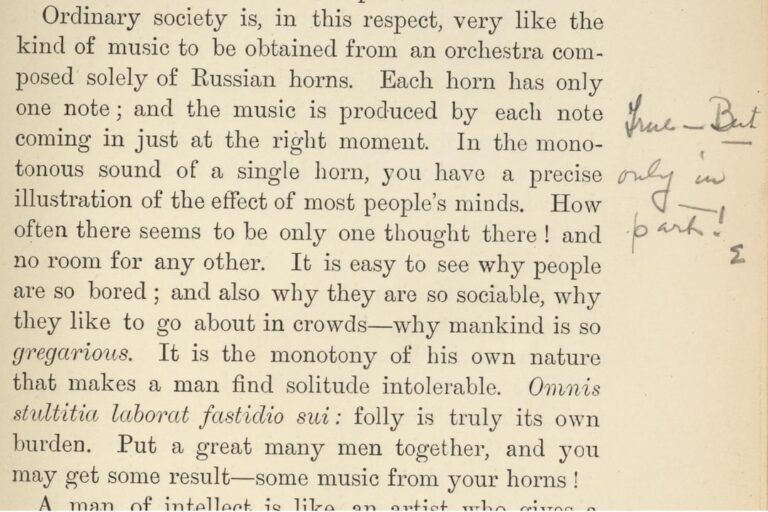
    The pure joy of private writing

    Recent archival developments in the literary world have reignited a timeless debate about the nature of creation. When the personal archives, diaries, and private notebooks of legendary literary figures are cataloged and opened to the public, readers gain an intimate glimpse into a process entirely free from external expectation. Raw Honesty In an era dominated by social media algorithms, content metrics, and immediate digital validation, the contemporary act of writing has become increasingly public. Writers are frequently urged to build personal brands, cultivate audiences before completing a single chapter, and measure the value of their thoughts by engagement metrics. Yet, a look across literary history suggests that forcing self-expression through the filter of public consumption often strips writing of its essential power: raw honesty. The Freedom of the Unseen Page When Franz Kafka famously instructed his close friend Max Brod to burn all his unpublished manuscripts and private journals upon his death, he was asserting a radical boundary. Though Brod ultimately defied those wishes giving the world masterpieces like The Trial and The Castle, Kafka’s mandate highlighted a fundamental truth about his relationship with the written word. For Kafka, writing was not a trade, a performance, or a search for acclaim. Rather, it was a urgent, internal necessity. He wrote to process his existential anxiety and negotiate his place in a confusing world. Revolutionary Contribution to Modern Poetry Similarly, Emily Dickinson spent her life in relative reclusion in Amherst, Massachusetts, quietly composing over 1,700 poems. She bound them carefully with thread and tucked them away in a wooden chest, largely indifferent to the literary establishment of her era. Freed from the pressure of publisher deadlines, critical reviews, or popular trends, Dickinson invented an entirely original poetic structure. Unconventional in its punctuation, bold in its metaphors, and uncompromising in its vision. she didn’t customise her voice to suit 19th-century publishing standards. That’s her revolutionary contribution to modern poetry is still there. Why Private Writing Rescues Creativity Writing for an audience activates self-censorship. When you write exclusively for yourself, the fear of judgment vanishes. This phenomenon allows uncomfortable truths and unrefined ideas to flow onto the page. Modern culture fixates on output. For instance, the finished book, the polished essay, the published post. Writing privately restores focus to the immediate sensation of thinking on paper. It is transforming the craft from a task into a sanctuary. A writer’s authentic voice is rarely found by attempting to match market trends. It emerges in the quiet margins of private journals, where syntax and thought patterns develop naturally without external influence. Reclaiming the Personal Journal in a Public World Reclaiming the joy of private writing does not require abandoning public work altogether. Instead, it requires establishing a sacred space where performance is forbidden. Writing for an audience of one remains one of the most effective ways to sharpen thought and restore mental clarity.   The enduring fascination with published literary archives proves an intriguing paradox. The writing that captivates us most deeply is often the very writing that was never meant for our eyes. We unlock the true alchemy of the written word by letting go of the need for an audience. A private conversation between the self and the page.