
evolution modern literary
|

The evolution of the modern literary hero

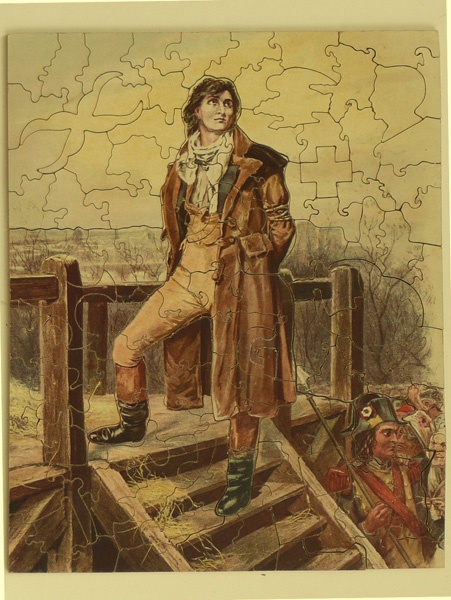
For millennia, the literary hero was defined by extraordinary grandiosity. From Gilgamesh navigating epic wildernesses to Achilles demanding battlefield glory, ancient narrative traditions favored figures of superhuman strength, divine lineage, and absolute moral certainty. These classic archetypes reflected societies that sought order in chaos through idealized figures who conquered external monsters and conquered impossible odds. Yet, as civilization evolved, so too did our definition of heroism. The story of global literature is, in many ways, the gradual dismantling of the perfect hero in favor of someone far more recognizable: ourselves.

The shift began in earnest during the European Renaissance and accelerated through the rise of the novel in the eighteenth and nineteenth centuries. Readers began turning away from mythic kings and gods, seeking stories that reflected the complex realities of ordinary life. Authors like Cervantes with Don Quixote poked affectionate fun at chivalric romance, replacing invincible knights with well-meaning, delusional dreamers. By the nineteenth and early twentieth centuries, writers like George Eliot, Fyodor Dostoevsky, and James Joyce completely reshaped the landscape. Heroism moved inward. The primary battleground was no longer a blood-soaked field of armor. It’s transformed into the unseen terrain of human conscience, social expectation, and psychological angst.

In modern and contemporary literature, the classical hero has largely given way to the complex protagonist or antihero. Today’s readers are naturally suspicious of flawless saviors. We recognize that perfection in storytelling is flat, predictable, and fundamentally false. Instead, modern narrative arcs celebrate figures characterized by vulnerability, moral ambiguity, and deep personal flaws. Characters like Jay Gatsby, Arthur Pendelton, or Holden Caulfield resonate not because they always make noble choices, but because their struggles with identity, grief, and societal pressure mirror our own daily conflicts.

Moreover, modern literature has democratized who gets to be a hero. Where ancient myths strictly reserved heroism for powerful men of noble birth, contemporary fiction centers voices that were historically marginalized or silenced. Today’s protagonists reflect diverse racial, economic, gender, and neurodivergent experiences. Heroism in the modern era is rarely about wielding a magical sword to slay a dragon; it is about surviving systemic pressure, demonstrating radical empathy, reclaiming identity, or simply deciding to get out of bed and keep going in an unpredictable world.

This historical transformation underscores a profound truth about human nature. We no longer look to literature for godlike ideals to worship from afar. Instead, we look into the literary mirror to see our own fractures, uncertainties, and quiet triumphs validated on the page. The modern literary hero reminds us that courage does not require perfection. Rather, it requires the willingness to remain human despite everything.


 

Similar Posts

  • The hallucination trap – information convincing but factually incorrect

    By Syeda Samar Zahra Zaidi When you ask an AI chatbot a question it does not know the answer to, an odd thing can happen: instead of hesitating or saying, “I am not sure!” it confidently delivers a tidy, well-structured, completely fabricated response—often with fake citations, fictional figures, and an authoritative tone. This phenomenon is known as the ‘hallucination trap ’, and it may be the most significant barrier between trust and artificial intelligence. I was introduced to the term “AI hallucination” for the first time in the workshop under the project titled “Digital Trust and Free Expression in the AI Era” at Department of Media and Development Communication, University of the Punjab, supported by the U.S. Mission to Pakistan in partnership with the Pakistan-U.S. Alumni Network (PUAN). I learned that a “hallucination” occurs when a language model produces information that sounds convincing but is factually incorrect or completely made up. Examples include inventing a legal case that never existed, citing a research paper that doesn’t exist or boldly misrepresenting a historical date. What is disturbing is not merely that AI can be wrong-humans make mistake too- but rather the way it presents that incorrect information with clearly, confidence and without a trace of doubt. Large language models are essentially highly complex pattern predictors trained to produce the most likely next word in a sequence. As a result, when a model has encountered a topic thousands of times in its training data, the predictors are typically accurate. However, when it comes across a gap, an unidentified fact or a question at the outer edge of its knowledge, it doesn’t shift into a hesitant mode. Instead, it continues doing exactly what it was trained to do: generate a logical, fluent piece of writing, producing a response that is structurally sound and grammatically correct but based on nothing. In human communication, confidence is generally perceived as a sign of strength which is important. We naturally prefer to trust a calm, reliable voice over a hesitant one. AI systems unintentionally exploit the tendency because their language remains confident whether they are right or wrong. The risks increase with the use of AI, as students may unintentionally include false information into their work and journalists have published articles citing artificially created sources and quotes, negatively affecting the credibility of their publications. Such inaccuracies influence what millions of people see, believe or share, thereby amplifying fabricated content. The reason AI does not simply say “I don’t know” is partly due to the way these systems are trained. Many models are designed to provide helpful, comprehensive-sounding answers and are rarely rewarded for expressing doubt during training. This means that a model that frequently acknowledges uncertainty may be judged as less helpful than one that consistently provides an answer, even when that confidence is occasionally misplaced. Such incorrectly aligned incentives arise when the training process gradually teaches the model that sounding confident is more valuable than being accuracy. Retrieval-augmented generation, which relies on responses in actual, verifiable records rather than internal memory alone, improved training techniques that explicitly account for uncertainty; and systems built to simply cite sources. So, users can independently verify claims are just a few of the ways developers are using to addresses this problem. While none of these solutions fully eliminate hallucination yet, taken together they represent a major shift from blind confidence toward earned trust. The most dangerous outcome is not an AI that makes mistakes but a culture of users who stop questioning because the system always sounds so sure of itself.   Therefore, until AI becomes more reliably aware of it own limitation, part of the responsibility falls on the people who use it: treating AI-generated output as a starting point rather than an endpoint, cross checking important facts against credible sources. In the end, the hallucination trap serves as a reminder that illusion is not the same as truth. As AI becomes increasingly common in education, digital media and everyday life, understanding why it occasionally lies with confidence is not only a technical curiosity but also a fundamental aspect of digital literacy. We must strengthen our ability to verify the information provided by AI as they become more persuasive. The views, thoughts, and opinions expressed in this blog are solely those of the author and do not necessarily reflect the official policy or position of the U.S. Mission to Pakistan or USEFP. The writer, Syeda Samar Zahra Zaidi, is a student of Media and Development Communication at  University of the Punjab, Lahore and can be reached at samarzahra456@gmail.com.  

  • Too much gaming may harm children

    Online and video games are a popular source of entertainment for children.  However experts warn that spending too much time playing games can affect a child’s mental physical and social development. Playing games in moderation can be enjoyable but excessive gaming may lead to several problems. Experts say the growing popularity of video games among children is becoming a concern around the world. Spending long hours in front of a screen can reduce time for schoolwork exercise and other healthy activities. Research also suggests that too much gaming may make some children more irritable angry or aggressive. According to experts excessive gaming may also affect brain function and the nervous system. Children who spend too much time playing games may lose interest in their studies perform poorly at school and become more likely to develop an unhealthy dependence on video games. Too much screen time can also reduce social interaction. Instead of spending time with family and friends children may prefer staying alone with their games which can affect their communication and relationship skills. Pediatric experts advise parents to set clear limits on screen time and encourage children to take part in other activities. Outdoor games painting arts and crafts reading and other creative hobbies can support healthy physical and mental development. These activities are even more beneficial when parents are involved. Experts also say that spending time with siblings and family members helps children build stronger relationships confidence, and social skills.  If video games become a child’s main focus family life and personal development may suffer. Experts do not recommend banning video games completely as learning to use technology is important today. Instead parents should set reasonable gaming limits monitor what their children play and encourage a balanced lifestyle that includes learning physical activity and family time.

  • The relationship between past tradition and present innovation

    In T.S. Eliot’s Tradition and the Individual Talent (1919), the relationship between tradition and innovation is conceived as a structural rejection of the Romantic rebels who came a century before. The English Romantics (Wordsworth, Coleridge, Byron, Shelley, and Keats) built an aesthetic identity on iconoclasm, intense individualism and radical rupture. In contrast, Eliot’s Modernist manifesto counters with historical humility, restraint and continuity. The Romantics operated as cultural iconoclasts. They emerged alongside the upheaval of the French Revolution. Poets like Shelley (Mont Blanc, Prometheus Unbound) explicitly rejected established institutional, religious and literary orthodoxies. For the Romantics, literature advances by breaking away from previous generations (especially Neoclassicism). The past is often viewed as a restrictive cage or a set of dead conventions that inhibit free human consciousness. Originality means creating something unprecedented from within the self. Authenticity is an act of poetic rebellion against tradition. In Tradition and the Individual Talent, Eliot argues that attempting to exempt oneself from the past is a delusion. Originality does not mean destroying past structures. In fact, it means acquiring a historical sense through arduous labor. Eliot reframes innovation as an internal readjustment of an existing system. A new poet cannot be rebellious in isolation. The poet’s work only gains aesthetic value when set among the dead poets of Western literature. It’s to see how it reshapes the entire dynamic order. Wordsworth famously defined poetry as the spontaneous overflow of powerful feelings. The Romantic movement centered the poet’s personal ego, subjectivity and unique psychological vision as the ultimate authority of art. The poet was a heroic prophet pouring out their soul. Eliot mounts a direct attack on this subjective expressivism. He famously counters: Poetry is not a turning loose of emotion, but an escape from emotion. It is not the expression of personality, but an escape from personality. To Eliot: The poet is not a heroic rebel, but a receptacle or catalyst (the platinum filament metaphor). The artist’s progress is a continuous extinction of personality and surrender to the literary heritage. Art should be judged as an autonomous, objective entity. It must be completely detached from the biographical life or emotional state of the human being who wrote it. Where the Romantic rebels viewed art as a wild, subjective act of liberation. Where the individual genius stands against society and past history. There and then, T.S. Eliot lowers the ego of the artist. Eliot redefines the individual talent not as a lone rebel storming the doors of literature. Individual talent is as ahistorically conscious craftsman who earns a place in the canon. This can only be by submitting to, learning from, and subtly altering the tradition that came before.  

  • 5 Morning drinks for weight loss

    Many people think losing weight requires expensive diet plans strict food restrictions or complicated meal programs. However health experts say that eating a balanced diet staying physically active and starting your day with healthy drinks may help support your weight loss journey. While there is no magic drink for weight loss some morning beverages may help improve digestion boost metabolism and keep you feeling full for longer. Here are five drinks that are commonly recommended to enjoy on an empty stomach. •Herbal detox tea A cup of herbal detox tea in the morning may help wake up your digestive system and support metabolism.  It is often made with natural ingredients such as dandelion ginger and licorice root. Experts say dandelion may help support healthy weight management while ginger can improve digestion and increase metabolism. Licorice root may also help reduce hunger making it easier to avoid unnecessary snacking. •Turmeric water Turmeric is well known for its anti-inflammatory properties. Since long term inflammation may be linked to weight gain adding turmeric to your daily routine may offer health benefits. Mix a small amount of turmeric powder into warm water. You can also add honey or lemon for taste. Drinking it in the morning may help improve digestion support metabolism and reduce inflammation. •Warm water with ghee In Ayurveda ghee is considered a healthy source of fat. Some experts believe that taking a small amount of ghee with warm water may support digestion and metabolism. The healthy fats in ghee may also help you feel full for a longer time which could reduce overall calorie intake during the day. • Apple cider vinegar drink Apple cider vinegar is a popular natural ingredient used by many people trying to lose weight.  It contains acetic acid which may help the body process fat more efficiently. It may also help control appetite and support metabolism. Mix a small amount of apple cider vinegar with water. You can add lemon juice and a little honey if you like. This drink may also help improve digestion reduce inflammation and support healthy blood sugar levels which may lower cravings for sweet foods. •Lemon water Lemon water is a simple and refreshing way to start the day. Lemons are rich in vitamin C which supports normal metabolism. They also contain pectin a type of fiber that may help you feel less hungry. Experts say drinking lemon water on an empty stomach may improve digestion support hydration and help reduce inflammation. Tips These drinks are not a quick fix for weight loss. They work best when combined with a healthy diet regular exercise and an active lifestyle. If you have diabetes stomach problems or any other medical condition it is important to speak with your doctor before making these drinks a daily habit.

  • |

    How fiction brain-trains compassion

    Empathy is the capacity to understand and share the feelings of another. It’s not merely an inherent personality trait; it is a cognitive muscle that requires exercise. While there are many ways to practice compassion in daily life, neuroscientists and psychological researchers have uncovered a uniquely powerful tool for training this mental capacity: reading deep, character-driven fiction. For decades, society viewed reading literature as a purely intellectual or escapist hobby. However, recent scientific studies using functional magnetic resonance imaging (fMRI) have revealed that when we read a story, our brains process the experience in ways remarkably similar to real-world social interaction. When an author describes a character running through a dark forest, struggling with heartbreak, or feeling a sharp pang of injustice, the sensory and emotional centers in the reader’s brain light up as if the reader were experiencing those events directly. This neural simulation allows us to step entirely out of our own shoes and temporarily inhabit the subjective reality of someone else. Psychologists often refer to this ability as theory of mind. It’s the cognitive skill that enables human beings to attribute mental states (beliefs, intents, desires, emotions, and knowledge) to themselves and others. Life only permits us to live a single, localized existence defined by our specific background, culture, and circumstance. Literary fiction breaks through those physical and social barriers. Through the pages of a novel, a reader living in a quiet suburban town can intimately experience the internal struggles of an immigrant navigating a new city, an incarcerated individual fighting for dignity, or a historic figure facing a agonizing moral dilemma. Crucially, fiction tells us what people do. Also, it exposes why they do it. It grants us unprecedented access to the secret thoughts, doubts, and vulnerabilities that real people rarely reveal in public. By witnessing a character’s internal contradictions, readers learn that human behavior is rarely black-and-white. We develop a tolerance for ambiguity and a healthier skepticism toward snap judgments. When we close the book, that expanded perspective lingers in our conscious mind, subtly altering how we interact with co-workers, strangers, and loved ones. Furthermore, reading fiction builds emotional stamina. It asks us to sit quietly with uncomfortable emotions like grief, fear, longing, and regret without fleeing into digital distractions. In doing so, it expands our capacity to hold space for others when they undergo difficult seasons in real life. Literary fiction, therefore, is far more than entertainment. It is a quiet, radical act of bridge-building. Every time we turn a page and immerse ourselves in a stranger’s story, we perform a vital neurological exercise that softens our defenses, broadens our horizons, and reminds us of our shared humanity.  

  • | |

    Rare star explosion creates mysterious gas bullets…

    Astronomers have made a remarkable discovery in the Milky Way after observing a rare exploding star releasing extremely fast-moving streams of gas. Scientists have described these unusual formations as cosmic “bullets” because of their incredible speed and shape. According to a new study, the gas material is being expelled from the star system at speeds of nearly 20 million miles per hour, creating a phenomenon that has never been observed in this way before, either in our galaxy or in other known stellar explosions. The discovery involves a rare helium nova known asV445 Puppis, which has been under observation for more than two decades. Scientists were able to study the star in greater detail after the surrounding cloud of dust became less dense, revealing new information about the unusual explosion taking place around it. Researchers from the University of Warwick confirmed that V445 Puppis is the only known helium nova of its kind in the Milky Way. The system consists of a white dwarf star that is collecting helium fuel from a rare companion star, eventually triggering an extraordinary stellar eruption. Unlike typical stellar explosions, this event involves the release of helium-rich material, creating powerful and unusual gas streams that have surprised researchers. The exact nature of these mysterious “bullets” and the process responsible for producing them are still not fully understood. Scientists believe that studying this rare phenomenon could provide valuable insights into how unusual stellar explosions occur and how stars evolve under extreme conditions. Understanding these events may also help researchers learn more about the behavior of white dwarfs and their role in shaping the evolution of galaxies. The discovery of V445 Puppis represents a significant step forward in astronomy, as it offers scientists a rare opportunity to examine a type of cosmic event that has never been observed in such detail before. Further observations will be needed to determine how these high-speed gas formations are created and what their long-term impact may be on the surrounding space environment. For astronomers, the mysterious “bullets” from this exploding star remain one of the most fascinating discoveries in recent cosmic research.

Leave a Reply

Your email address will not be published. Required fields are marked *