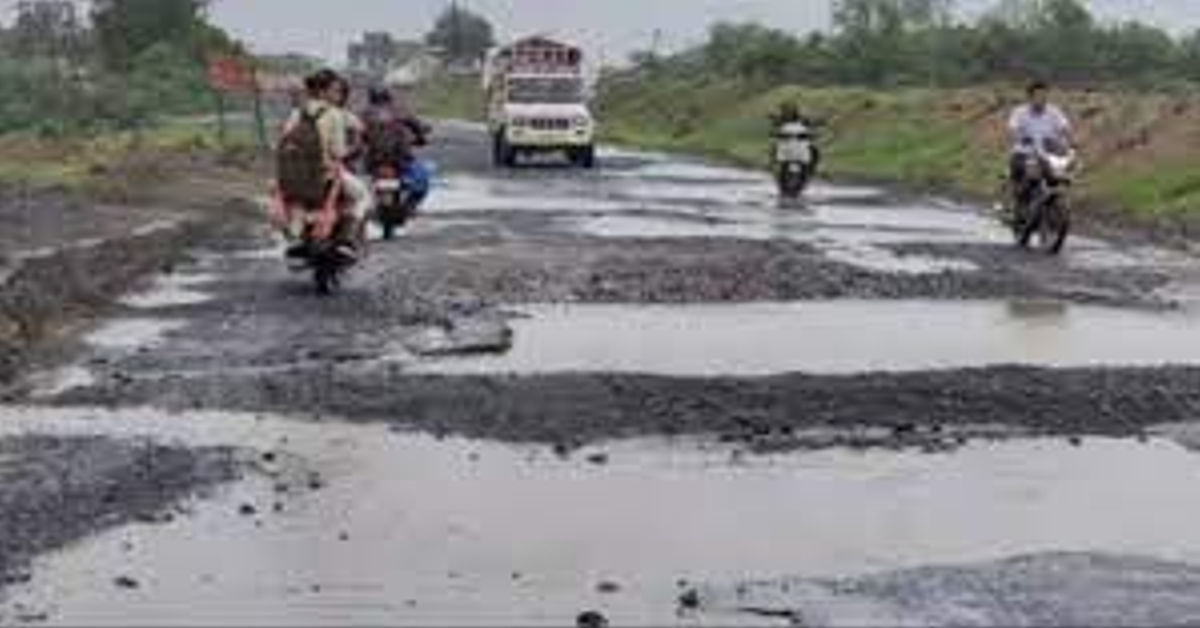
poor road conditions

Poor road conditions in Ginna

Meer Baloch

The poor condition of roads in Ginna, Kech, has become a serious problem for residents. Large potholes damaged road surfaces and the lack of proper maintenance make daily travel difficult and unsafe.


Students, patients, workers and elderly people suffer the most while motorists risk accidents and costly vehicle damage every day.

During the rainy season these roads become even more hazardous, disrupting transportation and delaying emergency services. Good roads are essential for public safety and economic development, yet the people of Ginna continue to face neglect.

I urge the concerned authorities to repair the damaged roads without further delay and ensure regular maintenance. The residents of Ginna deserve safe and reliable infrastructure.

Similar Posts

  • | |

    Modern fiction Is turning to non-human storytellers

    In contemporary literature, narrative perspective is being handed over to dogs, octopuses, whales, birds, and endangered wildlife. Talking animals have long been a fixture of children’s fables and folklore.  However, today’s literary fiction is doing something far more ambitious. Authors are adopting animal vantage points to grasp  profound existential questions, ecological grief, and the bewildering complexity of human society. Why readers and writers alike are suddenly captivated by animal narrators? This interest reveals much about our current cultural moment and the unique psychological role that fiction plays in times of global crisis. One of the most compelling reasons for the rise of animal storytellers is their ability to cut through human cynicism. We live in a world saturated with social media fatigue, and moral ambiguity. So, human characters often arrive with heavy psychological baggage. Readers may instantly judge a human narrator based on their socio-economic background, political leanings, or lifestyle choices. An animal narrator, by contrast, operates outside these human constructs. Whether it is a rescue dog observing a broken family or a pelican observing coastal transformation, an animal offers a clean perception. Their observations are rooted in immediate sensory experience: hunger, instinct, weather, fear, affection, and loyalty. Non-human narrators re-open channels of emotional honesty by stripping away political pretense. They allow readers to engage with burdening themes like grief, isolation and love. In literary theory, the concept of defamiliarization refers to the art of making the familiar look strange so that readers can see it clearly for the first time. Human beings have become accustomed to concrete jungles, light pollution, plastic waste, and digital distraction. To us, these phenomena are simply the backdrop of daily life. When we view through the eyes of a non-human entity, modern human habits suddenly appear bizarre. A bird that’s trying to navigate glass skyscrapers. Whale interpreting the deafening sonar of industrial ships. Forest mammal trying to cross a highway. They all illuminate the bizarre artificiality of human civilization. By shifting the vantage point, authors force readers to step outside their anthropocentric bubble. Thus, readers recognize how dramatically human choices disrupt the living ecosystem. We live in an era marked by accelerating biodiversity loss and climate instability. We own a reality that frequently induces emotional paralysis or denial in human populations. Directly reading about ecological devastation in news reports can lead to apathy or fatigue. Fiction narrated by animals offers a way to process ecological mourning on a deeply personal level. The abstract concept of climate change transforms into an immediate tragedy when the perspective is of an animal suffering habitat destruction. The non-human perspectives give dignity to  creatures that are seen as collateral damage in human progress. It transforms passive statistics into active, feeling individuals whose survival matters to the reader. At its core, the novel has always been an engine for cultivating empathy. For centuries, that empathy was restricted to other human beings of different cultures, genders, or eras. Modern fiction is taking the logical next step by stretching the boundaries of empathy beyond our own species. How do you depict a mind that experiences the world primarily through smell, echolocation, or instinct rather than human logic? Successful books navigate this by taking an imaginative leap with scientific understanding. Thereby, resisting the urge to turn animals into simple humans in fur or feathers. In doing so, they remind us that human intelligence is not the only valid way of experiencing reality. The surge in animal-led fiction reflects a growing realization that human stories do not exist in a vacuum. Our reluctance to listen to non-human perspectives has come at a high cost. Modern literature is not retreating from reality into fantasy. It is confronting our reality with clarity. It is reminding us of the wild world we share and the urgent need to preserve it.  

  • Beyond the Wallet

    By Manahil Pasha The women in Pakistan has a limited access towards financial independence for generations. Opening a bank account, purchase of property, willingness to travel have all been monitored by male family members for most women. Receiving money for daily or necessary use means being dependent on another member of the house. The era has gradually changed with the growth in Pakistan’s fintech ecosystem. After the availability of digital payments methods, mobile wallets and ease of not having to visit banks with cashless banking, some things are rapidly changing. This has opened up new opportunities for a number of women across the country in the formal digitally optimized economy. Barriers for women remain but the user friendly mobile wallets are gradually improving how women receive or save money. Fintech ecosystem in Pakistan is not just technology but it is about financial inclusion. According to the Karandaaz Financial Inclusion Survey (K-FIS) 2024, 14% of Pakistani women have access to a regulated financial account compared with 56% of men while just 11% of women own a mobile wallet compared to 48% of men. This highlights a clear gender gap in Pakistan’s fintech ecosystem which could be due to lack of basic financial education, access to digital resources or cultural norms. Fintech is now paving path to address traditional challenges for women including access to digital financial tools, mobility, maintaining credit history or wanting to be financially independent by lending or saving money. Where conventional banks require customers to visit branches for account opening, mobile wallets give easy access to create accounts through their phones. All facilities like paying utility bills, receiving salaries or making vendor payments is now easier than ever. Many women in Pakistan has an entrepreneurial spirit and are running their microbusinesses across multiple villages, small towns and communities. Some sell clothing, handicrafts or even baked goods on a regular basis to make ends meet but lack financial education to invest and multiply their money for growth and expansion. However, fintech facilitates women with receiving money in digital wallets instead of cash or male members’ bank accounts. International research also suggests that women who adopt mobile money services are significantly more likely to access formal financial systems particularly when combined with education and mobile phone ownership. Fintech is not limited to ease in digital payments. Fintech ecosystem increases transparency, reduces risks of carrying cash or theft, helps understand formal methods of saving and investing money. For women receiving salaries or government support do not rely on another person to receive their deserved money but has access to receive and manage their money on their own. According to the World Bank’s latest Global Findex research, receiving wages or government payments digitally is often the first reason many women open a financial account. Pakistan is gradually moving towards financial inclusion but understanding technology is not the only barrier. Many hindrances lie outside of technology starting with the limited use or access to smart phones, approximately 82% of Pakistani men own a mobile phone while only 46% of women do creating a significant divide. Digital literacy is another challenge that comes with lack of education on the safe use of mobile wallets around scams and frauds. Pakistan has gradually progressed in financial ecosystem and has been supported by policy makers with regulations to accelerate financial inclusion. Pakistan and private fintech sector has taken initiatives encouraging digital payments, delivering financial education, introducing cashless services while encouraging mobile wallets. However, better initiatives are needed around financial education on mobile wallets, designing products around women needs and ease which includes formal educational trainings, low-cost saving products or multilingual apps to cover provincial and regionally spoken and understood languages. Building trust, empowering women and developing a digital ecosystem are all equally important for the financial inclusion in Pakistan.

  • The Disappearing Baloch Culture

    Hani Rasheed Through the pages of your newspaper, I want to draw attention to the gradual disappearance of Baloch culture. We proudly call ourselves Baloch, but sadly, many of us are no longer following our own traditions, values and cultural practices. Our language, traditional dress, customs and respect for elders are slowly being replaced by modern influences. Modern life is not wrong, but forgetting our identity is a serious concern. Our culture is our history and a symbol of our identity. If we do not protect it today, future generations may know the word “Baloch” but forget the true meaning of Balochi culture. The government, schools and families should work together to promote Balochi language, traditions and cultural values. Young people should be encouraged to learn about their history and respect their cultural roots. I hope your newspaper will highlight this important issue and encourage people to protect our beautiful Baloch culture.

  • Patients are not being treated equally

    I want to draw attention to the problem of unequal treatment of patients in hospitals. Some patients are treated well because they are rich or have connections while poor patients often have to wait for a long time and do not receive proper attention. This is unfair and can put patients’ lives at risk. Doctors and hospital staff should treat every patient equally regardless of their financial status or social position. Hospitals should provide proper care medicines and emergency treatment to everyone. request the authorities to take strict action against this unfair practice and ensure that all patients receive equal and respectful treatment.

  • How to protect your phone screen without protector?

    If you have recently purchased a flagship smartphone, there is a good chance that you may not need a screen protector. In fact, most flagship smartphones now come with Corning Gorilla Glass protection which makes them highly resistant to scratches. However, many people still use screen protectors to provide their phone screens with additional protection. A screen protector is particularly useful when a phone is dropped from a height and hits the floor with significant force. But what should you do when the screen protector that has been on your phone for some time becomes damaged or covered with scratches? This can happen for various reasons such as accidentally placing the phone screen-down on a hard surface. Scratches can also occur when the phone is kept in a pocket with keys or coins. Although screen protectors are highly resistant to scratches, they are not completely scratch-proof. Dust and dirt can also affect the phone’s screen and increase the risk of scratches. So, if your screen protector becomes damaged, you can simply continue using the phone without replacing it immediately. Just try to keep the screen free from dust and make a habit of cleaning it regularly using a suitable screen-cleaning liquid and a soft cloth.

  • Inflation fuels mental health crisis in Pakistan

    Rising prices unemployment and ongoing financial pressure are not only reducing people’s buying power in Pakistan but are also affecting their mental and physical health. Mental health experts say that money problems job insecurity growing debt, and uncertainty about the future are leading to higher rates of depression anxiety stress sleep problems irritability family conflicts high blood pressure and heart disease. Clinical psychologist Fatima Tahir explained that when income is lower than household expenses people experience constant stress.  Over time this can develop into depression anxiety anger fear and hopelessness. She warned that without timely mental health support these problems can also lead to physical illness social isolation and family disputes. Psychiatrist and social worker Dr. Ayesha Imran Murtaza who has worked at Fountain House for more than 20 years said inflation unemployment poverty and financial hardship are major reasons behind the growing number of mental health cases in Pakistan. She noted that people with low incomes are more likely to suffer from emotional trauma and mental illness because they often lack family support and cannot afford treatment. According to her poverty and mental illness create a cycle in which each problem makes the other worse. When patients cannot afford medicine their condition often worsens and if the family’s only breadwinner becomes ill the entire household is affected. According to the Pakistan Psychiatric Society National Psychiatric Morbidity Survey (2019–2022) 32.3% of adults in Pakistan are living with a mental health disorder while 37.9% have experienced one at some point in their lives. Anxiety stress and depression are the most common conditions with women low income groups and people living in cities being more affected. The World Health Organization estimates that more than 24 million people in Pakistan need mental health services. However the country faces a severe shortage of specialists. Pakistan has only around 300 to 340 psychiatrists meaning there is roughly one psychiatrist for every 700,000 to 800,000 people. The country also has about 478 psychologists, 3,145 social workers and only 22 occupational therapists working in mental health care. According to Prof. Wajid Ali Akhundzada, one in four young people and one in five children in Pakistan are dealing with mental health issues while around 10% of the population struggles with drug addiction. He stressed that the number of mental health professionals and treatment facilities is far below the country’s growing needs making mental health a national priority. Meanwhile the Punjab government is upgrading the Punjab Institute of Mental Health (PIMH) in Lahore to improve treatment and rehabilitation services. The institute is expanding psychiatric care emergency services addiction treatment rehabilitation programs and professional training under one roof. The government also plans to extend mental health services to district and tehsil level public hospitals so that more patients can receive treatment closer to home.

Leave a Reply

Your email address will not be published. Required fields are marked *