
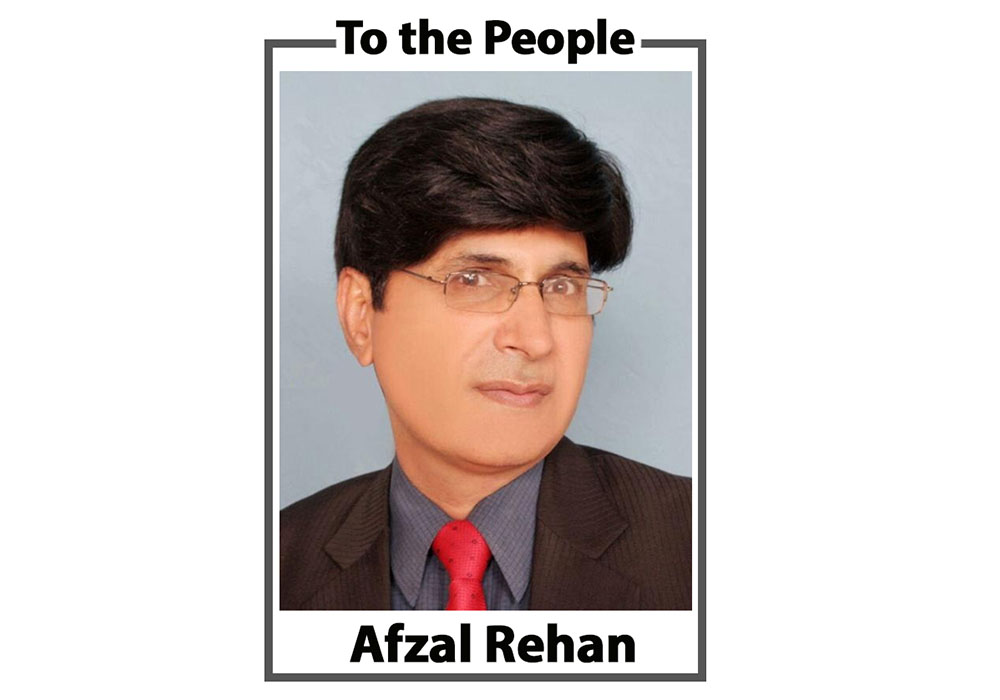
rigging violence pakistani

Why rigging and violence in Pakistani Kashmir?

Elections are currently being held in Pakistani-administered Kashmir (POK), and their results have already become controversial at the very first stage. Gilgit-Baltistan, which is essentially also part of Kashmir, held elections recently. Bilawal Bhutto Zardari’s Pakistan Peoples Party (PPP) won there, while the Istehkam-e-Pakistan Party also received some seats, and the Pakistan Muslim League-Nawaz (PML-N) won fewer seats. Despite this, the PML-N accepted the results and fully cooperated in the formation of the government.

In the first phase of elections in Mirpur, however, the PML-N won nine seats, while Bilawal’s PPP secured four. Despite winning four seats, the PPP immediately began raising allegations of rigging.

Even more painful is the fact that these elections have been marked by bloodshed. During clashes surrounding the long march of the banned Awami Action Party, one Rangers personnel was killed and five police officers were confirmed injured. The Awami Action Committee, meanwhile, claims that its protesters came under firing, resulting in the deaths of 14 of its workers.

The number of people killed or injured from the Awami Action Committee has not been officially confirmed. However, if government personnel have been killed and injured, it is reasonable to assume that protesters also suffered casualties.

The question now is what should be made of the rigging allegations being levelled by the PPP and Bilawal Bhutto Zardari. If one side refuses to accept the election results and uses such harsh language against the other side, could the situation not deteriorate further?

From a strategic perspective, it would have been better to hold the entire election on a single day. The total number of voters is not so large that the process needed to be stretched out in this manner. The second phase is scheduled for August 2, followed by the third phase on August 10, as if this were a battlefield.

Bilawal should also think beyond repeatedly raising the issue of rigging. At present, his own party is in power in Kashmir. The deputy commissioners, assistant commissioners and other officials were appointed by the ruling party. So who has greater opportunities to influence elections—the ruling party or the opposition?

Nawaz Sharif and Maryam Nawaz conducted an effective election campaign during the final days. However, the writer believes it was not befitting of a three-time elected Pakistani prime minister to say words to the effect of: “I will ask my brother Shehbaz Sharif to make me the prime minister of Kashmir, and I will solve all its problems.”

Instead, he should have said that whichever member from their party is elected to the assembly, he and his party would fully cooperate with that representative in resolving the problems of the people of Kashmir.

Maryam Nawaz also sent air-conditioned buses for the people of Kashmir, but they were stopped on the instructions of the Election Commission. Nevertheless, the message reached the people of Kashmir that the PML-N was in a position to do something to address their deprivation. This thinking could help the PML-N achieve further success in the next two phases as well.

But the real decisions, after all, remain in the hands of those who possess the power and influence.

In our country, writing and speaking the truth has become extremely difficult. There is immense pressure not only from powerful circles but also from violent and extremist mindsets. Their proxies can be found roaming freely in the streets.

In normal states, something that would be considered ordinary or insignificant was used as a pretext to shut down the country’s largest media organisation, Geo, for two weeks. This alone gives an idea of the pressure facing the Jang newspaper and the national media.

For this reason, the writer says he tries to avoid writing about national and domestic affairs and mostly focuses on international issues. Even there, however, he has to be careful not to write anything critical of China, Iran or certain other countries. Likewise, he says he cannot write anything supportive of India, Israel or certain other countries that might highlight a positive aspect or truth about them.

This, he says, is the pressure he faces every moment.

When it comes to Indian-administered Kashmir, we can freely write and speak about alleged government abuses without facing difficulty or objection. We can exaggerate as much as we want and add as much colour as we like. The violent militants there are portrayed as victims under all circumstances.

But when it comes to our own Kashmir, we are expected to portray the movement for public rights as anti-state, Indian-sponsored and terrorist, regardless of how strongly its members insist that they are simply demanding rights for ordinary people.

The organisation is not even named after any military or jihadist group. It is called the Jammu and Kashmir Joint Action Committee. It consists of local Kashmiri traders, transporters, workers, students and lawyers. These are ordinary citizens of the region.

They demand rights for ordinary Kashmiris. They speak against rising inflation and call for reductions in the prices of wheat and flour. They oppose excessive privileges for the elite, misuse of public resources and corruption. They also demand an end to what they consider unjust taxes.

Despite this, the organisation has not only been banned, but its workers have allegedly been arrested and subjected to violence in ways that are deeply disturbing.

While witnessing all this, writers like us sometimes adopt deliberate ignorance and tell the members of the Awami Action Committee: “You make allegations against our sacred institutions. How could they possibly commit excesses against you?”

We are told that these institutions are the reason this small part of Kashmir remains with us. We are also told that they have kept the Kashmir issue alive so that the entire region can eventually be recovered. Therefore, according to this argument, their praise and appreciation are justified.

If, according to protesters, 30 or 35 people have so far been killed and around 300 injured during demonstrations, then we are also told to consider how many of our security personnel have been killed during clashes caused by the protests.

According to figures collected by the writer, four people were killed during the initial electricity-related protests—three demonstrators and one soldier. More than 100 people were injured.

During protests over the 12 refugee seats and efforts to reopen roads, six protesters, two security personnel and one police officer were reportedly killed.

On July 14 alone, nine deaths were reportedly confirmed, while the number of injured was in the hundreds.

Different figures have been presented by both sides, but one fact is clear: the bloodshed that we used to condemn in Indian-administered Kashmir is now taking place in our own Kashmir.

Recently, millions of young people took to the streets in major Indian cities. They also clashed with police, but not a single person was killed. Eventually, those young people secured their demands and went home.

Why, then, is protest considered such a serious crime here that dozens of people have to die and hundreds are injured, yet protesters continue to cry out on the streets or fill the prisons without getting their legitimate demands accepted?

Instead, their organisation has been banned and declared unlawful.

The truth is that the Awami Action Committee’s demand concerning the 12 allegedly illegitimate seats is entirely justified, according to the writer. Those seats, he argues, do not truly represent the people living in Kashmir. Rather, they are a tried and tested mechanism for undermining their electoral choices.

But the question remains: who will bell the cat?

If the people responsible for the existing system are themselves present in the assembly, how can the necessary amendment be made?

The credibility of these elections has certainly been damaged. According to one report, only around one-quarter of eligible voters cast their ballots because two major groups, Pakistan Tehreek-e-Insaf (PTI) and the Joint Awami Action Committee, boycotted the elections.

The Awami Action Committee had also been staging a sit-in in Rawalakot for several days. Maintaining such a prolonged protest in hot weather and amid worsening circumstances was not easy.

Perhaps for this reason, the committee’s leadership appeared willing to compromise during negotiations with the government. At least for the time being, it reportedly backed away from its major demand concerning the 12 allegedly illegitimate seats.

The committee said that if cases registered against its members were withdrawn and detained workers were released, it would end the sit-in.

Even this demand was rejected. Instead, the establishment reportedly described the protesters as traitors, anti-state elements and terrorists.

Prime Minister’s Adviser Rana Sanaullah went so far as to say that trained militants were currently fighting against the government and state in Pakistan-administered Kashmir.

This immediately raised an important question: who had trained these militants?

Perhaps this was one reason why action was taken when members of the Awami Action Committee attempted to march from Rawalakot towards Muzaffarabad. Reports claimed that live ammunition was used against them and that casualties were high.

One report said the father of an Air Force squadron leader from Rawalakot was also killed during the committee’s march.

Dr Usama Jameel, a talented young PhD scholar at Islamabad’s Jinnah University, was also reportedly killed during the violence.

The Action Committee should also avoid taking the law into its own hands and show greater restraint. It should recognise that this is not a democracy where protests are necessarily praised or welcomed.

At the same time, it must be remembered that violence always gives birth to more violence.
Similar Posts

  • Second Darkest Day For Kashmiris

    Kashmiris including men, women, youth and children who underwent the second longest lockdown, complete curfew, for a pretty long time, are observing it as the second darkest day in their history on August 05, 2026. On August 05, 2019, the Indian Government of Prime Minister Narendra Modi had quite unexpectedly, illegally and unilaterally scrapped the special status of Jammu and Kashmir under Article 370 of the Indian Constitution making it an integral part of the country. These measures had ended the occupied territory’s limited autonomy and sought to alter the internationally recognized disputed status of Jammu and Kashmir in blatant violation of the United Nations Security Council resolutions and international law. The second darkest day in Kashmiris’ history is now better known and is observed every year on August 05 as Youm-e-Istehsal (Day of Exploitation). The observance of Youm-e-Istehsal not only serves as a reminder of the continued sufferings of the Kashmiri people but also reaffirms Pakistan’s unflinching solidarity with their just struggle for the realization of their right of self-determination. Pakistan’s civil and military leadership has all along been extending moral, diplomatic and political support to the Kashmiris in their just and indigenous freedom struggle. Kashmiris on both sides of the Line of Control (LoC), around the world as well as the Pakistan government and the people are observing yet another Youm-e-Istehsal on August 05, 2026 to mark the 7 years of quite regretful, deplorable Indian siege of its illegally occupied Jammu and Kashmir valley and denying the Kashmiris their birth right of self-determination in accordance with the UN Security Council resolutions. Needless to mention here that Kashmir conflict continues to remain as perhaps the oldest lingering and unresolved international dispute dating back to 1947. It also continues to be recognized by the world body, the United Nations, as an issue requiring peaceful settlement in accordance with its Security Council resolutions and the wishes of the Kashmiri people who were engaged in one of the longest unarmed struggles for freedom from the Indian shackles. Kashmiris in the occupied valley, on both sides of the Line of Control, in the world over are observing August 5, 2026 as the second darkest day of their history. The first one being observed every year on October 27 is to continue marking their protest and agitation against illegal and forcible occupation of their territory by India on this day in 1947 after its last Dogra ruler Maharaja Hari Singh, one of as many as 565 princely states, had an Instrument of Accession signed in Delhi, had opted to join India in accordance with the provisions of the Sub-Continent Partition Plan against the wishes and aspirations of the valley residents. Following this ugliest development, India had airlifted its security forces into the occupied territory. Since August 05, 2019, India has accelerated its efforts for consolidating its control over its Illegally Occupied Jammu and Kashmir (IIOJK) through a series of political, legal, and administrative measures. The Indian Government was also making attempts, which are a great source of concern for everybody, to engineer demographic changes in its occupied territory through the issuance of forged domicile certificates to non-Kashmiris, mainly Hindus, changing the land ownership laws, and electoral delimitation measures which were designed to arbitrarily alter the region’s demographic and political landscape. There were reports that in pursuance of Indian PM Narendra Modi’s devilish intentions of promoting Hindutva more than 350,000 fake and forged domicile certificates have been issued to non-Kashmiris (Hindus) enabling them to settle in the occupying territory since August 05, 2029. These measures, quite obviously, were a crude attempt to dilute the identity of the indigenous Kashmiri population, undermining their political representation, and creating irreversible changes to the disputed territory in flagrant violation of all international laws and the Fourth Geneva Convention. The years following August 5, 2019, have also witnessed a worsening and quite alarming human rights situation in IIOJK. Reports of arbitrary detentions, extrajudicial killings, enforced disappearances, custodial torture, women’s rapes, restrictions on freedom of expression and peaceful assembly, and systematic curbs on media freedom continue to surface and emerge frequently. Observance of another Youm-e-Istehsal on August 05, 2026 as such is not only a painful and tragic commemoration of August 05, 2019 events but also a reminder of the ongoing challenges being faced by the Kashmiris but will also highlight the urgent and dire need for the international community to take cognizance of the situation in IIOJK and exert pressure on India to respect international law and human rights and firmly support the efforts aiming at achieving a just and peaceful resolution of the Jammu and Kashmir dispute. Observance of the Youm-e-Istehsal by the government and the people of Pakistan is also a renewed commitment of Pakistan to continue extending political, diplomatic and moral support to the Kashmiris until they are enabled to exercise their inalienable right of self-determination in accordance with the UN Security Council resolutions. Kashmiris all over the world earnestly believe that their observance of the darkest days on August 5 and October 27 besides other protests and rallies in occupied territory and elsewhere will sooner or later awake the sleeping conscience of the international community and they will be getting their birth right of self-determination in accordance with UN Security Council resolutions and they will be free to either stay with India or join Pakistan. They are hopeful that this will happen but are unable to say surely as to when this is going to happen.

  • Trump Era is over?

    Donald John Trump entered the White House as the 45th President of the world’s oldest constitutional democracy in January 2017. As incumbent he lost the election at the end of his four-year term. He took oath of office as the 47th head of state in January 2025. As there is a two-term constitutional restriction most Presidents falter in the later years of power. It was George Washington, the founding father and the first President who set this tradition of going home after eight years at the helm. Franklin Delano Roosevelt ( FDR ) the 32nd President served from 1933 to 1945 until his death in office. He is the longest serving US President. As his rule stretched over four terms, a constitutional amendment was made to restrict the term in office to two. Since then, craziness of the final term has increased manifold as humans are fond of building their legacy to be remembered for all times to come. Richard Nixon had to resign in his second term on charges of break-in and lying. President Ronald Reagen got involved in the Iran Contra Affair that seriously dented his popularity. Jimmy Carter was a great President who never got a second term. Bill Clinton did well in his first term but then had to face impeachment because of the Monica Lewinsky affair in the second. Bush Sr had single term while Bush Jr started the Afghanistan war which proved to be disastrous. Barrick Hussain Obama promised to end wars but badly failed. In fact, the inferno spread in the entire Middle East. Joe Biden did not run for office for the second term as the first was not very glorious and he was out of steam so he nominated his Vice President for the top slot. Legacy is earned not forced. There are no short cuts to lasting glory. Craziness does not help it only complicates. Capturing and killing head of states in the 21st century indicates brutalized narrow thinking and over simplification of the long-term complexities. Such an approach may have worked in the 18th of 19th century but not anymore. Trump wanted to control oil. He first took control of Venezuela by abducting its President through palace intrigue. Most countries in the Middle East ( ME ) were already subservient. He decided to take control of Iran as was done in the decade of the fifties when Shah was reinstated through CIA action. Mohammaed Mussadiq the elected President was captured and imprisoned. The Pahlavi Dynasty ruled Iran till 1979 when it was over thrown by the Islamic Revolution led by Imam Khomeni. Since then, the country has been struggling for its sovereignty At the behest of the rogue Israeli Prime Minister Benjimin Nathenyau, Trump decided to attack Iran and kill its top leadership through clandestine on the ground information sharing and intrigue. Imam Khamenei, the successor to Imam Khomeni, was assassinated but the regime survived. Iran decided to retaliate. The US bases were the closet targets. Israel looked the other way for self-preservation leaving USA to face the wrath. The vulnerability of the oil rich states was exposed. Reality set-in. Yankees have to go home was the clear verdict. Power structure in the entire ME is gearing for change. Mecca Joint Defense Agreement ( MJDA ) has been signed by Turkey, Pakistan and Saudi Arabia, others may join soon. A reasonable peace agreement can provide the much-needed face saving for Pakistan is on the forefront. The Abraham Accord to legitimize the illegitimate state of Israel has been thrown in the cold storage. After Iran, Trump also sought regime change in Afghanistan which has not happened so far. His heroics have failed to produce results. Losers are rejected by the American public. Congressional elections are scheduled for Nov. The polls are not favorable for the Republicans. If Democrats gain control of the house, Trump may have to face impeachment. It will then be the end of his political ambitions, leaving behind a legacy of ill-planned misadventures for personal glorification. Fall of the most powerful leader of the only super power of the world will certainly have ripple effects. First, it will be the totally dependent and subservient leadership in the ME followed by other friendly regimes. The countdown has started for Trump. Collateral damage has to be understood and contained. I remember the words of the legendary Cricket Captain Hafiz Kardar when Pakistan was at the verge of victory in the Oval cricket test in the decade of the fifties; ” Only rain can save England from defeat “. Pakistan prevailed, Fazal Mahmood emerged as a hero. Since then, there has been no looking back. Pakistan emerged as a major player in the cricketing world. Trump should pray for divine intervention otherwise it is all over for him and his cronies.

  • A Nation in Focus: The Social Contract and the Mak…

    (When the water rises, who shows up and who is left waiting?) ‎I live in Sabzazar, a neighborhood in Lahore, Pakistan, but part of my heart is always sitting along the banks of the Moxahala Creek back home in Southeast Ohio. When the water rises in Muskingum County or the Punjab plains, who shows up, and who is left waiting? I live in Sabzazar, a neighborhood in Lahore, Pakistan, but part of my heart is always sitting along the banks of the Moxahala Creek back home in Southeast Ohio. ‎ ‎My mother and brother still live right near South Zanesville, just a stone’s throw from Crooksville. When heavy rains hit Perry and Muskingum counties, I don’t need to be there to know what it looks like. I can picture the heavy, chocolate-brown water backing up into the low spots, the damp chill that settles into a basement, the fears of what if the waters reach a house trailer, and that specific, exhausting smell of river mud that takes weeks to scrub out of porch boards and carpet. The worries of if the home has structural damage.. Halfway across the world in Pakistan, the landscape couldn’t look more different. But when monsoon season swells the rivers across the Punjab, the view from the ground is hauntingly identical. ‎ ‎Standing in a flooded doorway feels the same whether you are in Ohio or Lahore. The quiet shock is the same. The ruin of things you worked years to buy is the same. And the very first instinct is to grab your coat, shovel, a chainsaw and a pair of boots and go check on the elderly woman next door.. Start hauling wet furniture, debris to the curb and giving comfort, food and basics to those in need is entirely universal. Watching both worlds at once makes you look at governance differently. It strips away abstract political jargon and leaves you asking one fundamental question: When a community is hit with a crisis, does its system build capable people who can act, or does it leave them sitting on their hands, waiting for permission to survive? ‎ ‎What a Small Ohio Village Taught Me About Governance ‎ ‎Growing up around South Zanesville and Crooksville, you learn pretty early that small-town life relies on a very specific kind of quiet, distributed agency. ‎Crooksville isn’t a rich town. It’s a hard-working Appalachian village of under 1,500 people. But when the creek overflows, nobody sits around waiting for a press conference out of Washington, D.C., or a mandate from the state capital in Columbus. ‎ ‎The response moves in waves because the connections are already wired: ‎On the local levels we see neighbor checks on neighbor. The volunteer fire department turns on the sirens, pulls out the high-water gear, and starts the door to door knocks. At the County level we have the Perry County 911 dispatch and Emergency Management Agency (EMA) start tracking water levels and routing equipment where it’s needed most. At the State level, If the county gets overwhelmed, pre set legal triggers immediately call in the Ohio EMA or the National Guard. ‎ ‎Government here doesn’t replace the community’s instinct to help itself; it validates it, organizes it, and backs it up with real resources. The system trusts the people on the ground to know their own roads. Here in Pakistan, the human spirit is just as generous, if not more so. The impulse toward hospitality, neighborly charity, and mutual support runs incredibly deep. When disaster strikes, ordinary citizens open their wallets and their homes without a second thought. It’s just what they do… ‎ ‎And Pakistan’s has one of the world’s top class military engineering, a massive national disaster agency (the NDMA), and incredible private charities. The raw capacity is immense. Yet, too often, there is a however a very heartbreaking disconnect between that high-level power and the family standing in ankle deep water in a local neighborhood. An ordinary citizen here once described the country to me using a metaphor I’ve never forgotten: a child that was never allowed to stand on its own feet. An infant isn’t helpless because it lacks potential. It’s helpless because it hasn’t been given the space to build muscle, fall over, adjust its balance, and try again. If an authority figure picks the child up every single time it tries to pull itself up, the child never learns to walk—not from a lack of ability, but because the environment denied it the chance to build strength. ‎ ‎That is how systemic learned dependency takes root: Central authorities assume total control, bypassing local municipal councils. Neighborhoods are given no real budget or authority to fix their own drainage or organize local response teams. And when a flood comes, citizens have no choice but to wait for distant, top-down relief. The authorities look at the waiting crowd and say, “See? The people can’t manage without us.” ‎We witness power centralized even further, deepening the exact helplessness it claims to fix. Over generations, people adapt to the system they are given. If a system rewards waiting for a political patron, people learn to wait for patrons. If it rewards local initiative, communities build habits of self-reliance. It is very easy to blame culture or public apathy for civic passivity, but that misses the point entirely. Culture simply reflects the structural incentives people are given to survive and adapt. It is nature vs nurture and we have a break down when these two things fail to promote a cohesiveness and inclusion of what is a community and what that actually means. ‎ ‎Across the globe, the relationship between state control and citizen participation varies wildly, proving that central authority does not have to mean public powerlessness. In China, a deeply centralized state framework actively structures and expects local neighborhood committees and civil volunteer groups to manage community-level crises. Across much of Europe, comprehensive state safety nets exist alongside highly empowered municipal councils and professionalized local volunteer forces.

  • Cheating Today, Corruption Tomorrow

    By Tuba Khan  Cheating in the education sector is an issue of great concern. It is not merely an academic breakdown, but the foundation upon which corrupt values are built. Unfortunately, cheating culture has become a defining feature of Pakistan’s education system and is considered a normal practice instead of a moral failure. This dysfunctional culture has led to the production of highly qualified people with unproductive minds, weak analytical abilities and limited potential to play a transformative role in society. Academic cheating is a conscious effort to use unfair means during exams to gain educational credit. Common cheating practices include, paper leaks, copied material in exams, using AI chatbots and technological devices such as mobile phones, smartwatches and other digital gadgets, receiving help from others during examination and hiring another person to sit in exams on behalf of the original candidate. Shockingly, in some cases, invigilators themselves facilitate cheating in the exam hall. Pakistan clearly lags behind other countries worldwide in the research field because of its corrupt education system that discourages creativity and problem-solving skills and is based on rote learning. International reports highlight the declining quality of education in Pakistan. According to the World Top 20 (WT20) International Education Database 2026, Pakistan is ranked 136th out of 164 countries globally in terms of the quality of education. Culture of cheating reflects the education crisis in Pakistan. This menace is prevalent in all four provinces of Pakistan. Sindh and Balochistan have recorded the highest number of cheating cases. As per the reports released by the Board of Secondary Education Karachi in 2022, around 100 students were caught cheating during exams and 400 cell phones were confiscated in the course of just two days (May 21-22). Later it was discovered that 18 people had appeared in exams on behalf of original candidates. KPK and Punjab also depict a pathetic picture. Earlier this year, candidates at the Khurrianwala Government Girls High School were found cheating and copying from paper slips with the connivance of invigilation staff. Even the provincial capitals, Lahore and Peshawar, having well-known educational institutes have the same culture. Not only schools and colleges, but the universities are also prone to it. Many factors contribute to this toxic culture, including staff shortage, overcrowded examination centers, weak institutional policies, poor performance of teachers, habitual laziness among students and staff, low level of students’ interest in studies and a lack of awareness about moral values. Consequences of cheating are not limited to examination centers only, but extend to the whole society. Academic institutes are meant to produce ethical, responsible and intellectual citizens, but the cheating culture is eroding the very essence of education. In most of Pakistan’s educational institutes, students learn that success is determined not by merit, knowledge and hard work, but by shortcuts and dishonest practices. They learn how to undermine the rights of the honest ones for the sake of their personal interests. This mindset is leading towards the moral decay of society. Learners who develop the habit of achieving success through unfair means during academic years may apply the same tactics to gain influence when they come into power, fostering corruption in the country. Students don’t even realize the damage they are causing to themselves by cheating. For the short-term happiness of success, they often expose themselves to long-term consequences as cheating sabotages their self-confidence, ability to think critically and form independent opinions. Such students score high and even secure top positions in their educational institutes, but often fail to compete in the global job market, where analytical ability and practical skills are valued more than the high scores. When dishonesty is tolerated in classrooms, it puts the future of students at stake and the entire society suffers the consequences. Education sector needs comprehensive reforms. The Government of Pakistan should allocate enough financial resources to the educational institutions, recruit competent staff, strengthen surveillance in exam halls, introduce teacher training programmes, hold the students and staff accountable for their involvement in the debacle of cheating. Examination halls should be monitored and students should be thoroughly checked before entering examination centers so that they cannot carry any digital device or cheating material with them. Exams should be conceptual promoting effective learning and fair assessment. Schools, colleges and universities should educate their students about the importance of intellectual growth and honesty. Cheating must be met with strict actions. A nation cannot expect honest leaders unless the education system is fair. If Pakistan really needs a corruption-free system, the struggle must begin within the classrooms. In a nutshell, by eliminating the culture of cheating, Pakistan will be able to nurture a generation that values meritocracy, thus paving the way for a more just and progressive future.

  • Pakistan’s Governance Crisis

    Since its inception, Pakistan has been confronted with a multitude of complex and interwoven challenges that have persistently constrained its political stability, economic progress, institutional development, and social transformation. While the nature and intensity of these challenges have evolved over time, their cumulative impact has continued to impede the country’s pursuit of sustainable development and national prosperity. Among these enduring national challenges, the governance crisis has emerged as one of the most pressing concerns, posing serious implications for sustainable development, institutional resilience, socioeconomic progress, and the country’s long-term stability. A number of instances can be quoted to highlight the dismal situation of governance in Pakistan. The very first among these is the lack of citizens’ interest in participation. Citizens are not sufficiently aware of their participatory rights; therefore, they do not keep an eye on public officials and don’t raise their voices when their legal rights are violated by the elite class of the state. Moreover, in terms of transparency, Pakistan is far behind the required standards. According to the 2025 Corruption Perception Index published by Transparency International, Pakistan scored 28 out of 100 and ranked 136th out of 182 countries, indicating a high perceived level of public sector corruption. Furthermore, it is our bad luck that the situation of the rule of law has always been in trouble since 1947. Unfortunately, the rule of law has been confined to the conventional concept of law enforcement, internal security, and crime control, while, at the same time, it overlooks the basic elements, including transparency, accountability before the law, and the equal, just, and clear application of the law. Although, the state has numerous accountability committees and agencies to hold corrupt individuals accountable and curb corrupt practices in society. But still, the state is struggling to implement accountability in its true sense. Ignoring the major causes that have led to the deplorable situation of governance in Pakistan would be totally unjust. These include a number of factors that have directly or indirectly facilitated its existence. In this context, political instability is the biggest cause of bad governance in Pakistan. For most of the time, a myopic approach is adopted by political parties to establish their own governments. They remain engaged in the struggle for power while toppling governments by hook or by crook. Likewise, the relevant institutions do not respond immediately to the emergence of new challenges, leading to dearth of responsiveness in institution’s working.   In addition to it, the lack of strategic vision of the political leadership is also a factor which hits the structure of governance in Pakistan. Quite understandably, Political leaders have failed to foresee Pakistan’s emerging challenges and to cope with the persistent challenges that the state has been confronting for a long time. Keeping in view the crunch of governance, whom should be blamed and held accountable? It is the need of the hour that well-crafted and result-oriented policies regarding governance be formulated and effectively implemented to address the issue in its true spirit. Social media should play its crucial role in spreading awareness. Democracy should be strengthened. Posting, transfer, and promotion of bureaucrats should be done on merit. Last but not the least, the right to information should be guaranteed to citizens as provided under Article 19A of the Constitution of the Islamic Republic of Pakistan. These bold steps can place Pakistan in the list of countries having good governance.

  • Buying time not future

    Nations, organizations, and individuals who rely on borrowed time never prosper. Vision of the future is paramount to growth. Stagnation leads to disaster. In a world driven by technology, only change is permanent. As a nation, we started off well. The founding fathers burnt the midnight oil not only to sustain but also to prosper. Early in the decade of the fifties, the entire development framework was put in place. For industrialization, PIDC (Pakistan Industrial Development Corporation); for water and power, WAPDA (Water & Power Development Authority); PAEC (Pakistan Atomic Energy Commission) headed by Dr I.H. Usmani; PCSIR (Pakistan Council of Science & Industrial Research) under Dr Salim-Uz-Zaman Siddiqui; PSI (Pakistan Standards Institution), now PSQCA (Pakistan Standards and Quality Control Authority); PIAC (Pakistan International Airlines Corporation). The father of the nation, Quaid-e-Azam Muhammad Ali Jinnah, himself inaugurated the State Bank of Pakistan in 1948. The discovery of natural gas at Sui in 1952 was a gift of nature. At 12 TCF, it was considered one of the largest deposits of its time, sufficient to meet the needs of the nation for a century. Future requires investment, both short and long term. It was Sir Syed Ahmed Khan’s vision to bring the Muslim population of the Sub-continent into the mainstream. Starting with schools, he moved on to colleges and finally the Aligarh University, which not only led the movement for the creation of Pakistan but also provided the manpower to sustain it. In the formative years of the republic, education was taken seriously both by the teachers and the taught. In my entire academic journey, I never once missed a class, even during my term as President of the departmental student union. The first-born free generation was being prepared to lead, not follow. Instead of buying time, the future was being built. In the 1973 constitution, literacy was declared a fundamental right. Under Article 25-A, every Pakistani had to be literate by the year 1985, but the target was not only missed, the entire effort was sidelined. The government of Muhammad Khan Junejo tried to narrow the gap by introducing the Nai Roshni program, which was shut down after his government fell. For meaningful nation building, education, employment and health are critical. The recent student uprising in India focused on professional education followed by employment. They demanded transparency and merit, which were being compromised. Modi’s shining India meant very little for them. Other countries have experienced similar protests (Bangladesh, Nepal, Sri Lanka, Indonesia). Pakistan needs a lot of catching up to do. It is back to the basics of nation building. Universal Primary Coverage is the starting point. Every five-year-old child should be in school this year. This will reverse the trend of the swelling out-of-school youth population. Once primary coverage is ensured, the next target should be to cover those who missed out. The country is blessed with a bulging youth population, which must be made productive. Despite all the challenges of governance, the informal sector continues to perform well by providing the needed goods and services. Confidence in the formal sector is needed for a meaningful and cohesive march forward. In the decade of the fifties, Pakistan was poised to emerge as the first Asian Tiger; now it seriously lags behind while other nations have grown, which includes China, Japan, South Korea, Taiwan, Malaysia, Singapore, Vietnam, Thailand, Indonesia — the list goes on. Rightly said, this is the Asian Century. It is time to look inwards. The future belongs to educated and healthy nations who do not settle for short-term gains but instead focus on the future. Pakistan should not be a burial ground for those who build fortunes abroad. The homeland must come first. The best cannot be left for last.

Leave a Reply

Your email address will not be published. Required fields are marked *