azma bukhari hits
|

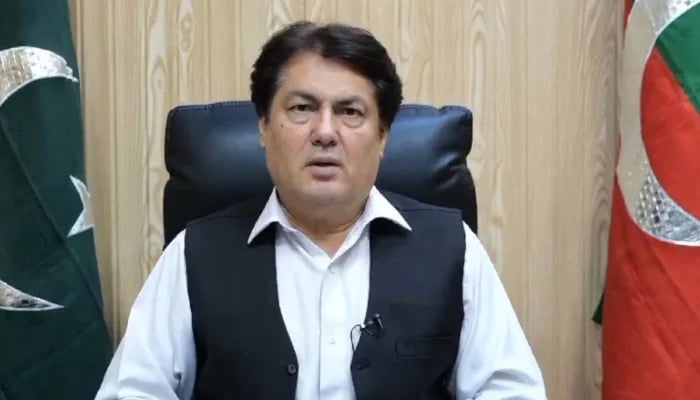
Azma Bukhari hits back at Sharjeel Memon over Sindh politics

Lahore :Punjab Minister for Information and Culture Azma Bukhari, responding to Sharjeel Memon, said, “Oh really! That’s why you have secured Sindh for the fourth time through blackmail, isn’t it?”

Azma Bukhari said that the Day of Judgment did not come when opposition candidates were made to disappear for the sake of a House seat, and when the local government elections in Sindh were stolen.

She said that they have always been using blackmail in the name of “national interest” and have remained in occupation of Sindh for the last 18 years.

Azma Bukhari said, “Big revolutionaries, fake democrats.”

Similar Posts

  • | |

    Barrister Saif calls for new provinces, governance…

    PESHAWAR: Former Khyber Pakhtunkhwa Information Adviser Barrister Muhammad Ali Saif has called for the creation of additional administrative provinces, saying Pakistan needs major structural reforms to improve governance and public service delivery. In a statement issued on Sunday, Saif said the proposal to establish new provinces should be taken seriously, arguing that the existing administrative framework is no longer capable of addressing the growing needs of the population efficiently. He said discussions alone would not bring meaningful change and urged the federal government to move beyond proposals by initiating practical measures for administrative restructuring. According to him, governance can only improve if reforms are implemented instead of remaining limited to public debate. Saif maintained that decision-making authority is concentrated within a small section of the bureaucracy, which limits administrative efficiency and delays the resolution of public issues. He stressed that a more balanced distribution of powers would strengthen governance and improve accountability. He said Pakistan requires comprehensive administrative reforms that would transfer greater authority to lower levels of government. Establishing new provinces, he added, would bring the government closer to the people, improve access to public services and ensure faster responses to local challenges. The former adviser also highlighted the importance of an effective local government system, saying empowered local bodies are essential for addressing citizens’ problems at the grassroots level. He argued that decentralisation and stronger local institutions would enhance transparency, improve service delivery and promote sustainable development across the country.

  • | |

    Sindh e-transfer approves over 2,000 teachers

    The Sindh School Education Department has approved the transfer of 2,059 teachers under the first phase of its e-transfer system, aiming to improve teacher distribution and ensure better staffing in public schools across the province. According to an official notification issued in Karachi, the approved transfers include 1,625 applications under the general category and 434 applications under the mutual transfer category. The department approved transfers for a total of 2,059 teachers. Among them, 1,163 are male teachers, while 896 are female teachers. Officials said 644 teachers were transferred on the basis of the teacher-to-student ratio to address staffing imbalances in schools. Another 544 teachers received transfers based on their marital status. The notification further stated that 173 transfers were approved on medical grounds. In addition, 100 teachers were transferred due to tribal dispute-related reasons. Another 31 teachers were granted transfers because of physical disabilities. The department also approved 434 applications under the mutual transfer category, allowing teachers to exchange their postings with one another. According to the official statement, the e-transfer system has also helped improve the functioning of public schools. A total of 41 schools that were previously facing teacher shortages have become operational after teachers were posted through the transfer process. Education officials said the e-transfer system is designed to make the transfer process more transparent, efficient and merit-based. The digital system reduces manual intervention and ensures that transfers are processed according to approved criteria. The School Education Department expects the initiative to improve the availability of teachers in underserved areas and strengthen the overall quality of education in government schools across Sindh. Further phases of the e-transfer programme are expected to continue in line with departmental requirements.

  • | | |

    SBP reserves climb to $17.26bn

    Pakistan’s foreign exchange reserves held by the State Bank of Pakistan (SBP) posted a slight increase during the week ending July 17. However, the country’s overall liquid reserves recorded a small decline as commercial banks’ holdings decreased. According to the latest figures released by the central bank, SBP’s foreign exchange reserves increased by $33 million, taking the total to $17.26 billion. The increase reflects a gradual improvement in the country’s external financial position. Despite the rise in the central bank’s reserves, Pakistan’s total liquid foreign exchange reserves slipped by $5.9 million to $22.67 billion. The decline was caused by a fall in the reserves held by commercial banks. Commercial banks’ net foreign exchange reserves dropped by $38.7 million, bringing their total holdings to $5.41 billion. As a result, Pakistan’s total foreign reserves now provide import cover for nearly 2.5 months, highlighting the need for further improvement in external inflows. The Pakistani rupee remained stable in the interbank market. It closed at Rs277.90 against the US dollar, compared with Rs277.91 a day earlier. The slight gain came as the US dollar also remained mostly steady in global markets despite continued geopolitical tensions. Meanwhile, gold prices in Pakistan declined sharply after international bullion prices fell by more than two percent. The price of 24-karat gold per tola dropped by Rs1,800 to Rs432,036. The price of 10 grams of gold fell by Rs1,543 to Rs370,401. Silver prices also moved lower, with the per tola rate declining by Rs33 to Rs6,370. The decline followed a strong rally in the previous trading session when gold prices had increased significantly in the domestic market. Internationally, gold prices fell after investors shifted their focus to rising oil prices and expectations that the US Federal Reserve may continue raising interest rates to control inflation. Spot gold traded near $4,047 per ounce, while US gold futures also recorded noticeable losses. Global energy markets remained under pressure as Brent crude oil climbed to around $100 per barrel. Rising tensions in the Middle East and concerns over disruptions to oil supplies supported higher crude prices. Analysts believe that increasing oil prices could push inflation higher around the world. This may encourage central banks, particularly the US Federal Reserve, to maintain a tighter monetary policy. Higher interest rates generally reduce the appeal of gold because the precious metal does not provide any interest or fixed return to investors. As borrowing costs increase, investors often shift towards interest-bearing assets.

  • | |

    PM’s fire probe reviews brigade response

    ISLAMABAD: A high-level investigation committee constituted by the Prime Minister visited the Fire Brigade Headquarters on Thursday as part of its inquiry into the response to a recent fire incident. During the visit, the committee recorded statements from officers and staff of Capital Emergency Services who participated in the rescue operation. Officials provided details about the sequence of events and the measures taken after the fire was reported. Sources said the investigators examined the timeline of the incident, including the period between the outbreak of the fire and the arrival of emergency response teams. The committee also assessed the fire brigade’s response and reviewed the actions taken by personnel during the operation. The investigators sought information about difficulties and operational challenges encountered by the emergency teams while carrying out rescue and firefighting efforts. The committee is headed by retired Federal Secretary Shahid Khan and includes Major General (retd) Dr Khursheed Uttra, Dr Barrister Naeem Ahmed Awan and the Deputy Commissioner Islamabad. According to sources, the committee is scheduled to submit an interim report to the Prime Minister today. A comprehensive investigation report, along with recommendations based on its findings, is expected to be submitted within five days. The inquiry is aimed at determining the sequence of events, assessing the emergency response and identifying areas requiring improvement in the city’s firefighting and rescue arrangements.

  • |

    Karachi flour price fixed at Rs. 130 per kilogram

    The Commissioner of Karachi has taken notice of a sharp increase in flour prices in the city. A meeting was held between the Commissioner of Karachi and the Flour Mills Association where it was agreed to ensure the supply of wheat at lower prices and without interruption. Following the meeting, flour mills reduced the ex-mill price of No. 2.5 flour by Rs. 3 per kilogram fixing it at Rs. 130 per kilogram. Flour mills across the city will sell No. 2.5 flour at an ex-mill price of Rs. 130 per kilogram from today. The price of wheat has also fallen to Rs. 121 per kilogram resulting in a reduction in flour prices. It is worth mentioning that the Flour Mills Association had previously increased flour prices arbitrarily. The price of No. 2.5 flour had been raised to Rs. 133 per kilogram while fine flour was priced at Rs. 149 per kilogram. During the past three months, the price of No. 2.5 flour increased by Rs. 24 per kilogram while the price of fine flour rose by Rs. 31 per kilogram. The price of mill-ground flour (chakki atta) has also increased by Rs. 20 to Rs. 25 per kilogram over the past three months. Wheat is currently being supplied to chakki owners at Rs. 130 per kilogram. However, if wheat prices rise further, there is a possibility that flour prices could increase again.

  • | |

    Rana Sanaullah compares AJK protesters to former m…

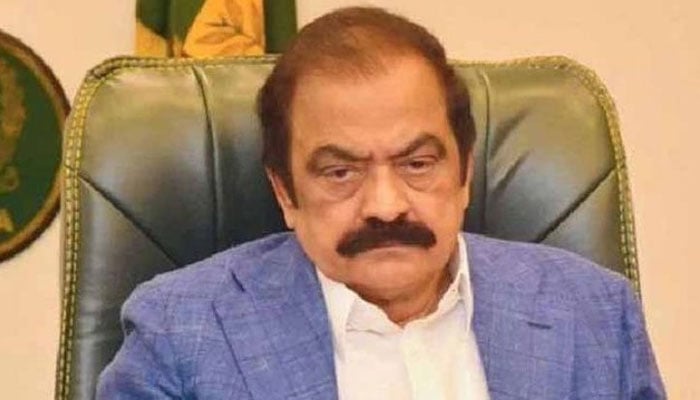
    Prime Minister’s Adviser Rana Sanaullah has compared some protesters in Azad Jammu and Kashmir (AJK) to militant groups that Pakistan had trained in the past, claiming that certain elements later turned against the country. Speaking during an interview Sanaullah alleged that individuals associated with armed organisations had become involved in the ongoing unrest in AJK. He claimed that these groups possessed weapons and were attempting to exploit public gatherings to create instability rather than pursue legitimate political objectives. According to the prime minister’s adviser, the protesters do not have genuine political demands and are instead using ordinary citizens as a shield while pursuing what he described as a broader agenda. He suggested that the situation involved elements who wanted to take advantage of public sentiment and use the protests to challenge the state. Sanaullah also defended the actions of law enforcement agencies, arguing that the authorities had few alternatives in dealing with what he characterised as an armed threat. He said security forces had to respond when groups carrying weapons created a law-and-order situation and posed a threat to public safety. The adviser maintained that the government could not allow armed groups to operate freely under the cover of protests. He said law enforcement agencies would continue to take action whenever necessary to maintain order and protect citizens. His comments come at a time of heightened political and social tensions in AJK, where protests have sparked a wider debate about public grievances, governance, law enforcement, and the government’s response. The situation has also raised questions about how authorities should balance the right to peaceful protest with the need to prevent violence and maintain public order. Sanaullah’s remarks are expected to fuel further discussion about the nature of the ongoing demonstrations and the role of political and armed elements in the unrest. While the government has emphasised the need for strict action against violence and armed activity, critics have continued to call for dialogue and political engagement to address the underlying concerns of the people of AJK.

Leave a Reply

Your email address will not be published. Required fields are marked *