living present lessons

Living in the Present: Lessons from Alfred

Shay Qais

As one of the leading psychologists of the modern times, Alfred Adler made remarkable contributions to the field, particularly to psychology, education, parenting and counseling.

Some of his teachings may have been controversial at the time but he eventually became one of the most popular personalities in these fields as Adlerian Psychology became highly influential in these areas due to the holistic approach of understanding individuals and their social interactions.

The most famous concept developed by Adler was the idea of “community feeling” or social interest.

The main idea is that an individual can only attain full happiness when they make society around them happy and comfortable as all humans are intrinsically linked with each other.

In other words, Adlerian Philosophy states that individuals should strive to contribute to the well being of their communities while being able to successfully interact with other human beings.

Interestingly enough the concept described above is very similar to the main message of The Courage to Be Disliked book which promotes an individualistic approach of being true to oneself regardless of what other people think about us.


According to Adler regardless of being disliked or not disliked, a person should not focus on the perceptions of others since those who truly matter will accept them for who they are.


However one should not aim to please everyone as it is impossible to gain the approval of everybody. Instead by contributing to the well being of society and acting morally an individual can feel full happiness since they would be living up to their ideals of being good people regardless of outside criticism.

Another important teaching of Adler’s is that he strongly emphasized the need to live “in the now”. According to his philosophy, individuals should not dwell on the past as it can only define a person to a certain degree.


In other words although one cannot deny the effect which past events and personal history have on the current state of an individual a person should not be held hostage by it. Instead a person should live in the present moment and do their best to shape their future because there is nothing else which can define them besides themselves.

Adler’s view on problems and struggles is that they mostly stem from poor interpersonal relationships. Therefore a great focus should be on improving relationships with others as well as learning to cooperate and support each other.


Alfred Adler was indeed a genius as his contributions to the field of psychology are very valuable and helped to shape the modern perception of the human psyche. I believe that many people today are influenced by his work and continue to follow his teachings. Therefore, there is nothing better than using the wisdom generated by him to improve the state of the world. After all, many individuals strive to achieve their goals while also trying to help others and have strong social bonds, which ultimately leads to personal fulfillment.


Similar Posts

  • New image reveal Sun’s surface in amazing detail

    Looking directly at the Sun is impossible and capturing a clear image of it is even more difficult. However, new images of the star at the center of our solar system have been released showing its surface in extraordinary detail. The images were captured by the Inouye Solar Telescope located in the US state of Hawaii. It is considered the world’s most powerful solar telescope and is capable of observing the Sun in unprecedented detail. The telescope has captured images of the Sun before but these new photographs provide the most detailed views yet of the surface of our solar system’s star. A unique wing-like pattern can be seen across the Sun’s surface in the images. According to scientists, this pattern is associated with the Sun’s magnetic field which is moving in a wave-like manner due to hot gases. Closer look at Sun’s surface The images reveal processes occurring on the Sun’s surface that may help explain a decades-old mystery: why the Sun’s outer atmosphere known as the corona is millions of times hotter than its visible surface. Experts say these are the highest-resolution images of the Sun’s surface ever captured. In earlier observations, the telescope detected sand-like structures on the Sun’s surface making it appear as though grains of sand were being viewed under a microscope. Each of these structures was roughly the size of France in terms of area but the new images reveal much greater detail. The new photographs show a distinctive pattern on the Sun’s surface associated with rapidly moving plasma. Scientists have identified this pattern as Kelvin-Helmholtz instabilities (KHIs). Kelvin-Helmholtz instabilities have been observed on Earth during the formation of patterns in lakes, oceans and clouds. They have also been detected on Jupiter and Saturn but their presence on the Sun had not previously been confirmed. Why Sun’s magnetic activity matters? Solar activity particularly changes in the Sun’s magnetic fields can affect power grids, satellites, GPS positioning and global communications on Earth. These magnetic fields are generated by the Sun’s extremely hot plasma but scientists have not yet fully understood how they work. Experts know that these magnetic fields can trigger sudden releases of enormous amounts of heat but exactly why this happens remains unclear. The new images, however, provide clues that could help explain why the Sun’s visible surface has a temperature of around 6,000°C while its outer atmosphere can reach temperatures of millions of degrees Celsius.

  • |

    China’s Chang’e-7 Moon mission to launch on August 24

    China is preparing to launch a complex, multi-spacecraft mission to the Moon. The mission will land near the Moon’s south pole and search for evidence of water and ice. The mission is scheduled to launch on August 24 from the Wenchang Satellite Launch Center on China’s Hainan Island. According to a statement issued by the China Manned Space Agency, the Chang’e-7 mission will be launched aboard a Long March 5 rocket. The mission will focus on the Moon’s south pole and attempt to determine whether water and ice are present inside the craters as well as their quantity and other related details. Water vapour has previously been detected in this region of the Moon through remote sensing but scientists have not yet been able to measure it directly or obtain samples. Chang’e-7 will also help lay the technological groundwork for China’s crewed lunar mission planned for 2030. The mission will consist of an orbiter, lander, rover and hopper spacecraft. Five days after launch, the spacecraft is expected to enter lunar orbit. The orbiter will then identify and determine the target landing area. Chinese authorities have not yet announced the exact landing date and the landing is expected to take place several months after launch. The hopper spacecraft will make multiple flights over the permanently dark craters near the Moon’s south pole. It will also be equipped with landing legs to allow it to land and analyze the surface of the selected locations. The mission will also carry scientific payloads from several countries. China’s Chang’e-5 mission in 2020 and Chang’e-6 mission in 2024 successfully collected lunar samples and returned them to Earth.

  • Bad breath causes and prevention

    Almost everyone experiences bad breath at some point in life. In medical terms this condition is called halitosis. While it is often temporary some people may have bad breath for a long time. In certain cases it can also be a sign of an underlying health problem. Experts estimate that about half of all adults experience bad breath at least once in their lifetime. •Common causes of bad breath •Poor oral hygiene One of the main causes of bad breath is not cleaning your teeth gums and tongue properly.  Tiny food particles can stay in the mouth and break down over time. This allows bacteria to grow and produce an unpleasant smell. •Not cleaning the tongue The tongue naturally collects bacteria. If it is not cleaned regularly these bacteria mix with leftover food and can cause bad breath. Cleaning your tongue every day is just as important as brushing your teeth. •Strong smelling foods Foods such as garlic onions and certain spices can make your breath smell bad. After digestion some of the natural oils from these foods enter the bloodstream and reach the lungs where they affect the smell of your breath. •Smoking Smoking is another common reason for bad breath. It leaves a strong smell in the mouth reduces saliva and increases the growth of harmful bacteria. •Dry mouth and not drinking enough water Saliva helps wash away food particles and bacteria. When your mouth is dry bacteria stay longer and produce bad odors. A dry mouth can happen if you sleep with your mouth open take certain medicines have problems with the salivary glands, or simply do not drink enough water. •Gum and tooth problems Plaque can build up around the teeth and gums if you do not brush and floss properly. Over time this can lead to gum disease infections, and bad breath. •Nose throat or sinus infections Bad breath may also be caused by sinus infections throat infections tonsil stones or other conditions affecting the nose and throat. •Certain medical conditions Sometimes bad breath is linked to health problems such as diabetes kidney disease liver disease or acid reflux. If bad breath continues even after improving oral hygiene it is a good idea to consult a doctor or dentist. •Simple tips to keep your breath fresh •Brush your teeth twice a day. •Clean your tongue every day. •Floss regularly to remove trapped food. •Drink plenty of water to keep your mouth moist. •Avoid smoking. •Limit foods with strong odors before social events. Visit your dentist regularly for check ups and cleanings. In many cases bad breath can be prevented with good oral hygiene and healthy daily habits. However if the problem does not go away it may be a sign of an underlying medical condition that should be checked by a healthcare professional.

  • From notebook to newsroom: what ethical journalism looks like in an AI-powered world

    By Nabiha Khalid A specific sort of discomfort falls over a newsroom when the instruments of the profession begin to surpass the ethical standards intended to regulate them. Artificial intelligence is now capable of creating text, images, and videos that are indistinguishable from genuine human creations, and the consequences of this change are far from straightforward. When a false quote can be convincingly linked to a public figure, or when a deepfake video can spread more swiftly than any correction can be issued, the very core of journalistic integrity the assumption that reported facts reflect what has truly happened faces significant pressure. This is not an imagined crisis; it is the current reality in modern media. I attened a workshop under the project titled “Digital Trust and Free Expression in the AI Era” at the Department of Media and Development Communication, University of the Punjab, supported by the U.S. Mission to Pakistan in partnership with the Pakistan-U.S. Alumni Network (PUAN) last week and we discuused in the wrodkshop that what ethical journalism requires in today’s context cannot depend solely on instinct. Verification must be a systematic process rather than something that happens by chance, involving a discipline of cross-checking, sourcing from multiple angles, and being technically adept at identifying manipulated media. Fact-checking, which used to be a background activity conducted before publication, must now be approached as a clear, continual practice that news consumers can observe and rely on. The difference between accurate reporting and unintentionally spreading misinformation often hinges on this one consistent habit of verification, applied uniformly rather than selectively. It is equally important to emphasize responsible digital storytelling, understanding that journalists do not just deliver information but are guardians of public knowledge. In an information landscape dominated by AI, the journalist’s role evolves slightly: from being the first to break news to becoming the most trustworthy source to verify it. This shift does not imply a lesser role; rather, it could very well be the most crucial aspect of journalism in the coming years. It is important to place this change in a broader historical context. Journalism has endured disruptive technologies in the past the telegraph shortened distances, the around-the-clock news cycle diminished patience, and social media altered the role of gatekeeping, enabling anyone with a smartphone to share information. Each disruption brought about its own ethical challenges, and each time, the industry persisted not by opposing the technology but by creating new standards to regulate it. Artificial intelligence is the newest and possibly the most significant example of this trend. What sets it apart from previous disruptions is the remarkable realism of synthetic content: earlier types of misinformation needed some level of narrative development, whereas AI can now generate the very evidence needed an image, a voice, a document ,Journalism has long relied on certain standards as evidence. This brings up a difficult yet essential question: can the technologies that jeopardize trust in journalism also aid in its restoration? The answer, with caution, is affirmative. News organizations are increasingly utilizing AI-assisted verification tools, reverse-image analysis, and metadata forensics to combat the misuse of these very technologies. This dual nature of AI serving both as a threat and a tool indicates that ethical journalism today necessitates a level of technical knowledge that was not mandatory a decade ago but has now become crucial. A journalist who lacks training in identifying the distinctive markers of synthetic media is, in a significant way, not adequately equipped for the current landscape. Additionally, there is a less obvious yet significant challenge to address: the imbalance between the rapid production of AI-generated content and the measured approach of ethical journalism. News organizations facing pressure to publish swiftly areparticularly prone to this disparity, making it essential that rigorous editorial standards, rather than advanced technological capabilities, serve as the key protection.No matter how advanced a detection tool may be, it cannot take the place of an organizational culture which places a priority on accuracy rather than on immediacy. The responsibility for digital trust does not fall solely on journalists. Public media literacy the ability to critically assess a viral image, to look for a second source before sharing, and to identify the emotional manipulation often present in synthetic content serves as a crucial second line of defense. In this regard, ethical journalism and an informed audience are interdependent: one cannot completely substitute for the lack of the other. The diligence of a newsroom holds little value if its audience hasn’t been prepared to recognize and demand that diligence in the first place. So, in an age when artificial intelligence is involved, ethical journalism does not call for rejecting technology; rather it involves basing the use of technology on firm principles of verification, transparency, and accountability. The future of the newsroom won’t be determined by how fast it publishes, but by the care with which it confirms the facts, and perhaps that is the most human safeguard we still have. The views, thoughts, and opinions expressed in this blog are solely those of the author and do not necessarily reflect the official policy or position of the U.S. Mission to Pakistan or USEFP/PUAN.

  • Stop the culture of begging

    Begging has become a growing problem in many cities of Pakistan. It is common to see children women and elderly people begging at traffic signals markets and public places.   While some are genuinely poor many are forced into organized begging networks that exploit them for money. Instead of encouraging begging by giving cash, society should support charities, shelters and welfare programs that help people become self reliant.   The government must also take strict action against begging mafias provide vocational training and create employment opportunities for those in need. By addressing the root causes of poverty and exploitation we can help people live with dignity rather than depend on begging

  • 6 Best ways to eat chia seeds

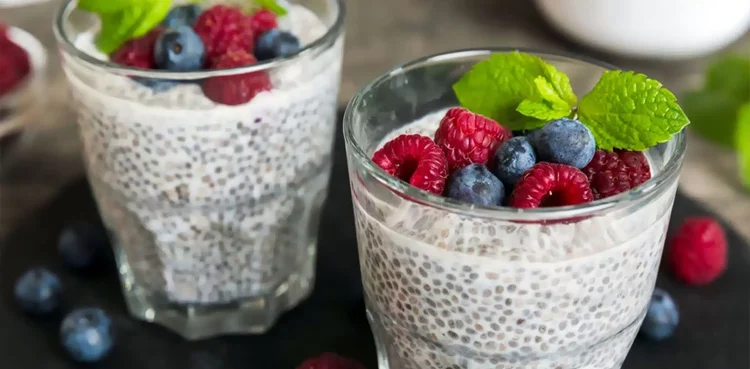
    Chia seeds are often called a superfood because they contain fiber, protein omega-3 fats and several important minerals. Adding them to your diet may support digestion heart health and healthy blood sugar levels. Nutrition experts say chia seeds can be a healthy addition to meals but they should be eaten correctly to avoid possible problems. Why are chia seeds good for you? Chia seeds contain soluble fiber, plant-based omega-3 ALA, protein and antioxidants.  They also provide minerals such as calcium magnesium and phosphorus which are important for normal body functions. About 28 grams or around two tablespoons, of chia seeds can provide roughly 9–10 grams of fiber making them an easy way to increase your daily fiber intake. Never eat dry chia seeds alone One important safety tip is to avoid swallowing dry chia seeds by themselves. Chia seeds can absorb a large amount of liquid and may expand several times their original size. If swallowed dry they could become stuck in the throat or cause a blockage in the digestive tract. It is safer to mix them with enough liquid or add them to foods that contain moisture. Make chia pudding Mix chia seeds with milk or almond milk and leave them for a few hours or overnight.  The seeds absorb the liquid and develop a soft pudding like texture. This is an easy and tasty way to enjoy chia seeds while making them easier to eat. Add them to smoothies Chia seeds can be blended with fruits vegetables or other smoothie ingredients. They add extra fiber and can make the drink thicker and more filling. Make a “Chia Egg” Chia seeds can also be used as an egg substitute in some recipes. Mix one tablespoon of chia seeds with about three tablespoons of water and let the mixture turn into a gel.  It can then be used as a binder in foods such as muffins, pancakes and bread. Add them to oatmeal Sprinkle chia seeds into hot oatmeal or overnight oats. The liquid in the oats helps soften the seeds while adding extra fiber and nutrients to your breakfast.  Mix them with yogurt Adding chia seeds to yogurt is another simple option. The moisture from the yogurt helps soften the seeds while the combination provides fiber and other nutrients. Use them as a topping You can sprinkle chia seeds over foods such as oatmeal yogurt smoothies or other hot and cold dishes. However make sure you consume them with enough liquid rather than eating a large amount of dry seeds on their own. Chia seeds are not the only source of Omega-3 Chia seeds are a good plant based source of ALA omega-3. However, the body does not convert ALA into EPA and DHA as efficiently as it gets them from marine sources. Therefore chia seeds can be part of a healthy diet but they should not be considered the only source of omega-3 fats. The bottom line Chia seeds can be an easy way to add fiber protein and healthy fats to your diet. The safest approach is to soak them or mix them into moist foods rather than swallowing them dry.

Leave a Reply

Your email address will not be published. Required fields are marked *