Poem

  • | |

    The immortal king: Gilgamesh

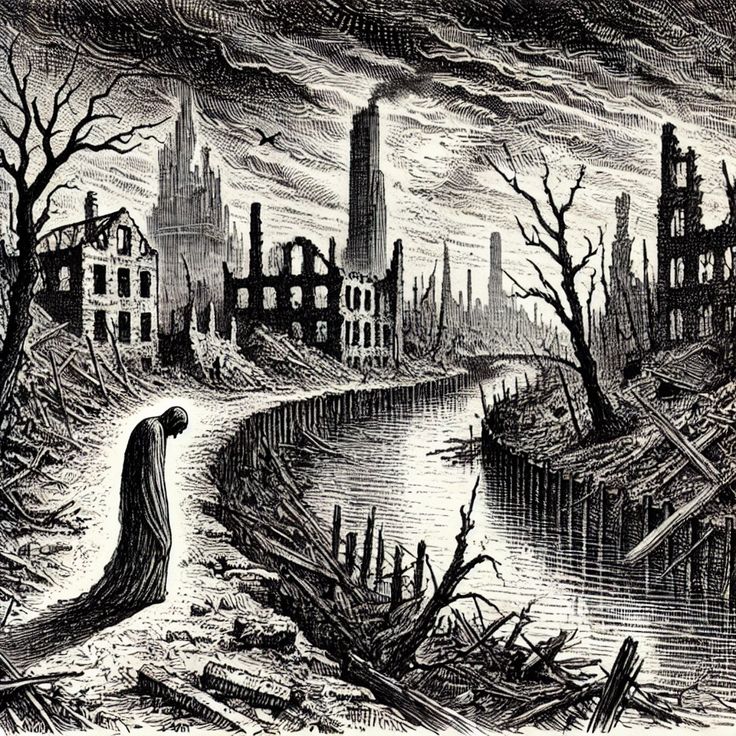
    The Epic of Gilgamesh chronicle a ruler whose reach eclipsed his own era. King Gilgamesh of Uruk was celebrated across the Fertile Crescent for his unmatched strength, towering city walls, and unyielding ambition. He was a mythical hero, two-thirds god and one-third man. The Influence of King Gilgamesh Over ancient kings and foreign lands, his influence was absolute. Monarchs who succeeded him across Sumer, Akkad, and Assyria measured their own majesty against his legacy.  Moreover, those realms seek to embody his wisdom and claim a dominion as legendary as the one he forged before the great waters swept the earth. He Who Saw the Deep.. He saw what was secret, discovered what was hidden, He brought us a tale of the days before the Flood. The Ancient Mesopotamia In recent archaeology, the shadow of Mesopotamia’s heroic past continues to reemerge in unexpected ways. Modern researchers conducting glacial surveys on Turkey’s Mount Ararat have begun mapping shrinking ice fields to retrieve core samples. Historically, Mount Ararat is the high peak linked with ancient flood mythologies.  This pioneering study seeks to extract a continuous chronicle of human activity, ancient agriculture and metal smelting preserved in ice layers spanning thousands of years. The studies offer a direct physical record of the environmental world that ancient Mesopotamian civilizations inhabited. Search For The Unknown This convergence of epic poetry and modern science reveals that the search for what was hidden remains as vital today as it was in antiquity. The ancient scribes etched Gilgamesh’s story into clay tablets. They recorded a hero who traveled to the ends of the earth to seek secrets of mortality and natural catastrophe. The story of the great deluge, brought back by Gilgamesh from the edge of the known world. It functioned both as a sobering warning and as a testament to the fragile line between human pride and nature’s fury. The Truth Today, scientists analyze ice layers and ancient cuneiform archives across the Middle East. Furthermore, we are reminded of the power of memory. Kings and empires inevitably turn to dust. Yet, the insights gathered by those who dare to look into the deep endure across millennia remain forever. Gilgamesh’s journey teaches us that true power lies not in martial conquest or monumental stone. Rather, it’s in the wisdom preserved for generations that follow. True power is a truth as resonant in our modern era as it was in the ancient halls of Uruk.    

  • | |

    The rise of Alfred, Lord Tennyson

    On August 6, 1809, one of the defining literary voices of the 19th century was born: Alfred, Lord Tennyson. Tennyson came to embody the doubts, solemnity, and romantic ideals of the Victorian era. He served as Britain’s Poet Laureate for more than four decades during the height of Queen Victoria’s reign. Early Brilliance and Sharp Criticism Tennyson’s journey to becoming a beloved national figure was anything but smooth. Raised in a large, tumultuous household by a clergyman father, young Alfred sought escape through verse. His talents surfaced early; while studying at Cambridge, he won the prestigious Chancellor’s Gold Medal in 1829 for his poem Timbuktu. Shortly thereafter, he published early collections containing works such as Mariana and Claribel. These early publications showcased his extraordinary musicality and eye for detail, yet contemporary critics were not entirely impressed. Severe reviews dismissed his work as overly melancholic, affected, and sentimental. The hostility of these early critiques shook Tennyson deeply, prompting a decade-long period of publishing silence. A phase scholars often refer to as his ten years’ silence. Crafting the Masterpieces Rather than abandoning his craft, Tennyson spent those quiet years refining his technique, studying philosophy, and confronting personal tragedy. The sudden death of his closest friend, Arthur Henry Hallam, plunged Tennyson into profound grief. This loss became the catalyst for his most famous masterpiece, In Memoriam A.H.H. Published in 1850, the massive elegy explored faith, mortality, and scientific progress, striking a deep chord with a Victorian public navigating rapid industrialization and societal change. The immense success of In Memoriam transformed his standing almost overnight. That same year, following the death of William Wordsworth, Queen Victoria appointed Tennyson as Poet Laureate. He went on to compose iconic works that defined the national consciousness, including The Charge of the Light Brigade, Ulysses, and his epic Arthurian cycle, Idylls of the King. A Lasting Literary Legacy While early critics painted him as a sentimentalist, history remembers Tennyson as a master craftsman of English rhythm and sound. Lines like; “To strive, to seek, to find, and not to yield” (Ulysses) have woven themselves permanently into the modern lexicon. His ability to blend intimate personal emotion with grand societal themes elevated him from a criticized young poet to an enduring pillar of world literature. Key Milestones in Tennyson’s Career 1809: Born in Somersby, Lincolnshire on August 6. 1829: Wins the Chancellor’s Gold Medal at Cambridge for Timbuktu. 1830: Publishes Poems, Chiefly Lyrical, introducing works like Mariana and Claribel. 1850: Publishes In Memoriam A.H.H. and is appointed Poet Laureate by Queen Victoria. 1854: Pens The Charge of the Light Brigade, capturing national sentiment during the Crimean War. 1892: Passes away at age 83, buried in Poets’ Corner at Westminster Abbey.

  • | |

    Echoes from the Interstellar Dark

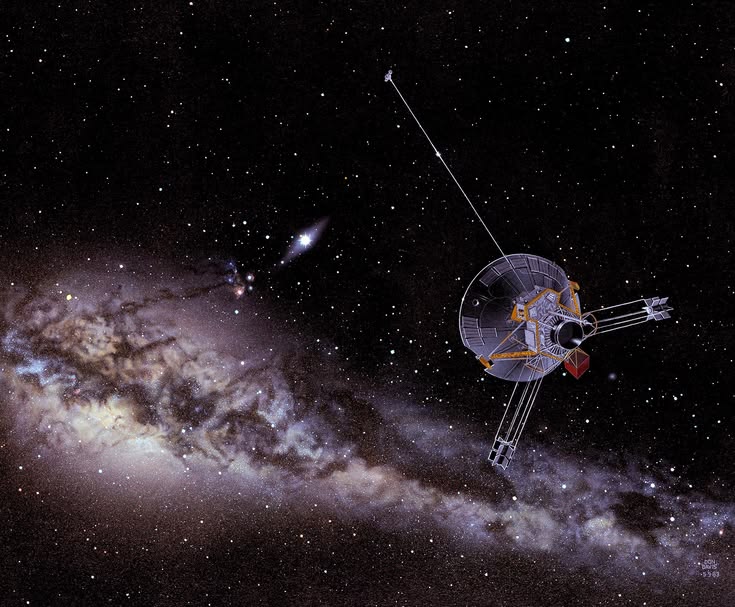
    NASA’s Voyager 1 probe was designed to explore the outer giant planets and send back photographs of Jupiter and Saturn. It was launched in 1977. More than eleven billion miles from Earth, floating through the icy void beyond our solar system, a tiny scrap of 1970s human ingenuity continues its lonely journey. Decades after its primary mission ended, the craft crossed the heliopause. The boundary where the sun’s protective magnetic bubble ends and true interstellar space begins. ​In recent months, engineers faced a daunting crisis. Voyager 1 began transmitting a repeating, meaningless gibberish loop of ones and zeros back to Mission Control. For a moment, scientists feared that after nearly half a century of unbroken operation, the farthest human artifact had finally succumbed to cosmic radiation and cold degradation. Yet through meticulous diagnostic work, engineers isolated a corrupt microchip. They rerouted its memory code across ancient hardware.  Hence, they successfully restored intelligible science data across the vast distance. ​Voyager 1’s survival is not just an engineering miracle; it is a profound testament to humanity’s desire to touch the unknown. ​A spindle of wire, a heart made of bronze, It drifts through the night where the quiet responds. Beyond the sun’s breath and the cradle of red, It whispers the secrets of worlds overhead. ​A Message in a Bottle Across Cosmic Waves ​Carried on the hull of Voyager 1 is the Golden Record, a gold-plated copper phonograph disc containing sounds of Earth, greetings in fifty-five languages, musical compositions from Bach to Chuck Berry, and encoded images of terrestrial life. It serves as an interstellar time capsule, intended to outlast our civilization and tell any distant intelligence who we were. ​We carved our desire on golden veneer, To prove in the darkness that someone was here. A chorus of ocean, a child’s brief greeting, Sent out to outlive every mortal heart’s beating. ​As the probe glides through the cosmic dust, its radio signal traveling at the speed of light takes over twenty-two hours to reach dish antennas on Earth. Every line of telemetry received is a faint echo from an environment no human eye will ever witness firsthand. The spacecraft operates on a diminishing power supply provided by its decaying plutonium generators. Year by year, NASA engineers shut down non-essential instruments to conserve every milliwatt of power, prioritizing the magnetometers and cosmic ray sensors that measure the interstellar medium. ​The Final Quiet Crossing ​The remaining active instruments will inevitably power down as the thermal generators fade entirely by the end of this decade. Voyager 1 will then become a silent voyager, drifting along its galactic orbit around the center of the Milky Way, unbothered by atmospheric drag or gravitational interference, lasting for millions of years. ​When the last power flickers and warmth slips away, It will glide through the night till the dawn of no day. No longer a transmitter, no longer a thread, Just a monument floating where gods used to tread. ​The triumph of retrieving clear data from Voyager 1 reminds us why we look up. Science and art stem from the same original impulse: the refusal to remain quiet in the vastness of the dark, and the drive to leave something meaningful behind before the power fades.

  • | |

    Greek epic poetry finds a home in Irish literature

    There is an intimacy in the way Irish writers engage with classical mythology including epic poetry. The Odyssey predates Ireland’s earliest written epic, Táin Bó Cúailnge (The Cattle Raid of Cooley), by nearly 1,400 years. The distance in time and geography vanishes the moment an Irish poet puts pen to paper. Universal Image of The Weary Traveler In her modern translation of The Odyssey, classicist Emily Wilson frames Homer’s epic through a deeply human lens. She writes of an exhausted wanderer standing outside a home. A figure who has been displaced and lost for decades. That universal image of the weary traveler searching for home is precisely why Homer’s writing has found such a permanent resonance in Ireland’s literary canon. Across generations, Ireland’s greatest literary minds have treated Homer as a living contemporary. William Butler Yeats, Patrick Kavanagh, and Nobel laureate Seamus Heaney all drew heavily on Homeric motifs to articulate the Irish experience. For these writers, the themes of exiled wanderers, domestic longing, political strife, and tragic return were not abstract concepts from a bygone Mediterranean era. They mirrored the realities of Irish history, rural life, and national identity. Seamus Heaney Seamus Heaney’s engagement with classical literature was particularly profound. Heaney frequently used ancient myths to process modern conflict, finding in Greek drama and epic poetry a framework to speak about political violence, loss, and reconciliation during the Troubles in Northern Ireland. By mapping Homeric echoes onto the Irish landscape, Heaney showed that the struggles of Ithaca were not so different from those of Derry or Ulster. To Heaney and his peers, classical antiquity offered a universal mirror through which local grief and local beauty could be understood. Patrick Kavanagh Similarly, Patrick Kavanagh famously elevated the quiet, local struggles of rural Monaghan by comparing them to the epic siege of Troy, insisting that the everyday life of ordinary people contains just as much drama and dignity as the ancient sagas. Meanwhile, W.B. Yeats wove Homeric imagery directly into the fabric of the Irish Literary Revival, bridging Ireland’s Gaelic heritage with classical antiquity to forge a distinct national identity. Ireland’s Relationship with The Odyssey What makes Ireland’s relationship with The Odyssey so enduring is this sense of shared cultural DNA. Both traditions belong to storytelling cultures rooted in oral performance, mythic memory, and a deep reverence for language. Homer’s tales of displaced heroes, lingering grief, and ultimate return resonate naturally within an island nation shaped by exile, migration, and the constant search for home. Ultimately, the literary bridge connecting Homer to Heaney proves that timeless stories do not belong to a single era or place. As long as readers recognize the tired wanderer standing at the door, The Odyssey will continue to find a home in Irish literature. The Literary Parallel Homer’s The Odyssey predates Ireland’s national epic, Táin Bó Cúailnge, by roughly 14 centuries, yet their thematic overlap remains seamless. Prominent Irish authors including Seamus Heaney, W.B. Yeats, and Patrick Kavanagh frequently adapted Homeric themes into their modern works. Emily Wilson’s modern translation highlights themes of exile and displacement, which reflect Ireland’s history of migration, political conflict, and domestic longing.