
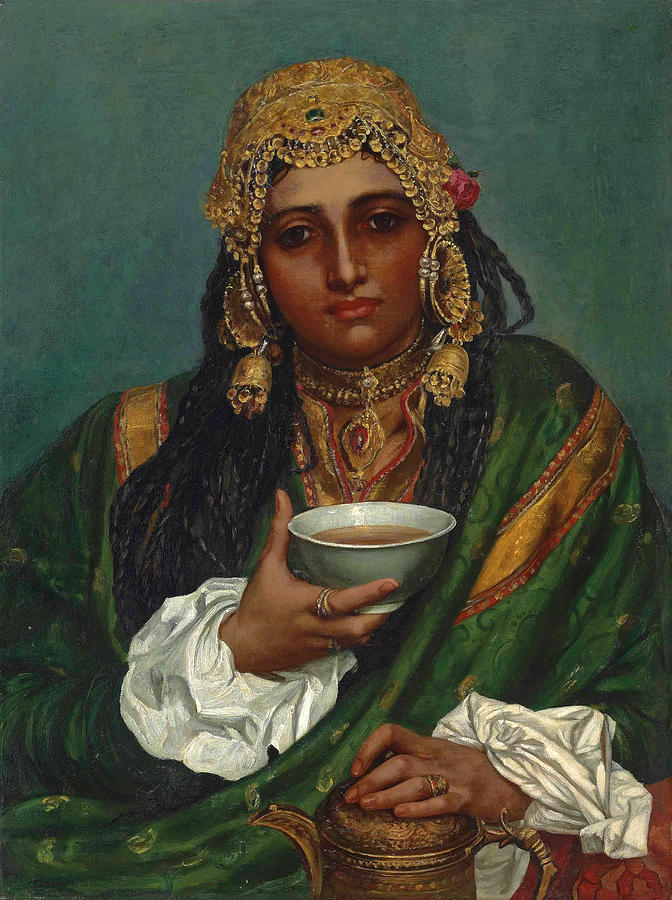
kashmirs nightingale habba
|

Kashmir’s nightingale Habba Khatoon

Habba Khatoon stands as Kashmir’s Nightingale and Zoon: the Moon of Kashmir. Living in the 16th century, she transformed personal grief, marital heartbreak, and political exile into the foundational canon of Kashmiri romantic poetry. She was born to a peasant family in Chandhara village (Pampore), famous for its saffron fields. Unlike most rural girls of her era, her father sent her to a local maktab where she learned Persian and Arabic, nurturing her early literary talent. She got married to a peasant named Aziz Rathar. Unappreciative of her poetic disposition and intelligence, her husband and mother-in-law ill-treated her. She began singing her inner pain while working in the saffron fields and fetching water. Legend holds that while hunting near Pampore, Prince (later Sultan) Yousuf Shah Chak heard her singing under a plane tree. He arranged her divorce and married her as he was mesmerized by her voice and beauty. This marriage elevated her to Queen of Kashmir as Habba Khatoon. Emperor Akbar summoned Sultan Yousuf Shah to Delhi under the pretense of talks, arrested him, and exiled him to Bihar. Kashmir fell to Mughal rule, breaking Habba Khatoon’s world. She shed her courtly garments, donned the robes of an ascetic, and wandered the valley singing lamentations for her lost king. In short, she refused royal comfort. She spent her final years near Gurez and Athwajan, where her tomb rests today.

Before Habba Khatoon, Kashmiri verse was dominated by devotional mysticism: Vaakhs and Shrukhs. She revolutionized Koshur literature by introducing the Lol. Lol is a short, melic lyric of intense personal feeling, love, longing, and domestic intimacy. It’s particularly designed to be sung rather than recited. One of her most iconic pieces, sung to this day across the valley:

Mey haa karchey kitt kitaye,

Mey kar tayiaar lole-vun…

Chey kyaah gazi chaani roopeye,

Volo haa maalyene dhoopeye!

I have prepared myself in every way,

I have composed my heart into a song of longing…

What does it cost your beauty to look upon me?

Come, my love, let us gather wild mountain herbs together!

In the following verses, she uses Kashmir’s fleeting spring as an allegory for human beauty and time:

Gulaan goy rang, pholan goy bahar,

Mey valai poshan hyund hahaar…

Yuthus chhumyene chaani dhaar,

Volo maayi chaane pyarey!

The flowers have faded, spring has taken its leave,

My youth is wilting like a blossom in the heat…

My eyes remain fixed on the path where you disappeared

Come back, my beloved, for the sake of love!

  After emperor Akbar exiled her husband to Bihar, she wrote this verse that captures geopolitical heartbreak reduced to raw human loss:

Cchey saazey vaaye, bo saazey vaaye,

Kati chhak chey, bo kati chhas…

Diluk zaar vanay kith-kith bo,

Jeel-e-Jhelum geyi aaba-haar!

You play your tune far away, while I play mine in solitude,

Where are you trapped, and where am I left to wander?

How shall I tell you the agony of my heart?

Even the waters of the Jhelum weep and overflow their banks for us.

Her poetry is more than a story of personal transformation. It is the emotional arc of Kashmir itself. By introducing the Lol, she pulled Kashmiri verse down from abstract, detached mysticism into the intimate, beating heart of human experience. She gave language to the quiet endurance of ordinary women, the agony of sudden separation, and the unyielding beauty of a homeland caught in the tides of history.


Similar Posts

  • Why are young bodybuilders dying so early

    Brazilian bodybuilder and fitness influencer Melson Araujo recently shared a gym photo showing his impressive physique. Just a few hours later the 35 year old reportedly became ill at home and died suddenly. The exact cause of his death has not been officially confirmed. However his passing has added to growing concerns about the number of young bodybuilders who have died unexpectedly in recent years. Earlier this year 22 year old Brazilian bodybuilder Gabriel Ganley also died after suffering sudden cardiac arrest. In 2024, two other Brazilian bodybuilders in their 30s and 40s also died from heart related problems including one who collapsed during a competition. Similar cases have been reported around the world. American bodybuilder Dallas McCarver died in 2017 at the age of 26, while German fitness influencer Jo Lindner passed away in 2023 at the age of 30. These deaths have raised an important question. why are some people who appear extremely fit and healthy dying at a young age? A 2025 study published in the European Heart Journal examined nearly 20,000 amateur and professional bodybuilders who competed between 2005 and 2020. Researchers found that professional bodybuilders were more than five times more likely to die from sudden cardiac arrest than amateur competitors. The study recorded 121 deaths including 46 caused by sudden cardiac arrest. The average age at death was 45 years but for active competitors it was only 34.7 years. Researchers believe several factors may increase the risk, including the use of performance enhancing drugs rapid weight loss before competitions and extremely intense strength training. Another 2025 study from Denmark published in the journal Circulation followed 1,189 men who used anabolic steroids and compared them with nearly 60,000 men over 11 years. The researchers found that steroid users had a nine times higher risk of developing cardiomyopathy a disease that weakens the heart muscle. They also had about three times the risk of heart attack and heart failure. Experts say anabolic steroids may also raise blood pressure speed up the build up of plaque in the arteries and change the structure of the heart. Autopsy reports from several bodybuilders have shown that many had enlarged hearts and thicker heart walls especially in the left ventricle. These changes can increase the risk of dangerous heart rhythm problems and heart failure. One of the best known cases was Dallas McCarver, whose heart weighed 833 grams more than twice the normal weight of an adult male heart. A 2022 review also found that many American bodybuilders had hearts that were much larger and thicker than normal. In some cases even athletes in their 20s showed enlarged hearts thickened heart muscles, and serious coronary artery disease.

  • Sindh’s missing universe

    Since Ashura, the mothers of Sindh have been sitting in at Babarloi Bypass through suffocating heat and humidity, with one demand: return our missing and abducted children. For a mother, a child is her entire universe — and for years these women have lived in psychological anguish searching for theirs. Fazila Sarki of Thul vanished nearly seventeen years ago; her father named the local Wadero he says orchestrated it, yet she was never recovered. Priya Kumari of Sangrar is entering her fifth year missing — committees formed, updates promised, and still nothing, as if the earth or sky simply swallowed her. Sindh’s landlords and chieftains have built a parallel state, one that operates above the law. If not, why would fourteen children currently be missing, why would the soil be stained with young blood over trifles, why would mothers go blind from weeping and cemeteries keep expanding? Innocent young women are still declared Kari and honor-killed — denied even a ritual bath, shroud, or funeral prayer, sometimes dumped in rivers. The law exists on paper; hundreds of thousands of officials draw salaries and perks from public taxes to enforce it — yet ordinary people have no protection at any level. The papers are full of these stories daily. The law exists, but it is locked away in books. Are the hands meant to enforce it helpless, or simply indifferent? Sukkur Civil Hospital — the teaching hospital for Ghulam Muhammad Mahar Medical College, and once a lifeline stretching from Balochistan’s Sibi, Nasirabad, and Bhag Nari to Kandhkot-Kashmore, Shikarpur, and Ghotki — has sunk to the level of Shikarpur’s Rai Bahadur Udhodas Hospital. Department heads sit in name only; real control rests with a handful of favorites who have run these institutions into the ground. Road accidents are a daily occurrence on the highways, and while the Orthopaedic Department stays busy, its facilities inspire only regret. With Nasir Shah and veteran politician Khurshid Shah both present, this hospital ought to be a model for Northern Sindh — instead it is anything but. Law and order, and justice, are the pillars any civilized society rests on. Where they hold, life, property, and honor are protected, and social harmony follows. Where they fail, fear, distrust, and unrest take their place — and our own society is proof enough of that; little more needs saying. An educated person lifts not just himself but his society; where ignorance and social ills grow instead, it is education that has failed first. Healthcare here tells the same story: women give birth in Qingqi rickshaws, medicine is scarce, and families buy even a disposable syringe out of pocket — though the budget for it exists. Doctors draw government salaries while absent, some working in Qatar or Saudi Arabia, others running private clinics. A friend recently told me PPHI, on taking over a government health unit, found a stockpile of medicines for heart disease, diabetes, and stomach ailments — worth a fortune, and only months from expiry. What tyranny is greater than this: medicine sitting unused while the needy go without? It is nothing short of an atrocity against the public. Hunger, disease, unemployment, lawlessness, and ignorance have battered Sindh until its people’s capacity for critical thought is paralyzed. The state, along with conscious citizens, politicians, and the well-off, must turn to this crisis — urgently.

  • | | |

    Ducky bhai questions parents’ role in children?…

    Pakistani YouTuber Ducky Bhai has questioned the growing criticism of YouTubers over their alleged negative influence on children, arguing that parents must also take responsibility for their children’s upbringing and online activities. In his recent remarks, Ducky Bhai rejected the idea that YouTubers alone are responsible when children are exposed to inappropriate or negative content. He questioned where parents are when children are spending significant amounts of time online and consuming digital content. According to Ducky Bhai, content creators should make an effort to keep their videos clean and appropriate. However, he stressed that YouTubers cannot be expected to act as parents for every child watching their content. He argued that parents have a key role in deciding what their children watch and how much time they spend online. Monitoring internet activity, setting boundaries and discussing appropriate content with children, he suggested, should be part of responsible parenting. Ducky Bhai also referred to his own childhood while explaining his perspective. He recalled that his father encouraged him to focus on his studies and used rewards, including the promise of a PlayStation for good performance, as motivation. He further revealed that his father had installed security measures on his computer that allowed him to monitor his activities. According to Ducky Bhai, this close supervision helped his parents remain aware of what he was doing online. His comments have renewed discussion about the responsibilities of parents and digital content creators in an age when children have easy access to YouTube and other online platforms. While creators can influence young audiences through the content they publish, Ducky Bhai believes parents cannot simply shift the entire responsibility onto YouTubers. Instead, he says families should actively monitor children’s digital activities and guide them toward appropriate content. The debate highlights a broader challenge for modern families: balancing children’s access to entertainment and technology with parental supervision. As online platforms continue to become an important part of children’s daily lives, both content creators and parents face increasing pressure to ensure that young viewers are exposed to safe and suitable material.

  • Monsoon eye care tips

    The monsoon season brings welcome relief from the summer heat but it also creates conditions that allow many illnesses to spread more easily. Eye infections are one of the common health problems during this time. According to experts high humidity pollution and the growth of germs during the rainy season increase the risk of bacterial and viral eye infections. Dust dirty rainwater pollution and allergy causing particles can easily irritate the eyes.  These factors may lead to redness swelling and discomfort making daily activities difficult. Common symptoms of eye infections Some of the most common signs of an eye infection include. •Red eyes •Swelling •Eye pain •Watery eyes •Blurred vision •Itching or irritation If these symptoms become severe or do not improve it is important to see a doctor. How to protect your eyes during the monsoon Experts say that good hygiene is the best way to prevent eye infections.  Wash your hands regularly with soap and avoid touching your eyes with dirty hands. Keeping your face and eyes clean can also lower the risk of infection. If your eyes feel itchy or irritated do not rub them. Rubbing can spread germs and make the infection worse. Instead gently clean your eyes with a clean tissue or soft cloth. Applying a clean warm compress over your closed eyes for a few minutes can help reduce discomfort and swelling. This can be done several times a day if needed. Avoid sharing personal items If you have an eye infection avoid using eye makeup until your eyes have fully healed.  If makeup must be used make sure brushes and other beauty tools are cleaned properly. It is also important to wash bed sheets pillowcases and towels regularly with hot water and detergent. Never share towels handkerchiefs or other personal items that come into contact with your eyes as infections can easily spread from one person to another. When to see a doctor If your symptoms get worse or do not improve after a few days avoid self treatment and consult an eye specialist. A doctor may prescribe antibiotic or antiviral eye drops depending on the cause of the infection to help you recover safely and quickly.

  • Hair dye after Cancer treatment

    For many cancer survivors seeing their hair grow back is more than a cosmetic change. It is a sign of recovery and a return to normal life. As new hair appears many people want to cover gray hair or try a new color. However health experts say it is important not to rush into using hair dye. Chemotherapy and radiation are designed to destroy fast growing cancer cells but they also affect healthy hair follicles. This is why many patients lose their hair during treatment. When hair grows back it is often thinner softer, drier and more sensitive than before. The scalp may also remain delicate for several months. Doctors warn that using permanent hair dye too soon after treatment can irritate the scalp cause allergic reactions and damage new hair. It may also slow healthy hair growth while the scalp is still healing. Several studies have looked at the possible risks of hair dye. A large study by the US National Institute of Environmental Health Sciences involving more than 46,000 women found that frequent use of permanent hair dye and chemical hair straighteners was linked to a slightly higher risk of certain types of breast cancer. Another long term study by the Harvard T.H. Chan School of Public Health, which followed more than 117,000 women over 36 years found that hair dye did not increase the risk of most cancers. However long term use of permanent dyes was linked to a small increase in the risk of some types of breast skin and ovarian cancers. Experts advise cancer survivors to carefully read the ingredients before buying any hair dye. Chemicals such as PPD (para-phenylenediamine), ammonia, hydrogen peroxide parabens, and phthalates may be harmful to sensitive skin and newly grown hair. Most doctors recommend waiting at least six months after completing chemotherapy before using permanent hair dye. This gives the scalp and hair enough time to recover. Patients who had scalp cooling or radiation to the head should only use hair dye after getting approval from their doctor. During the first six months after treatment experts suggest avoiding chemical hair dyes and keeping the scalp well moisturized.  Even after six months patients should speak with their oncologist before coloring their hair. Safer options include pure henna or natural herbal dyes that do not contain added chemicals. Ammonia free and peroxide-free semi permanent dyes may also be suitable.  Temporary root powders and color mascaras are another option because they wash out with shampoo. Experts also recommend doing a patch test 48 hours before using any hair color to check for allergies or skin irritation. Whenever possible choose coloring methods that reduce direct contact between the dye and the scalp. Doctors say that caring for your hair again after cancer treatment is an important step in recovery. However taking a careful approach choosing safer products and speaking with your doctor first can help protect your hair and scalp while they continue to heal.

  • Frailty, thy name is woman

    Frailty, thy name is woman. When William Shakespeare wrote those famous words in Hamlet, he was reflecting a cultural dogma that would shackle women for centuries. For generations, society treated female vulnerability not as a situational condition, but as an inherent biological truth. Women were categorized as delicate creatures requiring protection, physically incapable of heavy labor, and psychologically unsuited for high-stakes conflict. That archaic myth has officially crumbled. Across military frontlines, deep-sea research facilities, high-altitude athletics, and outer space, women are consistently performing tasks once deemed physically and mentally impossible for them. The notion that physical and emotional fragility is uniquely female is just outdated. It is empirically false. To understand how rapidly this paradigm is shifting, one needs to look no further than recent milestones in defense and aerospace news. Over the past decade, armed forces around the globe including the United States, Britain, and Ukraine have systematically opened elite infantry, combat engineering, and special forces units to women. Reporting from military defense outlets highlights that female service members are completing rigorous combat fitness tests, enduring punishing load-bearing marches carrying 80-pound packs, and demonstrating tactical mastery under live fire. During recent global conflicts, female soldiers have served directly on combat lines, driving heavy tactical vehicles, executing artillery strikes, and providing direct tactical support under extreme duress. The old argument that women lack the physical stamina or aggressive grit for battlefield conditions has been disproven not by rhetoric, but by operational reality. Beyond Earth’s atmosphere, space exploration news provided another definitive refutation of female frailty when NASA astronauts Christina Koch and Jessica Meir conducted the world’s first all-female spacewalk. Working outside the International Space Station for more than seven continuous hours, the pair maneuvered massive hardware components while tethered over 200 miles above Earth. Operating in heavy, pressurized extravehicular suits requires immense upper-body endurance, spatial coordination, and psychological coolness under pressure. Their performance demonstrated that when training, gear, and opportunity align, gender is completely irrelevant to high-risk technical performance. For centuries, skeptics cited raw biological differences such as lower average muscle mass compared to men as definitive proof of female inadequacy for physically demanding tasks. However, modern exercise physiology and ergonomics present a far more nuanced picture. While average biological markers differ across populations, top-tier female athletic conditioning overlaps significantly with high-level male capabilities. A trained female soldier or weightlifter easily outperforms the vast majority of untrained men in functional strength, endurance, and power output. Studies in ultra-endurance athletics such as 200-mile marathons and open-water ocean swims show that women often narrow the performance gap as distance increases. Female physiology displays high metabolic efficiency in utilizing fat stores during prolonged exertion, alongside exceptional psychological resilience in managing physical discomfort. Modern warfare, heavy industry, and aviation rely less on brute force and more on endurance, technical precision, decision-making, and specialized gear. Advances in ergonomic equipment and load-distribution technology ensure that operational success hinges on skill and stamina rather than raw power alone. Physical capability is only half the equation. The traditional stereotype of frailty was always as much about mental weakness as physical limitation. Women were portrayed as overly emotional, prone to panic, and ill-equipped for decisive leadership during crises. Real-world experience repeatedly contradicts this bias. From emergency room physicians navigating mass-casualty events to political leaders steering nations through global pandemics and conflicts, women consistently exhibit calm, strategic resolve under fire. Calling frailty a woman’s trait was never a scientific fact. It was a social construct designed to limit access, independence, and authority of women. When women were barred from gymnasiums, sports, military academies, and executive boardrooms, society pointed to their absence as proof of their inability. Once those doors were forced open, the illusion dissolved. Acknowledging that frailty is not a female trait does not mean pretending that men and women are biologically identical. It means recognizing that human potential is defined by discipline not by gender.

Leave a Reply

Your email address will not be published. Required fields are marked *