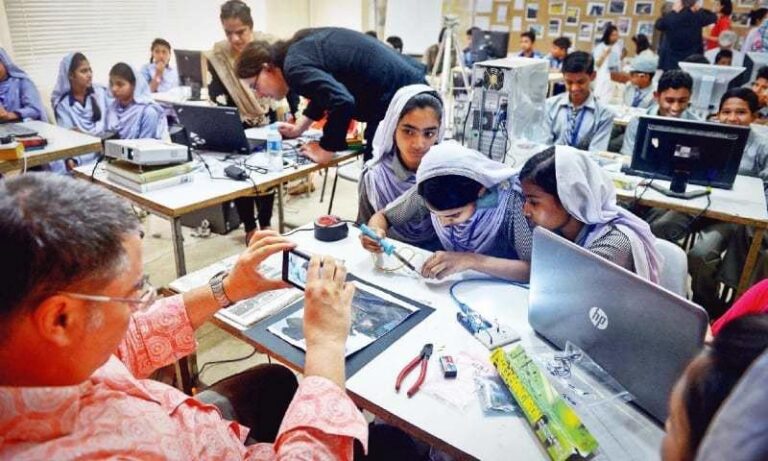
By Dr. Naveeda Katper Human beings live in a world of countless needs and wants, but the resources available to meet those needs are limited. Food, shelter, education, health and a sense of belonging are among the basic requirements of life. Because resources are scarce, individuals, organizations and governments have to set priorities, make choices and use available resources wisely. Resources can broadly be divided into natural and human-made resources. Natural resources such as land, water, forests, minerals and energy come from nature. Human-made resources, including machines, buildings, technology and infrastructure, are developed by people using natural resources. Natural resources can be depleted, while human-made resources can depreciate through use and time. Human beings, however, are different from other resources. A person is not simply a consumer of resources. With education, training, health and appropriate opportunities, a person can develop knowledge and skills and become an important form of human capital. This is why human capital is often considered more valuable than other resources. Human beings discover, develop and manage resources. They create technology, improve production, solve problems and generate new ideas. Among the traditional factors of production—land, labour, capital and entrepreneurship—human effort remains central because it activates and combines the others. Education and skills are therefore essential for economic and social development. A person without education or employable skills may have limited opportunities to earn a stable income. A skilled person, on the other hand, can use available resources productively and create value for both themselves and society. Skills can take different forms. Hard skills include technical and professional abilities. Soft skills include communication, teamwork, discipline and problem-solving. Transferable skills can be applied across different occupations and workplaces. All of these can improve a person’s ability to participate productively in the economy. Developed economies provide useful examples of how investment in people can contribute to national development. Countries such as Finland, Norway, Singapore, Switzerland, Japan and South Korea have invested substantially in education, vocational training, technology and workforce development. Their experience shows that economic progress is not based only on natural resources or physical infrastructure. The knowledge, skills and productivity of people are equally important. Skills development should begin early in life. Children should not be taught only to memorise information. They should also be encouraged to ask questions, solve problems, make things, experiment and learn from mistakes. An education system that allows children to try, fail and try again can help develop confidence, creativity and practical thinking. Schools, vocational institutions and workplaces all have a role in this process. Young people need opportunities to connect education with practical skills. They should be able to understand how knowledge can be applied to real problems and employment opportunities. The challenge is particularly serious in developing and least-developed countries, where many people have limited access to quality education, technical training and decent employment. Weak educational systems, inadequate infrastructure and limited opportunities for formal employment can prevent large sections of the population from developing their full potential. The problem is not simply unemployment. It is also the gap between what people know and what the economy needs. Many young people complete some level of education but do not acquire the practical or technical skills required by employers. At the same time, businesses often struggle to find workers with the right skills. Pakistan faces a similar challenge. The country has a large and relatively young population, which can become an important economic advantage if the right investments are made. But population size alone does not create economic growth. A large population becomes an asset when people are healthy, educated, skilled and productively employed. The World Bank’s Human Capital Index has repeatedly highlighted the importance of investments in education, health and skills for Pakistan’s long-term economic prospects. Pakistan’s human-capital performance remains below that of many countries that have made stronger and more sustained investments in these areas. Improving the quality of education, expanding vocational training and increasing opportunities for productive employment should therefore be treated as national priorities. Formal education, however, should not be considered the only route to developing human capital. Many adults who did not receive adequate schooling can still acquire useful skills through vocational and technical training. Short courses in areas such as construction, agriculture, livestock, tailoring, information technology, electrical work, plumbing, mechanics, hospitality and other trades can provide people with opportunities to earn a livelihood. Such training should not remain concentrated in major cities. Local training centres and mobile skill programmes can take practical education to towns and villages. Community-level training can help women, young people and adults who cannot easily access conventional educational institutions. Pakistan can also benefit from stronger links between education and the labour market. Training programmes should be designed after identifying the skills actually demanded by local and national economies. Employers, educational institutions and government departments should work together to ensure that training leads to real opportunities rather than certificates alone. The private sector also has an important role. Businesses can provide apprenticeships, internships and on-the-job training. Young people can gain valuable experience when they are given opportunities to learn directly in workplaces. Human capital development should also include lifelong learning. Technology and the nature of work are changing rapidly. Skills that are valuable today may become less relevant tomorrow. Workers therefore need opportunities to update their knowledge and acquire new skills throughout their careers. The central lesson is simple: people should not be viewed merely as consumers of a country’s resources. With proper investment, they become producers, innovators, entrepreneurs, teachers, technicians, researchers and problem-solvers. They create value from resources that might otherwise remain underused. For Pakistan, this is both a challenge and an opportunity. The country’s young population can become a powerful economic resource if it receives quality education, healthcare, practical skills and meaningful employment opportunities. But if these needs are ignored, population growth can increase pressure on already limited resources. Human capital is therefore not a secondary concern. It is one of the foundations of sustainable development. Roads, buildings, machines, technology and natural