human capital superior

Human Capital Is Superior to Other Resources

By Dr. Naveeda Katper

Human beings live in a world of countless needs and wants, but the resources available to meet those needs are limited. Food, shelter, education, health and a sense of belonging are among the basic requirements of life. Because resources are scarce, individuals, organizations and governments have to set priorities, make choices and use available resources wisely.

Resources can broadly be divided into natural and human-made resources. Natural resources such as land, water, forests, minerals and energy come from nature. Human-made resources, including machines, buildings, technology and infrastructure, are developed by people using natural resources. Natural resources can be depleted, while human-made resources can depreciate through use and time.

Human beings, however, are different from other resources. A person is not simply a consumer of resources. With education, training, health and appropriate opportunities, a person can develop knowledge and skills and become an important form of human capital.

This is why human capital is often considered more valuable than other resources. Human beings discover, develop and manage resources. They create technology, improve production, solve problems and generate new ideas. Among the traditional factors of production—land, labour, capital and entrepreneurship—human effort remains central because it activates and combines the others.

Education and skills are therefore essential for economic and social development. A person without education or employable skills may have limited opportunities to earn a stable income. A skilled person, on the other hand, can use available resources productively and create value for both themselves and society.

Skills can take different forms. Hard skills include technical and professional abilities. Soft skills include communication, teamwork, discipline and problem-solving. Transferable skills can be applied across different occupations and workplaces. All of these can improve a person’s ability to participate productively in the economy.

Developed economies provide useful examples of how investment in people can contribute to national development. Countries such as Finland, Norway, Singapore, Switzerland, Japan and South Korea have invested substantially in education, vocational training, technology and workforce development. Their experience shows that economic progress is not based only on natural resources or physical infrastructure. The knowledge, skills and productivity of people are equally important.

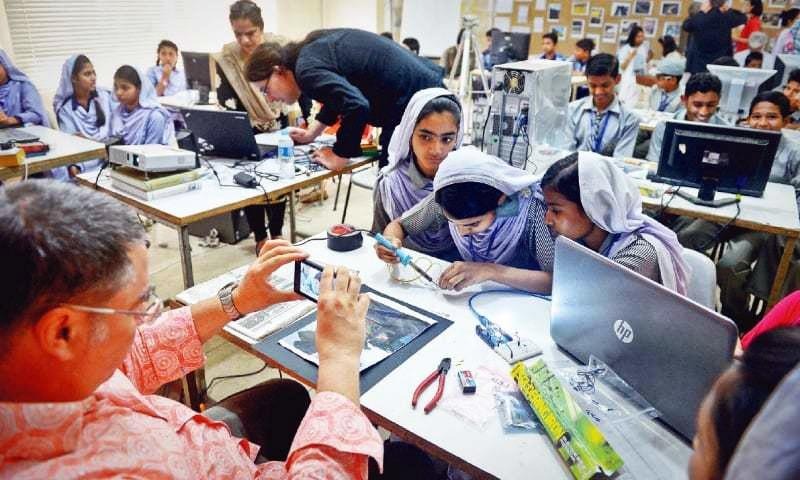
Skills development should begin early in life. Children should not be taught only to memorise information. They should also be encouraged to ask questions, solve problems, make things, experiment and learn from mistakes. An education system that allows children to try, fail and try again can help develop confidence, creativity and practical thinking.

Schools, vocational institutions and workplaces all have a role in this process. Young people need opportunities to connect education with practical skills. They should be able to understand how knowledge can be applied to real problems and employment opportunities.

The challenge is particularly serious in developing and least-developed countries, where many people have limited access to quality education, technical training and decent employment. Weak educational systems, inadequate infrastructure and limited opportunities for formal employment can prevent large sections of the population from developing their full potential.

The problem is not simply unemployment. It is also the gap between what people know and what the economy needs. Many young people complete some level of education but do not acquire the practical or technical skills required by employers. At the same time, businesses often struggle to find workers with the right skills.

Pakistan faces a similar challenge. The country has a large and relatively young population, which can become an important economic advantage if the right investments are made. But population size alone does not create economic growth. A large population becomes an asset when people are healthy, educated, skilled and productively employed.

The World Bank’s Human Capital Index has repeatedly highlighted the importance of investments in education, health and skills for Pakistan’s long-term economic prospects. Pakistan’s human-capital performance remains below that of many countries that have made stronger and more sustained investments in these areas. Improving the quality of education, expanding vocational training and increasing opportunities for productive employment should therefore be treated as national priorities.

Formal education, however, should not be considered the only route to developing human capital. Many adults who did not receive adequate schooling can still acquire useful skills through vocational and technical training. Short courses in areas such as construction, agriculture, livestock, tailoring, information technology, electrical work, plumbing, mechanics, hospitality and other trades can provide people with opportunities to earn a livelihood.

Such training should not remain concentrated in major cities. Local training centres and mobile skill programmes can take practical education to towns and villages. Community-level training can help women, young people and adults who cannot easily access conventional educational institutions.

Pakistan can also benefit from stronger links between education and the labour market. Training programmes should be designed after identifying the skills actually demanded by local and national economies. Employers, educational institutions and government departments should work together to ensure that training leads to real opportunities rather than certificates alone.

The private sector also has an important role. Businesses can provide apprenticeships, internships and on-the-job training. Young people can gain valuable experience when they are given opportunities to learn directly in workplaces.

Human capital development should also include lifelong learning. Technology and the nature of work are changing rapidly. Skills that are valuable today may become less relevant tomorrow. Workers therefore need opportunities to update their knowledge and acquire new skills throughout their careers.

The central lesson is simple: people should not be viewed merely as consumers of a country’s resources. With proper investment, they become producers, innovators, entrepreneurs, teachers, technicians, researchers and problem-solvers. They create value from resources that might otherwise remain underused.

For Pakistan, this is both a challenge and an opportunity. The country’s young population can become a powerful economic resource if it receives quality education, healthcare, practical skills and meaningful employment opportunities. But if these needs are ignored, population growth can increase pressure on already limited resources.

Human capital is therefore not a secondary concern. It is one of the foundations of sustainable development. Roads, buildings, machines, technology and natural resources are important, but their effective use ultimately depends on people.

The task before Pakistan is not simply to manage its population. It is to develop its people. Converting a large population into a skilled, productive and adaptable workforce can strengthen the economy, improve living standards and create opportunities for future generations.

The real wealth of a country is not only what lies beneath its soil or what it builds above it. It is also the knowledge, skills, creativity and capacity of the people who inhabit it.

Similar Posts

  • Man returns book He stole 40 years ago

    A US bookstore staff was left surprised when a package arrived containing a book that had been stolen from the store nearly 40 years ago. The package also included an apology letter and $100 in cash as compensation. The package was recently delivered to Bookleggers, a bookstore in Old Town Eureka, California. When the staff opened it, they found a copy of The Unstrung Harp. The letter explained that the sender had stolen the book from the store about four decades ago.  He said he was a student at the time and was struggling with alcohol addiction and financial problems. He also wrote that he found the book recently while cleaning out his garage. After discovering that the bookstore was still operating he decided to return the book and apologize for what he had done. The man included $100 with the book and told the store owners they could contact him if they wanted to take any further action. Bookstore owner Jennifer McPhaiden said she and her staff were deeply touched by the letter. She said it was surprising to see someone return after so many years to admit their mistake and try to make things right.

  • |

    Why you should stop sitting on your wallet

    Pain in the lower back hip or leg is often blamed on spine problems.  However doctors say a simple daily habit may also be responsible. Sitting for long periods with a thick wallet in your back pocket can put pressure on an important nerve causing pain numbness or tingling. This condition is commonly known as “wallet sciatica” or “fat wallet syndrome.” It is not a disease but a problem caused by pressure on the sciatic nerve. Because its symptoms are similar to sciatica caused by spine problems many people mistake it for a back condition. The sciatic nerve is the largest nerve in the body. It starts in the lower back and runs through the hips and down each leg. Sitting on a thick wallet can make one side of the body higher than the other creating an uneven sitting position.  Over time this can put extra pressure on the nerve and lead to discomfort. Doctors say this constant pressure may reduce blood flow to the nerve cause irritation and lead to inflammation. In some cases it may also contribute to a condition called piriformis syndrome which can be confused with a spine problem. Common symptoms include a dull ache in the lower back or hip burning or shooting pain down the back of the leg tingling or numbness in the leg or foot and pain that gets worse after sitting for a long time. These symptoms usually appear on the same side where the wallet is carried. Experts warn that similar symptoms can also be caused by a slipped disc spinal narrowing or other nerve conditions. For this reason people should not rely on online information to diagnose themselves. If the pain continues a medical check up is important to find the real cause. People who sit for long hours such as office workers drivers and frequent travelers may face a higher risk. Carrying a wallet packed with cards receipts and cash makes the problem even more likely. The good news is that many people improve simply by changing this habit. Keeping your wallet in a front pocket jacket or bag removing unnecessary items and using digital payments can help reduce pressure on the nerve. Doctors also recommend standing up and walking for a few minutes every 30 to 45 minutes sitting with good posture and doing gentle stretching exercises with professional guidance. If pain numbness or difficulty walking continues or becomes severe seek medical care immediately. Experts say ongoing back or leg pain should never be ignored as it may sometimes be a sign of a more serious nerve or spine problem.

  • |

    Increasing fuel prices

    From Meer Baloch Through the columns of your respected newspaper, I would like to draw the attention of the concerned authorities to the continuous increase in fuel prices in Pakistan. The rising cost of petrol and diesel has made life difficult for ordinary people. Higher fuel prices increase transportation costs, which also raise the prices of food, medicines, and other daily necessities. Poor and middle-class families are suffering the most because their incomes remain the same while expenses continue to rise. The government should take effective measures to control fuel prices and provide relief to the public. It should also promote affordable public transport and reduce unnecessary taxes on fuel. I hope my letter will create awareness and encourage the authorities to take prompt action.

  • Best choice 500kg cake covered in 33,000 flower petals

    Spanish pastry chef Marc Suarez has created an extraordinary wedding cake for a Saudi royal family.  The giant cake stands 3.5 meters tall is 1.8 meters wide and weighs around 500 kilograms. Months of planning and work According to reports Suarez spent about six weeks designing the cake and another four months bringing the idea to life. Although he normally works alone this huge project required help from several pastry chef friends their families and other people close to him. Thousands of handmade flowers One of the biggest challenges was creating and coloring around 33,000 flower petals.  Each petal had to be carefully prepared and placed with branches and flowers to create the final design. Friends family members and others also helped with the detailed work. Suarez said the project required around 1,800 hours of work in total. The finished cake looks less like a traditional wedding cake and more like a large piece of art that could be displayed in a museum. A grand wedding in paris The enormous cake was presented at the Paris Opera Garnier during the wedding of a Saudi couple. The bride and groom chose to keep their identities private but their wedding featured a cake that was certainly difficult to forget. The project shows how pastry can go beyond food and become a form of art creativity and craftsmanship.

  • |

    Silence is the gateway to self-knowledge

    In a world governed by the constant impulse to broadcast every thought, quiet reflection has become a rare commodity. Modern culture often treats silence as an uncomfortable void. It is termed as a gap in conversation that must be immediately filled with idle chatter, opinions, or background noise. However, a insightful cultural piece by The Marginalian revisit Kahlil Gibran’s classic masterpiece, The Prophet. It reminds us that embracing silence is not an act of withdrawal, but a necessary passage toward understanding who we truly are. When Kahlil Gibran wrote The Prophet in 1923, he addressed human struggles that remain relevant today. In his discourse on speech, Gibran suggests that incessant talking often springs from a subtle internal distress. We speak most compulsively when we lose touch with the quiet rhythm of our own thoughts. When we can no longer sit comfortably with our internal world, language transforms from genuine connection into a mere distraction. Thus, rendering itself as verbal pastime designed to drown out silence. Gibran offers a vivid metaphor for this dynamic. He writes that thought is a bird of space that can spread its wings inside a cage of words. Yet, it remains incapable of real flight. By reducing complex feelings into rigid verbal formulas, we often constrain the depth of our experiences. Excessive talk can obscure deeper understanding rather than clarify it. It might replace genuine contemplation with superficial noise. Why do so many people flee from quiet moments? According to Gibran, chatter frequently serves as a shield against the intimidating clarity of solitude. In the stillness of being alone, external distractions vanish. This silence forces us to stand face-to-face with our unvarnished selves: our fears, insecurities, unresolved longings, and raw truths. When Gibran’s prophet-protagonist is asked to address the matter of talking, he responds: You talk when you cease to be at peace with your thoughts; And when you can no longer dwell in the solitude of your heart you live in your lips, and sound is a diversion and a pastime. And in much of your talking, thinking is half murdered. For thought is a bird of space, that in a cage of words may indeed unfold its wings but cannot fly.In a world governed by the constant impulse to broadcast every thought, quiet reflection has become a rare commodity. For many, this exposure feels uncomfortable, triggering an urgent desire to keep a conversation going. It takes genuine courage to endure the silence long enough to hear what our inner world is actually trying to tell us. Gibran’s perspective on self-knowledge carries a warning against over-categorizing human identity. He cautions against treating the human soul as a static math problem or a territory that can be fully mapped and measured. Rather than declaring, “I have found the absolute truth,” Gibran suggests a humbler, more open attitude: “I have found a truth” He describes the human spirit not as a straight line or a single rigid structure, but as a boundless sea unfolding like a lotus with countless petals. When we attempt to define our entire identity through fixed labels or rigid verbal definitions, we risk placing artificial boundaries around a psyche that is naturally vast and evolving. Real self-knowledge isn’t about arriving at a final conclusion about who we are… it is about maintaining a curiosity toward our own inner evolution. Reclaiming Quiet in a Hyper-Connected Age In an epoch characterized by constant connectivity, Gibran’s reflections serve as an urgent invitation to recalibrate our relationship with quietness. Silence is not the absence of sound. Rather, it is a space where creative intuition, emotional healing, and genuine self-awareness take root.  

  • | | |

    Parliament should focus on Pakistan’s real c…

    Pakistan is an Islamic republic whose Constitution defines not only the structure of the state but also its ideological foundation. It explicitly states that the country should create an environment in which Muslims can live their lives in accordance with the teachings of the Quran and Sunnah. Against this constitutional backdrop, it is surprising that the issue of women wearing the abaya—or an Islamic financial institution including the abaya in its employee dress code—has become a matter of concern for a parliamentary committee. This naturally raises an important question: Who is setting the country’s priorities, and are these truly the issues that deserve Parliament’s attention? Pakistan continues to face pressing challenges, including rising inflation, unemployment, an unequal tax system, a struggling economy, and serious shortcomings in education and healthcare. These are the issues that directly affect the daily lives of millions of citizens. If a parliamentary standing committee, whose primary responsibility is financial oversight, chooses to focus instead on the dress code of Islamic banks, it is reasonable for the public to question whether legislative priorities are aligned with the country’s most urgent needs. The debate also raises questions about consistency. Critics have objected to the abaya as part of an institutional dress code, yet there is little discussion about uniforms in many government departments that follow Western styles of dress. Women serving in the police, the Federal Investigation Agency (FIA), and several other public institutions are commonly required to wear trousers and shirts as part of their official uniforms. If clothing is to become a matter of parliamentary debate, then similar standards should apply across the board. Selective criticism can create the perception of bias. Supporters of Islamic dress codes argue that the issue extends beyond clothing itself and reflects broader concerns about cultural and religious identity. From this perspective, the concern is not simply about the abaya but about a mindset that views visible expressions of religious identity as obstacles to modernization. They question whether institutions with an Islamic identity should be expected to abandon their traditions in the name of progress. This leads to a broader debate: Who defines what it means to be modern? Does modernization necessarily require reducing the public expression of religious values or adopting Western cultural norms? For institutions operating within Pakistan’s Islamic banking framework, supporters argue that their identity is rooted not only in financial principles but also in ethical and religious values. If such institutions adopt internal policies that comply with Pakistani law and reflect constitutional and religious principles, they contend that those choices should be respected. The discussion also draws comparisons with international examples. In countries such as France, restrictions on religious clothing have generated significant criticism from human rights advocates. Supporters of religious freedom argue that Pakistan, which was established with a distinct religious and cultural identity, should carefully consider whether adopting similar approaches is consistent with its own constitutional framework and historical foundations. Ultimately, the central argument is that Parliament should devote its time and resources to addressing issues that directly affect governance, economic stability, and public welfare. Matters of personal attire, religious belief, and institutional identity, many argue, should not become subjects of unnecessary official intervention when the country faces far more pressing social and economic challenges.

Leave a Reply

Your email address will not be published. Required fields are marked *