pakistan8217s health system
|

Pakistan’s health system requires lasting reform

By Raja Ashraf

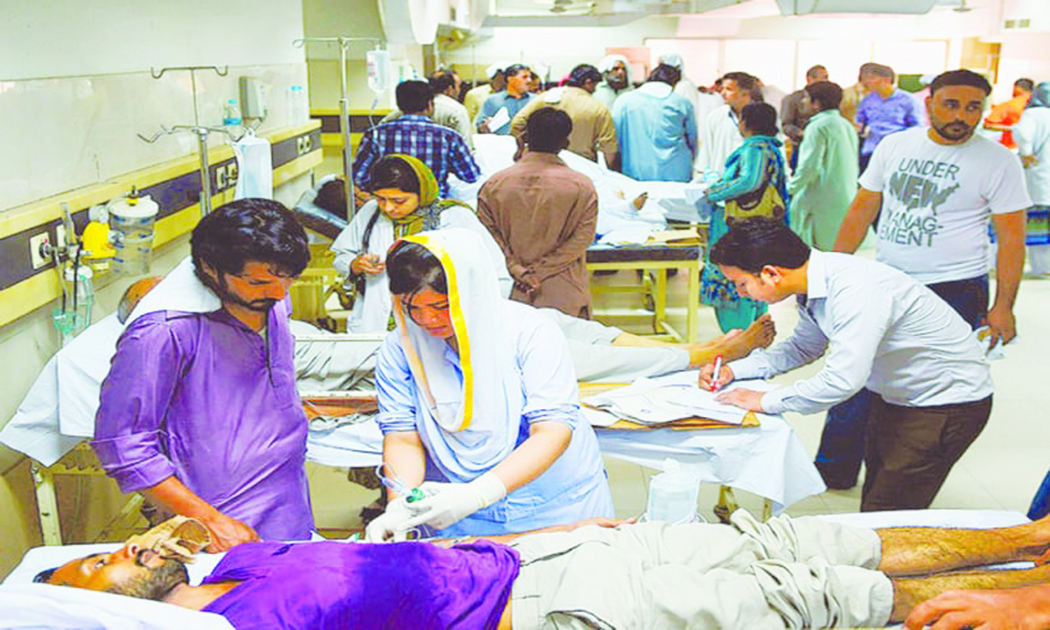
A country’s healthcare system is judged not only by the number of hospitals it has but also by whether people can access timely, affordable, and quality medical care. In Pakistan, public confidence in the health sector has weakened due to persistent challenges, including shortages of healthcare professionals, rising medicine prices, under-resourced hospitals, and the continued presence of unqualified medical practitioners. These issues require comprehensive and long-term reforms rather than short-term policy responses

Healthcare is a fundamental right closely linked to Article 9 of Pakistan’s Constitution, which guarantees the right to life. The Supreme Court has interpreted this provision to include access to essential healthcare services. Pakistan is also a signatory to the International Covenant on Economic, Social and Cultural Rights, which commits the country to progressively ensuring the highest attainable standard of physical and mental health for its citizens.

One of the most pressing concerns is the shortage of qualified doctors in rural and underserved regions. Although medical institutions produce thousands of graduates every year, many public health facilities outside major cities continue to face vacant positions. As a result, many communities struggle to obtain even basic healthcare services and are often forced to travel long distances for treatment.

The migration of doctors, nurses, and other healthcare professionals to foreign countries has further weakened the healthcare system. Better salaries, improved working conditions, career opportunities, and greater security abroad encourage many skilled professionals to leave Pakistan, creating significant gaps in public hospitals and specialized medical services.

The pharmaceutical sector also faces increasing challenges. Some multinational pharmaceutical companies have reduced their presence in Pakistan, raising concerns about future medicine availability and investor confidence. While local pharmaceutical manufacturers continue to meet much of the country’s demand, policymakers must create a stable regulatory and economic environment that supports both domestic production and responsible international investment.

The rising cost of medicines has become another major burden for families already affected by inflation. Patients suffering from chronic illnesses such as diabetes, hypertension, and cardiovascular diseases often require lifelong treatment, making affordability a growing concern. At the same time, the continued circulation of counterfeit and substandard medicines highlights weaknesses in regulation and quality control, despite improvements in oversight by regulatory authorities.

Public hospitals also frequently experience shortages of essential medicines and emergency supplies, forcing patients to purchase drugs from private pharmacies. This increases treatment costs and can delay critical medical care during emergencies. Ensuring uninterrupted medicine supplies in government hospitals should remain a national priority.

Another persistent issue is the presence of unqualified medical practitioners, commonly known as quacks, particularly in areas where licensed healthcare providers are scarce. Tackling this problem requires stronger enforcement of existing laws alongside improved access to qualified medical professionals.

Pakistan’s healthcare challenges extend beyond these issues to include inadequate public health funding, ageing hospital infrastructure, weak primary healthcare services, limited mental health facilities, and uneven implementation of health policies across provinces.

Addressing these problems requires a comprehensive national strategy focused on increasing healthcare investment, improving working conditions for medical professionals, strengthening medicine regulation, modernizing pharmaceutical oversight, expanding preventive care, and reinforcing primary healthcare services. Investing in healthcare is not merely a public expense—it is an investment in human capital, economic growth, and national development.

Pakistan possesses skilled healthcare professionals, reputable medical institutions, and a capable pharmaceutical industry. With sound policymaking, stronger governance, and sustained investment, these strengths can be transformed into a healthcare system that guarantees every citizen safe, affordable, and quality healthcare. The need for reform is no longer in question; the real challenge is ensuring that action is not delayed any further.

Similar Posts

  • |

    Jennifer Garner recalls paparazzi chaos that impacted her children

    Jennifer Garner has reflected on the overwhelming media attention her family faced during her marriage to Ben Affleck, revealing how relentless paparazzi coverage disrupted her children’s daily lives and created safety concerns for those around them. Speaking during a recent podcast appearance, the actress shared that photographers frequently followed the family wherever they went, often putting both the public and her loved ones at risk. She described situations in which multiple vehicles chased after her car, creating dangerous traffic conditions as photographers attempted to capture exclusive images. According to Garner, the constant pursuit extended beyond busy streets and public spaces. She recalled that photographers would drive onto private property and ignore normal traffic rules, turning ordinary errands into stressful experiences. The actress said the level of attention surrounding her family had become excessive and difficult to manage. Garner explained that the intense media presence eventually began affecting her children’s activities. She revealed that one of her children had to temporarily stop attending soccer practice because the large number of photographers and vehicles arriving at the venue created a disruption for everyone involved. The situation became so overwhelming that those responsible for organizing the activity reportedly requested that the family avoid attending for a period of time, as the attention was impacting other children and families as well. The actress said the issue went far beyond celebrity life, emphasizing that innocent children often bore the consequences of aggressive paparazzi behavior. She described the environment as one in which photographers were willing to go to great lengths to capture images of her family, regardless of the impact on others. Garner also spoke about the emotional challenges she faced as a mother while raising her children under constant public scrutiny. She explained that photographers frequently waited outside her home, making even routine tasks difficult. Taking a sick child to a doctor’s appointment or leaving the house for everyday responsibilities often became stressful because cameras and vehicles were already waiting nearby. She further recalled incidents in which young children leaving preschool were caught in the middle of the chaos created by photographers trying to reach either her or Affleck. Garner said such moments highlighted how the pursuit of celebrity photographs could place children in uncomfortable and potentially unsafe situations. Reflecting on those years, Garner suggested that the culture surrounding celebrity photography had become excessive, with the privacy and well-being of children often overlooked in the race for exclusive images. She stressed that young family members should never have to experience such pressure simply because of their parents’ public profiles. Jennifer Garner and Ben Affleck married in 2005 after several years together. The couple announced their separation in 2015, and their divorce was finalized in 2018. Despite ending their marriage, they have continued to co-parent their three children: Violet, 20, Seraphina, 16, and Samuel, 13. In recent years, both Garner and Affleck have spoken publicly about prioritizing their children’s well-being and maintaining a supportive co-parenting relationship. Garner’s latest comments offer a rare glimpse into the difficulties her family faced during the height of media attention, while reinforcing her belief that children deserve privacy and protection regardless of their parents’ celebrity status.

  • | | |

    PML-N secures first wins in AJK refugee seats

    Unofficial and provisional results have started coming in following the completion of polling for the second phase of the 2026 Azad Jammu and Kashmir (AJK) Legislative Assembly elections. Early results indicate that the Pakistan Muslim League-Nawaz (PML-N) has secured victory on two refugee constituencies, while vote counting continues across the remaining seats. Polling was held for eight constituencies in the Muzaffarabad Division and 12 refugee seats reserved for Kashmiri migrants living in different cities across Pakistan. Voting in the Muzaffarabad Division began at 8:00 a.m. and, due to high voter turnout, the Election Commission extended polling by one hour until 6:00 p.m. Polling for the refugee constituencies concluded at 5:00 p.m. Early Results from Muzaffarabad Division In LA-25 Neelum Valley-I, with results from 10 of 143 polling stations, PML-N candidate Shah Ghulam Qadir was leading with 1,364 votes, followed by Abid Afzal of the All Jammu and Kashmir Muslim Conference with 951 votes. In LA-26 Neelum Valley-II, after results from 8 of 135 polling stations, PPP candidate Mian Abdul Waheed led with 1,157 votes, while PML-N’s Shah Ghulam Qadir had 940 votes. In LA-29 Muzaffarabad-III, results from 2 of 138 polling stations showed Barrister Iftikhar Ali Gilani of PML-N leading with 379 votes, ahead of PPP’s Sardar Mukhtar Khan, who secured 353 votes. In LA-30 Muzaffarabad-IV, PML-N’s Mustafa Bashir Abbasi was ahead with 247 votes, while PPP’s Mubashir Munir Awan had 206 votes, according to results from 2 of 129 polling stations. In LA-31 Muzaffarabad-V, PML-N candidate Saqib Majeed Raja led with 2,934 votes, while PPP’s Chaudhry Latif Akbar received 1,660 votes, based on results from 14 of 249 polling stations. In LA-32 Muzaffarabad-VI, former AJK Prime Minister Raja Muhammad Farooq Haider of PML-N was narrowly ahead with 892 votes, while PPP candidate Sahibzada Muhammad Ashfaq Zafar had 871 votes, according to results from 5 of 163 polling stations. In LA-33 Muzaffarabad-VII, PPP candidate Diwan Ali Khan Qamar Chughtai was leading with 1,349 votes, followed by PML-N’s Mian Muhammad Rashid, who secured 1,029 votes after counting at 7 of 155 polling stations. Refugee Seats The first complete unofficial results declared PML-N victorious in two refugee constituencies. In LA-43 Kashmir Valley-IV, PML-N’s Muhammad Yasin Lone won the seat with 1,276 votes, defeating PPP candidate Javed Butt, who received 563 votes. In LA-44 Kashmir Valley-V, PML-N’s Muhammad Ahmad Raza Qadri was declared the winner with 1,700 votes, while Mehr-un-Nisa of the All Jammu and Kashmir Muslim Conference secured 650 votes. Vote Counting Continues In LA-34 Jammu-I, PML-N’s Nasir Hussain Dar was leading with 1,690 votes after results from 51 of 131 polling stations, while independent candidate Raja Riaz Ahmad had 741 votes. In LA-35 Jammu-II, PML-N’s Chaudhry Muhammad Ismail maintained a commanding lead with 18,788 votes, followed by independent candidate Sardar Muhammad Ghayas with 5,041 votes, based on results from 100 of 142 polling stations. In LA-36 Jammu-III, PML-N’s Muhammad Ahsan Raza led with 10,002 votes, while PPP’s Ahsan Ismail had 4,756 votes after counting at 50 of 140 polling stations. In LA-37 Jammu-IV, PML-N candidate Maryam Javed was ahead with 19,014 votes, while independent candidate Usman Aleem had 14,734 votes, according to results from 121 of 185 polling stations. In LA-38 Jammu-V, PML-N’s Zeeshan Ali was leading with 5,524 votes, narrowly ahead of Muhammad Akbar Chaudhry of the Muslim League AJK, who had 4,988 votes, based on results from 49 of 115 polling stations. In LA-39 Jammu-VI, PML-N’s Raja Muhammad Siddique secured 3,176 votes, while PPP’s Chaudhry Fakhar Zaman followed with 945 votes after counting at 41 of 157 polling stations. In LA-40 Kashmir Valley-I, PPP candidate Aamir Abdul Ghaffar led with 1,178 votes, while PML-N’s Muhammad Naeem Khan had 65 votes, according to results from 23 of 47 polling stations. In LA-41 Kashmir Valley-II, PML-N’s Muhammad Aamir Shah was ahead with 922 votes, while independent candidate Saba Diwan received 556 votes after counting at 13 of 19 polling stations. In LA-42 Kashmir Valley-III, PML-N candidate Syed Shaukat Ali Shah led with 1,326 votes, followed by PPP’s Muhammad Asim Sharif with 682 votes after results from 13 of 43 polling stations. In LA-45 Kashmir Valley-VI, PPP’s Abdul Majid Khan was leading with 2,444 votes, while Khawaja Muhammad Dilawar of the All Jammu and Kashmir Muslim Conference had 562 votes, according to results from 15 of 41 polling stations. The Election Commission had established 1,483 polling stations across the Muzaffarabad Division. Polling in LA-27 Muzaffarabad-II was postponed because of severe weather and landslides. Voting for the refugee constituencies was held in several cities across Pakistan. Polling for Jammu-I and Kashmir Valley-I took place in Karachi, while Rawalpindi and Islamabad hosted polling for LA-43 Kashmir Valley-IV, LA-44 Kashmir Valley-V, and LA-39 Jammu-VI. Vote counting is continuing, and official results are expected after the completion of the counting process.

  • |

    US says it will deepen security role in Asia

    The United States has rejected suggestions that it is reducing its involvement in Asia. A senior Pentagon official said Washington plans to strengthen its position in the Indo-Pacific and maintain what it considers a favourable balance of power in the region. US Undersecretary of Defense for Policy Elbridge Colby made the remarks during a speech in Manila on Monday. He said the United States was not leaving Asia. Instead, Washington was increasing its focus on the region. Colby also called on US allies and partners to take greater responsibility for their own defence. He said Washington wanted stronger partnerships rather than relationships based on dependence. According to Colby, the United States expects its regional allies to increase defence spending and strengthen their own military capabilities. He said greater responsibility from partner countries should not be interpreted as a sign that Washington is abandoning the region. Colby argued that stronger allies would contribute to stronger deterrence and help maintain regional stability. The Pentagon official said the US strategy includes maintaining a credible military presence along the First Island Chain. The strategic area stretches from Japan through Taiwan and the Philippines toward Borneo. It is considered important to US efforts to deter potential military threats in the Indo-Pacific. Colby said the United States was committed to maintaining a balance of power in the region. He also emphasised the need for allies to contribute more to regional security. His comments come amid continuing questions about the long-term US security commitment to Asia. Some regional governments and analysts have expressed concerns about whether Washington will remain as deeply involved in the Indo-Pacific as it has been in previous years. Colby sought to address those concerns by stressing that the United States intends to remain engaged. The Philippines is the first stop on Colby’s Southeast Asian tour. He is also scheduled to visit Indonesia, Thailand and Cambodia. The Philippines is a longstanding US treaty ally and has strengthened defence cooperation with Washington in recent years. The Pentagon official’s remarks are likely to be closely watched by US partners across the region. Washington is seeking to strengthen cooperation with allies while encouraging them to invest more heavily in their own defence. The approach reflects a broader US strategy of sharing the security burden with regional partners while maintaining a strong American military presence. Colby said the goal was to build capable partners rather than create countries that depend entirely on US protection. He maintained that stronger regional partners would make the overall US deterrence strategy more effective.

  • | | |

    Pakistan unveils major construction reforms to boo…

    ISLAMABAD: The federal government is preparing a wide-ranging reform package aimed at revitalising Pakistan’s construction industry, improving regulatory oversight and attracting greater investment in modern infrastructure. The proposed measures include the establishment of a Construction Industry Development Board (CIDB), consideration of a specialised Construction Development Bank (CDB), targeted tax reforms and changes to import and export policies. The proposals were discussed during a high-level meeting chaired by Federal Minister for Economic Affairs and Establishment Division Senator Ahad Khan Cheema. The meeting brought together senior government officials, representatives of the Construction Association of Pakistan and other stakeholders to examine the sector’s financial, regulatory and operational challenges. Under the proposed framework, the CIDB would promote the development of the construction industry while also regulating contractors, consultants and industry standards. The body would include representatives from both the public and private sectors and would seek to establish more consistent construction standards across the country. Senator Cheema said the government and the Construction Association of Pakistan were in agreement over the need for a dedicated regulatory and development body. The proposed framework will be presented to Prime Minister Shehbaz Sharif for approval. The government also plans to introduce targeted tax incentives and rationalise import and export policies to encourage the use of modern construction technologies and strengthen local production capacity. In a significant move to improve the quality and durability of public infrastructure, the standard Defect Liability Period for public development projects is expected to increase from one year to three years, with a longer-term plan to extend it to five years. The proposed reforms would also increase accountability for consultants. Unlike contractors, who can face penalties for poor performance, consultants currently have limited direct legal accountability. Under the new framework, consultants could be subjected to regulatory oversight and held financially and legally responsible for design defects and technical errors. The government is also examining the construction industry’s difficulties in obtaining financial and performance guarantees. Senator Cheema directed Minister of State for Finance Bilal Azhar Kayani to consult the State Bank of Pakistan and Pakistan Banks Association on these issues and assess the feasibility of establishing a dedicated Construction Development Bank. The government says the reforms are intended to ensure that public infrastructure projects deliver better value for money, remain durable and meet higher technical standards. Officials believe stronger regulation and accountability could reduce disputes, improve construction quality and bring Pakistan’s industry closer to international standards.

  • | |

    KP launches Rs2bn Jamrud development projects

    Khyber Pakhtunkhwa Chief Minister Muhammad Sohail Afridi on Sunday launched five development projects worth more than Rs2 billion in Jamrud, District Khyber, saying the schemes would improve public services and accelerate development in the merged tribal districts. The projects include the construction of a Nursing College in Jamrud at a cost of Rs636 million, the establishment of artificial intelligence (AI) classrooms at the Institute of Applied Sciences for Rs32 million, the rehabilitation and solarisation of 21 drinking water supply schemes worth Rs502 million, the beautification of Jamrud Bazaar for Rs430 million, and the widening, rehabilitation and improvement of the 10-kilometre Takhta Beg Road in Bara at a cost of Rs424 million. Speaking at the groundbreaking ceremony, Afridi said the people of his constituency had given him overwhelming support in the elections, making him the first chief minister from the merged tribal districts. He said the trust placed in him by the public had increased his responsibility to ensure balanced and transparent development across the province. The chief minister described the newly launched projects as the rightful entitlement of the people and said his government was committed to improving healthcare, education, road infrastructure, clean drinking water and urban facilities in underdeveloped areas. Afridi also spoke about the political situation facing Pakistan Tehreek-e-Insaf (PTI), saying the party leadership was going through a difficult period. He reiterated the party’s stance that former prime minister Imran Khan had been denied adequate access despite pursuing legal and constitutional avenues. He claimed PTI had exhausted all efforts aimed at reconciliation and said the party would continue its political struggle through public mobilisation. The chief minister announced that PTI would hold a major public gathering in Peshawar on August 5, urging supporters to participate in large numbers. He described the event as a significant moment for the party and pledged to stand alongside its workers during the movement.

  • | | |

    Lt Gen Amir Raza promoted to four-star general

    The government has promoted Chief of General Staff Lieutenant General Amir Raza to the rank of four-star general and appointed him as Commander of the National Strategic Command. Prime Minister Shehbaz Sharif announced the promotion and new appointment, congratulating General Amir Raza, Hilal-i-Imtiaz (Military) and Sitara-i-Basalat, on taking up the senior military position. The prime minister also extended his best wishes to General Amir Raza and expressed confidence in his ability to carry out the important responsibilities associated with his new role. The promotion marks a significant step in General Amir Raza’s military career and places him in charge of a key strategic command. Prime Minister Shehbaz Sharif wished him success in fulfilling his duties and serving the country in his new capacity.

Leave a Reply

Your email address will not be published. Required fields are marked *