netanyahu accuses new
|

Netanyahu accuses New York Mayor Mamdani of ‘fomenting hate’ and rejects ICC war crimes charges

Israeli Prime Minister Benjamin Netanyahu has strongly criticised New York City Mayor Zohran Mamdani, accusing him of “fomenting hate” and attempting to divide the city’s population.

The sharp exchange follows comments by Mamdani asserting that Netanyahu is unwelcome in New York City due to ongoing International Criminal Court (ICC) war crimes charges linked to the war in Gaza, and urging federal authorities to execute the court’s arrest warrant when the prime minister attends the United Nations General Assembly in September.

Appearing on Fox News Channel, Netanyahu dismissed the ICC charges as “bogus” and claimed the allegations were designed to divert attention from internal misconduct within the prosecutor’s office.

He expressed concern over eroding bipartisan support for Israel within the United States, warning that political rhetoric from progressive Democrats risks fueling rising anti-Semitism in major American cities.

Despite the mayor’s stance, US President Donald Trump has publicly assured Netanyahu that he will face no risk of arrest during his visits to the United States.

Similar Posts

  • | |

    Shehbaz govt outlasts political forecasts

    ISLAMABAD: More than two years after Prime Minister Shehbaz Sharif’s coalition government took office, repeated predictions about its imminent collapse have yet to materialize, even as fresh deadlines continue to dominate Pakistan’s political debate. Since the Pakistan Muslim League-Nawaz (PML-N)-led coalition assumed power following the February 2024 general elections, political commentators, television analysts, and social media personalities have frequently forecast the government’s downfall. The expected timelines have varied—from 90 days to six months and beyond—but each prediction has ultimately passed without bringing the anticipated political change. Over time, different events have been presented as potential turning points, including IMF reviews, the federal budget, economic challenges, coalition disagreements, opposition campaigns, and speculation surrounding Pakistan’s political establishment. As one deadline expired, another quickly emerged, keeping the narrative alive despite the government’s continued survival. The latest claim suggests the government has been given six months to create new provinces. However, constitutional experts argue that such a proposal is highly unlikely within that timeframe. Under Pakistan’s Constitution, altering provincial boundaries requires a constitutional amendment approved by a two-thirds majority in both houses of Parliament as well as the consent of the relevant provincial assembly. Given the current political landscape and the absence of broad political consensus, analysts believe such a move faces significant constitutional and political hurdles. Political observers note that earlier forecasts were largely driven by concerns that the coalition lacked the strength to withstand inflation, IMF-linked reforms, and mounting economic pressures. Yet the government has managed to navigate successive economic and political challenges, prompting critics to repeatedly revise their predictions rather than abandon them. Speculation has also been fueled by statements from several political figures and commentators who have periodically hinted at major political developments or institutional changes. Although such claims have often generated widespread public discussion, none of the predicted political upheavals have occurred. In recent weeks, the Pakistan Peoples Party (PPP) has intensified its criticism of the federal government, particularly amid growing tensions with its coalition partner during the Azad Jammu and Kashmir election campaign. While the PPP has adopted a tougher political tone, analysts caution that electoral rhetoric and coalition disagreements do not necessarily signal the immediate collapse of the federal government. Rumors about possible alternatives to the current leadership have also surfaced repeatedly. Claims that a new political figure was being prepared to replace Prime Minister Shehbaz Sharif, along with speculation about the removal of senior cabinet members, have circulated over the past year. However, none of those predictions have been borne out by subsequent developments. Analysts say the recurring cycle of political forecasts reflects a broader trend in Pakistan’s political discourse, where speculation often outpaces reality. While acknowledging that every government faces political and economic challenges, they note that repeated predictions of the coalition’s imminent fall have consistently failed to match events on the ground, leaving each passing deadline followed by yet another countdown.

  • | | |

    New Indian chargé d’affaires takes charge in Pa…

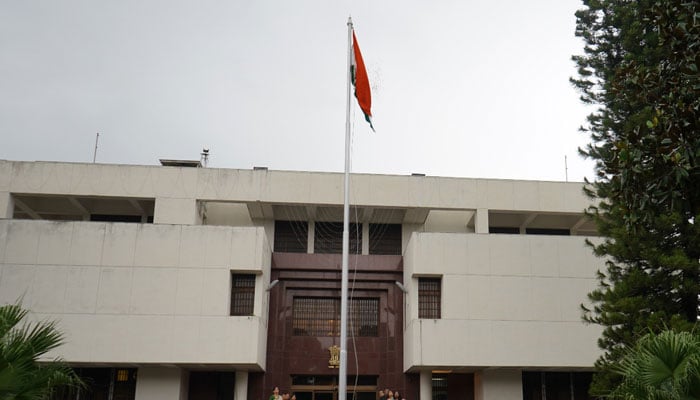
    Dr. Styanjal Pandey has formally assumed his responsibilities as the new Indian chargé d’affaires in Pakistan. He will serve as the head of the Indian High Commission in Islamabad. Pandey took charge of the position on August 1, 2026, according to diplomatic sources. His appointment comes after the completion of the tenure of former Indian chargé d’affaires Geetika Srivastava. Srivastava has completed her diplomatic assignment in Pakistan and has returned to India. After assuming his new responsibilities, Pandey also visited Pakistan’s Ministry of Foreign Affairs in Islamabad. During the visit, he held a formal meeting with Sajjad Haider, Director General for South Asia at the Foreign Office. The meeting was part of his initial diplomatic engagements after taking charge of the Indian mission. Pandey also met other relevant officials of the Ministry of Foreign Affairs. The meetings focused on diplomatic engagement and matters concerning bilateral relations between Pakistan and India. Pandey’s arrival marks a change in leadership at the Indian High Commission in Islamabad at a time when relations between the two neighbouring countries remain closely watched. As chargé d’affaires, he will oversee the functioning of the Indian diplomatic mission in Pakistan and represent New Delhi in official diplomatic engagements. Diplomatic sources said Pandey has begun his official engagements following his appointment. His meetings with Pakistani officials are expected to provide an opportunity for continued diplomatic communication between the two countries. The Indian High Commission in Islamabad plays a key role in maintaining official contacts between Pakistan and India.

  • | | |

    Prolonged Iran mission puts US sailors under pressure

    The prolonged deployment of the US aircraft carrier USS Abraham Lincoln in connection with the Iran conflict has raised concerns over the mental health and wellbeing of personnel serving aboard the vessel. US media reports say several sailors allegedly attempted to jump overboard during the carrier’s extended deployment in the region. According to reports, the carrier has remained at sea for more than 250 days, with around 5,000 sailors and Marines reportedly deployed aboard the vessel. The long period without a regular port visit has reportedly placed additional pressure on crew members. A sailor’s wife was quoted as saying that her husband attempted to jump from the carrier after struggling with the impact of prolonged and continuous duty. Reports also claim that crew members intervened in several incidents and prevented personnel from going overboard. The reports have raised wider concerns about the conditions faced by sailors during the extended deployment. Some US media outlets have also reported shortages of food and other basic supplies aboard the carrier. The situation has prompted US lawmakers to call for an investigation into the reported incidents and the overall conditions aboard the ship. Senators have sought information about the deployment, including the mental health of personnel, crew fatigue, living conditions and the impact of the prolonged mission on operational readiness. The US Navy, however, has rejected claims of a rise in suicide attempts or mental health problems among personnel aboard the carrier. The Navy has maintained that it continues to monitor the wellbeing of sailors and provide appropriate support during the deployment. The USS Abraham Lincoln’s extended mission comes amid continuing US military operations and heightened tensions involving Iran and the wider Middle East. The carrier’s unusually long deployment has also sparked questions about how long the US Navy can maintain such an operational tempo without affecting crew welfare, equipment maintenance and future readiness. The reported incidents have intensified scrutiny of the human cost of prolonged military deployments, particularly for personnel spending months at sea without regular opportunities for rest and recovery

  • | | |

    13 militants killed in Balochistan operation: secu…

    QUETTA: Security forces continued intelligence-based operations under Operation Azm in Balochistan, carrying out another targeted raid against suspected militants in Mastung district. According to security sources, the latest operation resulted in the killing of several militants, bringing the total number of militants killed during the ongoing operation to 13. Security sources said the operation was conducted in the Khad Kocha area of Mastung after intelligence reports indicated the presence of armed militants in the region. Troops launched a coordinated operation and engaged the suspects during the raid. According to the sources, several militants were killed during the exchange. Officials did not disclose the exact number of militants killed in the latest action but confirmed that the overall death toll in the operation has now reached 13. The operation also targeted militant infrastructure in the area. Security sources said multiple hideouts allegedly linked to the group referred to as Fitna al-Hindustan were destroyed. They added that dismantling these hideouts is part of broader efforts to disrupt militant activities and prevent future attacks. During the operation, security personnel recovered a cache of weapons, ammunition, explosives and materials allegedly used to manufacture improvised explosive devices (IEDs). Officials said the recovered items would be examined as part of the ongoing investigation. Sources further claimed that several militants were injured during the operation. However, the exact number of those wounded has not been confirmed, and no official details have been released regarding their identities. Security officials said intelligence-based operations are continuing across different parts of Balochistan to eliminate militant networks and improve the overall security situation. They added that such operations are being carried out on the basis of intelligence information to target suspected militant hideouts. According to security sources, the campaign against militant groups will continue until terrorist networks are dismantled and peace and stability are restored across the province. They reiterated the commitment of security forces to maintain pressure on armed groups through sustained intelligence-led operations.

  • |

    Harshad Chopda becomes first finalist as Shivangi Joshi exits

    Harshad Chopda has secured the first finalist position in Lock Upp 2, while Shivangi Joshi’s journey on the reality show came to an unexpected end after a dramatic elimination that left contestants and viewers stunned. The latest episode featured an emotional task to determine the season’s first finalist. Several contestants, including Varun Yadav, Shilpa Shinde, Ram Kapoor and Akanksha Chamola, stepped aside, leaving Harshad Chopda and Shivangi Joshi as the final two contenders for the coveted spot. As part of the challenge, the two actors were locked inside the final cell and asked to decide between themselves who deserved to move directly into the finale. However, the decision proved difficult as both contestants hesitated to choose themselves over the other, resulting in an emotional conversation that revealed the strong bond they had formed during the competition. During the discussion, Chopda surprised Joshi by admitting that he had intentionally lost one of the earlier tasks to help her. The revelation caught the actress off guard, especially after he had previously denied making such a sacrifice. “I did lose the game,” Chopda confessed, leaving Joshi visibly confused and emotional. Questioning his decision, Joshi asked why he had given up an opportunity that could have benefited him. Chopda explained that throughout the season he had often put others before himself. This time, however, he felt it was important to focus on his own journey and fight for a place in the finale. Despite his explanation, neither contestant was willing to make the final decision. Their reluctance prompted hosts Farah Khan and Riteish Deshmukh to intervene and encourage them to settle the matter. Chopda remained firm, saying that for the first time in the competition he wanted to prioritise himself. Realising his determination, Joshi eventually stepped out of the final cell, allowing Chopda to claim the title of the season’s first finalist. The emotional moment was followed by another dramatic twist that changed the course of the game. Earlier in the episode, Shreya Kalra had earned a special advantage after winning a crucial task. The reward gave her the authority to eliminate one contestant from the competition. Most contestants believed Kalra would use her power against either Yogesh Rawat or Akanksha Chamola, making her eventual decision all the more surprising. Instead, Kalra chose to evict Shivangi Joshi, bringing the actress’s journey on Lock Upp 2 to an abrupt end. The unexpected elimination shocked fellow contestants, many of whom had not anticipated Joshi’s exit at this stage of the competition. Viewers also reacted with surprise, as the actress had been widely considered one of the strongest contenders for the title. With Chopda becoming the first confirmed finalist and Joshi leaving the show in a dramatic fashion, the race for the Lock Upp 2 trophy has become even more intense. As the finale draws closer, the remaining contestants will continue battling for the remaining spots in the final, promising more emotional moments, strategic gameplay and unexpected twists before the winner is crowned.

  • | |

    Hepatitis screening made mandatory for Islamabad e…

    The federal government has decided to launch mandatory hepatitis screening for all government employees in Islamabad. Employees working in federal ministries will also be required to undergo screening. The move is part of the government’s efforts to detect hepatitis cases at an early stage and provide timely treatment. According to sources in the Ministry of Health, the screening will be conducted under the Prime Minister’s Hepatitis Programme. The programme aims to identify people infected with hepatitis and connect them with free diagnostic and treatment facilities. Employees who test positive during the initial screening will be referred for a PCR test. The PCR test will be provided free of cost under the programme. The government will also provide free medicines to patients after completion of the PCR testing process. The initiative is intended to reduce the financial burden on patients and ensure that those diagnosed with hepatitis receive proper treatment. The Prime Minister’s Hepatitis Programme has a total allocation of Rs67 billion. The funds will be used for screening, diagnostic tests, treatment and other measures aimed at controlling the spread of hepatitis. Free hepatitis screening is already being conducted at different locations across Islamabad. The government plans to expand the screening process to federal government employees as part of the wider programme. Sources said more than 50,000 hepatitis screening kits have already been purchased. The kits will be used to screen employees and identify suspected cases. Machinery for PCR testing has also been installed at the National Institutes of Health in Islamabad. The facility will help process tests for people who are found positive during the initial screening. Health authorities are focusing on early diagnosis because many hepatitis patients may not show clear symptoms in the initial stages. Regular screening can help identify infections before they cause serious health complications. The mandatory screening of government employees is therefore being seen as an important step in strengthening hepatitis prevention and treatment efforts in the federal capital.

Leave a Reply

Your email address will not be published. Required fields are marked *