political crisis pakistan

Political Crisis in Pakistan

By Granaz Assa

A nation cannot move forward when its leaders are divided. Political stability is the backbone of every successful country, but when conflict, corruption, and power struggles become more important than public welfare, a nation begins to suffer. Unfortunately, Pakistan has faced a political crisis for many years.

A political crisis is a situation in which a country’s political system becomes unstable, making it difficult for the government to run the country properly. It is mainly caused by conflicts between the government and the military, political disagreements, corruption, and weak leadership, which lead to instability, loss of public trust, and slow development in the country.

Pakistan’s future depends on strong and fair leadership, but the ongoing political crisis is slowing the country down. Moreover, the people are facing hardships because of this. As a result, Pakistan is experiencing an economic slowdown, a poor international image, and low development. When leaders fight for power and control, it divides the country and creates confusion. Corruption also makes the situation worse because some leaders misuse public money for their own benefit instead of serving the citizens. If the government is weak, it cannot make good decisions or effectively help the people.

A political crisis has many negative impacts on the country. It creates instability, weakens the economy, increases prices, and raises unemployment. Development projects such as schools, hospitals, and roads may be delayed. Public services can also be affected. As a result, the country’s overall progress becomes slow, and the daily lives of citizens become more difficult. In this way, a country cannot move forward.

To solve the political crisis in Pakistan, some important steps are needed. First, corruption must be reduced, and leaders should work honestly for the people. Moreover, the country needs strong and fair leadership to make good decisions and guide the nation. Political parties should work peacefully and respect one another instead of engaging in conflicts. These steps can bring stability, improve the country’s economy, and build a better future for Pakistan.

The political crisis is a serious problem that affects the country in many ways. The country needs to promote peace and unity among its people. Pakistan can overcome this crisis if all political parties and their leaders work together for the country instead of pursuing their personal interests. Free and fair elections, respect for the Constitution, and peaceful dialogue can help resolve political disagreements. The government must focus on the needs of the people. Citizens should also vote responsibly and support peace, unity, and democracy. By working together, the country can achieve political stability, economic growth, and a brighter future.
Similar Posts

  • HEC new weighted policy: putting weight on research credibility

    By Ali Abbas Pakistan’s Higher Education Commission (HEC) new weighted research policy has surely raised an eyebrow among a few academics nationwide. Before further dissecting the policy and its implications, it is pertinent to understand the role of HEC as a regulatory authority, which can help clear the air to a greater extent. As stated, “Regulatory”, it is important to accept that the Higher Education Commission of Pakistan is there to implement quality checks irrespective of the decision being popular or unpopular. So, with this lens, it is easy to understand why HEC is weighing this bold step of assigning weights to authorship and what must have been the shortcomings in the previous policy, despite the earlier policy’s apparent benefits. The new policy values first authors and corresponding authors more, acknowledging a reward for the initiators and potential stakeholders in the event that there are more than 3 authors. While HEC is not stopping co-authorship, it aims to credit researchers who have genuine contributions and are adding value as a lead or major contributor. It is entirely up to contributors to choose the number of other co-authors and their desired contribution and commitment in the research article. In fact, this should rather be seen as a measure of transparency that researchers who are expecting to get fewer marks for co-authorship will be doing less work in contrast to the first author. That can actually act as a yardstick for them to allocate their time to multiple projects to get their respective share/ count. However, not to undermine the researchers whose genuine intent surrounds a higher number of publications in less time with real contribution, it is a welcoming sign for authors who stay away from relationship-based and aided research. So, HEC, being a quality custodian of education and research practices for HEIs, has come up with a stance to curb research mills, fraudulent research, and fake authorship, where publications in friends’ journals and contributions following quid pro quo are compensated. And one never knows when these researchers who have worked as co-authors or fall last in the author list make it to the classes; their share of knowledge and impact may be a concern at times as well. The problem is even bigger, as not only papers with 20+ authors can be found, but researchers are co-authoring in different fields that may be beyond cross-domain collaboration. This is where HEC might have to respond and find this weighted policy as damage control.  Well, this research’s credibility is not Pakistan’s dilemma only, but something that is a world issue in a higher education setting. And when HEC addresses these concerns, it might act as a benchmark for other nations’ education systems, especially for the education and accreditation councils of similar demographics. Whether one favors or opposes it, HEC has devised something that raises major concerns, and that is to curb the need to distinguish between real and fake contributors. Now comes the point of demotivating international contributions from this weighted system, as raised by the affected prospective contributors. Well, though not every policy can avoid its collateral, the overall gain may be exploited as well. It is to be remembered that international collaborators are not to be linked with those weights; they can continue to collaborate at any number in the author list as they used to be, i.e., first or second or third, etc. In this case, the logic for local authors will remain the same as stated above about their respective contributions and rewards. The time and effort can then help in identifying multiple avenues as well. Again, there are always two sides to a coin, and in the current dynamics, where co-authorship has appeared to be a business deal, the side with the assigned weights policy bears more weight. Also, on the other hand, the offset can be made by allocating funds and instructing HEIs to devote funding to Gold open access, thus accelerating the pace of the first-author research. All in all, the new policy hints at increasing competitiveness and research credibility while leaving it to the test of time to see if it turns out to be a value addition for researchers by choice or by chance. About the author: Ali Abbas, PhD, works at Beaconhouse National University. He can be reached at aabbas724@gmail.com

  • Danger signs your air conditioner needs repair

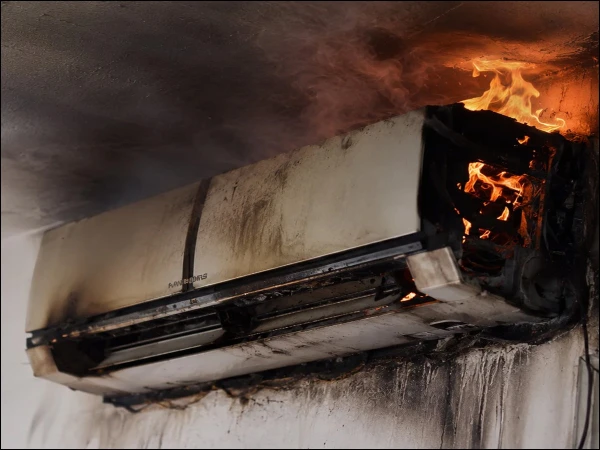
    As temperatures rise many people buy old or low cost air conditioners to save money. However experts warn that aging AC units can become dangerous if problems are ignored.  Small faults may turn into serious issues including electrical short circuits fires or costly damage. According to experts older air conditioners often develop worn out wiring damaged electrical parts faulty motors and overheating. These problems may seem minor at first but can become dangerous if they are not repaired in time. One of the biggest warning signs is a burning smell or the odor of melted plastic when the AC is switched on. Experts say this could mean the internal wiring motor or insulation has been damaged increasing the risk of fire.  If this happens turn off the unit immediately and have it checked by a qualified technician. Unusual sounds such as rattling grinding or loud noises are also signs that something is wrong. These noises may be caused by a loose part a damaged fan or a compressor problem.  Ignoring them could lead to a complete system failure. If the air conditioner becomes unusually hot while running it may indicate an electrical fault inside the unit.  Overheating can increase the risk of a short circuit or fire making immediate inspection and repair important. Experts also advise not to ignore weak cooling. Reduced cooling may be caused by low refrigerant a faulty compressor or a clogged air filter.  These issues usually mean the AC needs servicing or repairs. Another serious warning sign is seeing sparks near the voltage stabilizer or electrical wires. This may indicate loose connections or damaged wiring, which can quickly become a fire hazard if not fixed. Experts recommend turning off the air conditioner immediately if you notice any of these warning signs and contacting a qualified technician for a full inspection. Timely repairs can help prevent bigger damage and keep your home and family safe. They also advise that if an air conditioner keeps breaking down and needs frequent repairs replacing it with a newer safer and more energy efficient model may be a smarter and more cost effective choice.

  • Childhood divorce linked to stroke risk

    A new study suggests that people whose parents divorced during their childhood may have a higher risk of having a stroke later in life. The research, published in the journal PLOS One looked at data from more than 13,000 adults aged 65 and older. Researchers found that people whose parents divorced before they turned 18 were about 60% more likely to have experienced a stroke than those who grew up in families where their parents stayed together. Lead researcher Dr. Mary Kate Schilke, a psychology lecturer at Tyndale University in Toronto said the increased risk remained even after taking other factors into account including smoking low physical activity lower income and education levels. She said childhood parental divorce was still linked to a 61% higher risk of stroke in later life. A stroke happens when blood flow to part of the brain is blocked or when a blood vessel in the brain bursts.  It can cause brain damage long term disability or even death if not treated quickly. The researchers stressed that this was an observational study meaning it does not prove that parental divorce directly causes strokes. However childhood family stress may be connected to other health conditions that increase stroke risk such as depression diabetes smoking and obesity. Doctors say recognizing the warning signs of a stroke can save lives because early treatment is very important. Common stroke symptoms include. Sudden weakness or numbness in the face arm or leg especially on one side of the body. •Trouble speaking or understanding speech. •Sudden vision problems in one or both eyes. •Difficulty walking dizziness loss of balance or poor coordination. Experts say anyone with these symptoms should seek emergency medical care immediately as fast treatment can greatly improve recovery.

  • Forgotten memories may not be gone

    New research suggests that some memories that seem to be forgotten may not completely disappear from the brain.  Instead they may remain stored in a quiet state and can sometimes return when a person receives the right reminder or is placed in a familiar environment. Scientists studied fruit flies and found that memories could become active again when the flies were placed in an environment similar to the one where the memory was first formed. This suggests that some memories may not be erased with time. They may simply become harder for the brain to access. Human memory is a very complex system. Some memories become weaker over time while others may suddenly return after seeing a familiar place, smelling a certain scent or noticing another related signal. However researchers still do not fully understand why the brain sometimes creates false memories along with real ones.  Understanding how the brain brings back true memories and creates inaccurate ones remains an important question for scientists. The findings could  help researchers better understand how memories are stored in the brain and how different surroundings or reminders can help bring forgotten memories back.

  • Can you take a bath during fever?

    During the rainy season and changing weather cases of dengue malaria viral fever typhoid and other illnesses often increase. When people develop a fever many wonder whether taking a bath could make their condition worse. Health experts say that taking a bath during fever is generally safe. A bath with lukewarm water can help the body feel more comfortable and may temporarily reduce body temperature. However the water should not be extremely hot or cold. Avoid very cold water Experts advise against bathing with ice-cold or very cold water during a fever.  Sudden exposure to cold water can cause shivering. This may make the body work harder to produce heat and can increase discomfort. Very hot water should also be avoided. It can raise body temperature and may make weakness and tiredness worse. Do not use alcohol on the skin Some people use alcohol or spirit on the skin to try to lower fever. Health experts do not recommend this method. Alcohol can be absorbed through the skin and may cause harmful effects. It should especially never be used on children for this purpose. What should you do during a fever? Fever is usually not a disease itself. It is often a sign that the body is fighting an infection.  Therefore it is important to find and treat the cause of the fever instead of only trying to lower the temperature. Drink plenty of fluids during a fever to prevent dehydration. Water, ORS coconut water soup and other suitable drinks can help. Wear light comfortable clothes and make sure the room has good airflow. If a full bath feels difficult you can gently clean the body with a soft cloth dipped in lukewarm water. Eating light and easily digestible foods such as porridge, khichdi, and other soft foods may also help the body recover. When should you see a doctor? A mild fever may improve with rest enough fluids and medicines recommended by a doctor. However medical help should be sought if the fever lasts for more than two to three days or is accompanied by confusion breathing problems severe headache repeated vomiting unusual skin rashes, or other serious symptoms. A baby under three months old with a fever should be examined by a doctor immediately. Overall taking a lukewarm bath during fever is usually not a problem. Staying hydrated, getting enough rest eating light food and finding the actual cause of the fever are much more important for recovery.

  • Solo travel finding its footing in Pakistan

    The image of travel in Pakistan is changing. At bus terminals in Rawalpindi, at Islamabad International Airport, and on trails in Hunza, a growing number of travellers are moving with just one thing in common — they are alone. Solo travel, once seen as unusual, is now a quiet but visible trend among Pakistanis. Industry data and tour operators say bookings by single travellers have risen steadily over the last two years, driven by social media, remote work, and a desire for independence. For decades, Pakistani travel meant family trips to Murree, Nathiagali, or Swat, or group tours arranged through agencies. That model is shifting. Nevertheless, reasons are practical and personal. Let’s say, no need to coordinate leave or budgets with others, or time to navigate new places on one’s own terms. These days , hostels, cafés, and trekking groups in places like Karimabad and Skardu have become meeting points for solo travellers. However, safety remains the top concern, especially for women. That is pushing both travellers and the industry to adapt. Hotels in major tourist towns now offer female-only dorms. Ride-hailing apps provide trip sharing. Also, the Ministry of Tourism has started listing registered guesthouses and guides on its website. Taking about the top destinations, Domestically, the most popular solo destinations of 2026 are, Hunza, Skardu, and Fairy Meadows for trekking and landscapes, Swat and Kalam for short trips, easier access. And Islamabad and Lahore, for weekend culture trips, history, and food walks. Internationally, Pakistanis traveling alone are choosing Turkey, Malaysia, and Saudi Arabia for Umrah-plus-tourism packages. Portugal and Japan are also rising for first-time solo travellers abroad due to safety and transit systems. But I would say Sri Lanka is the must go. For traveling solo, One of the biggest challenge is price. Single rooms and ‘single supplements’ on tours can add 20-30% to costs. However, to counter this, some operators are launching “solo-friendly” departures — group tours where you get your own room but share activities. To combat this, solo travellers usually travel in shoulder months and spend more on local experiences — guides, food, and home-stays. I am a travelwriter, who travels solo weather traveled domestically or internationally, my advise is basic precautions, let say, safe hotels, air travel, authentic agents and no home stays, since for my travel I only prefer top notch hotels, always get the travel plan from reputable travel agencies, and travel with the guide from company. Also, I avoid night life.

Leave a Reply

Your email address will not be published. Required fields are marked *