tradition impersonality mythic
|

Tradition, impersonality and mythic structure in “The Waste Land”

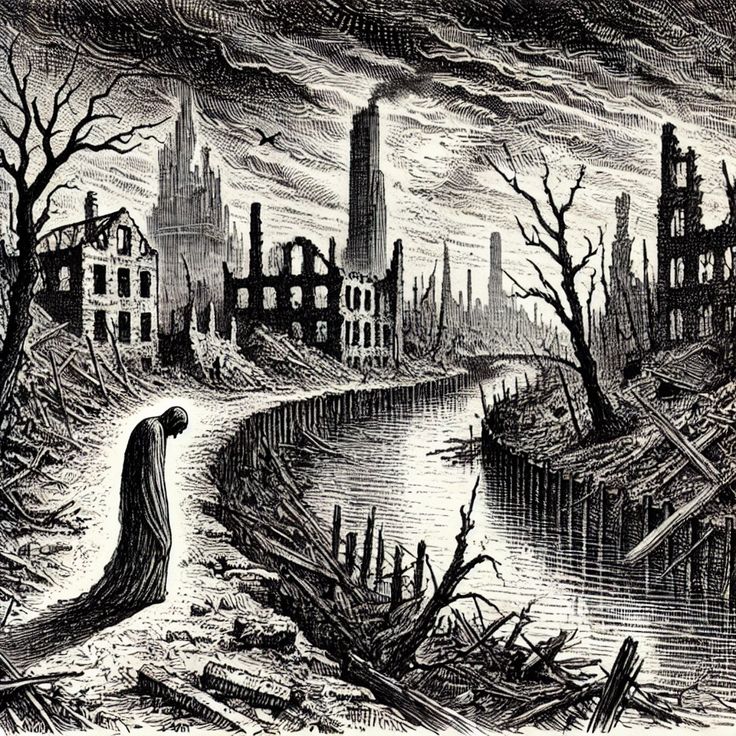
Eliot’s masterpiece The Waste Land is published in 1922 just three years after “Tradition and the Individual Talent“. The poem serves as the ultimate practical demonstration of his theoretical ideas. Rather than describing tradition abstractly, Eliot uses allusion, polyphony, structural juxtaposing, and mythic framing to explain how a modern poem can absorb European history to process post-WWI disillusionment.

Eliot argued that a poet must possess a historical sense. It is an awareness of the past’s presence alongside the contemporary moment. In The Waste Land, centuries of literary tradition exist on a single plane. In Section I (The Burial of the Dead), the speaker encounters acquaintance in modern London named Stetson and asks:

   That corpse you planted last year in your garden,

Has it begun to sprout?

 In the very next line, Eliot links this modern London scene directly to the Punic Wars between Rome and Carthage.

You who were with me in the ships at Mylae!

  Modern industrial London and ancient Rome are collapsed into the same spiritual wasteland. The historical sense allows Eliot to treat human trauma across millennia as simultaneous rather than sequential. In his Impersonal Theory, Eliot argued that the poet’s mind acts as a catalytic medium. It’s  fusing disparate feelings and literary artifacts into a new substance without injecting personal bias. Throughout the 433 lines of The Waste Land, Eliot incorporates over 35 distinct literary references, 6 foreign languages, and references to sacred texts across Eastern and Western traditions. Eliot quotes Edmund Spenser’s Renaissance poem Prothalamion:

Sweet Thames, run softly, till I end my song.

He juxtaposes Spenser’s idyllic, nymph-filled river with the industrial Thames of 1920s London, scattered with silk handkerchiefs, cardboard boxes, cigarette ends. As commuters cross London Bridge, Eliot echoes Dante’s Inferno (Canto III):

I had not thought death had undone so many.

The modern office workers are literally mapped onto the souls trapped in Hell’s vestibule. He isn’t relying on a traditional narrative arc or a subjective personal narrative. Eliot uses what he famously called the Mythic Method (a technique he also praised in James Joyce’s Ulysses)..Eliot grounds the entire poem in two scholarly texts on mythology and ritual. From Ritual to Romance (the Grail Legend and the sterile Fisher King). The Golden Bough (ancient fertility cults, dying-and-rising gods).

The underlying archetype, a sterile land awaiting a spiritual rain to restore fertility, unifies the fragmented scenes of modern decay (mechanized sex, empty conversations, spiritual apathy). Therefore, the individual talent grounds chaos in timeless mythic order. In order to achieve the extinction of personality, Eliot abandons a central I persona. Instead, he speaks through a chorus of shifting voices. A Marie in Munich, a hyacinth girl, a cockney woman in a pub, and Saint Augustine. In his famous explanatory notes to line 218, Eliot exposes he unifying center of the poem:

 Tiresias, although a mere spectator and not indeed a ‘character’, is yet the most important personage in the poem, uniting all the rest… What Tiresias sees, in fact, is the substance of the poem.

Tiresias: the blind, bisexual prophet of Greek myth (from Sophocles and Ovid). It has lived as both man and woman and seen the depths of classical tragedy. Eliot submerges his own biographical ego into an ancient, collective consciousness by adopting Tiresias as the central perspective

Eliot’s concept of tradition is not narrowly provincial. His concept relates to the broader heritage of human thought. In the final section “What the Thunder Said”, the modern mind seeks a cure for its spiritual dryness not in the West, but in the Upanishads. The thunder speaks the Sanskrit syllables: Datta (give), Dayadhvam (sympathize) and Damyata (control). The poem concludes with the solemn formal chant:

Shantih shantih shantih

The Peace which passeth understanding.

The final line: “These fragments I have shored against my ruins” summarizes Eliot’s entire philosophy of tradition. Modern civilization may be in ruins, but the individual poet reconstructs meaning by gathering and rearranging the enduring fragments of global tradition.


 

Similar Posts

  • Everything you need to know about air turbulence

    Many people have experienced a flight suddenly shaking while flying thousands of feet above the ground.  It can feel as if the airplane has hit a large bump in the sky, leaving passengers frightened. This is called air turbulence a common part of air travel that is usually harmless but can sometimes be severe. What causes turbulence? Airplanes fly through different layers of moving air called air currents.  When the speed or direction of these air currents changes suddenly the aircraft passes through rough air causing it to shake. This is known as turbulence. Aviation experts say that most turbulence is mild and modern airplanes are built to handle forces much stronger than those experienced during normal flights. In most cases turbulence does not cause an aircraft to crash. The biggest risk is to passengers who are not wearing their seat belts. Types of air turbulence There are several types of turbulence Clear Air Turbulence (CAT) This is one of the hardest types to predict because it happens in clear skies and often cannot be detected by weather radar. It usually occurs between 30,000 and 40,000 feet due to fast moving jet streams. Wake Turbulence. This happens when a large aircraft leaves powerful swirling air behind it and another plane flies through it. Thermal turbulence On hot days warm air rises from the ground. If an aircraft flies through these rising air currents passengers may feel bumps. Frontal turbulence This occurs when warm and cold air masses meet often during storms rain or cloudy weather. Can turbulence be dangerous? Turbulence is usually more dangerous for people than for the airplane itself. Passengers who are standing or not wearing seat belts can be thrown from their seats and may suffer injuries to the head neck or bones. Strong turbulence can also cause luggage food carts and other loose items inside the cabin to move around increasing the risk of injury. Some passengers may also experience fear or anxiety during the shaking. In rare cases pilots may change the flight path or make a precautionary landing if the turbulence is unusually severe. How to stay safe Aviation experts recommend keeping your seat belt fastened whenever you are seated even if the seat belt sign is off. This is the best way to stay safe if unexpected turbulence occurs. Scientists also say that climate change may be increasing the number of clear air turbulence events in some parts of the world. To improve safety airlines use advanced weather forecasts satellite data and warning systems to avoid areas with severe turbulence whenever possible. Although turbulence can feel frightening experts stress that modern aircraft are designed to withstand very strong air movements. Staying calm following the crew’s instructions and keeping your seat belt fastened are the best ways to stay safe during a turbulent flight.

  • Our Women Communicators of Tomorrow

    By: Mehreen Imambaksh  Empowering Voices for Global Change Throughout history, women have possessed powerful thoughts, deep emotions, and creative voices; yet, many of these voices have gone unnoticed. Their experiences were frequently limited to their homes, their abilities were questioned, and their intellectual development was neglected. However, literature, history, and social thought expose that women were capable of uttering knowledge, shaping culture, and influencing society, but patriarchal systems often restricted their visibility. For centuries, women were expected to remain silent in public intellectual areas. Their role was widely limited to household responsibilities, whereas education, authorship, and public speaking were dominated by men. Yet despite these barriers, many women endured to write, think, and challenge the systems that tried to silence them. One beautiful example can be found in the nineteenth century with the eminent novel *Wuthering Heights*, written by Emily Brontë (1847). Today the novel is considered one of the masterpieces in English literature. Moreover, Emily Brontë did not publish it under her original name; rather, she used the pen name Ellis Bell. Similarly, her sisters also adopted the same approaches. Charlotte Brontë published *Jane Eyre* under the name of Currer Bell, and Anne Brontë published *The Tenant of Wildfell Hall* under the name of Acton Bell. The reason behind these pen names was simple but widely revealing: society frequently refused to take women writers seriously. The Brontë sisters were highly imaginative and intellectually able, yet they felt pressured to hide their identities to ensure their work could be approved. Their circumstances examine the huge restrictions placed upon women’s voices during that time. Long before the Brontë sisters, early feminist thinkers had raised concerns about women’s lack of education and freedom. In 1792, Mary Wollstonecraft wrote *A Vindication of the Rights of Woman*, challenging that women should have equal access to education and intellectual opportunities. She said that women were treated as inferior in society not because they lacked capability, but because they were refused the chance to advance their minds. More than a century later, this problem was discussed again by Virginia Woolf in her masterpiece work *A Room of One’s Own* (1929). She famously argued that women in the past were refused both financial independence and private space, which restricted them from freely uttering knowledge. Therefore, she said a woman needs not merely talent but also freedom and equality to express her feelings and thoughts. Modern scholars have further examined how systems of knowledge can silence subaltern voices. In her essay “Can the Subaltern Speak?” (1988), Gayatri Chakravorty Spivak introduced the idea of epistemic violence, which means how dominant systems of knowledge remove or suppress the voices of certain groups, especially women and colonized communities. When women’s ideas are ignored or removed, their experiences are excluded from the production of knowledge, creating a form of intellectual oppression. These rooted examples depict that women’s silence was never because of a lack of intelligence or creativity. Instead, it was the result of social systems that demotivated or limited their role in participation in intellectual and public life. Even today, this evidence remains visible in many societies. In many cultures, women still hesitate to talk openly, particularly on public platforms or digital spaces. Furthermore, social expectations and fear of judgment frequently create unseen obstacles that prevent women from sharing their thoughts and feelings. This hesitation is not always enforced directly; sometimes it evolves internally due to long-standing social pressures. Moreover, I personally experienced this hesitation in my own life. For many years, I believed in the significance of women’s ability, yet I was not actively immersed in initiatives related to it. One cause for this was my anxiety about visibility on social media platforms to reveal my feelings and ideas because I feared how society, especially as a Baloch student, might react to a woman openly sharing her ideas. This anxiety is not unfamiliar. Many women feel unsure about expressing themselves publicly because they expect critique or misunderstanding. However, personal growth frequently begins with a small step. For me, that step was creating my social media platforms such as Medium, a LinkedIn profile, and starting to share my writings, including poems and reflections based on my experiences. At the start, this act felt common, yet slowly opened new chances. Through this visibility, I became connected with extensive intellectual and professional networks, which ultimately led me to become immersed in women’s ascension. Being involved in this initiative has allowed me to interact with women from various cultures, backgrounds, and perspectives. These interactions have been widely improving. They have shown me that when women communicate and share experiences across cultures, they create unique forms of understanding and collective growth. This experience shows that women’s empowerment does not always happen through major changes, but it begins slowly when women start to express themselves, engage in conversations, and share knowledge with others. Communication is one of the influential tools that helps women to connect their personal experiences with global discussions about equality and justice. However, change needs cooperation. Women’s power should not be seen as an effort between men and women. Instead, it should be perceived as a collaborative struggle to create a fair and inclusive society. Both men and women play a major role in supporting and motivating women’s voices. Traditionally, patriarchal societies frequently reduced women to limited roles, especially examining their function as a child-bearing machine. Whereas motherhood is an essential and valuable role, it should never define the entirety of a woman’s identity. Women have intellectual capabilities, creative skills, and leadership qualities that can contribute importantly to society. Education plays an essential role in changing these circumstances. When women receive education, they gain the confidence and knowledge necessary to contribute actively in social, economic, and intellectual life. Educated women are more capable of expressing their thoughts, challenging injustice, and participating in the development of their communities. Furthermore, the impact of women’s education extends beyond the individual. When women are educated, they can brighten their children’s lives and motivate the next generations

  • Breakfast leads to better food choices

    Breakfast is often called the most important meal of the day and a new study supports that idea. Researchers at the University of Texas found that eating breakfast can help people make healthier food choices for the rest of the day. The study included 128 young adults who usually skipped breakfast. They were divided into three groups. One group continued to skip breakfast the second group ate breakfast with 15 grams of protein and the third group had breakfast with 30 grams of protein. After breakfast all participants were free to eat whatever they wanted throughout the day. The researchers found that all three groups consumed about the same number of calories around 2,300 calories per day. However there was one important difference. People who ate breakfast consumed more healthy nutrients including fiber, iron zinc and choline. Those who skipped breakfast were more likely to choose unhealthy foods and got lower amounts of these important nutrients. The study also found that people who ate a high-protein breakfast consumed more protein iron and choline throughout the day than those who had only 15 grams of protein. In addition both breakfast groups ate fewer sugary foods than those who skipped breakfast. Researchers said that eating less sugary and high fat food may help lower the risk of several long term health problems.

  • | |

    DI Khan church still guards colonial memories

    There are some places we pass every day without realising how much history they hold. They remain untapped until some visitors put their eyes on them. During summer vacations, I travelled to Dera Ismail Khan, a district situated in southern Khyber Pakhtunkhwa. It takes six hours from Lahore to arrive in this historic city. During my stay there, I came across one such place that immediately captured my attention, and I thought to write about it. It was St Thomas Church, sacred place of worship for Christian community. A large cross standing at the entrance, old rusty walls, and an ambience of spiritualism. But the Church showcased more than that. Its walls contain historical accounts of colonial past, the military campaigns led by British soldiers in this area and a grave of one Lieutenant Governor of Punjab.   St Thomas Church was built in 1856 during British rule in the Indian subcontinent. It is one of the oldest churches in present-day Pakistan. It has survived political changes, the Partition of 1947, and the passing of time. Even today it stands as a symbol of the rich and diverse heritage of Dera Ismail Khan. The church is not only a place of worship but also a reminder that different faiths and communities have long been part of the history of this region. As we walked inside, we met the old priest and caretaker of the church named Chand. He welcomed us warmly and narrated the remarkable history of this place. There are memorials of British soldiers who lost their lives in this region during military campaigns. The priest stood in front of each tablet inscribed on the church wall and briefed about it. One memorial narrates the names, ranks and units of one hundred and 69 British military officers and other ranks who were killed or died due to injuries or disease in Waziristan military campaigns launched between 1919 to 1921.     Another memorial lists details of sixty-eight officers and other ranks who met a similar fate during the 1936-1938 Waziristan military campaigns. Similarly, one tablet erected by friends and fellow officers mourns the death of Herbert Walter Gee, ICS, deputy commissioner of Dera Ismail Khan, who died in 1901. There are other memorials as well, erected by colleagues in memory of the fallen officers. I thought that these names contain historical accounts year by year about what happened in this part of the world at that time. Every sentence of the Priest carried a new story, such as how the church has witnessed a lot of happenings through generations and that it still serves the small Christian community living in Dera Ismail Khan. As we stepped outside, believing our visit had come to an end, the priest said, “Wait. I have to show you one more thing.” He took me to the back of the building, where I saw a large white grave standing quietly among the dusty bushes. Here rests Lieutenant General Sir Henry Marion Durand (1812-1871). Durdand – a quite familiar name for the people of Pakistan and Afghanistan. Sir Durand was a career British military officer, diplomat, and administrator. He served in the East India Company Army, took part in several military campaigns, and later became the Lieutenant Governor of Punjab from 1870 to 1871. His son Sir Mortimer Durand is the one who drew the contours of the border between British India and Afghanistan in 1893. A man who once held such an important position now lies in silence behind an old church, while many people living nearby are unaware that his grave even exists. Henry Marion Durand died in 1871 at the age of 58 from a tragic accident. He was visiting Nawab of Tank Shahnawaz Khan along with his daughter when he fell from an elephant. The elephant was passing through the gateway by the town of Tank with the Nawab on the same elephant and an official (Chaprassy). The gate was too low to cross an elephant with howdah. The howdah struck the walls of crossing and the elephant got frightened resulting in the fall of Durand. He remained unconscious for a few days and never recovered. He was buried beside St. Thomas’ Church in Dera Ismail Khan. The British suspected some conspiracy into this incident. One of descendent of Nawab Shahnawaz Khan says that The British launched an enquiry into it. But the daughter of Durand gave testimony in favour of the Nawab that it was just an accident and there was no fault on his part. However, as a punishment, the British authorities stripped the powers of Nawab Shahnawaz Khan in 1875 and sent him to Lahore under strict watch. He passed away in 1881 while under surveillance. Standing beside the grave of Sir Henry Durand, I felt as if I had stepped into a forgotten chapter of history. The name engraved on the stone reminded me that many important events and personalities of the past remain connected to places that we often overlook. How easily history can fade from people’s memories, even when it is standing right in front of us. As I left St Thomas Church, I felt that I had walked through a chapter of history that few people ever get to read. Sir Henry Durand ruled Punjab from this soil, and his son later sat across a table in Kabul and drew the line that still separates Afghanistan and Pakistan today. That line appears in newspapers and political debates all the time. Yet the grave of the man whose name it carries lies quietly behind a church in Dera Ismail Khan.

  • Fake it till you break it: inside the deepfake era

    Previously, I believed that if one could see something, it could be trusted because seeing is believing. A video was proof. A voice recording was evidence. That belief is gone, and I don’t think we have fully sat with the implications. There is an abnormal shift happening. AI-generated images, voice cloning, face-swapping apps, and similar tools were supposed to expand how people express themselves, but instead they have slowly chipped away at what matters most: the belief that people can express themselves through their images and their words. I attended a workshop under the project titled “Digital Trust and Free Expression in the AI Era” at Department of Media and Development Communication, University of the Punjab, supported by the U.S. Mission to Pakistan in partnership with the Pakistan-U.S. Alumni Network (PUAN) last week. During the discussions on digital trust. I took part in the discussion and shared my thoughts that we are now in a time where we must take this out of the realm of fun tech novelty and place it in the realm of a structural issue in how societies operate. Everyone says deepfakes are a “misinformation” issue, but this is not an adequate way to describe it. Misinformation is something that’s a false statement that can, in theory, be fact-checked. Deepfakes strike at the heart of video and audio credibility which have always been treated as vivid reality. When people realize that any clip can be fabricated, they stop trusting all clips, even real ones. This is what concerns me most. Fake things are believed and real things become deniable. Consider the implications of journalism, courts, political accountability, etc. If a politician is recorded saying something damaging, they can simply claim that it’s a “deepfake” and, depending on how much trust citizen have lost, people may believe them. We are creating a society in which it is possible to negotiate authenticity and in which negotiable authenticity is a gift for those who wish to avoid consequences. I also face a conflict here: I strongly believe in free speech, satire, parody, art and provocation even with synthetic media. The same technology behind de-aged actors, resurrected voices, dubbing, and experimental AI is extremely creative, yet it is all connected to malicious deepfakes. There is no way to ‘clean’ a tool of its worst use-case. A hammer can break windows or build houses. I do not think banning synthetic media is the answer, nor do I support pre-emptive censorship. That path harms legitimate satire, journalism and art under the pretense of ‘preserving truth’. History does not look kindly on institutions that decide what is a “fair” fake. Freedom of expression has never been of consequence or friction, and right now, deepfakes have almost no friction. The reality is there is no cost, disclosure, and accountability in using this technology deceptively. The issue is the imbalance. I believe the solution is not reducing synthetic tools but improving provenance. We need a digital watermarking, which cannot be “easily removed”: cryptographic signatures embedded into cameras, microphones and generative tools at the point of creation, so that the “unverified” label appears by default, not as an afterthought. Not to prohibit any content but to allow people to know what they are seeing before deciding whether to trust it. Platforms have been allowed to operate without responsibility for too long. Convincing fakes can reach millions before correction and corrections never travel as far. This asymmetry is not natural; it is a design choice. Platforms can mark, rate or tag synthetic content at the time of dissemination. Most simply haven’t had to! But, beyond platforms, we must change our own instincts as individuals. The old saying was “pics or it didn’t happen.” The new rule should be: “Who gains from believing this and can I verify it myself? A society that believes everything or worse, believes nothing is in danger. The deepfake age is not the age of AI; it is the consequences of a world where the cost of faking reality is near zero and the cost of establishing truth remains high. Freedom of expression should protect the most challenging and profound exchange of ideas, not the production of fake consent, fake evidence, or fake people. We can have creative freedom and still expect honesty about sources. These are not competing prioritie These are not different objectives/priorities. However, if we pretend it’s a content-moderation footnote, we must make sure we are not waking up in a world where “fake it till you make it” has become ‘fake it till you break it” and by that time, it won’t be just one video or one lie that will break. It will be our fundamental ability to reach a shared understanding of reality. The views, thoughts, and opinions expressed in this blog are solely those of the author and do not necessarily reflect the official policy or position of the U.S. Mission to Pakistan or USEFP/PUAN. The writer, Mahnoor Ashraf Wattoo, is a student of Media and Development Communication at University of the Punjab, Lahore 

  • How breakfast supports children’s mental health

    Health experts say that starting the day with a healthy breakfast is important for children’s energy growth and mental development.  However many children go to school without eating anything in the morning. This habit can affect their health mood and studies. Skipping breakfast is common among school going children. Some children do not feel hungry in the morning while others leave home without eating because they are in a hurry. Experts warn that this routine can lead to tiredness low energy poor concentration and irritability. According to Health line it is not only important what children eat for breakfast but also where and how they eat it.  Research suggests that regularly skipping breakfast or having breakfast outside the home may be linked to a higher risk of emotional and behavioral problems among children and teenagers. A spanish national health survey collected information from parents and guardians of 3,772 children between the ages of 4 and 14.  The study looked at their breakfast habits as well as their mental well being self esteem mood and anxiety levels. The findings showed that eating breakfast outside the home could have negative effects similar to skipping breakfast completely.  Experts believe that a balanced home prepared breakfast can support children’s physical growth as well as their mental and emotional well being. A nutritious breakfast may also help improve children’s memory attention and ability to learn.  These benefits can make it easier for them to stay focused in class and perform better at school. Experts advise parents to plan breakfast in advance if mornings are busy.  Some foods can even be prepared the night before. Most importantly parents should try not to send children to school on an empty stomach as a healthy breakfast can help them stay active, focused and ready to learn throughout the day.

Leave a Reply

Your email address will not be published. Required fields are marked *