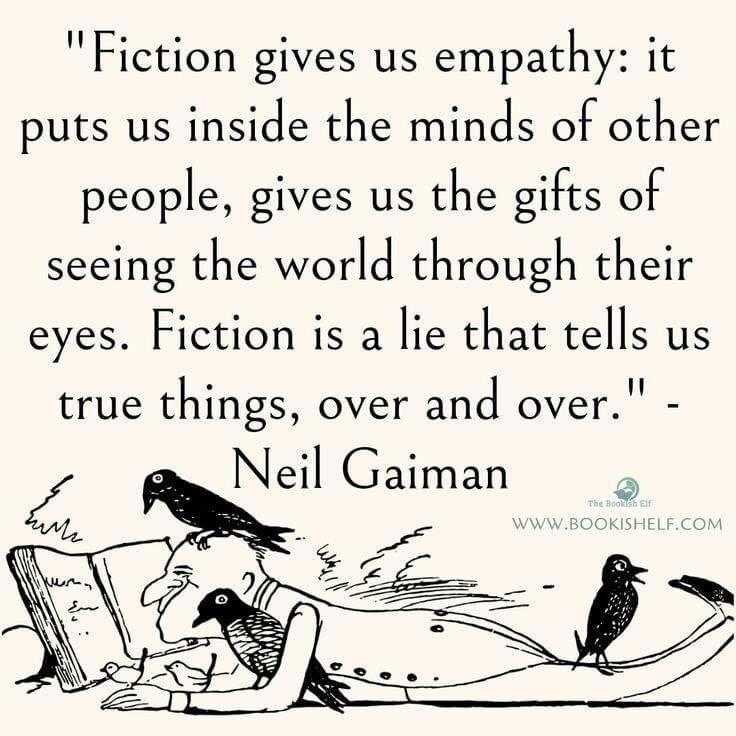
fiction braintrains compassion
|

How fiction brain-trains compassion

Empathy is the capacity to understand and share the feelings of another. It’s not merely an inherent personality trait; it is a cognitive muscle that requires exercise. While there are many ways to practice compassion in daily life, neuroscientists and psychological researchers have uncovered a uniquely powerful tool for training this mental capacity: reading deep, character-driven fiction.

For decades, society viewed reading literature as a purely intellectual or escapist hobby. However, recent scientific studies using functional magnetic resonance imaging (fMRI) have revealed that when we read a story, our brains process the experience in ways remarkably similar to real-world social interaction. When an author describes a character running through a dark forest, struggling with heartbreak, or feeling a sharp pang of injustice, the sensory and emotional centers in the reader’s brain light up as if the reader were experiencing those events directly. This neural simulation allows us to step entirely out of our own shoes and temporarily inhabit the subjective reality of someone else.

Psychologists often refer to this ability as theory of mind. It’s the cognitive skill that enables human beings to attribute mental states (beliefs, intents, desires, emotions, and knowledge) to themselves and others. Life only permits us to live a single, localized existence defined by our specific background, culture, and circumstance. Literary fiction breaks through those physical and social barriers. Through the pages of a novel, a reader living in a quiet suburban town can intimately experience the internal struggles of an immigrant navigating a new city, an incarcerated individual fighting for dignity, or a historic figure facing a agonizing moral dilemma.

Crucially, fiction tells us what people do. Also, it exposes why they do it. It grants us unprecedented access to the secret thoughts, doubts, and vulnerabilities that real people rarely reveal in public. By witnessing a character’s internal contradictions, readers learn that human behavior is rarely black-and-white. We develop a tolerance for ambiguity and a healthier skepticism toward snap judgments. When we close the book, that expanded perspective lingers in our conscious mind, subtly altering how we interact with co-workers, strangers, and loved ones.

Furthermore, reading fiction builds emotional stamina. It asks us to sit quietly with uncomfortable emotions like grief, fear, longing, and regret without fleeing into digital distractions. In doing so, it expands our capacity to hold space for others when they undergo difficult seasons in real life.

Literary fiction, therefore, is far more than entertainment. It is a quiet, radical act of bridge-building. Every time we turn a page and immerse ourselves in a stranger’s story, we perform a vital neurological exercise that softens our defenses, broadens our horizons, and reminds us of our shared humanity.

 

Similar Posts

  • Suzi’s monument keeps Lahore Zoo’s beloved elephant alive in memory

    By Sahr Sarfraz A visit to Lahore Zoo recently brought back memories of one of its most beloved residents, Suzi, whose monument continues to preserve the legacy of an elephant that remained close to the hearts of visitors for nearly three decades. Founded in 1872, Lahore Zoo is among Pakistan’s oldest zoological institutions and has witnessed generations of animals becoming part of the city’s collective memory. However, few managed to capture public affection quite like Suzi. The African elephant arrived at Lahore Zoo in 1988 and soon became one of its most popular attractions. Families, schoolchildren and tourists regularly gathered around her enclosure, fascinated by her gentle nature and calm presence. Suzi was more than an animal on display. Over the years, she developed a special relationship with her keepers, who cared for her and became familiar faces in her daily life. Visitors also grew accustomed to seeing her during school trips, holidays and weekend outings. Her popularity was reflected in the affection with which people remembered her. At times, her name was painted on her forehead alongside Pakistan’s crescent and star, a gesture that reflected the special place she held in the hearts of Lahore’s residents. For thousands of visitors, seeing Suzi became part of growing up in the city. Children who first encountered her during school trips later returned with their own families, creating memories that crossed generations. Suzi died on May 13, 2017, after suffering from leg-related health problems. Her death left many visitors and zoo workers grieving, particularly those who had known her for years. Today, a monument at Lahore Zoo stands as a tribute to the elephant who once occupied the area. Although her former enclosure has since become home to other animals, including a white rhinoceros and a hippopotamus, the sculpture keeps Suzi’s memory alive. Standing before the monument offers a quiet opportunity to reflect on the connection that can develop between people and animals. In a rapidly changing city, the memorial serves as a reminder of a life that brought happiness to countless visitors. Lahore Zoo remains an important destination for recreation, education and family visits. Yet Suzi’s monument adds another dimension to the experience by preserving a piece of the zoo’s history. Her story demonstrates that animals can become much more than exhibits. They can become part of a community’s memories, childhood experiences and emotional history. Suzi may no longer be present at Lahore Zoo, but her legacy continues through the monument that ensures generations of visitors can remember the elephant who once brought quiet joy to one of Lahore’s most familiar landmarks. About the writer Sahr Sarfraz is a doctor by profession who enjoys writing reflective articles in her spare time.

  • |

    Increasing fuel prices

    From Meer Baloch Through the columns of your respected newspaper, I would like to draw the attention of the concerned authorities to the continuous increase in fuel prices in Pakistan. The rising cost of petrol and diesel has made life difficult for ordinary people. Higher fuel prices increase transportation costs, which also raise the prices of food, medicines, and other daily necessities. Poor and middle-class families are suffering the most because their incomes remain the same while expenses continue to rise. The government should take effective measures to control fuel prices and provide relief to the public. It should also promote affordable public transport and reduce unnecessary taxes on fuel. I hope my letter will create awareness and encourage the authorities to take prompt action.

  • Live longer stay healthier

    If you want to live a longer healthier and more active life experts say it is never too late to start making healthy changes. A new U.S. study suggests that following a healthy lifestyle could add more than 20 years to your life. Researchers say you do not have to begin these habits at a young age.  Even people in their 40s, 50s or 60s can still enjoy major health benefits by making better lifestyle choices. Lead researcher Xuan-Mai T. Nguyen said healthy habits not only improve personal well being but can also support better public health. The study found that smoking and drug use increase the risk of early death by 30% to 45%.  Ongoing stress poor sleep an unhealthy diet and heavy alcohol use were also linked to about a 20% higher risk of death. Researchers said men and women who followed eight key healthy lifestyle habits from age 40 could increase their life expectancy by about 23 and 22 years respectively. •Eat a healthy diet Choose nutritious foods every day including fresh fruits vegetables grains beans and protein rich foods. A balanced diet supports the immune system and lowers the risk of heart disease and other health problems. •Avoid smoking Staying away from cigarettes and other tobacco products is one of the best ways to protect your health.  Quitting smoking can improve your lungs heart and blood vessels over time. •Get enough sleep good quality sleep helps your brain work better restores your body balances hormones and reduces the risk of many diseases. •Stay physically active regular exercise such as walking cycling swimming or other physical activities helps keep your heart healthy supports a healthy weight and improves overall fitness. •Manage stress experts recommend meditation yoga deep breathing hobbies and spending time with family and friends to reduce stress and improve mental well being. •Avoid alcohol and drugs Limiting or avoiding alcohol and staying away from illegal drugs can protect the liver heart brain and overall health. •Build strong relationships Maintaining close relationships with family friends and your community can improve emotional well being reduce stress and help you live a happier and longer life. Researchers say small but consistent lifestyle changes can make a big difference, helping people enjoy better health and a longer life.

  • Stop the culture of begging

    Begging has become a growing problem in many cities of Pakistan. It is common to see children women and elderly people begging at traffic signals markets and public places.   While some are genuinely poor many are forced into organized begging networks that exploit them for money. Instead of encouraging begging by giving cash, society should support charities, shelters and welfare programs that help people become self reliant.   The government must also take strict action against begging mafias provide vocational training and create employment opportunities for those in need. By addressing the root causes of poverty and exploitation we can help people live with dignity rather than depend on begging

  • Not all green foods are healthy

    Vegetables and fruits are generally considered an important part of a healthy diet.  Health experts also recommend including them in a balanced meal. However not everything that is green is automatically good for everyone. Some raw undercooked artificial or  rich green foods may cause health problems in  certain people. People with weak immune systems may be more sensitive to some foods and could experience allergies food reactions or other health problems. Green potatoes some green seafood products and foods with artificial green coloring are examples that may require extra care. Some people can also develop an allergy or intolerance to certain green foods. For example spinach may cause skin rashes or other allergic symptoms in sensitive individuals. In rare and serious cases a food allergy can lead to a dangerous reaction called anaphylaxis. Anyone who notices allergy symptoms after eating a particular food should seek medical advice. People with IBS (Irritable Bowel Syndrome) may also need to be careful with certain green vegetables.  Foods such as cabbage broccoli and Brussels sprouts can cause gas bloating stomach discomfort and pain in some people. People with kidney problems should also pay attention to their food choices. Spinach and Swiss chard contain high amounts of potassium. Eating too much of these foods may be risky for people with advanced kidney disease because their kidneys may have difficulty removing extra potassium from the body. This can lead to an unhealthy electrolyte balance. Eating too much of any food can cause problems and green foods are no exception. Large amounts of raw vegetables may cause bloating, constipation stomach pain or digestive discomfort in some people. In certain cases excessive intake of particular foods may also increase the risk of kidney stones electrolyte problems low blood sugar or allergic reactions. Some green fruits and vegetables may also cause digestive problems when eaten raw.  For example raw bananas and papaya may cause gas or stomach discomfort in some people. People who take warfarin a blood thinning medicine also known by the brand name Coumadin should talk to their doctor about eating large amounts of green leafy vegetables. These vegetables are often high in vitamin K, which can affect how warfarin works. The important thing is usually to keep vitamin K intake consistent rather than suddenly changing the amount. Spinach, Swiss chard and beetroot are also high in oxalates.  For some people who are prone to kidney stones, eating large amounts of these foods may increase the chance of developing stones again. Raw or lightly cooked green vegetables can provide many nutrients but they can sometimes be difficult to digest.  Vegetables such as cabbage broccoli and Brussels sprouts contain fiber that may cause digestive discomfort in some people especially when eaten in large amounts. Green potatoes are another important exception. When a potato turns green it may contain higher levels of a natural chemical called solanine.  Eating a large amount of solanine can cause nausea, vomiting, and in severe cases nervous system problems. Green potatoes should therefore be handled with care. Green tea is also not completely harmless in every situation. Poor quality green tea may contain unwanted impurities or low quality ingredients. Drinking very strong or very hot green tea may cause stomach discomfort in some people. Green tea also contains caffeine and too much caffeine can lead to nervousness shaking sleep problems or other side effects. Artificially green foods are not necessarily healthy either. Green colored candies sweet drinks and other processed foods may contain large amounts of sugar and provide little nutritional value.  Eating these foods regularly can contribute to tooth damage high blood sugar and other health problems. The main point is that green color alone does not make a food healthy.  The type of food the amount eaten how it is prepared and a person’s health condition all matter. People with food allergies, IBS, kidney problems or those taking certain medicines should be especially careful and seek medical advice when needed.

  • Faculty development: beyond classrooms 

    By Prof. Engr. Dr. Khuram Pervez Amber The persistent weaker linkage between industries and universities in Pakistan requires strategic interventions from all stakeholders. Pakistan cannot expect systemic industrial growth while its higher education institutions and industrial sectors operate in silos. Number of universities in Pakistan has dramatically increased over the past two decades. At current, there are nearly 280 universities in Pakistan which are producing thousands of graduates every year. But the concerns of industries remain valid that the graduates lack the necessary technical knowledge and skills which are required in the industries. These concerns of industries are particularly reported in disciplines such as engineering, computer science and the applied sciences, where employers frequently report a mismatch between academic preparation and industrial requirements. Although there are some valuable initiatives by the HEC, PEC, and NTC which include mandatory industrial internships of six to eight weeks for the engineering and technology students, the impact of such initiatives is limited due to multiple factors. Another initiative of HEC to strengthen university academia linkage is the establishment of the Office of Research, Innovation, and Commercialization (ORICs) in universities. However, the effectiveness of this initiative has not been successful at the desired level as in many universities, ORICs operate with limited staff and resources, while directors of ORICs are usually on additional charges. Expecting a small office alone to build industrial linkages for an entire university is unrealistic. Currently, out of nearly 260 universities, only 95 universities have established ORICs. In the recent ORIC ranking of HEC, only seven of 95 universities achieved the top category, i.e. “W” category. One of the major unexplored reasons behind this fragile linkage between industry and academia is the limited or no industrial exposure of university teachers. Most university teachers move directly from their bachelor’s degrees into master’s and PhD programs. Through this route, such individuals may become academically qualified teachers, but this route does not make them professionals having knowledge of industrial practices, industrial standards, and industry-oriented innovations. In many cases, a teacher teaches an industrial system which he/she has never experienced. This approach may clear theoretical concepts of students, but such students will certainly struggle when they would face real- life industrial problems after their induction in industry. So why do our university teachers require industrial exposure in their field of research? The answer is simple. A teacher with industrial exposure brings his industrial experience into the classrooms, laboratories, projects, and discussions on daily basis. Industrial experience of such teachers would not only improve the technical understanding of students about various industrial systems but also enhance students’ problem-solving skills. It would further help students to understand industrial expectations. So how could universities help their faculty members to get industrial experience? This could be achieved through implementation of structured industrial placement/professional development programs under ORICs for university teachers particularly working in engineering, technology and applied sciences faculties. Under this program, university teachers can spend six months to twelve months in an industry related to their field of interest/research on a turn-by-turn basis. During this period, such faculty members will keep receiving their monthly salaries as usual. So, what will be the major benefits of this model? There will be significant improvement in the pedagogical skills of faculty members as they will be teaching with practical examples, industrial case studies and real-world problem-solving approaches. During their placement in the industry, faculty members would make connections with the industrial experts/managers/engineers which would help them in future to supervise industry-relevant research, secure collaborative projects and contribute to technology transfer. They would identify operational challenges requiring research-based solutions. Upon returning to universities, they can transform these challenges into student projects, postgraduate research topics and consultancy opportunities. This would help create a healthier research culture focused on solving local industrial problems. University graduates will have problem solving skills that are required by industry. Over time, this model would help bridge the trust deficit that exists between academia and industry. Admittedly, implementing such a policy would not be easy. Challenges such as shortage of faculty, and increased teaching workloads are genuine challenges. There are also cultural barriers within academia, where industrial experience is often valued less than traditional academic achievements. However, these barriers are manageable. HEC and professional bodies such as PEC, and universities can jointly develop and implement structured industrial placement programs for faculty members. The industrial experience can be recognized within promotion criteria of faculty members, accreditation frameworks and quality assurance standards. In the nutshell, to produce industry ready graduates, the industrial exposure of university faculty members is indispensable. Their industrial experience will result in a stronger academia-industry linkage which is essential for economic growth, innovation and technological progress. Until universities and industries begin working together more meaningfully, Pakistan will continue producing degrees faster than opportunities. Prof. Engr. Dr. Khuram Pervez Amber (CEng, MEI, PE, FHEA) The writer is serving as Director QEC at Mirpur University of Science and Technology, AJ&K.

Leave a Reply

Your email address will not be published. Required fields are marked *