percy bysshe shelleys
|

Percy Bysshe Shelley’s “Mont Blanc”

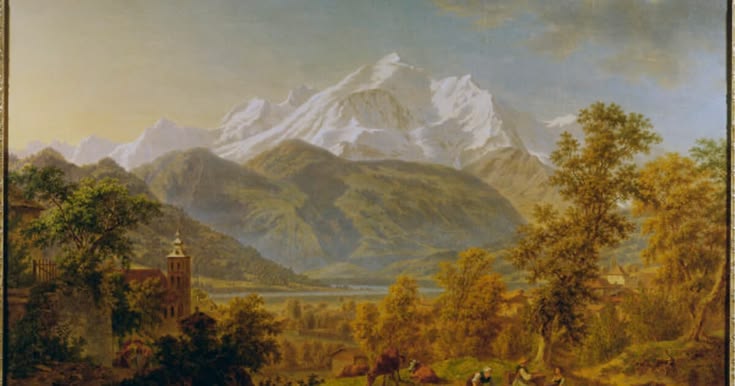
In Romantic-era poetry, Percy Bysshe Shelley’s “Mont Blanc: Lines Written in the Vale of Chamouni” (1816) stands as the ultimate meditation on the romantic sublime. He wrote it during the second generation of English Romanticism alongside Lord Byron and John Keat.  Shelley used the terrifying scale of the Alpine peak to launch questions about perception, human consciousness and the unseen forces governing the cosmos.

While early Romantics like William Wordsworth often found moral harmony and divine comfort in nature, Shelley’s philosophical temperament brought a different energy. For Shelley, nature was not a benevolent mother figure, but an indifferent, boundless, and overwhelming energy. Shelley engages directly with the concept of the Sublime. The sublime is an aesthetic experience where vastness or power induces a feeling of terrifying awe. It makes the human observer feel physically insignificant while mentally elevated. Rather than finding traditional religious comfort in the mountain’s height, Shelley explores his philosophical atheism. He views Mont Blanc as a symbol of Necessity or an impersonal power that governs existence.

Throughout the five-part poem, Shelley constructs a series of striking visual and philosophical wonders. Shelley opens the poem by comparing human thought to a river flowing through a ravine. The “everlasting universe of things” rolls through human perception. Human consciousness is both passive (receiving impressions from the grand landscape) and active (shaping those impressions into meaning).

The everlasting universe of things

Flows through the mind, and rolls its rapid waves…

Looking up at Mont Blanc, Shelley does not describe a peaceful picture-postcard landscape. Rather, he depicts a wild, chaotic realm of ice, rock, and storm. He envisions the mountain as a primordial arena where “the old Earthquake-daemon taught her young / Ruin”. The glaciers are slow-moving “frozen floods” that flatten forests and rocks with silent force. Shelley reflects on what lessons this silent mountain holds for humanity. The mountain possesses a mysterious tongue that teaches a lesson.

To Shelley, Mont Blanc speaks an unspoken truth that can repeal large codes of fraud and woe (i.e., tyrannical dogmas, religious orthodoxies, and political oppression). Nature’s unyielding reality strips away human pretense. The poem reaches its dramatic climax by returning to the relationship between the peak and human thought. Shelley notes that the mountain remains still, snowy, and serene high above human affairs.

He closes with a famous philosophical question:

And what were thou, and earth, and stars, and sea,

If to the human mind’s imaginings

Silence and solitude were vacancy?

 The mountain’s grandeur is real, but its meaning exists because the human imagination is there to perceive it. Without the human mind to process wonder, the immense universe would merely be an empty void.


Similar Posts

  • 6 Foods for better sleep

    If you often stay awake late at night without any reason it is important to know that not getting enough sleep can increase the risk of serious health problems. Poor sleep has been linked to heart disease stroke and other long term illnesses. If you struggle to fall asleep even when you are tired a few simple changes to your diet may help. Some foods contain natural nutrients that support better sleep and may help you fall asleep more easily. •Bananas Bananas are rich in tryptophan an amino acid that helps the body produce melatonin the hormone that controls sleep. They also contain magnesium which helps relax muscles and supports restful sleep. • Warm milk A glass of warm milk before bed is a popular bedtime drink. Milk contains tryptophan which may help the brain produce more melatonin and improve sleep quality. • Honey A spoonful of honey before bedtime may help you sleep better. Honey contains small amounts of tryptophan and its natural sugars may help the body use this amino acid more effectively. • Jalebi Some people believe that eating jalebi before bed can make you sleepy because it raises blood sugar and insulin levels. However there is limited scientific evidence to support this and eating sugary foods at night is generally not recommended as a regular sleep aid. • Cherries Cherries especially tart cherries are a natural source of melatonin. Research suggests that drinking cherry juice may improve sleep quality and help some people sleep longer. • Almonds Almonds are rich in magnesium a mineral that supports healthy sleep and muscle relaxation. Studies suggest that low magnesium levels may contribute to sleep problems. While these foods may support better sleep they are not a cure for chronic insomnia. If you have ongoing sleep problems it is best to speak with a healthcare professional to find the underlying cause.

  • Kids and healthy eating

    Fast food sugary drinks and packaged snacks have become a regular part of many children’s diets. As a result experts say more children are facing problems such as obesity poor nutrition weaker immunity and other  health issues. Health experts believe that instead of completely banning junk food parents should slowly encourage children to make healthier food choices. One of the best ways to do this is by setting a good example.  Children often copy their parents’ habits. When parents eat balanced meals choose fresh fruits and vegetables and enjoy homemade food instead of fast food children are more likely to do the same. Nutrition experts also suggest explaining why healthy food is important. Instead of simply saying “no” to junk food parents should help children understand that healthy meals support growth give them energy improve focus at school and help them stay active. Parents can also involve children in grocery shopping by letting them pick fruits and vegetables or help prepare simple meals. This makes healthy eating more fun and encourages better food choices. Keeping healthy snacks at home is another simple but effective step. Fresh fruit yogurt milk nuts salads boiled corn and healthy sandwiches are much better options than chips cookies or soft drinks. When healthy snacks are easy to find children are more likely to choose them. Experts also recommend limiting junk food instead of banning it completely. If fast food chocolate and sugary drinks are always available at home children will naturally want them more. Saving these treats for special occasions and serving them in small amounts can help create healthier eating habits. Physical activity is just as important as a healthy diet.  Parents should reduce children’s screen time and encourage them to play outside ride bicycles go for walks or take part in sports. Regular exercise improves overall health and can also reduce unhealthy snacking. Experts say that with patience consistency and a positive attitude parents can help children develop healthy eating habits that will benefit their health now and in the future.

  • Three hours with Nawaz Sharif: reflections on a leader looking to the future

    On Friday, I had the opportunity to spend nearly three hours with former Prime Minister and President of the Pakistan Muslim League (Nawaz), Mian Muhammad Nawaz Sharif, at his Jati Umra residence in Raiwind. We offered Jumma prayers together, shared lunch and held an extensive discussion on Pakistan’s political landscape. It was more than a courtesy meeting; it provided a rare opportunity to observe, first-hand, the thinking of a leader who remains deeply involved in shaping the direction of his party and closely following the country’s political developments. The meeting came at a significant moment for the PML-N. Following the party’s recent success in the Azad Jammu and Kashmir elections, there is renewed confidence within its ranks. Nawaz Sharif appeared optimistic, composed and fully focused on the challenges and opportunities that lie ahead. What struck me first was his health and energy. Nawaz Sharif was in excellent spirits, displaying the confidence and composure of a politician who believes his party is firmly back on the front foot. There was no sense of retirement or political detachment. Instead, there was a clear focus on governance, organisation and preparing for the future. The recent PML-N victory in the Azad Kashmir elections has undoubtedly reinforced that confidence. For the party, the result was more than just another electoral success; it was an affirmation that its political message continues to resonate with voters. Nawaz Sharif spoke with satisfaction about the outcome, viewing it as an important milestone in the party’s broader revival. He was equally appreciative of the performance of the Punjab Government under Chief Minister Maryam Nawaz Sharif. In his view, the provincial administration has demonstrated that governance and public service remain the strongest political currency. Whether through infrastructure, public welfare initiatives or administrative reforms, he believes Punjab is once again becoming the party’s showcase of governance. Prime Minister Muhammad Shehbaz Sharif also received praise during our conversation. Nawaz Sharif expressed confidence in his younger brother’s efforts to steer Pakistan towards economic stability, strengthen institutions and improve the country’s international standing during a challenging period. His remarks reflected a leadership that sees continuity and coordination within the party as one of its greatest strengths. Perhaps the most significant observation from the meeting was Nawaz Sharif’s continued command of the PML-N. Despite years away from active frontline politics, he remains the party’s central strategic figure. Senior leaders continue to look towards him for direction, while party workers still regard him as the movement’s principal source of political inspiration. Much has been written about Nawaz Sharif’s return to Pakistan and his re-emergence in national politics. Yet spending time with him offered a clearer picture than any public rally or television appearance could provide. He is not merely observing events from the sidelines; he is actively shaping the party’s direction, evaluating political developments and planning for the future. My own conclusion from this meeting is straightforward. Nawaz Sharif remains fully engaged, firmly in command of the PML-N and focused on leading his party into the next general elections whenever they are held. Whether one agrees with his politics or not, it would be a mistake to underestimate his influence or his determination. Pakistan’s political landscape continues to evolve rapidly. But after spending three hours with Nawaz Sharif on Friday, one thing appears certain: he believes his political journey is entering a new phase, not its final chapter, and he intends to remain at the centre of Pakistan’s political discourse for years to come.

  • Solo travel finding its footing in Pakistan

    The image of travel in Pakistan is changing. At bus terminals in Rawalpindi, at Islamabad International Airport, and on trails in Hunza, a growing number of travellers are moving with just one thing in common — they are alone. Solo travel, once seen as unusual, is now a quiet but visible trend among Pakistanis. Industry data and tour operators say bookings by single travellers have risen steadily over the last two years, driven by social media, remote work, and a desire for independence. For decades, Pakistani travel meant family trips to Murree, Nathiagali, or Swat, or group tours arranged through agencies. That model is shifting. Nevertheless, reasons are practical and personal. Let’s say, no need to coordinate leave or budgets with others, or time to navigate new places on one’s own terms. These days , hostels, cafés, and trekking groups in places like Karimabad and Skardu have become meeting points for solo travellers. However, safety remains the top concern, especially for women. That is pushing both travellers and the industry to adapt. Hotels in major tourist towns now offer female-only dorms. Ride-hailing apps provide trip sharing. Also, the Ministry of Tourism has started listing registered guesthouses and guides on its website. Taking about the top destinations, Domestically, the most popular solo destinations of 2026 are, Hunza, Skardu, and Fairy Meadows for trekking and landscapes, Swat and Kalam for short trips, easier access. And Islamabad and Lahore, for weekend culture trips, history, and food walks. Internationally, Pakistanis traveling alone are choosing Turkey, Malaysia, and Saudi Arabia for Umrah-plus-tourism packages. Portugal and Japan are also rising for first-time solo travellers abroad due to safety and transit systems. But I would say Sri Lanka is the must go. For traveling solo, One of the biggest challenge is price. Single rooms and ‘single supplements’ on tours can add 20-30% to costs. However, to counter this, some operators are launching “solo-friendly” departures — group tours where you get your own room but share activities. To combat this, solo travellers usually travel in shoulder months and spend more on local experiences — guides, food, and home-stays. I am a travelwriter, who travels solo weather traveled domestically or internationally, my advise is basic precautions, let say, safe hotels, air travel, authentic agents and no home stays, since for my travel I only prefer top notch hotels, always get the travel plan from reputable travel agencies, and travel with the guide from company. Also, I avoid night life.

  • Star Anise tea benefits you should know

    Star anise is a popular spice used to add a rich smell and flavor to food.  It contains nutrients such as vitamins A, C and B vitamins, along with minerals like calcium and phosphorus. It can be used whole as a powder or in spice mixes. Some people also make tea from star anise and believe it may offer several health benefits. How to make star Anise tea Add one or two star anise pods to two cups of water. Boil the water until its color changes then cook it for about five more minutes. Strain the tea and drink it while warm. May help with breathing Star anise tea is traditionally used by some people when they have a blocked nose or mild breathing discomfort caused by dust and other particles.  Drinking a warm cup may help provide comfort. Hormonal health Some people also use star anise tea for hormonal balance especially among women. It is sometimes recommended in the morning but people with diabetes should avoid adding sugar. Joint discomfort Star anise tea is also used traditionally for joint pain and discomfort.  However there is not enough strong evidence to consider it a replacement for medical treatment. May soothe burning sensations Some people drink warm star anise tea before bed when they experience burning or discomfort in their hands and feet.  It may provide a soothing effect but more research is needed. Star anise tea should not be considered a cure for any disease. If symptoms are severe frequent or continue for a long time, it is better to consult a doctor.

  • Remembering Maryam Mirzakhani

    When Maryam Mirzakhani approached complex mathematical problems, she did not rush to find immediate solutions. Instead, she unrolled large sheets of paper across her floor, sat down with markers, and drew intricate shapes, loops, and abstract surfaces. A ritual so visual that her young daughter described her rigorous research simply as painting. Behind those quiet, methodical sketches was one of the most brilliant mathematical minds of her generation. A scholar whose work reshaped our understanding of spatial geometry and dynamic systems forever. Born and raised in Tehran, Iran, Mirzakhani’s early childhood ambitions centered on literature rather than numbers. She devoured books and dreamed of writing novels. However, during her high school years, her focus shifted dramatically as she discovered the creative, puzzle-like nature of advanced mathematics. Her extraordinary talent surfaced on the world stage when she represented Iran at the International Mathematical Olympiad, winning gold medals in back-to-back years at ages 17 and 18, including a flawless top score in her second appearance. After completing her undergraduate studies at Sharif University of Technology in Tehran, Mirzakhani moved to the United States to pursue graduate research. At Harvard University, under the mentorship of Fields Medalist Curtis McMullen, she tackled complex problems in theoretical geometry that had baffled researchers for decades. She earned her PhD at age 27, producing a doctoral dissertation so groundbreaking that it yielded multiple papers published in top-tier mathematical journals. Her career progressed rapidly, leading to a full professorship at Stanford University by the age of 31. Mirzakhani’s work specialized in theoretical areas such as hyperbolic geometry, Riemann surfaces, and moduli spaces. She’s expert in abstract concepts that involve understanding the geometry and dynamic possibilities of complex curved surfaces. While her research was firmly rooted in pure mathematics, it held profound implications for theoretical physics, quantum field theory and cryptography. In 2014, at the age of 37, Mirzakhani achieved a historical milestone. She was awarded the Fields Medal, officially known as the International Medal for Outstanding Discoveries in Mathematics. Widely regarded as the equivalent of the Nobel Prize for mathematics, the honor is presented only once every four years to exceptional scholars under 40. Mirzakhani became both the first woman and the first Iranian ever to receive the award since its establishment in 1936. Despite national and international acclaim, Mirzakhani remained famously modest. She often referred to herself as a slow mathematician. She emphasized that true insight comes from patience, resilience, and a willingness to feel lost before finding a breakthrough. To her, mathematics was not about fast calculations, but about deep, enduring understanding. Tragically, her life was cut short. Diagnosed with breast cancer in 2013, she continued her scholarly pursuits while fighting the disease. By 2016, the cancer had spread to her liver and bones. On July 14, 2017, Mirzakhani passed away at Stanford Hospital at the age of 40. Her passing sparked widespread tributes across the globe, with academic institutions, world leaders, and fellow scientists celebrating her contributions. Today, her legacy endures as a testament to human curiosity. Her life is an enduring inspiration for women pursuing careers in science and mathematics worldwide.    

Leave a Reply

Your email address will not be published. Required fields are marked *