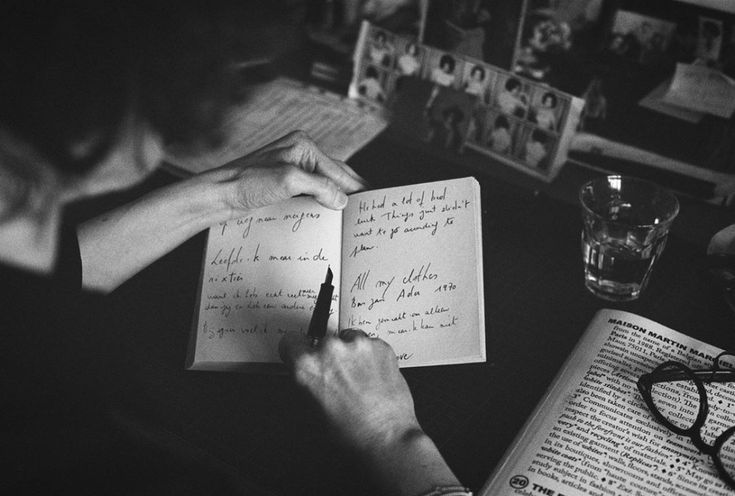
The pure joy of private writing
Recent archival developments in the literary world have reignited a timeless debate about the nature of creation. When the personal archives, diaries, and private notebooks of legendary literary figures are cataloged and opened to the public, readers gain an intimate glimpse into a process entirely free from external expectation.
Raw Honesty
In an era dominated by social media algorithms, content metrics, and immediate digital validation, the contemporary act of writing has become increasingly public. Writers are frequently urged to build personal brands, cultivate audiences before completing a single chapter, and measure the value of their thoughts by engagement metrics. Yet, a look across literary history suggests that forcing self-expression through the filter of public consumption often strips writing of its essential power: raw honesty.
The Freedom of the Unseen Page
When Franz Kafka famously instructed his close friend Max Brod to burn all his unpublished manuscripts and private journals upon his death, he was asserting a radical boundary. Though Brod ultimately defied those wishes giving the world masterpieces like The Trial and The Castle, Kafka’s mandate highlighted a fundamental truth about his relationship with the written word. For Kafka, writing was not a trade, a performance, or a search for acclaim. Rather, it was a urgent, internal necessity. He wrote to process his existential anxiety and negotiate his place in a confusing world.
Revolutionary Contribution to Modern Poetry
Similarly, Emily Dickinson spent her life in relative reclusion in Amherst, Massachusetts, quietly composing over 1,700 poems. She bound them carefully with thread and tucked them away in a wooden chest, largely indifferent to the literary establishment of her era. Freed from the pressure of publisher deadlines, critical reviews, or popular trends, Dickinson invented an entirely original poetic structure. Unconventional in its punctuation, bold in its metaphors, and uncompromising in its vision. she didn’t customise her voice to suit 19th-century publishing standards. That’s her revolutionary contribution to modern poetry is still there.
Why Private Writing Rescues Creativity
Writing for an audience activates self-censorship. When you write exclusively for yourself, the fear of judgment vanishes. This phenomenon allows uncomfortable truths and unrefined ideas to flow onto the page.
Modern culture fixates on output. For instance, the finished book, the polished essay, the published post. Writing privately restores focus to the immediate sensation of thinking on paper. It is transforming the craft from a task into a sanctuary.
A writer’s authentic voice is rarely found by attempting to match market trends. It emerges in the quiet margins of private journals, where syntax and thought patterns develop naturally without external influence.
Reclaiming the Personal Journal in a Public World
Reclaiming the joy of private writing does not require abandoning public work altogether. Instead, it requires establishing a sacred space where performance is forbidden. Writing for an audience of one remains one of the most effective ways to sharpen thought and restore mental clarity.
The enduring fascination with published literary archives proves an intriguing paradox. The writing that captivates us most deeply is often the very writing that was never meant for our eyes. We unlock the true alchemy of the written word by letting go of the need for an audience. A private conversation between the self and the page.