poor diet harms

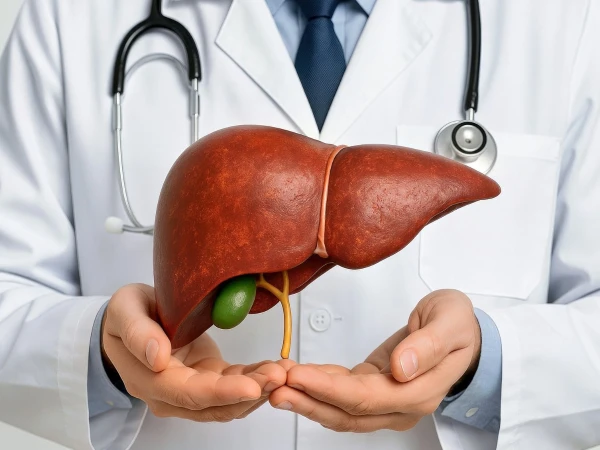
Poor diet harms liver and stomach

Poor eating habits are becoming a major health concern in Pakistan with health experts warning that unhealthy food is contributing to a growing number of illnesses.

According to a global survey around 2 billion people worldwide become sick each year because of poor quality or unhealthy food.

Experts say countries in South Asia, Eastern Europe and parts of Africa are among the most affected.

In Pakistan doctors say unhealthy diets are increasing the risk of several health problems including liver disease stomach disorders and heart disease.

They estimate that about one in five people suffers from liver or stomach related illnesses linked to poor nutrition and unhealthy eating habits.

Health experts also say that many young people are facing health issues at an early age.

Around 70% of young adults reportedly experience back pain or joint pain which may be linked to poor nutrition unhealthy lifestyles lack of physical activity and long hours of sitting.

Dr. Shiraz Malik said the human body needs a balanced supply of nutrients every day to stay healthy.

He explained that natural and fresh foods provide the vitamins minerals proteins and energy the body needs to function properly.

Regularly eating highly processed foods sugary drinks and meals high in unhealthy fats may increase the risk of long term health problems.

Experts recommend including more fruits vegetables whole grains lean proteins and clean drinking water in daily meals.

They also advise reducing the intake of fast food packaged snacks and sugary beverages.

Along with a healthy diet doctors encourage people to stay physically active maintain a healthy weight and get regular medical checkups. These simple lifestyle changes can help lower the risk of many chronic diseases and improve overall health.

Health specialists stress that while poor diet is an important risk factor many diseases are also influenced by genetics physical activity smoking alcohol use infections and environmental factors.

They say improving food quality and adopting healthier daily habits can play an important role in protecting public health and reducing the burden of preventable diseases in Pakistan.

Similar Posts

  • |

    Mill’s “On Liberty” in the era of censorship

    In his 1859 political treatise On Liberty, Victorian philosopher John Stuart Mill issued this timeless warning. The greatest threat to humanity is not monarchical despotism, but the tyranny of the majority enforced through state power. The Harm Principle At the heart of Mill’s philosophy lies the Harm Principle. The radical assertion that authority can only be legitimately exercised over a member of a civilized community against their will to prevent harm to others. Beyond this minimal threshold, individual autonomy over mind, body, and speech must remain absolute. Re-reading Mill today reveals a truth. His warnings are no longer abstract political theory. They provide a precise mirror for contemporary state overreach. This overreach is illustrated by the erosion of civil liberties in Indian-administered Kashmir and the systemic suppression of media outlets like Al Jazeera. The Harm Principle and the Disfranchisement of Kashmir Mill argued that suppressing individual self-determination degrades both the citizen and the state. In Kashmir, the unilateral revocation of constitutional autonomy, prolonged blackouts, and detentions of political leaders represent a case of majoritarian coercion. A state strips millions of their basic political rights under the justification of order or national integration. So, it violates the core of Millian liberty: consent and self-governance. Mill cautioned against treating entire populations as passive subjects incapable of directing their own political destiny. By denying Kashmiris the freedom to assembly, political self-expression, and uninhibited digital communication, state machinery replaces organic democratic engagement with enforced compliance. In Mill’s framework, a government that fears the peaceful political expression of its people reveals the fragility of its own moral authority. Ban on Al Jazeera Mill’s second chapter, dedicated to freedom of thought provides the intellectual critique of state censorship. He argued that silencing an opinion is a unique crime against humanity because it presumes the state possesses infallibility. Even if an perspective is deemed antagonistic, banning it deprives the public of testing truth against error. This principle directly challenges the recent enforcement of the Al Jazeera Law, under which the Israeli government shut down the Qatari broadcaster’s local operations, confiscated equipment, and blocked access to its platforms. Citing national security threats, state authorities effectively declared themselves the sole arbiters of acceptable news coverage. Mill would argue that invoking national security to silence reporting—especially during conflicts where independent oversight is most vital—is a classic instrument of state self-protection, not public safety. When a state decides which facts citizens and the international community are allowed to hear, it undermines the very foundation of a free society. Why Mill Matters Today   On Liberty remains an indispensable framework because it demonstrates that liberty is not a luxury granted by governments, but an essential condition for truth and justice. Whether in the militarized silence enforced upon Kashmir or the legislative bans silencing journalists, the modern state increasingly employs legal mechanisms to enforce conformity. Mill reminds us that a society that trades fundamental liberties for state-defined security ultimately preserves neither.

  • The Geography of Governance

    By Syed Tahir Rashdi  The writer is a Shahdadpur-based contributing columnist, book reviewer, and climate change activist. He holds a BS degree in Pakistan Studies from University of Sindh Pakistan’s debate over new provinces has returned with familiar demands: South Punjab, Bahawalpur, Hazara, Karachi and, periodically, proposals for a more extensive reorganisation of the federation. There are credible arguments behind some of these demands. Population growth, administrative distance, uneven development and the persistence of regional identities have altered the circumstances in which Pakistan’s present provincial arrangement was conceived. Yet the debate tends to proceed from an assumption that deserves greater scrutiny: that creating smaller provinces will, in itself, improve governance. It may. But it may also not. The distinction is important because Pakistan’s principal difficulty has never been simply the size of its administrative units. It has been the weakness, discontinuity and politicisation of the institutions through which those units are governed. This does not make the case for new provinces illegitimate. It does, however, suggest that provincial restructuring should be considered as one component of administrative reform rather than as a substitute for it. Pakistan’s provincial boundaries have never been immutable. The One Unit scheme of 1955 consolidated the western wing into a single province, partly to establish parity between the two wings of the country. It was abolished in 1970, restoring the provinces. The episode remains relevant because it demonstrated the limits of administrative engineering. A territorial arrangement can be imposed constitutionally, but its durability ultimately depends upon political legitimacy. The present debate is considerably more complex. The demand for a South Punjab province contains at least three distinct strands: the historical claim associated with Bahawalpur, the linguistic and cultural politics of Saraiki identity, and the administrative argument that the southern districts have remained distant from the provincial centre in Lahore. There is also the persistent claim of regional economic neglect. These strands should not be conflated. Similarly, the Hazara demand has a strong identity component, while the Karachi question is inseparable from the city’s unusual demographic, economic and political history and the longstanding contest over authority between urban local institutions and the provincial government. The differences matter because different problems require different institutional responses. The Constitution does not make the creation of a new province a matter of political declaration. Article 239 provides a demanding procedure for constitutional amendment, including the approval of the concerned provincial assembly where provincial boundaries are affected. That requirement is not an accidental obstacle. It reflects the logic of federalism: a federation cannot permit the territorial boundaries of one constituent unit to be altered without giving that unit a decisive constitutional voice. The experience of the parliamentary commission on new provinces in 2012 illustrated the complexity of the exercise. Questions of boundaries, resources, representation, administrative structures and constitutional amendments quickly became inseparable from the political question of who would gain or lose influence. That is why the debate deserves to be insulated, as far as possible, from electoral expediency. There is, however, a more fundamental issue that receives considerably less attention. Article 140-A of the Constitution requires provincial governments to establish local government systems and devolve political, administrative and financial responsibility and authority to elected local representatives. This provision goes to the heart of the governance question. A citizen’s encounter with government is rarely with the federal government or even with a provincial assembly. It is with the school, hospital, police station, municipal authority, land office, sanitation service or local administration. Yet local governments in Pakistan have rarely acquired the institutional continuity, fiscal autonomy and political authority envisaged by the Constitution. The result is an unusual form of devolution. The 18th Amendment substantially strengthened the provinces by transferring functions and resources from the federation, but the transfer of authority has often stopped at the provincial level. Islamabad became less dominant. The provinces became stronger. The citizen did not necessarily become more powerful. This is perhaps the most important issue in the new-provinces debate. If a region is suffering because decisions are too distant from its population, the first question should be whether existing institutions can be decentralised before an entirely new tier of government is created. Comparative experience does not provide a universal answer, but it does offer useful cautions. Indonesia’s post-Suharto decentralisation transferred extensive responsibilities to subnational governments. The reform was necessary after decades of centralised rule, but decentralisation itself did not guarantee effective or accountable government. Subsequent reforms had to focus on institutional capacity, fiscal management and local accountability. Nigeria provides another caution. The creation of additional states was partly intended to improve political representation and accommodate regional interests. Yet the country continues to face substantial governance and institutional-capacity problems across its states. The lesson from both cases is not that administrative restructuring is futile. It is that territorial fragmentation and institutional development are different processes. South Africa offers a somewhat different model. Its Constitution explicitly recognises local government as a sphere of government and assigns municipalities constitutional responsibilities relating to democratic participation and service delivery. The significance lies less in the number of provinces than in the distribution of authority among the different levels of government. Switzerland’s federal tradition similarly rests on substantial cantonal and communal autonomy. Its relevance to Pakistan is not institutional imitation but a principle: government functions should be located at the level at which they can be performed most effectively, while higher levels retain responsibilities that require wider coordination. There is therefore no universally correct number of provinces. The appropriate administrative scale depends upon geography, population, fiscal capacity, the nature of the public service and, above all, institutional competence. Pakistan’s governance difficulties are familiar enough to require little elaboration: weak rule of law, politicisation of public institutions, patronage, corruption, uneven accountability, administrative discontinuity and the recurrent weakening of local government. None of these problems disappears when a provincial boundary is moved. A new province may shorten the administrative distance between a region and its provincial capital. It does not automatically make the police independent,

  • Unbearable heat in Turbat

    Hani Rasheed Through the columns of your esteemed newspaper, I wish to highlight the unbearable heat in Turbat. Every summer, temperatures rise to dangerous levels, making life extremely difficult for residents. Students, labourers, elderly people, and patients suffer the most. Long hours of load shedding and water shortages make the situation even more unbearable. The authorities should take urgent measures to ensure an uninterrupted electricity supply, improve water availability, and plant more trees to reduce the effects of extreme heat. Public awareness about staying safe during heatwaves should also be promoted. The people of Turbat deserve timely action before this severe weather causes more health problems. I hope the concerned authorities will address this issue without delay

  • The Unspoken Pain: A Lexicon of Shame – Infertility in Pashtun Society

    By Dr.Sajjad Ali A suffering pervades the walled villages of Khyber Pakhtunkhwa, and the privacy of the homes in the city, in a language of suffering all distinct. The language of infertility is not the one used in medical textbooks but it is the one that speaks to life and death in Pashtun society. Being a childless woman is being defined by a lexicon of failure here, a failure that runs against the very ethos of Pashtunwali, where a person’s nasl (lineage) and naam (name) is everything. The condition is identical, but the language employed to use it as a weapon against women and men are very different, very vicious. It is a public indictment to her; a silent, emasculating damnation to him. The Woman’s Cross: The Public Indictment The worthiness of a Pashtun woman is arbitrarily squeezed into her reproductive capability. When she drops the one perceived duty, she is not infertile, she is cursed, useless and dangerous. The attack starts with an endless list of names and peghoor (tease). She is a banjh (barren), the most common and heart-breaking epithet. She is a shana (dry, unfruitful tree that bears no fruit). She is khaanch (empty), a hollow vessel with no substance. The elders of the family complain, “Mata plar na laree, khaanch de” (She hasn’t borne him a son, she is empty). Her body is compared to the barren land of Sheera zameena (salty, infertile land) which nothing can grow, or shara (fallow land). The childless woman or the one whose children have died is generally known as a kheeri, which translates as woman of ill omen, bearer of misfortune. She is slightly banned from being present at weddings or cradles (gharay). When a child is sick after the visit, people begin muttering, “Da kheeri da las na ye bimar sho” (After the touch of the kheeri the child fell sick). This spiritual banishment is so devastating! If her husband returns to marriage, or if the family goes bankrupt, she is considered a shamat (a bad omen, a curse to the family) and a manhoos (inauspicious, unlucky). The psychological take-home message is no less horrifying: she is not only failing to give birth; she is an active, evil agent of birthlessness and death and decay. She’s a curse for their existence. The peghoor is available in a dramatic fashion. A mother-in-law would see a hen with chicks and will loudly cry out, “Da charkha ham bachy kawal, khu da adamzad mung na shwe.” (Even this hen hatched chicks, but this human gave us nothing). Neighbours grumble, ‘Khudai da qahar da, cha ta kho pukha na we (She is God’s wrath, she hasn’t ripened for anybody—to mean that she has not become a mother). A cruel comic scene that is often acted out: The guest exclaims the house is a paradise, and the mother-in-law replies, “Kor kho jannat de, khu khaanch de, khoonda raghlay na de” [The house is a paradise, but it is empty, no fragrance has come into it]—singing about the fragrance of a child which reminds her of something she failed to do with her daughter-in-law. This puts her in an economic hostage position. She is a servile slave to make up for her “defect” because of the ever-present unspoken danger of a balka (co-wife). All the money is spent on her own “cure,” which includes dangerous dai (traditional birth attendant) concoctions, expensive visits to taweez-keeping (piir sahib) and futile taweez (amulet) usage. She will wear a tawiz laced with prayers for fertility and she will be made to drink water that has been washed with a dranzay (a special supplication)—her husband’s diagnosis will not even be suspected. This quest devours the family’s resources, everything aimed at the woman who is in a desperate struggle to remain not the family’s shamat. The Man’s Secret: The Silent Emasculation The man feels that the lack of producing babies is not something he has failed to do biologically, but something he has failed to do as a man. He can’t be brought into pity, because if he is, he’s acknowledging that he lost nang (honour). The words he has to say, the words he is not allowed to say, the words he can’t say at all: his torment is a poison that is surrounded by a wall of aggressive denial, but is intended to un-man him. If he is unable to generate a zo-ye (a son), then he is no longer a sar-ye (a man, a leader). His name is a na-mard, the worst of all names, that of a non-man. He is a susra—an utterly impotent, weakling man, a term of maximum contempt. A khassya (castrated bull, eunuch), who has no power and virility. He is a namardanz (an impotent creature). A popular bit of vicious poetry is: “Dwa kalah ye we-weted, khu goly ye na kholay shwe” (“He tried twice, but not a bud was able to blossom for him”, a poetic and mean way of saying that he was unable to start life. His true trial is in the hujra (man’s assembly). The taunt is never a literal arrow, but an arrow of some sort. A story will be told: “Da kala de, cha tofang walwela, khu dasy nese wa, che laande khassia we” (“There’s a man who wields a big rifle, and makes a lot of noise, but inside, he’s a eunuch”). They all laugh, the childless man is forced to laugh loudest, and the white-hot shame is his. The tale is best told in a popular social media comic strip that shows a doctor showing a semen analysis report to a furiously upset husband with a nervous wife looking on: Panel 1: A doctor shows a semen analysis report to a furious-looking husband, with his wife sitting nervously. The Doctor says, “The report reads: azoospermia.The Doctor says, “The report reads azoospermia. Panel 2: A huge, broken speech bubble bursts out of the husband’s mouth: “Tor! Tor! Sta da peghalay!” (“Lies! “It’s your slander!”)

  • Breakfast leads to better food choices

    Breakfast is often called the most important meal of the day and a new study supports that idea. Researchers at the University of Texas found that eating breakfast can help people make healthier food choices for the rest of the day. The study included 128 young adults who usually skipped breakfast. They were divided into three groups. One group continued to skip breakfast the second group ate breakfast with 15 grams of protein and the third group had breakfast with 30 grams of protein. After breakfast all participants were free to eat whatever they wanted throughout the day. The researchers found that all three groups consumed about the same number of calories around 2,300 calories per day. However there was one important difference. People who ate breakfast consumed more healthy nutrients including fiber, iron zinc and choline. Those who skipped breakfast were more likely to choose unhealthy foods and got lower amounts of these important nutrients. The study also found that people who ate a high-protein breakfast consumed more protein iron and choline throughout the day than those who had only 15 grams of protein. In addition both breakfast groups ate fewer sugary foods than those who skipped breakfast. Researchers said that eating less sugary and high fat food may help lower the risk of several long term health problems.

  • Surfing dogs impress crowds

    Dogs of all sizes took to the waves at the annual World Dog Surfing Championship in the United States, impressing crowds with their surfing skills. The event was held on Saturday at the beach in Pacifica about 22 kilometers south of San Francisco California. Hundreds of spectators gathered to watch dogs from different breeds ride the waves on surfboards. The competition featured everything from small spaniels to large Labrador retrievers. Judges scored each dog based on how long it stayed on the surfboard the size of the wave, and how confidently it surfed. Now in its 10th year the championship also included a pet adoption campaign and fundraising activities to support local animal welfare groups. Wearing colorful life jackets the dogs were guided onto the waves by their human partners. As the dogs successfully surfed toward the shore the crowd cheered and applauded each ride. One participant Sophia Siedlowski from Huntington Beach said she first placed her Miniature Pinscher, Rusty, on a surfboard just to take photos when he was a puppy. To her surprise he refused to get off the board. She later let Rusty ride a small wave and he successfully surfed to shore amazing everyone and beginning his surfing journey.

Leave a Reply

Your email address will not be published. Required fields are marked *