easy ways reduce

Easy ways to reduce belly fat

A large belly can affect your appearance but extra body fat can also increase the risk of several health problems. Health experts say that reducing belly fat requires healthy eating regular exercise enough sleep and limiting sugary foods and fast food.

Making these habits part of your daily routine can support healthy weight management.

Exercise regularly

Getting at least 30 minutes of physical activity each day may help with weight control and reducing overall body fat. Walking cycling jogging and other forms of exercise can be included in your daily routine.

Good quality sleep is also important. Poor or irregular sleep can make it harder to maintain a healthy weight.

Why belly fat can be a concern

Extra fat around the stomach is not only a cosmetic issue. Some of it can build up around internal organs.  Higher levels of abdominal fat have been linked with an increased risk of health problems such as heart disease and  type 2 diabetes.

A traditional herbal mix

Some people also try traditional home remedies when they want to lose weight.  One commonly used mixture contains several herbs and spices including:

•Dry ginger

•Mint

•Black seed

•Ajwain

•Black cumin

•Fennel seeds

•Small cardamom

How it prepared

The ingredients are usually ground into a powder and stored in a clean dry jar.  A small amount is traditionally taken after meals sometimes with a warm herbal drink.

However there is not enough scientific evidence to consider this mixture a proven treatment for belly fat or weight loss.  Herbal ingredients can also affect some people differently or interact with medicines.

It is better to speak with a doctor or qualified health professional before using such remedies regularly.

Healthy habits matter most

There is no magic drink or home remedy that can specifically burn belly fat.  The most reliable approach is to maintain a healthy calorie balance eat nutritious foods stay physically active get enough sleep and follow these habits consistently.

Remember reducing overall body fat takes time so focus on healthy and steady progress rather than quick results.
Similar Posts

  • Chickenpox cases rise in Gaza

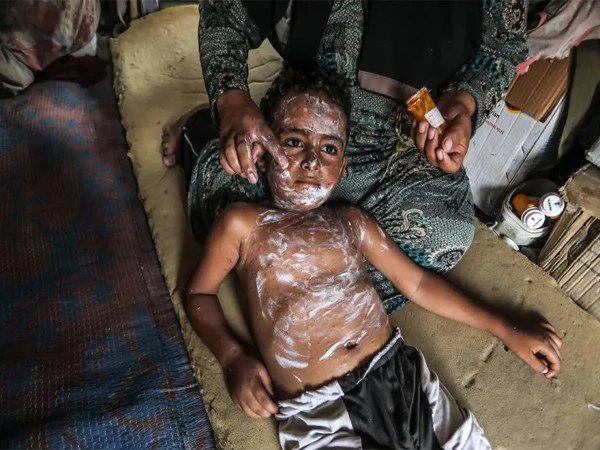
    The United Nations has warned that chickenpox cases are increasing among displaced children in Gaza. Around 9,300 cases have been reported over the past two weeks with more than half recorded in Khan Younis. According to the UN Office for the Coordination of Humanitarian Affairs (OCHA) overcrowded displacement camps piles of garbage limited access to clean water and damaged sewage systems are creating ideal conditions for infectious diseases to spread. As a result chickenpox is becoming a serious public health concern. The UN said respiratory illnesses and skin diseases remain the most common health problems in Gaza. Waterborne diseases are also increasing especially in the Khan Younis area due to poor sanitation and contaminated water. Last week alone more than 18,000 new cases of skin-related illnesses including chickenpox external parasitic skin infections and impetigo were reported. The report also said Gaza’s healthcare system has been badly damaged by the ongoing war. Many hospitals and medical facilities have been destroyed or damaged while shortages of medicines fuel and medical supplies continue to affect healthcare services. According to the Palestinian Ministry of Health, since the war began more than 73,250 Palestinians have been killed and 173,751 injured. The ministry also said that around 90% of Gaza’s infrastructure has been damaged or completely destroyed.

  • Women’s heart attack signs often missed

    A heart attack is a serious medical emergency that can be life threatening.  It usually happens when the heart does not receive enough oxygen because blood flow to the heart is blocked. Doctors say that getting treatment quickly is very important.  The longer a heart attack goes untreated the more damage it can cause to the heart muscle making recovery more difficult. According to health experts most heart attacks occur when a blocked artery stops oxygen rich blood from reaching the heart. Without enough oxygen parts of the heart muscle begin to weaken and may become permanently damaged. Doctors also warn that heart attack symptoms in women are often less obvious than in men. Instead of severe chest pain women may experience unusual tiredness shortness of breath nausea dizziness pain in the back neck jaw or shoulders or mild chest discomfort. Because these symptoms can be mistaken for other health problems women may delay seeking medical care increasing the risk of serious complications. Experts advise anyone experiencing possible heart attack symptoms to seek emergency medical help immediately as early treatment can save lives and reduce damage to the heart.

  • | |

    Greek epic poetry finds a home in Irish literature

    There is an intimacy in the way Irish writers engage with classical mythology including epic poetry. The Odyssey predates Ireland’s earliest written epic, Táin Bó Cúailnge (The Cattle Raid of Cooley), by nearly 1,400 years. The distance in time and geography vanishes the moment an Irish poet puts pen to paper. Universal Image of The Weary Traveler In her modern translation of The Odyssey, classicist Emily Wilson frames Homer’s epic through a deeply human lens. She writes of an exhausted wanderer standing outside a home. A figure who has been displaced and lost for decades. That universal image of the weary traveler searching for home is precisely why Homer’s writing has found such a permanent resonance in Ireland’s literary canon. Across generations, Ireland’s greatest literary minds have treated Homer as a living contemporary. William Butler Yeats, Patrick Kavanagh, and Nobel laureate Seamus Heaney all drew heavily on Homeric motifs to articulate the Irish experience. For these writers, the themes of exiled wanderers, domestic longing, political strife, and tragic return were not abstract concepts from a bygone Mediterranean era. They mirrored the realities of Irish history, rural life, and national identity. Seamus Heaney Seamus Heaney’s engagement with classical literature was particularly profound. Heaney frequently used ancient myths to process modern conflict, finding in Greek drama and epic poetry a framework to speak about political violence, loss, and reconciliation during the Troubles in Northern Ireland. By mapping Homeric echoes onto the Irish landscape, Heaney showed that the struggles of Ithaca were not so different from those of Derry or Ulster. To Heaney and his peers, classical antiquity offered a universal mirror through which local grief and local beauty could be understood. Patrick Kavanagh Similarly, Patrick Kavanagh famously elevated the quiet, local struggles of rural Monaghan by comparing them to the epic siege of Troy, insisting that the everyday life of ordinary people contains just as much drama and dignity as the ancient sagas. Meanwhile, W.B. Yeats wove Homeric imagery directly into the fabric of the Irish Literary Revival, bridging Ireland’s Gaelic heritage with classical antiquity to forge a distinct national identity. Ireland’s Relationship with The Odyssey What makes Ireland’s relationship with The Odyssey so enduring is this sense of shared cultural DNA. Both traditions belong to storytelling cultures rooted in oral performance, mythic memory, and a deep reverence for language. Homer’s tales of displaced heroes, lingering grief, and ultimate return resonate naturally within an island nation shaped by exile, migration, and the constant search for home. Ultimately, the literary bridge connecting Homer to Heaney proves that timeless stories do not belong to a single era or place. As long as readers recognize the tired wanderer standing at the door, The Odyssey will continue to find a home in Irish literature. The Literary Parallel Homer’s The Odyssey predates Ireland’s national epic, Táin Bó Cúailnge, by roughly 14 centuries, yet their thematic overlap remains seamless. Prominent Irish authors including Seamus Heaney, W.B. Yeats, and Patrick Kavanagh frequently adapted Homeric themes into their modern works. Emily Wilson’s modern translation highlights themes of exile and displacement, which reflect Ireland’s history of migration, political conflict, and domestic longing.

  • |

    Creative expression as survival in times of crisis

    In times of severe military occupation, state violence, and political trauma, art and literature undergo a fundamental transformation. They shift from aesthetic expression to vital tools for survival, record-keeping, and resistance. When conventional channels of news, speech, and movement are heavily restricted or censored, art and literature fulfill critical functions within a society. Documenting Counter-Narratives and Resisting Erasure In occupied zones, official narratives often frame political conflict using terms like normalcy or integration. They sanitize structural violence and human suffering. Kashmiri writers, poets, and essayists use narrative to preserve collective memory against state-enforced amnesia. Through poetry, fiction, and memoirs, literature captures the psychological reality of curfews, enforced disappearances, communication blackouts. It reminds of the loss of autonomy, rendering the lived experience of civilians indelible. Fine arts, illustration, and graphic art record incidents and emotional states that photojournalism or state-approved media often cannot access or transmit.  Processing Collective and Intergenerational Trauma Art creates a necessary intellectual and emotional container for a traumatized populace. Concepts such as unheimlich (the uncanny, or feeling un-homed in one’s own land) or grief over exile and displacement find structural expression through creative metaphors. Poetic forms allow writers to articulate loss, mourning, and fear in ways that transcend direct prose. The work of iconic Kashmiri poets such as the late Agha Shahid Ali, whose poetry continues to resonate. It demonstrates how verse can turn localized grief into a universal cry for human dignity. Artists frequently turn to raw mediums like paint, installation, and physical textiles to project the interiority of living under siege, using symbolic motifs like barren land, barbed wire, cages, or domestic objects disrupted by violence. Evading Censorship Through Metaphor and Allegory When direct political discourse leads to state surveillance, detentions, or legal suppression, creative expression relies on metaphor, symbolism, and myth. Playwrights and novelists weave political critiques into historical, mythological, or surreal settings, allowing themes of oppression, tyranny, and liberation to be discussed safely. On the ground, quick visual mediums like graffiti, posters, and digital art become decentralized tools. The mediums act for mass communication and solidarity, circulating rapidly across networks even during communication rollbacks.  Transcending Boundaries and Building Global Solidarity Art and literature serve onnect the isolated region to the global diaspora and international human rights communities. On memorial dates like August 5 (observed as Youm-e-Istehsal or Black Day by Kashmiris and solidarity groups worldwide), exhibitions, literary readings, poster competitions, and performance art allow communities across the world to bear witness to the ongoing struggle. Art transforms passive sympathy into active political consciousness. It forces the global audiences to confront physical realities of occupation beyond distant headlines. In times of intense crisis, art does not exist as an escape from reality. Rather, it becomes the definitive site where human dignity, historical truth, and resistance are actively preserved.  

  • Use rosemary in moderation

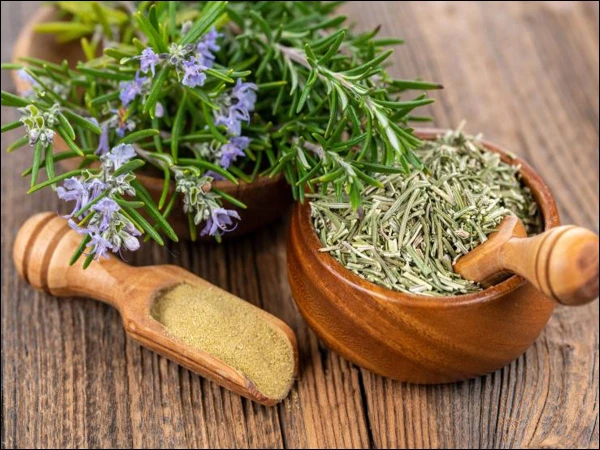
    Rosemary is a popular herb used to add a fresh and pleasant aroma to food. But it is more than just a kitchen ingredient.  This evergreen herb comes from the Mediterranean region and belongs to the mint family.  It is commonly used as dried leaves or in powdered form. Rosemary contains nutrients such as iron calcium and vitamin B6. It has also been used for centuries because of its possible health benefits. Modern research has explored how its natural compounds may affect the body. Rich in Antioxidants Rosemary contains antioxidants and anti-inflammatory compounds that may help protect the body from harmful free radicals.  These compounds may also support the immune system and healthy blood circulation. May support digestion rosemary has traditionally been used to help with digestive problems such as indigestion. In Europe it has been used for this purpose for many years and Germany’s Commission E has recognized its traditional use for digestive discomfort. May help focus and mood The smell of rosemary may also have an effect on mental performance. Research published in Therapeutic Advances in Psychopharmacology found that rosemary aroma was linked with better attention mental performance speed accuracy and mood. Possible brain benefits Rosemary contains a natural compound called carnosic acid.  Scientists are studying this compound because it may help protect brain cells from damage caused by free radicals. This is one reason rosemary is being researched for its possible role in brain and nerve health. What about Cancer? Some laboratory studies have explored rosemary extracts and their possible anti tumor effects.  One study found that a rosemary extract slowed the growth of human leukemia cells in laboratory conditions. Other research has also looked at its anti inflammatory and anti-tumor properties. However these findings do not mean that rosemary can treat or cure cancer. More research is needed to understand its effects in humans. Use it in moderation Rosemary is generally safe when used in normal amounts as a food ingredient.  However taking very large amounts may cause harmful effects including vomiting and other serious problems. For this reason rosemary is best used in moderate amounts. If you plan to take rosemary as a supplement or use it for a specific health purpose it is better to speak with a healthcare professional first.

  • Fenugreek seeds for healthier hair

    Many common kitchen ingredients can be useful for beauty and self care and fenugreek seeds are one of them.  They are often used in home remedies to help keep hair healthy and strong. Fenugreek seeds contain nutrients such as protein, iron and other compounds that may support hair and scalp health.  They can help nourish dry hair strengthen the roots and make hair look softer and shinier. Here are some simple ways to use fenugreek seeds for hair care. For dry hair Fenugreek can help add moisture to dry and dull hair.  Mix one tablespoon of ground fenugreek with two to three tablespoons of warm coconut oil.  Apply it to your hair after shampooing leave it for about 30 minutes, and then wash it out. For stronger hair Soak two tablespoons of fenugreek seeds overnight and blend them into a smooth paste.  Apply the paste from the roots to the ends before shampooing. This can help nourish weak and brittle hair. For dandruff Fenugreek may also help keep the scalp clean and reduce dandruff.  Mix three tablespoons of soaked fenugreek with half a teaspoon of lemon juice. Apply the mixture to your scalp leave it for around 15 minutes and then wash your hair. For shinier hair You can also use fenugreek water as a final hair rinse. Strain the water from soaked fenugreek seeds and pour it over your hair after washing. It can leave dry and dull hair feeling softer and looking shinier.

Leave a Reply

Your email address will not be published. Required fields are marked *