punjab announces rs60m

Punjab announces Rs60m scholarships for 500 students

Lahore – Scholarships worth more than Rs60 million have been announced for 500 students with students from Sindh and Khyber Pakhtunkhwa also benefiting from the scholarship program.

According to details, Punjab Education Minister Rana Sikandar Hayat has arrived in Skardu with a scholarship initiative from the Punjab government for students of Gilgit-Baltistan.

The Punjab Education Minister will distribute scholarships worth more than Rs60 million among around 500 students from seven educational institutions in Gilgit-Baltistan at a ceremony tomorrow.

Speaking to the media, Rana Sikandar Hayat said that the Punjab government does not believe in any kind of discrimination in education. He said Punjab Chief Minister Maryam Nawaz Sharif believes in providing equal educational opportunities to young people from all provinces.

He said that under the Chief Minister Punjab’s Honhaar Scholarship Scheme, quotas have been allocated for students from all provinces and students from Sindh and Khyber Pakhtunkhwa are currently benefiting from the program.

The provincial education minister announced that he would visit Azad Kashmir within the next few days to provide scholarships to its students as well. He said that every promise made by Punjab Chief Minister Maryam Nawaz to the youth of Azad Kashmir would be fulfilled.

Similar Posts

  • | | |

    PM Shehbaz, Kuwaiti FM discuss regional peace, bil…

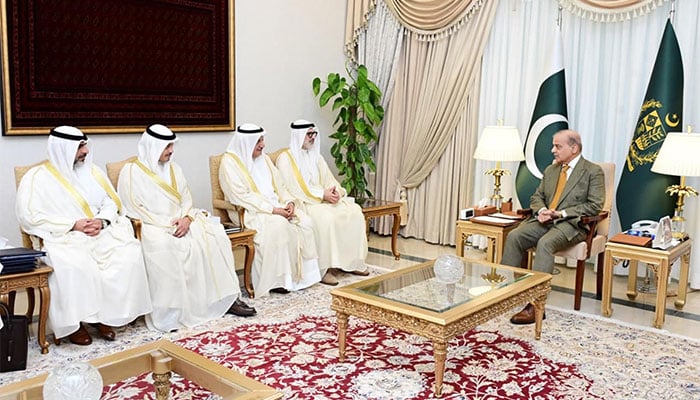
    Prime Minister Shehbaz Sharif met Kuwaiti Foreign Minister Sheikh Jarrah Jaber Al-Ahmad Al-Sabah in Islamabad on Wednesday. The meeting focused on Pakistan-Kuwait relations, regional developments and ways to expand cooperation between the two countries. Deputy Prime Minister and Foreign Minister Ishaq Dar also attended the meeting. Federal ministers for defence, commerce, national food security, communications, maritime affairs and petroleum were present. Advisers to the prime minister also joined the discussions. Prime Minister Shehbaz conveyed his best wishes to Kuwaiti Emir Sheikh Meshal Al-Ahmad Al-Jaber Al-Sabah and Crown Prince Sheikh Sabah Al-Khaled. He said Pakistan and Kuwait shared close and brotherly relations. The prime minister said the relationship was built on shared values, mutual trust and longstanding ties. He added that both countries had supported each other during difficult times. The regional situation was a major part of the discussion. Shehbaz reaffirmed Pakistan’s solidarity with Kuwait’s leadership and people. He strongly condemned attacks on Kuwait and other friendly Gulf countries during the ongoing regional conflict. He said Pakistan stood with its brotherly Gulf partners during the challenging situation. Shehbaz said Pakistan remained committed to promoting peace and stability in the region. He said Islamabad was playing the role of an honest and sincere mediator and facilitator in efforts to ease tensions. The prime minister stressed the importance of dialogue and diplomacy. He said peaceful engagement was essential for resolving regional disputes and preventing further escalation. The two sides also reviewed the progress in Pakistan-Kuwait relations. Shehbaz expressed satisfaction with the growing cooperation between the two countries. He called for further expansion of bilateral ties in key economic and strategic areas. These include trade, investment, energy, agriculture and information technology. Cooperation in maritime affairs and human resource development was also discussed. The prime minister said stronger economic links could create new opportunities for both countries. Shehbaz thanked the Kuwaiti government for its hospitality towards the Pakistani community. He also praised the contribution of Pakistani citizens to Kuwait’s social and economic development. The Kuwaiti foreign minister conveyed the best wishes of Kuwait’s leadership to Prime Minister Shehbaz. He expressed his country’s desire to strengthen cooperation with Pakistan in areas of mutual interest. The minister appreciated Pakistan’s efforts to promote dialogue and diplomacy in response to the regional crisis. He also thanked Pakistan’s leadership and people for their continued support for Kuwait during difficult circumstances. Both sides stressed the importance of regular consultations. They agreed that closer communication would help further strengthen bilateral relations. Pakistan and Kuwait also agreed to facilitate high-level exchanges in the near future. Such visits are expected to improve coordination and expand cooperation between the two countries.

  • | | |

    PM Shehbaz’s dialogue offer remains open for PTI

    ISLAMABAD: Parliamentary Affairs Minister Tariq Fazal Chaudhry has urged Pakistan Tehreek-e-Insaf (PTI) to engage in dialogue with the government, saying Prime Minister Shehbaz Sharif’s invitation for talks remains on the table. Speaking in the Senate, Chaudhry said the government was ready to hold discussions with the opposition if PTI was serious about negotiations. He said opposition leaders could meet the prime minister or raise the matter in parliament. He also suggested that the opposition leader in the Senate could hold discussions with PML-N Senator Rana Sanaullah. Later, Chaudhry, Sanaullah and Law Minister Azam Nazeer Tarar met Senate Opposition Leader Allama Raja Nasir Abbas and National Assembly Opposition Leader Mahmood Khan Achakzai at Parliament House. Sanaullah said the meeting was linked to a letter written by Achakzai to Prime Minister Shehbaz. He said the government representatives had met the opposition leaders to discuss the prime minister’s response. The government and PTI have remained politically divided since the 2024 general elections. Disputes between the two sides have included demands for investigations into political protests, as well as issues concerning PTI founder Imran Khan’s health and continued detention. Meanwhile, the Pakistan Peoples Party (PPP) has also agreed to intensify political contacts with opposition parties. A senior PPP delegation is scheduled to meet Achakzai and Allama Nasir Abbas at the Opposition Leader’s Chamber in Parliament House on Tuesday. The meeting is expected to focus on parliamentary affairs and strengthening political engagement between the government-aligned PPP and opposition leadership. PPP leaders Sherry Rehman, Raja Pervez Ashraf, Saleem Mandviwalla and Naveed Qamar are expected to attend. Naveed Qamar said the talks would focus on strengthening parliament, improving coordination and reinforcing the role of parliamentary committees.

  • | |

    Pakistan backs Saudi Arabia’s right to self-defe…

    ISLAMABAD: Pakistan has strongly condemned the attack on Saudi Arabia, reaffirming that every sovereign nation has the right to defend itself under international law. Islamabad stated that Saudi Arabia’s military response in Iraq should be viewed within the framework of legitimate self-defence. Speaking at the weekly media briefing, Foreign Office spokesperson Tahir Andrabi said Article 51 of the United Nations Charter grants states the inherent right to take necessary measures to protect their sovereignty and security against armed attacks. He said Saudi Arabia’s actions should be understood in that legal context. The spokesperson stressed that Pakistan remains committed to promoting peace and stability in the Middle East and urged all parties to exercise restraint to prevent further escalation of regional tensions. Andrabi also said Pakistan supports the effective implementation of the Islamabad Memorandum of Understanding (MoU) involving the United States and Iran, adding that diplomatic efforts are continuing to reduce tensions and encourage dialogue among the concerned parties. During the briefing, he welcomed the ratification of a defence cooperation agreement between Pakistan and Kuwait, describing it as a positive step toward strengthening bilateral ties. He noted that Pakistan also maintains close defence cooperation with Jordan and Bahrain and continues to expand collaboration in multiple sectors. He added that if any new defence agreements are finalised with Jordan or Bahrain in the future, the government will inform the public and the media at the appropriate time.

  • DG NAB Lahore hears public complaints at monthly open court

    Lahore – Director General NAB Lahore, Mirza Faran Baig chaired the monthly Open Court (Khuli Kachehri) where he met members of the public, listened to their concerns firsthand and directed the relevant officers to ensure the timely resolution of complaints. A total of 1,200 people attended the open court, the majority of whom were victims of various housing societies and fraud-related cases. More than 350 affectees of Al Jalil Garden and Al Noor Orchard also participated in a special session held during the event where they were given a detailed briefing on the latest progress in their cases. DG NAB Lahore informed the participants about the ongoing investigations, legal proceedings and efforts being made to restore their legitimate rights. Most of the other complaints received were related to Sarmayadari, Prime Zone, Future Vision, Mid City, Khayaban-e-Amin, Palm Vista, Gatwala Faisalabad, Omega Residencia, Metro City, Shadman Enclave, Century Venture 1, Elite Town, New Lahore City and Pak Arab Housing Scheme. The affectees appreciated NAB Lahore’s transparent communication and expressed confidence in the institution’s efforts. During the open court, DG NAB Lahore accompanied by senior officers reviewed each complaint in detail and issued directives to the relevant departments for prompt and effective action. In line with the Chairman NAB’s vision of combating corruption and protecting the public from exploitation, DG NAB Lahore Mirza Faran Baig reaffirmed the Bureau’s commitment to taking strict legal action against individuals involved in corruption and defrauding the public, in accordance with the law.

  • |

    Oil prices fall as US-Iran pause raises hopes for Hormuz talks

    Global oil prices dropped sharply on Monday after signs of easing tensions between the United States and Iran raised hopes that negotiations could resume over the Strait of Hormuz, one of the world’s most important oil shipping routes. Investors welcomed the temporary pause in military action, believing it could reduce the risk of further disruptions to global energy supplies. The decline came after both countries appeared to step back from recent hostilities. Following nearly two weeks of military exchanges, the United States did not carry out additional strikes over the weekend. President Donald Trump’s envoy to the United Nations said Washington was allowing diplomacy a chance by giving negotiations more time. Iran also announced that it would halt retaliatory attacks against neighboring countries, offering relief to Gulf shipping companies and international energy markets. The latest pause has renewed hopes that the fragile ceasefire between the two sides could be restored after breaking down earlier this month. The recent conflict began after Iran targeted vessels passing through the Strait of Hormuz, leading to a rapid escalation in tensions with the United States. The confrontation later spread beyond the Gulf, with Iran backed Houthi fighters in Yemen attacking Saudi ships near the Bab al Mandeb Strait, another critical maritime route linking the Red Sea with global trade networks. The fighting caused oil prices to surge, with Brent crude climbing above $100 per barrel for the first time since May. However, reports that shipping traffic through the Red Sea had continued without major disruption, combined with the latest diplomatic developments, encouraged traders to reduce their concerns over possible supply shortages. Iranian officials said discussions with Oman had made progress regarding the future management of the Strait of Hormuz. According to Foreign Ministry spokesman Esmaeil Baqaei, the talks focused on establishing practical measures to ensure the safe movement of commercial vessels while respecting the sovereignty of countries bordering the strategic waterway. There were also reports that Pakistan was exploring efforts to revive peace talks between Washington and Tehran with support from China. Although no formal agreement has been announced, the diplomatic activity has strengthened expectations that both sides may return to negotiations instead of further military escalation. As a result, both major oil benchmarks recorded significant losses. Brent crude fell by more than seven percent during trading before recovering slightly, while West Texas Intermediate also declined sharply. Analysts said the market viewed the latest developments as a positive signal that reduced the immediate threat to global oil supplies. Lower oil prices also eased fears that renewed energy inflation could force central banks to raise interest rates again. This helped lift many stock markets across Asia, although technology shares continued to face pressure because of concerns about the long term returns on heavy investment in artificial intelligence. Stock markets in Hong Kong, Shanghai, Sydney, Wellington, Manila, and Tokyo posted gains, while Seoul, Taipei, Singapore, and Jakarta closed lower. Investors remained cautious ahead of earnings reports from major technology companies including Samsung, SK hynix, Microsoft, Meta, Apple, and Amazon, with particular attention on future spending plans and investment in artificial intelligence. Market participants are also awaiting this week’s US Federal Reserve policy meeting. While expectations for another interest rate increase have grown slightly following recent geopolitical tensions, most analysts believe the central bank will leave rates unchanged for now. Even so, some economists continue to predict additional tightening before the end of the year if inflation remains above target. The combination of easing tensions in the Middle East and hopes for renewed diplomacy has provided financial markets with some relief, though investors remain alert to any developments that could quickly reverse the recent decline in oil prices.

  • | |

    Doctor suspended after performing laparoscopic sur…

    Islamabad: The Medical Tribunal has upheld a one year suspension of Dr Irfan Ashraf after finding that he performed laparoscopic surgery despite not completing the required training for independent laparoscopic procedures and operated at a healthcare facility that lacked an Intensive Care Unit and other essential facilities needed to deal with serious complications. The Tribunal also upheld a Rs100,000 fine and a ban preventing Dr Irfan Ashraf from performing laparoscopic procedures until he completes proper certified training. The judgment, announced on July 8, 2026, came in an appeal filed by Muhammad Zahid Niaz, whose father Niaz Ahmad died after a chain of medical treatment that began with laparoscopic surgery at Saleem Polyclinic in Mian Channu on December 31, 2016. The case took a serious turn when the disciplinary inquiry examined the actual training record of Dr Irfan Ashraf. The inquiry found that although he had taken part in laparoscopic procedures during his postgraduate training, most of his experience was as an observer or assistant. According to the judgment, Dr Irfan Ashraf had not completed the required number of procedures at the higher training levels needed to show independent surgical ability. The record showed that he had not completed even a single Level V procedure, which represents the stage at which a trainee is expected to perform laparoscopic surgery independently without supervision. The Tribunal said this was not simply a case where a normal surgical complication had occurred. The main concern was that Dr Irfan Ashraf undertook an elective laparoscopic operation without having demonstrated the required independent competence and at a facility that did not have the necessary backup facilities. The patient, Niaz Ahmad, suffered an injury to the common bile duct and hepatic vascular structures during the surgery. He was later taken to Bahawal Victoria Hospital in Bahawalpur for further treatment. He subsequently received treatment at Sheikh Zayed Hospital in Lahore and underwent an interventional radiological procedure at Lahore Medical Complex. Despite prolonged treatment at several hospitals, he died on March 4, 2017. The Punjab Healthcare Commission had earlier investigated the matter. It found that Saleem Polyclinic did not have the required infrastructure, qualified human resources and licensing needed for such surgical procedures. The Commission imposed a financial penalty on the owner of the healthcare establishment and referred the conduct of Dr Muhammad Saleem Akhtar and Dr Irfan Ashraf to the medical regulator for disciplinary action. The medical disciplinary committee later appointed Prof Dr Tanwir Khaliq, an experienced general surgeon, as an independent medical expert. He examined the medical record and assessed the standard of care, the management of laparoscopic complications and the facilities available at the clinic. Prof Dr Tanwir Khaliq concluded that the operation had been performed at a relatively small healthcare facility without an ICU and other essential backup facilities. He also found that Dr Irfan Ashraf was not sufficiently proficient in laparoscopic surgery, particularly when dealing with complications. The Tribunal noted that Dr Irfan Ashraf himself acknowledged that Saleem Polyclinic did not have an ICU or the facilities required to manage serious complications from laparoscopic surgery. The Tribunal also noted that Dr Irfan Ashraf had been working as a Senior Registrar at Bahawal Victoria Hospital, where better surgical support was available. When questioned about why the operation was carried out at the private facility, the explanation was that the patient wanted the surgery there. The Tribunal rejected this reasoning. It said a patient’s preference cannot remove a surgeon’s professional responsibility to determine whether a healthcare facility is safe enough for the planned procedure. The case also raised questions about what doctors tell patients about their professional skills. The disciplinary committee found that Dr Irfan Ashraf had represented himself as independently competent to perform laparoscopic surgery even though his training record did not show that he had completed the required independent procedures. The Tribunal said the evidence supported three major findings against Dr Irfan Ashraf. He performed an elective laparoscopic operation at a facility that could not properly manage foreseeable complications. He represented himself as independently competent despite incomplete training. He also exposed the patient to avoidable risk by choosing a facility without the necessary support instead of a properly equipped tertiary hospital. However, the Tribunal did not hold every doctor involved in the patient’s treatment responsible. Dr Muhammad Saleem Akhtar, the owner of Saleem Polyclinic, received a warning rather than a disciplinary punishment. The Tribunal found that there was no evidence that he personally performed the operation or took part in the surgical decision making. The Tribunal said ownership of a healthcare facility alone was not enough to impose the same disciplinary punishment on Dr Muhammad Saleem Akhtar as the operating surgeon. However, the warning required him to ensure that his facility was not used for procedures beyond its capacity. Dr Khurram Shafiq Khan was also cleared of professional negligence. His involvement came later, after the patient had already suffered complications from the earlier surgery. His role was connected with an embolization procedure to control bleeding from the hepatic artery. After examining his role, the disciplinary committee found no clear connection between the procedure performed by Dr Khurram Shafiq Khan and the patient’s eventual death. The Tribunal found no reason to disturb that decision. Muhammad Zahid Niaz had appealed because he believed the punishment against Dr Irfan Ashraf was too weak considering that his father’s treatment ultimately ended in death. He also wanted stronger action against Dr Muhammad Saleem Akhtar and Dr Khurram Shafiq Khan. The Medical Tribunal, chaired by Justice (Retired) Safdar Saleem Shahid, rejected the request for harsher punishment. The Tribunal said a tragic medical outcome does not automatically mean that every doctor involved was negligent. It explained that medical procedures can have known complications even when reasonable care is taken. The important question is whether a doctor failed to meet the level of skill and care expected from a competent doctor in similar circumstances. In the case of Dr Irfan Ashraf, however, the Tribunal found that the disciplinary committee had enough evidence

Leave a Reply

Your email address will not be published. Required fields are marked *