teachings hazrat pir
|

Teachings of Hazrat Pir Makki Sharif (RA) promote divine love, service to humanity and social harmony: Bilal Yasin & Dr. Ehsan Bhutta

LAHORE: Provincial Minister for Housing Punjab Bilal Yasin has said that the spiritual and religious teachings of Hazrat Pir Makki Sharif (RA) are a timeless source of guidance, inspiring people towards divine love, devotion to the Holy Prophet Muhammad (PBUH), humility, compassion, brotherhood and service to humanity.

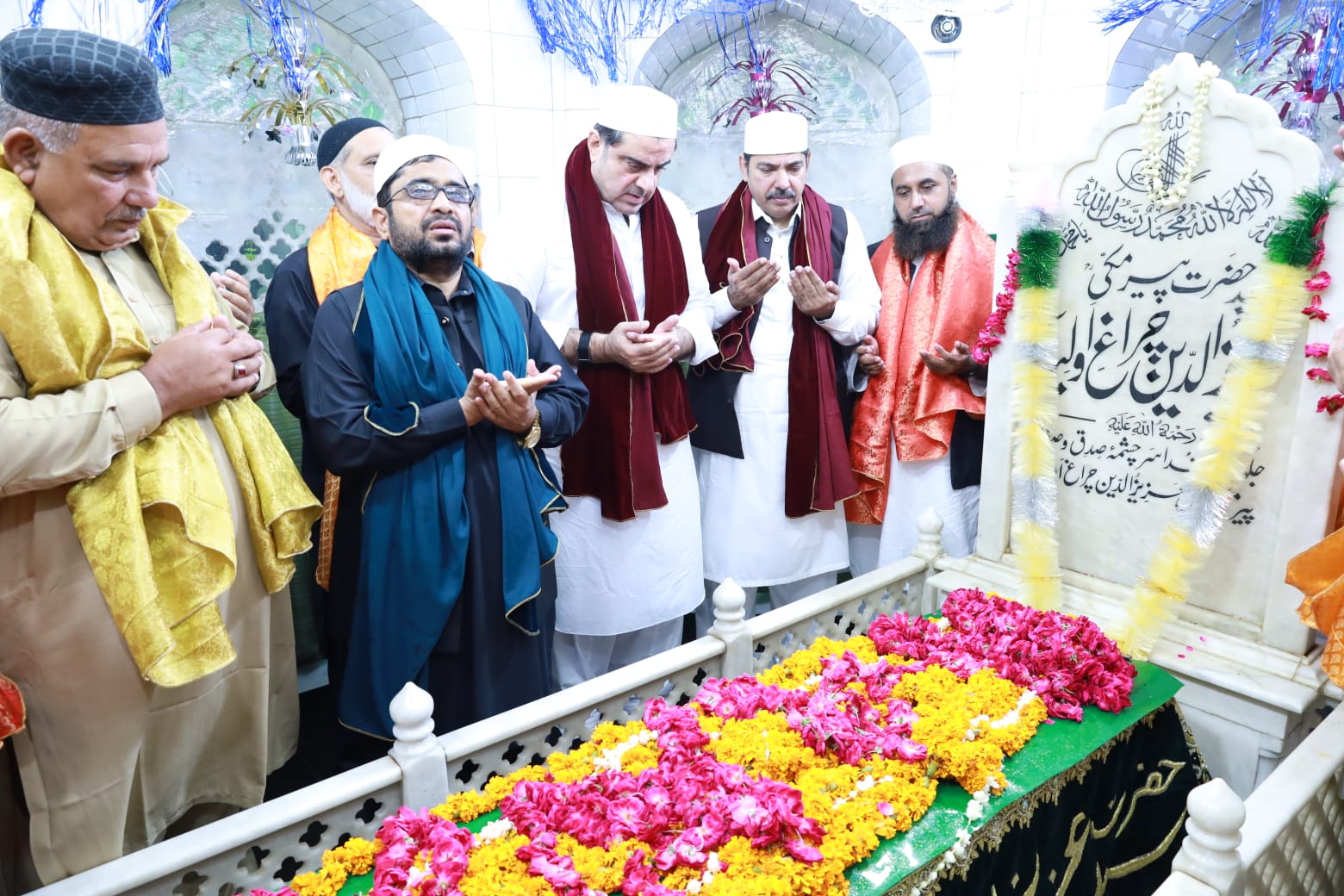
He said that the saints and spiritual leaders devoted their lives to the propagation of Islam, purification of the soul, moral reform and the promotion of a peaceful, harmonious and exemplary society. He expressed these views while inaugurating the Urs Mubarak of Hazrat Pir Makki Sharif (RA) and participating in the traditional chadar poshi ceremony.

Secretary/Chief Administrator Auqaf Punjab Dr. Ehsan Bhutta, Director General Religious Affairs Hafiz Anees ur Rehman, Director Administration Shakir Sandhu, officers of the Auqaf Department, and a large number of devotees and followers were also present. Addressing the gathering, Dr. Ehsan Bhutta said that Hazrat Pir Makki Sharif (RA), whose real name was Hazrat Sheikh Syed Ali Qadri (RA), also known as Sheikh Syed Ali Makki, is regarded among the prominent and earliest renowned Sufi saints associated with Lahore.

He said that the title “Makki” reflects his traditional association with Makkah Mukarramah, from where he is believed to have travelled to Lahore. His association is traced to the Ghaznavid era, around the 11th century CE/5th century AH. Hazrat Pir Makki Sharif (RA) devoted his life to the propagation of Islamic teachings, purification of the soul, social reform and service to humanity, and his spiritual and moral legacy continues to guide and inspire devotees in Lahore and across Pakistan. Dr. Ehsan Bhutta further emphasized that the teachings of Hazrat Pir Makki Sharif (RA) underscore a strong relationship with Allah Almighty, righteousness, humility and compassion for His creation, and that their practical implementation can help build a peaceful, morally upright and exemplary society.

He said that the Khanqahs and shrines of the saints are an integral part of Pakistan’s rich religious and spiritual heritage, serving as centres for the dissemination of peace, love, tolerance, brotherhood and service to humanity. He stressed that transmitting the noble teachings of Hazrat Pir Makki Sharif (RA) to the younger generation is a collective responsibility so that youth remain connected with their spiritual heritage and incorporate its positive and reformative message into their daily lives.

He added that the Government of Punjab, in accordance with the vision of Chief Minister Punjab Maryam Nawaz Sharif, is taking effective measures to provide devotees visiting the shrines of saints with the best possible facilities, cleanliness, security and other essential arrangements.

On the occasion, a 50-pound cake was cut, while a large-scale Langar distribution was also formally inaugurated for devotees and visitors. The ceremony concluded with special prayers for the security, peace, prosperity and stability of Pakistan, the safety of the Armed Forces of Pakistan, and the unity, solidarity and progress of the Muslim Ummah.

Similar Posts

  • |

    Teen footballer goes missing from Pakistan camp after Norway Cup

    OSLO: A 15-year-old Pakistani footballer has gone missing after reportedly leaving the Better Future Pakistan camp in Norway without informing team officials, prompting an immediate police search during the team’s stay in Oslo. According to a statement issued by Better Future Pakistan, the young player departed the camp on his own without seeking permission from the management. The organization said his whereabouts remain unknown despite ongoing efforts to locate him. Officials stressed that preliminary findings suggest the footballer left the camp voluntarily, with no evidence so far indicating foul play, kidnapping or coercion. They urged the public to avoid speculation while authorities continue their investigation. The camp management said police were notified within 20 minutes of the player last being seen. Norwegian authorities responded promptly, launching search operations and initiating the necessary legal procedures to trace the missing teenager. Better Future Pakistan stated that it is maintaining close contact with local law enforcement agencies and is fully cooperating with the investigation. The organization also said it is providing updates to the player’s family and relevant Pakistani authorities as new information becomes available. The incident occurred after the conclusion of the Norway Cup, one of the world’s largest international youth football tournaments, which was held in Oslo from July 25 to August 1. Better Future Pakistan had sent a group of young footballers to participate in the event as part of its youth development program. While the missing player’s disappearance has raised concern, officials confirmed that all other members of the Pakistani contingent have safely returned home following the completion of the tournament. The case has drawn attention in Pakistan’s sporting community, coming shortly after other reports involving Pakistani athletes going missing during overseas tours. However, Better Future Pakistan emphasized that each case is unique and cautioned against drawing premature conclusions. Authorities in Norway continue their search, while the football community hopes the teenager is found safe and reunited with his family as soon as possible. Both police and team officials have appealed for anyone with credible information about the player’s whereabouts to contact the relevant authorities immediately.

  • | |

    Babar Azam explains Pakistan’s defeat against We…

    Pakistan captain Babar Azam admitted his side’s batting collapse was the decisive factor in their 90‑run defeat to West Indies in the opening Test at the Brian Lara Cricket Academy. Chasing 211, Pakistan were bowled out for just 120, handing the hosts a 1‑0 lead in the two‑match series. Speaking after the match, Azam said Pakistan had shown fight over the first three days but failed to deliver with the bat when it mattered. “As a batting unit, we weren’t up to the mark. We kept losing wickets in quick succession, and our batting let us down,” he reflected. He dismissed suggestions that the pitch was to blame, noting that while the surface offered movement with the new ball, it remained playable. “West Indies bowled very well and used the conditions brilliantly. By the fourth day, the ball was keeping low and bouncing unevenly. We weren’t able to build partnerships, and that’s why we lost,” he explained. Azam highlighted the absence of opener Shan Masood, who is sidelined with a fractured finger, as a setback but stressed that other batters must take responsibility. “Yes, Shan’s injury affected us, but when you’re facing the new ball you have to survive the first 20 overs and build partnerships. We couldn’t do that,” he said. Despite the loss, Azam remained optimistic about Pakistan’s chances in the second Test. “We’ll sit together and discuss these things. While the result didn’t go our way, we can certainly address our mistakes. We’ll do our best to correct them and ensure we improve going forward,” he added.

  • | |

    New investigation team makes key decisions in Kara…

      A meeting of the investigation team probing the death of Karachi-based young businessman Mir Raza has concluded at Ferozabad Police Station, where several important decisions were taken regarding the ongoing investigation. According to investigative sources, different tasks have been assigned to members of the committee as part of the inquiry. The family of Mir Raza will be formally interviewed and their statements will be recorded. The team has also decided to record the statements of 21 individuals who were taken into custody during the investigation. Following the meeting, members of the investigation committee left for the crime scene to inspect the location and collect additional evidence. The former investigating officer will also accompany the new investigation team during the visit. Meanwhile, the new investigation team has contacted the National Cyber Crime Investigation Agency (NCCIA) in connection with the case. The team has requested details of Mir Raza’s social media profiles and digital accounts to examine his online activity and determine whether it could provide any clues regarding his disappearance and death. The new team has written four letters to the NCCIA. In one of the letters, the agency was asked to conduct a forensic examination of Mir Raza’s smartwatch. The smartwatch was handed over to the NCCIA a day earlier for examination. However, the victim’s family has requested that the forensic examination of the smartwatch be conducted at a forensic laboratory in Lahore rather than by the NCCIA. The family’s lawyer, Jibran Nasir, said the smartwatch had remained in the possession of the former head of the investigation committee for several days, raising concerns about possible tampering. He demanded that the forensic examination be carried out in Lahore to ensure transparency and credibility. Earlier, on August 12, Dr Usama Sheikh, who conducted Mir Raza’s initial post-mortem examination, was removed from his position as a medico-legal officer. Officials said the doctor had committed serious errors during the initial post-mortem. He will appear before officials during an inquiry into the matter. A preliminary medical report following the exhumation and second post-mortem of Mir Raza indicated signs of physical trauma on his body. The report stated that the gunshot wound was smaller at the back and larger at the front, suggesting that the bullet may have entered from the rear. The report also revealed that Mir Raza had suffered fractured ribs and multiple injuries to his head and face. A fracture and wound approximately 12 centimetres long were found on his right thigh, while blood stains were also detected in tissues in the lower part of his body. The preliminary findings obtained after his exhumation on August 8 differed significantly from the initial post-mortem report. Evidence of a deep injury and fracture was found in his jaw, while injuries were also detected on his nasal bone and various parts of his face. Investigative sources said 17 samples were collected during the exhumation. Samples from Mir Raza’s parents were also obtained for DNA matching. The samples will be submitted to the forensic laboratory of the University of Karachi. After the samples were collected, Mir Raza was reburied on the same day, August 8. Mir Raza Ali Khan went missing from the PECHS area of Karachi on July 28. He left home at 4:09 a.m. in an online taxi, and his body was recovered from Gulistan-e-Johar two days later. Police said the body was found in a severely damaged condition and had a gunshot wound to the chest. His social media accounts had reportedly been shut down one day before his body was recovered. According to Mir Raza’s father, his son was scheduled to marry on August 30 at Bait-ul-Mukarram Mosque in Gulshan-e-Iqbal and had been very happy about starting a new chapter in his life.

  • | |

    PM Shehbaz Sharif reviews implementation of nation…

      Prime Minister Shehbaz Sharif chaired a high-level meeting to review the implementation of Pakistan’s National Integrated Digital Policy Framework, with discussions focusing on strengthening digital governance, expanding the digital economy, and improving public services through modern technology. During the meeting, the prime minister directed the relevant authorities to take immediate steps to make the facilities of the National Data Center, “Sky 47,” available to all federal government institutions. He emphasized that the initiative would serve as a cornerstone of Pakistan’s digital transformation strategy and significantly improve the efficiency of government operations. Shehbaz Sharif said the National Data Center would function as a centralized platform for storing and managing data from all government institutions. He explained that maintaining a unified data infrastructure would eliminate the need for individual departments to establish separate data centers, resulting in substantial savings of public resources while ensuring greater coordination and improved data security. The prime minister highlighted the role of the Pakistan Digital Authority in leading the country’s digital transformation. He said the authority was providing an effective direction for the delivery of government services and citizen-centric facilities. According to him, the implementation of the National Digital Vision would play a key role in building a modern, integrated, and technologically advanced society capable of meeting future challenges. Appreciating the progress made so far in promoting digital governance, the digital economy, and digital public services, Shehbaz Sharif instructed officials to strengthen international partnerships under the National Integrated Digital Policy. He stressed the importance of increasing collaboration with global technology partners and ensuring Pakistan’s effective representation at international digital forums to benefit from global expertise and innovation. The prime minister further directed that the National Digital Vision should be implemented across multiple sectors, including healthcare, agriculture, public utilities, housing, and small and medium-sized enterprises (SMEs). He noted that the adoption of digital technologies in these sectors would improve service delivery, enhance efficiency, and provide citizens with faster, more reliable, and transparent access to government services. He also instructed authorities to accelerate efforts to provide better digital facilities to the public without delay. According to the prime minister, the introduction of a Digital ID system would allow citizens to access multiple government services through a single, integrated platform. This initiative is expected to simplify administrative procedures, reduce paperwork, improve transparency, and make public services more accessible for people across the country. The meeting also decided that a session of the National Digital Commission would be convened in the near future. The commission will engage provincial governments and other key stakeholders to ensure coordinated implementation of the National Digital Policy across Pakistan. Officials said the collaborative approach would help align federal and provincial initiatives while accelerating the country’s digital transformation agenda. Several senior cabinet members and government officials attended the meeting, including Minister for Planning Ahsan Iqbal, Minister for Economic Affairs Ahad Cheema, Finance Minister Muhammad Aurangzeb, Commerce Minister Jam Kamal Khan, Law Minister Azam Nazeer Tarar, Information Minister Atta Tarar, National Health Minister Mustafa Kamal, Federal Minister for Information Technology Shaza Fatima Khawaja, Minister of State Bilal Azhar Kayani, and State Bank of Pakistan Governor Jameel Ahmad, along with other senior officials. The meeting reaffirmed the government’s commitment to creating a digitally connected Pakistan by modernizing public administration, strengthening the digital economy, and ensuring that technology-driven services improve the daily lives of citizens while supporting sustainable economic growth.

  • | |

    Pakistan, FAO strengthen partnership to boost food…

    Pakistan and the Food and Agriculture Organization (FAO) have reaffirmed their commitment to expanding cooperation in food security, climate resilience, sustainable agriculture, and livestock development. The renewed partnership aims to address the growing challenges posed by climate change while supporting Pakistan’s long-term agricultural and economic development. The commitment was made during a meeting held in Islamabad between Federal Minister for National Food Security and Research Rana Tanveer Hussain and a delegation from the FAO led by Deputy Regional Representative for Asia and the Pacific, Robert Simpson. The discussions focused on strengthening existing partnerships and accelerating the implementation of projects designed to improve agricultural productivity and food systems across the country. During the meeting, Rana Tanveer Hussain emphasized that Pakistan remains one of the countries most vulnerable to the impacts of climate change, despite contributing only a minimal share to global greenhouse gas emissions. He stressed that unpredictable weather patterns, floods, droughts, and rising temperatures continue to threaten agricultural production, food availability, and the livelihoods of millions of farmers. The minister called for enhanced technical assistance from the FAO and urged the timely implementation of ongoing development initiatives. He highlighted the importance of adopting modern farming practices, improving water management, and strengthening institutional capacity to help Pakistan build a more resilient agricultural sector. Rana Tanveer Hussain also outlined the government’s key priorities for the agriculture sector. These include improving food safety standards, strengthening Sanitary and Phytosanitary (SPS) systems to boost agricultural exports, expanding livestock development programs, and increasing livestock exports to international markets. He further stressed the need to reduce Pakistan’s dependence on imported wheat and edible oil by increasing domestic agricultural production and promoting sustainable farming practices. The FAO delegation reaffirmed its continued support for Pakistan’s agricultural development agenda. Robert Simpson assured the minister that the organization would continue working closely with the government to mobilize financial resources from international financial institutions and development partners. The funding is expected to support climate adaptation projects, food security initiatives, and sustainable agricultural development across the country. The meeting reflects the shared commitment of Pakistan and the FAO to building a resilient and sustainable food system capable of addressing future challenges. By strengthening cooperation and investing in climate-smart agriculture, both sides aim to improve food security, enhance rural livelihoods, and promote sustainable economic growth for the benefit of future generations.

  • | |

    Attaullah Khan’s remarks on burial plans spark debate

    Legendary Pakistani folk singer Attaullah Khan Essa Khelvi has sparked widespread discussion on social media after revealing that he has already prepared his burial place and often reflects on life after death. During a recent podcast interview, the veteran singer spoke openly about his preparations for the hereafter. He said he has arranged a grave for himself in his hometown of Isa Khel, where his family has a private graveyard. Attaullah Khan said the grave has already been prepared and that it is located near the mosque and farmhouse he built in the area. He explained that after completing those projects, he felt it was important to also prepare a final resting place for himself. The singer said he has witnessed the deaths of many close friends, relatives and family members, including his mother. Those experiences, he said, have made him think deeply about the temporary nature of life and the importance of preparing for the hereafter. He added that he prays for a peaceful death and hopes to leave this world with faith and dignity. While mentioning that there are burial plots nearby, he clarified that he has reserved only his own grave. His remarks quickly went viral on social media, where users expressed mixed opinions. Some people appreciated his willingness to speak openly about death and described his comments as a reminder that life is temporary and everyone should prepare spiritually for the hereafter. Others questioned the idea of preparing a grave in advance. Some users argued that while planning for the hereafter is important, faith, good deeds and righteous actions matter more than constructing a burial place. A number of social media users also suggested that spending money on charitable projects, such as welfare initiatives or homes for the elderly, would have a greater long-term impact. The discussion has generated a wide range of reactions online, with many praising the singer’s honesty while others debated the religious and cultural aspects of preparing a grave before death. Attaullah Khan Essa Khelvi is regarded as one of Pakistan’s most celebrated folk singers. Over the decades, he has earned recognition for his performances in Saraiki, Punjabi and Urdu, with several of his songs remaining popular among audiences across generations.

Leave a Reply

Your email address will not be published. Required fields are marked *