silence state
| | |

The silence of the state

Al Jazeera’s digital domain was restricted in Pakistan following its critical coverage of regional unrest and local election turmoil. Pakistan had become the second country after Israel to ban the Qatari broadcaster. While the statement makes for a soundbite, it oversimplifies both history and the mechanics of state censorship. In reality, the history of sovereign states attempting to mute inconvenient journalism is long, systemic, and filled with precedent.

The Reality Behind the Headlines

The recent digital restrictions in Pakistan emerged after the network broadcast extensive ground coverage of civil protests, Internet shutdowns, and election-related violence in Pakistan-administered Kashmir. State authorities responded by accusing the international news organization of yellow journalism and selective reporting. Shortly after, users across the country reported that the network’s website had become inaccessible.

Repeated bans on Al Jazeera

However, this action makes Pakistan the first nation to follow Israel’s 2024 ban overlooks press suppression. Over the past two decades, Al Jazeera has faced repeated office closures, revocations and total broadcast bans across numerous jurisdictions.

Egypt (2013): Following political upheaval, the government shut down the network’s local operations and detained several of its journalists under allegations of threat to national stability.

The Gulf Blockade (2017): During a severe diplomatic rift, Saudi Arabia, the United Arab Emirates, Bahrain, and Jordan blocked the channel’s signals and shuttered its regional bureaus.

Israel (2024): Emergency legislation empowered authorities to halt local broadcasts, raid offices, and seize transmission equipment over national security claims.

Far from being a rare sequel, the administrative impulse to silence an uncomfortable mirror is an old story retold.

The Architecture of Banishment

In literary traditions, the suppression of speech is rarely about the words themselves; it is about who holds the authority to define reality. George Orwell  observed in 1984 that the primary goal of totalitarian control is to limit the perimeter of thought by controlling the historical record. When a state apparatus brands unfavorable reporting as inherently fraudulent or subversive, it engages in an act of narrative containment. The label of yellow journalism becomes a rhetorical wall. This label shield the public from realities that disrupt official consensus.

This dynamic reflects the bureaucratic absurdity depicted in Franz Kafka’s The Castle, where an elusive authority governs from above while remaining immune to direct questioning. In Kafka’s vision, the citizen is caught in a maze of unwritten rules and opaque decrees, where seeking transparency is treated as an act of insubordination. When digital portals are quietly restricted without formal public legislation or explicit judicial oversight, the state operates within a similarly Kafkaesque realm. The silence itself becomes an instrument of governance.

The Illusion of Total Control

There is a profound irony in modern media suppression. In classical literature, exile was absolute. A banished figure like Ovid was removed physically from the city center, their voice fading at the empire’s edges. Today, however, censorship in a hyper-connected world is an exercise in futility. Blocking a website or pulling a broadcast signal rarely extinguishes the narrative. Instead, it often draws greater international scrutiny to the very events the state wished to obscure. A phenomenon akin to the Streisand effect.


When governments resort to digital blockades, they reveal a fundamental fragility. True political stability rests on the capacity to withstand criticism.  To edit reality is like trying to stop the tide by breaking the hourglass. The water continues to rise, and the story, inevitably, finds another way to be told.

Similar Posts

  • New drug treatment Center opens in Karachi

    Karachi: Sindh Health Minister Dr. Azra Fazal Pechuho has inaugurated a new Opioid Agonist Maintenance Therapy (OAMT) Center at Jinnah Hospital to help people recovering from drug addiction. Speaking to the media the minister said the center will support people in gradually overcoming addiction and returning to a healthy normal life. Patients will receive medical treatment regular health monitoring counseling and rehabilitation services under one roof. Dr. Pechuho said the facility will be staffed by experienced doctors and trained healthcare workers who will closely monitor patients throughout their recovery. She also stressed the need to speed up HIV screening so that more cases can be detected early and  treated without delay. Commenting on reports of a patient’s death at Jinnah Hospital the health minister said that every loss of life is deeply tragic. If negligence was involved she said a full and transparent investigation must be carried out to identify those responsible. She added that no patient’s death should ever be treated as unimportant and strongly condemned any remarks that appeared to downplay such incidents.

  • |

    Pashtun identity in modern South Asia

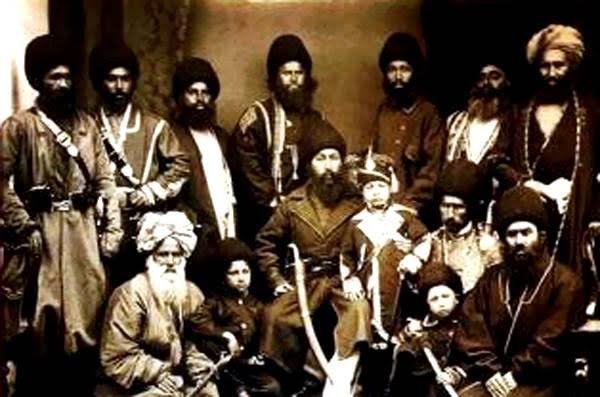
    The Pashtuns represent one of the most populous indigenous groups across South and Central Asia, predominantly in Afghanistan and Pakistan. Their social backbone relies on interconnected lineages, extended families, clans, and tribal alliances rather than a centralized political authority. From major confederations like the Durrani and Ghilzai to influential communities such as the Yusufzai, Afridi, Mohmand, Khattak, Wazir, and Mahsud, Pashtun society is a rich tapestry of overlapping regional, religious, and civic loyalties. At the core of their culture is Pashtunwali, an ancient honor code governing daily life through principles of hospitality, courage, asylum, and restorative justice. Historically, community issues and disputes were negotiated collectively through jirgas, or assemblies of local elders, maintaining order through consensus. Empire Builders and Cultural Crossroads Beyond tribal structure, Pashtuns have repeatedly reshaped the political landscape of the Indian subcontinent and Central Asia. Sultanate Dynasties: The Lodi dynasty established its rule over the Delhi Sultanate, paving the way for intricate South Asian governance structures. Administrative Reforms: Imperial leader Sher Shah Suri founded the Sur Empire in North India, pioneering sweeping reforms in taxation, infrastructure development, and currency. Empire Founding: In the 18th century, Mirwais Hotak challenged Safavid Persian dominance, while Ahmad Shah Durrani established the Durrani Empire in 1747, laying the groundwork for modern Afghanistan. This history is far more than military conquest. Pashtun territories served as vital crossroads where Persian, Turkic, Indian, and Islamic traditions converged. Consequently, their heritage spans beyond warrior traditions. It thrives in rich oral poetry, musical compositions, complex embroidery, craftsmanship, and trade networks. The Borderlands and Modern Challenges The 19th century brought prolonged conflict with British imperial forces along the northwestern frontier. A pivotal turning point arrived with the demarcation of the Durand Line in 1893. By drawing an artificial boundary between Afghanistan and British India (now Pakistan), the British divided ancestral Pashtun communities, establishing a geopolitically sensitive frontier that continues to spark debate and shape regional politics today.   In recent weeks, administrative re-alignments and border disputes in provinces like Balochistan and Khyber Pakhtunkhwa have reignited local debate. Prominent political and tribal leaders have voiced strong resistance to state restructuring, asserting that top-down administrative decisions risk erasing historical identities. Through renewed calls for broad political dialogue rather than bureaucratic divisions, modern Pashtun communities continue to rely on unified assemblies to safeguard their cultural heritage, self-determination, and historical voice in a changing region.

  • |

    Why young minds internalize being a burden

    When a child begins to internalize the belief that their presence is an obstacle, the transformation rarely happens in an explosive moment. Instead, it is a gradual, quiet erosion of their sense of self-worth. Recent reports surrounding youth mental health have drawn urgent attention to how children absorb socio-economic pressure, domestic tension, and emotional distress. The youth has convinced themselves that their families would simply be better off without them. Psychological research identifies a specific mindset known as perceived burdensomeness. It’s the distorted cognitive belief that one’s existence imposes an unmanageable drain on loved ones.  Adults often process household stress out loud through financial worries or fatigue. However, children are acute observers but poor interpreters of these adult struggles. When young minds witness prolonged arguments over money, household strain, or family burnout, they frequently externalize the blame onto themselves. Rather than recognizing systemic or situational issues, a child’s natural self-referential worldview leads to a heartbreaking conclusion. If I weren’t here, my parents wouldn’t be so stressed. Triggers for Emotional Withdrawal in Children  Hearing constant worry over basic living costs or healthcare expenses. Feeling as though love or acceptance is tied strictly to high achievement or complete emotional compliance. When overwhelmed caregivers unintentionally treat basic parenting duties as exhausting chores. Receiving persistent feedback that their emotional or physical needs are too much to handle. How Burden Beliefs Manifest in Everyday Behavior Unlike adults, who might voice feelings of worthlessness directly, children express this weight through shifts in conduct. Identifying these subtle indicators early can make the difference between early intervention and severe psychological crisis. From Obligation to Belonging Addressing this internal crisis requires shifting household culture from transactional survival to unconditional emotional safety. Child mental health advocates emphasize that reassurance must go beyond simple verbal praise. It requires active, structural validation within the home. A child needs to know that their value isn’t dependent on their convenience to adults. Love is not a debt they owe back to the family, but a foundation they stand upon. Explicitly reassure children that adult challenges such as bills, jobs, or adult relationships are strictly the responsibility of grown-ups. Validate their requests for help, space, or care as healthy and welcome parts of growing up. Spend unhurried, non-evaluative time together where no performance or chore is expected. Rebuilding a child’s foundational sense of belonging takes consistency, but by recognizing the early signals of perceived burdensomeness, parents and educators can intervene before silence turns into deep-seated trauma.  

  • Gustav Klimt’s “Lakeshore with Birches” (1901)

    Gustav Klimt’s Lakeshore with Birches (Seeufer mit Birken, 1901) presents a contemplative immersion into nature. This piece was painted during a crucial transitional moment in Klimt’s artistic development. It was completed when Klimt spent his summers away from the urban noise of Vienna at Lake Attersee. This work captures the quiet rhythm of the natural world, distilled through a distinctly modern visual sensitivity. What immediately distinguishes Lakeshore with Birches is its unorthodox composition. Rather than offering a traditional panorama with a distant horizon line, Klimt deliberately truncates the viewer’s field of vision. The composition is anchored by a singular birch trunk rising vertically near the center-right of the canvas. Klimt creates a radical sense of spatial compression by eliminating the sky. The landscape is flattened into a decorative field, where depth is suggested through subtle layering. A lush, wild embankment dotted with small yellow and purple wildflowers. The stark pale birch trunk with its rhythmic dark lenticels, acting as a structural mast. In the background, still water reflecting the dark foliage of the far shore. This croppings draws inspiration from both Japanese ukiyo-e woodblock prints and contemporary square-format photography. The canvas forces the viewer to engage with the textures and moods of the immediate environment. The atmosphere of the painting is dictated by a restrained palette. Dominated by muted moss greens, deep olive tones, and dark murky browns, the water acts as a mirror absorbing the weight of the forest shadows. Against this dark, reflective pool, the small specks of yellow buttercups and delicate purples along the grass introduce a subtle optical vibration. Klimt’s brushwork here bridges French Impressionist techniques and the emerging principles of Art Nouveau. The bank is rendered using tiny, stippled dabs of paint, creating a tapestry-like surface pattern. Up close, the reflections on the water resolve into abstract patches of blue, gray, and dark brown. The slender birch tree provides a crisp, pale contrast. Its bark painted with precise horizontal dashes that echo the linear motifs Klimt would later deploy in his famous Golden Phase. Beyond its formal qualities, Lakeshore with Birches radiates profound stillness. Free from human figures or dramatic narrative.  Turns nature into a psychological sanctuary. The solitary birch trunk stands almost like a quiet observer at the edge of the water. It seems like a subtle proxy for the solitary painter himself. During his summer retreats at the Attersee, Klimt used landscape painting as a palette cleanser, freeing himself from the contentious public commissions and psychological weight of his Viennese portraiture. In Lakeshore with Birches, he captures the fleeting light and quiet isolation of late summer. He converted a humble patch of lakeside grass and water into an intricate sanctuary of pattern and color. It remains a testament to Klimt’s unique ability to merge acute observation with abstract harmony.  

  • |

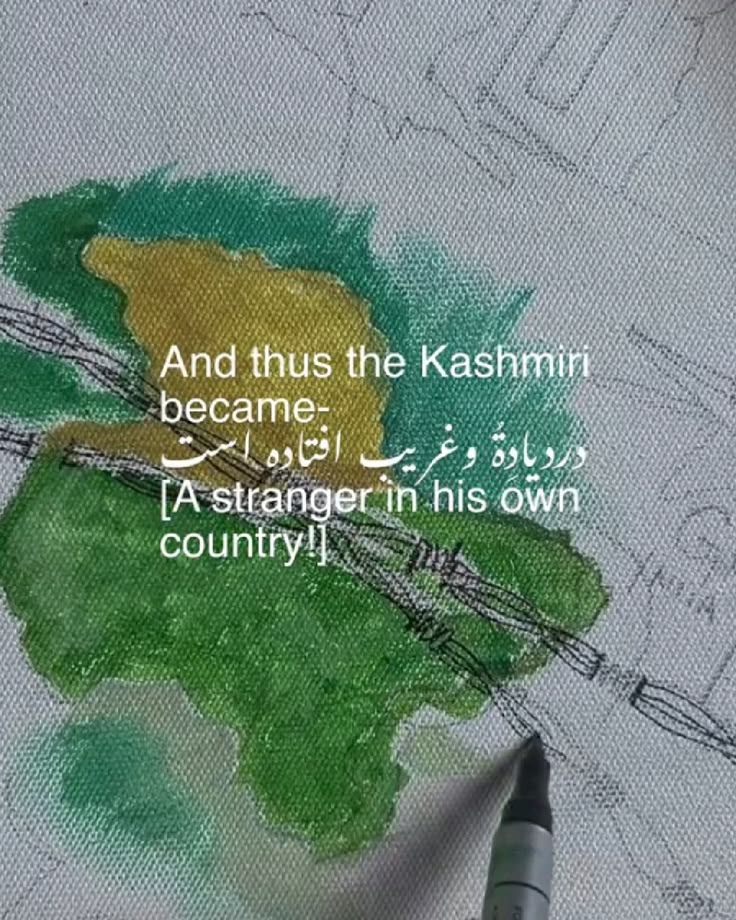
    Kashmir is beyond a geographic location

    For centuries, Kashmir has occupied a singular space in the poetic imagination. It is a region defined by a paradox. On one hand, earthly paradise of pristine lakes, towering snow-capped peaks and crimson autumn chinars. On the opposite, centuries of political upheaval, exile and grief. In literature, Kashmir is beyond a geographic location. It is a metaphor for divine beauty, and a testament to human endurance. The poetic tradition of Kashmir took root in spiritual mysticism and poignant lyricism during the medieval period. In the 14th century, the mystic poet Lal Ded pioneered the Vakh: four-line spiritual verse couplets in the Kashmiri vernacular. Her poetry bridged Hinduism and Sufism. It’s essence was inner purity, liberation, and the transcendence of physical suffering. I searched for my Self until I grew weary, No one, I thought, could reach this hidden knowledge. I plunged into it, and there found the jar of nectar. Habba Khatoon was known as the Nightingale of Kashmir. The 16th-century peasant-turned-queen introduced the Lol: a short, melodic form of love lyric. Her husband, King Yousuf Shah Chak, was exiled by the Mughal Emperor Akbar. Then, her poetry transformed into immortal songs of separation and longing. The spring has come, but you have not returned; My heart bleeds like the red bloom of the pomegranate. During the Mughal and Persian era, Kashmir became synonymous with heavenly superiority. The iconic Persian couplet often attributed to Amir Khusrow or Mughal Emperor Jahangir summarized this adoration: Agar firdaus bar roo-e zameen ast, Hamin ast-o hamin ast-o hamin ast. (If there is a paradise on the face of the earth, it is this, it is this, it is this.) In the 20th century, Allama Iqbal, whose ancestors hailed from Kashmir, brought a nuanced perspective to this paradise. In works like Javid Nama, he celebrated Kashmir’s breath-taking landscape while lamenting the subjugation and suffering of its people. He reflected on the region’s immense dormant potential in Payam-e-Mashriq: ​Pani tere chashmon ka hai aab-e-hayat, Aur tere kohsar hain qasran-e-kibriya. ​The water of your natural springs is the elixir of life, And your mountain ranges are towering palaces of divine grandeur. Iqbal’s verse moved beyond aesthetic wonder, using poetry as a call to dignity, resilience, and self-realization for the Kashmiris. In modern poetry, Kashmir’s narrative shifted dramatically toward exile, memory, and war. No poet captured this transition more powerfully than Agha Shahid Ali (1949–2001). He wrote primarily in English while employing traditional Urdu ghazal forms. Ali gave voice to the tragedy of late 20th-century Kashmir. In his seminal collection, The Country Without a Post Office (1997), Kashmir becomes a landscape of ghost letters, curfews, and faded memories. I write on fallen leaves and floating petals, I write to you from a country without a post office. Ali’s verse knits together global literary influences from Mahmoud Darwish to James Merrill. His poetry creates a poignant eulogy for a lost homeland. Their memory is anything but green, an white-hot fire. They burn down Kashmir in my veins. From the ascetic reflections of Lal Ded to the haunting elegies of Agha Shahid Ali, poetry has served as Kashmir’s truest archive. A disputed land of changing maps, borders, and historical conflicts. It’s the poetry that preserves the living soul of the land. The verses anchor its beauty, its heartbreaks, and its unyielding hope. Kashmir remains forever intact. It is an eternal paradise written in ink, surviving through the memory and voices of its poets.  

  • Spot the hidden person

    The internet is full of amazing optical illusions that can trick your eyes and this image is one of them. At first glance it looks like an old building but there is actually a person hidden in the picture. Finding them is much harder than it seems. Optical illusions use colors patterns  and backgrounds to hide objects or create images that confuse the brain. Solving these puzzles can improve observation skills boost focus and encourage creative thinking. hink you have sharp eyes? Take a close look at the image and try to find the hidden person. Even though the person is right in front of you they are very difficult to notice because they blend perfectly into the background. The hidden figure has been carefully painted to match the color and texture of the wall making them almost invisible. This fascinating illusion was created by German artist Jörg Düsterwald, who is known for combining body painting photography and real world surroundings to create eye catching artwork. According to the artist the project brings together body painting the environment and photography to create a single complete image. If you still can’t find the hidden person look closely at the area just below the roof above the doorway. That’s where the camouflaged figure is hiding as shown in the solution image.

Leave a Reply

Your email address will not be published. Required fields are marked *