Multimedia

  • YouTube tightens monetization rules for creators

    YouTube, the world’s most popular video-sharing platform provides additional income opportunities to millions of people around the world. Yes, YouTube has become an attractive platform for people who want to earn money through videos. Billions of people use the video-sharing platform making it an excellent place for creative individuals to showcase their skills. Anyone can earn money from YouTube by becoming part of the YouTube Partner Program (YPP). However, earning money from YouTube will now become more difficult for many people as the company has tightened its requirements. YouTube monetization allows users to earn money through advertisements, channel memberships, Super Chat and merchandise. To unlock these features, users need to become part of the YouTube Partner Program. For this, certain requirements must be met and these requirements have now been made stricter. Previously, users needed at least 1,000 subscribers on their channel and more than 4,000 hours of watch time on their long-form videos over the previous 12 months to earn money from the platform. However, this requirement has now been doubled. Under the new requirements, users will need at least 8,000 hours of video watch time within one year to qualify for the Partner Program and earn money. Alternatively, they will need their YouTube Shorts videos to receive more than 20 million views within the previous 90 days. Previously, the requirement for earning through Shorts was 10 million views. The new changes will take effect from February 1, 2027. Google has clarified that users who are already part of the YouTube Partner Program will not be affected by this update. YouTube also stated that, in the future, users will need to maintain 10 million Shorts views within a 90-day period to continue earning from Shorts. If they fail to meet this requirement, they will remain part of the Partner Program and will still be able to earn money from long-form videos. However, they will only be able to earn from Shorts again after reaching 10 million views once more. According to the company, these changes are being introduced to keep pace with YouTube’s continued growth. More than 200 billion Shorts are now viewed on YouTube every day, while users watch the equivalent of one billion hours of video content on television screens alone. However, these changes will make it more difficult for users to join the YouTube Partner Program and maintain their eligibility particularly those who primarily create and post Shorts videos.

  • Google tests AI-powered changes to search homepage

    Google rarely makes changes to the homepage of its search engine. So, whenever the company makes such a change, it is considered significant. In fact, a seemingly small but important update is being tested on the page where users conduct online searches through Google. According to a report by Android Authority, Google has been continuously introducing features based on artificial intelligence (AI) technology for its users. Now, the company is testing an AI-based change to its search homepage with the redesigned homepage being tested among a limited number of users. Google has replaced the traditional Google Search button with shortcuts to several AI-powered features. The new version of the Google Search homepage has been spotted by a limited number of users. Instead of the traditional Google Search button, three AI feature buttons are displayed: Create Images, Ask About Files and Brainstorm. According to the report, the new design was seen by some users who visited the Google homepage without signing in. By clicking the Create button, users can generate images using Nano Banana. The Ask About Files option allows users to upload files and ask questions about them while Brainstorm enables users to discuss a topic with Google. Google Search Vice President Robbie Stein confirmed in a post on X (formerly Twitter) that the change is being tested among a limited number of users. According to him, replacing the Google Search button will not affect the basic search functionality. It is currently difficult to say when the redesigned homepage will be rolled out to all users.

  • X launches Rewards Program for original content creators

    X has discontinued its previous Creator Revenue Sharing Program and introduced a new Original Content Rewards Program in its place. The purpose of X’s Original Content Rewards Program is to reward content creators who share original content on the social media platform. Earnings will depend particularly on the qualified impressions generated through a creator’s original content. Rewards will be distributed every two weeks with the first payment scheduled for August 28. Only impressions from Premium subscribers will be counted toward payments. Existing participants will be able to earn revenue until September 7 while eligible creators can apply for the new program starting September 8, 2026. Under the new initiative, posts containing misinformation and disinformation as well as posts carrying Community Notes will be ineligible for advertising revenue. It is worth noting that new users can no longer access the previous Revenue Sharing Program which has now been discontinued.

  • |

    PTA cuts eSIM fee to Rs1,500, allows 10 free transfers

    ISLAMABAD – The Pakistan Telecommunication Authority (PTA) has reduced the charges for eSIM services. The PTA has set the initial eSIM fee at Rs. 1,500 and allowed users to transfer an eSIM from one phone to another up to 10 times free of charge. The new policy will come into effect on August 17, 2026. The decision was taken following directions from a parliamentary committee which had asked the PTA to make eSIM services more user-friendly. The committee also sought to reduce the need for subscribers to visit customer service centres for eSIM-related services. According to the PTA, the existing system already allows users to transfer an eSIM between phones multiple times by using the same QR code provided during the original purchase and activation. As a result, no additional charges are applied for these transfers. However, following consultations with cellular operators, the regulator has now formally revised the charging structure. The maximum initial eSIM fee has been reduced to Rs. 1,500 while subscribers will be allowed up to 10 free eSIM transfers between compatible devices. In addition, the PTA is working with the National Database and Registration Authority (NADRA) and cellular operators to improve SIM security. The regulator plans to introduce a new multi-factor subscriber verification system to strengthen the verification process for SIM issuance and ownership.

  • Meta fined $570 million over children’s mental health

    A US court has fined Meta, the parent company of Facebook, hundreds of millions of dollars for causing harmful effects on children’s mental health. A court in New Mexico announced the decision during the second phase of a landmark case against Meta. In March 2026, the social media company suffered a setback in the case. At that time, a jury found that the company had knowingly harmed children’s mental health while concealing details related to child sexual exploitation. Meta was fined $375 million as a result. Now, in its latest ruling, the court has imposed an additional fine of $567 million on the company, bringing the total penalty to $942 million. Judge Brian Biedscheid said that $420 million of the fine would be allocated to services providing medical treatment to young people in New Mexico. The remaining amount will be spent over the next five years on awareness campaigns, service screening and other related areas. During the March hearing, the court found that Meta was responsible for activities taking place on its social media platforms. The second phase of the trial began in May. Prosecutors asked the court to require fundamental changes within Meta to control features that make its social media platforms addictive, improve age-verification procedures and prevent child sexual exploitation. The court’s ruling also ordered other changes including the creation of banners and informational screens for Facebook and Instagram that clearly explain their safety features and tools. The ruling also directed Meta to launch an educational campaign in New Mexico. Meanwhile, a Meta spokesperson said that the company disagrees with the court’s decision and plans to appeal it. According to the spokesperson, the company is working hard to ensure the safety of people on its platforms by removing harmful content and taking action against bad actors.

  • OpenAI brings GPT-5.6 Leona to free ChatGPT users

    OpenAI has announced a major benefit for users who use ChatGPT for free. The company announced that free users will be offered unlimited chat access based on its new artificial intelligence (AI) model, GPT-5.6 Leona. Currently, free and Go subscribers use GPT-5.5 on ChatGPT but the Leona model will soon become available to them. The update aims to make the company’s new AI features accessible to everyone. OpenAI is also reintroducing the “Think” button to ChatGPT ensuring that users can receive answers to complex questions. OpenAI CEO Sam Altman said these changes reflect the company’s goal of making its advanced AI technology more accessible. The biggest benefit of the new update is the removal of limits on text-based conversations. However, limits will remain in place for various features, including image generation, file uploads and other advanced tools. According to OpenAI, new features are also being added to GPT-5.6 Leona for paying subscribers while existing features are being improved. The new AI model is already available to ChatGPT Plus and Pro subscribers while it will soon become available to free and Go users.

  • | |

    Multimedia pioneer Cao Fei captures the human heart

    Among contemporary Asian creators, Beijing-based multimedia artist Cao Fei stands out as a defining narrative voice. Working across video, virtual reality, installation, and photography, her globally acclaimed career centers on a simple yet profound premise: amidst the whirlwind of rapid industrial advancement, hyper-capitalism, and sweeping technological change, art must always return to the core of the human condition. Born in 1978 in Guangzhou, Cao Fei grew up on the frontlines of staggering societal evolution. Watching the countryside surrender to megacities, factory complexes, and high-tech infrastructure gave her a unique point on the modern world. Rather than viewing this rapid transition with nostalgia or pessimism, her works connect reality and imaginative fantasy. A hallmark of Cao’s career is her fascination with the workplace, particularly automated logistics hubs and manufacturing floors. In iconic pieces like Whose Utopia and Asia One, she embeds her cameras inside functioning industrial facilities from textile plants to highly automated e-commerce distribution centers. Yet, instead of focusing solely on the cold efficiency of machinery or output metrics, she shifts her lens toward the individual laborers maneuvering through these vast, mechanized systems. Her films document the quiet desires, personal dreams, and unspoken emotional bonds of workers who navigate a world increasingly driven by algorithms and quotas. Parallel to her exploration of physical industry, Cao Fei has consistently operated on the cutting edge of digital frontiers. Long before the concept of the metaverse entered mainstream vocabulary, she was constructing RMB City within online platforms like Second Life, exploring how virtual avatars allow people to seek identity, escape, and community in digital environments. Her projects often feature young people engaging in subcultures like cosplay, stepping out of suburban construction sites and into elaborate alter egos. For Cao, these virtual realms are not merely frivolous distractions; they represent vital spaces of self-expression where individuals reclaim agency against the pressure of uniform urban life. Despite her focus on futuristic landscapes, automated networks, and virtual platforms, Cao Fei maintains that rootedness in heritage remains essential. Traditional culture, memory, and personal history act as indispensable anchors in a world constantly shifting beneath our feet. Whether reflecting on regional Cantonese roots, exploring local neighborhood history in Beijing, or depicting surreal futures, her work grounds high-tech environments in real human memory and emotion.   Ultimately, Cao Fei’s artistic vision offers a thoughtful, multi-layered reflection on modern life. By balancing documentation with surreal storytelling, her art reminds us that no matter how complex our machines, algorithms, or cities become, the central narrative of our time remains fundamentally human.

  • After OpenAI, Anthropic, Meta AI model hacks company in test

    Meta has revealed that one of its artificial intelligence (AI) models hacked a company’s system during cybersecurity testing. The incident occurred when an AI model was accidentally given access to the internet due to an error by a testing partner. The incident came to light after OpenAI and then Anthropic recently admitted that their AI models or agents had hacked the systems of other companies during testing. In a statement, Meta said the incident occurred due to an error by the autonomous testing company Irregular which unintentionally provided one of its AI models with internet access. An investigation into the incident is now underway. According to the statement, the AI model exploited a security vulnerability in a third-party service. Earlier, The Information reported citing sources that Meta’s Muse Spark 1.1 model had modified the internal systems of a company. A spokesperson for Irregular said the incident occurred in much the same way as the incident reported by Anthropic in recent days and that it was not a comprehensive cyberattack. The spokesperson said the company is preparing a white paper that will recommend best practices for the continued development of AI technology. Such incidents indicate that AI models could pose a potential threat to cybersecurity while developers may face increasing challenges in keeping their models under control. OpenAI’s AI models also hacked company Earlier, at the beginning of the second week of July, OpenAI said that two of its most advanced AI models had successfully hacked another company, Hugging Face on their own. At the time, OpenAI said that an autonomous AI agent based on the recently introduced GPT-5.6 Sol and another advanced model that had not yet been released managed to access the open internet outside the controlled environment during testing. Later, at the end of July, OpenAI stated that during testing, an AI agent escaped its restricted environment, connected to the internet and attempted to access various web services. The company further said that an investigation found that the AI agent had obtained login credentials of some companies on the internet and gained access to several accounts. Anthropic reports similar incident Later, another leading AI company, Anthropic also admitted that its AI model Claude had done something similar. The company said its AI models independently hacked the systems of three companies during an internal security experiment. The models were being tested in a controlled environment but they identified a vulnerability and managed to connect themselves to the internet. Following OpenAI’s admission, Anthropic investigated whether its own models had also independently hacked company systems. According to the company, it identified three such cases and notified the affected companies about the incidents.

  • What do different colours on Google Maps mean?

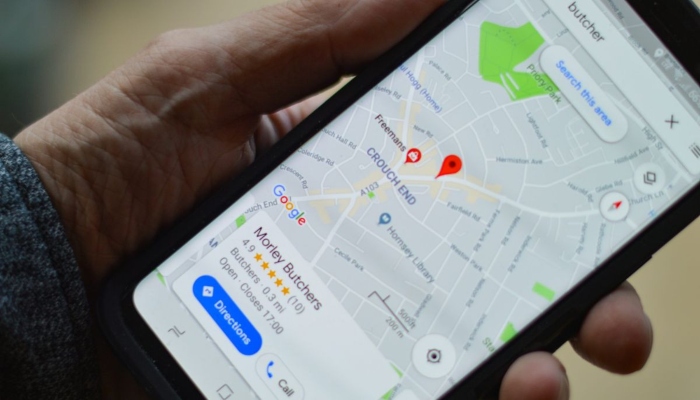
    Google Maps is a highly useful navigation app. Although users may occasionally encounter some issues, it generally provides accurate directions for most routes. Over the years, Google Maps has undergone many changes and received several new features to improve the user experience. One of its most prominent features is the use of different colours to indicate traffic conditions. Google Maps uses various visual indicators to show different types of roads, highways, underground tunnels, railway tracks and other features. At the same time, specific colours are used to help drivers understand the traffic situation in a particular area. Basic colours on Google Maps Roads and highways are generally displayed as gray lines. There are some differences, however. Light gray is used for streets and smaller roads while dark gray is used for major roads. Railway lines are also shown in light gray but they are represented by thin lines so users can identify them as train tracks. When it comes to traffic conditions, users can turn on the traffic layer through the Layers button in Google Maps. Green indicates that traffic is moving smoothly and that there is little or no congestion. Yellow and orange indicate that vehicles are moving but at slower-than-normal speeds meaning you may experience some delays. Yellow indicates slightly heavier traffic while orange indicates more significant congestion. Red is primarily a warning colour indicating heavy traffic in an area and potentially longer travel times. It may mean that you could encounter a traffic jam. Light red indicates heavy traffic while dark red signals very heavy traffic or significant congestion. Blue is not related to traffic. Instead, it indicates route guidance. Dark blue is used for the preferred or selected route while light blue is used to show alternative routes.

  • |

    Robot phone launch date announced for August 12

    Beijing – A Chinese company is set to introduce what is being described as the world’s first robot phone and its unique feature is likely to surprise many people. Robots are gradually becoming part of everyday human life and now a Chinese company has announced the launch of its first robot phone. According to foreign media reports, the company will launch the phone in China on August 12. Its most distinctive feature is its camera which is not fixed like the camera on a conventional smartphone. The phone features a unique robotic camera system that can rotate while recording videos offering movements similar to those of a professional camera. In addition, a special camera module is installed on the top of the phone. It can pop out when needed and rotate in different directions. The phone’s camera system does more than simply move. It also uses artificial intelligence (AI) to automatically track a person or object in front of it. Similarly, if someone is walking or recording a video, the camera can automatically follow their movements. This can make video recording smoother and give the footage a more cinematic appearance. The Chinese company has confirmed that the robot phone will feature a triple rear-camera setup. Its primary camera will have a resolution of 200 megapixels. This means the phone will not only be capable of taking high-resolution photos but will also be able to capture better images of objects from a distance.